AI didn’t change how Google ranks content.
It just exposed who was already cutting corners.
Google has always prioritized quality content that actually helps users. Now, with generative AI making content creation faster than ever, that standard is enforced even harder.
That’s where EEAT comes in.
EEAT is one of the core ranking factors in Google’s algorithm, used to evaluate whether your content deserves to show up in search results. It’s also a major part of the quality rater guidelines used by search quality raters to assess content quality.
And despite what people think, Google isn’t against AI generated content.
It just expects it to meet the same standard.
In this article, we’ll break down what EEAT actually means, how it applies to AI content, and how to make sure everything you publish meets Google’s expectations without overcomplicating the process.
Key Takeaways:
- EEAT is one of the most important ranking factors for evaluating content quality in Google search
- Google EEAT stands for Expertise, Experience, Authoritativeness, and Trustworthiness
- AI content is fine as long as it meets EEAT and provides helpful content
- The quality rater guidelines define how search quality raters evaluate content
- Expertise and trustworthiness are the two biggest drivers of high quality content
- Good content creation starts with clear intent, structure, and real input from a content creator
- AI should support content creation, not replace expertise or personal experience
- Strong content combined with link building is still key to improving rankings and visibility

Link building cheat sheet
Gain access to the 3-step strategy we use to earn over 86 high-quality backlinks each month.
What Is EEAT?
EEAT is how Google evaluates content quality.
It stands for Experience, Expertise, Authoritativeness, and Trustworthiness, and it’s a core ranking factor in how content gets evaluated across Google search.
It comes directly from Google’s quality rater guidelines, which are used by search quality raters to assess whether content actually deserves to rank.
In simple terms, EEAT answers one question:
Can this content be trusted?
Experience
This is the newest addition to Google EEAT.
Google wants to see that the content creator has actual, first-hand experience with the topic. Not just summarizing what others have said, but adding something real.
That could be:
- personal experience
- original insights
- real examples or case studies
This is especially important for YMYL content, where accuracy and credibility matter more.
Expertise
Expertise is about knowledge.
Does the person creating the content actually understand the topic? Are they qualified to talk about it?
This doesn’t always mean formal credentials, but it does mean depth.
Surface-level content won’t cut it anymore. Google is looking for real expertise that shows up through detailed explanations, accurate information, and clear understanding.
Authoritativeness
This is how others see you.
Even if your content is solid, Google still looks at external signals to determine authority.
That includes:
- mentions on other sites
- backlinks from authoritative sources
- your presence across platforms like social media
This is where things like the knowledge graph and domain authority come into play.
Trustworthiness
This is the most important part.
If your content isn’t trustworthy, nothing else matters.
Google looks for signals like:
- accurate and consistent information
- clear author bio and credentials
- transparency about who created the content
- reliable sources and references

Trustworthiness is what ties everything together.
Why EEAT Matters More Now
With AI content and generative AI becoming more common, Google is relying even more on EEAT to filter out low-quality content.
It’s not about how content is created.
It’s about whether it’s actually helpful.
If your content meets EEAT standards, it has a much better chance of ranking. If it doesn’t, it won’t matter how optimized it is.
How To Keep EEAT If You Use AI For Content?
It’s actually simple.
Most people overcomplicate this.
Google isn’t against AI content. It doesn’t matter if it’s written by a person or generated with AI. What matters is whether the content meets EEAT and actually helps the user.
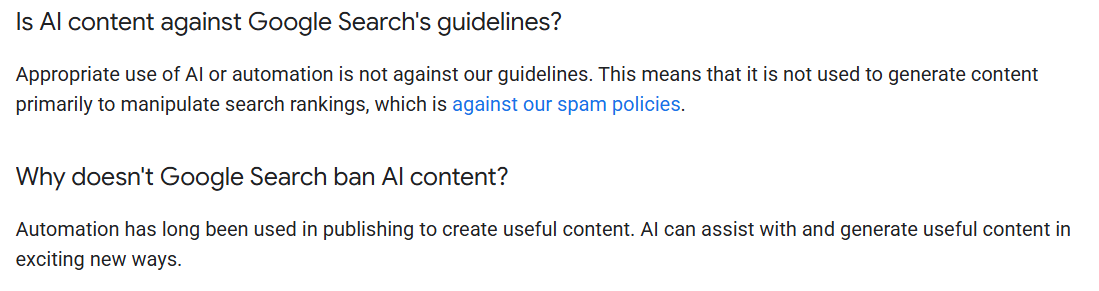
Image source: Google
So the goal isn’t to “hide” AI.
It’s to control it.
Start With Your Own Drafts
This is the most important part.
Before you generate anything, write your own outline and notes for each section.
Not vague bullet points.
Clear, detailed instructions. The kind you’d give to another content creator if you were handing off the article.
- What should each section say?
- What points need to be covered?
- What examples or experience should be included?
Here’s part of my thread with ChatGPT while writing this very article:
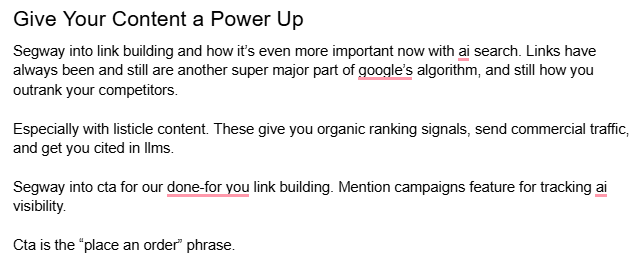
This is where your expertise comes in.
AI just fills in the gaps.
Use AI for Execution, Not Thinking
AI is good at writing.
It’s not good at thinking for you.
If you rely on it to come up with ideas, structure, or positioning, your content will feel generic. That kills both expertise and trustworthiness.
Instead, use it for:
- turning notes into full content
- improving clarity and flow
- speeding up content creation
You handle the thinking. AI handles the execution.
Train It on Your Style
If you want consistent quality, don’t start from scratch every time.
Feed it examples of content you’ve already written. Let it learn your tone, structure, and how you explain things.
This helps maintain consistency across your content marketing and improves overall content quality.
Edit Everything
Don’t publish AI-generated content as is.
Read it. Tighten it. Remove anything generic.
Add:
- personal experience
- specific insights
- real examples
That’s what turns average content into high quality content.
That’s It
Seriously.
Write detailed drafts → generate → edit.
If you follow that process, your AI content will meet EEAT, maintain trustworthiness, and perform just like manually written content in search engine results.
It’s not complicated. Most people just skip the thinking part.
Give Your Content a Power Up
EEAT gets your content to a good place.
But it doesn’t guarantee you’ll rank.
At some point, Google has to decide between you and everyone else writing about the same topic. And that’s where off-page signals come in.
Links are still one of the strongest ranking factors.
They always have been.
And with AI search becoming more prominent, they matter even more. When Google pulls sources into AI Overviews or other AI answers, it tends to favor pages that already have authority behind them.
That authority mostly comes from links and mentions across the web.
But not all links do the same thing.
If you look at what’s actually showing up for commercial queries, it’s usually listicle-style content. “Best tools,” “top agencies,” “alternatives to…” type pages.
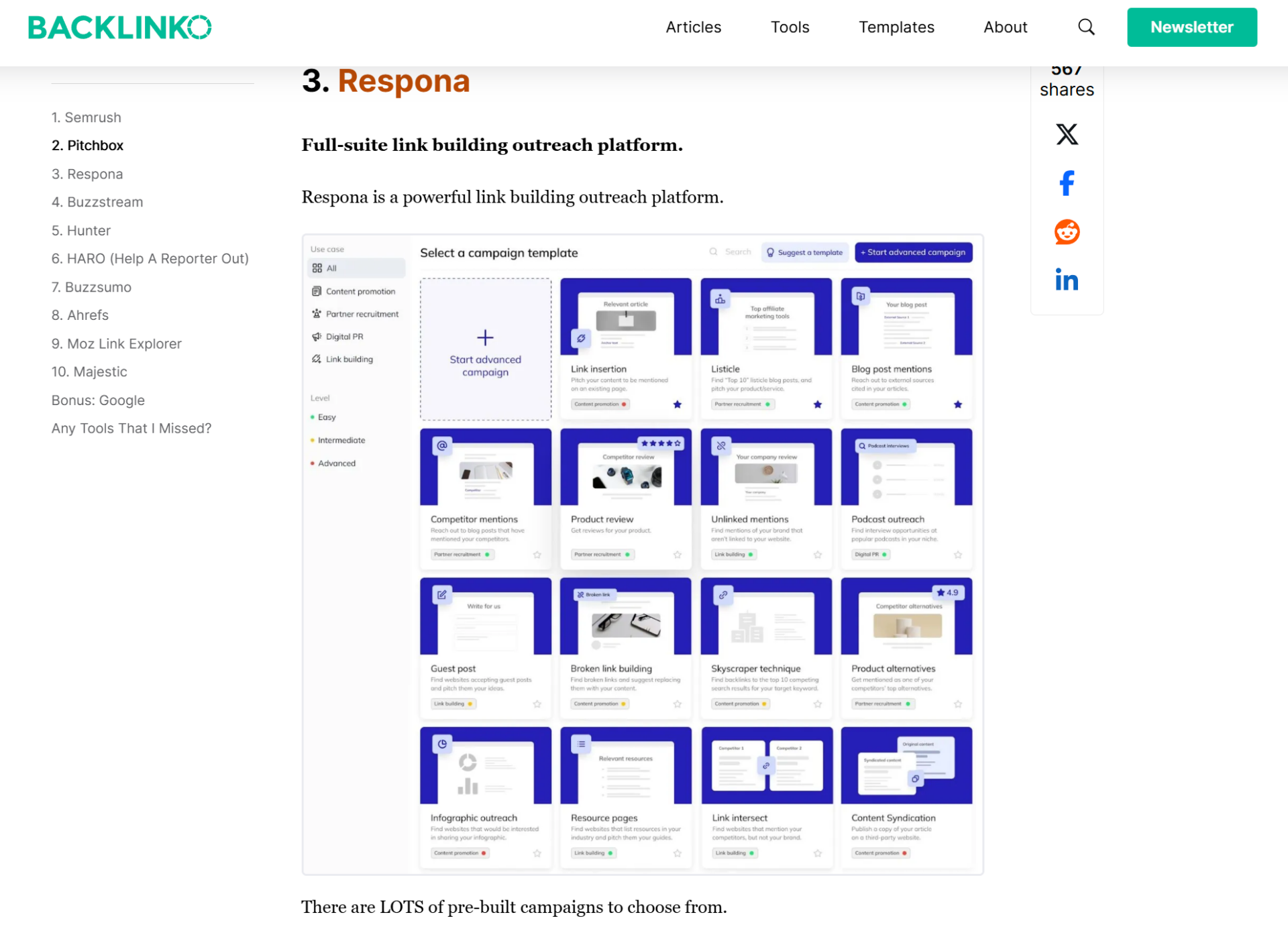
Those pages already rank, already get traffic, and are easy for AI systems to pull from because everything is clearly structured.
So when your brand shows up in those, you’re not just getting a backlink.
You’re getting:
- ranking signals
- referral traffic
- and visibility in AI answers
All from the same placement.
That’s why this type of link building works so well.
And it’s also why we built Respona the way we did.
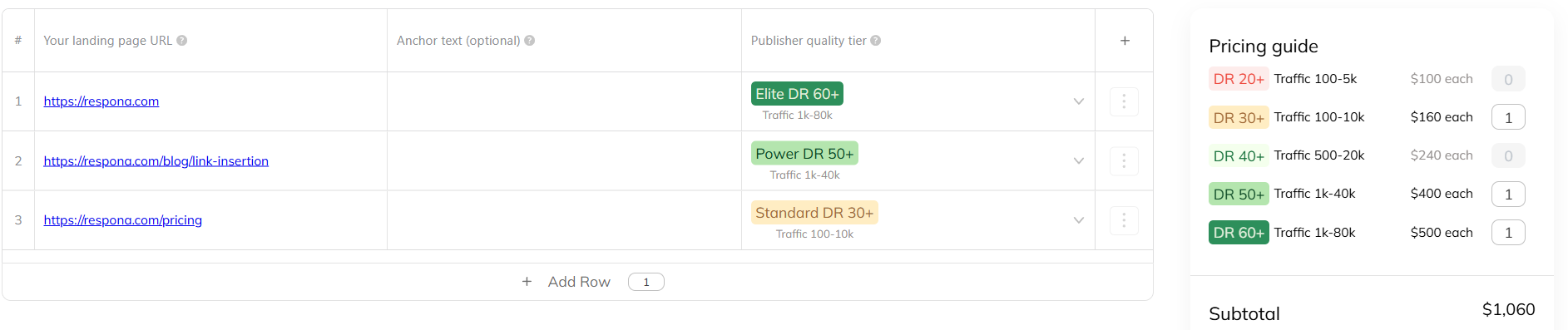
Instead of running outreach manually, you can just place an order with your target page and requirements, and we handle getting you placed on relevant content that already performs.
On top of that, the Campaigns feature shows you which pages are actually being used in AI answers right now, so you can focus on placements that are already driving visibility.
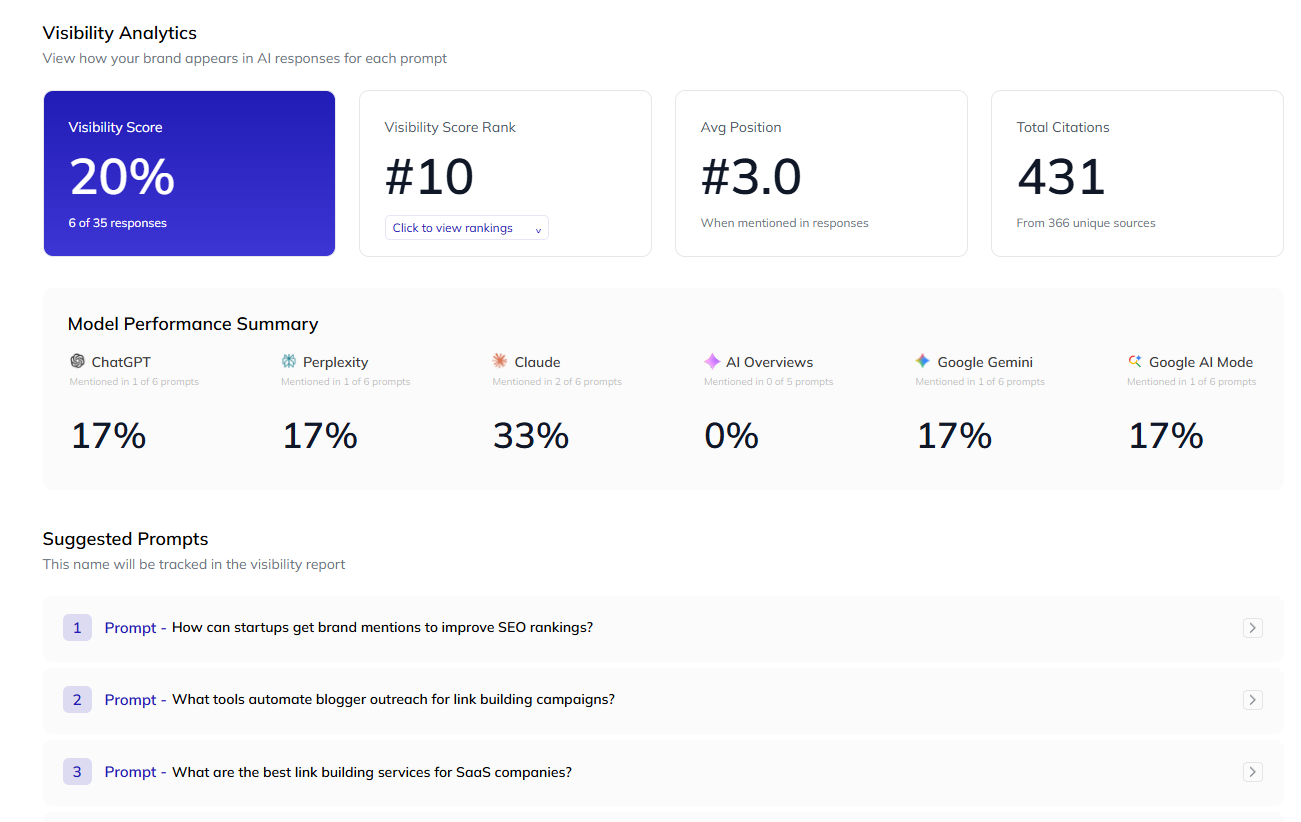
And it tracks your performance across 6 answer engines monthly.
So instead of guessing where to build links, you’re building them where they already matter.
Link building cheat sheet
Gain access to the 3-step strategy we use to earn over 86 high-quality backlinks each month.
Now Over To You
EEAT isn’t complicated.
It just forces you to actually know what you’re talking about.
If your content has real expertise, clear experience, and is actually trustworthy, you’ll be fine. AI doesn’t change that. It just makes it easier to scale the writing part.
What still separates you is input.
What you put into the content before it gets written.
And once that’s in place, the next step is getting it seen.
That’s where links still matter.
If you want to speed that up, you can place an order with Respona and get your content featured on pages that already rank and already show up in AI search results.
Frequently Asked Questions (FAQ)
What is EEAT in SEO?
EEAT stands for Experience, Expertise, Authoritativeness, and Trustworthiness. It’s a framework used in Google’s quality rater guidelines to evaluate content quality and determine what should rank in search results.
Is EEAT a ranking factor?
Yes, EEAT is considered a core ranking factor in Google’s algorithm. While it’s not a single measurable metric, it influences how content is evaluated by search engines and search quality raters.
Does Google penalize AI generated content?
No. Google has stated that AI generated content is acceptable as long as it meets EEAT standards and provides helpful content. The focus is on content quality, not how the content is produced.
What are the quality rater guidelines?
The quality rater guidelines are a set of standards used by search quality raters to evaluate content across Google search. They help define what qualifies as high quality content.
What is the role of expertise in EEAT?
Expertise shows that the content creator understands the topic deeply. It’s one of the most important parts of EEAT and a major factor in determining content quality.
Why is trustworthiness so important?
Trustworthiness is the foundation of EEAT. If your content isn’t trustworthy, it won’t rank, no matter how optimized it is. It affects user trust and overall performance in search results.
How does EEAT relate to AI search?
In AI search and AI Overviews, Google pulls information from authoritative sources. Content with strong EEAT signals is more likely to be selected and cited in AI answers.
What is considered high quality content?
High quality content is content that is accurate, helpful, and written with clear expertise and trustworthiness. It should fully satisfy the user’s query and provide a good user experience.
Does EEAT apply to all types of content?
Yes, but it’s especially important for YMYL content (Your Money or Your Life topics), where accuracy and trustworthiness directly impact users.
How can I improve EEAT on my website?
You can improve EEAT by:
- adding real expertise and personal experience
- improving content quality and structure
- building authority through link building
- maintaining consistency across your site and social media
Does link building help with EEAT?
Yes. Link building improves authoritativeness and trustworthiness by showing that other authoritative sources recognize your content.
What role does an author bio play?
An author bio helps establish expertise and trustworthiness by showing who created the content and why they are qualified to write about the topic.