Search engines and AI systems need ways to evaluate which sites deserve to show more prominently in search than others. One of the signals they use is backlinks.
This guide breaks down what backlinks are, the factors that affect their value, and proven ways to build them.
What Are Backlinks?
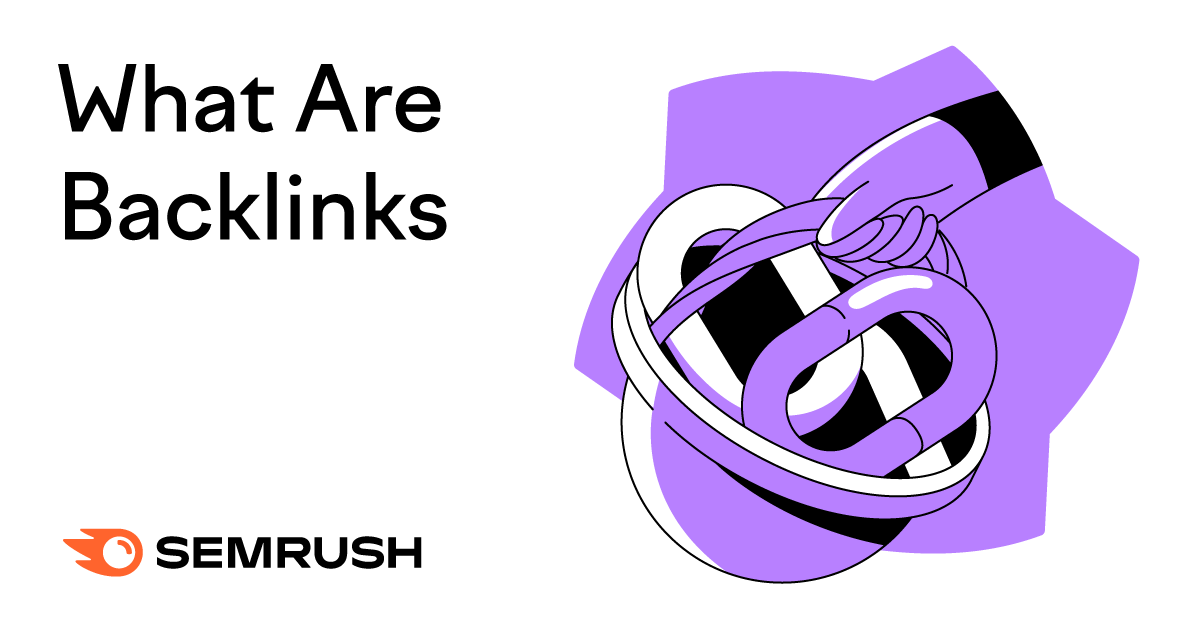
Backlinks are links from another website pointing to your site that signal trust and authority to improve your visibility in search results.
Plus, backlinks can also drive referral traffic from other websites to yours.
From the perspective of the site linking out, these are called external links, outbound links, or outgoing links. But when other sites link to your website, they become your backlinks.

You can acquire backlinks naturally when other sites discover and link to your content. Or you can proactively build them through outreach and by building relationships.
To quickly see your or any other site’s backlinks, use our free backlink checker tool.

Why Are Backlinks Important in SEO?
Backlinks are important in SEO and AI SEO because they signal that your content is reputable and that your website is authoritative.
Google looks at the quantity and quality of backlinks to gauge authoritativeness and use it when ranking search results.
For example, the top-ranking pages for “iphone reviews” in Google have thousands of backlinks:

And the corresponding domains have millions of backlinks:

The idea of gaining authority with Google through backlinks is tied in part to Google’s PageRank algorithm. (Note that PageRank isn’t the only way Google assesses authority.)
PageRank can be thought of as a measure of page authority. And pages pass authority (also known as link equity) to each other through links.
The higher a page’s PageRank, the more equity it can pass to the pages it links to. And this does not affect the linking page’s own perceived authority.

Backlinks are similarly important for AI search visibility. A Semrush study evaluating 1,000 domains shows having high-quality backlinks improves AI visibility.
And consider that Google’s AI Overviews and AI Mode are built on top of existing search infrastructure. Which means backlinks likely still play a large role in your visibility in Google’s AI search experiences.
Just be aware that Google has link spam policies to discourage unfair link building practices. And if you violate these policies, you may receive a Google penalty that harms your search visibility.
What Affects the Value of a Backlink in SEO?
Some backlinks are more beneficial for SEO than others, some have the potential to harm your rankings, and some probably have no impact.
Let’s explore the main factors that affect the value of a backlink in SEO:
Follow Status
When a backlink has a nofollow attribute indicating the publisher doesn’t want the link to be seen as an endorsement, the link can be less valuable for improving search visibility.
Publishers are able to suggest search systems don’t follow a link by adding one of these attributes to the link’s HTML:
- rel=“nofollow”: This indicates that the linking site doesn’t want to endorse the target site
- rel=“sponsored”: This shows that the target site paid for the link to be placed on the linking site
- rel=“ugc”: This indicates that the link appears within user-generated content (like forum comments)
Adding one of these attributes creates a nofollow link. Like this:
<a href="https://example.com/" rel="sponsored">Click here</a>
“Follow” links (sometimes called “dofollow” links) are links that don’t contain any of the above attributes. And while Google is more likely to follow these links, there’s no guarantee they’ll positively affect your SEO.
Plus, Google has said that even nofollow links can serve as hints for ranking purposes.
AI systems seem to place even less emphasis on whether a link is nofollow. Our research on backlinks in AI search shows that nofollow links have almost the same impact on AI visibility as follow links.
To see if your backlinks are marked nofollow, you can manually look at the HTML on the linking page. But it’s quicker to check your links with the Backlink Analytics tool.

If you find a link that’s marked nofollow, consider reaching out to the relevant contact and asking them to fix it.
Domain and Page Authority
The more authoritative the domain and page linking to your website, the more valuable a backlink can be for your search visibility.
For example, a backlink from a highly reputable site like the World Health Organization is likely to carry more weight than one from a small, little-known health blog.
It’s normal to accrue backlinks from sites/pages of varying authority. But it’s helpful to focus on high-authority sites that have many quality backlinks when you’rebuilding links to your own site.
While Google and AI tools don’t provide any metrics to gauge authority, Semrush’s Authority Score (AS) can be used as an approximation. It measures the authoritativeness of pages and domains based on:
- Link power: The quality and quantity of backlinks
- Organic traffic: The estimated number of monthly unpaid visits from search engines
- Natural profile: How natural (rather than spammy) their backlink profile seems to be
It’s also wise to try getting backlinks from websites that consistently publish well-researched, accurate, and helpful content. These websites are likely to be perceived as more authoritative based on user engagement signals and brand mentions.
Topical Relevance
Backlinks from websites and content that are highly relevant to you are best because they can appear more natural to search engines and more trustworthy to AI tools.
For example, Healthline has backlinks from reputable healthcare sites like the Centers for Disease Control and Prevention (cdc.gov) that are likely to benefit search visibility more than backlinks from similarly authoritative sports sites.

Plus, any visitors that come to your site by following highly relevant backlinks are more likely to engage with your content and even convert.
The Likelihood of the Link Being Clicked
Links that are likely to be clicked may pass more SEO value than links that are in places unlikely to receive clicks—it signals that the link is more important to users.
Google has a reasonable surfer model patent that discusses the likelihood of a link being clicked. It considers factors like:
- The positioning of the backlink: Backlinks that appear high in the main content are more likely to be clicked than footer links, for example
- Content quality: The higher the quality of the content and the backlink, the more likely the link is to be clicked
- Link density: The fewer the number of links on the page, the more likely your link is to be clicked
Google may use this reasonable surfer model as part of its link assessment.And if it does, then having your product be the top recommendation in a gift guide is more valuable than having it be the last entry in a list of 100.
Anchor Text
Anchor text is the clickable text that a link is attached to, and it can play a role in a backlink’s value.

Search engines use anchor text to better understand what the linked page is about. So, some marketers build lots of backlinks with keyword-rich anchor text in the hopes of improving the page’s rankings for those keywords.
For example, they might use unnatural anchor text like “buy men’s wedding shoes and wedding shoes for men online.” Or build dozens of backlinks with the anchor text “men’s wedding shoes.”
But using unnatural anchor text is a form of link spam that can lead to a Google penalty.
We recommend that you use descriptive but natural-sounding anchor text for your links. And avoid purposefully building lots of links with the exact same anchor text.
Link Schemes
Link schemes are efforts to gain SEO advantages by building unhelpful or spammy backlinks.
If you participate in link schemes, Google is likely to identify and ignore the resulting links. And if you use link schemes at scale, you may receive a penalty.
Here are some of the bad link building practices outlined in Google’s guidelines:
- Exchanging money, goods, or services for follow links
- Link exchanges (i.e., “link to me and I’ll link to you”)
- Using automated programs that create links to your site
- Placing links on low-quality directory sites
- Adding unnatural or unwanted links to forum comments
- Creating poor-quality content purely to get backlinks
While it’s unclear whether link schemes are equally detrimental for AI visibility, it’s always best to avoid them.
If you’ve previously engaged in any questionable practices to gain backlinks, use Semrush’s Backlink Audit tool. It helps you identify potentially toxic backlinks. And remove them, if necessary.
After setting up Backlink Audit, go to the “Audit” report and review the flagged backlinks.
If you find any harmful backlinks, send them to the “Remove” tab.From there, you can connect your mailbox and email the relevant website admins to ask them to remove your backlinks.

As a last resort, consider disavowing your links (i.e., formally asking Google to ignore them). Only do this if you have lots of potentially harmful links that you’re unable to remove and you have or are likely to receive a Google penalty.
Disavowing links incorrectly can harm your site’s search visibility.
5 Ways to Build Valuable Backlinks for SEO
There are many ways to build valuable backlinks for SEO.
Here are five link building tactics to try:
1. Create Useful Resources
Create useful resources that are hard for others to replicate or improve upon, so publishers have a good reason to cite your website in their content.
For example, Healthline has an in-depth article about how much water you should drink.It’s cited as a source in many related articles, like this one from HuffPost:

It’s crucial that the resources you create are highly relevant to your brand because:
- It makes your content more trustworthy and more likely to get linked to
- It means you’re more likely to attract links from topically relevant sites
- The content is more likely to generate other business benefits (like conversions from referral traffic)
If you need inspiration, see which of your competitors’ pages attract the most backlinks by analyzing their domains in Backlink Analytics and going to the “Indexed Pages” report.

High-quality content like this can attract backlinks naturally. But you can also use outreach tactics to build links.
2. Try Broken Link Building
Broken link building is the process of finding backlinks that don’t work (e.g., because the target page was deleted) and suggesting a relevant backlink to your website as a replacement.
Broken link building works well because publishers don’t want broken links on their site. And you’re offering them an easy solution that will improve their user experience.
To find broken links you can suggest alternatives to, look for links that were supposed to point to your site in the first place.
Go to the “Indexed Pages” report for your domain in Backlink Analytics and apply the “Broken Pages” filter.

If you have a good replacement for any broken page you see here, click the corresponding number in the “Backlinks” column.
Then, decide which broken backlinks are worth trying to recover (if any) based on the authority of the page, the context of the link, etc.

Finally, email the relevant contact(s) to let them know about your broken backlink and your suggested replacement. Here’s an email template you can use:
Subject line: Resource suggestion for [Page Title]
Hi [Name],
I was reading your article on [topic/page title] and noticed that the link to [describe the resource briefly] appears to be broken.
Here’s the specific link: [broken URL]
I recently published a similar resource that covers [brief description of your content]. If you think it would be helpful for your readers, here it is: [your URL]
Either way, I wanted to give you a heads up about the broken link.
Best,
[Your name]
3. Answer Relevant Media Requests
Finding and responding to relevant media requests can be an effective way to build website backlinks because creators often credit their contributors with a link like this:

You can find media requests to respond to on websites like Help a Reporter Out (HARO), Qwoted, and Featured:

Generally, you need to follow these steps when you want to use a platform to respond to media requests:
- Sign up to your chosen platform(s) and create a personal profile
- Opt in to alerts about relevant requests and monitor your email inbox
- Respond to relevant requests as quickly and helpfully as possible
Responding to media requests requires time and patience, as you are essentially competing with other sources also trying to get featured in these publications. Check out our guide to HARO link building to learn how to use this tactic effectively.
4. Replicate Your Competitors’ Backlinks
Replicating competitor backlinks can be a highly effective tactic because it means using methods that have already worked.
To get started, add your domain and up to four rival domains to the Backlink Gap tool.
You’ll see the “Best” link building prospects by default. These are domains that link to all analyzed competitors but not to you.

Click the arrows in the corresponding rows and columns to learn more about your competitors’ backlinks. And determine if those links are possible (and worthwhile) to replicate.

For example, if your competitor has a backlink because their CEO gave an interview to the site, you might want to contact the publisher to see if they’re interested in interviewing your CEO, too.
5. Capitalize on Business Relationships
Use your existing business relationships to try to get backlinks placed on your partners’ websites.
For example, you can get backlinks through existing relationships by:
- Supplying case studies to service providers
- Providing testimonials to freelancers
- Getting featured as a preferred vendor on distributors’ websites
- Announcing joint projects on partners’ blogs
- Getting listed on trade association websites
To get started, list all the website owners that your business has an affiliation with. Then, explore their sites to look for link building opportunities.
Once you have an idea, consider who at your business has the strongest relationship with the partner. Ask them to review the idea and propose it to their contact.
Keep Track of Your Link Building Efforts
There’s a lot to keep track of when building backlinks for SEO, but Semrush’s Link Building Tool makes things easier by allowing you to:
- View all your link building prospects and associated metrics in one place
- Track the status of your outreach emails and responses
- Record and monitor the backlinks you acquire

Sign up for a free Semrush account to try the Link Building Tool.
![What Is Prompt Tracking? [Tips and Workflows To Do It on a Budget]](https://mgrowtech.com/wp-content/uploads/2026/03/Practical-Marketer-Blog-OG-Image-Crystal-Carter-LLM-Prompt-Tracking-350x250.png)