In just 10 days over the summer of 1854, 500 people died of cholera in the Soho neighborhood of London. The city’s population had more than doubled to 2.3 million people in the first half of the 1800s, and its sewage system could not keep up. But the streams of human waste flowing into the street and seeping into the water supply were considered unconnected to the cholera crisis. The prevailing theory of the day was that bad air — miasma — caused illness.
The English physician John Snow thought differently. Five years before the outbreak he had suggested that the diarrheal disease was actually caused by a waterborne infection rather than miasma. He soon had a chance to test his theory, mapping the location of cholera-related deaths in Soho. Snow realized that the victims used one specific water pump on Broad Street, and he persuaded city officials to remove the pump’s handle to prevent anyone else from using it. With the source eliminated, the outbreak, which had already passed its peak, ended in days.
Though it took years for Snow’s theory to achieve widespread acceptance, his approach is central to modern epidemiology. Investigating the source of outbreaks can prevent new cases, but it also gives us a better understanding of diseases and helps manage public fear. Even when infections have stopped, outbreak investigations are useful to develop strategies for preventing — and, failing that, responding to — future outbreaks.
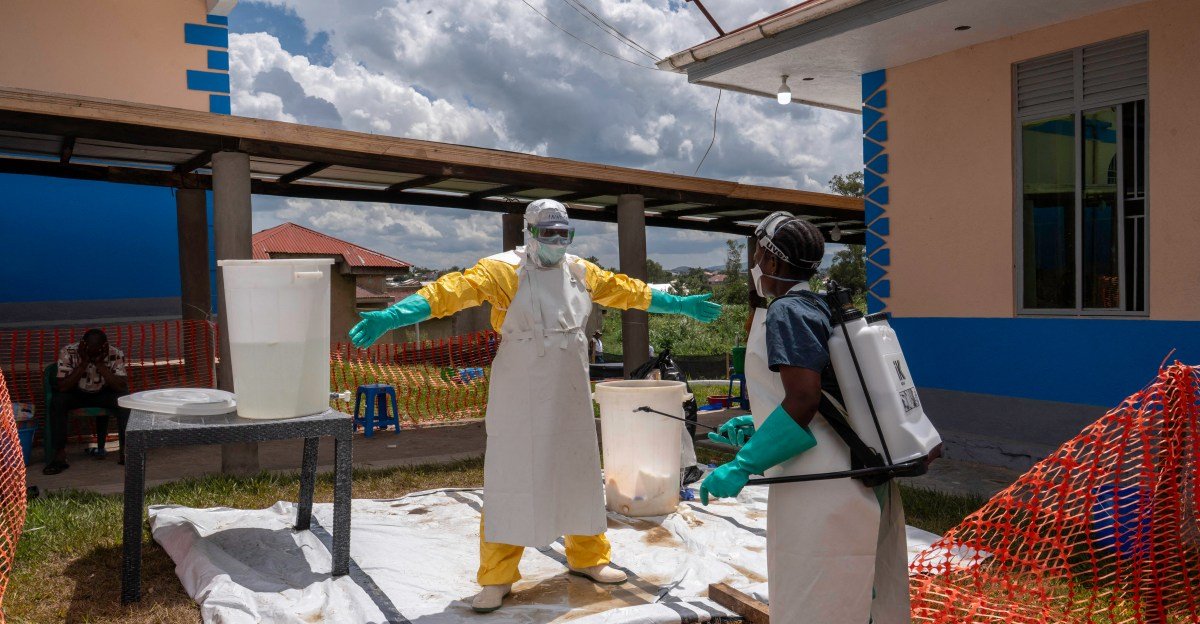
Two recent outbreaks have demonstrated the necessity — and the challenges — of such investigations, almost two centuries after Snow’s pioneering work. The first was the hantavirus outbreak that dominated headlines last month. Then, on May 17, the World Health Organization (WHO) declared a public health emergency of international concern, the highest level of global health alert, in response to an outbreak of the deadly hemorrhagic disease Ebola in the Democratic Republic of the Congo (DRC), which, as of June 2, had killed 62 people, with 363 confirmed cases. It’s the 17th Ebola outbreak in the DRC and one of the largest on record. It has spread to neighboring Uganda, where, as of June 4, there are 16 confirmed cases, one confirmed death, and one probable case and likely death.
The first confirmed case, a healthcare worker in Bunia, DRC, died on April 24, but the outbreak may have been spreading undetected since as early as January. Investigators haven’t identified patient zero — the index case — and still don’t know how this outbreak began. Abdou Sebushishe, a doctor working with the International Medical Corps in Goma, DRC, told CBS News that up to 20 percent of current patients are themselves healthcare workers. He estimated that it may be more than six months before the outbreak could be controlled, given that the disease is outpacing the current response.
Part of the challenge is that the current outbreak is caused by the Bundibugyo strain of Ebola, which is relatively uncommon and has a genome about 30 percent different from the Ebola viruses that usually spark outbreaks. Testing for more common variants didn’t pick up the Bundibugyo virus right away, and ongoing conflict in the DRC contributed to the delay and continues to make contact tracing difficult. Unlike other strains, the Bundibugyo virus has no approved therapeutics or vaccines.
In the past, researchers have had some success identifying the index case of Ebola outbreaks. Investigators managed to identify the first patient of the 2014-2016 West Africa Ebola epidemic — the largest and deadliest in history, with more than 15,000 confirmed cases and 11,000 deaths — as a toddler in the west African nation of Guinea. What’s harder to definitively determine is how the boy, who died in December 2013 before the outbreak had been identified, contracted it. It’s possible that he came into contact with an Ebola-infected fruit bat or its droppings while playing in a hollow tree, but scientists can’t say for sure.
Investigating outbreak origins is inherently fraught and can lead to the international fingerpointing that characterized much of the Covid-19 pandemic. But it’s not primarily about assigning blame. Instead, knowing where and how outbreaks began informs how we respond to them, halt transmission, communicate to the public, and prevent them from happening again. It can identify high-risk regions and influence how public health officials monitor a disease. As the recent Ebola and hantavirus outbreaks demonstrate, however, that effort is often complicated by a host of factors, and the resulting uncertainty makes it that much harder to manage public health concerns efficiently and well.
The curious case of Legionnaires’ disease in New York City
Our epidemiological tools have come a long way since John Snow used hand-drawn maps to identify the source of the Soho cholera outbreak. The value of these new tools lies in the information they generate — which is crucial to fighting outbreaks.
Take the case of New York City’s biggest — and deadliest — outbreak of Legionnaires’ disease (LD), a bacterial infection that causes a severe pneumonia and has a fatality rate of 10 percent. By the time public health investigators detected it in the summer of 2015, dozens had already been hospitalized. It was the second-largest LD outbreak in US history, infecting 138 people and killing 16.
The initial epidemiologic investigation started with contact tracing to find the source of the disease, but the results didn’t suggest any shared exposures. Cooling towers, which provide water for air conditioning systems in the form of an inhalable mist, had been involved in previous LD outbreaks, but officials didn’t know how many cooling towers there were in the city or how well-maintained they were.
Investigators ultimately located and tested 55 cooling towers in the South Bronx, where cases were clustered, for Legionella. They identified the source: a single cooling tower atop the Opera House Hotel. The hotel disinfected the tower, and New York’s City Council passed new regulations requiring every building in the city with a cooling tower to register it with the health department, test it every 90 days, and remediate it if Legionella was found.
Within a year, the health department inspected almost 80 percent of the city’s towers — detection and disinfection that would have never been conducted otherwise. No large LD outbreaks emerged — until inspections declined in 2025. “Regulations do not enforce themselves,” Jay Varma, a physician and epidemiologist who served as incident manager for the 2015 New York outbreak, wrote last year in Healthbeat. “The Covid pandemic has sparked a strong backlash against government authority, and austerity budgets are now starving public health agencies. Infections may be inevitable, but outbreaks are a choice.”
Cholera and LD are waterborne, but Ebola and hantavirus, which first cross over to humans from animal reservoirs, present a different challenge.
The challenge of hantavirus and Ebola
“The end of the world, the beginning of everything” is the motto of Ushuaia, Argentina, the southernmost city on the planet, where tourists flock to watch birds and embark on cruise ships. It’s the main gateway to Antarctica, making up 90 percent of all cruise departures to the continent.
It’s here that a Dutch couple may have contracted the Andes virus, the only strain of hantavirus known to spread from person to person, before sparking an outbreak on the MV Hondius. The Argentinian government’s prevailing theory is that the couple got infected while birdwatching at a landfill in Ushuaia before the cruise, coming into contact with the rodents that carry the Andes strain.
“The current theory of a couple birdwatching in southern Argentina may not be plausible, because the [long-tailed pygmy] rice rat that is responsible for spreading the Andes strain of the virus is usually found in northern Argentina or Chile, and we know the birdwatching at the landfill occurred in the southern part of Argentina,” Omer Awan, a physician and public health expert, told me over email. There have been no recorded cases of hantavirus in Tierra del Fuego province, where Ushuaia is located, before.
“Understanding the origins of the outbreak will be helpful in guiding interventions like rodent control, isolation protocols, and…how the rare Andes strain of Hantavirus is transmitted,” Awan said. “[And] identifying the source of the [2026] ebola outbreak can influence response strategy and how public health officials monitor the virus.”
Delayed detection and human movement — especially for illnesses like hantavirus and Ebola that can incubate over the course of weeks — make tracing the source of an outbreak difficult, even in the best of circumstances. We still don’t know the original source of the first Ebola outbreak in 1976, which occurred in two simultaneous waves. Debates still rage over whether Covid-19 emerged naturally through zoonotic spillover — the virus jumping from an animal host to humans — or if it potentially escaped from a lab in an accident. We know that the hantavirus and Ebola outbreaks are natural in origin, but there are still international efforts to shift the “blame” from Argentina to neighboring Chile, especially with economic interests on the line.
Such spillover events have only become more likely as humans destroy ecosystems and infringe on animal habitats. Climate change exacerbates existing infectious disease risk. “Because of our choices as a society, there’s a one-in-five chance that another pandemic will occur in the next decade that will kill at least 25 million people,” Neil Vora, the executive director of Preventing Pandemics at the Source coalition, wrote in Time Magazine.
Determining the source of outbreaks is even more difficult — and politically perilous — in the post-Covid era. The US and Argentina have pulled out of WHO. Global health funding cuts, on the part of the US as well as other countries, have weakened our biosurveillance architecture and ability to effectively respond to infectious disease.
Compared to Covid, the scale of the 2026 Bundibugyo and hantavirus outbreaks are small. It’s still proving hard to get answers. That’s going to be a serious problem whenever the next pandemic arrives — and it is a matter of when, not if.
An evolving threat landscape
Although we face escalating spillover risks from habitat destruction and climate change, we can’t count on the next global infectious disease threat being naturally occurring in origin when it does come.
“It’s very clear that artificial intelligence capabilities are advancing incredibly rapidly,” Jaime Yassif, senior advisor for global biological policy and programs at the Nuclear Threat Initiative (NTI), told me. “[That could] make it easier for novice actors to engineer pathogens that we [already] know about or for sophisticated actors to engineer novel pathogens that are more dangerous than what’s found in nature.”
If there is an outbreak of uncertain origin — where it’s unclear if it’s natural, accidental, or deliberate — we lack robust international mechanisms that can investigate the source and quickly arrive at a conclusion. That would make it harder to address the source proactively, whether that means stopping future natural spillover events, preventing lab accidents, or holding bad actors to account.
Public health professionals would need to take additional precautions if there was a risk of a deliberate outbreak, as we saw with the 2001 anthrax attacks, where letters laced with Bacillus anthracis were sent in the mail, infecting 17 people and killing five. A naturally-occurring anthrax exposure would have required a different response, since a bioterrorism investigation has to contend with the additional challenge of determining criminal responsibility.
And as we’ve seen with the debates around Covid-19 origins, suspicion that something was caused by human activity can be incredibly corrosive to international trust, making necessary geopolitical cooperation in the face of outbreaks significantly harder.
NTI identified that preparedness gap and proposed a Joint Assessment Mechanism to identify the source of outbreaks of uncertain origin. It would be housed in the UN Secretary-General’s Mechanism for Investigation of Alleged Use of Chemical and Biological Weapons (UNSGM) in order to pull together different components of the UN system and bridge security and public health.
That project (which I supported and advocated when I worked at NTI from 2022 to 2024) is currently on pause. “We still think it’s a vital gap and really important, but we just couldn’t get the political will to move it forward in the system, notwithstanding the significant support for it internationally in various quarters,” Yassif said.
We are simply unprepared domestically and internationally to prevent, detect, and respond to global infectious disease threats. Emerging infectious disease outbreaks threaten us all, and we are nowhere near where we should be in order to protect vulnerable populations and countries around the world. While the current Ebola and hantavirus outbreaks are very unlikely to become pandemics on the scale of Covid-19, they’re still dangerous and deadly. Unless we can determine where and how they began, we’ll be ill-equipped to stop them from recurring. And next time, things could be far worse.