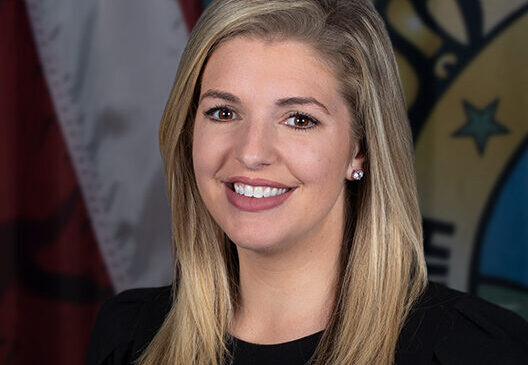
Amanda Granit of the Hillsborough County Sheriff’s Office shares why thinking like a reporter can change how organizations handle crises and media scrutiny.
Amanda Granit is the chief communications officer for the Hillsborough County Sheriff’s Office, where she oversees media relations and internal and external communications. Granit joined HCSO in 2019 and was promoted to chief in 2022.
Before stepping into law enforcement, she spent nearly a decade as an award-winning investigative journalist in New York, uncovering government waste and mismanagement and earning both a New York State Emmy Award and a National Edward R. Murrow Award. When the journalism landscape began to change, she realized what she loved most wasn’t just reporting — it was communicating, advocating for the community and sharing information that could drive change and improve safety, she told Ragan.
Granit and her team at HCSO won Ragan’s Zenith Award in crisis communications.
You moved from investigative journalism into law enforcement communications. What habits from the newsroom still guide how you do this job?
Part of being a good communicator is knowing your audience. I know what reporters are looking for, even when I’m putting together something as simple as an overnight law enforcement effort. For example, we had a fire overnight and used our Bambi bucket, which scoops up water. I knew it would make a great video — our morning stations would love a 15-second piece of content — and it gets us out there in a positive way.
It’s really knowing how the newsroom operates and what its limitations are. We’ve had many conversations where we say something would be a great story to push out, but we also look at the time and realize their crews are assigned and done — we’d just be feeding stuff into the wind. Being able to look at that strategically and make an informed decision has been invaluable.
From a reputation management perspective, being a former investigative journalist helps me see around corners when we’re heading down a road with two decisions and two outcomes. I can help leadership make an informed decision about the public perception consequences of both. Ultimately, it’s up to leadership at the sheriff’s office to make those calls, but I can be a strong adviser in the room and bring a different perspective — especially in law enforcement, where people are thinking cop brain and investigations — and help them focus on public perception.
What’s one lesson you learned the hard way that changed how you lead during high-pressure situations?
Always trust my gut instinct. It can be easy, especially as a new leader, to sit in a room full of people who have been in leadership longer than you, observe the conversation, and let it change your original perspective. I’ve since adopted a rule: In any situation like that, I’ll say, “I’ll do whatever you would like me to do, but I’m going to give you my opinion next.”
That way, they know I’m a team player. If a decision is made, I will carry it out, but I’m also going to be honest. Any time I’ve gone against my gut instinct and stayed silent, I’ve found that we might have gone in a different direction if I had spoken up. Having confidence in those moments — for your team, your leadership, your agency or sheriff’s office — really matters. It does take time to get there. Confidence is very much a fake-it-until-you-make-it process.
Now, I tell anyone stepping into leadership that this is my biggest piece of advice: Trust yourself, and be willing to be a team player. You’re not always going to win the battle, but you have to be willing to be the person in the room with a different opinion. That’s really important.
How has your background in investigative reporting shaped how you handle scrutiny, criticism, or hostile questions?
I think it’s twofold. First, there’s the emotional side. I don’t have an emotional response to tough questions, and that’s key, because that’s often where people go sideways in an interview — they’re offended by the question or take it personally. Sometimes it is personal, like, ‘Why did you make this decision?’ But at the end of the day, the journalist has a job, and that job is to ask those questions. If a question is tough, there’s probably some level of accountability that needs to be addressed.
The key is not taking it personally and staying grounded in your answer, using whatever techniques you need — whether that’s block-and-bridge, talking points or key messages. From a communications standpoint, you can’t let emotion take over. You have to think clearly. I can do that, in part, because I can usually foresee the questions. If my leadership has to answer tough questions, I grill them beforehand. I always tell them, “This isn’t Amanda, your chief communications officer. This is Amanda as the reporter, and it’s about to get uncomfortable.” I’d rather be the pit bull in the office and have my leadership prepared than tell them they’re ready and then watch them get destroyed. No one wants to see their principal getting hammered with questions.
I also understand the importance of room control. I’ve been on the reporter side when no communications strategist is managing the room, and someone is just getting peppered with questions and drowning. I will step in front of the cameras and be the bad person — it will never be the sheriff. I’ll look like a fool if I have to so questioning can stop. I’ve only had to do that a couple of times, because he listens when I call last question. But you have to know all the ways things can go wrong so you can prepare everyone. Most of the time, you’re preparing for situations that never happen, and that’s important.
What does “proactive storytelling” actually look like in an organization like a sheriff’s office?
I think it’s one of the most critical things we do, and it can look very different in different situations. Sometimes it’s as straightforward as humanizing the badge — telling the stories of our deputies and the people who work here. Other times, it’s more nuanced, like showcasing technology before we ever use it in a critical incident. When we have a new tool, we should be sharing it with the community and our media partners well in advance, so people understand it’s available. No one is listening to explanations about new technology in the middle of a crisis.
All of this happens through small, consistent touchpoints. For a sheriff’s office, people usually interact with us on the worst day of their lives, no matter which side of a situation they’re on. Proactive messaging allows us to build relationships outside of those moments — by humanizing the badge, connecting with the community and continuing to cultivate trust. Sometimes that means highlighting what we’re investing in to improve safety. All of those touchpoints help build and strengthen relationships with the community. That’s proactive messaging.
What skill do you think communications leaders in public safety will need most in the next five years?
I think there are a couple of answers. First is AI. You have to be willing to embrace it. I tell everyone on my team that we’re not going to be replaced by AI, but we will be replaced by someone who knows how to use it effectively. In public safety and government, there are important safeguards that have to be in place — you can’t just drop police reports into generative AI. That isn’t responsible use. But when used responsibly, AI can help improve workflows, move faster and prepare for crises.
I also believe internal communications has never been more important. We often focus on external messaging, but we have to make sure we’re communicating with our people, telling stories internally and making sure they feel appreciated and validated. As a communications leader, you have to look at the entire structure. There will be times when external communications take priority and others when internal communications do, but the goal is to keep both moving together at the same pace.
What keeps you grounded?
I’m very fortunate to work with a team that is incredibly talented and strong. It allows me, in stressful moments, to say, “I’m stressed and overwhelmed, and I need a minute to get back in the game.” Everyone understands and steps in. That’s true for anyone — we all feel that way at times. Having the strength to say you need a minute, whether that’s venting in someone’s office, taking a walk around the building or calling my husband to complain, is important.
Being able to truly express yourself is how you build resiliency. Bottling everything up and pretending nothing bothers you doesn’t change anything. It also sets unrealistic expectations as a leader, making your team feel like they’re the problem because they experience stress. Showing what might seem like vulnerability is actually a strength, and it makes the entire team stronger.
What excites you about the work you do?
We just had a huge weekend here in Tampa Bay, with about 350,000 people at a parade called Gasparilla — all these adults dressed as pirates. It felt like the best day at work. I was walking in the parade, taking pictures of the community supporting our deputies and the sheriff throwing beads. It’s about finding joy in those moments, especially in a law enforcement agency, where if you don’t find joy in the happy moments, you’ll let too many of those sad moments bookend on each other.
I try to find joy around every corner. One day it’s spending time on the Marine Unit, another day it’s being in a helicopter. I think that goes back to the journalist in me — telling these stories and giving people a glimpse behind a curtain they’d never see otherwise. There are so many stories here, so many people, and so many different paths that bring them to the sheriff’s office. We’ll never run out of stories.
Isis Simpson-Mersha is a conference producer/ reporter for Ragan. Follow her on LinkedIn.
The post ‘Trust your gut’: what PR leaders can learn from a CCO in law enforcement comms appeared first on PR Daily.