[ad_1]
Plus: Recipe makers push back against AI slop; Satya Nadella positions Microsoft as a pro-human AI; Bed Bath & Beyond hunts for oldest coupon.
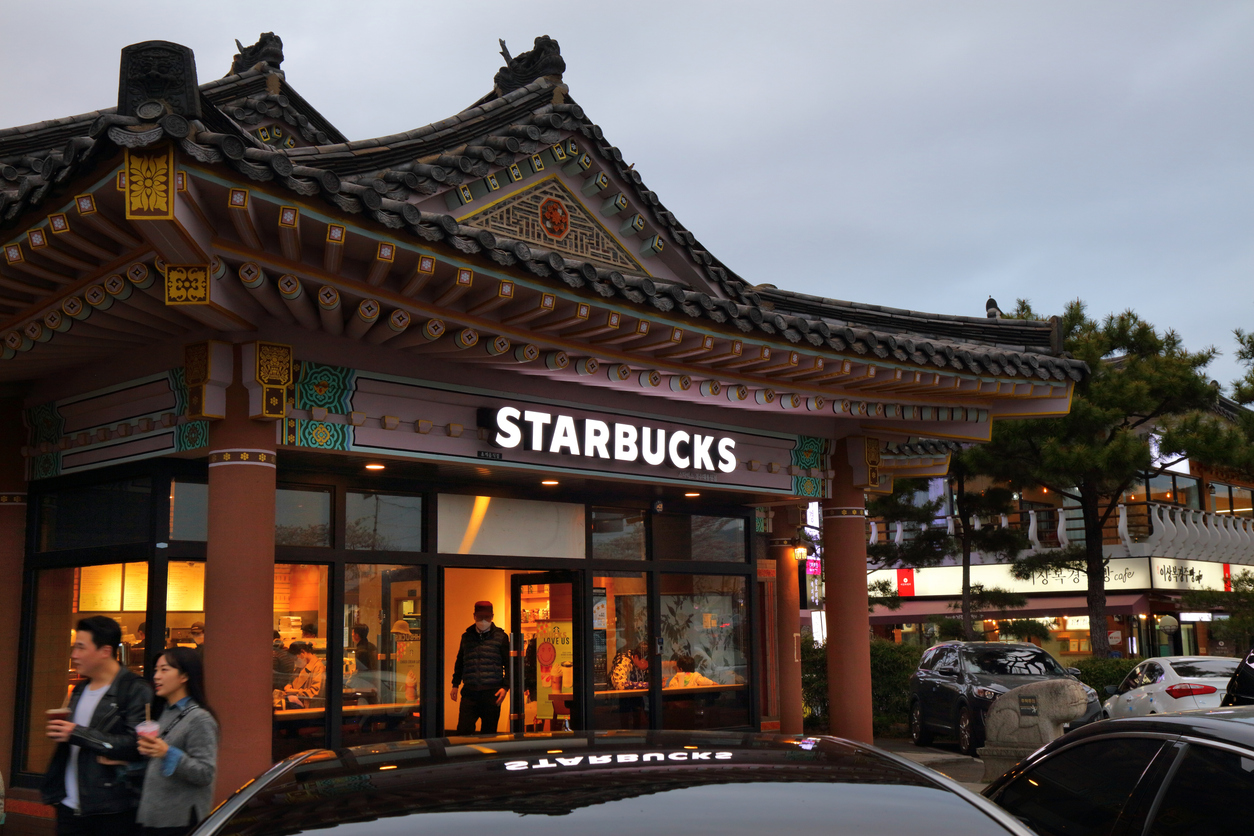
Earlier this year, Starbucks in South Korea earned public outrage by launching a line of tumblers called “Tank Day” on May 18.
The issue is that that date is the anniversary of an infamous anti-democratic crackdown in 1980 that left at least 600 people dead — many of them killed with tanks.
The CEO of Starbucks South Korea was fired in the wake of the marketing disaster. The company offered apologies to the families of victims. The global Starbucks corporation also weighed in with its own apology: “We recognize the deep pain and offense this has caused, particularly to those who honor the victims, their families and all who contributed to Korea’s democratization.”
Now, as another act of penance for the misstep — which the company said was caused, in part, by the use of AI without appropriate vetting — every Starbucks in South Korea closed early to train baristas on “historical awareness and cultural sensitivity.”
Why it matters: Training baristas on cultural sensitivity is a bit of a head-scratching PR move in the wake of this particular snafu.
The insensitivity arose not from a barista, but from a marketing team within Shinsegae Group, the retail company that owns Starbucks South Korea. Their use of AI to brainstorm without checking the context of an event that likely occurred before they were born was the misstep, not anything done by an employee pulling an espresso shot.
The PR strategy feels like it was an attempt to emulate American Starbucks’ early close of all stores in 2018 for racial sensitivity training after two Black men were arrested in a Starbucks for sitting at a table without buying anything.
In that case, the problem was caused by frontline employees. Other employees could easily make the same mistake.
But in the South Korean situation, frontline employees weren’t involved. Their historical knowledge or cultural sensitivity just weren’t relevant. While these are nice to haves, the choice to close stores for their training comes across as performative rather than meaningful.
When seeking to recover from a mistake, it’s important that the actions taken actually address the problem. Otherwise, you risk alienating both the public and your employees who are atoning for something they did not do.
The Scoop, in your inbox: Get our free daily newsletter
How media brands are combatting AI slop
The internet is now awash with AI-generated recipes — some of which are fine, some of which end in disgusting disasters. This is a major problem for recipe makers, such as People Inc., whose suite of magazines and websites make it one of the largest recipe creators in the U.S. However, the decline of search traffic as AI bots take over has led the company to double down on recipe creation, betting that human-made creations will triumph over machines in the long run.
“A.I. can’t smell what something smells like,” Sid Evans, the editor in chief of Southern Living, told the New York Times. “It can’t taste. It doesn’t understand nostalgia. And I think we are able to communicate all of that, and the expertise that we have.”
Rather than packing up and giving up, the company is instead pivoting to social media and finding new ways to reach audiences with things that feel real. There will always be an audience for people who eschew the automated and want authentic human experiences.
Microsoft’s Satya Nadella calls for ‘earning the social permission’ of AI
Microsoft CEO Satya Nadella is acknowledging that AI has a pretty big PR problem at the moment. “You can’t say, hey, all white-collar jobs are gone and this could even be a weapon and we will use all the power to build data centers,” he told the Wall Street Journal. He also criticized companies which use AI as a pretext for cutting jobs. “No, how about we think about reorganizing the jobs?” he said.
Nadella is choosing a different messaging path for Microsoft than other AI juggernauts, such as Anthropic, which consistently warns about the collapse of the information economy and the development of mega weapons due to AI. By choosing a more optimistic, cheerful stance, he’s aligning Microsoft as a tool for improving how work gets done rather than a replacement for people.
The messaging has to be backed up by action. But at the moment, it’s a compelling bit of counter-messaging that’s earning headlines.
Does Bed Bath & Beyond accept expired coupons?
I once worked at Bed Bath & Beyond. People would bring in huge stacks of ancient coupons, dog eared and torn. We’d accept them all, no matter how out-of-date they were.
The practice came to an end as the company went bankrupt. But now, as the brand is being resurrected and physical stores are reopening, the company is honoring all of the iconic coupons once again. They’re even holding a contest to find the oldest coupon in existence — one lucky hoarder will take home a $100,000 home renovation.
Bed Bath & Beyond is honoring its history — albeit at the cost of 20% off. It’s a smart bit of PR, tying itself to its past and reminding customers of its resurrection. But can a company stand with such deep discounts forever? There has to be a balance between PR and business. Does this tip too far in the wrong direction?
The post The Scoop: Starbucks in South Korea shutter early for training amid ‘Tank Day’ fiasco appeared first on PR Daily.
[ad_2]
Source_link