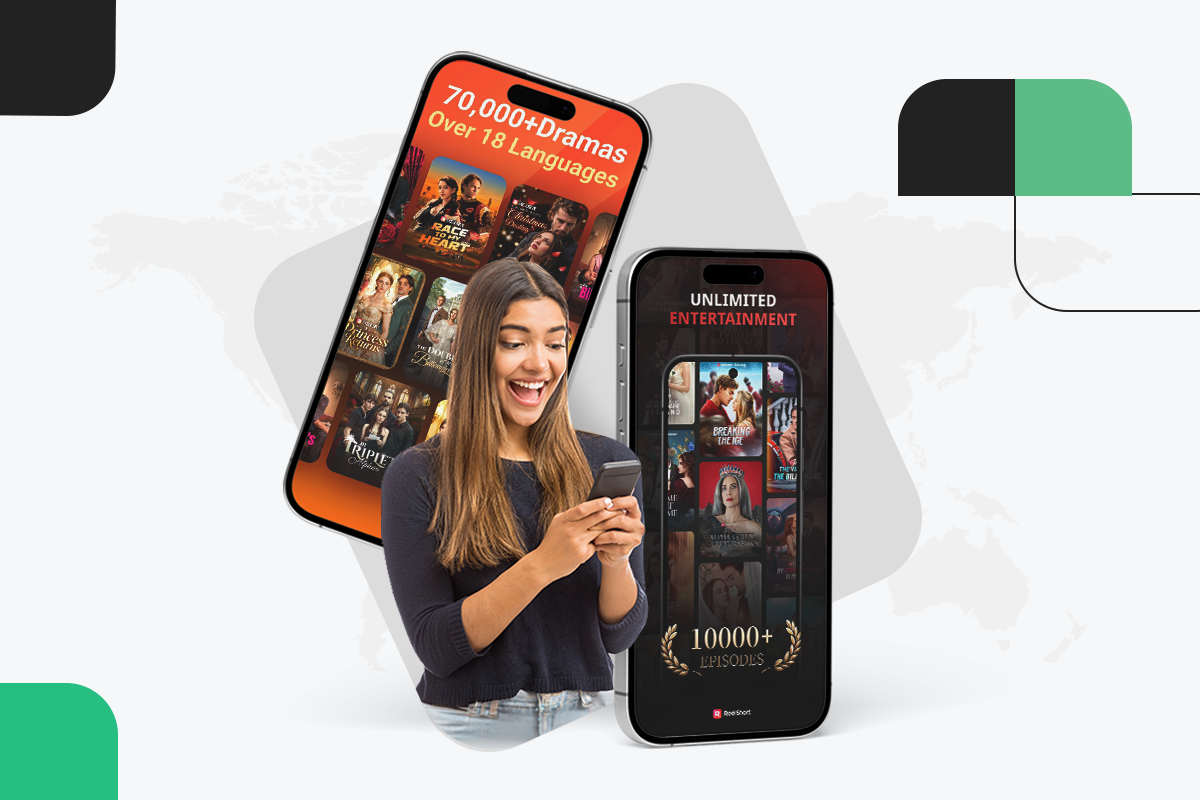
You’ve seen them in your feed: those vertical drama clips where the acting is a bit too intense, the plot is wildly dramatic, and the production feels like a high-budget soap opera filmed exclusively for a smartphone. Maybe it’s a billionaire hiding his identity to test his “evil” fiancé, or a long-lost heiress seeking revenge after being mistreated by her stepmother. The acting is sometimes “weird,” the dialogue is campy, and the cuts are jarringly fast.
If this sounds familiar, you aren’t alone. You are part of a massive global phenomenon. What started as a niche trend has exploded into a $11.3 billion industry as of early 2026. With over 1.2 billion cumulative downloads globally, these apps, like ReelShort, DramaBox, and ShortTV, are no longer just a “weird” corner of the internet. They are the new frontline of digital entertainment, fundamentally changing how we consume stories.
The Meteoric Rise: From “Vertical Cinema” to Global Domination
The short-form revolution didn’t happen overnight. It was a perfect storm of technological maturity, a radical shift in human attention spans, and a business model imported from the East that perfected the “micro-transaction” of storytelling.
The Death of the “Wait”
Historically, television required an appointment. Streaming made it “on-demand,” but it still required a 20- to 60-minute time commitment. Short-form drama apps have effectively killed the “barrier to entry.” Each episode lasts between 60 and 90 seconds, specifically designed to fit into the “cracks” of our daily lives; waiting for the microwave, sitting on the bus, or during a quick work break.
The Data Behind the Boom
The financial scale of this “snackable” content is staggering. According to recent 2025 and 2026 market analysis:

The “China-to-West” Pipeline
This trend didn’t start in Hollywood; it started in China (known as micro-dramas or zhuandian). Companies like COL Group realized that the high-intensity pacing of Chinese web novels could be translated into vertical video. They took these scripts, localized them with Western actors and settings (often filming in Los Angeles or Atlanta), and found that the psychological triggers for a “revenge plot” are universal across all cultures.
The Psychology of the Swipe: Why We Can’t Look Away
Why do we keep watching even when we know the acting is “extra” or the plot is ridiculous? It’s not a lack of taste; it’s a masterpiece of neuro-behavioral engineering.
The “Random Reward” Mechanism
Psychologically, short-form apps function similarly to a slot machine. This is known as Variable Ratio Reinforcement. When you swipe to the next video, you don’t know if it will be a boring filler or a high-octane plot twist. That uncertainty triggers the brain’s reward centers—specifically the Ventral Tegmental Area (VTA) and the Nucleus Accumbens.
Every “hit” (a shocking slap, a romantic revelation, or a cliffhanger) releases a pulse of dopamine. Because the videos are so short, your brain never reaches “satiety” (the feeling of being full). You are always just 60 seconds away from the next potential reward, leading to “binge-scrolling” that can last hours.
The “Weird Acting” as a Feature, Not a Bug
That “weird” acting you noticed? It’s often intentional. In a 60-second window, there is no time for subtle character development. Emotions must be telegraphed instantly.
- Hyper-Expression: Wide eyes, dramatic gasps, and aggressive movements ensure the viewer understands exactly what is happening even if the sound is off.
- Visual Stimuli: This “hyper-expression” keeps your brain stimulated and prevents the “zoning out” that often happens during slow-paced traditional TV. It’s “high-octane” acting designed to grab attention within the first 3 seconds.
The Erosion of Sustained Attention
Recent studies in 2026 have highlighted the “cost” of this convenience. High-frequency consumption of short-form content is linked to:
- The “Cliffhanger” Trap: Micro-dramas are specifically written with a “hook-per-minute” philosophy. Every 60 seconds ends in a revelation or a threat, making it psychologically painful to stop.
- Cognitive Overload: The rapid-fire transitions and constant high stakes can overwhelm working memory, conditioning the brain to prefer short bursts over long-form narratives. Researchers call this “attentional fragmentation.”

The Business Model: Micro-Transactions, Mega-Profits
Unlike Netflix or HBO Max, which rely on a flat monthly fee, these apps often use the “Freemium” model borrowed from the world of mobile gaming. It is a system designed to extract maximum value from the most engaged users.
1. The Hook
The first 5–15 episodes are free. This is enough to get you “sunk” into the story. By the time you reach episode 16, you are emotionally invested in whether the protagonist gets their revenge.
2. The Paywall
Just as the hero is about to discover the truth, the app stops. You are asked to pay “coins” or “tickets” to unlock the next episode. These episodes usually cost around $0.15 to $0.40 each.
3. The “Whale” Economics
While 40 cents feels like nothing, a typical series has 80 to 100 episodes. To finish one “show,” a user might spend $25.00 to $35.00. This makes the Revenue Per User (ARPU) significantly higher than traditional streaming. A “whale” (a high-spending user) might spend $100 a week jumping between different dramas.
4. The Ad-Watch Alternative
For users who refuse to pay, the apps offer a trade: time for content. By watching two or three 30-second advertisements, you can unlock one episode. This creates a massive secondary revenue stream through high-yield video ads, ensuring the app makes money even if the user never pulls out their credit card.
The Content Factory: How They are Made
The production of these dramas is unlike anything Hollywood has seen. It is a high-speed, high-volume manufacturing process.
- Speed to Market: A full 100-episode micro-drama is often scripted, cast, filmed, and edited in less than 21 days.
- Budget Efficiency: While a single episode of a Netflix show can cost $10 million, an entire short-form series might cost between $150,000 and $300,000.
- Data-Driven Scripting: Writers use “heat maps” of user engagement to see exactly where viewers drop off. If people stop watching at episode 30, the writers will literally change the plot of future shows to include a “twist” at exactly that 30-minute mark.
The Future: AI, Interactive Dramas, and 2027 Projections
As we look toward the end of 2026 and into 2027, the industry is entering its “Second Phase.”
AI-Assisted Global Scaling
AI is now being used to solve the “language barrier.” In 2026, tools like Gemini 3 Flash and specialized video-to-video AI are allowing studios to take a drama filmed in South Korea or China and automatically:
- Deepfake the actors’ mouths to match English or Spanish audio perfectly.
- Adjust skin tones or backgrounds to better suit a specific regional audience.
- Translate the script with cultural nuances rather than just literal word-for-word translation.
The Rise of “Interactive” Drama
Emerging apps are experimenting with “branching narratives.” Imagine a drama where, at episode 50, the video pauses and asks: “Should the hero forgive her, or burn the company down?” Users then vote or pay coins to choose the path. This turns viewers into “producers,” increasing psychological “buy-in” and doubling the potential revenue as users might pay to watch “both endings.”
Hollywood’s “Vertical” Pivot
Major studios are no longer laughing at the “weird” acting. Sony, Warner Bros, and even Disney have reportedly begun exploring “vertical-first” subsidiaries. They realize that to capture the Gen Z and Gen Alpha demographic, they must meet them where they live: on the vertical screen.
Final Thoughts
Short-form drama apps are the ultimate reflection of our modern age: they are fast, intense, hyper-efficient, and unapologetically addictive. They have turned the “cracks” in our day into a multi-billion-dollar goldmine.
While critics may dismiss the “weird” acting or the melodramatic plots, the data doesn’t lie. Humans have an ancient, hard-wired craving for story—and in a world where time is our most precious commodity, the 60-second drama is king.
The next time you find yourself stuck in a loop of “The Billionaire’s Secret Maid,” remember: you aren’t just watching a video. You are part of a global shift in human psychology and digital economics. The question isn’t whether these apps will survive, but how much of our attention—and our wallets—they will eventually own.