Updated: April 2026
The most effective SMS text message ideas for small business in 2026 are the ones that feel personal, arrive at the right moment, and give customers a reason to respond. Appointment reminders, loyalty rewards, last-minute openings, and exclusive subscriber offers consistently outperform blanket promotions. SMS open rates hit 90–98% — and 80% of those messages get read within five minutes. If you use text messaging correctly, it is one of the highest-ROI tools you own.
I got a call from a spa owner a few years ago. She was furious that her SMS list was shrinking. She had been sending a promotional discount every single Friday — “20% off this weekend!” — to everyone on her list. Her unsubscribe rate had tripled in 90 days. The list she spent two years building was disappearing. The problem had nothing to do with SMS as a channel. She was treating a private conversation channel like a billboard. This article will make sure you don’t make that same mistake.
Why SMS Text Marketing Still Works in 2026
Every few years someone declares that SMS is dead. Every time, the data says otherwise. Response rates for SMS average 45%, compared to about 6% for email. Conversion rates in well-optimized programs run between 21–30%. And ROI estimates put returns between $21 and $41 for every dollar spent.
SMS works because it is the one communication channel your customers have not learned to ignore yet. Inboxes are cluttered. Social feeds are algorithmic. Texts still feel personal, which means the bar for getting that right — and wrong — is higher than anywhere else.
68% of marketers say a multichannel strategy that includes SMS is essential for a positive customer experience. The businesses winning with SMS in 2026 are not sending more texts. They are sending smarter ones.
What You Must Know About SMS Compliance in 2026
Before we get into text message ideas, let’s cover the part most small business guides skip: compliance changed significantly in 2025 and 2026, and the consequences of getting it wrong are expensive.
The TCPA (Telephone Consumer Protection Act) governs all marketing text messages in the US. As of January 2026, a major rule change went into effect: consent is now one-to-one. You cannot share or resell your subscriber list to other brands, and each business must collect its own direct consent. Separately, since April 2025, you must honor opt-out requests made through any reasonable method — not just the STOP keyword. That includes email and voicemail opt-outs.
After February 2025, 10DLC (10-digit long code) registration became mandatory for any business sending application-to-person SMS in the US. If you are using a shared number or have not registered your brand and campaign, carriers will filter or block your messages.
💡 STRATEGY ALERT
Before you send a single marketing text, make sure you have explicit written consent, your brand is registered with 10DLC, and your opt-out process accepts requests beyond just “STOP.” Your SMS platform should handle most of this for you — but you need to ask whether it does.
The 5 Rules Every Small Business Should Follow for SMS Text Marketing
1. Get Written Permission First
The TCPA requires prior express written consent before you send any marketing SMS. A customer giving you their phone number for a delivery confirmation does not count as consent for promotions. Set up a clear opt-in — a checkbox at checkout, a keyword-to-subscribe campaign, or a form on your website works fine.
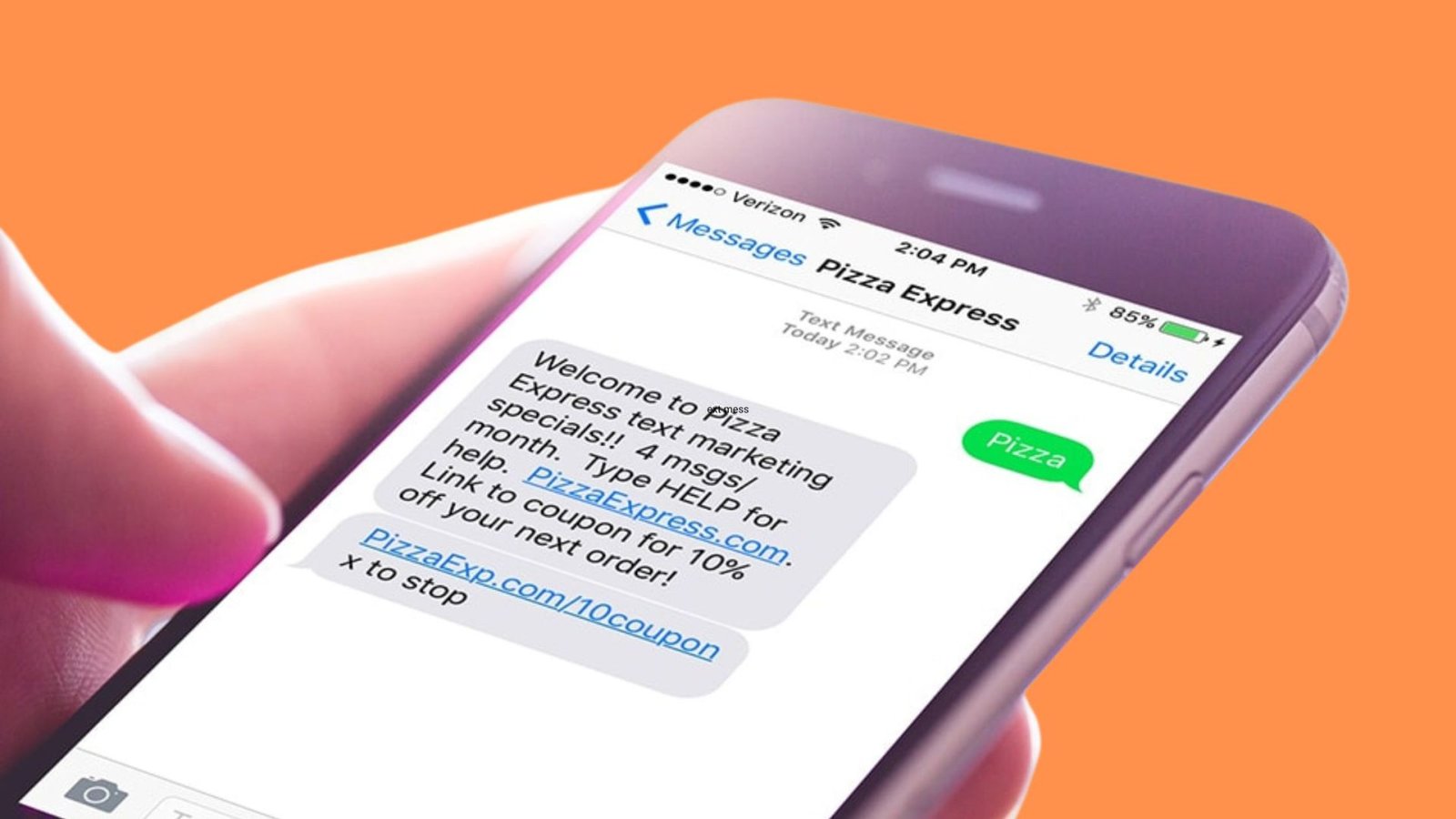
Your first message after opt-in should confirm what they signed up for: “You’re subscribed to [Business Name] texts. Expect 2–4 messages/month with exclusive offers. Reply STOP to unsubscribe.”
2. Text People the Way You Want to Be Texted
Ask yourself: if you got this message from a business, would you be glad you received it? If the answer is “probably not,” do not send it. Texts are personal. They land alongside messages from family and friends. You earn your place in that space by being relevant, not by being persistent.
3. Limit Frequency to 1–2 Messages Per Week
SMS marketing data shows that most customers are comfortable with one to two texts per week. Beyond that, fatigue and unsubscribes climb fast. If you have more to say, email is the right channel for it — use SMS for what is truly time-sensitive and personal. For a deep dive on pairing these channels, see my guide on how to do email marketing.
4. Be Consistent in What You Send
If someone opted in for appointment reminders, do not suddenly start sending weekend promotions. Switching message types without warning feels like bait-and-switch. Customers subscribed to a specific kind of value, and they will leave when you stop delivering it.
5. Measure What You Send
SMS is fully measurable. Track opt-out rates (anything above 1.5% is a signal to adjust). Track click-through rates on links. And yes, asking your customers directly whether they like hearing from you via text counts as measurement too.
12 SMS Text Message Ideas That Work for Small Business
These are the 12 types of text message ideas that consistently get responses — without burning your list.
1. Appointment Reminders and Prep Instructions
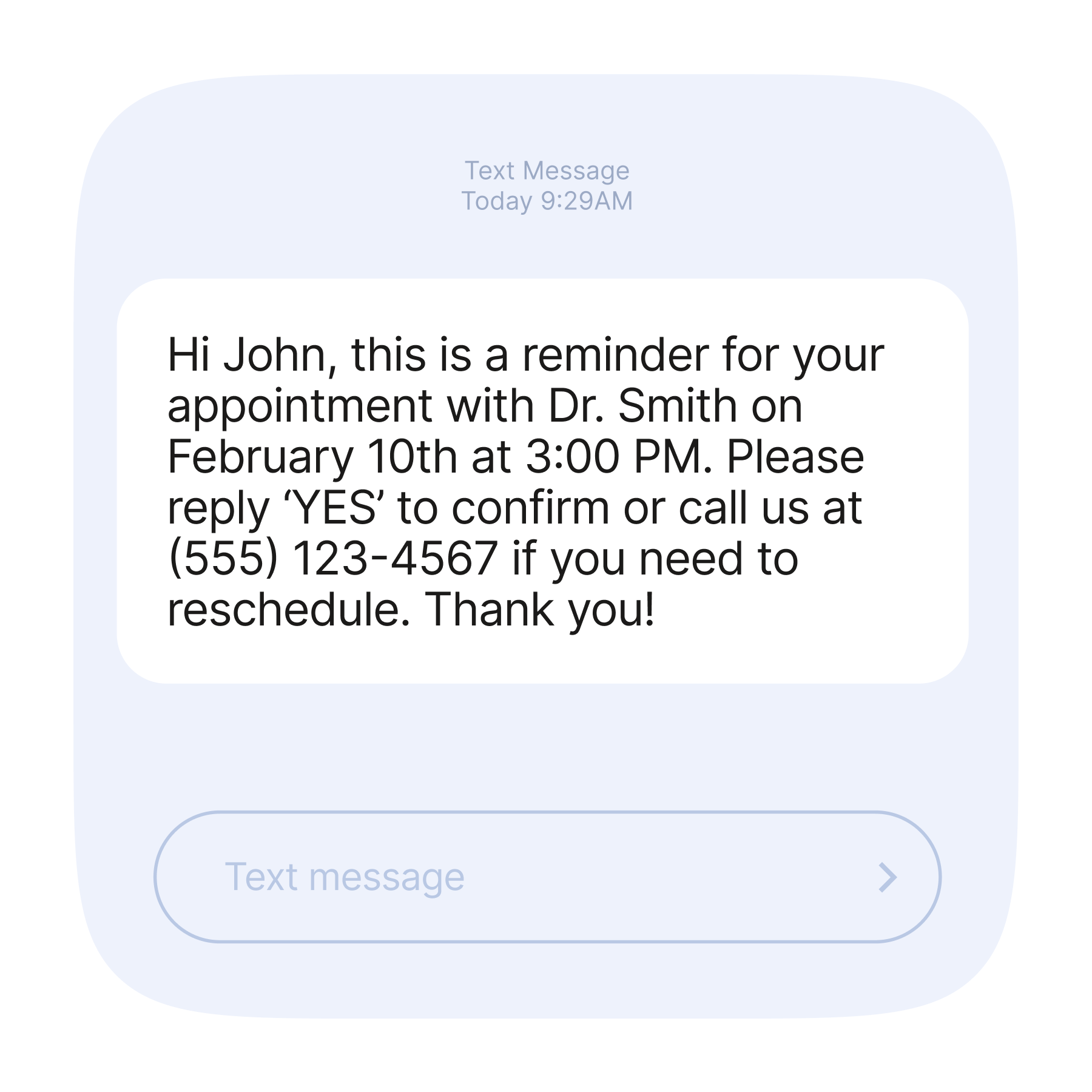
For any service business — spa, dental office, law firm, personal trainer, consultant — appointment reminders are the single highest-value SMS use case. They reduce no-shows, and they give the customer a chance to reschedule before it costs you money.
Send two: one 24–48 hours before, and a short prep message if they need to bring anything or prepare. “Hi [Name], your appointment with us is tomorrow at 2pm. Here’s what to bring: https://diymarketers.com/text-message-ideas/. Reply C to confirm or RESCHEDULE to change.” Keep it short, specific, and personal.
2. Last-Minute Openings
Got a cancellation? Text your waitlist or recent customers who missed out on a booking. This works for restaurants, salons, trainers, consultants, and any appointment-based business. It fills revenue gaps fast and makes the customer feel like an insider.
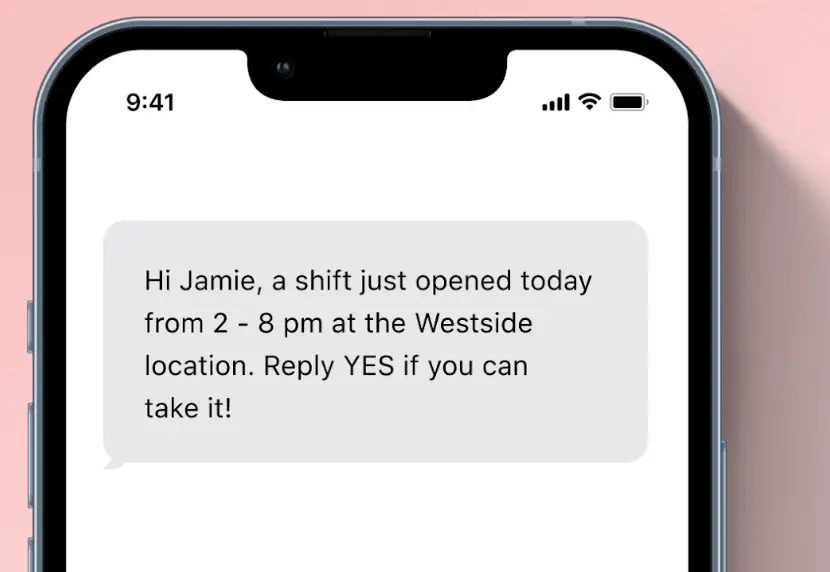
Example: “Hey [Name] — we just had a 3pm opening today. Want it? Reply YES and we’ll hold it for 10 minutes.”
3. Exclusive Subscriber-Only Offers
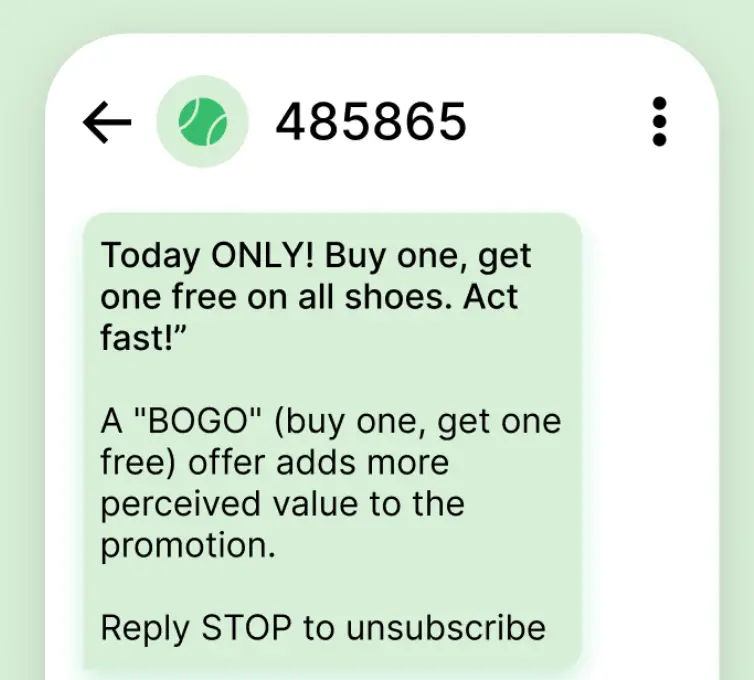
The only promotional texts worth sending are the ones your subscribers cannot get anywhere else. Pre-sale access, first-look at new inventory, a member pricing window before the general public sees the offer. When subscribers feel like VIPs, they stay subscribed. When they feel like a marketing list, they leave.
4. Birthday and Anniversary Messages
A personalized birthday text with a meaningful offer is one of the few promotional messages customers actually look forward to. “Happy Birthday, [Name]! Your gift from us: 20% off anything this week. No code needed — just mention this text.” Pair your SMS platform with your CRM so these go out automatically. For more on customer loyalty strategies that go beyond discounts, start there.
5. Loyalty Reward Notifications
When a customer earns a reward they can use immediately, a text message is the best way to tell them. “You just earned a free drink, [Name]. It’s waiting for you the next time you stop by.” The timing matters here — let them know when it’s fresh and actionable, not buried in a monthly email digest.
6. Conversational Follow-Ups
One of the bigger shifts in SMS marketing since 2024 is the rise of two-way conversational commerce. This market hit $11.26 billion in 2025 and keeps climbing. Customers now expect to be able to reply to a business text and get a real response. Use follow-up texts to check in after a purchase, ask a quick question, or handle a simple service issue. “How did your appointment go today? Reply with any questions and we’ll get back to you within the hour.”
⚠️ REALITY CHECK
Most small businesses set up one-way SMS blasts and call it SMS marketing. Customers notice the difference. If someone replies to your text and nothing happens, you have just broken trust. Make sure your SMS platform supports two-way messaging before you start promising personalized service.
7. Feedback Requests After a Service
Timing is everything for review requests. The ideal window is within 30–60 minutes of completing a service or delivering an order. Email review requests get buried. A text with a direct link to your Google Business profile gets read immediately.
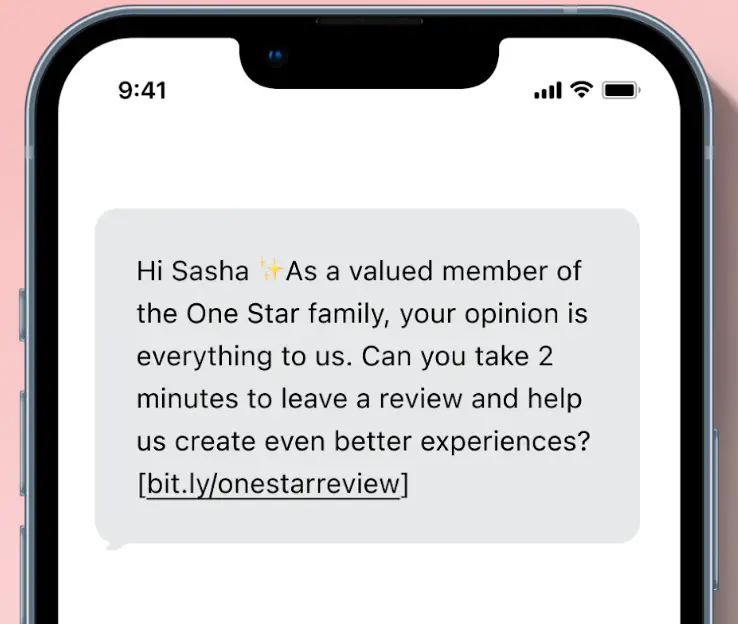
“[Name], how did we do today? A quick review means the world to us: https://diymarketers.com/text-message-ideas/. Takes 60 seconds.” Keep it that simple.
8. Flash Sales and Time-Limited Offers
A flash sale via text works because of the speed and urgency of the channel. If you have perishable inventory, excess capacity, or a same-day deal to fill, a text gives you a direct line to the people most likely to act. The key word here is “time-limited.” Give them a window — 4 hours, end of today — so the urgency is real.
9. Event and Class Reminders
If you run workshops, classes, pop-ups, or community events, collect mobile numbers at registration. A day-before reminder and a day-of logistics text — parking, what to bring, the Zoom link — dramatically cut down no-shows. For referral-based businesses running networking events, this is particularly useful. See how referral marketing works alongside events.
10. Alerts and Emergency Notifications
If your office closes unexpectedly, your website is down, or a product has a delay, text is the fastest way to reach customers. This is one of the most appreciated uses of SMS — customers genuinely prefer a text to finding out through a voicemail or a buried email. Build this into your customer communication plan before you need it.
11. Helpful Seasonal Tips
One or two genuinely useful tips per season can build real goodwill with your list. A landscaper texting a pre-winter lawn care reminder. A bookkeeper texting a Q4 tax prep checklist link. A fitness studio texting a post-holiday reset plan. These texts do not push a sale. They position you as a trusted advisor, and that is the kind of trust that keeps customers coming back. It also ties directly into strong customer loyalty and retention.
12. RCS-Enhanced Messages (The 2026 Upgrade Worth Paying Attention To)
RCS (Rich Communication Services) is what happens when SMS gets a serious upgrade. Branded sender names, images, action buttons, read receipts, and interactive carousels — all delivered inside the native messaging app. Apple added RCS support in iOS 18, which means the channel is now viable across both Android and iPhone in the US.
RCS is not universally available through every carrier and SMS platform yet, but the early performance data is strong. If you are already using SMS well, ask your platform about RCS capabilities. It is worth testing in 2026 while the channel is still relatively uncrowded.
SMS Text Message Marketing Tools for Small Business in 2026
The tool landscape has evolved. Here is what I recommend at different stages.
SimpleTexting
Still one of the easiest platforms to start with. Two-way messaging, scheduled sends, automation sequences, and keyword opt-ins. Plans start around $29/month for up to 500 messages. It handles 10DLC registration, which saves you a significant headache.
Zoho Campaigns (SMS Add-On)
If you are already in the Zoho ecosystem, the SMS add-on inside Zoho Campaigns integrates directly with your CRM. That means your birthday texts, follow-ups, and loyalty messages can trigger automatically based on customer data. More setup required upfront, but the automation payoff is strong for businesses with repeat customers.
Klaviyo (for E-Commerce)
If you run an online store, Klaviyo’s SMS and email integration is one of the most complete options available. Abandoned cart texts, post-purchase sequences, and browse abandonment workflows all run from the same platform as your email campaigns. The data and segmentation it gives you make targeting far more precise.
🛑 DON’T COPY BLINDLY
TCPA fines run from $500 to $1,500 per text, per violation. Before you launch any SMS program, confirm that your platform handles 10DLC registration, supports the one-to-one consent rules effective January 2026, and gives you a way to honor opt-outs sent by any method — not just “STOP.” If your current tool does not do these things, switch platforms before you scale.
How to Build Your SMS Strategy Without Overwhelming Your Customers
Start with one use case. If you run an appointment-based business, start with reminders. If you run a retail or e-commerce business, start with an exclusive subscriber offer. Pick the one type of text message idea that fits your business model and do it well before adding more.
The businesses that get SMS right are not the ones sending the most texts. They are the ones sending texts that feel like the customer is glad they got them. Once you earn that reaction consistently, you can expand.
For a broader look at how SMS fits into your full marketing strategy, read my guide on email marketing for small business — because SMS and email should be working together, not competing.
Frequently Asked Questions About SMS Text Message Marketing
What are the best text message ideas for small business?
The most effective SMS text message ideas for small business are appointment reminders, loyalty reward notifications, last-minute opening alerts, birthday messages with a personal offer, and exclusive subscriber-only deals. These messages work because they are timely, relevant to the individual customer, and give the recipient a clear reason to act.
How often should a small business send text messages to customers?
One to two text messages per week is the upper limit for most customers, according to multiple SMS marketing studies from 2025–2026. Sending more than that increases opt-out rates. The right number for your business depends on your message type — transactional messages like reminders can go out more frequently without causing list fatigue, while promotional texts should stay at one to two per week.
Do small businesses need permission before sending SMS marketing messages?
Yes. The TCPA requires prior express written consent before sending any marketing SMS in the United States. As of January 2026, consent rules tightened further — each business must collect its own direct consent, and consent cannot be shared across brands. Additionally, after February 2025, businesses must register with 10DLC to send application-to-person SMS without messages being blocked by carriers.
What is the difference between SMS and RCS messaging?
SMS (Short Message Service) sends plain text messages up to 160 characters. RCS (Rich Communication Services) is an upgraded messaging standard that supports branded sender names, images, action buttons, and read receipts — all inside the native messaging app. With Apple adding RCS support in iOS 18, both Android and iPhone users in the US can now receive RCS messages, making it a viable upgrade for small businesses already running strong SMS programs.
What SMS platform should a small business use in 2026?
SimpleTexting is the easiest starting point for most small businesses — it handles 10DLC registration, supports two-way messaging, and runs around $29/month for up to 500 messages. Businesses already using Zoho CRM will get the most value from the Zoho Campaigns SMS add-on. E-commerce businesses should look at Klaviyo for its ability to integrate SMS and email automations into a single customer journey.