Welcome back to TechCrunch Mobility, your hub for the future of transportation and now, more than ever, how AI is playing a part. To get this in your inbox, sign up here for free — just click TechCrunch Mobility!
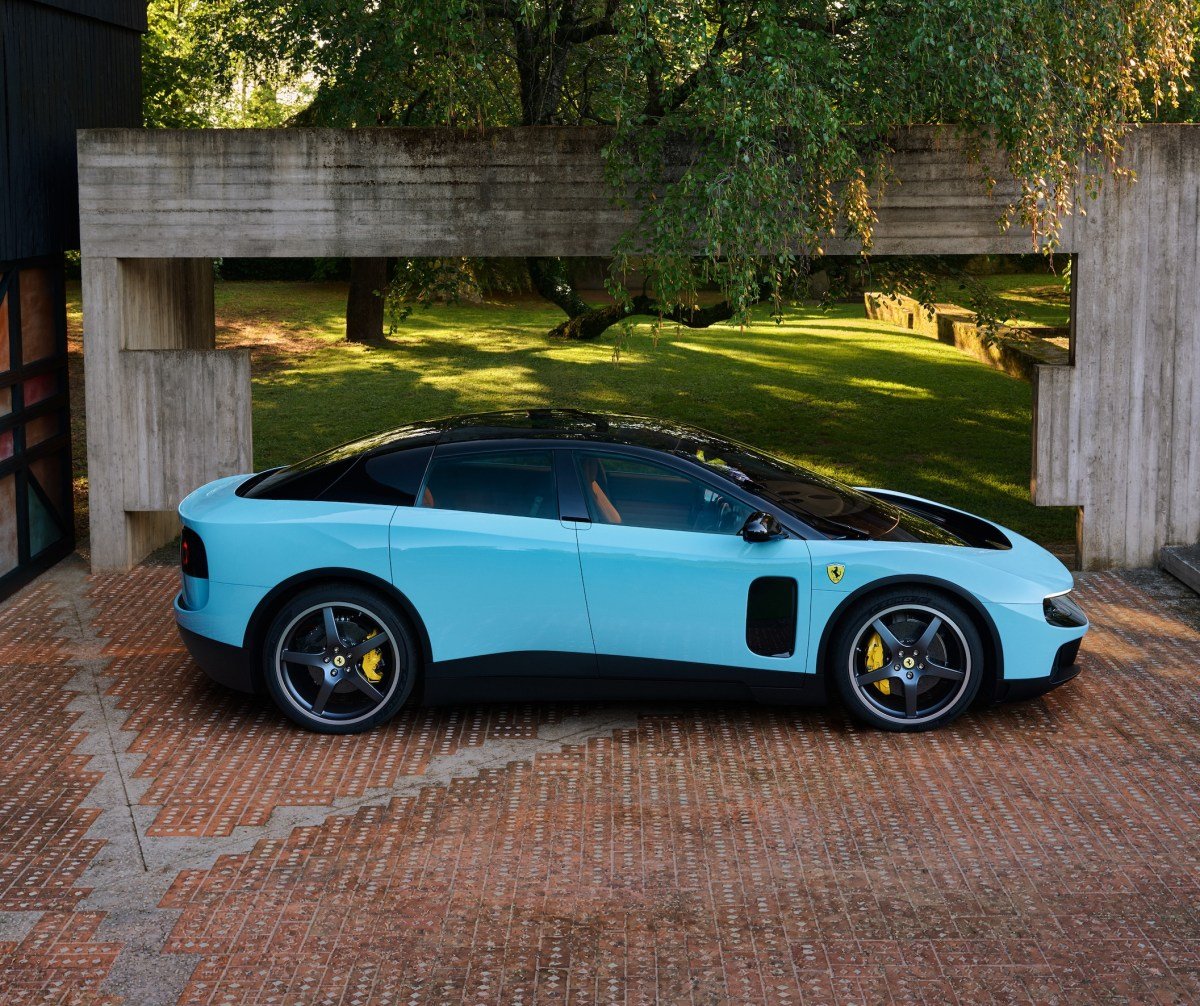
If you’re into EVs or sports cars, then you surely saw the kerfuffle over Ferrari’s first all-electric car, the Luce. The reaction was swift and biting for the five-seater EV designed by Apple veteran Jony Ive and priced at close to $650,000.
Ferrari fans expressed horror, critics compared it to the far cheaper Nissan Leaf, memes were made, and even one car designer (Lucid’s Derek Jenkins) threw some shade.
Senior reporter Sean O’Kane asked a different question as the great Ferrari Luce debate blew up the internet: Who is the Luce for?
You’ll have to read the full story to get his complete breakdown. But in my view, the most important question is whether the Luce is for existing Ferrari owners. After all, Ferrari owners often possess more than one. More than 80% of the 14,000 people who bought a Ferrari last year already own one of its vehicles, O’Kane notes.
According to Ferrari, there is demand for the EV. Ferrari CEO Benedetto Vigna claims the Luce is already getting orders from old and new customers. Assuming that demand outstrips the number of Luce EVs that the automaker plans to make, the next question is, who will Ferrari pick? (IYKYK)
Ferrari could be vindicated. Remember the Ferrari Purosangue, which was widely panned when it launched several years ago? That SUV is now considered a success. Sometimes it doesn’t matter if a product is hated. Ferrari doesn’t need universal approval; it just needs enough buyers.
Let’s jump from EVs to AVs.
A new Texas law allows its Department of Motor Vehicles agency to exert more control over autonomous vehicle testing and deployment in the state. Companies must now license AVs in the state, and the data is public. Here’s what I found after spending a little time with the AV tracker tool.
Waymo is far and away the leader with 577 registered AVs, followed by Avride with 317, Nuro with 47, and Tesla with 42. Self-driving truck companies Aurora, Gatik AI, Kodiak AI, and Waabi can also be found. (For all the details, you can read my story.)
Fleet size is just one measure — and it certainly doesn’t always translate into whoever has the most wins. After all, many of these companies have not launched commercial services in the state.
I’m far more interested in the complaints feature on this new tool, which is also public record. As of today, complaints have not been filed against the companies listed above.
Deals!

A new single asset fund managed by Equip Capital has taken a majority stake in European e-scooter operator Ryde Technology. Goldman Sachs Alternatives is the lead investor.
Harley-Davidson’s electric motorbike spinoff LiveWire acquired electric off-road startup Dust Moto. Terms of the deal were not disclosed.
Matternet, an autonomous drone delivery company, raised $33 million in a private placement offering and completed a reverse merger with Los Altos Ventures Corp.
Revel, the EV charging company that shuttered its ride-hailing business last August, is merging with Voltera. Terms of the deal were not disclosed, but the combined business will operate under the Voltera brand and will be led by Revel CEO Frank Reig, Bloomberg reported.
Stark, a German drone maker, is in talks to raise at least €300 million ($350 million), a round that could double its valuation to €2.5 billion, the Financial Times reported.
Volara Motorsports Group, a motorsports and performance-focused holding company, acquired Lynx Motor Works, an Austin, Texas-based company that makes limited-production, reimagined classic vehicles.
WeRoad, the Milan-based group adventure travel startup, raised $58 million in a Series C round led by Airbnb. The funding brings the company’s total capital raised to roughly $100 million and will finance WeRoad’s push into the U.S., beginning with Austin.
Notable reads and other tidbits

American Airlines will install Starlink on more than 500 narrow-body Airbus aircraft beginning early next year, the latest carrier to pick the SpaceX unit for in-flight Wi-Fi service. The deal provides a financial lift for Starlink, the satellite communications network and the only SpaceX business unit that generates meaningful revenue.
Rivian said it will begin deliveries of its new R2 SUV on June 9. Meanwhile, Rivian is being investigated by the National Highway Traffic Safety Administration over how the EV maker services its vehicles’ rear suspension components.
Slate Auto is expected to announce pricing and start taking nonrefundable preorders for its low-cost electric vehicle on June 24. Deliveries are supposed to happen later this year.
Volvo Cars received a specification authorization by the Commerce Department that allows the Swedish automaker, which is majority owned by China’s Geely Holding, to continue to import and sell its vehicles in the United States. A law, finalized in January 2025, effectively bans virtually all Chinese vehicles from the U.S. market as part of a crackdown on connected car technology with ties to China.
Waymo has started giving select riders in Los Angeles, Phoenix, and San Francisco access to its newest robotaxi: an all-electric, minivan-like vehicle that is designed to lower costs and handle the use and abuse of hundreds of thousands of riders. I had a chance to ride in the vehicle, a modified Zeekr-made minivan called the Ojai (pronounced oh-hi). Stay tuned for my full review, which will run this weekend. Here’s a teaser: Robotaxis have long suffered from a magic problem. This Ojai robotaxi starts to solve it.
One more thing …
It’s poll time! Maybe you secretly like the Ferrari Luce and just don’t want to get trolled. Maybe you hate it. We asked our newsletter readers to share their opinion.
Sign up for the Mobility newsletter to participate in our polls!
And now one more thing, for real this time. Last week, I asked our newsletter readers, “Will SpaceX and Tesla merge?” Here’s how they answered. More than 51% selected “Yes, within two years”; 34% picked “never”; and 14.5% chose “Yes, this year.” That means more than 65% believe a merger is inevitable.
When you purchase through links in our articles, we may earn a small commission. This doesn’t affect our editorial independence.