Five times a day, someone asks me the same question: “Ivana, what’s working in marketing?”
I wish I had a clean answer. I don’t. I do know that your small business marketing budget doesn’t go as far as it did just a few months ago.
📊 Key Finding
How much should a small business spend on marketing in 2026?
According to the Constant Contact Q1 2026 report, 68% of small businesses are increasing their marketing budgets this year. The recommended minimum is $500/month, focused on building online presence and reputation management.
Spending more doesn’t reduce risk — spending smarter does.
If you’ve been running a business for ten years or more, you already know this in your bones. The digital marketing playbook rewrites itself constantly. What filled your pipeline last year stalls this year. What drove leads last month flatlines this month. And now, with AI reshaping the tools every week, the shelf life of a “winning tactic” has shrunk from months to days.
Meanwhile, every optimism survey tells the same split-screen story. Business owners are optimistic. Business owners are concerned. Both things, at the same time, about the same future.
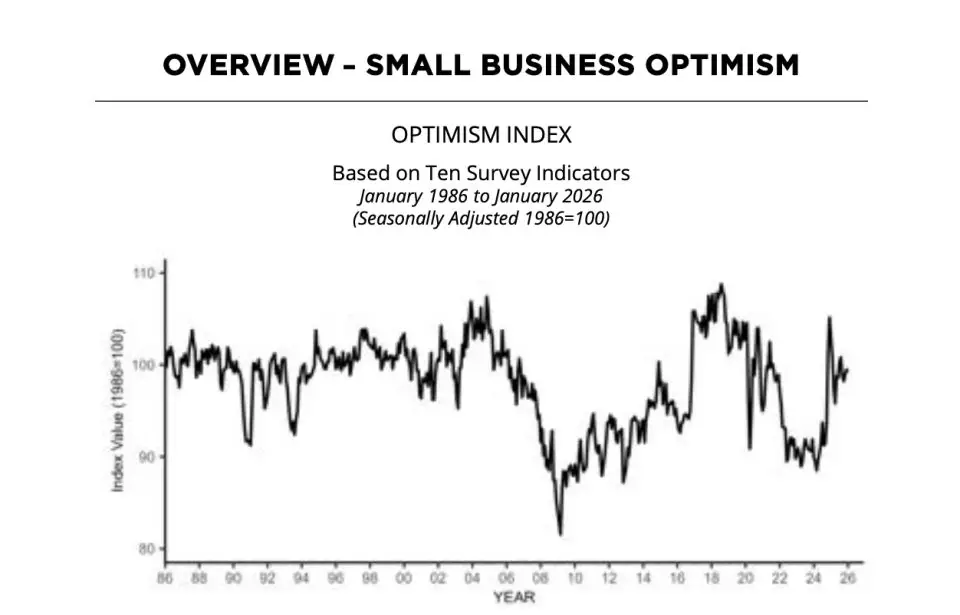
Here’s what that tension means for you: every marketing dollar you spend in 2026 carries more weight than it did in 2025. The margin for guessing has gotten razor thin.
So if you’ve been playing slot machine marketing, pulling one lever after another and hoping the next tactic pays off, that approach has an expiration date. And it’s already passed.
All of this is happening while inflation remains the #1 concern for 41% of owners, far outpacing weak customer spending at 19%.
Translation: small businesses are pouring more money and more hours into marketing at the exact moment when every dollar carries the most risk. And most of them have no system for knowing whether it’s working.
That’s not strategy. That’s a gamble.
Why Spending More on Marketing Doesn’t Reduce Risk
Here’s what most marketing advice gets wrong: it assumes more spending equals more results.
It doesn’t.
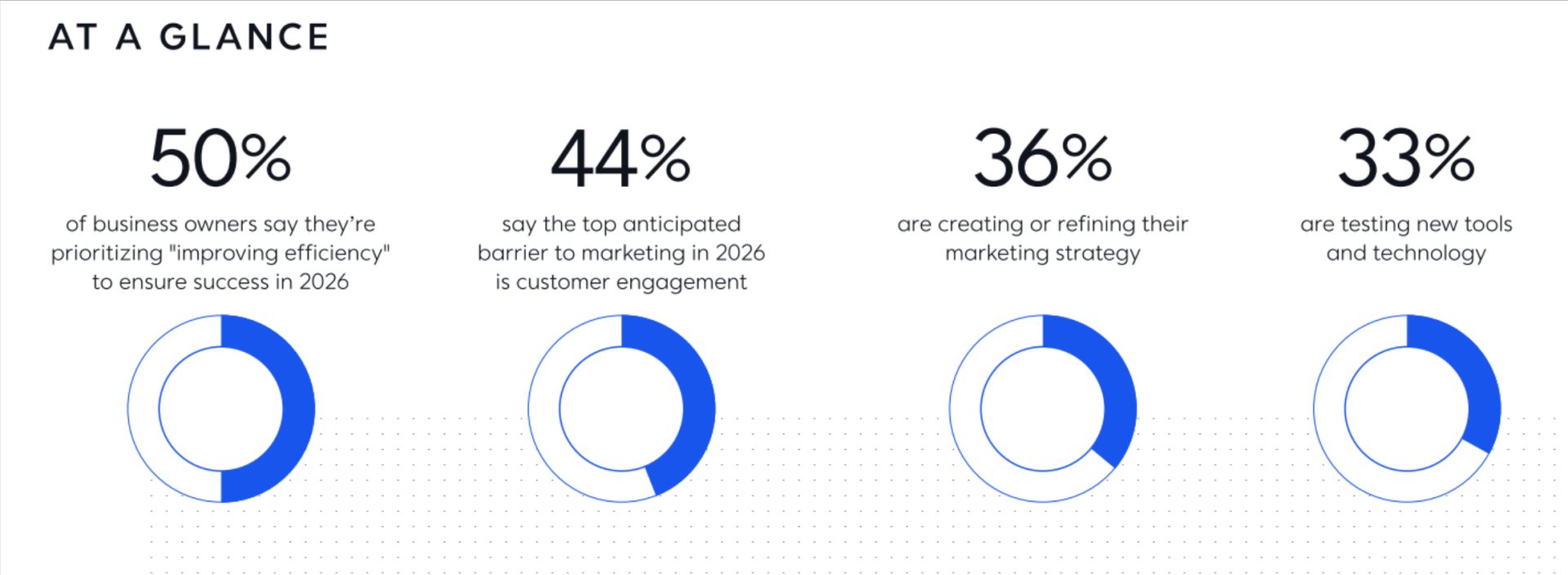
The same Constant Contact report reveals that 44% of small business owners say customer engagement is their biggest marketing barrier in 2026. So budgets and effort are going up, but connection with customers isn’t keeping pace.
To close that gap, businesses are testing more tools, more platforms, and more technology:
- 33% are testing new tools and technology
- 54% already use AI marketing tools
- 27% plan to start using AI in 2026
- 50% are prioritizing “improving efficiency”
On the surface, that sounds smart. Underneath, it’s where your small business marketing budget quietly turns into a slot machine.
More options. More promises. More places to spend without clarity on what’s working and what’s wasting your money.
The Confidence Crisis Nobody Talks About
Here’s what I’ve observed working with small business owners for more than 20 years: after enough missed bets, something deeper changes.
It’s not the budget that takes the biggest hit. It’s confidence.
Business owners start second-guessing what they know about their customer, their industry, and their own instincts. Every new marketing idea feels riskier. Every investment carries more weight.
The Constant Contact 2025 State of Small Business Marketing report confirmed this pattern: only 18% of SMBs feel “very confident” in the effectiveness of their marketing, despite increased budgets and more widespread use of email, AI, and video.
That gap between spending and confidence is the most dangerous place a small business owner can sit.
When confidence erodes, marketing stops feeling strategic and starts feeling defensive. You’re no longer investing. You’re reacting. You’re throwing money at whatever someone tells you is “working right now” because you’ve lost trust in your own judgment.
I’ve seen this exact pattern play out with businesses whose marketing stopped working but couldn’t figure out why. The problem was never the tactics. It was always the foundation underneath them.
AI Didn’t Break Your Marketing. It Exposed the Cracks.
AI didn’t cause this problem. It amplified a pre-existing one: decision-making under uncertainty.
The Constant Contact data shows how small businesses are using AI:
- 45% use AI to analyze trend data
- 44% use AI to write copy for emails and content
- 40% use AI to create images and visual content
These are all efficiency plays. And efficiency is great, when you know what you’re being efficient at.
But AI is cheap and fast at producing output. Implementation, testing, and interpreting results? That still costs real time, real focus, and real opportunity cost. And once the money is spent, it’s psychologically hard to admit it shouldn’t have been.
The risk isn’t using AI. The risk is using it without clear judgment about where it belongs in your specific business.
Where Small Businesses Are Betting Their Marketing Budgets
The Constant Contact report shows where owners expect the most value in 2026:
| If You See This… | It Means… | Your Next Move |
|---|---|---|
| 68% bet on social media posting and paid ads | The most popular channel, but also where businesses report the lowest satisfaction with results | Track cost-per-lead by platform. If you don’t know it, pause paid spend until you do. |
| 41% count on email marketing | Email consistently delivers the highest ROI ($36 for every $1 spent) and satisfaction among SMBs | Double down here. Clean your list. Build your referral system to feed it. |
| 29% rely on in-person events | Direct marketing and relationship-building channels consistently convert at higher rates with lower cost per lead | Invest in direct marketing strategies like networking and referrals first. |
| 48% will tweak existing campaigns (vs. 31% creating new ones) | Most businesses are optimizing what they have rather than starting from scratch | This is the right instinct. Fix what’s broken before launching something new. |
Notice the pattern? The channel businesses are most excited about (social media) is the same channel where satisfaction is lowest. Meanwhile, email and in-person events, which have proven track records, get less attention.
This is the marketing budget risk hiding in plain sight.
The 4-Question Risk Assessment for Your Marketing Budget
If you’re planning to increase your small business marketing budget this year (and 68% of you are), run every dollar through these four questions before you spend it.
Question 1: Where is this investment most likely to pay off?
Not “where does everyone say I should be.” Where have YOU seen results before? If referrals are your best source of new business (and for 50% of small businesses, they are according to the 2020 Keap survey), your budget should reinforce your referral system, not replace it with something unproven.
Question 2: What assumptions am I making?
Most marketing failures trace back to an untested assumption. “My customers are on TikTok.” “People will click this ad.” “This email will convert.” Write down your assumptions before spending. Then figure out the cheapest way to test each one.
Question 3: How will I know early if this isn’t working?
Set a kill switch. Before you launch any campaign, define the number that tells you to stop. Not after 90 days. After 2 weeks. What’s the minimum result you need to see to keep going?
Question 4: What am I willing to stop funding?
This is the hardest question. You’ve been paying for that tool, running that ad, posting on that platform for months. Sunk cost makes it feel like you should keep going. But every dollar you spend on something that isn’t working is a dollar you can’t spend on something that will.
The Strategy Most Small Businesses Are Ignoring
Here’s what the Constant Contact data doesn’t say, but the math does.
Small businesses that rely on direct marketing, referrals, and relationship-based selling spend less, convert faster, and report higher satisfaction with their results than businesses chasing broad digital strategies.
The LocaliQ 2025 Small Business Marketing Trends Report confirms this: direct marketing channels like word of mouth and referrals consistently outperform social media for businesses with fewer than 50 employees.
And yet, 68% of small businesses are betting their biggest budget increases on social media.
Why? Because it’s visible. Because everyone talks about it. Because it feels like “doing marketing.”
But doing marketing and doing effective marketing are not the same thing.
If you want to reduce the risk on your small business marketing budget, start where the data says you’re most likely to win:
- Strengthen your referral system. Build structured referral partnerships with businesses that serve your same customer.
- Fix your email first. Email has the highest ROI of any channel. Clean your list. Create a real follow-up sequence. Segment by behavior, not demographics.
- Invest in your personal brand. Building your personal brand lowers the cost of every other marketing activity. Referrals come faster when people know, like, and trust the person behind the business.
- Test before you scale. Run any new tactic for 30 days at minimum spend. Measure cost per lead. Compare to your proven channels. Then decide with data, not hope.
[INFOGRAPHIC: A 3-step flowchart titled “The Marketing Budget Risk Reduction Loop”. Step 1 icon: Magnifying glass — “Audit what’s working now.” Step 2 icon: Target — “Double down on proven channels.” Step 3 icon: Shield — “Set kill switches before spending.” Arrow flow shows a cycle. Clean, flat vector style with #009879 green accent color. Alt Text: small business marketing budget risk reduction process]
The Real Marketing Trend of 2026
The Constant Contact report frames 2026 as “do more, but do it smarter.”
I’d push that further.
The real trend isn’t doing more or doing it smarter. It’s making clearer decisions before the money moves.
Marketing doesn’t need more optimism. It doesn’t need more tools, more platforms, or more AI-generated content.
It needs a process. A system for deciding where money goes, how long you give it, and when you pull the plug. Because the cost of guessing has never been higher.
And for a small business owner working with a tight budget, every guess costs more than you think.
If you need help mapping your marketing process, start there. It’s the foundation everything else sits on.
Frequently Asked Questions
How much should a small business spend on marketing in 2026?
Most small businesses spend between 5-10% of revenue on marketing. According to the Constant Contact Q1 2026 report, 68% plan to increase their marketing budgets this year. The key isn’t the amount you spend but where you spend it. Start with channels that have proven ROI for your specific business, like email marketing and direct referrals, before investing in unproven platforms. A $50 marketing budget spent strategically will outperform $500 thrown at random tactics.
What’s the biggest risk with increasing your marketing budget?
The biggest risk is spreading your budget across too many channels without tracking results. Constant Contact’s research shows 44% of small businesses cite customer engagement as their top barrier, which means money is going out but connection isn’t happening. Before increasing your budget, establish a cost-per-lead baseline for every channel you’re using. If you don’t know which channels generate paying customers, more money won’t fix that problem.
Should small businesses use AI for marketing in 2026?
Yes, but with a clear plan. 54% of small business owners already use AI marketing tools, and 27% plan to start in 2026. AI works best for specific tasks like analyzing data, drafting email copy, and creating visual content. It doesn’t replace marketing strategy. Use AI to speed up execution of a strategy you’ve already validated, not as a substitute for understanding your customer and what makes them buy.
What marketing channels have the lowest risk for small businesses?
Email marketing and direct referrals consistently deliver the highest return with the lowest risk. Email generates $36 for every $1 spent. Referrals from existing customers close faster, complain less, and spend more. Social media, despite being the most popular channel (68% of businesses plan to invest there), also produces the lowest satisfaction rates. Build your foundation with one proven strategy before expanding.
How do I know if my marketing is working?
Track three numbers: cost per lead, conversion rate, and customer lifetime value. If you’re spending $500/month on social media ads and generating 5 leads that convert at 20%, your cost per customer is $500. Compare that to referrals, where your cost might be $0 and your close rate is 80%. According to the Keap Small Business Trends report, nearly half of small business owners don’t know if their marketing is effective. You don’t need fancy analytics. You need these three numbers for every channel, reviewed monthly.
If You Liked This, You’ll Love These
Drowning in Data but Starving for Sales?
You don’t need more reports. You need a plan.
In a Fix-It Session, we don’t look at the numbers in isolation — we look at your business. We translate your marketing data into a specific, actionable strategy that fits your strengths and your budget.