[ad_1]
Summary
- Real AI-powered shopping experiences work as one decisioning layer across search, messaging, and merchandising, not as separate bolted-on tools
- Stitching together disconnected AI point solutions for email, search, and on-site discovery creates identity fragmentation that quietly undercuts personalization results
- Channel-focused platforms often leave on-site product discovery to third-party tools, while enterprise suites can carry longer deployment timelines and heavier data lock-in
- Mature AI shopping experiences connect discovery, messaging, and checkout in real time, and that connection is what tends to drive gains in conversion and average order value
- Evaluating a platform means testing data portability and integration depth, not just the AI feature list a vendor shows in a sales demo
Your on-site search runs one AI model, your recommendation widget runs another, and your email platform runs a third. None of them know what the customer just searched for, or ignored, ten minutes ago, because each tool holds its own slice of that customer’s data.
That is the state of shopping with AI at many retailers today: a collection of smart tools that never actually talk to each other.
This article is for ecommerce directors, digital marketing leaders, and customer experience teams evaluating or scaling AI personalization across a growing online retail stack. We define what a genuine AI-powered shopping experience looks like versus a stitched-together one, and show where popular point solutions leave gaps.
By the end, you will have a clearer framework for judging whether your stack personalizes through one connected system or several disconnected tools.
A genuine AI-powered shopping experience is one decisioning layer that reads a single customer profile and acts on it consistently across search, messaging, and merchandising.
It is not a chatbot bolted onto checkout or a recommendation widget bolted onto a product page; those are features, and a unified experience is an operating model.
Surface-level AI shows up as isolated moments: a static “customers also bought” carousel, a scripted chatbot, an email send-time optimizer. Each works on its own and each ignores what the customer did on other channels five minutes earlier.
Real-time decisioning is different. It means the same intelligence that ranks search results also shapes the email a customer receives that evening and the on-site message they see on their next visit.
The prerequisite many retailers skip is unifying customer data before layering on AI tools. Without a single, real-time customer record, every AI feature works from partial information.
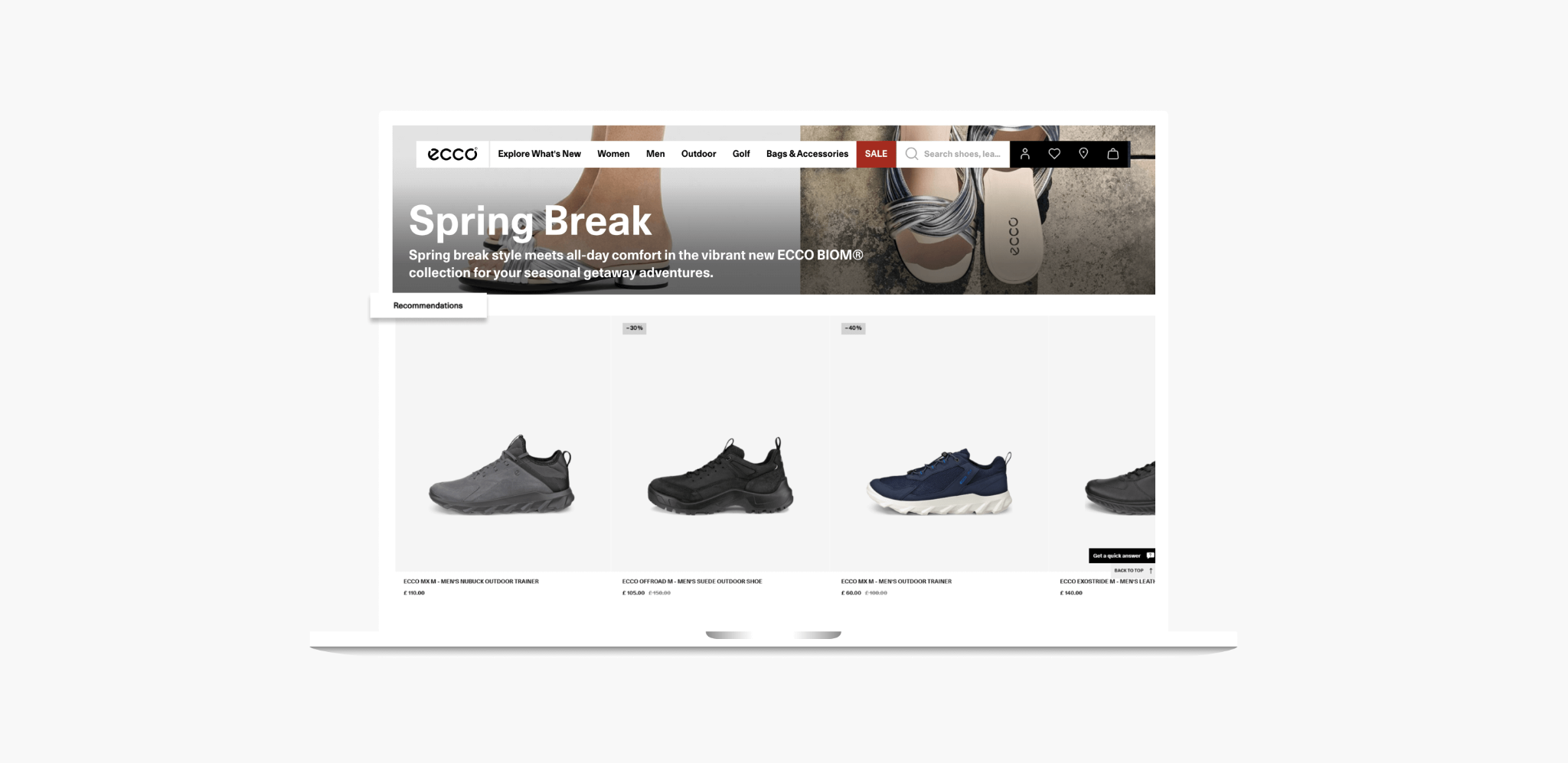
Levi’s connected Eureka Search and Smart Recommender to one underlying customer data layer instead of running discovery and recommendations as separate systems, an approach the retailer credits with stronger returns from personalization.
The data fragmentation problem behind most AI personalization stacks
AI personalization stacks tend to fragment identity the moment a retailer adds a second vendor. Each point solution builds its own version of the customer, and those versions rarely reconcile in real time, so the personalization each tool promises is built on an incomplete picture from the start.
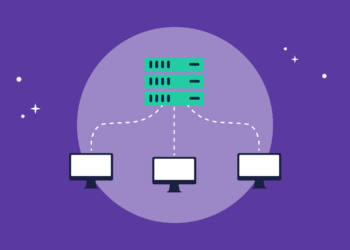
Stitching together a search AI, a messaging AI, and an email AI sounds efficient on a vendor comparison sheet. In practice, it means three separate identity graphs, three separate event streams, and three separate definitions of an engaged customer.
A shopper who abandons a cart on mobile might still get a generic email because the messaging tool never received that signal.
The operational cost compounds over time. Marketing operations teams end up maintaining data pipelines between tools instead of building campaigns, and every new integration adds a point of failure.
A Customer Data Management foundation, where customer data lives in one unified layer that every channel reads from, removes that reconciliation work instead of adding another system to synchronize.
Where point solutions fall short
Point solutions excel at the one job they were built for and often struggle elsewhere, which is why some retailers end up running three or four AI vendors to cover one customer journey. Understanding where each type of platform tends to stop is the fastest way to see the gap.
Messaging-first platforms: strong on messaging, thin on discovery
Messaging-first platforms built their reputation on email and SMS, and they can perform well within that channel focus.
The gap tends to open on-site: product discovery, search personalization, and merchandising decisions often sit outside their core capability, so retailers bolt on separate search and recommendation tools to cover that ground.
Each addition can reintroduce the fragmentation problem, since the messaging platform and the discovery platform still do not share one customer view.
Enterprise suites: Powerful, but heavy to deploy and hard to leave
Enterprise AI suites can bring real strength to discovery and merchandising, but that capability often comes with tradeoffs. Deployment can take longer and require dedicated technical resources, a timeline that may not suit mid-market retailers needing faster time-to-value.
Once behavioral and customer data flow deep into a platform, migrating to another system can become friction-heavy, which risks locking retailers into a stack even if it stops fitting their needs.
Neither pattern is a flaw specific to one vendor. It reflects a structural outcome of building a platform around a single channel or a single acquired module instead of one decisioning core.
The Why Insider One page breaks down what a unified alternative looks like in practice.
A mature AI shopping experience personalizes discovery, messaging, and checkout from the same real-time customer signal. A product a shopper viewed on mobile can shape the search results, the recommendation carousel, and the follow-up message they see next, without a marketer manually connecting the dots.
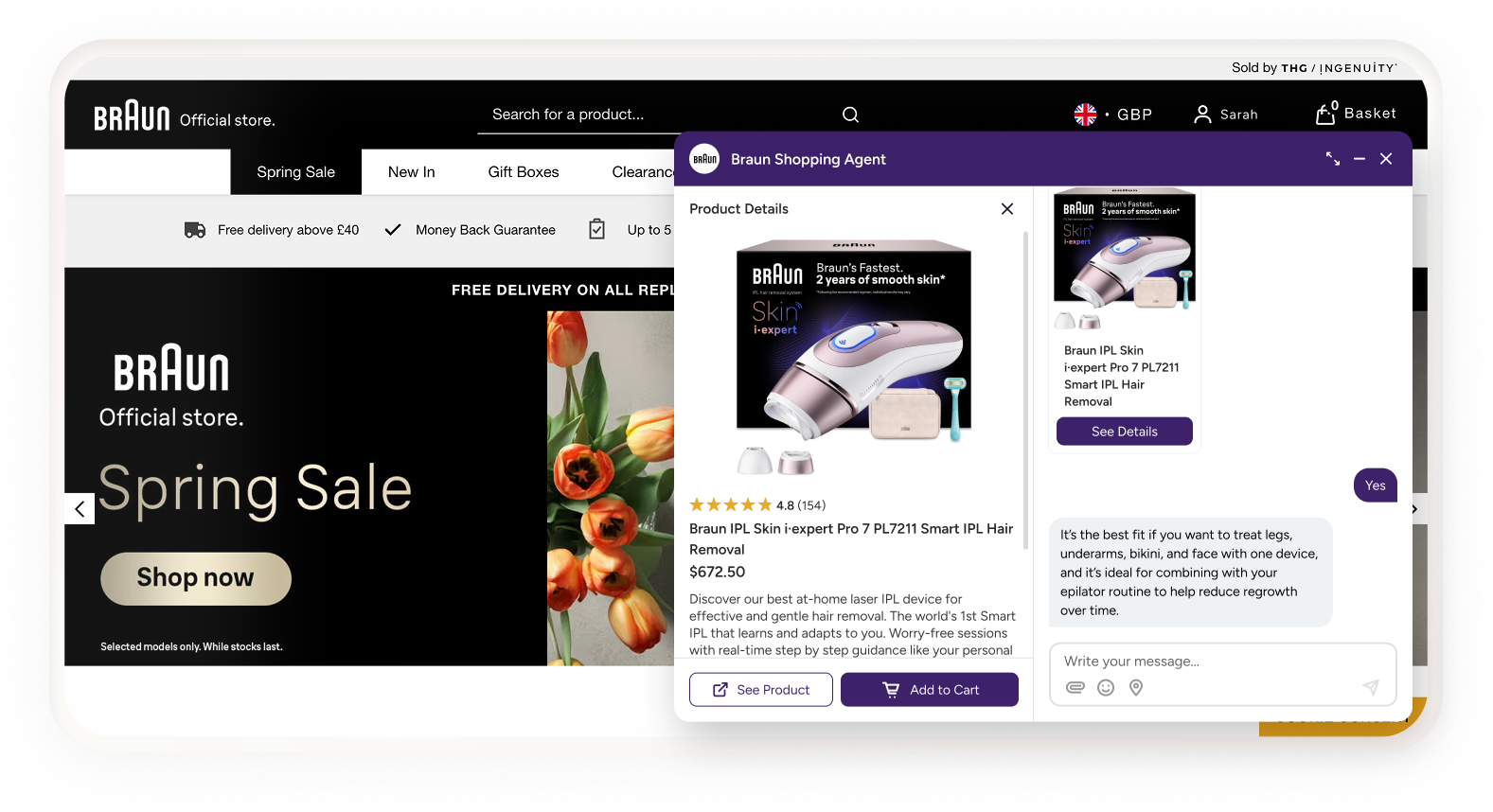
This is where conversational commerce earns its place in the stack, not as a novelty chatbot but as a connected extension of the same decisioning layer. Insider One AI™ shopping agent, for example, draws on catalog data, Eureka Search, and Smart Recommender to guide product discovery in natural conversation rather than static menus.
The outcomes compound when discovery, messaging, and merchandising share one model instead of three, as Braun found after connecting its AI shopping agent to the same catalog and behavioral data driving the rest of its site.
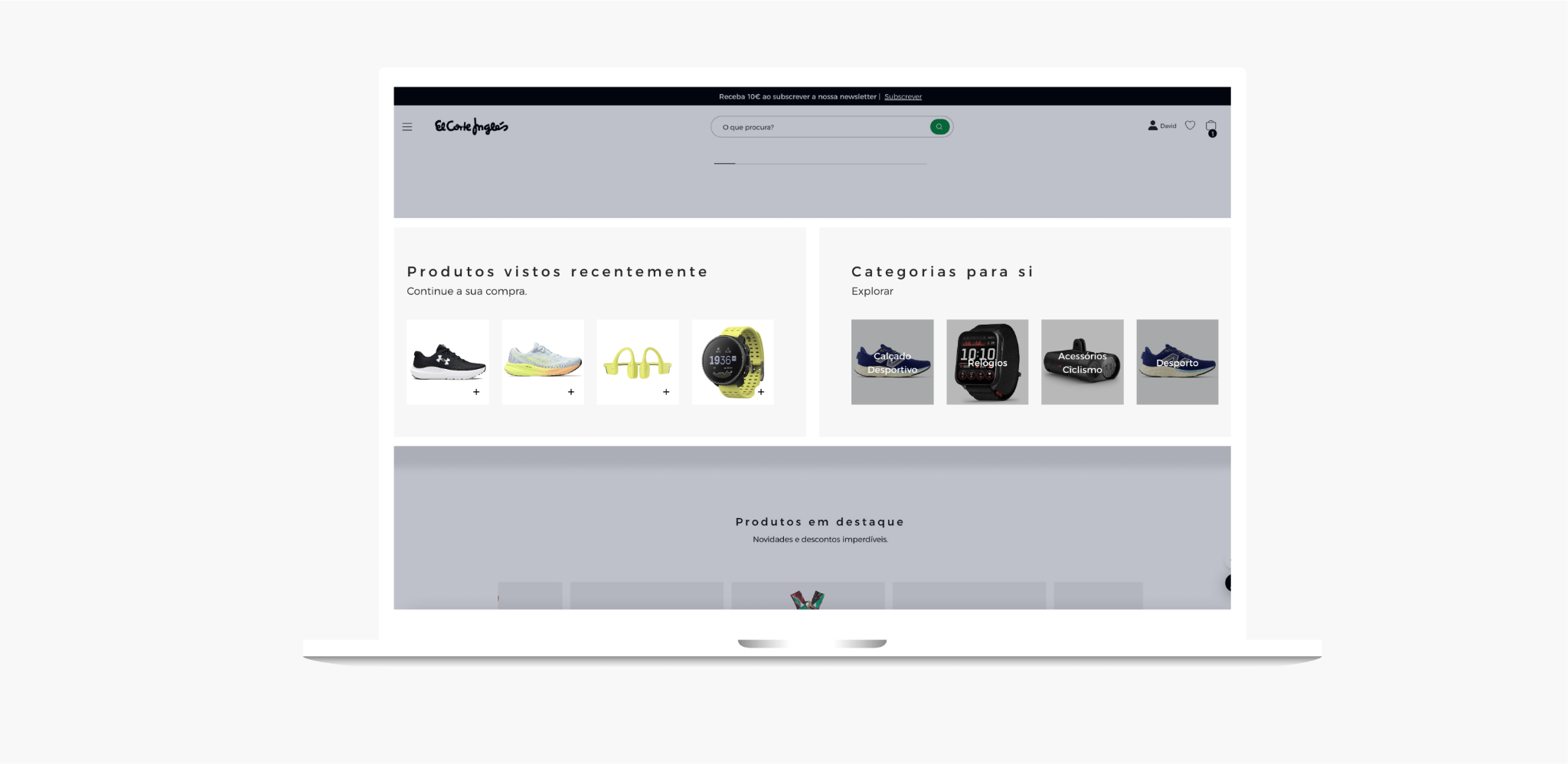
Retailers running this way typically see gains in conversion rate and average order value, since the recommendation a customer sees in search matches the one in an email rather than contradicting it.
That consistency, powered by an engine like Insider One AI™ working across channels, is the real return on personalization investment, not a single high-performing widget.
Choosing an AI commerce platform without getting locked in
Choosing the right AI commerce platform means testing for data portability and integration depth before signing, not evaluating the AI feature list alone. A demo can show impressive recommendations in isolation, but it cannot show how hard it will be to leave in three years.
Ask vendors direct questions before committing:
- Can we export our full customer and behavioral data set in a usable format, and how long does that take?
- Does the AI model decisioning span search, messaging, and merchandising, or only one channel?
- What is the realistic deployment timeline for our catalog size and team structure?
- Are personalization rules and customer segments portable if we switch platforms later?
- Is the AI a single model, or a set of acquired point tools running under one dashboard?
That last question separates a genuinely unified platform from a bundled one. GNC grew average order value after consolidating personalization onto one platform instead of running separate discovery and messaging vendors, a result that reflects what happens when one system, not three, makes the decision.
The Integrations page details how that unification connects to an existing commerce stack without a full replatform.
Conclusion
AI shopping only pays off when one decisioning layer, not a bundle of disconnected tools, governs search, messaging, and merchandising together. Point solutions solve their own channel well and leave the rest to guesswork.
Retailers that unify customer data first and layer AI on top tend to see it in conversion, average order value, and retention, not just in a demo.
To evaluate the fit of Smart Recommender, Eureka, and Customer Data Management for your use case, book a personalized demo to review your goals, data requirements, and implementation constraints with the Insider One team.
Frequently Asked Questions
It means one system, not several, making personalization decisions across search, messaging, and merchandising using a shared customer profile. A chatbot or a recommendation widget alone does not qualify. The test is whether every channel reflects the same real-time signal about a shopper’s intent.
Each point solution builds its own version of the customer, so messaging, search, and email teams end up personalizing against three incomplete pictures instead of one accurate one. The reconciliation work also drains marketing operations resources that could go toward campaigns instead of data pipelines.
Messaging-first platforms can perform well for email and SMS personalization, but on-site product discovery and search typically need a separate tool. That means retailers often need another platform to cover merchandising and discovery, which can reintroduce the identity fragmentation a unified stack is meant to solve.
Longer deployment timelines and heavier reliance on dedicated technical resources are common with some enterprise-scale suites. Data lock-in is another concern: once behavioral data flows deep into a platform, migrating elsewhere can get significantly harder.
Ask whether one model powers decisioning across search, messaging, and merchandising, or whether the vendor combined separate tools under one dashboard. Test data portability directly by asking how customer and behavioral data would export if you left.
[ad_2]
Source_link