
[ad_1]
The search for the best e-commerce platform often starts with building an online store, but most businesses are really trying to answer a bigger question: which platform can support their growth without creating limitations later? To find out, I evaluated Shopify, Salesforce B2C Commerce, Wix Studio, WooCommerce, BigCommerce, and Adobe Commerce.
As I compared these platforms, I noticed they solve very different problems. Some make it easier to launch and manage a store with limited technical resources, while others offer greater flexibility for businesses with more complex requirements. The challenge is figuring out which approach aligns with your goals before investing time and resources into a platform.
For this guide, I looked at factors like ease of use, customization, scalability, integrations, and overall store management experience. I wanted to understand where each platform fits, who it’s best suited for, and what trade-offs buyers should know about.
In the sections below, I’ll share what stood out to me about each platform and the considerations that can help you choose the right fit for your business.
6 best e-commerce platforms for 2026: My top picks
- Shopify: Best e-commerce platform for small businesses
Easy-to-manage platform with strong scalability and a large app ecosystem. ($39 per month) - Salesforce Commerce: Best for enterprise brands managing B2C and B2B commerce
Connects commerce operations with CRM, marketing, and customer data. (Pricing available upon request from vendor) - Wix Studio: Best for non-technical teams launching an online store
Combines website building, e-commerce, and business tools in one platform. ($19 per month) - WooCommerce: Best for WordPress users who want full control over their online store
Adds flexible, open-source e-commerce functionality to WordPress websites. (Pricing available upon request from vendor) - BigCommerce: Best for growing mid-market and B2B brands that need built-in commerce features
Offers built-in commerce features and multi-channel selling without transaction fees. ($39 per month) - Adobe Commerce: Best for enterprise brands managing complex catalogs, multi-site operations, and deep customization
Supports highly customized commerce experiences across large-scale operations. (Pricing available upon request from vendor)
*These e-commerce platforms are top-rated in their category, according to the G2 Summer 2026 Grid Report. I’ve also added their publicly available monthly pricing to make comparisons easier for you.
The 6 best e-commerce platforms I recommend trying in 2026
As I compared e-commerce platforms, I noticed that most businesses were looking for more than a way to launch an online store. They wanted tools that could support growth, simplify day-to-day operations, and help them keep up with changing customer expectations. The platforms I evaluated all handle the fundamentals, such as product management, payments, inventory tracking, and order fulfillment, but they differ significantly in how they support businesses as they scale.
One trend that stood out during my research was the growing role of AI in online shopping. A 2025 consumer survey found that nearly 60% of Gen Z shoppers and 48% of Millennials have used AI shopping assistants or ChatGPT to help with purchases. As buying behavior evolves, many e-commerce platforms are adding AI-driven features, automation, and personalization capabilities to help merchants create smoother shopping experiences and manage their stores more efficiently.
How did I find and evaluate these best e-commerce platforms?
I started with G2’s latest Grid® Report for e-commerce platforms to identify the highest-rated products in the category. To narrow down the list, I looked at G2 Score, customer satisfaction ratings, market presence, review volume, and review recency. This helped me focus on platforms that consistently receive positive feedback from verified users.
From there, I analyzed user reviews to understand how these platforms perform in real-world e-commerce operations. I paid particular attention to feedback around store setup, product management, customization, integrations, scalability, multichannel selling, inventory management, and overall ease of use. My goal was to understand not just what features each platform offers, but how well those features support businesses at different stages of growth.
I also used AI to analyze hundreds of G2 reviews and identify recurring themes, strengths, limitations, and common use cases across the category. This helped me evaluate which platforms deliver the most value for small businesses, growing brands, and larger organizations with more complex e-commerce requirements.
The screenshots featured in this article come from my testing, G2 vendor listings, and publicly available product documentation.
Choosing the right e-commerce platform is critical for the smooth operation of any business. I found some platforms that were incredibly effortless to use, while others required more learning but offered more advanced tailoring options. It all depends on your business size, goals, and technical expertise.
What sets the best e-commerce platforms apart
A user-friendly e-commerce platform for businesses should offer intuitive dashboards, clear navigation, and minimal technical requirements — all things I prioritized during testing. These are some other factors I considered when evaluating the best e-commerce platform:
- Core features for e-commerce platforms should cover all the essentials: product listing management, payment gateways, inventory tracking, and order fulfillment. I prioritized platforms that also offer advanced features such as multi-channel selling, abandoned cart recovery, and built-in SEO tools. These features ensure that businesses can streamline operations while maximizing sales potential.
- Ease of use is a must for all tools. Managing an online store involves complex tasks, so a clean, accessible design makes all the difference. I looked for platforms with straightforward navigation, drag-and-drop design options, and dashboards that make it easy to manage inventory, orders, and analytics without requiring technical expertise.
- Scalability and flexibility allow businesses to grow without worrying about switching tools. I evaluated platforms based on how well they accommodate increasing product catalogs, higher traffic, and expanding sales channels. Platforms that allow for extensive fine-tuning, whether through APIs, third-party apps, or themes, ranked higher, as they can adapt to specific business needs over time.
- SEO and marketing tools are nice-to-have features that are important for driving organic traffic and maximizing visibility. That’s why I paid special attention to platforms that offer essential SEO features like custom URLs, meta tags, schema markup, and site speed optimization. Platforms that simplify the process of implementing these SEO best practices stood out to me because they enable businesses to rank higher on search engines and attract more customers.
- Integration capabilities with third-party tools help you connect with your business’s most important channels. I looked for solutions that easily connect with popular apps and services like accounting software, CRM systems, and other marketplaces. I also value integrations with social media platforms and analytics tools.
- Any reliable platform must offer performance and security to handle high traffic volumes without lag or downtime. I evaluated the platforms’ performance, uptime, and loading speeds to ensure they meet the needs of both customers and business owners. Security was another crucial factor. I looked for platforms that offer SSL certificates, PCI compliance, and efficient fraud prevention measures.
- Customer support can make a huge difference when issues arise. I assessed the quality of each platform’s support, including the availability of 24/7 live chat, phone support, and comprehensive documentation or forums. Platforms with active user communities are definitely a big win, as they provide additional troubleshooting resources.
- Pricing is always a factor, but it’s also about value for money. I considered how well each platform balances pricing with the features it offers. Transparent pricing structures, affordable plans for small businesses, and scalability for growing enterprises were key considerations.
Over the past few weeks, I have tested six e-commerce platforms that really stood out. Even though this list is short, it has something for every business size. And like me, you will also relate to some of the wins and some losses for each platform.
The list below contains genuine user reviews from e-commerce platforms. It’s important to note that in the context of this list, vendors offering a free trial are also considered free.
To be included in this category, a solution must:
- Help companies run their e-commerce business on a single, unified platform
- Manage e-commerce products and services, as well as product information
- Deliver standard options to create online stores that can be customized
- Include functionality for personalization to improve the customer experience
- Provide features for or integrate with drop shipping and inventory management software
- Track and manage customers, their order history, and online behavior
- Allow companies to choose between multiple payment options and gateways
- Support the headless commerce architecture and provide native mobile apps
- Offer security, or encryption of data and information, or both, and comply with regulations
- Include features for e-commerce data management, integration, and search
*This data was pulled from G2 in 2026. Some reviews may have been edited for clarity.
1. Shopify: Best e-commerce platform for small businesses
Shopify offers two options:
- Shopify: Designed for small and medium-sized businesses
- Shopify Plus: Designed for enterprise high-growth, high-volume brands.
I evaluated them together because they sit within the same ecosystem but serve different stages of business growth. G2 data also shows Shopify is especially common among smaller businesses, with 80% of users from small businesses and 15% from mid-market companies.
For small and medium-sized businesses, Shopify’s setup experience is one of its clearest advantages. I found that its basic store setup does not require coding, which makes it approachable for teams that want to list products, configure payments, and begin selling without relying heavily on technical resources. This aligns with G2 feedback from users who value how quickly they can get an e-commerce site running.
Shopify’s interface also stood out in my evaluation. Product addition, inventory tracking, and collection management are organized in a way that supports day-to-day store operations without adding unnecessary complexity. For businesses managing growing catalogs or changing stock levels, that ease of navigation can make routine updates easier to handle.
The theme library is another reason Shopify fits smaller businesses well. I found that its templates give merchants a practical starting point for building a visually polished storefront without extensive design experience. Since many of these themes are also built with mobile shopping in mind, they can help businesses create a storefront that works across devices with less upfront customization.
Payment setup is another area where Shopify keeps the process relatively straightforward. The platform supports options such as Shopify Payments, PayPal, and Stripe, giving merchants flexibility in how they accept customer payments. For small teams, this reduces the amount of configuration work needed to support common checkout preferences.
Shopify Plus adds a different layer of value for larger brands. In my evaluation, its ability to support multiple storefronts under one account stood out for businesses operating across markets, regions, or languages. For teams managing several customer experiences, this structure can reduce the need to manage each storefront as a disconnected system.
I also found Shopify Plus useful for businesses planning major sales events or product launches. Its Launchpad tool helps teams schedule and automate sales campaigns that would otherwise require more manual coordination. G2 users also point to automation and workflow support as helpful for brands managing higher order volumes or recurring promotional activity.
Dedicated support is another meaningful part of the Shopify Plus offering. Access to a merchant success manager gives larger teams more structured guidance as they implement advanced features or adapt the platform to more complex requirements. This may be especially useful for brands that want to scale within Shopify’s ecosystem rather than move to a more technical enterprise platform.

That said, Shopify’s customization can require extra effort once a business moves beyond standard templates and built-in settings. While the platform offers flexibility, more tailored storefront changes may require developer support or familiarity with Liquid, Shopify’s coding language. This trade-off makes sense for teams that want control over the customer experience, but businesses without technical resources should account for that learning curve.
Cost is another consideration, especially for teams using several apps or moving into Shopify Plus. G2 users note that expenses can rise when additional functionality depends on paid plug-ins or third-party tools. Still, for businesses that benefit from Shopify’s ecosystem, those added costs may be easier to justify when they reduce the need for custom-built systems.
Shopify is a strong fit for small businesses that want an approachable way to start selling online, while Shopify Plus makes more sense for growing and enterprise brands that need multi-store management, automation, and dedicated support. I would consider Shopify over the more complex platforms on this list if ease of use, ecosystem depth, and a clear growth path matter more than building a highly customized commerce environment from the ground up.
What I like about Shopify and Shopify Plus:
- Shopify’s onboarding, product management, and inventory workflows stood out for how approachable they are for small businesses that want to start selling without relying heavily on developers.
- Shopify Plus extends that simplicity into the enterprise space with multi-store management, Launchpad automation, and dedicated support for growing brands.
What G2 users like about Shopify and Shopify Plus:
“What I like most about Shopify is how intuitive and user-friendly the interface is. You don’t need a background in coding or web design to build a clean, highly professional online store. The drag-and-drop editor makes it simple to customize themes, and uploading products, managing inventory, and setting up payment gateways is incredibly straightforward. It really takes the technical headache out of running an e-commerce business.”
– Shopify review, eklavya s.
“Shopify Plus is great because it just works when things get big. You can have crazy traffic or big drops and it doesn’t crash or slow down, which is huge. I like how flexible it is too—you can customize a lot without it turning into a total headache. And the checkout is super smooth, which actually helps sales.”
– Shopify Plus review, Alex W.
What I dislike about Shopify:
- Shopify offers a flexible theme system, but businesses that need highly customized storefronts may need developer support or time to learn Liquid. For teams that want more control over design, that added effort can still be worthwhile.
- G2 users note that costs can increase when businesses rely on multiple apps or advanced Shopify Plus capabilities. That said, the broader ecosystem can be useful for teams that prefer extending Shopify through apps instead of building custom systems.
What G2 users dislike about Shopify:
“While Shopify is a strong platform overall, there are a few areas where we experience limitations. Advanced customisation can become restrictive without developer support. As a growing brand with both DTC and trade customers, more flexibility natively particularly around tiered pricing, customer segmentation and complex promotions, would reduce reliance on third-party apps.”
“Although the ecosystem is strong, some advanced features still require third-party apps. If you need highly customized promotions or complex merchandising rules, you may end up relying on multiple apps, which increases monthly costs. I also wish Shopify would give more control over checkout customizations without requiring Shopify Scripts or Functions, especially for businesses with regional pricing or multi-market setups.”
– Shopify Plus review, Ajay Y.
2. Salesforce Commerce: Best for enterprise brands managing B2C and B2B commerce in the Salesforce ecosystem
Salesforce Commerce supports both B2C and B2B e-commerce, which makes it a fit for organizations managing different selling motions within the same broader ecosystem. I evaluated it as an enterprise commerce platform for teams that want storefront, customer, marketing, and service data to work together more closely.
One of the clearest strengths I saw in the G2 data was Salesforce Commerce’s integration with the broader Salesforce stack. Reviewers frequently mention connections with Salesforce CRM, Marketing Cloud, and Service Cloud, which can help teams avoid managing customer data across disconnected systems. For businesses already using Salesforce, that continuity can make commerce feel more connected to sales, marketing, and service operations.
Personalization also stood out in the B2C reviews. Several users point to Einstein AI capabilities, especially product recommendations, as useful for tailoring shopping experiences based on customer behavior. I found this especially relevant for merchandising and marketing teams that want AI-driven personalization without building a separate data science workflow around it.
Salesforce Commerce also appears well-suited for enterprise traffic and multi-region operations. G2 reviewers describe using it for high-volume storefronts, multi-currency selling, and global commerce requirements. For brands planning to expand across markets, that scalability matters because the platform is designed to support growth without requiring teams to rebuild core commerce infrastructure.
On the B2B side, Salesforce Commerce addresses requirements that are harder to manage on general-purpose e-commerce platforms. Reviewers mention capabilities such as account-specific pricing, contract-based buying, customer hierarchies, and role-based access. I see this as a strong fit for companies that sell to business buyers with more structured procurement processes.
Ease of use came up often in the B2C feedback as well. G2 reviewers mention managing catalogs, discounts, promotions, and cart-related workflows from a centralized interface. While the platform has enterprise depth, this type of consolidation can make daily commerce management easier for teams that would otherwise switch between multiple systems.
I also found its API and headless commerce support important for larger teams. Technical reviewers highlight the ability to connect storefront experiences, payment gateways, ERPs, shipping tools, and other third-party systems. For businesses with more complex architecture, this flexibility can help them build commerce experiences across channels without giving up Salesforce’s backend commerce foundation.

Implementation is the main trade-off I saw across both B2C and B2B reviews. G2 users frequently mention setup complexity, a learning curve, and the need for experienced Salesforce resources or implementation partners. That said, many reviewers also suggest that once the platform is configured and teams are trained, day-to-day operations become more manageable.
Pricing is another area to evaluate carefully. Reviewers note that licensing, GMV-based pricing, add-ons, and implementation costs can make Salesforce Commerce a larger investment than lighter e-commerce platforms. For enterprise teams already committed to Salesforce, the cost may be easier to justify, but it should be planned for early in the evaluation.
Salesforce Commerce makes the most sense for enterprise organizations that want B2C and B2B commerce connected to the same customer data foundation. I would consider it over simpler platforms on this list when CRM integration, personalization, scalability, and complex B2B workflows matter more than fast setup or lower upfront cost.
What I like about Salesforce Commerce:
- The strongest advantage I see in Salesforce Commerce is how closely it connects commerce, CRM, marketing, and service data within a single ecosystem.
- Supporting both B2C personalization and B2B commerce workflows makes it easier for enterprise organizations to manage multiple selling models from one platform.
What G2 users like about Salesforce Commerce:
“Salesforce B2C commerce is very helpful for ecommerce Enterprise level business, as it provides capabilities of easy launching for Big enterprises who focus on their business expansion online. It makes the launch of ecommerce site very fast so that their footprint can be in market sooner.”
– Salesforce Commerce review, Hemanth K.
What I dislike about Salesforce B2C Commerce:
- Based on G2 feedback, implementation can be complex and may require experienced Salesforce support, but teams with the right setup resources often benefit from the platform’s flexibility once it is configured.
- Reviewers also mention that licensing, GMV-based pricing, and add-on costs can increase the total investment, though that cost is more defensible for organizations that need enterprise-scale commerce within the Salesforce ecosystem.
What G2 users dislike about Salesforce B2C Commerce:
“Setup and the customization can be rally more complex and also very expensive. Smaller companies and teams may struggle with all the implementation, and support isn’t really always responsive when you actually need the quick fixes.”
– Salesforce Commerce review, Harshul S.
3. Wix Studio: Best for non-technical teams launching an online store
Wix Studio is a cloud-based website builder that combines website creation, hosting, e-commerce, marketing tools, and domain management in a single platform. During my evaluation, I found that Wix is designed for small businesses, freelancers, and entrepreneurs who want to build a professional online presence without relying on developers or technical expertise.
Ease of use was the most consistent theme I saw across G2 reviews. Users frequently mention being able to create and launch a website without prior web design experience, which makes Wix accessible to business owners who want to manage their own site rather than outsource the work.
The drag-and-drop editor is another reason Wix appeals to non-technical users. Reviewers often highlight how easy it is to customize layouts, update branding, and rearrange content without touching code. Combined with its template library, the platform provides a structured starting point that helps users get online quickly.
I also noticed growing interest in Wix’s AI-powered features. Recent reviewers describe using AI tools to generate content, create marketing assets, and assist with SEO-related tasks. For smaller teams that don’t have dedicated content or marketing resources, these capabilities can help reduce some of the work involved in launching and maintaining a website.
Another advantage is the number of tools included within the platform. Wix bundles hosting, analytics, SEO features, domain management, and other business tools into a single subscription. Based on the feedback I reviewed, many users appreciate managing these functions from one place instead of coordinating multiple vendors and services.
For businesses planning to sell online, Wix provides e-commerce capabilities that are straightforward to set up and manage. Reviewers frequently mention adding products, tracking inventory, managing orders, and configuring payment methods through a guided interface. While it isn’t positioned for highly complex commerce operations, it covers the needs of many small online stores.
The app marketplace adds flexibility as businesses grow. Users mention connecting tools for email marketing, customer management, scheduling, social media, and other business functions without having to switch platforms. Service-based businesses, in particular, often highlight the booking and scheduling features as valuable additions.
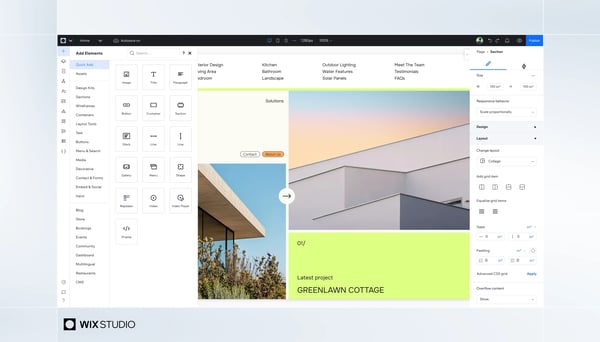
Customization is one area where some users encounter limitations. While the platform offers plenty of flexibility for standard business websites, reviewers with more advanced design requirements or highly specific workflows occasionally mention reaching the limits of what can be achieved within Wix’s structure. For most small businesses, those constraints may never become an issue, but teams with complex requirements should evaluate them early.
Pricing also comes up in G2 feedback. Some reviewers note that costs can increase as premium plans, paid apps, and additional features are added over time. However, many also point out that when hosting, domains, analytics, and other tools are considered together, the bundled approach can still represent solid value for businesses that use multiple parts of the platform.
Wix is a strong fit for business owners who want to build and manage a website or online store without a developer. I would consider it over the more commerce-focused platforms on this list when ease of use, speed to launch, and all-in-one website management are more important than deep customization or enterprise-level e-commerce functionality.
What I like about Wix Studio:
- Wix lowers the barrier to launching a professional website or online store through its drag-and-drop editor, templates, and beginner-friendly interface.
- Having website building, hosting, SEO tools, analytics, and e-commerce capabilities under one subscription helps reduce platform sprawl for smaller businesses.
What G2 users like about Wix Studio:
“The studio is fairly easy to use. AI also helps with wording and layout that can be adjusted later. Adding your projects and images can be time-consuming if not organized. Plans are available to purchase if you really want a high-end website. I have not used the Support option, as I have not needed it. The performance is smooth when the internet is good.”
– Wix Studio review, Adrian B.
What I dislike about Wix Studio:
- Based on G2 feedback, businesses with highly customized design requirements or advanced workflows may eventually encounter limitations, though the platform’s structure is often what makes it approachable for less technical users.
- Some reviewers note that costs can increase as premium features and paid apps are added, but many also find value in having multiple website and business tools consolidated under one platform.
What G2 users dislike about Wix Studio:
“Because the platform is so feature-rich, there’s a bit of a learning curve for beginners. Also, some very advanced customizations still require workarounds. That said, once you get familiar with it, the advantages far outweigh the downsides.”
– Wix Studio review, Les M.
A great storefront won’t drive results without visibility, so explore the best free SEO tools to improve your search performance.
4. WooCommerce: Best for WordPress users who want full control over their online store
WooCommerce is a free, open-source e-commerce plugin built for WordPress. During my evaluation, I found that its biggest advantage is how naturally it extends the WordPress ecosystem, allowing businesses to add online selling capabilities without moving to a separate commerce platform.
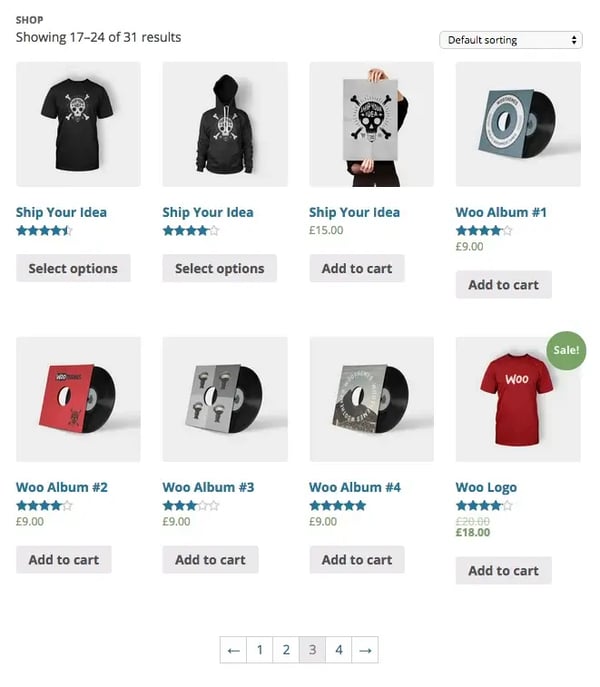
One of the first things that stood out to me was the cost of getting started. WooCommerce itself is free, and the core functionality covers product management, inventory tracking, checkout, and payment processing. Based on G2 feedback, many businesses appreciate being able to launch a store without committing to a monthly platform subscription from day one.
Because WooCommerce is built specifically for WordPress, the setup experience feels familiar for users already managing a WordPress website. Reviewers frequently mention working within the same admin environment to manage content, products, orders, and payments, which can make the transition into e-commerce much smoother.
I also noticed that flexibility comes up repeatedly in user feedback. WooCommerce supports a large ecosystem of plugins and extensions that allow businesses to add capabilities as their needs evolve. Reviewers mention connecting CRM systems, payment providers, shipping tools, subscriptions, and analytics platforms without being limited to a single vendor’s ecosystem.
Customization is another reason many businesses choose WooCommerce. Since the platform is open source, store owners have control over their site’s design, functionality, and data. I found that developers and technically experienced users often view this level of ownership as a major advantage compared to more restrictive hosted platforms.
The platform also supports a wide variety of business models. Whether a company sells physical products, digital downloads, memberships, or subscription-based offerings, WooCommerce provides the flexibility to adapt through its extension ecosystem. This broad applicability was reflected across the reviews I evaluated.
Community support is another area where WooCommerce benefits from its long-standing presence in the WordPress ecosystem. Users frequently reference the availability of documentation, tutorials, forums, and third-party resources. For businesses that prefer solving issues independently, this large knowledge base can be a valuable resource.
Performance is one area that requires planning as stores grow. Some reviewers mention slower site speeds when stores become more complex or rely heavily on plugins. However, many also note that hosting quality, caching, and site optimization play a significant role, making this less of a platform limitation and more of a consideration for how the store is managed.
I also found that while the core plugin is free, costs can increase as businesses add premium extensions and specialized functionality. Features such as advanced shipping rules, enhanced reporting, or niche integrations may require additional purchases. That said, many reviewers prefer this model because it allows them to invest only in the capabilities they actually need.
WooCommerce is a strong fit for businesses already invested in WordPress and for teams that value flexibility, ownership, and customization over convenience. I would consider it over hosted platforms on this list if maintaining control over your store’s data, design, and technology stack is a higher priority than having an all-in-one managed solution.
What I like about WooCommerce:
- WooCommerce feels like a natural extension of WordPress, allowing businesses to add e-commerce functionality without changing platforms or workflows.
- The combination of open-source flexibility, plugin extensibility, and full data ownership gives businesses significant control over how their stores evolve.
What G2 users like about WooCommerce:
“What makes WooCommerce so powerful is that it essentially removes the “ceiling” on what you can build. Since it’s an open-source plugin that integrates directly with WordPress, you’re not locked into a rigid, proprietary ecosystem where you have to pay a percentage of every sale or operate by someone else’s rules.”
– WooCommerce review, Derek W.
What I dislike about WooCommerce:
- Based on G2 feedback, larger stores with extensive plugin usage may need additional attention to hosting and performance optimization, though businesses that invest in the right infrastructure often report stable performance.
- While the core plugin is free, advanced functionality can require paid extensions over time. For many businesses, however, the ability to choose only the features they need offers more flexibility than paying for capabilities they may never use.
What G2 users dislike about WooCommerce:
“A key drawback of WooCommerce is that it can become resource-intensive as your store scales. As traffic and product listings grow, performance depends heavily on hosting quality and technical optimization, which can increase costs and require ongoing technical management.”
– WooCommerce review, Vishal J.
5. BigCommerce: Best for growing mid-market and B2B brands that need built-in commerce features
BigCommerce is a hosted e-commerce platform built for businesses that need more advanced commerce functionality without relying heavily on third-party apps. It holds a 4.2 out of 5 rating on G2 and an 83% recommendation rate. During my evaluation, I found that BigCommerce is particularly well-suited for growing retailers and B2B businesses that want a platform capable of supporting more complex operations as they scale.
One theme that appeared repeatedly in G2 reviews was the depth of BigCommerce’s native functionality. Users frequently mention features such as multi-channel selling, abandoned cart recovery, customer groups, and built-in SEO tools as capabilities that are available without relying on additional apps. For growing businesses, that can reduce both software costs and the operational complexity that comes with managing a large app ecosystem.
The platform’s approach to payment processing is another area that stood out to me. BigCommerce does not charge platform transaction fees, regardless of the payment gateway a merchant chooses. Several reviewers specifically compare this to competing platforms and describe it as a meaningful advantage as order volume grows. Payment processing also earns an 89% satisfaction score on G2, making it one of the platform’s highest-rated capabilities.
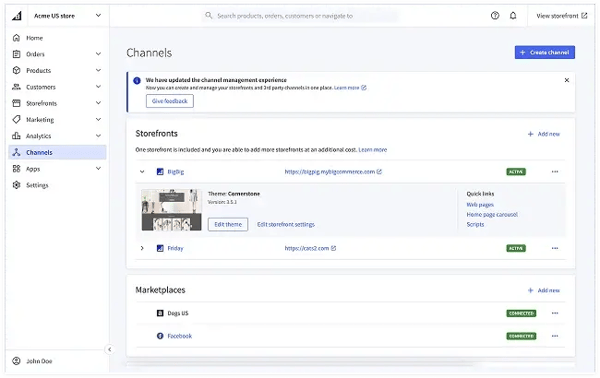
Ease of management came through consistently in the feedback I reviewed. BigCommerce scores 87% for ease of use, 86% for ease of administration, and 86% for ease of doing business on G2. Reviewers often describe managing products, promotions, inventory, and orders through a centralized dashboard that remains manageable even as catalogs and operations become more sophisticated.
Multi-channel commerce is another capability that users frequently highlight. BigCommerce offers native integrations with Amazon, eBay, Walmart Marketplace, Google Shopping, Facebook, and Instagram, allowing merchants to manage multiple sales channels from one platform. For retailers selling across marketplaces and social channels, this can simplify catalog management and reduce the need for additional integration tools.
Performance and reliability also receive strong marks from users. The platform scores 88% for reliability on G2, and reviewers often describe it as capable of supporting seasonal spikes, growing catalogs, and higher traffic volumes without significant disruption. For businesses planning long-term growth, that stability can be an important consideration.
I also found BigCommerce’s B2B capabilities noteworthy. Features such as customer-specific pricing, quote management, purchase orders, account hierarchies, and customer groups are built directly into the platform. Several reviewers operating both wholesale and direct-to-consumer businesses mention being able to manage those relationships from a single platform rather than maintaining separate systems.
Revenue-based pricing is one of the most commonly mentioned considerations in G2 reviews. Users note that BigCommerce automatically moves merchants into higher plan tiers as annual sales thresholds are reached, which can create unexpected cost increases during periods of rapid growth. At the same time, many reviewers acknowledge that the platform’s built-in functionality and zero-transaction-fee model often help offset those additional costs.
Design flexibility is another trade-off worth evaluating. Reviewers mention that while the Stencil framework provides meaningful customization options, the visual editing experience is less flexible than some drag-and-drop website builders. Some users also note that advanced theme modifications may require developer support. For businesses with technical resources, that additional control may be worthwhile, but less technical teams may find the learning curve steeper.
BigCommerce makes the most sense for retailers and B2B businesses that have outgrown basic storefront builders and want more functionality built directly into their commerce platform. I would consider it over simpler alternatives when multi-channel selling, B2B capabilities, and long-term scalability are priorities, particularly for businesses looking to reduce their reliance on a large collection of paid apps.
What I like about BigCommerce:
- BigCommerce includes a wide range of commerce features natively, reducing the need to rely on a large collection of paid apps as a business grows.
- The combination of zero transaction fees and highly rated payment processing capabilities can create meaningful savings for merchants processing larger sales volumes.
What G2 users like about BigCommerce:
“BigCommerce makes it easy to build and edit our website. We started our project to build a new website for our company late last year and we went live within 3 months with a small team. The user experience is amazing, and the performance has been great so far, we haven’t run into any issues.”
– WooCommerce review, Stephanie D.
What I dislike about BigCommerce:
- Revenue-based pricing tiers are a recurring theme in G2 reviews. Some users mention that automatic plan upgrades tied to annual sales thresholds can create unexpected cost increases, though many also note that the platform’s built-in functionality helps justify the higher tiers.
- Design customization requires more technical involvement than some competing platforms. While the Stencil framework offers meaningful control, reviewers note that advanced theme changes are often easier to manage with developer support.
What G2 users dislike about BigCommerce:
“I dislike that BigCommerce can feel limiting with its design customization and that some advanced features require extra apps or higher-tier plans, which can make it more expensive as you scale.”
– WooCommerce review, Nikhil. A.
6. Adobe Commerce: Best for enterprise brands managing complex catalogs, multi-site operations, and deep customization
Adobe Commerce, formerly Magento Commerce, is an enterprise e-commerce platform built for businesses with requirements that extend beyond what most out-of-the-box commerce platforms can support. My evaluation revealed that organizations typically choose Adobe Commerce because they need flexibility, control, and scalability that can accommodate highly specific business processes.
Customization sits at the center of Adobe Commerce’s value proposition. G2 reviewers consistently highlight the platform’s ability to support tailored pricing models, custom checkout experiences, unique product structures, and industry-specific workflows. This strength is also reflected in its G2 feature ratings, where both customization and extensibility score 88%, outperforming the category average. For businesses that view commerce as a competitive differentiator rather than a standardized process, that flexibility can be difficult to replicate elsewhere.
Catalog complexity is another area where Adobe Commerce stands out. Several reviewers describe managing large product assortments, advanced product attributes, inventory across multiple locations, and sophisticated pricing structures within a single platform. I found that many organizations adopt Adobe Commerce specifically because they need a platform that can grow alongside increasingly complex catalog and merchandising requirements.
Enterprise reviewers also frequently mention the platform’s ability to support multiple storefronts from a centralized backend. Managing different brands, regions, currencies, and languages within the same environment can reduce operational duplication and provide greater consistency across global commerce operations. For businesses operating in several markets, this capability appears to be a meaningful advantage.
What stood out to me in the B2B feedback was the platform’s ability to support multiple commerce models simultaneously. Reviewers describe running both wholesale and direct-to-consumer operations from a shared infrastructure while managing customer-specific pricing, purchase orders, account hierarchies, and contract-based buying experiences. This flexibility allows businesses to support different buyer journeys without maintaining separate commerce systems.
Marketing teams also seem to benefit from Adobe Commerce’s content management capabilities. Several G2 reviewers reference Page Builder and Content Staging as useful tools for scheduling promotions, preparing campaign launches, and updating storefront content without requiring developer involvement for every change. For organizations managing frequent campaigns, that level of control can help marketing teams operate more independently.
Another advantage I noticed was Adobe Commerce’s connection to the broader Adobe ecosystem. Businesses already using Adobe Experience Cloud, analytics, personalization, or marketing tools frequently describe those integrations as valuable because they create a more connected view of customer behavior across channels. Recent additions around AI-powered content and commerce experiences further expand that ecosystem.
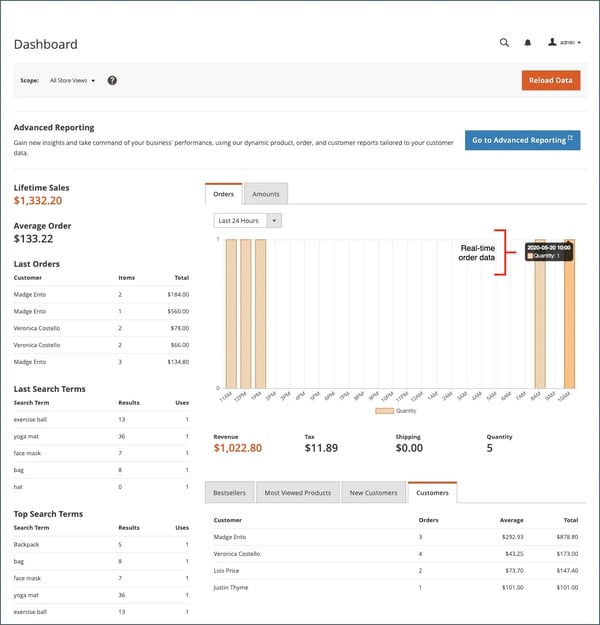 Source: Adobe Commerce
The platform’s biggest trade-off is complexity. Ease of Setup scores 69% on G2, well below the category average, and reviewers regularly mention a steep learning curve, developer dependency, and longer implementation timelines. However, many of those same reviewers also acknowledge that the platform’s flexibility is directly tied to that complexity, making it a more suitable fit for organizations with dedicated technical resources.
Cost is another recurring theme in G2 reviews. Licensing, development, hosting, extensions, and ongoing maintenance can make Adobe Commerce one of the more significant investments in this category. At the same time, businesses managing large catalogs, multiple storefronts, and highly customized commerce experiences often describe that investment as easier to justify because replacing those capabilities with separate tools can introduce additional complexity.
Adobe Commerce is best suited for organizations that have outgrown the limitations of simpler platforms and need a commerce foundation capable of supporting highly customized operations. I would consider it over every other platform on this list when customization, multi-store management, catalog complexity, and long-term flexibility are more important than ease of implementation or speed to launch.
What I like about Adobe Commerce:
- Adobe Commerce gives businesses the flexibility to support highly specific pricing models, workflows, and customer experiences that are difficult to achieve on more prescriptive platforms.
- Its combination of multi-store management, B2B functionality, and deep catalog flexibility makes it particularly valuable for organizations managing complex commerce operations.
What G2 users like about Adobe Commerce:
“What I liked most about Adobe Commerce formerly Magento Commerce is its flexibility and customization options. It allows easy customization of online stores based on business needs. Managing products, categories, and multiple payment options is also smooth and efficient. Ovverall, it is a scalable platform that works well for growing ecommerce businesses.”
– Adobe Commerce review, Muzammil M.
What I dislike about Adobe Commerce:
- G2 reviewers frequently mention the implementation effort required to get Adobe Commerce up and running. The learning curve, developer dependency, and longer deployment timelines can be significant, though many users also note that those challenges are tied to the platform’s depth and flexibility.
- Cost of ownership comes up regularly in reviews, especially when licensing, development, hosting, and maintenance are considered together. However, organizations with complex commerce requirements often view that investment as reasonable given the level of customization and scalability the platform provides.
What G2 users dislike about Adobe Commerce:
“The costs were a bit of an issue for us because we moved from a different platform that was cheaper. We didn’t see a big growth in sales right after switching. Plus, the platform was complex, and the team had to be trained well, which took a long time. The initial setup was complex and hard to grasp, even though we got guided onboarding and some simplifications for Marketing. A clearer UX would be nicer.”
– Adobe Commerce review, Marta .
Frequently asked questions about e-commerce platforms
Have more questions? Find more answers below.
Q1. What is e-commerce platform?
An e-commerce platform is software that helps businesses build, manage, and grow an online store. It typically includes tools for product management, payments, inventory tracking, order fulfillment, customer accounts, and website design, allowing businesses to sell products and services online from a centralized system.
Q2. Which platform is best for e-commerce?
Shopify is the best overall e-commerce platform for most businesses. It offers a strong balance of ease of use, scalability, integrations, and commerce functionality. However, businesses with more specialized needs may find a better fit in platforms such as BigCommerce, WooCommerce, Salesforce Commerce, or Adobe Commerce.
Q3. Which e-commerce platform should I use for my online store?
Choose Shopify for simplicity and scalability, Wix for ease of website creation, WooCommerce if you’re already using WordPress, BigCommerce for built-in commerce functionality, Salesforce Commerce for enterprise operations, and Adobe Commerce for advanced customization. The best choice depends on your business size, technical resources, and growth plans.
Q4. Which e-commerce platform is best for SEO?
WooCommerce offers the most flexibility for SEO because it gives businesses greater control over site structure, URLs, metadata, and optimization tools. BigCommerce and Adobe Commerce also provide strong SEO capabilities, while Shopify and Wix offer easier-to-manage SEO features for businesses without dedicated technical teams.
Q5. Which is the highest-rated commerce platform for emerging brands seeking an all-in-one e-commerce without customization complexity?
Shopify is the strongest option for emerging brands seeking an all-in-one e-commerce platform. It combines store management, payments, inventory tracking, themes, and integrations in a single system while requiring minimal technical expertise, making it a practical choice for businesses focused on growth rather than customization.
Q6. Which are the most trusted commerce solutions by e-commerce leaders managing high-volume storefronts based on user reviews?
Salesforce Commerce and Adobe Commerce are the strongest options for businesses managing high-volume storefronts. Both platforms support complex catalogs, large transaction volumes, multiple storefronts, and enterprise-level operations. BigCommerce is also frequently considered by growing mid-market brands that need scalability without extensive app dependencies.
Q7. Which is most trusted social commerce solutions by e-commerce managers based on user reviews?
Shopify is one of the most trusted platforms for social commerce. Its integrations with Instagram, Facebook, and other sales channels make it easy to manage products and sales across multiple touchpoints. BigCommerce is another strong option for businesses with more advanced multi-channel commerce requirements.
Q8. How to choose an e-commerce platform?
Start by evaluating your budget, technical resources, product catalog complexity, and growth plans. Consider factors such as ease of use, customization, integrations, SEO capabilities, multi-channel selling, and scalability. The best platform should support your current requirements while providing room for future growth.
Q9. Which e-commerce platform is best for small business?
Shopify is the best e-commerce platform for most small businesses because it balances ease of use with long-term scalability. Wix is another strong option for business owners who want a simple website and online store experience without managing technical setup or ongoing maintenance.
Q10. Which e-commerce service is best for tech startups?
WooCommerce is a strong choice for tech startups that want flexibility, customization, and full control over their technology stack. Shopify is often a better fit for startups that want a managed platform, faster deployment, and fewer infrastructure responsibilities while focusing on business growth.
Q11. How do I choose the right e-commerce shopping cart software?
Look for shopping cart software that supports your preferred payment methods, inventory management requirements, shipping workflows, and integrations. It’s also important to consider security, mobile responsiveness, scalability, and ease of use. Choosing software that aligns with future growth can reduce migration challenges later.
Choose where your business is going next
As I evaluated these platforms, one thing became clear: the best choice isn’t always the platform with the most features. It’s the one that can support your business as it grows. Migrating platforms later can be expensive and disruptive, which makes long-term fit just as important as immediate needs.
Shopify and Wix are strong options for businesses that want simplicity and speed. WooCommerce offers more ownership and flexibility through WordPress. BigCommerce balances built-in functionality with scalability, while Salesforce Commerce and Adobe Commerce are better suited for organizations managing more complex commerce operations.
If you’re still comparing options, focus on your growth plans, technical resources, and operational requirements rather than feature lists alone.
And once you’ve chosen a platform, I recommend exploring shopping cart software to learn how different checkout experiences can impact conversions and customer satisfaction.
[ad_2]
Source_link