Summary: Multi-channel marketing is now essential for brands in 2026. By reaching audiences across email, social, web, and more, with consistent messaging tailored to each platform, you’ll boost engagement, conversions, and resilience against shifting algorithms. Start small: define your audience, pick key channels, use automation, and optimize with data to future‑proof your marketing strategy.
Multi-channel marketing, what is it, why is it important, and how do I start? These are just some of the questions our team gets when this topic is brought up. For any marketer or company thinking about starting a multi-channel marketing strategy, we have no reservations in saying that multichannel marketing WILL make or break brands in the coming years.
Brands can no longer afford to only communicate to customers via one channel anymore, instead they need to cast a wide (but organized) net for communications and strategy. Let’s break down what multi-channel marketing is and how businesses like yours can use it in 2026.
What is Multi-channel Marketing?
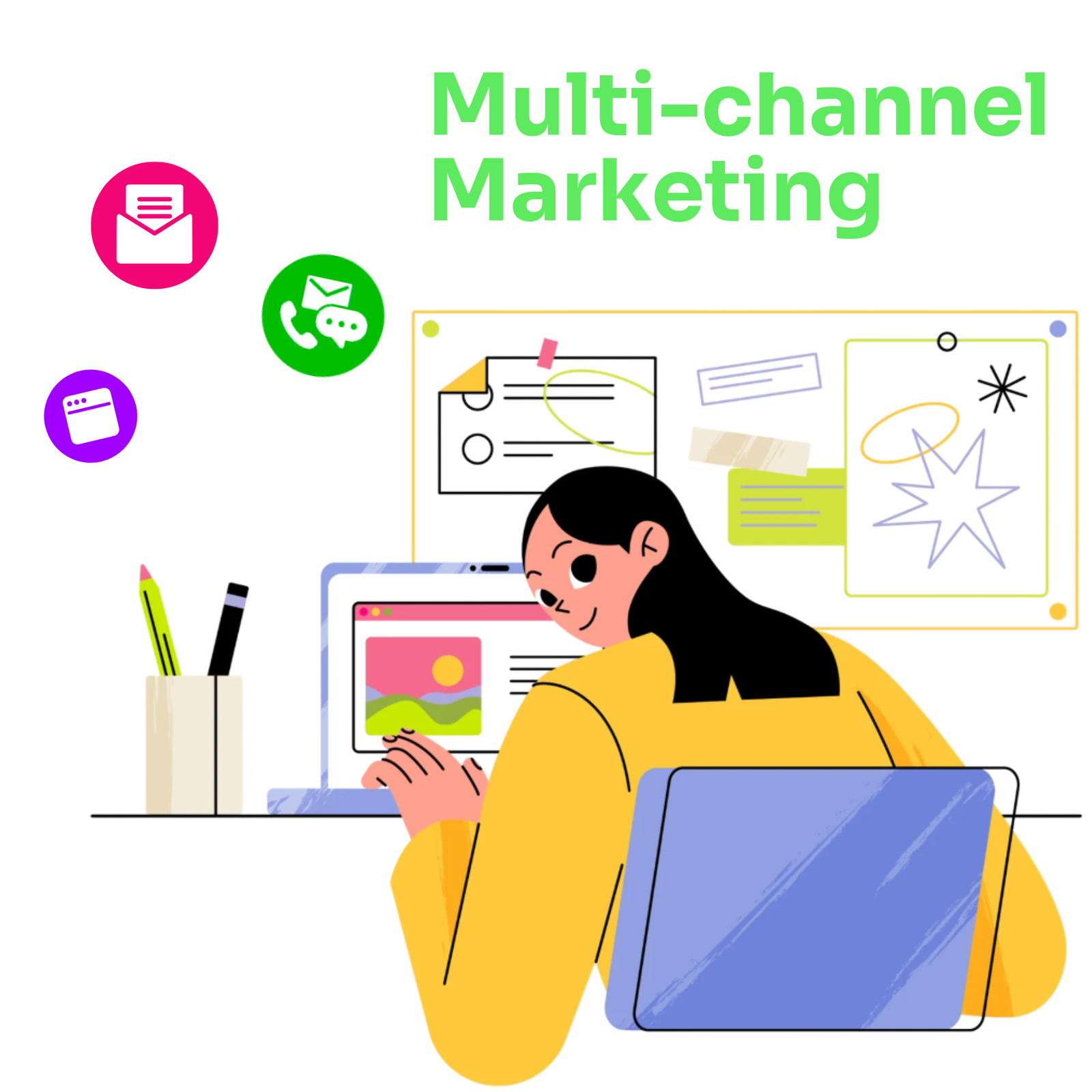
Multi-channel marketing is all about reaching your audience across various channels, from email to social media, websites, and more, all at the same time, so customers can engage with your brand however they like. It’s like casting a wider net with consistent messaging to boost visibility and touchpoints, without forcing everyone down a single path.
Before we breakdown some multi-channel marketing strategies and benefits, it’s important for us to emphases that these strategies won’t fully work (and reap you benefits) until you define your buyer personas first. This foundational step ensures you understand your audience’s demographics, behaviors, pain points, and preferred channels before selecting platforms or crafting messages.
Muti-channel or Omni-channel?
Just to clear up some confusion between multi and omni channel marketing, let’s breakdown the differences and positives of both: Multi-channel focuses on presence and consistent messaging across separate platforms, allowing customers to engage via their preferred method.
Whereas omni-channel shares customer data in real-time, so actions on one channel (e.g., browsing an app) influence others (e.g., personalized email reminders), eliminating any customer journey silos.

Multi-channel Marketing Benefits
The key driver for marketing teams to deploy a multi-channel marketing strategy in the next 12 months is algorithms!
With 2026 algorithms on platforms like LinkedIn and Google now prioritizing authentic, multi-source content and expertise signals such as detailed topical blogs, businesses must maintain a presence everywhere to combat shrinking organic reach and stand out in crowded feeds.
If you haven’t already, read our social post about shrinking organic reach due to zero-click searches here.
Multi-channel marketing shines here by enabling consistent messaging across email, social, ads, and web, driving higher engagement, lead volume, and ROI without the complexity of omni channel integrations.
Diversified approaches future-proofs campaigns (especially for B2B businesses), leveraging automation tools for efficient scaling while adapting swiftly to algorithm shifts that reward broad visibility over siloed efforts.
The Stats
- Multi-channel campaigns combining email, LinkedIn, and phone boost conversion rates by up to 250% compared to single-channel efforts. Source.
- B2B companies using strong multichannel strategies retain 89% of customers, nearly 2.7x higher than the 33% retention of weak or single-channel approaches. Source.
- Campaigns across 3+ channels outperform single-channel ones by up to 494% in engagement. Source.

Getting Started with Multi-channel Marketing
To get started with multi-channel marketing, marketing teams or businesses can follow these practical, sequential steps to build momentum without overwhelming resources.
- Define clear goals and buyer personas: Start by setting specific, measurable objectives like boosting website traffic by 20% or increasing conversions, then create detailed profiles of your ideal customers based on demographics, behaviors, and preferences to guide your efforts.
- Select the right channels: Identify 3-5 platforms where your audience already spends time, such as email, social media platforms, or your website. Avoid being spread too thin by prioritizing based on data and starting small.
- Develop consistent yet tailored messaging: Craft a unified brand voice across channels, but adapt content formats (e.g., short videos for Instagram, detailed emails for newsletters) to suit each platform’s strengths.
- Leverage automation tools: Use platforms like marketing automation software to manage campaigns efficiently, personalize outreach, and integrate channels.
- Launch, measure, and optimize: Roll out a pilot campaign, track key metrics like engagement rates, click-throughs, and ROI with analytics tools, then adjust based on performance.
Multi-channel marketing isn’t just a trend, it’s the strategic lifeline for brands thriving in 2026’s algorithm-driven, multi-platform world, where single-channel efforts simply can’t compete on reach, engagement, or ROI.
By defining your audience, picking the right channels, crafting smart messaging, automating smartly, and iterating with data, your team can launch campaigns that deliver outsized results.
Start small today, scale with confidence, and watch your business cast that wide, organized net to connect, convert, and future-proof against whatever shifts come next.