• About Us
  • Disclaimer
  • Contact Us
  • Privacy Policy
Thursday, July 30, 2026
mGrowTech
No Result
View All Result
  • Technology And Software
    • Account Based Marketing
    • Channel Marketing
    • Marketing Automation
      • Al, Analytics and Automation
      • Ad Management
  • Digital Marketing
    • Social Media Management
    • Google Marketing
  • Direct Marketing
    • Brand Management
    • Marketing Attribution and Consulting
  • Mobile Marketing
  • Event Management
  • PR Solutions
  • Technology And Software
    • Account Based Marketing
    • Channel Marketing
    • Marketing Automation
      • Al, Analytics and Automation
      • Ad Management
  • Digital Marketing
    • Social Media Management
    • Google Marketing
  • Direct Marketing
    • Brand Management
    • Marketing Attribution and Consulting
  • Mobile Marketing
  • Event Management
  • PR Solutions
No Result
View All Result
mGrowTech
No Result
View All Result
Home Al, Analytics and Automation

Meet oLLM: A Lightweight Python Library that brings 100K-Context LLM Inference to 8 GB Consumer GPUs via SSD Offload—No Quantization Required

Josh by Josh
September 29, 2025
in Al, Analytics and Automation
0
Meet oLLM: A Lightweight Python Library that brings 100K-Context LLM Inference to 8 GB Consumer GPUs via SSD Offload—No Quantization Required


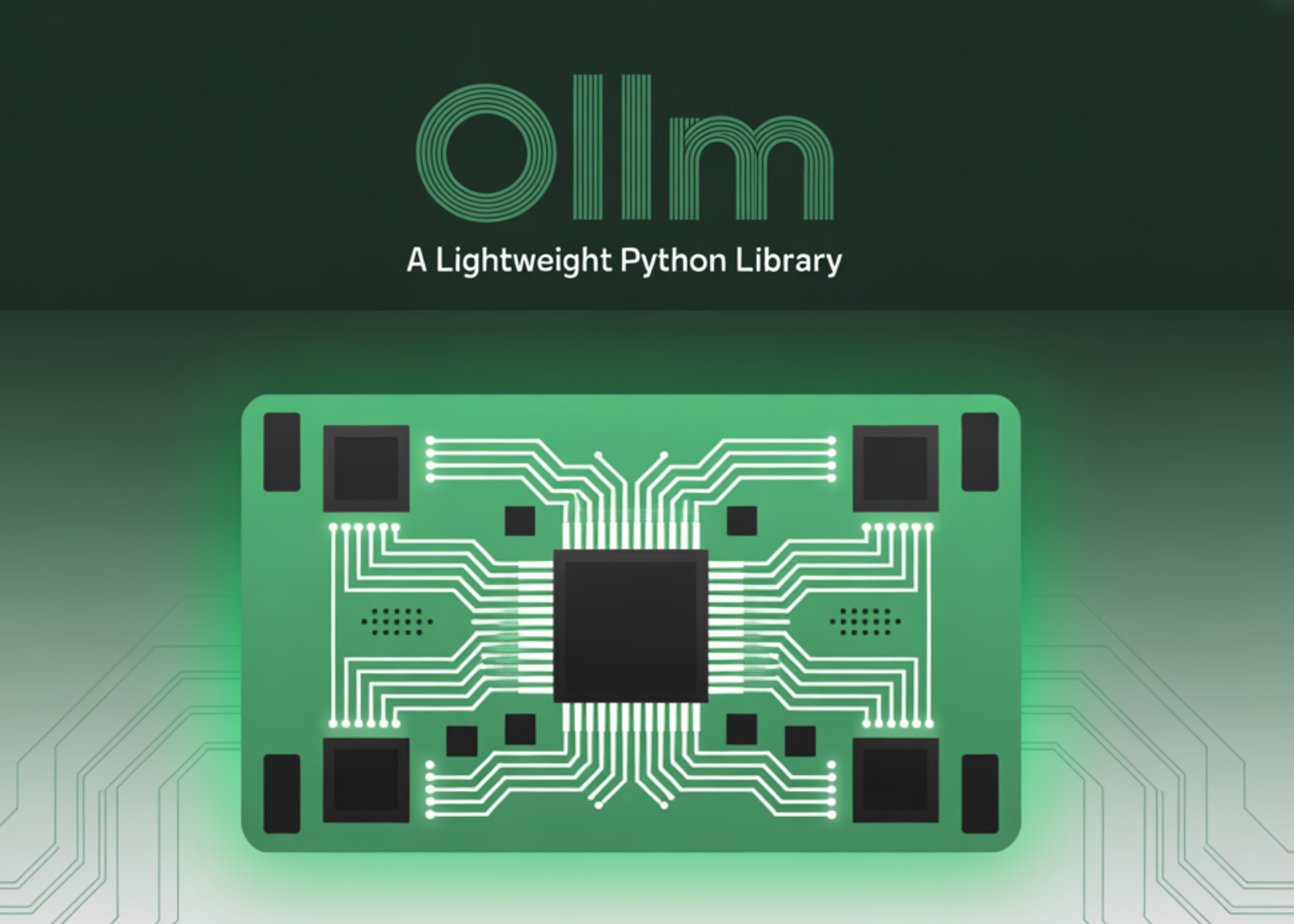
oLLM is a lightweight Python library built on top of Huggingface Transformers and PyTorch and runs large-context Transformers on NVIDIA GPUs by aggressively offloading weights and KV-cache to fast local SSDs. The project targets offline, single-GPU workloads and explicitly avoids quantization, using FP16/BF16 weights with FlashAttention-2 and disk-backed KV caching to keep VRAM within 8–10 GB while handling up to ~100K tokens of context.

But What’s new?

(1) KV cache read/writes that bypass mmap to reduce host RAM usage; (2) DiskCache support for Qwen3-Next-80B; (3) Llama-3 FlashAttention-2 for stability; and (4) GPT-OSS memory reductions via “flash-attention-like” kernels and chunked MLP. The table published by the maintainer reports end-to-end memory/I/O footprints on an RTX 3060 Ti (8 GB):

  • Qwen3-Next-80B (bf16, 160 GB weights, 50K ctx) → ~7.5 GB VRAM + ~180 GB SSD; noted throughput “≈ 1 tok/2 s”.
  • GPT-OSS-20B (packed bf16, 10K ctx) → ~7.3 GB VRAM + 15 GB SSD.
  • Llama-3.1-8B (fp16, 100K ctx) → ~6.6 GB VRAM + 69 GB SSD.

How it works

oLLM streams layer weights directly from SSD into the GPU, offloads the attention KV cache to SSD, and optionally offloads layers to CPU. It uses FlashAttention-2 with online softmax so the full attention matrix is never materialized, and chunks large MLP projections to bound peak memory. This shifts the bottleneck from VRAM to storage bandwidth and latency, which is why the oLLM project emphasizes NVMe-class SSDs and KvikIO/cuFile (GPUDirect Storage) for high-throughput file I/O.

Supported models and GPUs

Out of the box the examples cover Llama-3 (1B/3B/8B), GPT-OSS-20B, and Qwen3-Next-80B. The library targets NVIDIA Ampere (RTX 30xx, A-series), Ada (RTX 40xx, L4), and Hopper; Qwen3-Next requires a dev build of Transformers (≥ 4.57.0.dev). Notably, Qwen3-Next-80B is a sparse MoE (80B total, ~3B active) that vendors typically position for multi-A100/H100 deployments; oLLM’s claim is that you can execute it offline on a single consumer GPU by paying the SSD penalty and accepting low throughput. This stands in contrast to vLLM docs, which suggest multi-GPU servers for the same model family.

Installation and minimal usage

The project is MIT-licensed and available on PyPI (pip install ollm), with an additional kvikio-cu{cuda_version} dependency for high-speed disk I/O. For Qwen3-Next models, install Transformers from GitHub. A short example in the README shows Inference(...).DiskCache(...) wiring and generate(...) with a streaming text callback. (PyPI currently lists 0.4.1; the README references 0.4.2 changes.)

Performance expectations and trade-offs

  • Throughput: The maintainer reports ~0.5 tok/s for Qwen3-Next-80B at 50K context on an RTX 3060 Ti—usable for batch/offline analytics, not for interactive chat. SSD latency dominates.
  • Storage pressure: Long contexts require very large KV caches; oLLM writes these to SSD to keep VRAM flat. This mirrors broader industry work on KV offloading (e.g., NVIDIA Dynamo/NIXL and community discussions), but the approach is still storage-bound and workload-specific.
  • Hardware reality check: Running Qwen3-Next-80B “on consumer hardware” is feasible with oLLM’s disk-centric design, but typical high-throughput inference for this model still expects multi-GPU servers. Treat oLLM as an execution path for large-context, offline passes rather than a drop-in replacement for production serving stacks like vLLM/TGI.

Bottom line

oLLM pushes a clear design point: keep precision high, push memory to SSD, and make ultra-long contexts viable on a single 8 GB NVIDIA GPU. It won’t match data-center throughput, but for offline document/log analysis, compliance review, or large-context summarization, it’s a pragmatic way to execute 8B–20B models comfortably and even step up to MoE-80B if you can tolerate ~100–200 GB of fast local storage and sub-1 tok/s generation.


Check out the GITHUB REPO here. Feel free to check out our GitHub Page for Tutorials, Codes and Notebooks. Also, feel free to follow us on Twitter and don’t forget to join our 100k+ ML SubReddit and Subscribe to our Newsletter.


Asif Razzaq is the CEO of Marktechpost Media Inc.. As a visionary entrepreneur and engineer, Asif is committed to harnessing the potential of Artificial Intelligence for social good. His most recent endeavor is the launch of an Artificial Intelligence Media Platform, Marktechpost, which stands out for its in-depth coverage of machine learning and deep learning news that is both technically sound and easily understandable by a wide audience. The platform boasts of over 2 million monthly views, illustrating its popularity among audiences.

🔥[Recommended Read] NVIDIA AI Open-Sources ViPE (Video Pose Engine): A Powerful and Versatile 3D Video Annotation Tool for Spatial AI


Source_link

READ ALSO

Meta Bets Its Next Revenue Line on Personal AI Agents – Unite.AI

How a medical database developed at MIT evolved into a global standard of data-sharing | MIT News

Related Posts

Meta Bets Its Next Revenue Line on Personal AI Agents – Unite.AI
Al, Analytics and Automation

Meta Bets Its Next Revenue Line on Personal AI Agents – Unite.AI

July 30, 2026
How a medical database developed at MIT evolved into a global standard of data-sharing | MIT News
Al, Analytics and Automation

How a medical database developed at MIT evolved into a global standard of data-sharing | MIT News

July 30, 2026
Prompt Engineering vs Loop Engineering vs Graph Engineering: What Changes at Each Layer
Al, Analytics and Automation

Prompt Engineering vs Loop Engineering vs Graph Engineering: What Changes at Each Layer

July 29, 2026
Al, Analytics and Automation

5 Architectural Patterns for Persistent Memory and State in AI Agents

July 29, 2026
A Practical Guide to Bone Tissue Labeling and Annotation
Al, Analytics and Automation

A Practical Guide to Bone Tissue Labeling and Annotation

July 29, 2026
OpenAI and Anthropic Back Employee Call to Pace AI Progress – Unite.AI
Al, Analytics and Automation

OpenAI and Anthropic Back Employee Call to Pace AI Progress – Unite.AI

July 29, 2026
Next Post
Lenovo’s Latest Gaming Laptop Is $200 Off Right Now

Lenovo's Latest Gaming Laptop Is $200 Off Right Now

POPULAR NEWS

Trump ends trade talks with Canada over a digital services tax

Trump ends trade talks with Canada over a digital services tax

June 28, 2025
15 Trending Songs on TikTok in 2025 (+ How to Use Them)

15 Trending Songs on TikTok in 2025 (+ How to Use Them)

June 18, 2025
Communication Effectiveness Skills For Business Leaders

Communication Effectiveness Skills For Business Leaders

June 10, 2025
App Development Cost in Singapore: Pricing Breakdown & Insights

App Development Cost in Singapore: Pricing Breakdown & Insights

June 22, 2025
Comparing the Top 7 Large Language Models LLMs/Systems for Coding in 2025

Comparing the Top 7 Large Language Models LLMs/Systems for Coding in 2025

November 4, 2025

EDITOR'S PICK

A Guide to Fine-Tuning FunctionGemma

A Guide to Fine-Tuning FunctionGemma

January 17, 2026
Justin Solomon appointed associate dean of engineering education | MIT News

Justin Solomon appointed associate dean of engineering education | MIT News

May 22, 2026
When your AI browser becomes your enemy: The Comet security disaster

When your AI browser becomes your enemy: The Comet security disaster

October 26, 2025

How to Build and Evolve a Custom OpenAI Agent with A-Evolve Using Benchmarks, Skills, Memory, and Workspace Mutations

April 1, 2026

About

We bring you the best Premium WordPress Themes that perfect for news, magazine, personal blog, etc. Check our landing page for details.

Follow us

Categories

  • Account Based Marketing
  • Ad Management
  • Al, Analytics and Automation
  • Brand Management
  • Channel Marketing
  • Digital Marketing
  • Direct Marketing
  • Event Management
  • Google Marketing
  • Marketing Attribution and Consulting
  • Marketing Automation
  • Mobile Marketing
  • PR Solutions
  • Social Media Management
  • Technology And Software
  • Uncategorized

Recent Posts

  • PR can’t stop measuring the wrong things
  • The Spacecraft NASA Sent To Rescue The Falling Swift Observatory Is In Trouble
  • Caribbean & Mexico Escapes with Marriott Bonvoy
  • Drive more holiday sales with July’s Demand Gen Drop
  • About Us
  • Disclaimer
  • Contact Us
  • Privacy Policy
No Result
View All Result
  • Technology And Software
    • Account Based Marketing
    • Channel Marketing
    • Marketing Automation
      • Al, Analytics and Automation
      • Ad Management
  • Digital Marketing
    • Social Media Management
    • Google Marketing
  • Direct Marketing
    • Brand Management
    • Marketing Attribution and Consulting
  • Mobile Marketing
  • Event Management
  • PR Solutions