• About Us
  • Disclaimer
  • Contact Us
  • Privacy Policy
Saturday, March 14, 2026
mGrowTech
No Result
View All Result
  • Technology And Software
    • Account Based Marketing
    • Channel Marketing
    • Marketing Automation
      • Al, Analytics and Automation
      • Ad Management
  • Digital Marketing
    • Social Media Management
    • Google Marketing
  • Direct Marketing
    • Brand Management
    • Marketing Attribution and Consulting
  • Mobile Marketing
  • Event Management
  • PR Solutions
  • Technology And Software
    • Account Based Marketing
    • Channel Marketing
    • Marketing Automation
      • Al, Analytics and Automation
      • Ad Management
  • Digital Marketing
    • Social Media Management
    • Google Marketing
  • Direct Marketing
    • Brand Management
    • Marketing Attribution and Consulting
  • Mobile Marketing
  • Event Management
  • PR Solutions
No Result
View All Result
mGrowTech
No Result
View All Result
Home Al, Analytics and Automation

Lincoln Lab unveils the most powerful AI supercomputer at any US university | MIT News

Josh by Josh
October 4, 2025
in Al, Analytics and Automation
0
Lincoln Lab unveils the most powerful AI supercomputer at any US university | MIT News


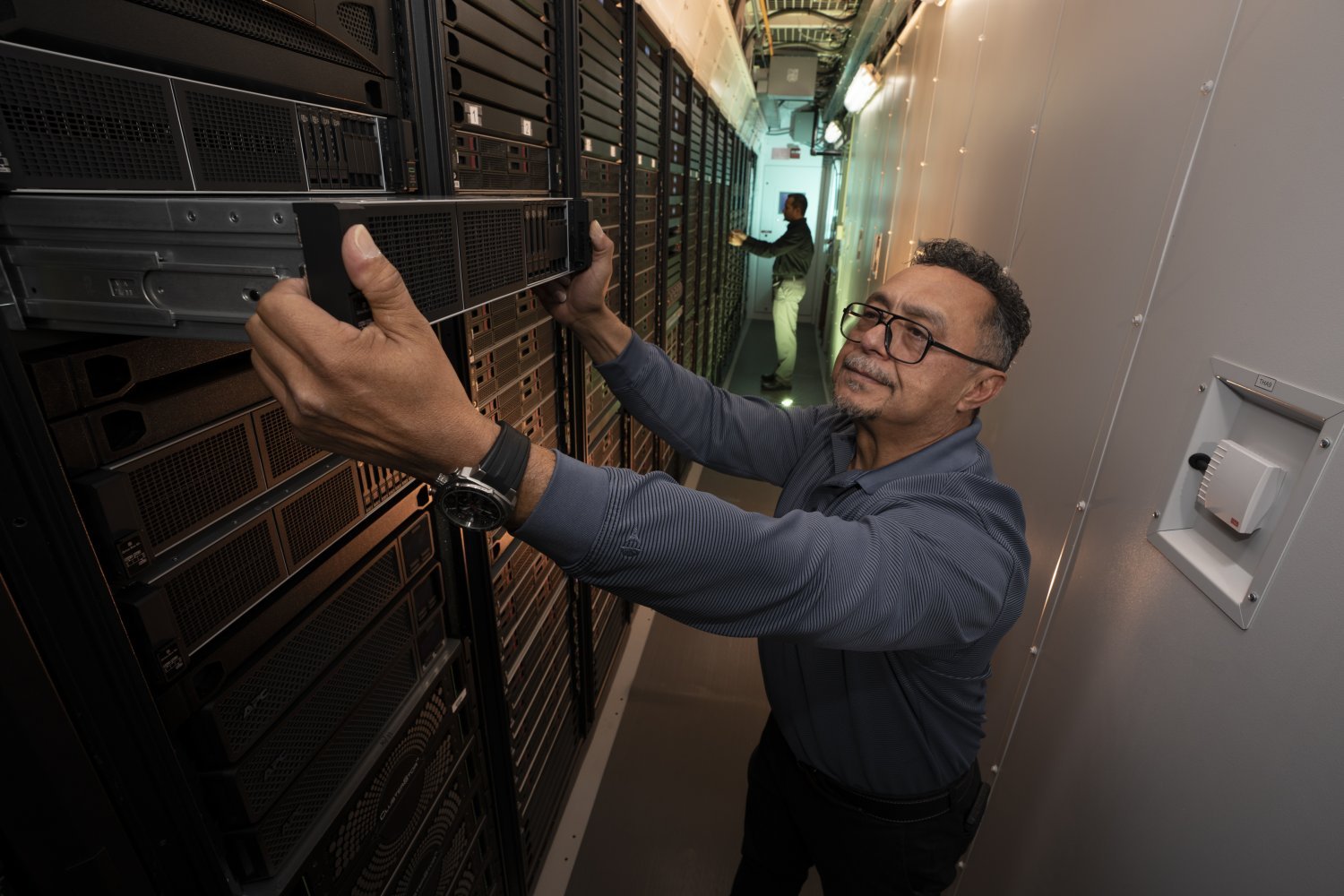
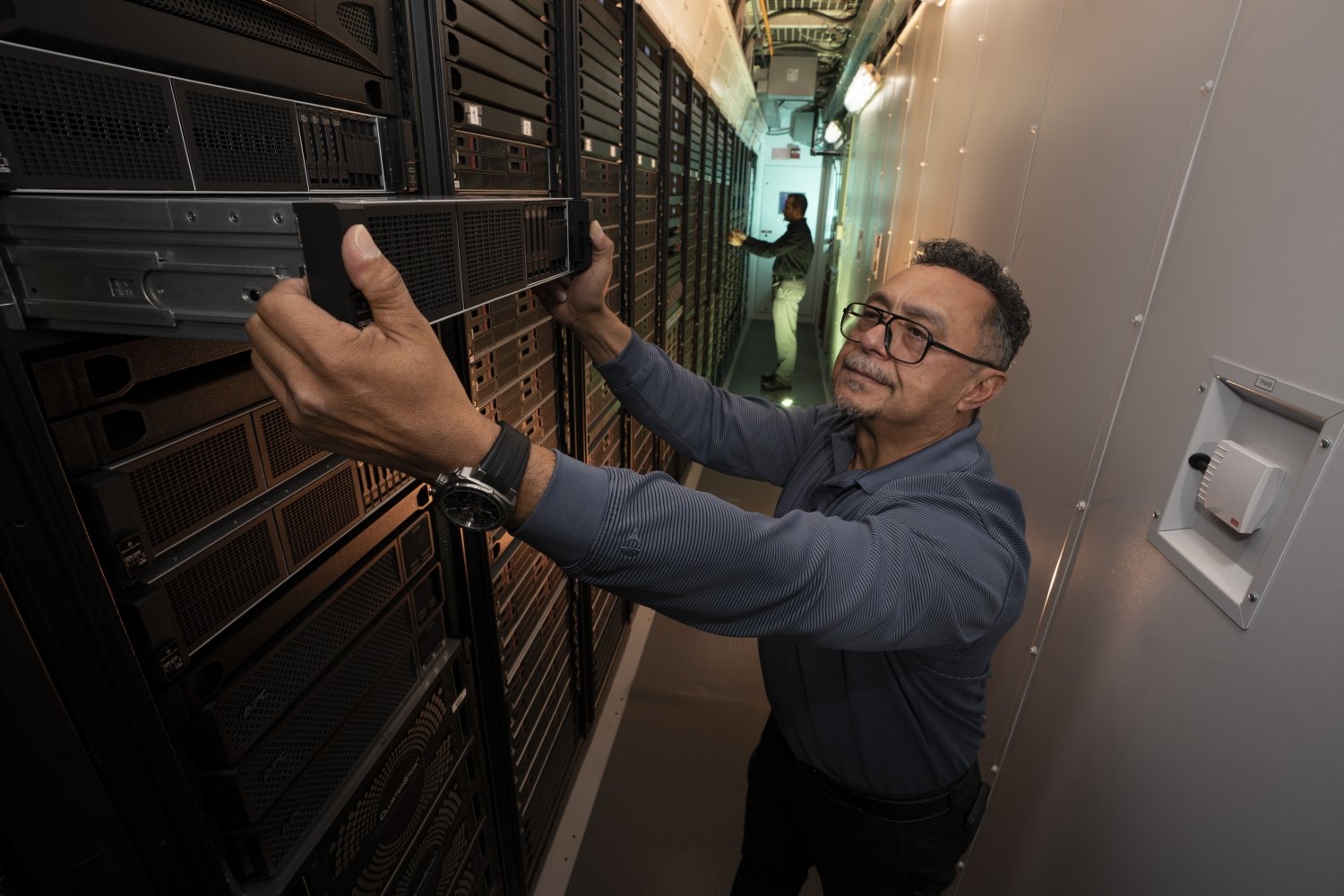
The new TX-Generative AI Next (TX-GAIN) computing system at the Lincoln Laboratory Supercomputing Center  (LLSC) is the most powerful AI supercomputer at any U.S. university. With its recent ranking from  TOP500, which biannually publishes a list of the top supercomputers in various categories, TX-GAIN joins the ranks of other powerful systems at the LLSC, all supporting research and development at Lincoln Laboratory and across the MIT campus. 

“TX-GAIN will enable our researchers to achieve scientific and engineering breakthroughs. The system will play a large role in supporting generative AI, physical simulation, and data analysis across all research areas,” says Lincoln Laboratory Fellow Jeremy Kepner, who heads the LLSC. 

The LLSC is a key resource for accelerating innovation at Lincoln Laboratory. Thousands of researchers tap into the LLSC to analyze data, train models, and run simulations for federally funded research projects. The supercomputers have been used, for example, to simulate billions of aircraft encounters to develop collision-avoidance systems for the Federal Aviation Administration, and to train models in the complex tasks of autonomous navigation for the Department of Defense. Over the years, LLSC capabilities have been essential to numerous award-winning technologies, including those that have improved  airline safety,  prevented the spread of new diseases, and  aided in hurricane responses. 

As its name suggests, TX-GAIN is especially equipped for developing and applying generative AI. Whereas traditional AI focuses on categorization tasks, like identifying whether a photo depicts a dog or cat, generative AI produces entirely new outputs. Kepner describes it as a mathematical combination of interpolation (filling in the gaps between known data points) and extrapolation (extending data beyond known points). Today, generative AI is widely known for its use of large language models to create human-like responses to user prompts. 

At Lincoln Laboratory, teams are applying generative AI to various domains beyond large language models. They are using the technology, for instance, to evaluate radar signatures, supplement weather data where coverage is missing, root out anomalies in network traffic, and explore chemical interactions to design new medicines and materials.

To enable such intense computations, TX-GAIN is powered by more than 600 NVIDIA graphics processing unit accelerators specially designed for AI operations, in addition to traditional high-performance computing hardware. With a peak performance of two AI exaflops (two quintillion floating-point operations per second), TX-GAIN is the top AI system at a university, and in the Northeast. Since TX-GAIN came online this summer, researchers have taken notice. 

“TX-GAIN is allowing us to model not only significantly more protein interactions than ever before, but also much larger proteins with more atoms. This new computational capability is a game-changer for protein characterization efforts in biological defense,” says Rafael Jaimes, a researcher in Lincoln Laboratory’s Counter–Weapons of Mass Destruction Systems Group. 

The LLSC’s focus on interactive supercomputing makes it especially useful to researchers. For years, the LLSC has pioneered software that lets users access its powerful systems without needing to be experts in configuring algorithms for parallel processing.  

“The LLSC has always tried to make supercomputing feel like working on your laptop,” Kepner says. “The amount of data and the sophistication of analysis methods needed to be competitive today are well beyond what can be done on a laptop. But with our user-friendly approach, people can run their model and get answers quickly from their workspace.”

Beyond supporting programs solely at Lincoln Laboratory, TX-GAIN is enhancing research collaborations with MIT’s campus. Such collaborations include the Haystack Observatory, Center for Quantum Engineering, Beaver Works, and Department of Air Force–MIT AI Accelerator. The latter initiative is rapidly prototyping, scaling, and applying AI technologies for the U.S. Air Force and Space Force, optimizing flight scheduling for global operations as one fielded example.

The LLSC systems are housed in an energy-efficient data center and facility in Holyoke, Massachusetts. Research staff in the LLSC are also tackling the immense energy needs of AI and leading research into various power-reduction methods. One software tool they developed can reduce the energy of training an AI model by as much as 80 percent.

“The LLSC provides the capabilities needed to do leading-edge research, while in a cost-effective and energy-efficient manner,” Kepner says.

All of the supercomputers at the LLSC use the “TX” nomenclature in homage to Lincoln Laboratory’s Transistorized Experimental Computer Zero (TX-0) of 1956. TX-0 was one of the world’s first transistor-based machines, and its 1958 successor, TX-2, is storied for its role in pioneering human-computer interaction and AI. With TX-GAIN, the LLSC continues this legacy.



Source_link

READ ALSO

Tremble Chatbot App Access, Costs, and Feature Insights

Google DeepMind Introduces Aletheia: The AI Agent Moving from Math Competitions to Fully Autonomous Professional Research Discoveries

Related Posts

Tremble Chatbot App Access, Costs, and Feature Insights
Al, Analytics and Automation

Tremble Chatbot App Access, Costs, and Feature Insights

March 14, 2026
Google DeepMind Introduces Aletheia: The AI Agent Moving from Math Competitions to Fully Autonomous Professional Research Discoveries
Al, Analytics and Automation

Google DeepMind Introduces Aletheia: The AI Agent Moving from Math Competitions to Fully Autonomous Professional Research Discoveries

March 14, 2026
How Joseph Paradiso’s sensing innovations bridge the arts, medicine, and ecology | MIT News
Al, Analytics and Automation

How Joseph Paradiso’s sensing innovations bridge the arts, medicine, and ecology | MIT News

March 13, 2026
Al, Analytics and Automation

Model Context Protocol (MCP) vs. AI Agent Skills: A Deep Dive into Structured Tools and Behavioral Guidance for LLMs

March 13, 2026
Top LiDAR Annotation Companies for AI & 3D Point Cloud Data
Al, Analytics and Automation

Top LiDAR Annotation Companies for AI & 3D Point Cloud Data

March 13, 2026
Can AI help predict which heart-failure patients will worsen within a year? | MIT News
Al, Analytics and Automation

Can AI help predict which heart-failure patients will worsen within a year? | MIT News

March 13, 2026
Next Post
Grow a Garden Azure Mutation Multiplier

Grow a Garden Azure Mutation Multiplier

POPULAR NEWS

Trump ends trade talks with Canada over a digital services tax

Trump ends trade talks with Canada over a digital services tax

June 28, 2025
Communication Effectiveness Skills For Business Leaders

Communication Effectiveness Skills For Business Leaders

June 10, 2025
15 Trending Songs on TikTok in 2025 (+ How to Use Them)

15 Trending Songs on TikTok in 2025 (+ How to Use Them)

June 18, 2025
App Development Cost in Singapore: Pricing Breakdown & Insights

App Development Cost in Singapore: Pricing Breakdown & Insights

June 22, 2025
Google announced the next step in its nuclear energy plans 

Google announced the next step in its nuclear energy plans 

August 20, 2025

EDITOR'S PICK

2025’s Chrome extensions that help you browse smarter with AI

2025’s Chrome extensions that help you browse smarter with AI

December 4, 2025
Behind the Scenes of Continuous Improvement: Interview with a Regpack Account Executive

Behind the Scenes of Continuous Improvement: Interview with a Regpack Account Executive

May 28, 2025
The 12 best retro gaming gifts for the 2025 holidays

The 12 best retro gaming gifts for the 2025 holidays

November 11, 2025
MIT engineers design an aerial microrobot that can fly as fast as a bumblebee | MIT News

MIT engineers design an aerial microrobot that can fly as fast as a bumblebee | MIT News

December 3, 2025

About

We bring you the best Premium WordPress Themes that perfect for news, magazine, personal blog, etc. Check our landing page for details.

Follow us

Categories

  • Account Based Marketing
  • Ad Management
  • Al, Analytics and Automation
  • Brand Management
  • Channel Marketing
  • Digital Marketing
  • Direct Marketing
  • Event Management
  • Google Marketing
  • Marketing Attribution and Consulting
  • Marketing Automation
  • Mobile Marketing
  • PR Solutions
  • Social Media Management
  • Technology And Software
  • Uncategorized

Recent Posts

  • Y Combinator-backed Random Labs launches Slate V1, claiming the first 'swarm-native' coding agent
  • Silverpush Releases Trend Intelligence Platform for Contextual Advertising
  • What Is Content Decay? (And How to Fix It Before It Tanks Your Traffic)
  • Vulnerability Assessment and Penetration Testing Guide
  • About Us
  • Disclaimer
  • Contact Us
  • Privacy Policy
No Result
View All Result
  • Technology And Software
    • Account Based Marketing
    • Channel Marketing
    • Marketing Automation
      • Al, Analytics and Automation
      • Ad Management
  • Digital Marketing
    • Social Media Management
    • Google Marketing
  • Direct Marketing
    • Brand Management
    • Marketing Attribution and Consulting
  • Mobile Marketing
  • Event Management
  • PR Solutions