
[ad_1]
GEO vs SEO: Is There an Actual Difference?
Not really. It’s just a new acronym.
I know that’s not the answer you came here for, but it’s the honest one. GEO (Generative Engine Optimization) is, for the most part, all the same things you were already doing for SEO: great content, brand mentions, structured data, the works.
The fundamentals didn’t get replaced. They got a new label.
What did change is the effect of that work. You don’t JUST show up in the top 10 on Google anymore.
Now the same optimization shows up in Google AI Overview, ChatGPT, Perplexity, and every other generative AI tool people use to get answers instead of scrolling through links.
And here’s the part that actually matters: it’s a little bit easier to influence your AI visibility than you’d think.
The trick is getting brand mentions on articles that are already being cited by these answer engines. Do that, and you start showing up in AI search results without reinventing your entire playbook.
More on that below. First, let’s break down what’s actually the same and what’s genuinely different between GEO vs SEO.
Key Takeaways:
- GEO is a new acronym, but the underlying work is the same search engine optimization you’ve always done: helpful content, backlinks, structured data, and brand signals. The label changed faster than the practice did.
- The real shift is where your work pays off. Beyond the traditional SEO top 10, you now compete to be cited in generative AI answers across Google AI Overview, ChatGPT, and similar tools.
- Backlinks still matter, just in a slightly different form. Structured listicle mentions on pages that already get pulled into AI search now do more heavy lifting than a pile of plain links ever did.
- Your content has to work for two readers at once: the human scanning for an answer, and the AI parsing your page to build its synthesized response. A single brand mention on the right cited article can move your visibility more than weeks of technical tweaks.
- The hardest part of any GEO strategy isn’t the schema markup or the metrics dashboards. It’s earning those structured brand mentions in the first place, which is exactly where most teams get stuck.

Link building cheat sheet
Gain access to the 3-step strategy we use to earn over 86 high-quality backlinks each month.
GEO vs SEO: The (Not So) Short Answer
Okay, let me give you the slightly longer version now.
GEO is a new acronym, but the actual optimization practices underneath it haven’t changed. When people ask about the key differences between GEO vs SEO, they’re usually expecting some brand-new discipline with its own rulebook.
There isn’t one. The work that earned you rankings in traditional SEO is the same work that earns you citations in AI answers today.
What shifted is the payoff, not the playbook. Same inputs, broader output.
So instead of pretending there’s a whole new set of tactics to learn, let’s walk through the practices that actually move the needle, the ones that worked before and still work now, just with a wider reach.
Here are the main ones:
Backlinks are Still King
Yep. After all these years, all the algorithm updates, all the “link building is dead” hot takes, backlinks are still king. Just in a slightly different form.
Here’s the shift: it’s not about volume anymore, it’s about structure. Listicles are the single best format for GEO because they’re structured in exactly the way answer engines love to parse.
A “Top 10 tools for X” article hands the AI a clean, ranked, easy-to-extract list of options, and your brand sitting inside that list is what gets pulled into the synthesized answer.
So a couple of listicle spots on websites that already rank in search engines AND already get picked up by AI search engines can genuinely do more for you than a hundred plain links pointing at your homepage.
I’m not exaggerating.
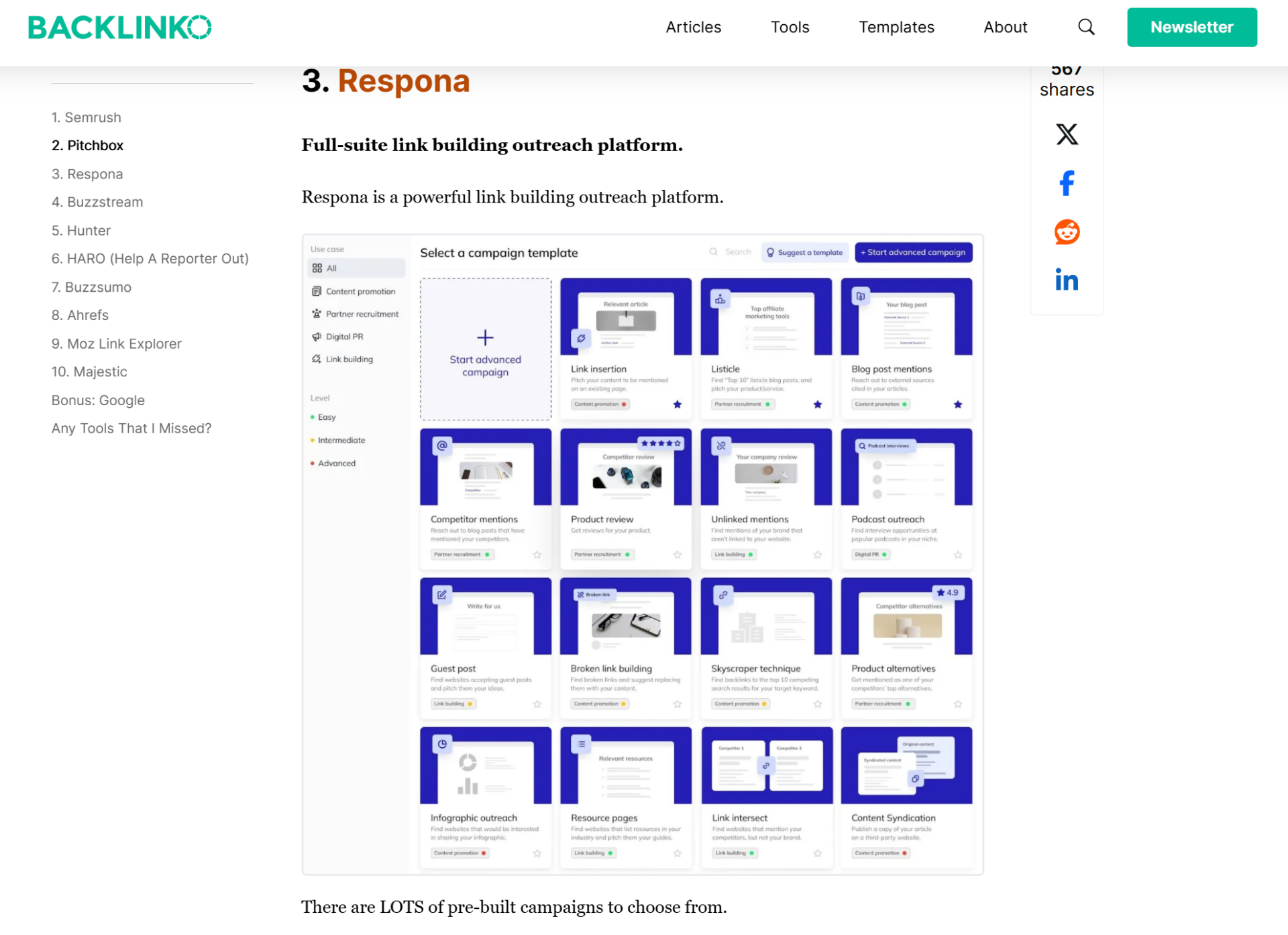
This one placement on Backlinko pushed our GEO visibility further than an entire quarter of “shotgun” link building.
Parseable EEAT Content
This one has two layers, and you need both.
Layer one: actually helpful content.
The kind that genuinely satisfies the user query. This isn’t new advice, it’s the whole point Google has been hammering for years.
Google wants to provide the best user experience possible, and if you aim for the same thing, you get rewarded. Write the article that actually answers the question better than anyone else, and you’re already ahead of most of the internet.
Layer two: parseability.
This is the part that tilts toward GEO.
Your content needs to be structured so the AI can scan it, quickly find the piece that satisfies the user query, and pull it straight into its AI answer.
Clear headings, direct answers near the top, tight definitions, no burying the lede under 600 words of preamble.
When AI crawlers hit your page, they should be able to lift a clean takeaway out of it in seconds.
So yeah, you’re optimizing for humans and AI at the same time now. And the good news is they want the same thing.
People “scan” through articles too.
Nobody reads your intro paragraph by paragraph hunting for the answer, they skim for the bolded bit that solves their problem. Content that’s easy for a person to scan is, conveniently, content that’s easy for an AI to parse into a generated answer.
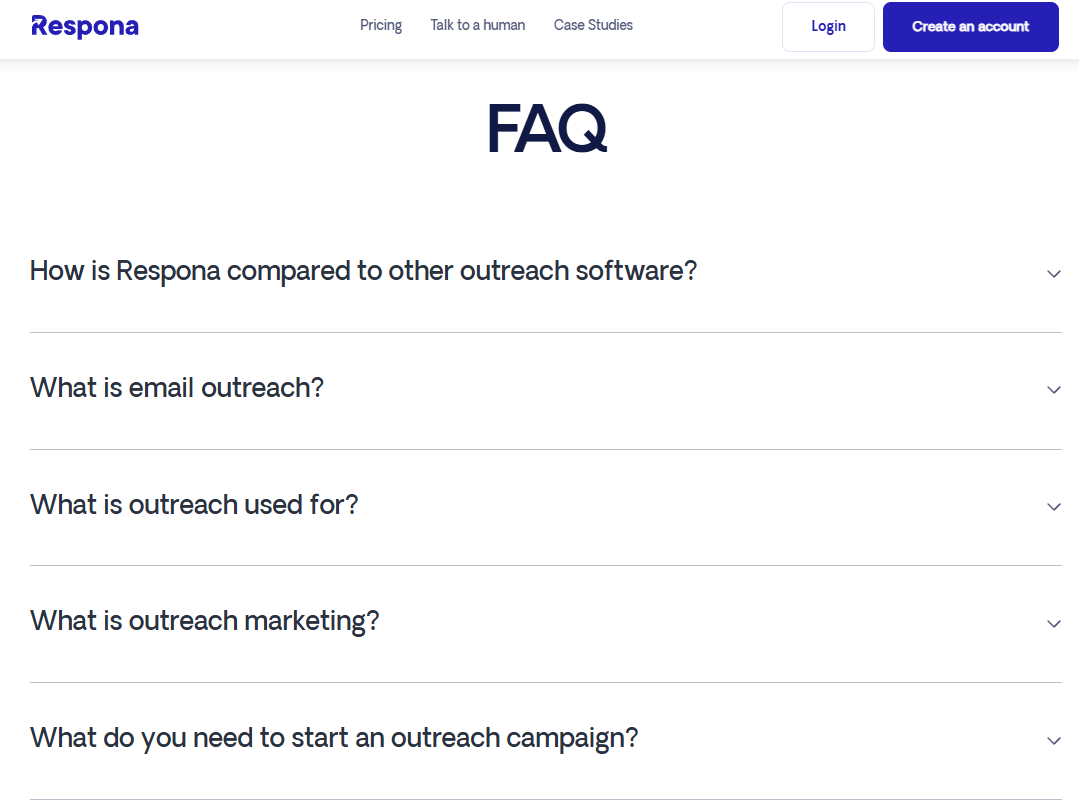
Which is exactly why this page (and so many others) have a key takeaways section at the top and a FAQ section at the bottom.
Important caveat: this is NOT an invitation to stuff keywords or over-optimize. Parseable does not mean robotic. An AI response that cites you still has to make sense to a human reading it, and search engines are very good at spotting content written for machines instead of people.
Structured Data
Okay, this one I’ll admit is a little more important now for GEO than it used to be.
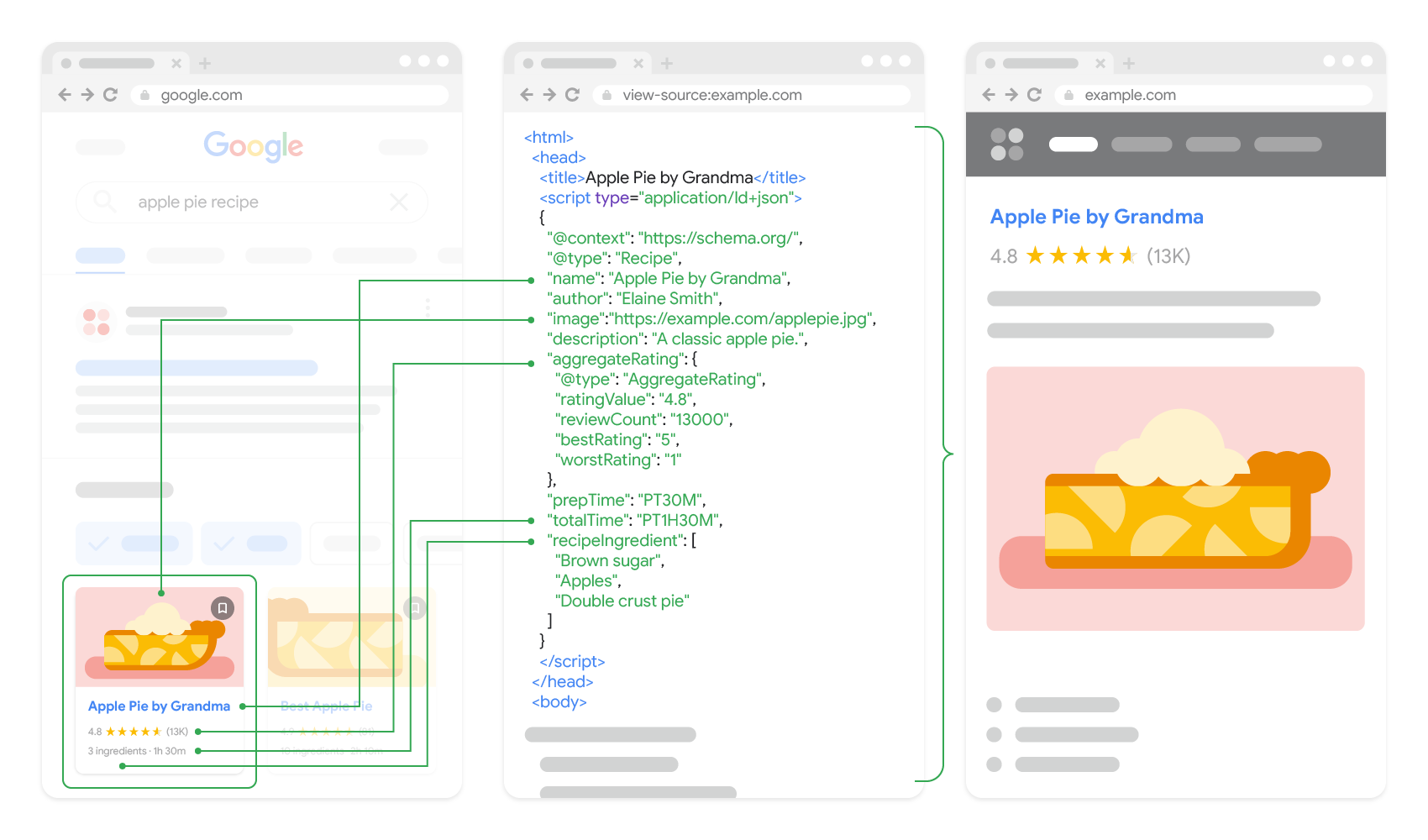
Adding structured data helps AI tools understand what your content actually is: which part is a product, which is a review, which is a step-in-a-process, which is a frequently asked question.
The cleaner that structure, the easier it is for a model to confidently pull your info into a response without guessing.
But here’s the thing: structured data was always a great practice.
Implementing proper schema markup is how you used to earn featured snippets, those little boxes at the top of the Google SERP that answered the query before you even clicked.
Yeah, remember those? They were basically AI search beta.
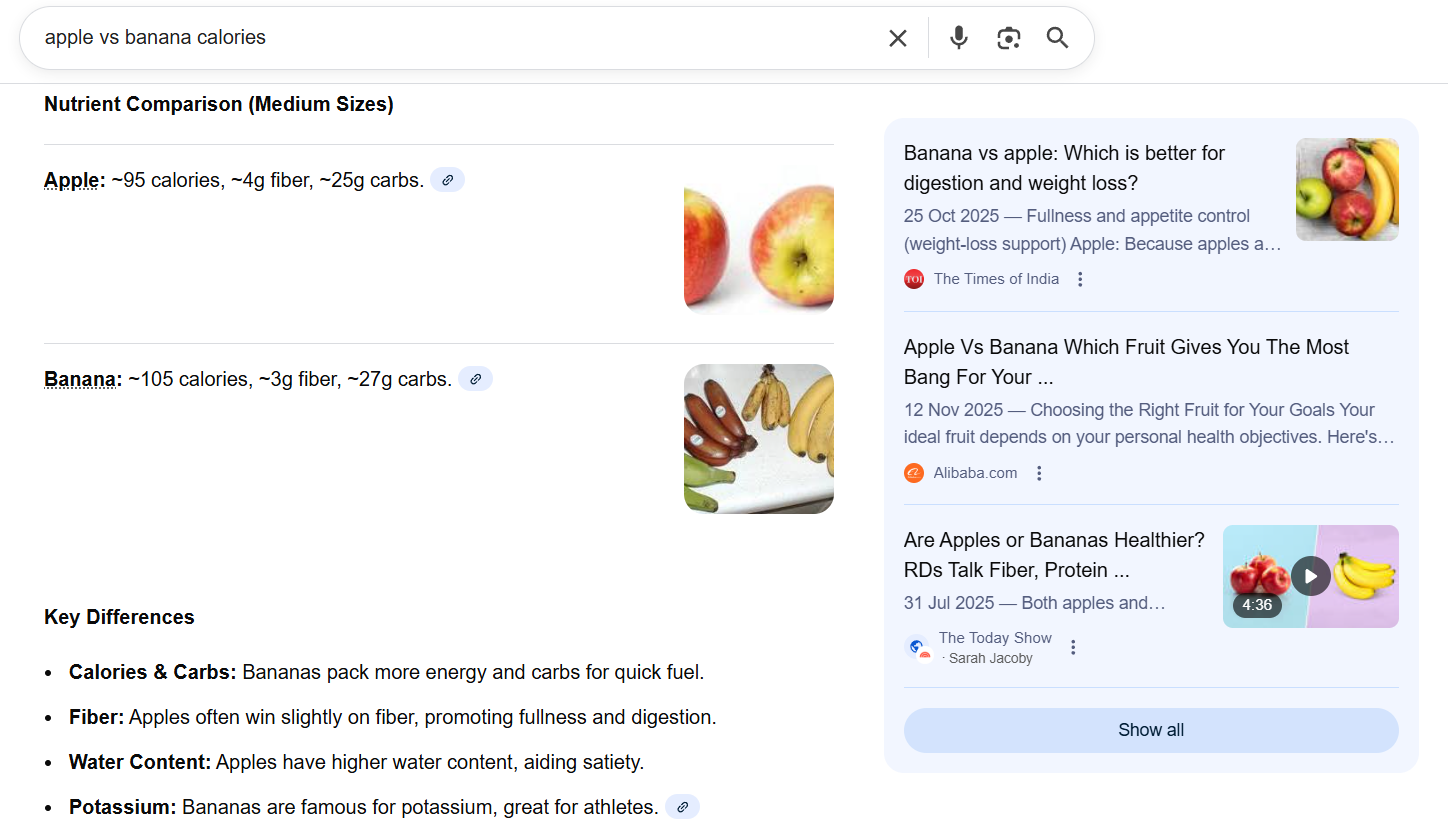
Same idea, slightly different delivery. Back then Google grabbed your structured content and displayed it directly.
Now an AI engine grabs your structured content and weaves it into a synthesized response.
If you were already optimizing for featured snippets and the People Also Ask boxes, congratulations, you’ve been doing technical SEO for GEO this whole time without calling it that.
Verdict? The Grind Continues
So what’s the actual takeaway here?
Google rewards consistency. And authenticity.
That hasn’t changed in fifteen years and it isn’t going to change because we slapped a new three-letter label on it.
As long as you have a genuinely good product and genuinely helpful content, you’ll be fine, no matter which acronyms are trending this quarter.
Your GEO strategy and your old SEO strategy are, honestly, mostly the same.
Show up consistently. Publish content that actually helps. Earn relevant mentions. Keep your technical house in order.
There are no GEO tactics that magically replace doing the work. GEO success comes from the same snowballing grind it always did, just measured across a few more places now.
But, and this is the one genuinely tricky part, there’s a single piece of this puzzle that’s harder than the rest.
The thing that separates teams seeing real GEO visibility from teams stuck wondering why nothing’s moving.
It’s getting those structured brand mentions.
Which brings me to the next section.
How Do You Actually Get These Brand Mentions?
Through outreach. And this is where the romance of GEO runs into reality.
Getting a structured brand mention on an article that already ranks and already gets cited by AI engines means doing real outreach.
You have to find the right articles. Then find the right person to contact. Then find their email. Then pitch them. Then follow up. Then follow up again.
That takes time. It takes resources. And it takes tools, an email finder, an outreach platform, something to track it all, which stack up to hundreds of dollars a month before you land a single placement.
And even after all that, you still have to give the site owner a reason to say yes.
Nobody adds your link to a commercial page out of the goodness of their heart. You need to offer something of equal value in return.
In other words, hassle, hassle, hassle.
So if you’d rather not build that whole machine yourself, here’s the shortcut: we do it for you.
How Respona Helps
Respona is a done-for-you link building service built specifically around the kind of structured placements that drive both rankings and AI visibility.
Here’s how it works:
1. Tell us what you want to promote.
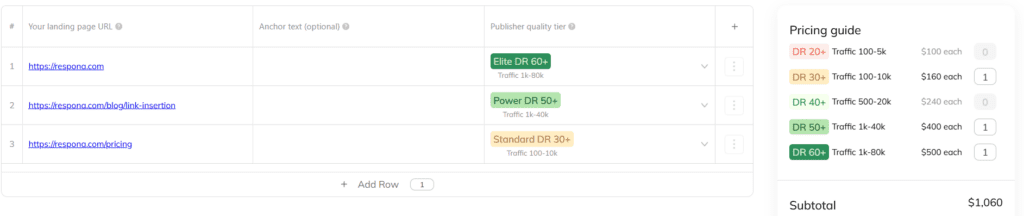
Register and place an order with your target URLs, your preferred anchor text, and the AI prompts you want your brand cited for. No monthly retainer, no setup fee.
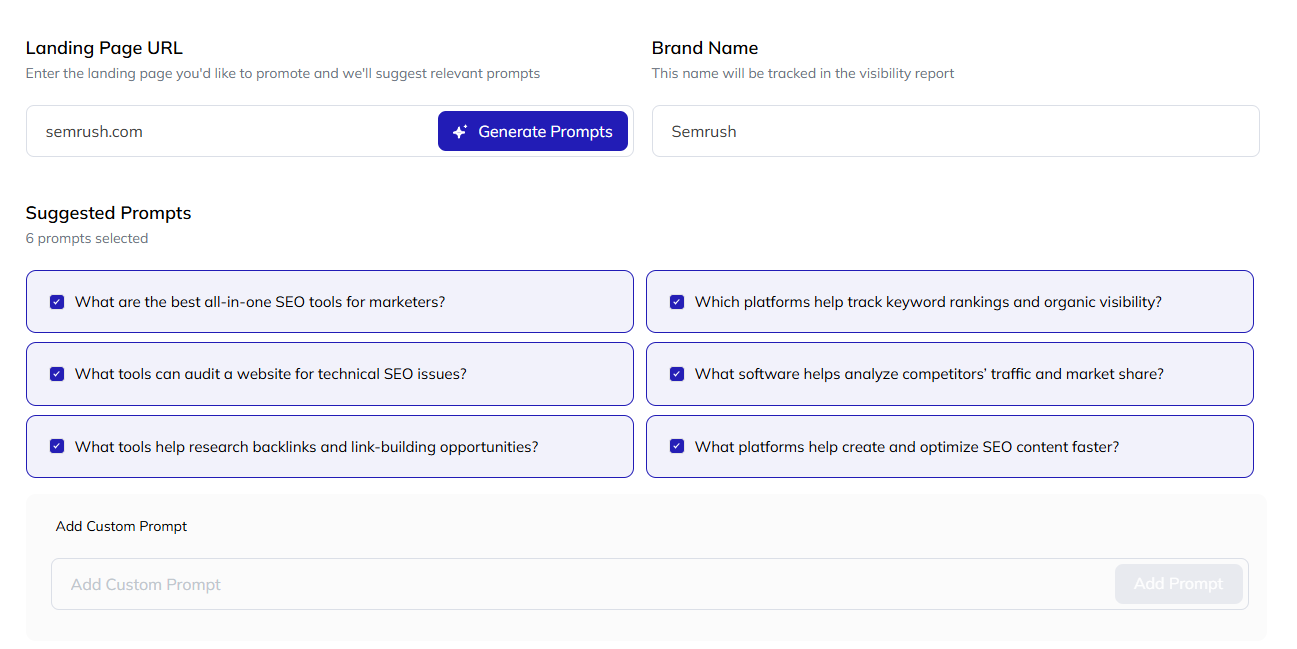
2. Our tool finds the right placements automatically.
Respona identifies articles that already rank in search engines AND already get cited in AI tools like ChatGPT, Google Gemini, and Perplexity.
Every prospect is filtered for authority, relevance, and real traffic, so you’re targeting the exact pages shaping visibility in your space.
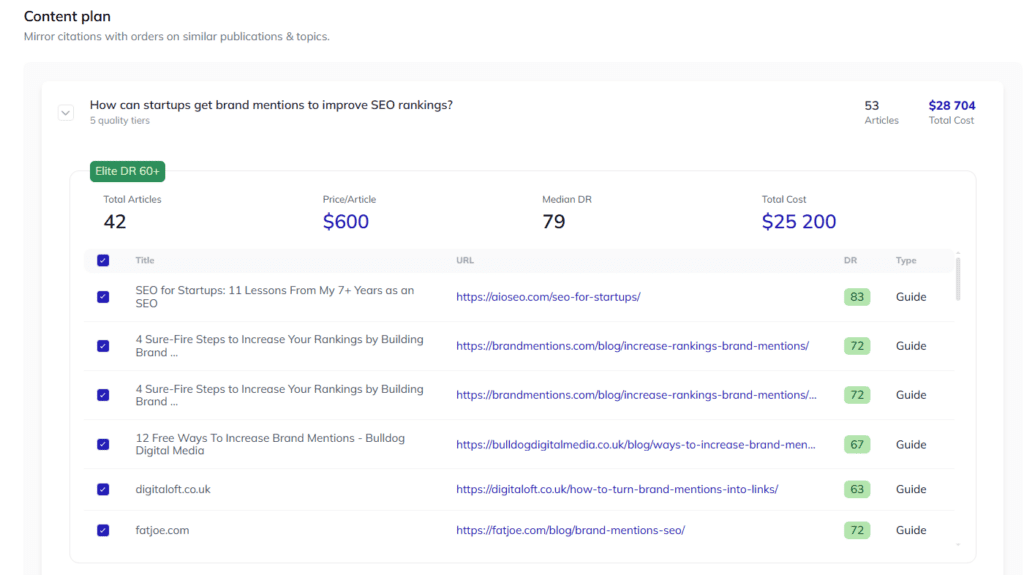
3. Review, or skip straight to ordering.
Approve the opportunities you want, or just place orders within a specific DR and traffic range and let us handle the rest.
4. Our team does the outreach.
Prospecting, pitching, follow-ups, negotiations, and managing the value exchange that actually earns the placement. Every link is editorial, on a real site with real traffic.
5. Track your AI visibility over time.
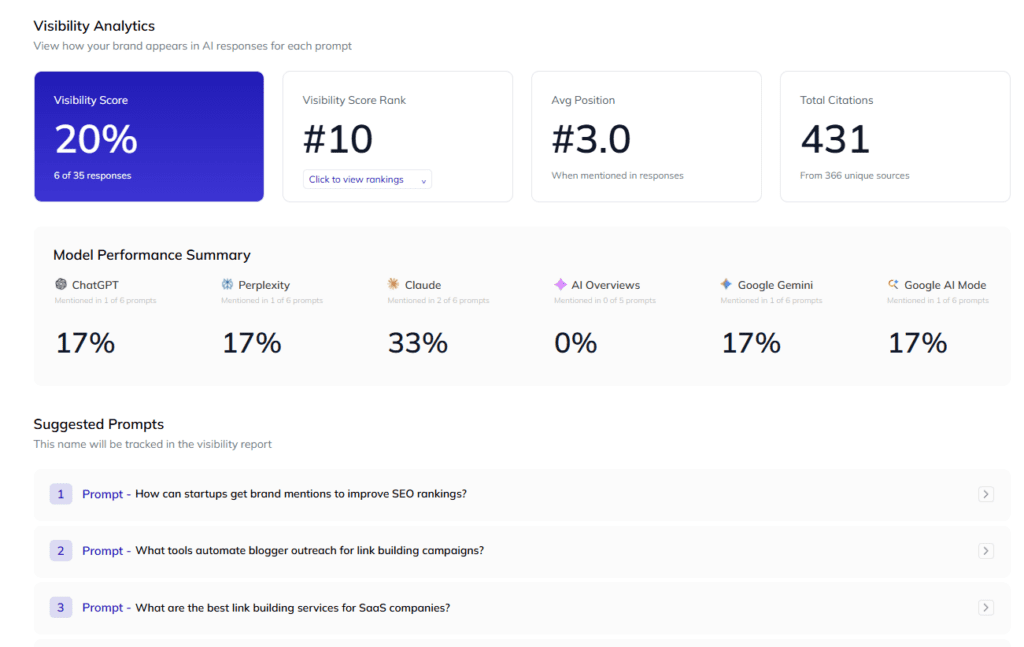
The platform monitors your brand citations across six engines: ChatGPT, Perplexity, Google AI Overview, Google Gemini, Claude, and Google AI Mode. You see your visibility climb across every AI platform that matters, not just guess at it.
Pricing is pay-per-placement, from $100 per link (DR 20+) up to $500 (DR 60+), with no retainer.
Around 80% of customers are agencies folding it into their own digital marketing services under a white label.
It’s the entire brand-mention grind, handled, so your visibility goes up while you focus on everything else.
Link building cheat sheet
Gain access to the 3-step strategy we use to earn over 86 high-quality backlinks each month.
Now Over to You
So, GEO vs SEO: is there an actual difference? A little, but way less than the hype suggests.
The optimization work is the same work you’ve always done, and that core optimization mindset hasn’t shifted.
Helpful content, clean structure, and relevant brand mentions still win, only now they win across AI Overviews and ChatGPT on top of the traditional search results you were already chasing. The teams panicking about a brand-new discipline are mostly wasting energy that could go toward, you know, the actual work.
The one piece genuinely worth outsourcing is the hardest one: earning structured brand mentions on the articles that feed AI answers. That’s exactly what we built Respona for.
If you’d rather skip the outreach grind and the tool stack, our done-for-you link building service handles prospecting, outreach, and placement on the pages that move both rankings and AI visibility.
You pay per link delivered, with no monthly retainer or setup fees.
Place your first order to get started today.
Frequently Asked Questions (FAQ)
What does GEO actually stand for, and is it different from SEO?
GEO stands for Generative Engine Optimization: optimizing to be cited in answers from generative AI tools like ChatGPT and Perplexity.
In practice it overlaps almost entirely with classic search engine optimization. The whole GEO vs SEO debate is really about labeling, since the search engine optimization playbook barely changes.
Is GEO replacing SEO?
No. GEO sits on top of traditional SEO rather than replacing it. The same content, technical, and link work that wins in traditional search is what earns AI citations, so the SEO fundamentals you already follow remain the foundation. A traditional search engine and an AI engine reward most of the same signals.
How do I track my AI visibility?
You track it with dedicated tools that monitor how often your brand appears in AI answers across engines. Standard SEO metrics from Google Search Console (impressions, clicks, organic traffic) still matter, but they only tell you about the Google SERP, not about your AI visibility. Watch both sets of metrics side by side, since AI citations and organic traffic increasingly move together.
Which AI engines should I care about?
Focus on where your buyers actually are. For most brands that means ChatGPT, AI Overviews, Google AI Mode, and Perplexity, with Gemini and Microsoft Copilot close behind. You don’t need to chase every one of these AI powered search engines equally; track the platforms that drive your organic traffic and prioritize those.
Does paid search fit into GEO?
Not directly. Google Ads and other paid placements are a separate lever from organic AI visibility, though they belong in the same overall marketing strategy. GEO is about earning citations, not buying a search result, so treat paid as a complement to your digital marketing rather than a shortcut to AI visibility.
Do I need entirely new tools for GEO?
Mostly no. Your existing SEO strategy and toolset cover most of it, plus an AI visibility tracker to measure citations. Some people call this broader approach “search everywhere optimization,” but the underlying geo tactics are the same ones you already run for on-page SEO and content, just measured across more engines.
[ad_2]
Source_link