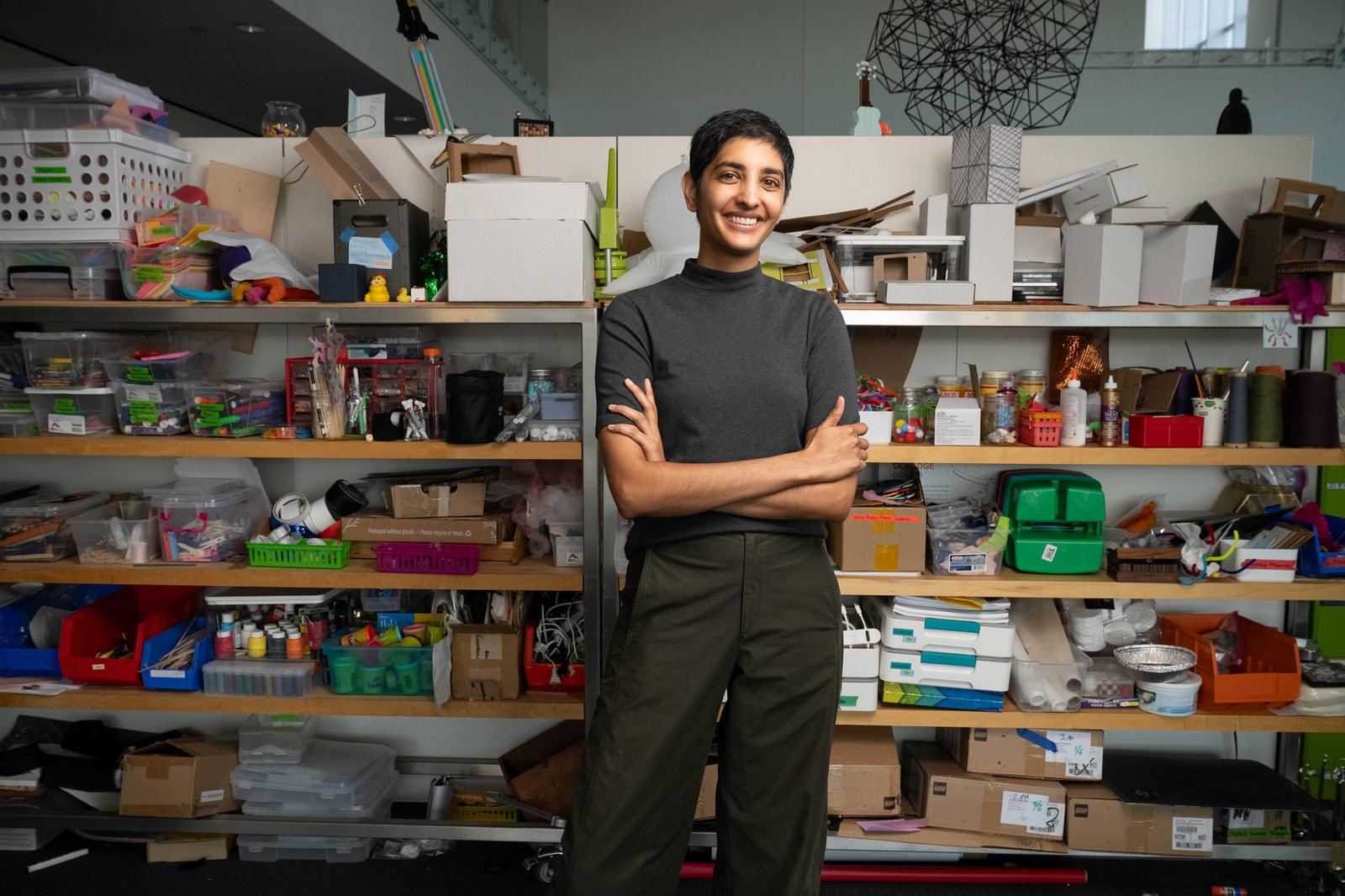
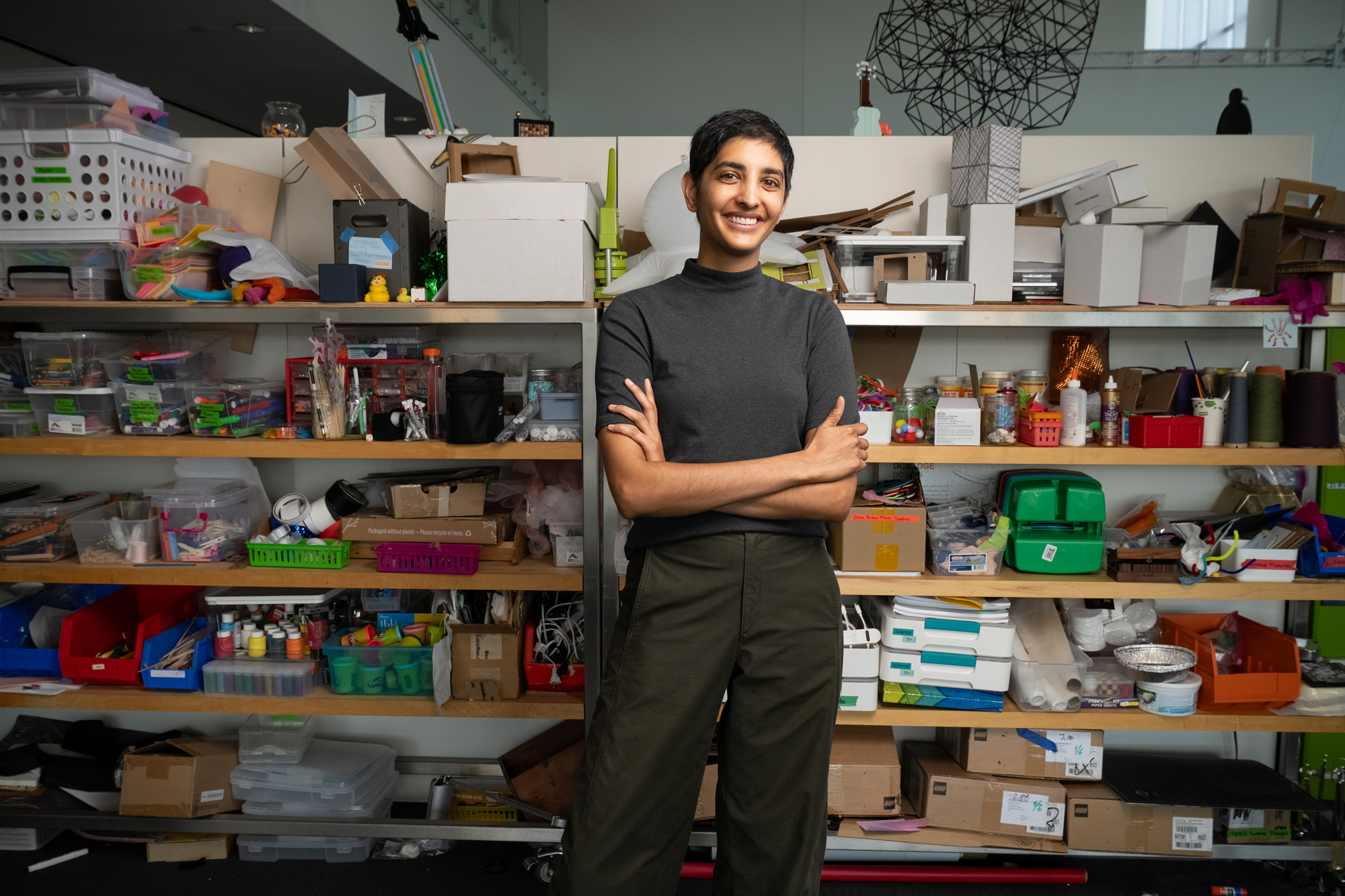
Before graduate school, Kumar grew up in Philadelphia, attended the University of Pennsylvania, and worked on several projects at the intersection of technology and mental health or psychology research.
Through those experiences, Kumar began to question whether the technology she was helping to develop was having the sustained impact she hoped for. “I had done a number of projects that were ‘tech for good,’” she says. “And I wasn’t seeing that what I was doing had a long-term impact.”
Rather than walking away from technology altogether, Kumar began to rethink how it was created. “If we design technology in community-based ways and really think about holistic well-being,” she says, “maybe we can actually create things that help people.”
That conviction eventually became the foundation of her doctoral research, and over the course of her PhD, Kumar has increasingly moved from simply listening to communities to building with them.
Public conversations about technology often present a choice: Embrace it or reject it. Kumar believes that it’s not that simple.
Kumar sees the way digital platforms have the potential to both harm young people’s mental health and development, and help young people process emotions, strengthen relationships, and practice healthy vulnerability — if those tools are designed thoughtfully and embedded in the systems where young people already receive care and support.
Much of her work explores exactly what that could look like.
One project Kumar worked on, in partnership with Stepping Forward LA and with the input of the young people who would use the app, replaces text-heavy communication with a visual collage system to help young people impacted by trauma and the child welfare system to express emotions that may be difficult to put into words, and to build a sense of connectedness with one another.
In an ongoing project, Kumar is collaborating with the Justice Resource Institute to design a mobile app that supports youth in playing an active role in their treatment-planning process and helps them work toward the goals they set outside of the therapy office. The group is working with clinicians and youth to design and evaluate the system.
“We are not sitting at MIT designing tools and just throwing them at people,” Kumar says. “We’re designing it together. We need to actually have the folks that are relevant to providing the care in the room.”
That idea became even clearer to Kumar through a 10-month technology leadership circle she co-facilitated with Foster America. The program brought together people with lived experience of foster care and technology experts to envision how digital technologies could fill gaps in care for young people in the child welfare system.
This project surfaced the importance of not just designing tools that center youths’ needs but also considering the ways in which social services need to be brought into the innovation process.
Those ideas have also led Kumar to explorations that involve one of technology’s newest frontiers: artificial intelligence. She began asking questions after she realized that young people who had experienced trauma had already been turning to AI to make critical life decisions, even as many caregivers were not aware of it.
As a result, Kumar has increasingly focused on supporting care providers in talking with young people about AI. She has led training workshops with organizations that serve young people impacted by trauma or involved in the child welfare system.