• About Us
  • Disclaimer
  • Contact Us
  • Privacy Policy
Wednesday, September 16, 2026
mGrowTech
No Result
View All Result
  • Technology And Software
    • Account Based Marketing
    • Channel Marketing
    • Marketing Automation
      • Al, Analytics and Automation
      • Ad Management
  • Digital Marketing
    • Social Media Management
    • Google Marketing
  • Direct Marketing
    • Brand Management
    • Marketing Attribution and Consulting
  • Mobile Marketing
  • Event Management
  • PR Solutions
  • Technology And Software
    • Account Based Marketing
    • Channel Marketing
    • Marketing Automation
      • Al, Analytics and Automation
      • Ad Management
  • Digital Marketing
    • Social Media Management
    • Google Marketing
  • Direct Marketing
    • Brand Management
    • Marketing Attribution and Consulting
  • Mobile Marketing
  • Event Management
  • PR Solutions
No Result
View All Result
mGrowTech
No Result
View All Result
Home Technology And Software

If Waymo Cars Are Level 4 Automation, What Does It Take To Be A Level 5?

Josh by Josh
August 22, 2026
in Technology And Software
0
If Waymo Cars Are Level 4 Automation, What Does It Take To Be A Level 5?

[ad_1]

It’s less about an autonomous vehicle’s capabilities and more about what conditions it can operate in.
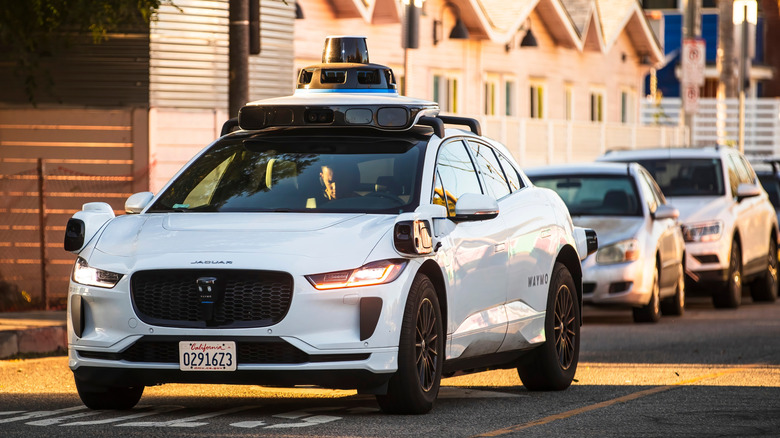

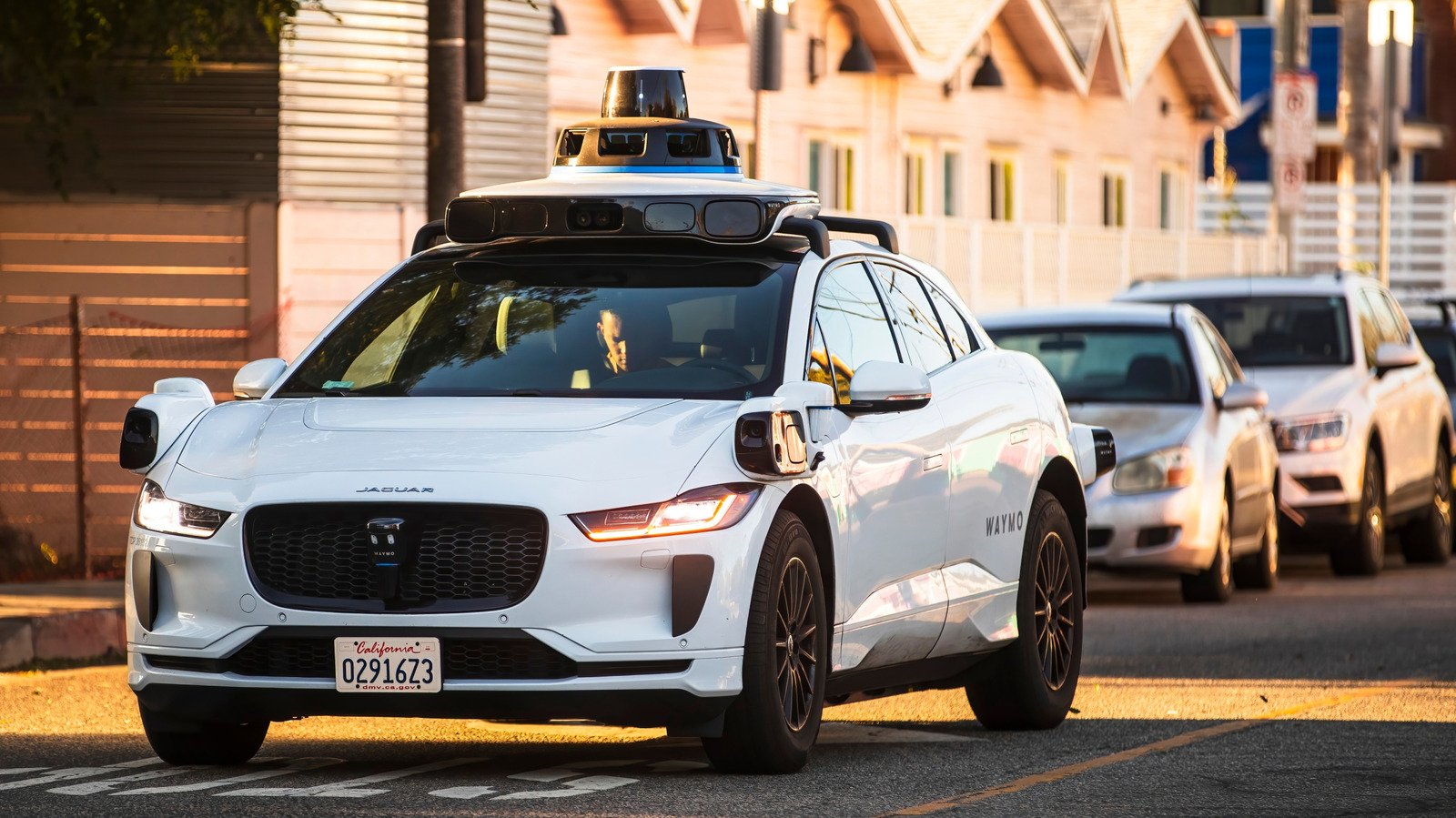
White Waymo self-driving Jaguar, traveling along a city street with its roof-mounted sensor array visible.
Karolis Kavolelis/Shutterstock

Seeing a car move through city traffic with no one in the driver’s seat can make it feel like Waymo has already reached the highest possible level of automation. From a passenger’s perspective, there’s no steering, no monitoring and no need for a human to intervene. The vehicle handles the entire trip on its own.

But under SAE’s (Society of Automotive Engineers) driving automation framework, that capability is still Level 4 rather than the highest: Level 5. The key distinction isn’t how “independent” the driving looks in practice, but where that independence is allowed to exist. At Level 4, the system can fully handle the driving task without human input — within a defined set of conditions and locations. Level 5 removes those boundaries entirely.

Why Waymo is considered Level 4 automation
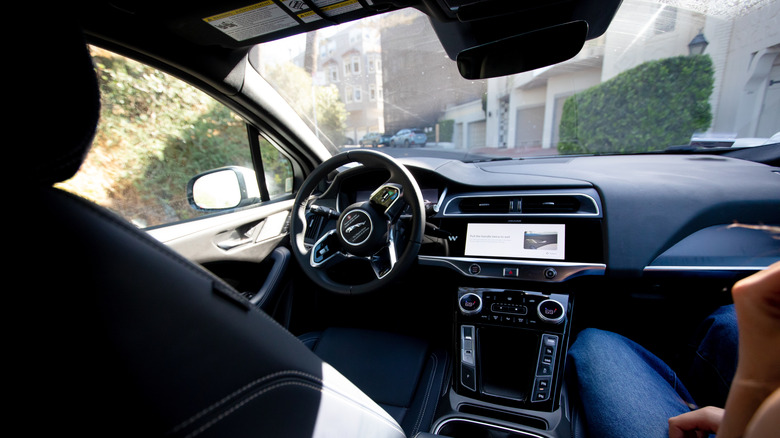

Interior of a Waymo self-driving Jaguar with an empty driver's seat, steering wheel and dashboard visible from the rear passenger area.
bluestork/Shutterstock

Strictly speaking, it’s the Waymo Driver, the company’s automated driving system, that’s classified as Level 4. Waymo’s published safety research describes it as an SAE Level 4 automated driving system, and that classification explains why an empty driver’s seat doesn’t automatically make a Waymo Level 5.

There are a total of six SAE automation levels, numbered 0 through 5. The National Highway Traffic Safety Administration (NHTSA) starts its breakdown at Level 0, where the human does all the driving even if safety systems can briefly intervene. Level 1 can continuously assist with steering or acceleration and braking, while Level 2 can handle both at the same time. In each case, the driver remains responsible for the car.

Level 3 changes who’s doing the driving. The system can handle the entire driving task under certain conditions, but the human must be available to take over when requested. At Level 4, that requirement disappears. Once the automated system is operating within its intended conditions, the occupants are passengers rather than backup drivers.

This is also why Waymo can describe its service as fully autonomous without claiming SAE Level 5. Its cars can complete rides without anyone sitting behind the wheel, but that ability still has defined operating limits.

What separates Level 4 from Level 5 automation
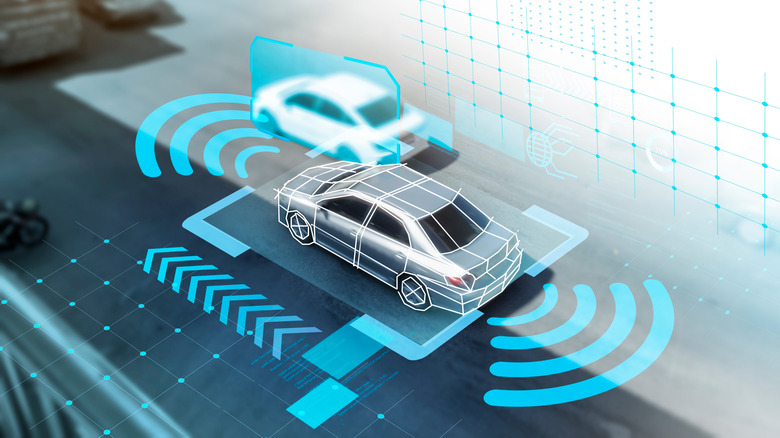

Digital illustration of an autonomous car surrounded by sensor waves, mapping graphics and vehicle-detection overlays.
Oselote/Shutterstock

Those limits are usually described as an operational design domain, or ODD. In simple terms, the ODD defines where and under what conditions a self-driving system is designed to operate. That can include geography, the types of roads it’s designed for and the weather conditions it can handle. SAE defines it as the set of conditions an automated driving system is designed for, and Level 4 systems are expected to handle driving on their own within those boundaries.

At Level 4, the system handles the entire driving task within its ODD. Level 5 removes that limitation: NHTSA describes it as operating universally rather than within limited service areas. So Level 5 isn’t about a car being “more autonomous” during a particular maneuver. A Level 4 Waymo already handles steering, braking and decision-making on its own when operating within its domain. The difference is scope, not who is responsible for driving.

That’s why Waymo can keep improving its system and still remain Level 4. For example, Waymo says its sixth-generation Driver has expanded capabilities for more diverse environments, including extreme winter weather. Expanding into new cities or weather types makes the system more capable, but as long as it still operates within defined boundaries, it remains Level 4 rather than Level 5.

Why getting to Level 5 is much harder than expanding Level 4
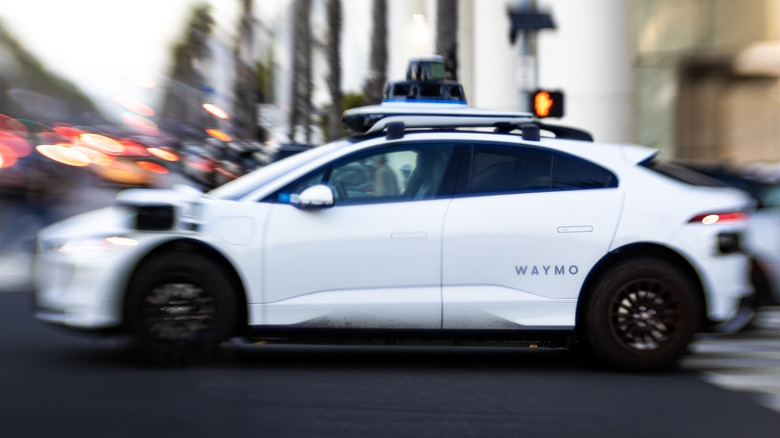

White Waymo self-driving vehicle moving through a city intersection with its roof-mounted autonomous driving sensors visible.
Ward Dewitt/Getty Images

Expanding a Level 4 system gives developers boundaries around the problem. They can define where the system should operate, identify the conditions it needs to handle and test its behavior against scenarios relevant to that domain. Removing those boundaries dramatically increases what has to be accounted for.

That’s already difficult at Level 4. In its 2026 research on collision-avoidance testing, Waymo noted that evaluating a Level 4 system is complicated by the potentially enormous number of operational scenarios in which a hazardous situation might develop. Its methodology identifies potentially hazardous scenarios using human driving data, data from Waymo’s automated-driving tests and expert knowledge.

Weather offers a concrete example of those limits. In May 2026, Waymos encountered flooded roads in Atlanta and San Antonio, leading the company to suspend or restrict some operations while it worked on improvements.

There isn’t a reliable countdown to when Level 5 will arrive. NHTSA currently says Level 5 technology isn’t available in vehicles for consumer purchase, and the SAE levels describe capabilities rather than a development roadmap.


[ad_2]

Source_link

READ ALSO

How These XL Phones Compete

OpenAI Wants to Know if an AI Industry Slowdown Would Even Be Legal

Related Posts

How These XL Phones Compete
Technology And Software

How These XL Phones Compete

September 11, 2026
OpenAI Wants to Know if an AI Industry Slowdown Would Even Be Legal
Technology And Software

OpenAI Wants to Know if an AI Industry Slowdown Would Even Be Legal

September 11, 2026
Thrive Capital led VCs into pro sports ownership; Collaborative Fund just upped that play
Technology And Software

Thrive Capital led VCs into pro sports ownership; Collaborative Fund just upped that play

September 11, 2026
New Sensing System, Health Features And Audio Intelligence
Technology And Software

New Sensing System, Health Features And Audio Intelligence

September 10, 2026
Coleman Promo Codes and Deals: Up to 75% Off in September 2026
Technology And Software

Coleman Promo Codes and Deals: Up to 75% Off in September 2026

September 10, 2026
AI research startup Listen Labs scrubbed a $1.5B funding round for Salesforce talks
Technology And Software

AI research startup Listen Labs scrubbed a $1.5B funding round for Salesforce talks

September 10, 2026
Next Post
GeoGuessr Daily Challenge Answer Today for August 22, 2026

GeoGuessr Daily Challenge Answer Today for August 22, 2026

POPULAR NEWS

Trump ends trade talks with Canada over a digital services tax

Trump ends trade talks with Canada over a digital services tax

June 28, 2025
15 Trending Songs on TikTok in 2025 (+ How to Use Them)

15 Trending Songs on TikTok in 2025 (+ How to Use Them)

June 18, 2025
Communication Effectiveness Skills For Business Leaders

Communication Effectiveness Skills For Business Leaders

June 10, 2025
Comparing the Top 7 Large Language Models LLMs/Systems for Coding in 2025

Comparing the Top 7 Large Language Models LLMs/Systems for Coding in 2025

November 4, 2025
App Development Cost in Singapore: Pricing Breakdown & Insights

App Development Cost in Singapore: Pricing Breakdown & Insights

June 22, 2025

EDITOR'S PICK

NVIDIA and Mistral AI Bring 10x Faster Inference for the Mistral 3 Family on GB200 NVL72 GPU Systems

December 3, 2025
App Retargeting on Google Ads: A Complete Guide

App Retargeting on Google Ads: A Complete Guide

September 4, 2026
Louis Carter’s Blueprint for Building Workplaces People Love

Louis Carter’s Blueprint for Building Workplaces People Love

October 21, 2025
How we’re making data centers more flexible to benefit power grids

How we’re making data centers more flexible to benefit power grids

August 4, 2025

About

We bring you the best Premium WordPress Themes that perfect for news, magazine, personal blog, etc. Check our landing page for details.

Follow us

Categories

  • Account Based Marketing
  • Ad Management
  • Al, Analytics and Automation
  • Brand Management
  • Channel Marketing
  • Digital Marketing
  • Direct Marketing
  • Event Management
  • Google Marketing
  • Marketing Attribution and Consulting
  • Marketing Automation
  • Mobile Marketing
  • PR Solutions
  • Social Media Management
  • Technology And Software
  • Uncategorized

Recent Posts

  • Cohere Releases North Small Translate: A 218B MoE Translation Model That Scores 83.6 on WMT26 Across 50 Languages
  • The Changing Role of Digital PR in AI Search Landscape
  • How These XL Phones Compete
  • Corporate Event Registration Software: A Practical Guide
  • About Us
  • Disclaimer
  • Contact Us
  • Privacy Policy
No Result
View All Result
  • Technology And Software
    • Account Based Marketing
    • Channel Marketing
    • Marketing Automation
      • Al, Analytics and Automation
      • Ad Management
  • Digital Marketing
    • Social Media Management
    • Google Marketing
  • Direct Marketing
    • Brand Management
    • Marketing Attribution and Consulting
  • Mobile Marketing
  • Event Management
  • PR Solutions