• About Us
  • Disclaimer
  • Contact Us
  • Privacy Policy
Tuesday, June 9, 2026
mGrowTech
No Result
View All Result
  • Technology And Software
    • Account Based Marketing
    • Channel Marketing
    • Marketing Automation
      • Al, Analytics and Automation
      • Ad Management
  • Digital Marketing
    • Social Media Management
    • Google Marketing
  • Direct Marketing
    • Brand Management
    • Marketing Attribution and Consulting
  • Mobile Marketing
  • Event Management
  • PR Solutions
  • Technology And Software
    • Account Based Marketing
    • Channel Marketing
    • Marketing Automation
      • Al, Analytics and Automation
      • Ad Management
  • Digital Marketing
    • Social Media Management
    • Google Marketing
  • Direct Marketing
    • Brand Management
    • Marketing Attribution and Consulting
  • Mobile Marketing
  • Event Management
  • PR Solutions
No Result
View All Result
mGrowTech
No Result
View All Result
Home Al, Analytics and Automation

How we really judge AI

Josh by Josh
June 16, 2025
in Al, Analytics and Automation
0
How we really judge AI


Suppose you were shown that an artificial intelligence tool offers accurate predictions about some stocks you own. How would you feel about using it? Now, suppose you are applying for a job at a company where the HR department uses an AI system to screen resumes. Would you be comfortable with that?

READ ALSO

NVIDIA cuTile Python Tutorial: Building Tiled GPU Kernels for Vector Addition, Matrix Addition, and Matrix Multiplication in Colab

ClawHub Security Signals: A Coding Guide to End-to-End Security Signal Analysis and Verdict Classification on the AI Skills Dataset

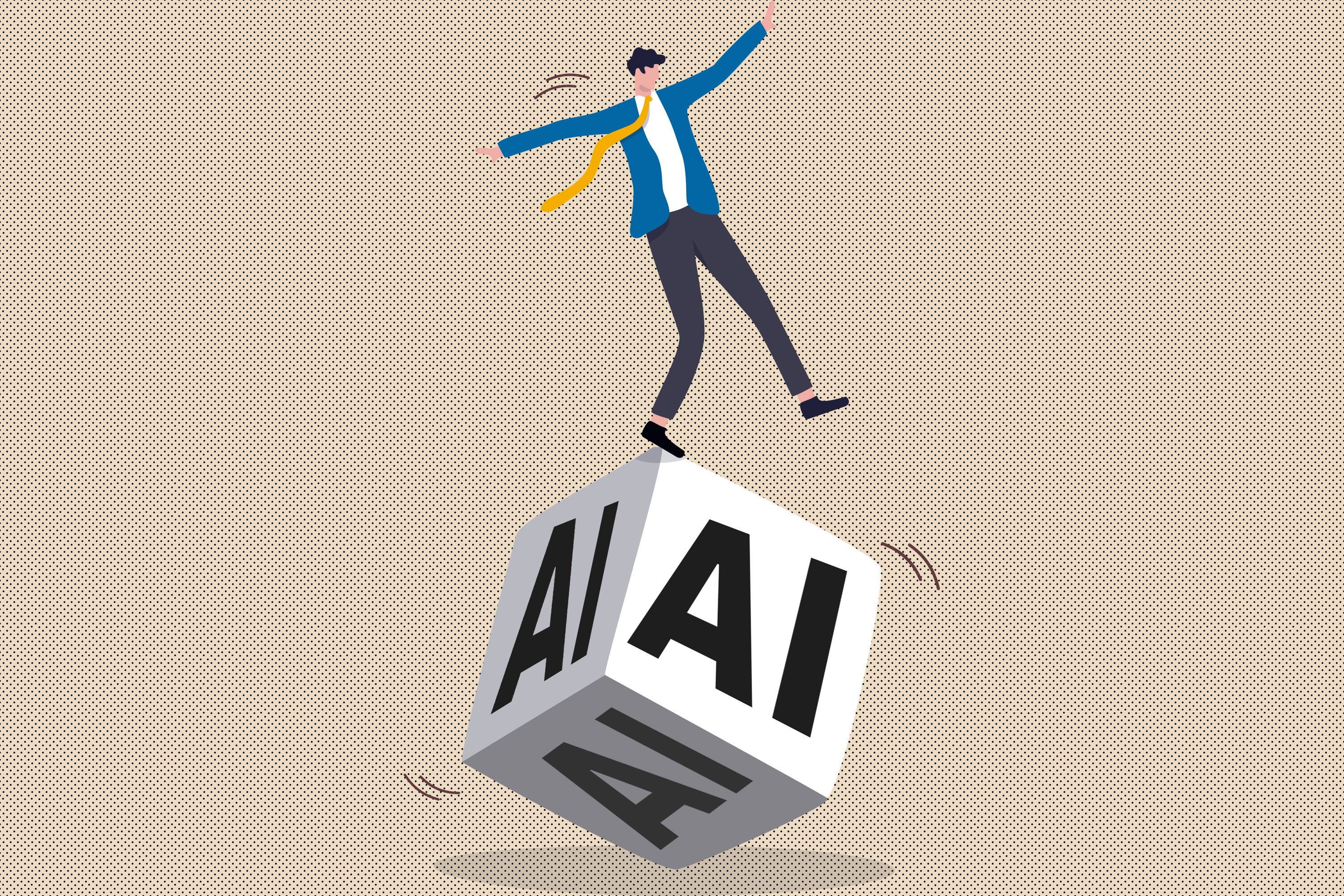
A new study finds that people are neither entirely enthusiastic nor totally averse to AI. Rather than falling into camps of techno-optimists and Luddites, people are discerning about the practical upshot of using AI, case by case.

“We propose that AI appreciation occurs when AI is perceived as being more capable than humans and personalization is perceived as being unnecessary in a given decision context,” says MIT Professor Jackson Lu, co-author of a newly published paper detailing the study’s results. “AI aversion occurs when either of these conditions is not met, and AI appreciation occurs only when both conditions are satisfied.”

The paper, “AI Aversion or Appreciation? A Capability–Personalization Framework and a Meta-Analytic Review,” appears in Psychological Bulletin. The paper has eight co-authors, including Lu, who is the Career Development Associate Professor of Work and Organization Studies at the MIT Sloan School of Management.

New framework adds insight

People’s reactions to AI have long been subject to extensive debate, often producing seemingly disparate findings. An influential 2015 paper on “algorithm aversion” found that people are less forgiving of AI-generated errors than of human errors, whereas a widely noted 2019 paper on “algorithm appreciation” found that people preferred advice from AI, compared to advice from humans.

To reconcile these mixed findings, Lu and his co-authors conducted a meta-analysis of 163 prior studies that compared people’s preferences for AI versus humans. The researchers tested whether the data supported their proposed “Capability–Personalization Framework” — the idea that in a given context, both the perceived capability of AI and the perceived necessity for personalization shape our preferences for either AI or humans.

Across the 163 studies, the research team analyzed over 82,000 reactions to 93 distinct “decision contexts” — for instance, whether or not participants would feel comfortable with AI being used in cancer diagnoses. The analysis confirmed that the Capability–Personalization Framework indeed helps account for people’s preferences.

“The meta-analysis supported our theoretical framework,” Lu says. “Both dimensions are important: Individuals evaluate whether or not AI is more capable than people at a given task, and whether the task calls for personalization. People will prefer AI only if they think the AI is more capable than humans and the task is nonpersonal.”

He adds: “The key idea here is that high perceived capability alone does not guarantee AI appreciation. Personalization matters too.”

For example, people tend to favor AI when it comes to detecting fraud or sorting large datasets — areas where AI’s abilities exceed those of humans in speed and scale, and personalization is not required. But they are more resistant to AI in contexts like therapy, job interviews, or medical diagnoses, where they feel a human is better able to recognize their unique circumstances.

“People have a fundamental desire to see themselves as unique and distinct from other people,” Lu says. “AI is often viewed as impersonal and operating in a rote manner. Even if the AI is trained on a wealth of data, people feel AI can’t grasp their personal situations. They want a human recruiter, a human doctor who can see them as distinct from other people.”

Context also matters: From tangibility to unemployment

The study also uncovered other factors that influence individuals’ preferences for AI. For instance, AI appreciation is more pronounced for tangible robots than for intangible algorithms.

Economic context also matters. In countries with lower unemployment, AI appreciation is more pronounced.

“It makes intuitive sense,” Lu says. “If you worry about being replaced by AI, you’re less likely to embrace it.”  

Lu is continuing to examine people’s complex and evolving attitudes toward AI. While he does not view the current meta-analysis as the last word on the matter, he hopes the Capability–Personalization Framework offers a valuable lens for understanding how people evaluate AI across different contexts.

“We’re not claiming perceived capability and personalization are the only two dimensions that matter, but according to our meta-analysis, these two dimensions capture much of what shapes people’s preferences for AI versus humans across a wide range of studies,” Lu concludes.

In addition to Lu, the paper’s co-authors are Xin Qin, Chen Chen, Hansen Zhou, Xiaowei Dong, and Limei Cao of Sun Yat-sen University; Xiang Zhou of Shenzhen University; and Dongyuan Wu of Fudan University.

The research was supported, in part, by grants to Qin and Wu from the National Natural Science Foundation of China. 



Source_link

Related Posts

NVIDIA cuTile Python Tutorial: Building Tiled GPU Kernels for Vector Addition, Matrix Addition, and Matrix Multiplication in Colab
Al, Analytics and Automation

NVIDIA cuTile Python Tutorial: Building Tiled GPU Kernels for Vector Addition, Matrix Addition, and Matrix Multiplication in Colab

June 9, 2026
ClawHub Security Signals: A Coding Guide to End-to-End Security Signal Analysis and Verdict Classification on the AI Skills Dataset
Al, Analytics and Automation

ClawHub Security Signals: A Coding Guide to End-to-End Security Signal Analysis and Verdict Classification on the AI Skills Dataset

June 8, 2026
Microsoft AI Introduces MAI-Transcribe-1.5: 2.4% WER on Artificial Analysis, Best-in-Class FLEURS Accuracy, and Up to 5x Faster Long-Audio Transcription
Al, Analytics and Automation

Microsoft AI Introduces MAI-Transcribe-1.5: 2.4% WER on Artificial Analysis, Best-in-Class FLEURS Accuracy, and Up to 5x Faster Long-Audio Transcription

June 8, 2026
Building Reflective Prompt Optimization with GEPA: Multi-Component Prompts, Structured Feedback, and Held-Out Validation
Al, Analytics and Automation

Building Reflective Prompt Optimization with GEPA: Multi-Component Prompts, Structured Feedback, and Held-Out Validation

June 7, 2026
Best 21 Low-Code and No-Code AI Tools in 2026
Al, Analytics and Automation

Best 21 Low-Code and No-Code AI Tools in 2026

June 7, 2026
Tod Machover receives George Peabody Medal for contributions to music and technology | MIT News
Al, Analytics and Automation

Tod Machover receives George Peabody Medal for contributions to music and technology | MIT News

June 6, 2026
Next Post
What’s the difference between AdTech and MarTech?

What’s the difference between AdTech and MarTech?

POPULAR NEWS

Trump ends trade talks with Canada over a digital services tax

Trump ends trade talks with Canada over a digital services tax

June 28, 2025
15 Trending Songs on TikTok in 2025 (+ How to Use Them)

15 Trending Songs on TikTok in 2025 (+ How to Use Them)

June 18, 2025
Communication Effectiveness Skills For Business Leaders

Communication Effectiveness Skills For Business Leaders

June 10, 2025
App Development Cost in Singapore: Pricing Breakdown & Insights

App Development Cost in Singapore: Pricing Breakdown & Insights

June 22, 2025
Comparing the Top 7 Large Language Models LLMs/Systems for Coding in 2025

Comparing the Top 7 Large Language Models LLMs/Systems for Coding in 2025

November 4, 2025

EDITOR'S PICK

Undetectable Ai Text Humanizers: Only 3 Actually Worked!

Undetectable Ai Text Humanizers: Only 3 Actually Worked!

August 25, 2025
Enterprise Claude gets admin, compliance tools—just not unlimited usage

Enterprise Claude gets admin, compliance tools—just not unlimited usage

August 21, 2025
Tesla board chair calls debate over Elon Musk’s $1T pay package ‘a little bit weird’

Tesla board chair calls debate over Elon Musk’s $1T pay package ‘a little bit weird’

September 14, 2025
Wikipedia cracks down on the use of AI in article writing

Wikipedia cracks down on the use of AI in article writing

March 26, 2026

About

We bring you the best Premium WordPress Themes that perfect for news, magazine, personal blog, etc. Check our landing page for details.

Follow us

Categories

  • Account Based Marketing
  • Ad Management
  • Al, Analytics and Automation
  • Brand Management
  • Channel Marketing
  • Digital Marketing
  • Direct Marketing
  • Event Management
  • Google Marketing
  • Marketing Attribution and Consulting
  • Marketing Automation
  • Mobile Marketing
  • PR Solutions
  • Social Media Management
  • Technology And Software
  • Uncategorized

Recent Posts

  • How to Choose the Right CRO Agency for Revenue Growth
  • Social media customer service: 2026 enterprise guide
  • MacOS 27 Golden Gate: Top New Features
  • Best Event Registration Software in 2026: 11 Options Compared by Event Type
  • About Us
  • Disclaimer
  • Contact Us
  • Privacy Policy
No Result
View All Result
  • Technology And Software
    • Account Based Marketing
    • Channel Marketing
    • Marketing Automation
      • Al, Analytics and Automation
      • Ad Management
  • Digital Marketing
    • Social Media Management
    • Google Marketing
  • Direct Marketing
    • Brand Management
    • Marketing Attribution and Consulting
  • Mobile Marketing
  • Event Management
  • PR Solutions