
[ad_1]
How do you tell a legitimate vendor from one that will tank your site with PBN spam? With white-hat services costing 50x more than the suspicious $5-per-link offers on freelance platforms, that question matters more in 2026 than ever.
This guide breaks down what to look for when buying backlinks, the warning signs that signal a low-quality vendor, and our top 15 picks for agencies and platforms worth your money.
We’ll also tackle the elephant in the room: yes, Google has rules about paid links, and we’ll explain exactly where the line sits between legitimate link building and the kind of scheme that gets sites deindexed.
Key Takeaways:
- A legitimate link building service charges you for outreach work and editorial relationships, not for the links themselves. That distinction is what separates white-hat vendors from the ones Google penalizes.
- Buying backlinks at suspiciously low prices (think $5/link) almost always means PBN networks, a link farm operation, or unmarked sponsored posts. These tactics get devalued quickly and can hurt your ranking.
- Real outreach takes time and relationships. The agencies actually doing this work charge $100-$500+ per placement, with no monthly retainer required at the better vendors.
- Quality backlinks from editorial mentions on real publisher websites do more for your traffic than 100 high-DR placements on networks nobody reads. Focus on the placements that earn referral clicks AND authority signals.
- Your vendor should be transparent about which sites they pitch, the anchor text they use, and the publishers they have relationships with. If they won’t share examples, that’s a red flag.

Link building cheat sheet
Gain access to the 3-step strategy we use to earn over 86 high-quality backlinks each month.
Wait, Isn’t Google Against Paid Links?
Yes and no. Google’s official position is that buying link placements specifically to manipulate search engine rankings violates their guidelines. The Webmaster Guidelines section on link schemes calls out a few specific tactics:
- Excessive paid backlinks without rel=”sponsored” disclosure
- Large-scale guest content with optimized anchor text
- Excessive social bookmarks pointing to low-quality content
- Participation in a link farm or private blog network
- Article spinning aimed at manipulating page rank
The key distinction Google draws: are you paying for the link itself, or are you paying for the labor and outreach that earns the link? The first is link scheme territory. The second is legitimate link building.
Think about it this way. When you pay a freelancer to write a blog post, you’re paying for their time and skill, not buying a piece of writing that exists independent of them.
Same logic applies to paid link building services: you’re paying for someone to do prospecting, pitch publishers, negotiate placements, and follow up. The publisher’s editorial decision to include you is the actual link transaction, and that’s free in the sense that the publisher controls it.
This is also why sponsored posts with proper disclosure (rel=”sponsored” attributes) are fine. You’re transparently paying for content placement, and Google treats it as advertising rather than search engine optimization manipulation.
What Google penalizes: backlink buying through bulk vendors who post links on PBN networks they control or pay third parties to host. The link itself is the product, no editorial gatekeeping, no real outreach. That’s where the line sits.
How to Pick a Backlink Seller
Now that we’ve cleared up Google’s actual position, the question becomes practical: how do you tell a legitimate vendor from a sketchy one? Three signals matter more than any pricing page or marketing claim.
Make Sure They Do Real Outreach
The first thing to ask any vendor: how do you actually get the link?
A legitimate link building agency answers with specifics.
They pitch the editor or website owner of a target publication, propose an angle, negotiate placement details, and follow up. The actual site owner makes the editorial call on whether to include you.
A red-flag answer sounds vague: “we have a network of publishers we work with,” “we have access to high-traffic sites,” “we guarantee placement.” If they can’t tell you which sites, they’re not doing outreach.
They’re posting on their own network. Don’t get me wrong: it’s perfectly fine to have a network of legitimate publishers. What’s not fine is to have a PBN network.
Other things to look for from real outreach operations:
- Examples of past placements (real URLs, not screenshots)
- Discussion of link insertion versus new content placement
- Anchor text variations they recommend
- Realistic timelines (link placement on real editorial sites takes 4-8 weeks)
- Process for handling rejections (any agency claiming 100% placement rate is lying)
Avoid PBNs
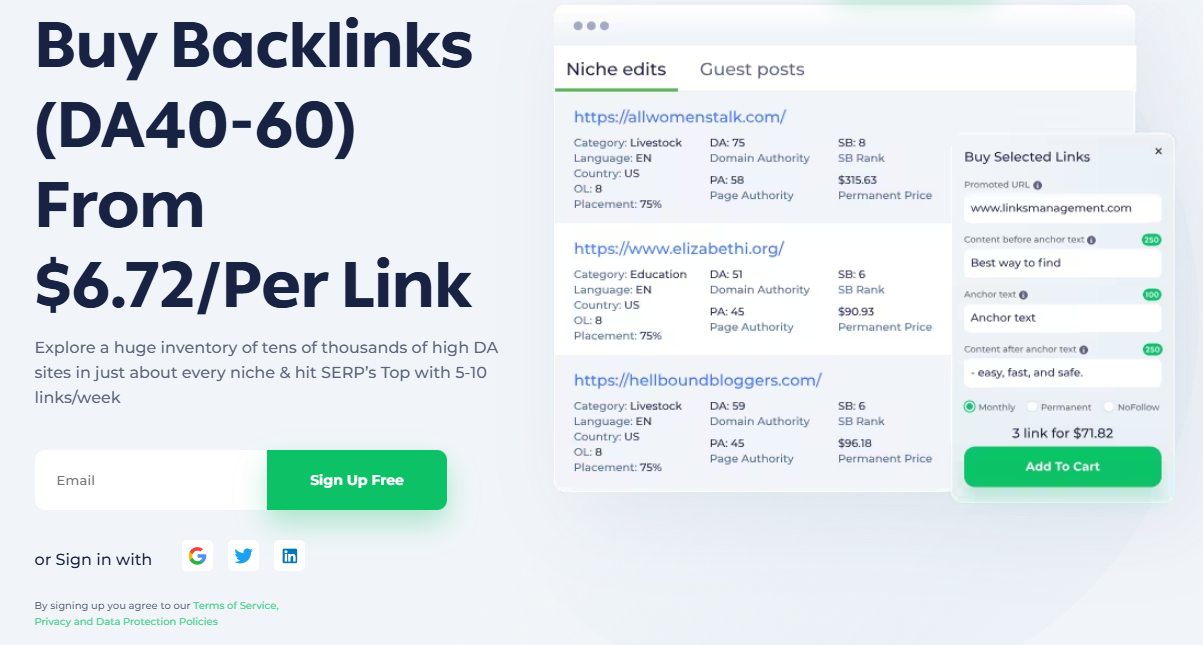
PBNs (private blog networks) are still the dominant tactic of low-quality vendors. The pitch is appealing: instant placements on sites with respectable domain authority and domain rating numbers. The catch is that those numbers don’t mean anything when the sites in question exist purely as link injection vehicles.
How to spot a PBN-driven vendor:
- They show you DA/DR metrics but won’t tell you the actual URLs upfront
- The referring domains they list are bizarrely diverse (no thematic clustering across what should be a niche-focused operation)
- The “publishers” have no organic traffic when you check Ahrefs or Semrush
- Their domain registration history shows expired-domain purchases
- Their backlink profile shows obvious footprints (shared IP addresses, identical themes, same plugin signatures)
In fact, a lot of PBN services flaunt it like it’s a good thing.
If It Sounds Too Good To Be True, It Is
The clearest warning sign of a bad vendor: the price.
A single high quality backlink, earned through real outreach, typically costs $150-$500+.
The labor alone (prospecting, pitching, negotiation, follow-up) takes an hour or two per placement when done right. So when you see a freelance marketplace listing offering 100 cheap backlinks for $100, the math literally cannot work out for a legitimate operation.
Top 15 Link Building Sellers
Respona
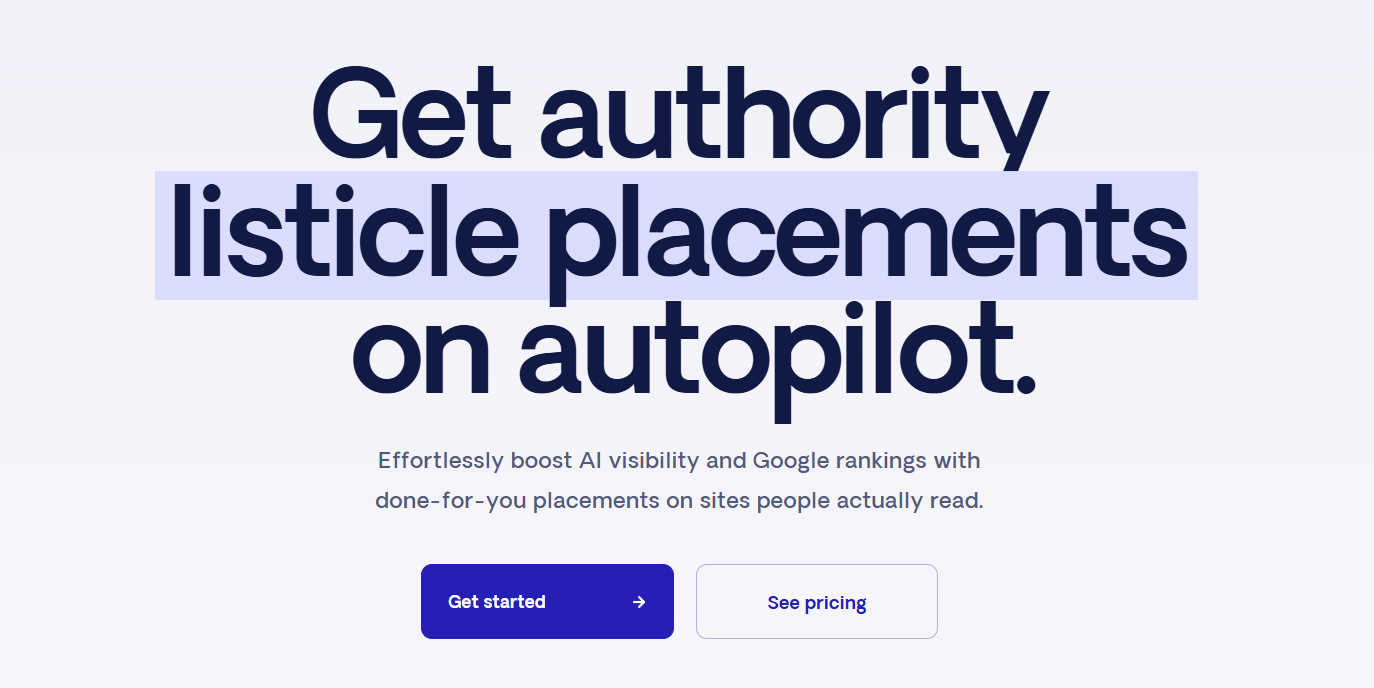
Respona is a unique done-for-you offering built around a combination most other vendors don’t have: a proprietary platform the team uses internally for prospecting and AI visibility tracking, paired with a publisher network and a dedicated outreach team that delivers customizable orders.
Behind the scenes, the platform automatically generates an action plan based on your target URLs, anchor variations, and (optionally) the AI prompts you want your brand cited for.
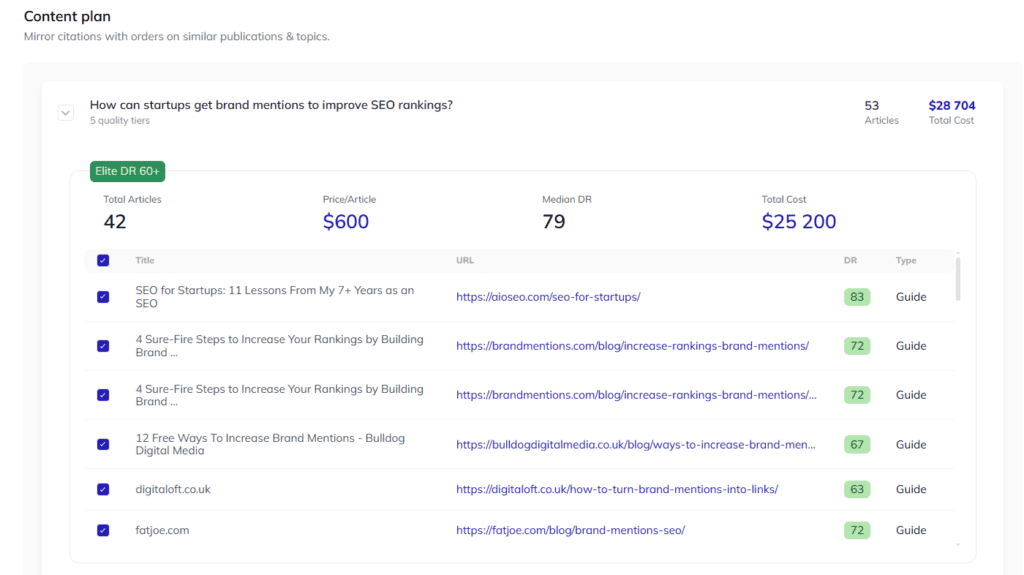
Every prospect is filtered for relevance, authority, and active traffic on the linking page. From there, our team handles outreach end-to-end: pitches, follow-ups, negotiation, and live placement.
Pricing is per-placement, tiered by the publisher’s DR: Starter (DR 20+) at $100, Standard (DR 30+) at $160, Authority (DR 40+) at $240, Power (DR 50+) at $400, and Elite (DR 60+) at $500.
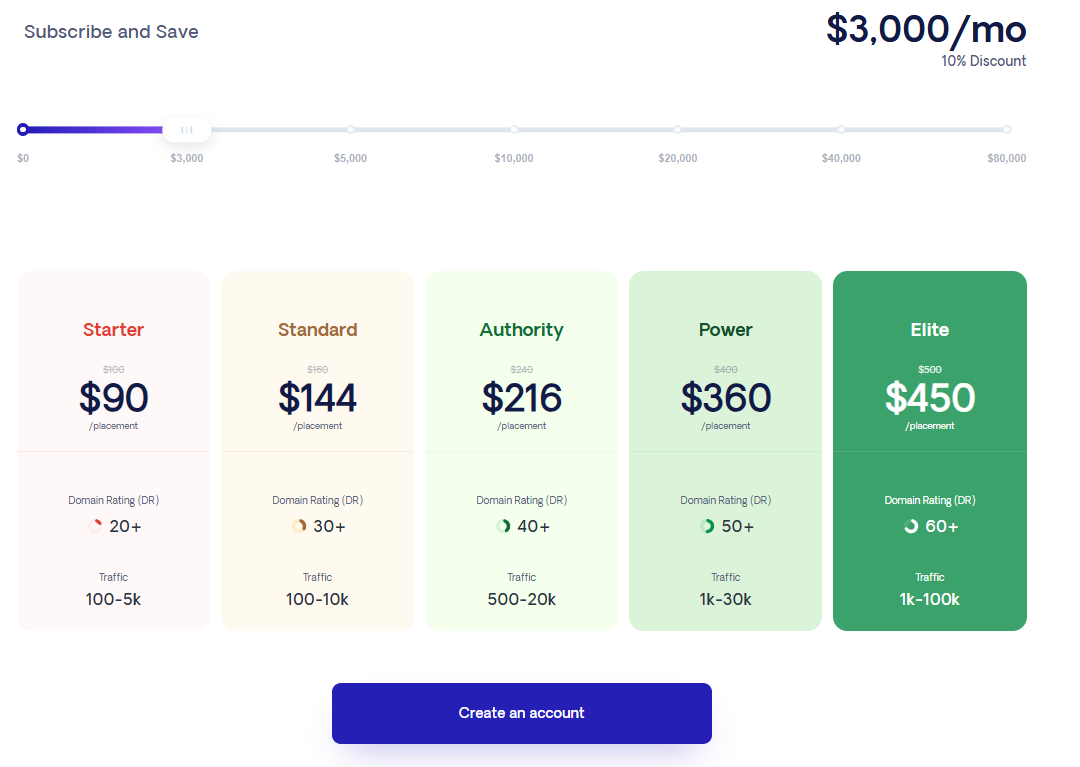
No monthly retainer, no setup fees, no charge for any link that doesn’t meet your defined specs.
Around 80% of customers are agencies white-labeling the service to their own clients, but the model works equally well for small and large businesses running campaigns directly.
Pre-approval on every prospect is available as a +20% paid add-on for teams that want manual sign-off before any outreach goes out.
uSERP
uSERP is a full-service SEO and link building agency known for editorial placements on high-DA publications. They’ve worked with major SaaS brands including monday.com and ClickUp, focusing on the kind of high-traffic content that earns mentions inside AI engine answers.
Pricing starts at $10,000/month, which makes them a fit primarily for established companies with serious outreach budgets. The trade-off: each link comes from a vetted publication with active traffic, not a network site.
Page One Power
Page One Power has been in the outreach space since 2010, which makes them one of the older operators still doing legitimate work. They focus on guest posting and editorial placements across a variety of industries.
Their guest posting service starts at around $600 per link, with custom campaign pricing available for larger engagements. They’re a solid choice for businesses that want a steady stream of placements without the volatility of newer agencies.
The HOTH
The HOTH offers an extensive menu of SEO services beyond just backlinks, including content creation, local SEO, and managed campaigns. Their link placement options range from “high-DA blog posts” to “guest post outreach” packages, with prices typically starting around $400 per placement.
A useful pick for marketers who want one vendor for multiple SEO needs, though it pays to scrutinize each product carefully. Some packages within The HOTH’s catalog deliver real outreach; others lean more toward template-driven processes.
Siege Media
Siege Media is best known for content-led link acquisition: they create high-quality assets (data studies, original research, comprehensive guides) specifically designed to attract organic backlinks over time.
Their pricing reflects the labor involved, starting around $250 per link for individual placements and scaling up significantly for full content campaigns. Best for brands willing to invest in content that compounds over months and years.
FATJOE
FATJOE is one of the largest agencies offering link acquisition at scale, with a robust white-label program for SEO agencies reselling under their own branding.
Their pricing operates on a calculator system where you specify article length and target domain quality. Prices range from accessible (under $100 for lower-tier placements) to premium (several hundred for high-authority links). Worth checking carefully which links are real outreach versus marketplace-style placements.
Authority Builders

Authority Builders sits in the high-authority placement category, focusing on sites with DR 50+ and consistent organic traffic. They run a curated marketplace where vetted publishers list their own placement options.
Pricing varies by listed publisher but typically runs $150-$1000 per link, with each link auditable for traffic and metrics before purchase. Useful for buyers who want maximum transparency on placement decisions.
Editorial.Link
Editorial.Link specializes in PR-focused outreach for SaaS clients. They have established relationships with a broad network of media publishers and guarantee placements within a specified DR range (typically 50-90).
Their plans start around $1,750/month for five backlinks, which makes them a midmarket option between freelance pricing and premium agency rates. The “Editorial” in their name is accurate: every placement is on real editorial sites.
Loganix
Loganix offers fixed-price packages alongside other SEO services like citations, content writing, and audits. Their backlink products are structured around clear DR tiers, with each link delivered with a screenshot, URL, and detailed report.
Pricing starts around $80 per link for the lowest tier and scales to several hundred for high-DR placements. Loganix appeals to buyers who want predictable, transparent pricing without custom-quote dynamics.
Stan Ventures
Stan Ventures runs a tiered pricing model from $100/link for entry-level placements up to $300+/link for higher-traffic publishers. The placements are obtained through outreach (not PBN networks), with the difference between tiers being the linking site’s monthly organic traffic.
A solid choice for teams that want to layer their backlink acquisition into specific publication tiers rather than buying generic “DA50+” packages.
Growth Partners Media
Growth Partners Media focuses on B2B and SaaS brands, with a strategy-first approach and selective client intake. Their service includes editorial backlinks, niche edits, and proprietary “Herd Links” placements on trusted community platforms.
Plans start at $2,095/month, putting them in the midmarket bracket. They’ve helped clients like OneUp scale organic traffic significantly through editorial outreach.
LinkBuilder.io
LinkBuilder.io’s flagship plan starts at around $5,999/month for 16 placements (about $375 per link), with all links coming from sites at DR 50 or higher. They also include target page planning, anchor text optimization, and competitor backlink analysis as part of the engagement.
A fit for established companies with comprehensive SEO budgets that want a full-service partner rather than just link procurement.
BlueTree
BlueTree leans into digital PR techniques to land placements, working from a network of over 450 publishing partners. Their entry plans start at $5,000/month for seven to eight editorial mentions on DR 70+ domains.
Flexible pricing is available for businesses targeting lower-DR sites. They’re known for creative angles in pitching, which often translates to higher acceptance rates than purely transactional outreach.
Outreach Desk
Outreach Desk is a manually-driven outreach agency that specializes in genuine editorial relationships with publishers. They don’t rely on automation, every pitch is custom, and they vet placements based on domain authority, organic traffic, and editorial standards.
White-label solutions are available for agencies that want to scale their offerings without building in-house teams. Custom pricing based on campaign goals.
Sure Oak

Sure Oak provides link building alongside other SEO services like editorial link insertion and digital PR. They specialize in startup-focused growth campaigns, including ecommerce, education, and telecom verticals.
Their packages start at $2,000/month for six links on sites with DA 30+. Useful for startup teams that want a service tier with measurable monthly deliverables.
Link building cheat sheet
Gain access to the 3-step strategy we use to earn over 86 high-quality backlinks each month.
Now Over to You
Picking the right vendor in 2026 comes down to three questions: Are they doing real outreach? Are their placements on websites people actually read? And does the price reflect the labor involved?
If the answer to any of these is “no” or “I don’t know,” the vendor is probably not worth the risk.
If you’d rather skip the vetting and have a team execute the entire pipeline end-to-end, our done-for-you link building service handles prospecting, outreach, follow-ups, and live placement on listicles and roundups that AI engines actually cite.
You pay per link delivered to your defined specs, with no monthly retainer or setup fees.
Place your first order to get started today.
Frequently Asked Questions (FAQ)
Are quality backlinks really worth the price?
In a word: yes. The math: a single quality backlink on a high-traffic editorial site can drive sustained referral clicks for years, plus the authority signals that come from earning external links on real publishers.
Building backlinks the right way takes time, but quality links from authoritative sites compound across both Google rankings and AI engine citations.
For most B2B and SaaS businesses, the math arrives at the same conclusion: fewer, better placements beat volume every time.
How much should I budget for buying backlinks?
It depends on your industry and goals. For SaaS or B2B brands in competitive niches, plan for $2,000-$10,000/month minimum to see meaningful traction.
For local businesses, $500-$2,000/month can move the needle when targeting regional publications. Buying backlinks at scale (10+ placements per month) typically requires a budget of $5,000+ at legitimate vendors.
What’s the difference between buying a backlink and earning one?
Earning a backlink is when a publisher decides on their own to link to you (someone discovers your content and references it).
Buying involves paying for the outreach work that asks a publisher to consider you. The publisher still controls the editorial decision. That’s why paying agencies for outreach labor is legitimate while paying for the link itself isn’t.
Can buying backlinks lead to higher ranking?
Yes, when the placements are legitimate. Real editorial backlinks from high-authority sites still contribute to Google’s ranking algorithm.
They also contribute to AI visibility, which is increasingly important. The path to higher ranking via paid services runs through real outreach, not through PBN purchases.
How do I verify a vendor is using real outreach?
Ask for examples of past placements with URLs (not just screenshots). Check whether those placements are on sites with real organic traffic (Ahrefs/Semrush will tell you). Look for case studies that name specific publications.
Anyone who can’t share these signals is likely doing something other than outreach.
[ad_2]
Source_link