[ad_1]
Summary
- Personalization tokens like {first_name} or {city} customize a message, while audience-level segmentation determines who receives it and when based on current signals.
- Platforms that refresh profile-based audiences as relevant data updates arrive can help keep membership current, while periodic list copies may become stale as customer behavior changes.
- Narrow, multi-condition segments built on recent behavior are a useful hypothesis to test against broad, demographic-only sends, even when the broad list is larger.
- Post-Apple Mail Privacy Protection, unique open rate and click-to-open rate are diagnostic signals that should be interpreted alongside controlled tests and downstream outcomes.
- When evaluating a platform switch for better segmentation, assess identity resolution and cross-channel data synchronization before relying on downstream activation.
Your list is enormous, engagement looks fine on paper, and yet every send still feels like a guess about who is actually paying attention that week.
That gap between list size and real engagement usually traces back to how a platform builds and refreshes its audiences, not to subject lines or send times.
Audience-level personalization means building segments from current behavior and lifecycle stage instead of static demographic fields, then refreshing membership as relevant customer data changes.
This article is for lifecycle and customer relationship management (CRM) marketers, marketing operations leads, and demand generation managers evaluating or switching email service provider (ESP) platforms, including teams that need coordinated activation across owned channels.
Instead of another feature checklist, we walk through how segmentation architecture, including profile stores, audience refreshes, and identity resolution, can be evaluated against engagement, conversion, retention, revenue per recipient, and deliverability outcomes.
You will leave with a framework for judging how audience currency and specificity may affect engagement, alongside conversion, retention, revenue per recipient, and deliverability outcomes.
How to evaluate audience-level personalization beyond subject-line tactics
Personalization tokens change how a message looks. Audience-level personalization changes who gets the message and when, which is a fundamentally different lever.
A subject line with a first name can still go to a customer who unsubscribed from that product category three weeks ago, while a recomputed audience may exclude that customer before the send when event collection, identity resolution, suppression logic, and configuration support it.
The distinction matters because relevance at the moment of send can influence engagement, while cosmetic customization alone does not ensure that an otherwise generic list is appropriate.
A message triggered by a specific behavior, such as browsing a product category in the last 48 hours without purchasing, can be tested as a more timely response to that signal.
A static “engaged in last 90 days” segment, by contrast, includes plenty of customers whose interest has already cooled.
Multi-condition triggers can reduce the gap between a customer’s behavior and the message that follows it, making them a useful approach to test against broad-list personalization. The difference becomes clear when comparing two approaches to the same audience:
- A list-based send to everyone tagged “active subscriber” regardless of recent activity
- A recomputed audience of customers who viewed a specific category, did not purchase, and have opened at least one email in the last 30 days
The second approach is smaller, but every recipient has a documented reason to care about that specific message. That is the core mechanic behind one-to-one personalization, and it gives lifecycle teams a clear relevance hypothesis to test against broader audience definitions using controlled measurement.
How segmentation architecture differs across popular platforms
The architecture behind a segment determines how current it is at send time, and that architecture varies meaningfully across popular platforms.
Understanding the difference between a profile store and a list copy helps teams evaluate how audience freshness, implementation, and measurement may affect outcomes on otherwise comparable sends.
Profile store architecture versus list-copy segmentation
Platforms built on a live profile store can update audience membership as new events arrive, so teams should test how quickly a customer who abandons a cart is reflected in the relevant segment.
Platforms that rely on periodic list exports or batch-refreshed static lists can leave a segment stale between refreshes, creating a risk that a customer who already purchased still receives an abandonment nudge.
Platform capabilities for behavioral triggering, condition layering, and audience-refresh timing can differ by plan tier and implementation, so teams should validate them in their own evaluation.
Teams should verify recompute latency during evaluation rather than assuming parity across vendors or across every plan a vendor sells.
Segmentation user interface simplicity versus granular control
A simpler segment builder can help smaller marketing operations teams self-serve straightforward behavioral segments, though capabilities and governance requirements vary by plan and implementation.
Deeper condition-stacking across behavioral, temporal, and attribute filters can suit complex lifecycle programs, but it may demand more marketing operations or engineering support to maintain.
Neither approach is inherently better for every team. The right choice depends on how many distinct customer journeys your organization runs concurrently, who owns segment logic day to day, and which plan tier is actually in use.
How cross-channel audience sync varies across marketing suites
The gap that shows up most often in enterprise evaluations is not segmentation logic itself, it is how well that logic reflects behavior happening outside the email channel.
A segment built purely on email engagement history misses the customer who is highly active on the website or app but rarely opens email, which understates true intent.
Siloed email segmentation versus a unified customer view
Some marketing-suite configurations segment primarily on email-specific signals such as opens, clicks, and unsubscribes, particularly when email sits in a separate module from web and app data.
This can work well for email-only use cases, but it becomes limiting once a brand needs to trigger an email based on an app session or an offline purchase; at that point the segmentation logic may need custom integration work depending on the plan and setup.
A platform built on a unified customer data management layer is designed to resolve identity across web, app, and offline touchpoints into a single profile before segmentation runs, which is a structural difference worth testing for during any platform evaluation.
Reporting and attribution gaps
Even when cross-channel data exists, proving that personalization caused an open-rate lift requires isolating the segment variable from everything else changing in the send: subject line, timing, and creative.
Reporting suites that treat email as a standalone channel can struggle to cleanly attribute lift back to audience logic versus other variables, which leaves marketing operations teams defending results with anecdote instead of evidence.
This is a reporting depth question worth its own line item in any vendor evaluation, separate from marketing capability entirely.
Metrics for evaluating personalization and engagement
Segment specificity and audience size are variables teams should test when evaluating engagement and downstream lifecycle outcomes.
Marketers who assume a broader send reaches more engaged customers often overlook the dilution effect: mixing highly interested recipients with lukewarm ones drags the blended open rate down, even when total opens increase.
How to test narrow, multi-condition segments against broad sends
A segment defined by three conditions, recent category view, no purchase, and active email engagement in a defined timeframe, creates a clear relevance hypothesis that teams can test against the full active list using a controlled design.
The tradeoff is volume: narrow segments reach fewer people per send, so the approach only works at scale if the platform can generate and refresh enough of these micro-segments to matter.
Separating unique opens from click-to-open rate
Apple’s Mail Privacy Protection changed how reliable a unique open rate is as a personalization signal, since pre-fetching can register an open regardless of whether a human is engaged.
Click-to-open rate, opens that convert to a click, can be a useful supporting signal because it reflects engagement beyond an open event, but teams should interpret it alongside clicks, conversions, revenue per recipient, retention, and deliverability indicators.
Teams evaluating a segmentation change should treat click-to-open rate as a supporting diagnostic and prioritize controlled comparisons plus downstream signals such as clicks, conversions, revenue per recipient, retention, and deliverability.
For verified customer-story context, consult the El Corte Inglés case study; teams should not treat it as proof of a specific relationship between audience precision, click-to-open rate, and revenue per recipient without a controlled test.
Choosing an email platform built for true audience-level personalization
The right platform choice depends on validating how identity resolution, recompute speed, and cross-channel depth are delivered for the relevant architecture, integrations, plan, and implementation.
A checklist helps standardize evaluation across vendors that all claim “AI-powered personalization” without defining what that means operationally:
- Identity resolution that merges anonymous and known behavior across devices before segmentation runs
- Predictive groups and AI-assisted audience building that teams can validate against their data, consent model, and campaign goals
- Cross-channel activation that lets teams build an audience from unified data and coordinate email, SMS, push, WhatsApp, web, and app experiences through journey orchestration
- Audience-update timing for behavioral triggers, validated for the relevant data sources, configuration, plan, and implementation
- Reporting that isolates personalization impact from creative and timing variables
Switching platforms carries real cost, so teams should assess migration readiness before committing to a full transition, including sender domains and DNS records, consent and opt-in data, unsubscribe management, IP selection, and sender-domain warm-up plans.
Teams should also validate priority lifecycle use cases, including onboarding, browse and cart abandonment, reactivation, post-purchase messaging, loyalty or POS-informed activation, and catalog-aware product messaging.
A phased evaluation, running the new platform’s segmentation logic against a control group on the current stack, helps avoid the common mistake of assuming a bigger feature list guarantees a bigger open-rate gain.
For verified customer-story context, consult the Aramex case study; teams should validate any expected conversion impact through a controlled migration or campaign test before committing to a full transition.
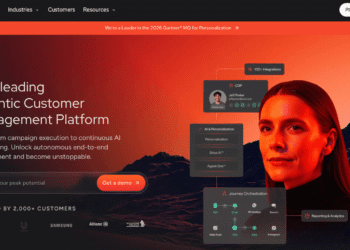
Insider One’s AI overview supports AI-assisted audience building and decisioning using unified customer profiles. Insider One can ingest web, app, CRM, ecommerce, offline, and catalog data through SDKs, APIs, and native integrations, then apply identity resolution to create profiles containing attributes, events, engagement data, predictive groups, and recommendations.
Its Email capability supports behavior-driven messaging, dynamic content, predictive targeting, triggered journeys, A/B testing, Smart Delivery, analytics, list hygiene, and sender-reputation support.
At the same time, Architect provides a visual cross-channel activation layer with branching, waits, A/B splits, and real-time triggers across email, SMS, push, WhatsApp, web, and app.
Teams weighing a switch can review deeper evaluation guidance in our guide to enterprise email marketing platforms or our breakdown of cross-channel email personalization platforms before shortlisting vendors.
Conclusion
Audience precision and subject-line treatment are both variables to test, with controlled measurement focused on engagement, conversion, retention, revenue per recipient, and deliverability. Platforms that support profile-based audience refreshes and cross-channel identity resolution can be evaluated against static, list-based approaches for the data freshness and coordination required by a team’s use cases.
The practical next step is auditing your current segmentation architecture against recompute speed and cross-channel depth before assuming a bigger feature list will fix a relevance problem.
To evaluate the fit of journey orchestration, customer data management, and AI personalization for your use case, book a personalized demo to review unified-data requirements, Email and Architect activation, deliverability setup, and implementation constraints with the Insider One team.
Frequently Asked Questions
Audience-level personalization builds segments from current behavior, purchase history, and lifecycle stage, then refreshes membership as relevant customer data changes according to the platform configuration and data flow. It differs from token-based personalization, which only customizes message content while sending to a static, unchanged list regardless of recent behavior shifts.
Narrow, multi-condition segments group recipients who share a specific, recent behavior, creating a relevance hypothesis that teams can test against a broader list. Broad lists may mix recipients with different levels of recent engagement, so teams should use controlled tests and downstream measures rather than blended open rate alone when assessing the tradeoff.
Apple’s Mail Privacy Protection pre-fetches images, which can register an open without genuine human engagement. This makes unique open rate less reliable as a personalization signal, while click-to-open rate can serve as a supporting diagnostic alongside controlled tests, clicks, conversions, revenue per recipient, retention, and deliverability.
A profile store can refresh segment membership as behavior changes, and teams should test the resulting audience-update timing for their data sources and implementation. List-copy segmentation may refresh on a batch schedule, and teams should validate whether its update timing could leave a segment stale for their data sources, configuration, and implementation.
Check identity resolution across devices, audience-update timing for behavioral triggers, native activation depth beyond email, and reporting that helps isolate audience logic from creative and timing variables. Testing these against a control group before switching helps avoid a costly, feature-driven migration decision.
[ad_2]
Source_link