rtCamp is one of the most credible WordPress agencies in the world, with 250+ engineers who’ve supported 500+ enterprise engagements. Their client list includes Al Jazeera, Google, Cox Automotive, and Penske Media.
However, when the rtCamp team checked what AI search engines were saying about them, something was missing. The models talked up rtCamp’s engineering and migration work. But they downplayed some of rtCamp’s credentials that enterprise security teams weigh most heavily.
Here’s how rtCamp used Semrush’s AI Visibility Toolkit to find that gap and close it in a single month.
The problem: No visibility into AI positioning
Enterprise buyers were increasingly using AI tools to shortlist vendors.
rtCamp knew this was happening. But they had no visibility into whether they were showing up in those AI-generated shortlists or how they were being described.
So they turned to Semrush’s AI Visibility Toolkit to find out.
The solution: Finding and addressing gaps in AI knowledge about the brand
Here’s the workflow rtCamp followed to identify and fix gaps in what AI tools know about them and present to users:
Step 1: Diagnose the AI visibility gap with Semrush
rtCamp’s team started with the Brand Performance report in Semrush’s AI Visibility Toolkit.
The goal was simple: rtCamp wanted to see how LLMs were describing the brand across categories that matter to enterprise buyers.
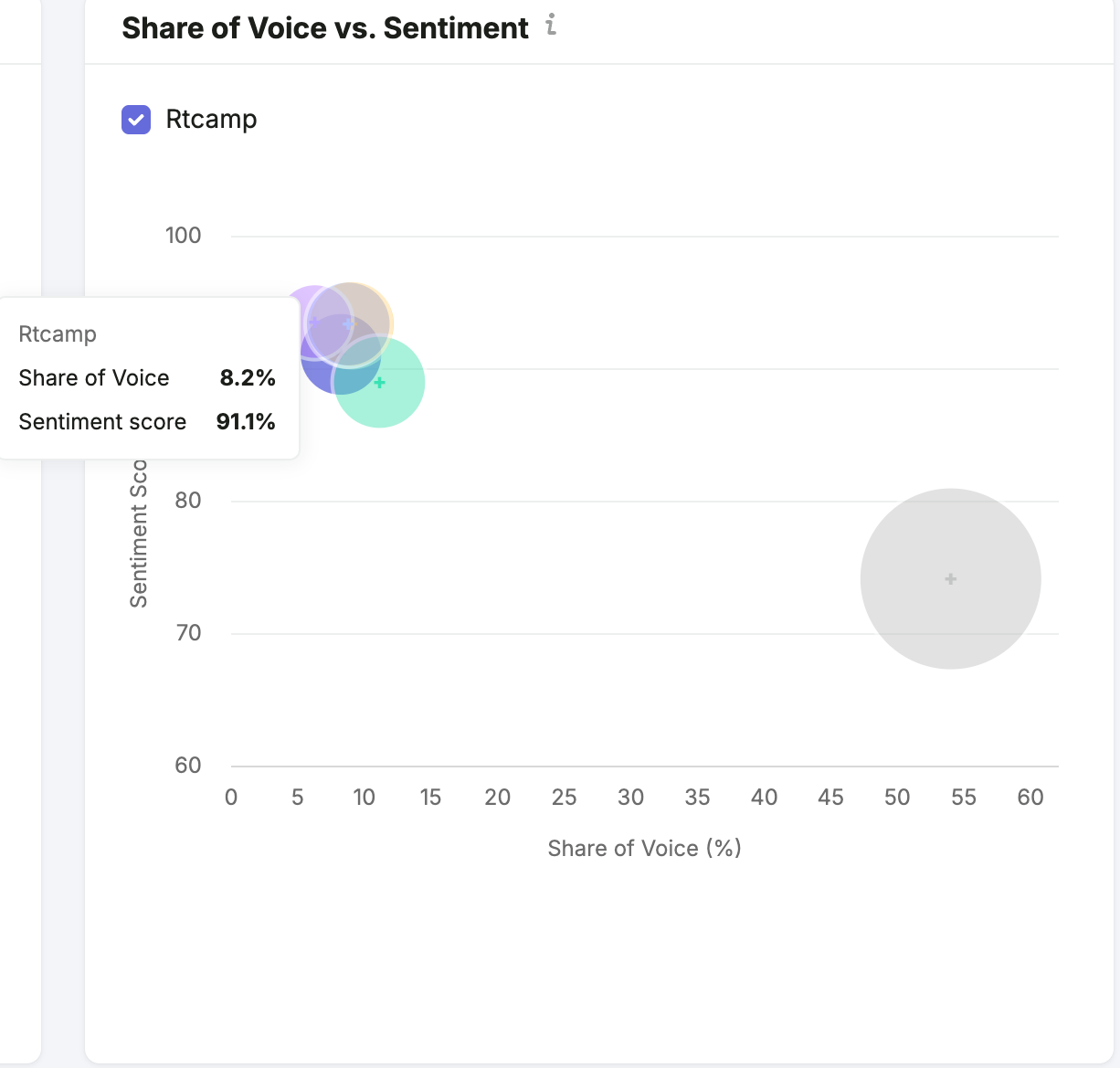
The sentiment score and AI share of voice looked healthy.

Then came the mention-specific data in the Perception report that reveals what AI talks about when describing a brand. That’s where a gap showed up.
AI models consistently recognized rtCamp’s strengths in migrations & replatforming, infrastructure, and architecture. However, they provided comparatively less favorable coverage in security, compliance, and governance — the category that enterprise procurement teams weigh most heavily.

rtCamp knew the credentials were important for enterprises. SOC 2 Type II and ISO 27001 certifications were already available. FedRAMP coverage existed through the WordPress VIP partnership.
But these credentials weren’t getting the same visibility in AI responses as their engineering strengths.
“Security is one of the most important factors for enterprises when choosing a platform and vendor. Semrush validated our thinking, and it gave us the data to prioritize security and compliance in how we present rtCamp.”
Step 2: Make the invisible visible
Armed with their AI visibility data, rtCamp ran a focused set of changes to make the agency’s existing capabilities across security and governance visible to AI models and the buyers.
Here’s what the rtCamp team did:
- Launched a dedicated Trust Center. rtCamp published trust.rtcamp.com as a centralized hub for security posture, compliance progress, and data handling practices. This gave AI crawlers a structured, authoritative source to pull from.
- Made certifications public. SOC 2 Type II and ISO 27001 certifications were highlighted on the website. AI models now had something concrete to reference instead of inferring trust.
- Mentioned FedRAMP authorization everywhere it mattered. rtCamp clients benefit from the FedRAMP-authorized infrastructure through the WordPress VIP partnership. That advantage was now explicit on service pages and partnership messaging.
- Elevated trusted partnerships site-wide. Information about partnerships with WordPress VIP, Automattic, Kinsta, and Pagely now appears in footers, banners, and key service pages. Ecosystem authority signals carry real weight with AI models that evaluate a vendor.
- Published new enterprise case studies. More structured evidence of complex, high-stakes engagements gives AI models additional material to draw on.
- Building trust through customer reviews on G2 and Clutch: Third-party validation is a trust signal for both AI models and human buyers. This work is ongoing.
For example, rtCamp’s credentials, security controls, and partnerships are now visible within the Trust Center:

And across the website, starting with the homepage:

The results: Measurable movement in 1 month
In a single month, rtCamp moved the needle on AI perception:
|
Metric |
April |
May |
|
Overall Favorable Sentiment |
73% |
100% |
|
Security, Compliance, & Governance Sentiment |
70%–80% |
100% |
First, the overall favorable sentiment jumped to 100%, with a 2% increase in the AI share of voice.

Second, sentiment for Security, Compliance, and Governance went from 70%–80% to 100%.

This was also reflected in rtCamp’s AI perception — a metric that measures sentiment across AI-generated answers to non-branded queries — versus its competitors.
|
Before:
 |
After:
 |
The change in how rtCamp appears in AI answers showed up in sales conversations.
“As AI-driven discovery becomes more prevalent, enterprises are increasingly encountering rtCamp’s security, compliance, and governance credentials before engaging with the sales team. Combined with the validation available on rtCamp’s website, including documented processes, delivery standards, and operational practices, this early visibility helps establish trust and reduces friction in the evaluation process, enabling prospective clients to move forward with greater confidence.”
Early signals of positive impact also came from organic traffic. Organic form fills increased 117% during the period.
The caveat: Enterprise sales cycles are long. rtCamp is still observing which improvements related to their AI visibility work stick.
But so far, it’s clear that better AI positioning is changing how buyers approach conversations.
What’s Next
rtCamp is treating AI visibility as an always-on brand health signal rather than a one-time audit.
The ongoing work includes:
- Scaling G2 and Clutch review volume to strengthen third-party validation
- Producing targeted content on compliance, governance, and risk reduction to grow the share of mentions in the security category and give prospects deeper context.
- Using the Semrush AI Visibility Toolkit to monitor perception shifts on a rolling basis
The takeaways from rtCamp’s efforts to improve how they’re presented in AI answers?
AI models reward what they can find, verify, and confidently surface to the people asking about you.
For rtCamp, the distance between operational reality and AI perception was a content and clarity problem. Semrush made that gap measurable. Closing it became an actionable project with clear results.

![What the data shows [Study]](https://mgrowtech.com/wp-content/uploads/2026/09/sharing-image_4-350x250.png)