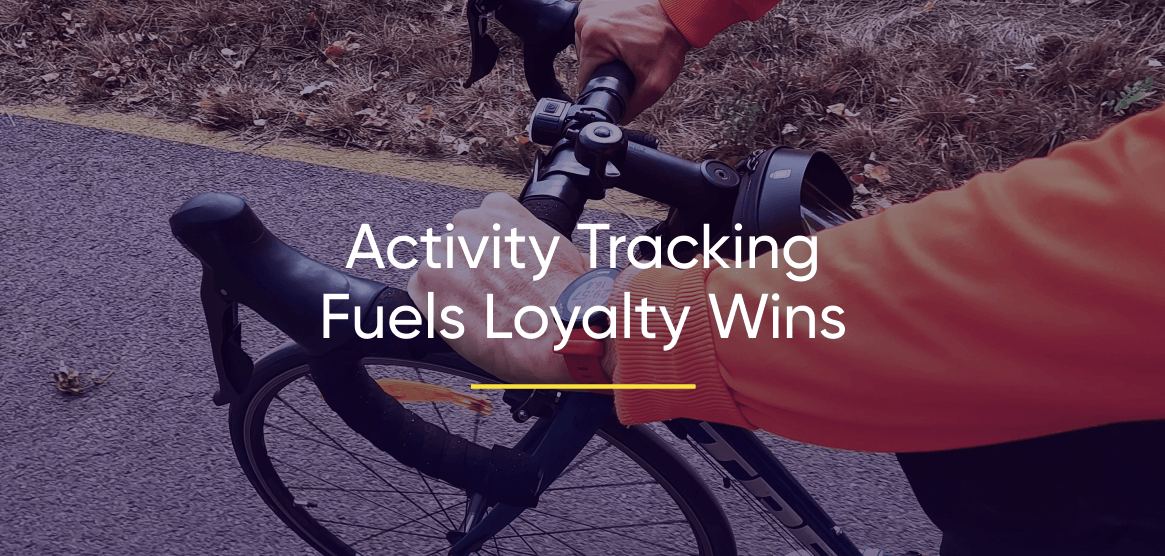
Picture this: A runner laces up before sunrise, watch already counting down to mile one, months into training for a race she’s been chasing all year.
Every step gets logged automatically: pace, distance, elevation, on the smart device she never takes off.
That kind of passion is exactly what identity-based loyalty should reward, not just what she buys. It’s why smart activewear brands are turning to activity-based rewards and fitness activity tracking.
This guide shows exactly how to reward customers for tracked workouts using a Garmin integration, the psychology behind it, and three challenge ideas, driving actual business goals that you can build right now.
Ready to jump straight into concept planning? Download our easy-to-use Concept Planning Worksheet for a speedy takeoff!
Why Should Activewear Brands Reward Tracked Workouts?
Because it turns the loyalty program into an extension of the member’s actual identity, not a running tally of transactions.
For sportswear and athleisure brands specifically, where discounting has already been fought to a standstill, activity-based rewards work on a different psychological register than points for spend, and that difference is exactly why they move the needle on engagement and retention.
It’s also backed by how members already behave: 77% of US online adults say they enjoy engaging with loyalty programs even when they’re not purchasing, which means a program built entirely around checkout moments is leaving most of that appetite for engagement on the table.
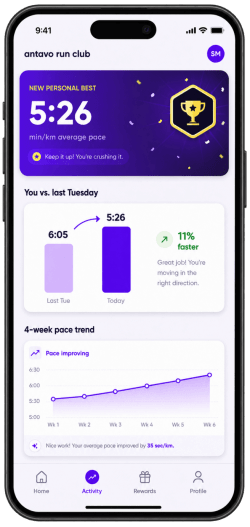
Self-competition beats last week’s you
Beating your own pace from last Tuesday feels nothing like saving five dollars on a hoodie. One is about becoming more. The other is a discount.
Programs that reward personal bests give members a reason to open the app on days they weren’t planning to shop at all, which is what keeps engagement frequency up between purchase cycles.
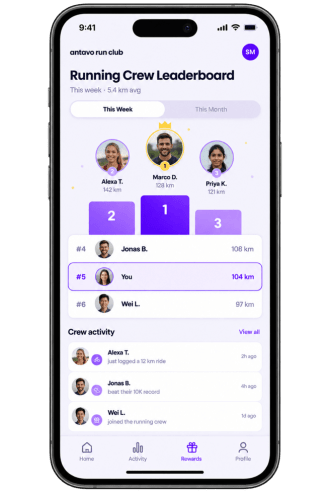
Peer competition changes the stakes
Put a leaderboard in front of people, and the behavior shifts immediately. It stops being “collecting points” and becomes “I am not letting my running group see me slack off this week.”
That’s a direct lever on session frequency and community-driven retention, the kind purchase-only programs can’t touch.
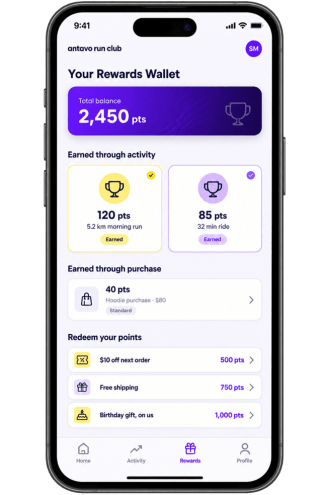
Earned points carry more weight than accumulated ones
Points that show up because a card got swiped feel like a receipt, something anyone can produce. Points earned through a logged run or ride feel like a trophy.
Members treat them differently, and brands that reward effort see higher perceived program value without raising the cost of a single reward.
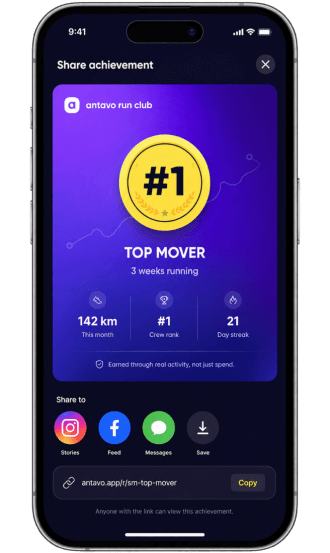
Community recognition drives organic reach
Nobody screenshots “redeemed 200 points for a hoodie.” People screenshot “top mover, three weeks running.”
One is a transaction. The other is a flex, and flexes get shared, which turns loyalty members into an acquisition channel a spend-only program never activates.
This isn’t a theoretical shift, either. Adidas’ adiClub already awards points for workouts logged in its own training app, on top of purchases, precisely because tying rewards to activity reinforces the brand’s fitness-first identity rather than just its retail one.
From Purchase to Behavior to Identity: Where Loyalty Is Headed
Loyalty has moved through three stages:
- Purchase-based loyalty says spend more, get more, achievable with a single card swipe.
- Behavioral loyalty says do the thing, get points, which already asks more of the member.
- Identity-based loyalty is the stage past that: be recognized as the kind of person who does the thing.
Sports and activity challenges, the clearest form of activity-based rewards, are what get a program all the way to that last stage.
Nobody builds an identity around a discount code.
Plenty of people build one around being a runner, a lifter, a rider. That’s the segment activewear and athleisure brands are already playing in, whether their loyalty program reflects it yet or not.
How Antavo’s Garmin Integration Makes Activity-Based Rewards Possible
This is where sports activity tracking in loyalty stops being a nice idea and becomes something a brand can actually run.
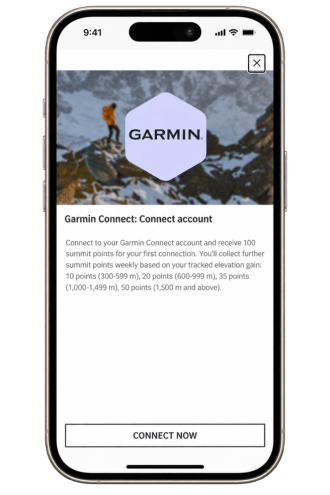
Antavo’s Garmin integration connects a member’s wearable data directly to their loyalty profile, the same kind of two-way data flow that makes a loyalty platform useful rather than a walled-off points ledger.
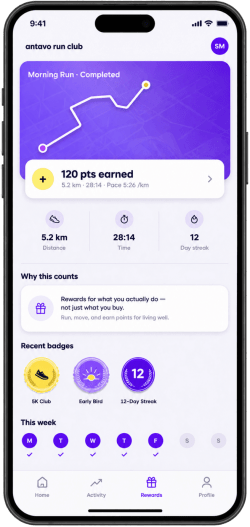
Every run, ride, swim, or hike logged on Garmin becomes real, verified activity data that the program can reward automatically- no manual submission, no honor system.
How Can You Verify if the Sports Activity Actually Happened?
That verification step matters more than it sounds. Effort-based rewards only work if the effort is real and trackable.
A self-reported field where members type in “ran 5k today” invites exactly the kind of gaming that erodes trust in the whole program.
Fitness activity tracking through a proper integration removes that risk entirely, because the data comes from the device, not from the member’s self-reflection.
Once that data is flowing, brands can build the mechanics that make it happen.
Identity-based loyalty works:
- Streaks for consistency,
- Milestone rewards for distance or elevation goals,
- Leaderboards that surface top movers publicly.
Each of these gives the brand a reason to reward customers for tracked workouts on an ongoing basis, not as a one-off gimmick tied to a single campaign.
3 Garmin Challenge Ideas Activewear Brands Can Actually Build
All three of these show what sports activity tracking in loyalty actually looks like in practice, built the way Antavo’s Garmin integration actually supports them.
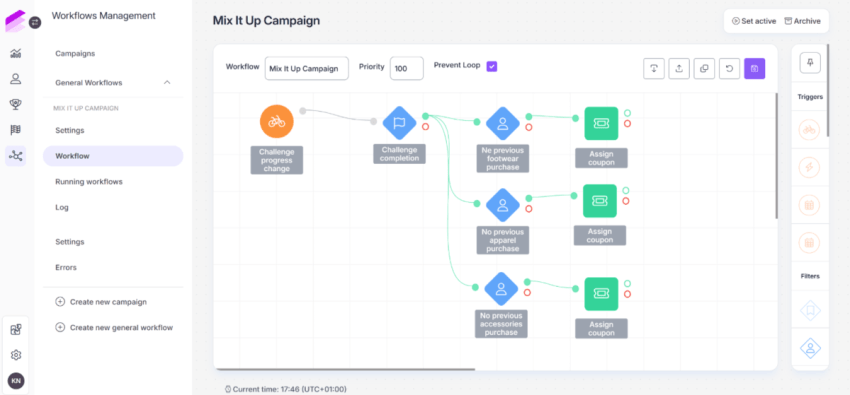
Either as a single Challenge with multiple activity criteria, or as a Challenge paired with a Workflow, where the Garmin event unlocks eligibility, and a follow-up action delivers the reward.
None of this requires a member to self-report anything. The data comes straight from their Garmin account.
#1 Activity Tracking Challenge Idea: “Cross-Train, Cross-Buy”
The challenge asks members to log activities from three different Garmin categories within 30 days, say one run, one ride, and one strength session.
Completing that trio unlocks a time-limited coupon, but only for a product category the member hasn’t shopped yet, pulled straight from their purchase history.
The pitch to the member is simple: you already mix up your training, now mix up your cart.
For the brand, this is a clean lever on cross-category basket expansion, and it comes with a built-in A/B cohort for measurement: challenge completers versus everyone else, so the category-expansion lift is easy to isolate and report on.
#2 Activity Tracking Challenge Idea: “Consistency Pays”
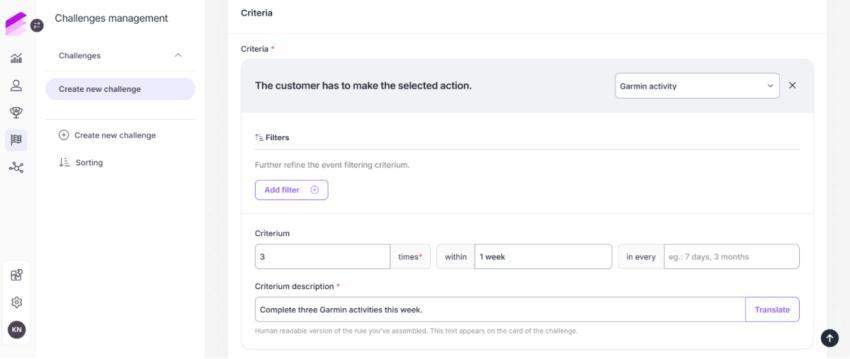
Reward the habit of showing up, not just the purchase. Members who log any activity at least three times a week for four consecutive weeks earn a stacking points multiplier on any order they place that same week, something like 1.5x.
Miss the activity target and a purchase that week still earns standard points. Nothing about this punishes a non-purchase week, which matters: activity should be the accelerant here, never the gate that blocks a reward the customer would otherwise get.
What this actually buys the brand is top-of-mind frequency.
A member checking in on their weekly activity streak is a member who sees the brand multiple times a week, and that repeated contact is what purchase frequency lifts are actually made of.
#3 Activity Tracking Challenge Idea: “Earn Your Way In”
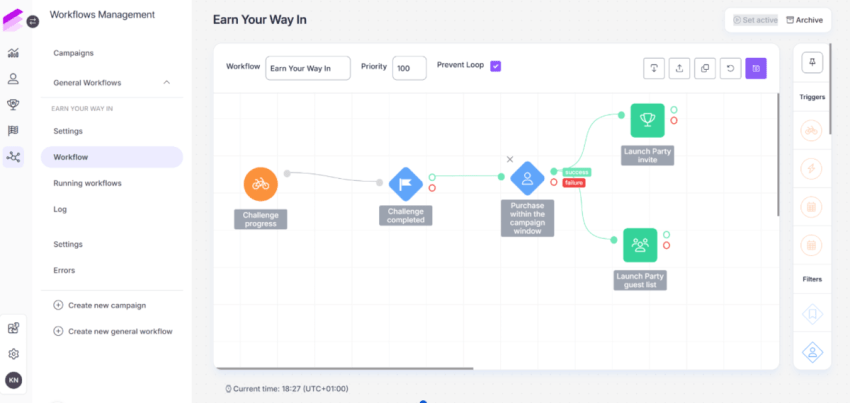
Make an exclusive event something members visibly work toward. Set a cumulative goal tied to the brand’s story, cover 100km, or log 10 hours of activity, before a launch date.
Optionally require at least one purchase in the same window, so the invite goes to members who are both active and transacting, not just Garmin-connected lurkers.
Completing the challenge triggers a Workflow that tags the member into a segment, and that segment becomes the launch party guest list.
The real value here goes beyond the guest list itself: a “quest to the launch” gives the brand a natural content series, progress updates, and leaderboard teasers, in the run-up to the event, generating owned-channel hype long before a single invite goes out.
It’s Already Working
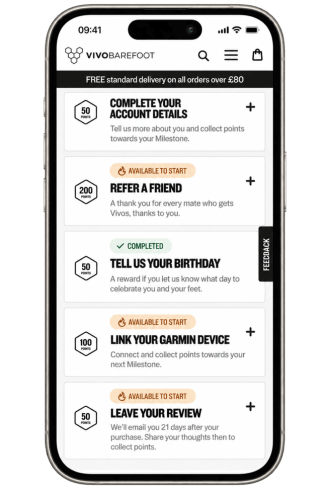
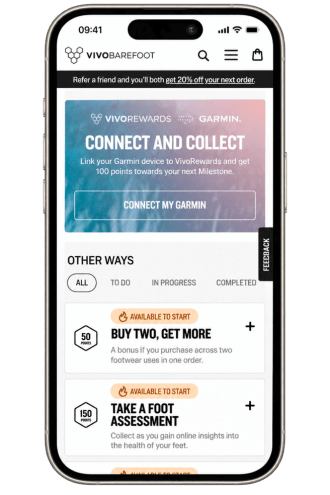
Antavo’s Garmin integration is already turning activity-based rewards into a reality for outdoor and activewear brands including Vivobarefoot and Bergzeit. These brands can already turn logged activity into loyalty rewards, connecting what members actually do in their gear to what the brand recognizes them for.
What KPIs Can Activewear Brands Move With Activity-Based Rewards?
The business case for choosing to reward customers for tracked workouts isn’t abstract. It gives brands a direct lever on:
- Purchase frequency and AOV: Members who stay engaged with streaks and challenges between purchases are more likely to buy again when a real need arises, rather than lapsing.
- Engagement and app open frequency: A leaderboard or streak gives members a reason to check in on days with no purchase intent at all.
- Churn reduction: Identity-based engagement is stickier than points-balance engagement, because leaving the program means giving up a personal record, not just a discount.
- Organic acquisition: Public recognition (top mover, longest streak) gets shared by members themselves, turning the loyalty program into a visible extension of the brand rather than a private ledger.
The customer-side value is what makes all of this sustainable. Members aren’t being asked to spend more to earn more.
They’re being recognized for something they were already doing, something they’re truly passionate about and committed to, which is a very different kind of relationship than “buy again for five percent off.”
Frequently Asked Questions About Rewarding Tracked Workouts in Loyalty Programs
Do we need a branded fitness app to reward tracked workouts?
No. That’s actually the point of building this on a Garmin integration rather than an in-house app: members keep using the device and app they already trust, and the activity data flows into the loyalty platform through Challenges and Workflows. Building and maintaining a proprietary fitness app is a much bigger lift, and it asks members to adopt a second app just to earn rewards they’d rather earn passively.
How many points should a tracked workout actually be worth?
There’s no universal number, but the guiding principle is that activity points shouldn’t outweigh purchase points to the point where working out replaces buying. Most brands treat fitness activity tracking as a frequency and engagement lever, small multipliers, streak bonuses, milestone drops, rather than the primary earn mechanic.
Does the Garmin integration only work for running and cycling brands, or can other activewear categories use it too?
Garmin’s activity taxonomy covers dozens of categories well beyond running and cycling, including strength training, yoga, swimming, winter sports, and racket sports, so a brand doesn’t need to be running-specific to use this. The mechanic scales to whatever movement a brand’s customers already do, which is why cross-category challenges (like rewarding a mix of activity types) tend to outperform single-sport ones for brands with a broad product range.
What loyalty program structure suits activity-based rewards best?
Gamified and lifestyle-type programs tend to be the most natural fit, since both are already built around non-purchase engagement rather than pure spend accumulation. That said, activity-based Challenges can be layered onto a tiered or earn & burn program too. The mechanic is additive: it works as a feature within most existing structures rather than requiring a brand to rebuild its program from scratch.
Ready to Reward More Than Purchases?
Rewarding tracked workouts isn’t a gimmick; it’s the natural next step for any activewear brand serious about identity-based loyalty.
A Garmin integration turns effort into verified, reward-worthy data- no self-reporting, no guesswork. The payoff shows up in purchase frequency, retention, and organic reach.
The mechanics are ready. The only question left is whether your program is built to use them.
Antavo is the AI loyalty and incentives platform that brings together loyalty, promotions, and agentic AI to turn customers into regulars: the customers who come back on their own, buy more often, and bring others with them. For more than a decade, Antavo has powered identity-led loyalty strategies for brands including SKIMS, Paul Smith, KFC, Flying Tiger Copenhagen, and Hyatt’s Inclusive Collection. Marketers build, change, and launch programs and promotions themselves, without waiting on engineering.
If you’re tired of paying to win the same customers twice, book a call with our experts and see how Antavo turns them into regulars.