

Ryan Hamilton
Ryan Hamilton is an Associate Professor of Marketing at Emory University and co-author of the book “The Growth Dilemma”
 By Stephen Shaw
For most mature brands today, the growth playbook looks pretty much identical: find potential first-time buyers who look like the customers you already have amongst the pool of new category entrants, or try to penetrate an adjacent market where there may be enough latent demand to be worth mining. Another option is going directly after competitive users (usually through price promotions), but those customers are hard to snatch away if they’re brand loyalists, or even if they are persuadable, likely to be just bargain hunters.
That standard playbook is known as “Segmentation, Targeting and Positioning”, or STP for short. Figure out your “Ideal Customer Profile”; partition the total addressable market into distinct demographic or psychographic segments; and then spend as much as you can afford capturing as big a share of the target population as possible. When that strategy runs low on fuel – growth is always constrained by category size and the inevitable counteroffensives from competing brands – marketers can just tack over to the alternate (albeit riskier) path to growth: broaden the consumer tent by stretching the value proposition, maybe even refurbishing the brand image, to draw in segments from outside the core customer base.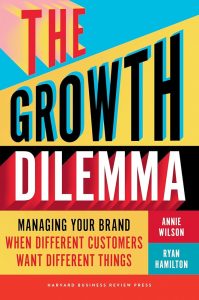
Where brand strategy often goes awry – sometimes horribly awry – is taking wild swings at marginal segments who may otherwise be indifferent to the category. Driven by the insatiable demand for faster growth, marketers will go to any lengths to hit their numbers, even if that means retrofitting the brand identity to court atypical buyers. That sudden positioning change can of course sow confusion amongst longtime customers and possibly alienate them. “That’s not what I signed up for”, they think, or “That’s not who I am”. Next thing you know, they’ve abandoned the brand in droves.
Certainly segmentation ought to drive strategy. People do differ, sometimes dramatically, in their reasons for choosing a particular brand. Marketers do have to tailor their strategies accordingly, whether through line extensions, new product development, the creation of flanker brands or simply variable positioning. The problem is that marketers often go about it with blinkers on. Taking existing customers for granted is all too common – so is being oblivious to newly formed market segments looking for something different – so is catering to one segment’s needs at the expense of another. But there is another, even more pernicious blind spot, according to Emory University’s Ryan Hamilton: ignoring the potential for conflict between customer segments – leading to friction that can fracture a brand’s identity and suppress growth.
Managing those segment relationships is supremely important to brand health, Hamilton says, whose book “The Growth Dilemma” provides a framework for frictionless growth. In the book he and his co-author Annie Wilson explain why customers clash; describe the different kinds of conflict that can occur; and suggest ways to minimize potential friction, knowing how segments differ in their needs, values, perceptions and expectations, thereby removing possible obstacles to growth.
Ryan is a recognized expert in consumer behaviour, with a special interest in the psychology of brands and pricing, and the co-host of the popular podcast “The Intuitive Customer” along with Colin Shaw.
STEPHEN SHAW: Your undergraduate studies were in applied physics of all things. How did you end up pursuing a career as a marketing academic?
RYAN HAMILTON: I actually started off as a communications major. But even though I found the subject interesting, I wanted to push myself. I found physics very interesting, so I just bled my way through those classes. Man, they were hard. But I did feel like I had accomplished something at the end of it. I don’t know that I would have the energy to do it at this stage of my life.
SHAW: Why the switch back to marketing?
HAMILTON: So I worked a variety of odd jobs after I got my degree. I worked with a proton accelerator when I was in college, and then I worked as a computer programmer. I worked for a company that disposes of radioactive waste. But after I had worked for several years I realized that the questions that were most interesting to me in business were around how people make decisions. I realized I could get a PhD in that and so that led me back to marketing.
SHAW: Why the interest in consumer behaviour?
HAMILTON: So in academic marketing, you have the study of consumer behaviour, which is psychology based, and then there’s the modelling, which is more math based. I took classes in both of those when I started grad school. The questions around the behavioural science were what I was more excited about.
SHAW: Your book addresses a problem that’s under the radar of most marketers. What led you to focus on the potential segment conflict that can happen when a brand grows?
HAMILTON: I realized that there were no electives that addressed how you manage multiple segments and that seemed like a real missed opportunity. So Annie Wilson and I started collecting case studies to use in class. After we’d done that for a little while, we realized a lot of firms were at risk.
SHAW: Marketing academics usually look under every nook and cranny for subjects to explore. How did they miss this one?
HAMILTON: Good question! Yeah, academics love to go deep on topics. We’ll drill down, and drill down, and drill down. But we all have blind spots.
SHAW: Are the risks that much greater today because of the corporate insistence on faster growth? Does that force marketers into not looking before they leap?
HAMILTON: I think that’s definitely a part of the problem. A lack of growth is seen as something like a moral failing. So if we’re focused on growth, that means we’ve got to acquire more and more new customers. And so any concerns about affecting our current customer base – if those are thought of at all – tend to be secondary.
SHAW: Can you define what you mean by segment relationship management? Is it a sub-discipline within the overall practice of segmentation?
HAMILTON: Yeah, I think that’s a fair way of putting it. Actually I would say it’s a cross between CRM and segmentation. CRM is how we manage the relationship with our customers across different segments. Segment relationship management, on the other hand, is when segment A and segment B might be influencing each other. It’s not just the brand’s relationship with customers – it’s also the customers’ relationship with each other.
SHAW: In the book you describe four types of conflict that can occur: functional, brand image, user identity and ideological. Can you take me through a brief overview of each?
HAMILTON: Functional conflict is when different segments want different things from the same brand. An example of that is Disney World Parks. Disneyland Parks have been increasingly attracting childless adults, to the point where depending on the estimates you see, it might be as much as half of all parkgoers now are adults without children. Families with kids and adults without kids both want a magical Disney experience – they love the characters – but they also have very different needs.
For instance I took my family to Disney World in Florida last year and went to EPCOT which has this large lagoon around which they have different national pavilions where you can get food and drink from different parts of the world. It’s become kind of an international pub crawl. That’s great for adults, but if you’re there with your kids, you might not want to see people getting drunk. These two groups have different preferences in terms of how exciting a ride should be and how upscale the food options should be.
So I’d characterize this as kind of a low grade functional conflict, but it has the opportunity to become much worse. If Disney tilts too far in the direction of adult entertainment, they might drive away the families with small kids. And likewise, if they don’t provide enough adult oriented properties at the parks, then they could drive away that lucrative segment. The groups don’t hate each other – they all love Disney and they’re all very excited to be there – it’s just that they want different things out of the brand.
Brand image conflict is where by serving multiple segments the brand changes the meaning of the brand. My favourite example of this is Patagonia which is an environmental company. The owners have donated lots and lots of money to environmental causes, and their loyal customer base really values that about the brand. Then at some point, Patagonia apparel became a status symbol among tech and finance companies. They would buy these vests in large numbers and have their logos embroidered on them. That was very lucrative for Patagonia. They were very happy to sell all these vests to these tech firms. But can Patagonia still claim to be as environmentally friendly if they’re selling large numbers of vests to a segment that maybe is not associated with their values to the same extent?
SHAW: Because tech companies build gigantic data centers that consume vast amounts of energy and water.
HAMILTON: Yeah. And so that started to threaten Patagonia’s brand image among its core customers. Patagonia was sensitive to this. They took some drastic steps. They actually shut down their corporate partnership division for a while and then eventually re-established it with some very clear guardrails around who they would sell to and in what way. And they established a recycle and reuse program. So they were able to find a way to stay true to their brand values and still serve a sub-segment of that market.
The third type of conflict is user identity conflict. User identity is where I use a brand as a badge or a signal of who I am, showing that I am a part of a community or a group. But if the brand starts to be used by another group that diminishes the identity value, I may no longer want to use it as a signal of who I am.
Here’s a great example: a fashion brand out of New York called Supreme. It started off as a hardcore skateboarder brand. Only skateboarders knew about it. And it was highly valued for that reason: it could signal to other skateboarders that you were a real skater and part of that subculture. And then at some point it became a streetwear brand where lots of non-skaters were wearing it. Now that led to tremendous growth for the brand. They went from a small niche brand to much more mainstream. They were able to partner with a bunch of luxury brands for co-branded clothing and other items. But in the process it created this user identity conflict where the skaters no longer saw it as a skater brand.
Then you have ideological conflict. The best example of that is Bud Light. As everyone knows, Bud Light hired a trans influencer and this got a lot of press. A lot of people were sharing news of it online, and that caused a backlash amongst its conservative user base. And so there was this ideological conflict between the LGBTQ+ progressive group that Bud Light was trying to attract to the brand and the more conservative user group who saw this as too woke. And so, it led to this ideological conflict.A lot of times brands invite trouble by being more political than they necessarily need to be. Again, a lot of times it’s in the interest of attracting new segments of customers. So Bud Light was making a concerted effort at attracting younger customers, and they thought that moving the brand in a more progressive direction would help with that.
SHAW: The polarization of society has certainly amplified the risk of ideological conflict. Although Bud Light – and you bring this out in the book – had been active in the LGBTQ community long before then. So it caught them by surprise when it became a flashpoint with the MAGA crowd.
HAMILTON: Yeah, it was surprising. Bud Light had been openly sponsoring Pride parades for 25 years at that point in time. But Bud Light had segregated the messaging. So you wouldn’t necessarily know that Bud Light had been sponsoring pride parades, whereas hiring this trans influencer went viral. And so everybody saw it, because the message was being spread now, not through Bud Light, but through other people.
SHAW: The other example you give in the book is New Balance where at one point it’s adopted as official apparel by Neo Nazis.
HAMILTON: Yeah, that was just insane. So after the 2016 election, when Donald Trump was elected for the first time, a representative from New Balance happened to express some support for Trump’s trade policies. And that led to this huge backlash on the left saying this shoe company supports Trump, and so therefore we need to boycott it. Then there was a counter backlash where a lot of people on the right said, well, if the left hates New Balance, then we love it. And then people on the extreme right said, well then, New Balance is our sneaker. A leading figure in the Neo Nazi movement published a long editorial saying that New Balance was now part of their uniform. All because of what some poor executive said in an interview.
SHAW: Which brings me to your segment compatibility index. Can you just walk us through the different types of communities that you’ve identified and how a brand marketer can go about assessing compatibility?
HAMILTON: We identified four different types of relationships that exist between customer segments. And once you understand which relationship type you’re dealing with, with regards to any pair of segments, that’ll provide you with some insight into how you can manage that relationship more effectively. One segment relationship type is what we call “separate communities”. And this is where you have multiple segments that you keep apart from each other. Nike have done this very well in the past. They have these different sport communities. If you are a Nike runner, you feel like the brand is built for you. They have lots of special designs just for runners, and celebrities within the running community who endorse it. If you are a Nike basketball player, you also feel the brand is built for you. Nike has a curling division and nobody’s upset by that. And that’s because Nike managed them as separate communities. The advantage is that it’s a safe way to grow if you can keep them apart. Downside is, it’s expensive. Nike has struggled in recent years and at least part of it is they moved away from managing these communities well. They tried to manage it more as a typical apparel company where they just had men’s wear divisions and women’s wear divisions. And I think that’s why we’re seeing so many running brands encroaching on one of Nike’s strongest divisions: Nike runners feel less cared for.
“Leader follower” is another relationship type. This is where the communities are not kept completely apart or separate. You’re not creating fences between them. Instead there’s a relationship between them, but it’s vertical. One of these groups has greater status than the other: one is your leader segment and the other one is your follower segment.
Supreme is an example of a “leader follower” relationship type. The skateboarders were the leaders. They were the cool ones. They were the ones with credibility. And then you had this follower segment of streetwear fashion enthusiasts who valued the brand in large part because it was such a legitimate brand with skateboarders. Harley Davidson is another brand like that. There are very few actual outlaws riding Harley Davidson motorcycles. Most of their customers are middle aged accountants. But that’s the follower segment. So if you have a “leader follower” relationship type, you need to keep the leaders happy because that’s what’s attracting these other segments.
Connected communities is a third type of relationship. These are in markets that tend to benefit from network effects. The more segments that I can attract to the brand, the more valuable the offerings become overall. So a lot of social media companies are like this. The same with two sided markets, like Airbnb or Uber, where they need to attract both drivers and riders – the more customers they have, the better it is for everybody. And then the last one is incompatible segments. And importantly any of the other three can slip into incompatible segments through poor management. We talked about how Nike has. We talked about how Supreme has.
SHAW: And Starbucks.
HAMILTON: Yeah, part of what I love about the Starbucks case study as a teacher is that it is so unresolved, right? Starbucks has done some amazing things managing astronomic growth over the years, but the inherent problems of serving so many different customers never goes away. You’re never going to resolve it permanently.
There’s one segment that we call “The Starbies”. These are people who treat the brand as a badge brand who want to be seen walking around with their Starbucks cup. They have these highly specialized orders, these signature drinks they’ve created for themselves. And then there are also the traditional third placers who are there to hang out in a Starbucks and get work done. They want a quiet environment. Those two segments want different things out of the brand. And like I said, I think Starbucks has done a remarkably good job at managing the relationship between those segments. But the risk of conflict is never going to go away. As long as they’re serving both of those segments, they’re always going to want slightly different things from Starbucks, and it’s always going to be a struggle for them to keep both of those groups happy. To their credit, they’ve done pretty well, but it’s not perfect and it’ll continue to be hard.
SHAW: One of the solutions you offer is what you call a “layered SRM strategy”. You refer to it metaphorically as fences, bridges and ladders. Can you explain what you mean by that?
HAMILTON: With “fences” your goal is to keep the segments apart in some way. So one of the things Starbucks has done is they’ve created different store formats that serve different segments. They’re encouraging segments to self segregate. If you want to go and hang out someplace and get some work done, a Starbucks kiosk isn’t going to help you. Whereas there are other Starbucks located intentionally in out of the way places. But if you’re in a rush, that Starbucks is not going to help you. So you create fences between these segments, try to keep them apart, make them each feel like they’re getting what they need out of the brand.
With “ladders”, the goal is to ensure a status differential. So are you helping your “leader segments” feel different and special relative to your other segments? Can we create “bridges” between these segments where that’s appropriate, give them more opportunities to interact? So this would be a connected community strategy where we want to actually create more connections between these segments because they value rubbing shoulders with each other. And then the last one is “planks”, as in “walking the plank”, as in sometimes you just need to let a segment go. So we saw a mild version of that with Patagonia where they decided they couldn’t serve a segment anymore, at least for a while, until they could figure out a better way to do it. But there are occasions where the best long term solution is to fire a segment of customers and reduce conflict.
SHAW: Nike did that consciously with the whole Kaepernick controversy.
HAMILTON: Yeah. So Nike hired Colin Kaepernick, which was a very provocative move at the time. Kaepernick was closely associated with social justice movements. Nike serves lots and lots of customer segments, some of whom are more conservative politically. So Nike knew that hiring Kaepernick would make some of their customers angry. But this is what sociologists call a “costly signal”. It was a way of communicating to some of their customers, this is who we are, this is what we value, this is what is important to us. And they lost customers because of it. But financially they had their best year ever after hiring Kaepernick because it solidified the relationship with those segments that they wanted to keep.
SHAW: My collective impression after reading a lot of the case studies in the book is that brand marketers can be a confederacy of dunces due to their single-minded obsession with fast growth.
HAMILTON: I do think that part of the problem is that so many marketers are not given the time by management to take a step back and consider a more long term strategy. It doesn’t allow for introspection. If you are already selling to one segment of customers I think it’s the most human thing in the world to treat that as a box that’s been checked: “Oh, they’ll always be our customers. It doesn’t matter what we do, they’re our customers.” And so they just assume that the people who bought from us yesterday will continue to buy from us even as we change the company in significant ways.
SHAW: One of the other case studies in the book I thought was really interesting was Black & Decker.
HAMILTON: Yeah, Black & Decker was serving the home owner segment of DIYers and then they also had a line of professional grade tools that contractors, plumbers and electricians could buy. They were doing great in the consumer market, but they were really struggling in the professional segment. The problem was not with the tools. The tools were performing great. It turned out it to be a problem of brand image. Because they were so successful with consumers, their brand came to be associated with consumer grade tools. But professionals had an image to maintain. They didn’t want to be laughed off the construction site by bringing in an inferior tool, even if it wasn’t objectively inferior.
You would think construction workers just want what works best. But they were just as insecure as any middle school girl wearing the wrong brand of clothing. They didn’t want to be made fun of by their friends. So Black & Decker management took the very bold step of discontinuing the Black & Decker brand for professionals. It was a bold move: Black & Decker at the time was one of the top 10 strongest brands in the world. It had huge name recognition, very high levels of respect. And they killed it and replaced it with DeWalt. Yet they didn’t change the tools very much except cosmetically.
SHAW: They changed the colour of the tools to yellow.
HAMILTON: Yeah! I had a student who worked in construction and she pointed out that the yellow tools were better because they started to show wear immediately – what a weird thing to see as a benefit – but for a construction worker having well-used tools is a sign that you are a professional and that you are serious about your craft. So, yeah, they changed the brand, they changed the associations, and were able to reduce that conflict between these segments to the point where DeWalt became wildly successful.
SHAW: Your prescription for segment conflict is “Know thy customer, know thy brand, know thy marketplace.” You might as well have added “Know thy job”. Isn’t that the essence of good brand marketing?
HAMILTON: Oh, gosh, it is. In speaking with companies, it is shock. I mean, there’s great companies who do all this stuff very well. It is shocking to me how often large, successful Fortune 100 companies cannot articulate who their customer segments are. Or if they do, they do it in ways that are very vague and not actionable, where they are not clear on their positioning. A lot of marketers have forgotten what they learned in their introductory course work.
SHAW: You lament the fact that marketers lean so heavily on personas as a source of insight.
HAMILTON: You occasionally find a good persona that makes it very clear what a segment wants, how they’re making decisions. But a lot of times it reads more like a creative writing exercise. I do worry that our tactical toolkit has gotten so powerful that too many marketers neglect the strategy, including a deep understanding of segments.
SHAW: You raise the possibility that society is becoming more prone to conflict. What are the implications for brand marketers going forward?
HAMILTON: M&M redesigned some of their “spokes-candies” – their characters – giving them different shoes. The green M&M went from go-go boots to sneakers. This was mentioned on Fox News. Tucker Carlson did a whole segment on it. Can you imagine anything more harmless than changing the footwear on your cartoon candies? M&M decided to discontinue their cartoon characters for a while just to turn down the heat. This is the new reality of business. So build your toolkit for managing conflict. Try to identify it before it happens so that you can navigate around it. Recognize that your brand will almost certainly be pulled into conflict at some point if you grow. Bud Light probably should have seen it coming. And even if they didn’t, they should have been able to manage the crisis better. So have contingency plans – build out your skill set for dealing with conflict.
Stephen Shaw is the Chief Strategy Officer of Kenna, a marketing solutions provider specializing in delivering a more unified customer experience. He is also the host of the Customer First Thinking podcast. Stephen can be reached via e-mail at sshaw@kenna.