The time has finally come; today we’ll put Ben Affleck’s favorite brand under the microscope! So grab your coffee, and let’s dive into our Dunkin’ Rewards review!
We break down what’s actually working in one of QSR’s biggest loyalty programs, and what’s still catching up:
- How Dunkin drives KPI-related behavioral impact through rotating bonus offers in its mobile app;
- Take an honest look at the 2025 repricing backlash, and
- Explore where the badge system still falls short.
Whether you’re benchmarking your own program or just trying to understand why Dunkin’ made these calls, this review hands you the specific trade-offs and fixes worth taking away, not just a rundown of features.
Another takeaway-worthy moment: Our Global Customer Loyalty Report. Fresh insights on the biggest loyalty trends with real-life case studies, behind-the-scenes of the biggest programs across the globe.
Let’s Address the Elephant in the Room: The 2025 Dunkin’ Rewards Refresh
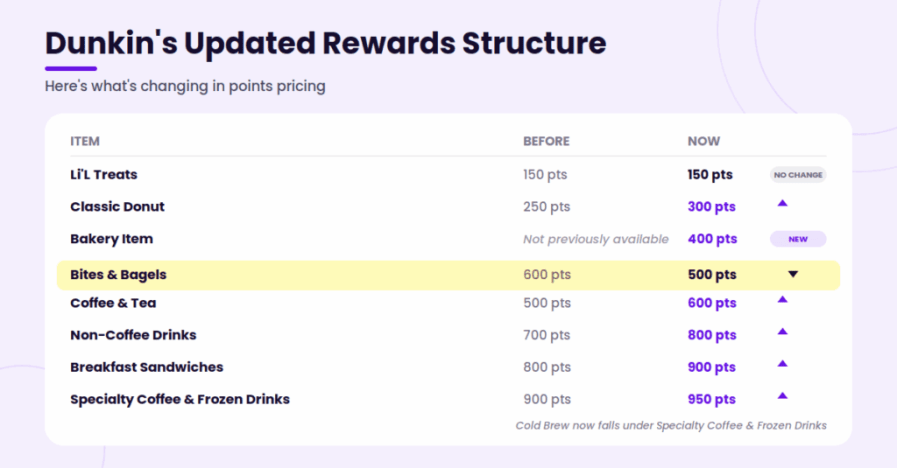
Here’s what actually changed. A free coffee or tea went from 500 points to 600 points, which means members now need to spend about $10 more to earn the same drink.
Cold brew took a much bigger hit (being placed in the Specialty Category), jumping from 500 to 950 points, a roughly $45 gap for the same cup.
And points, which previously never expired for active members, now expire 12 months after they’re earned, costing certain loyal customers 100 of dollars worth of points loss. The backlash on community platforms was immediate.
Why would Dunkin’ do this after already taking heat for the 2022 DD Perks-to-Dunkin’ Rewards switch?
The honest answer is most likely margin pressure. McKinsey’s 2026 restaurant outlook describes an industry under real cost strain, with consumers trading down and reshuffling where they spend rather than cutting spend outright.
For a routine-driven category like coffee, that’s the real threat: Quitly declining weekly visits, fewer treats orders with coffee, or the ultimate swap of one daily stop for another.
“Shrinkflation” has also been a running theme across QSR for years. A “free” reward funded across tens of millions of members adds up fast, and repricing the catalog is a legitimate way to manage that cost.
It’s worth noting that Dunkin’ obviously isn’t alone in tightening its rewards economics. For example, Wendy’s also tested dynamic pricing around the same time to boost foot traffic in off-rush-hour periods.
Where business needs clash with customer wants
But here’s the part where things get sticky: This move landed on two things loyalty members already say they dislike most, according to Antavo’s 2026 Global Customer Loyalty Report:
- 49.1% of consumers already feel it takes too long to earn rewards,
- 41.1% say rewards expire before they can use them.
Dunkin’ didn’t just reprice its catalog; it leaned directly into both of those pain points at once, on a member base that had already been burned by a points devaluation once before.
Was it worth it? Financially, probably yes; Dunkin’ needed to control redemption cost. Reputationally, it’s a much closer call.
Why Coffee and QSR Brands Need To Get Loyalty Programs Right (Yes, It’s The ROI)
Because loyalty done right pays off big time! It’s that simple. Loyalty is still the best tool for engagement, personalization, micro-segmentation, and zero-party data collection.
For loyalty program value, Antavo’s 2026 Global Customer Loyalty Report found that:
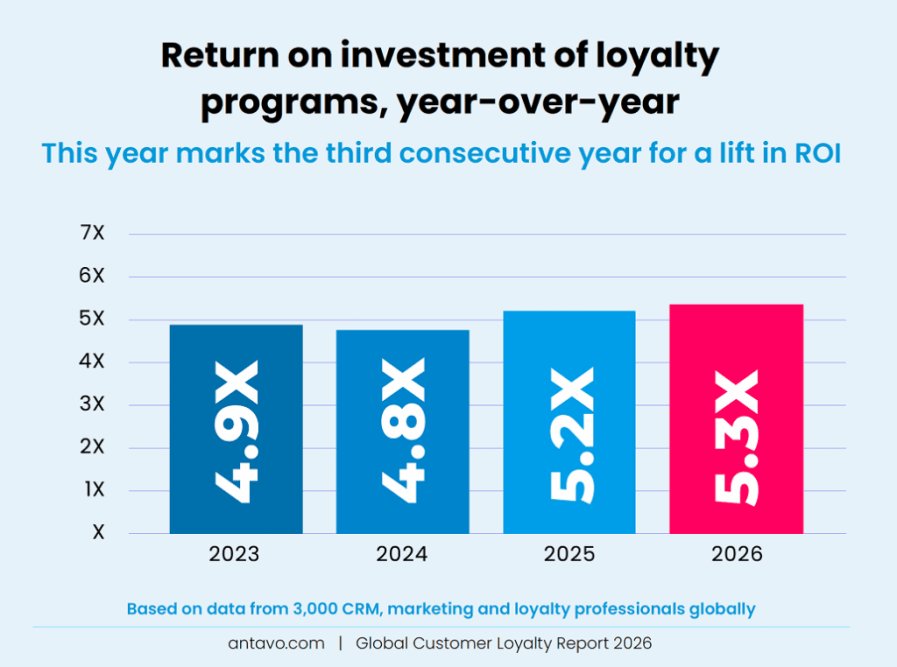
- 92.7% of program owners report positive ROI,
- with an average return of 5.3x.
But it’s not only rainbows and unicorns either! The same report has a less flattering number: 74% of loyalty members quietly stop engaging within two months of joining; while still technically staying “members”, they just stop paying attention.
That gap between “still enrolled” and “still engaged” is exactly the problem Dunkin’ needs its mechanics to solve, and that’s our baseline for the rest of this Dunkin’ Rewards review.
Points-Per-Dollar Earning & Boosted Status: A Simple But Foundation Built to Grow
Dunkin’ Rewards keeps earning simple: a flat 10 points per dollar, no matter how or where members pay. That simplicity removes friction in a high-frequency, low-consideration category; nobody’s calculating a multiplier mid-order.
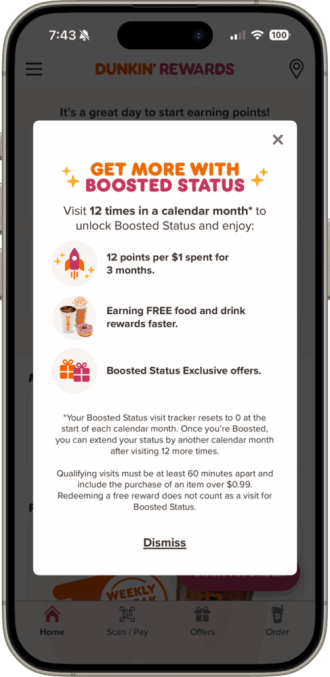
On top of that base, Boosted Status rewards the behavior that actually matters here: visit frequency. Twelve visits in a month unlock 12 points per dollar for three months, correctly betting on habit over basket size. Together, these two mechanics form a clear, easy-to-understand foundation.
The natural next step is building on it, layering in ways to recognize different customer types, from long-tenured members to varying spend patterns, so the program keeps growing right alongside its base.

Pro tip: A flat earn rate plus one strong recognition mechanic is a great foundation; just don’t let it become the ceiling.
Layer in a way to acknowledge tenure or different customer types (a frequent light spender isn’t the same as an occasional big spender, even at similar revenue), so your program keeps growing more personalized as your member base grows more diverse.
Boosting Category Sales and Slow-Hour Visits With Bonus Point Offers
Dunkin’ runs a steady calendar of limited-time bonus offers: Occasion-tied multipliers, day-part boosts, channel-specific bonuses that rotate frequently enough to give members a reason to check the app even on days they weren’t already planning a trip.
Each bonus point multiplier offer is really a KPI in disguise:
- 3X point bonus nudges traffic into slower afternoon hours (valid from 1 PM to Boosted Members),
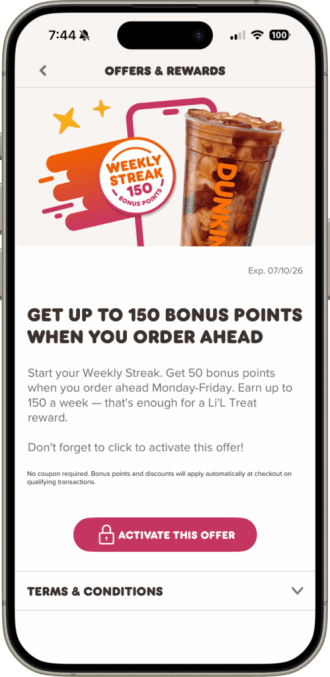
- Channel-specific 50-100 bonus point pushes volume toward drive-thru or mobile order,
- Product-tied 3X-4X point multipliers lift sales on a specific category, like donuts or Refreshers.
Pro tip: A flat program can feel static between visits, but an ever-fresh calendar of small, easy-to-understand bonuses keeps it feeling alive without ever asking members to relearn the rules.
Dunkin’s Flexible Birthday Offer: 3X Points To Delight
Dunkin’ Rewards now offers 3X points on a purchase made the day before, on, or the day after the member’s birthday.
Convenience is key here, since members aren’t boxed into a single date, and the reward scales with whatever they’d actually order that week, whether that’s a $3 coffee or a full breakfast run.
For a program built on habit, giving people room to redeem on their own schedule is a small design choice that respects how people actually live.
Pro tip: A three-day redemption window works because it removes the one variable members can’t control: Being near a Dunkin’ on the exact right day.
When you build a similar flexible offer, spell out the value upfront in your messaging (e.g., “that’s up to 30 points on a $10 order”) so members feel the convenience and see the payoff, instead of just noticing a rate change in the background.
The Controversial New Reward Structure Change
To Dunkin’s credit, the reward catalog is genuinely broader than it used to be: Donuts, bagels, hash browns, breakfast sandwiches, and specialty espresso drinks now sit alongside plain coffee.
Members can also stack several rewards into one transaction for something that feels like a free meal instead of just a free drink.
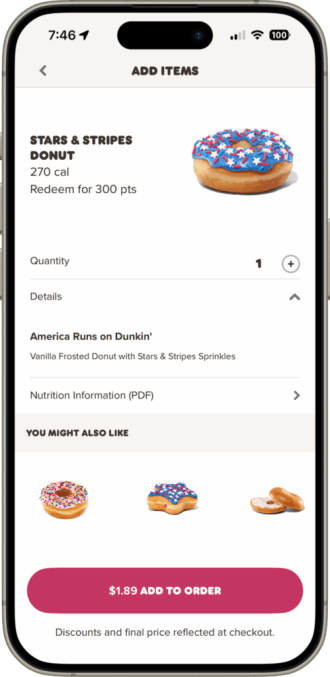
On the other hand, a wider menu of things to redeem doesn’t cancel out the fact that the thing most members actually want costs almost 2X the points than it did a year ago, with almost every other reward also becoming meaningfully harder to earn.
Pro tip: When you widen a reward catalog, weigh the additions against your flagship reward, not just against your margin targets.
If your most-redeemed item is getting meaningfully harder to earn, offset it by keeping other, coveted high-frequency rewards at a stable or lower cost, so members still have an easy, reliable win even as the rest of the catalog grows.
Badges: Gamification That Doesn’t Quite Hit The Spot Yet
Right now, Dunkin’s badges mostly track visits. There’s not really a sense of motivation or achievement there. Here’s why that’s an issue, looked at from both sides:
From the customer’s side: What do I actually get for this? Not bonus points, not a discount, not early access, not anything I can use. So why participate?
This highlights a real issue: A badge with no attached monetary or motivational value is basically only a record of how much money customers handed over.
From Dunkin’s side, the question is just as fair: What business behavior is this driving?
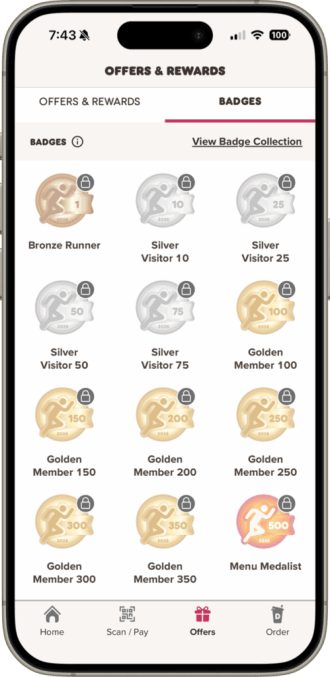
Visit-based badges by themselves don’t push customers toward off-peak hours, bigger baskets, or trying new items; they just count what customers were probably already doing.
Pro tip: Create a badge system that answers a question on both sides of the counter: Why should the customer bother, and what does the business actually get out of it (monetary value, aspirational goals, exclusivity),
Tie the mechanic to KPIs like cross-category selling, boosting new launches, AOV, or purchase frequency.
Expert Advice For The Untapped Territory: Where Dunkin’ Rewards Could Grow
This is the part of the review that matters more than any single complaint, because the fixes here aren’t complicated, and some of them are sitting right under Dunkin’s nose.
Tie badges to business goals
Instead of rewarding visits alone, badges could target specific behaviors, just like Dunkin’ point booster offers:
- stopping by during a slow mid-afternoon window,
- adding a food item to a beverage order,
- trying something outside a usual order,
- visiting twice a week instead of once.
Each of those maps to a real KPI: off-peak traffic, average order value, cross-category trial, frequency, instead of just counting footfall.
Put your most loyal customers to work
Dunkin’s most engaged members are sitting on genuinely useful product feedback, so why not tap into that? Gamified surveys, reviews, focus-group participation could all be easily incentivized.
A few bonus points for trying a new item and rating it would turn the loyalty base into an ongoing product-testing panel, which is a much better use of engaged members than just watching them redeem points for donuts.
Make merch the crown jewel of rewards
Dunkin has incredible collaborations and partnerships with brands like Barbie, lead actors like Ben Affleck and Matt Damon, social media heavy-hitters like Corporate Natalie, and even King Kylie herself. Plus, they create special merch for occasions like the Fourth of July.
It would add a very exciting element to their program to introduce permanent merch items as rewards, making coffee-lovers want to be part of these huge moments, completing special challenges for it even.
Frequently Asked Questions About The Dunkin’ Rewards Loyalty Program
What does Dunkin’ get right that a lot of QSR loyalty programs miss?
Simplicity that actually holds up at the counter. A flat 10-points-per-dollar rate means no member is doing multiplier math mid-order, and Boosted Status layers on top of that without adding any complexity. For a category built on speed and habit, that’s exactly the right trade-off to make.
How does Dunkin’ keep its loyalty program from feeling stale between visits?
Through a steady calendar of small, easy-to-understand bonus offers rather than one static rate. Occasion-tied multipliers, day-part boosts, and channel-specific bonuses rotate often enough that there’s usually something fresh to notice, without ever requiring members to relearn how the core program works.
What should Dunkin’ actually be measuring badges against?
The same KPIs it focuses on in its point boosters: A specific business behavior, not just visits. Off-peak traffic, cross-category purchases, trial of new menu items, or visit frequency increases are all measurable, meaningful goals that a badge system could target directly.
Why is point expiration such a sensitive issue in QSR loyalty specifically?
Because QSR purchases are small and frequent, members build up balances slowly and don’t always redeem right away. An expiration date can quietly erase real value before anyone notices. Dunkin’ just introduced its first-ever expiration window in 2025, which is exactly why the backlash landed as hard as it did.
Final Verdict Of Our Dunkin’ Rewards Review
Dunkin’ Rewards nails the fundamentals: simple earning, smart frequency rewards, and a genuinely wider catalog. Its rough edges- a bumpy 2025 repricing and badges still finding their purpose- aren’t dealbreakers, just next steps.
The real takeaway for loyalty marketers:
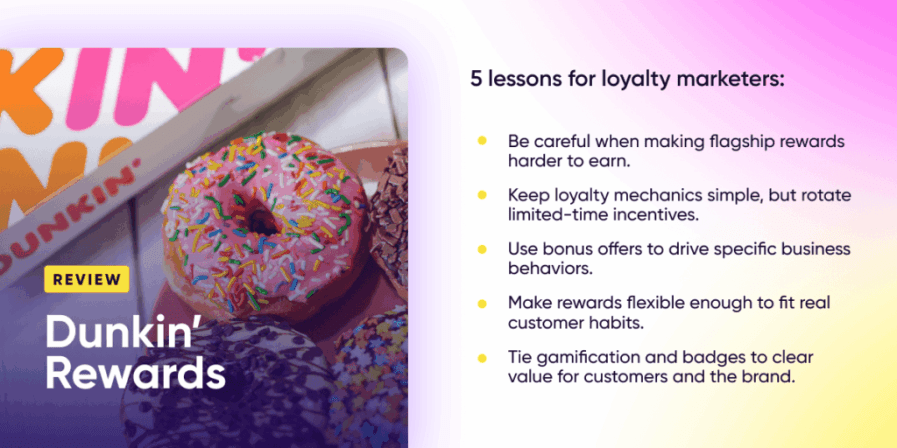
- Be careful when making flagship rewards harder to earn.
- Keep loyalty mechanics simple, but rotate limited-time incentives.
- Use bonus offers to drive specific business behaviors.
- Make rewards flexible enough to fit real customer habits.
- Tie gamification and badges to clear value for customers and the brand.
Antavo is the AI loyalty and incentives platform that brings together loyalty, promotions, and agentic AI to turn customers into regulars: the customers who come back on their own, buy more often, and bring others with them. For more than a decade, Antavo has powered identity-led loyalty strategies for brands including SKIMS, Paul Smith, KFC, Flying Tiger Copenhagen, and Hyatt’s Inclusive Collection. Marketers build, change, and launch programs and promotions themselves, without waiting on engineering.
If you’re tired of paying to win the same customers twice, book a call with our experts and see how Antavo turns them into regulars.
Also curious about where your current program stands ROI-wise? Download our Worksheet and find out!
Zsuzsanna is a Loyalty Specialist and Certified Loyalty Expert™ with years of experience in digital marketing and e-commerce. Zsuzsanna is known for having an analytic approach and high-level communication skills, helping her deliver engaging content. In her free time, she enjoys watching Formula 1 and listening to endless Taylor Swift playlists.