Product discovery is changing. It moved into conversations.
In 2025, OpenAI positioned ChatGPT as more than just a chatbot, but as an extensive platform, with GPT-based apps, integrations, and a growing ecosystem where users actively explore products, services, and recommendations within the interface.
At the same time, firms like Gartner continue to highlight a clear shift: AI-driven interactions are quickly becoming the primary interface between brands and customers, not a secondary layer.
Here’s what that looks like in practice:
Shoppers aren’t browsing first anymore. They’re asking.
- “What should I wear to a garden party under €150?”
- “What goes with this sofa?”
- “What’s a good gift for someone into minimalist design?”
And platforms like ChatGPT are now built to respond to it.
For many brands, those conversations are happening without them.
What are ChatGPT Apps?
ChatGPT Apps are custom GPT-based experiences that live inside ChatGPT and are designed for specific use cases, including product discovery, recommendations, and guided shopping.
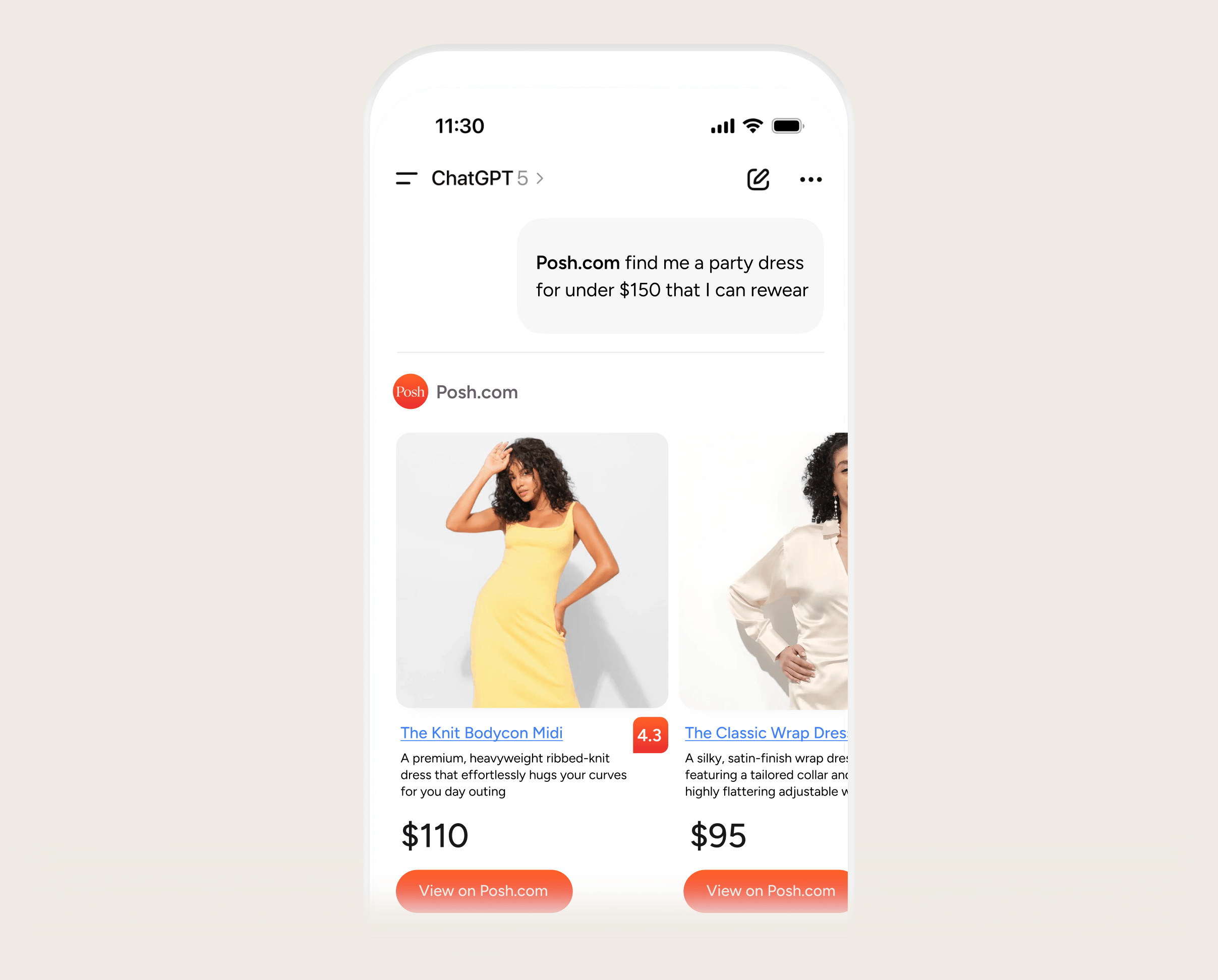
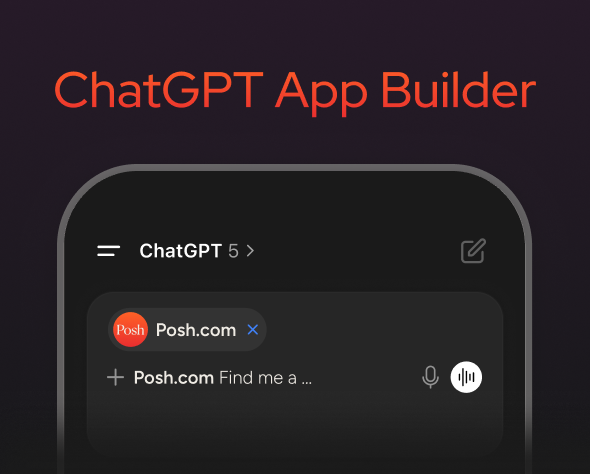
With the evolution of ChatGPT into a platform, OpenAI has made it possible for brands to build assistants that do more than respond to questions. These assistants can connect to existing systems, like your product catalog, CRM, offers, and incentives. For ecommerce brands, that means one thing:
You can create a shopping experience that exists inside ChatGPT.
Instead of relying on generic responses, a ChatGPT App allows you to:
- Surface products from your own catalog
- Apply your own recommendation strategies
- Guide shoppers through discovery in a way that reflects your brand
If you want to explore how these integrations work in more detail, this breakdown of ChatGPT Apps & Native Integrations explains how brands can connect their systems to ChatGPT environments.
Why ChatGPT is becoming a discovery channel
The shift from search to conversation is not just a UX change. It changes how intent is captured and where decisions are made.
In a traditional ecommerce journey, intent is fragmented. A shopper types a short query, applies filters, clicks through results, and gradually narrows their options. Each step reveals a small part of what they want.
In ChatGPT, that process is compressed into a single interaction.
A shopper might say they need something for a garden party, under a certain budget, not too formal, and versatile enough to wear again. That level of detail rarely appears in a search query, but it is exactly what drives a purchase decision.
This is what makes ChatGPT a fundamentally different discovery layer. It captures intent directly, without forcing the user to translate it into keywords.
The discovery gap: brands are not part of these interactions
Despite this major shift in how consumers search and buy, many brands are not present in these discovery moments.
When a shopper asks ChatGPT for a recommendation, the system does not have access to your catalog, your pricing, or your merchandising strategy. It cannot apply your recommendation logic or use your customer data to personalize the response.
The result is a generic answer. Even if your product is the best possible match, it has no way of being surfaced.
This is not a ranking problem or a visibility issue. It is a structural gap.
Your brand is simply not connected to the environment where the decision is being shaped.
ChatGPT Apps solve this problem by allowing brands to build their own presence inside ChatGPT.
By creating a GPT-based assistant, you can define how discovery works, connect your product catalog, and guide shoppers through a branded experience.
However, building that experience manually is not straightforward.
It requires prompt design, action schema configuration, backend integrations, and a clear model for how discovery should function across different scenarios. Personalization adds another layer, especially when customer data needs to be applied in real time.
For most ecommerce teams, this is where the process breaks down. The opportunity is clear, but the execution path is too complex.
Introducing Insider One’s ChatGPT App Builder
ChatGPT App Builder is designed to remove that complexity.
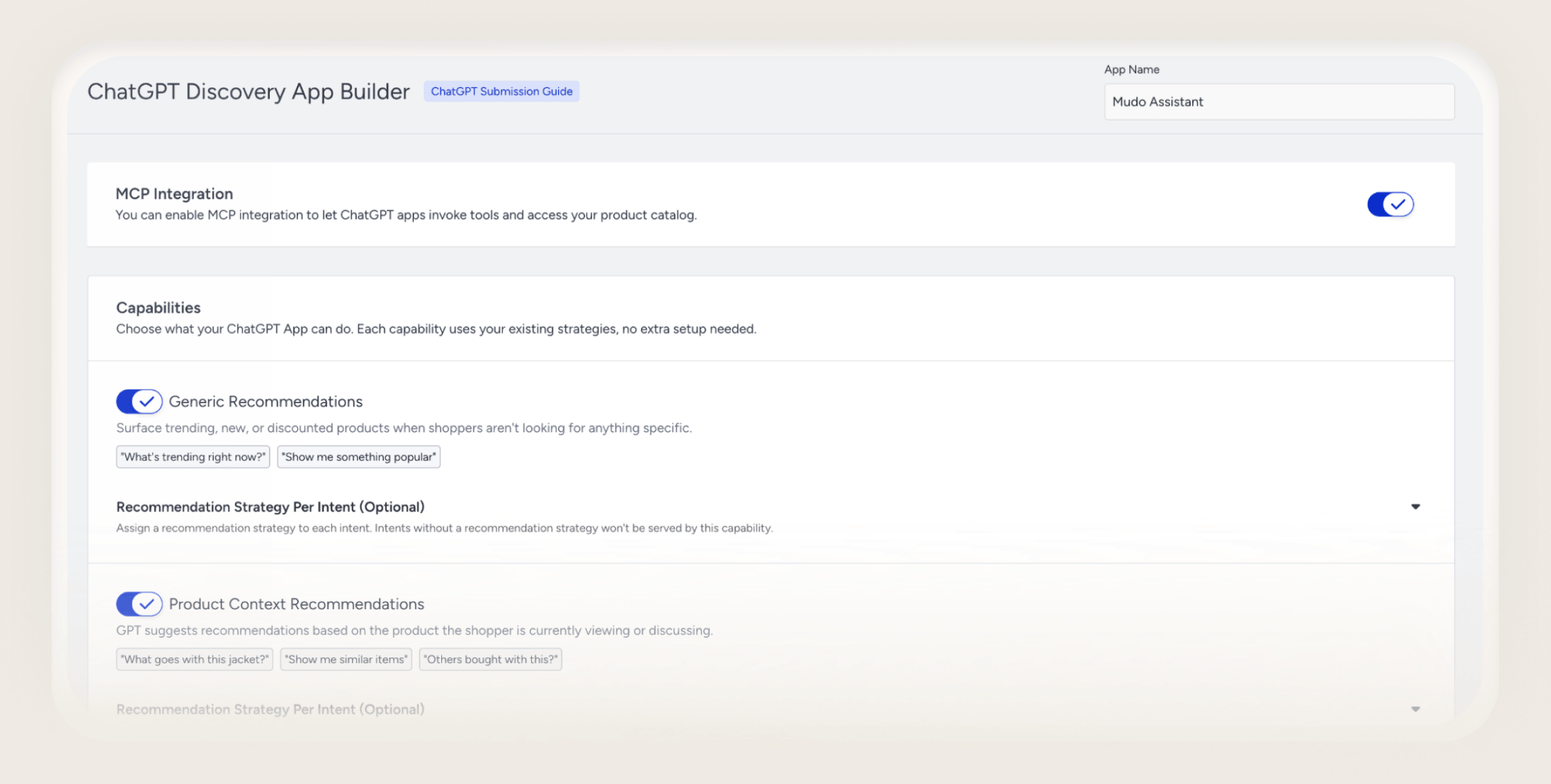
It is a no-code solution within Insider One that allows ecommerce teams to create, configure, and deploy a custom ChatGPT App using their existing infrastructure, in a simple guided step-by-step wizard.
Instead of building a ChatGPT App from scratch, teams use a guided workflow that translates their current discovery setup into a ChatGPT-ready experience.
This includes:
- Configuring how search and recommendations should work
- Connecting the product catalog
- Applying existing personalization logic
- Generating a ready-to-deploy ChatGPT App package
Build your ChatGPT App in under 30 minutes
The process is designed to be practical and fast.
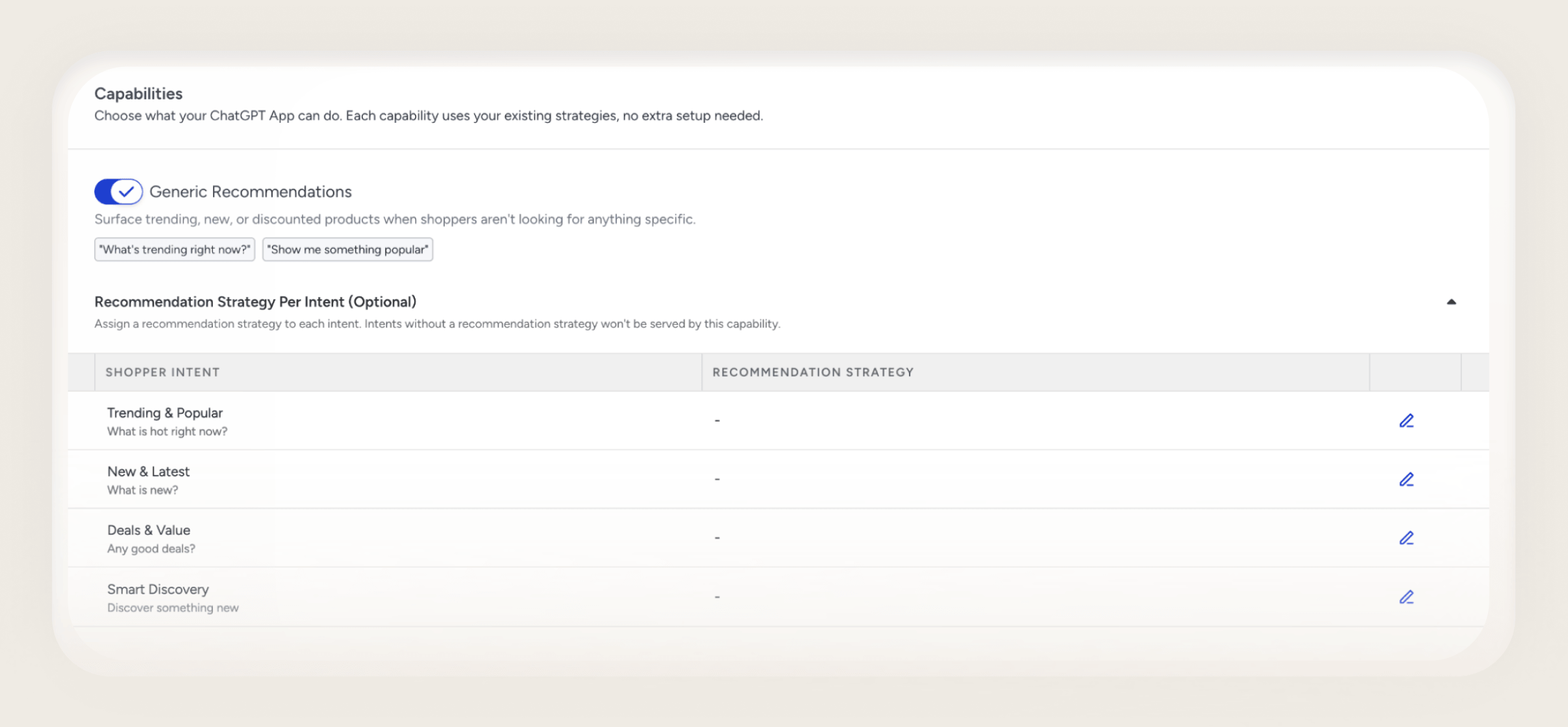
Inside Insider One, teams configure their ChatGPT App through a structured setup. They define their brand, select discovery capabilities, and determine how the assistant should respond to different types of shopper intent.
What makes this approach different is that it builds on what already exists.
Capabilities like Smart Recommender and Eureka are extended directly into the ChatGPT experience. Shopper data from our CDP is used to personalize interactions, while supporting meaningful discovery for anonymous users.
Once configured, the system generates a complete ChatGPT App package that can be published instantly without additional development work.
After launch, discovery strategies can be updated at any time without needing to rebuild or recode.
Real-World Use Cases
Fashion: turning intent into a complete outfit discovery
A shopper opens the ChatGPT App and describes what they need in one sentence: something for a garden party, under €150, not too formal, but versatile enough to wear again. Instead of returning generic suggestions, the brand’s GPT interprets the full context and responds with complete outfit combinations pulled directly from its catalog. It adapts recommendations based on budget, style, and occasion in real time, guiding the shopper toward a confident decision.
For the shopper: Faster decisions with relevant, styled recommendations that match real intent, through the ChatGPT interface that she loves.
For the brand: Direct access to high-intent signals like occasion, budget, and style captured upfront rather than inferred later. That intent can feed back into recommendation strategies, merchandising decisions, and future personalization.— feeding better personalization and merchandising.
Home & Living: from single products to contextual spaces
A new homeowner shopper asks a simple question: “What goes with this sofa?” The ChatGPT App doesn’t just return similar products. It builds a context. It suggests complementary furniture, matching textures, and cohesive decor options based on the brand’s existing recommendation logic.
So the experience feels less like browsing and more like guided design.
For the shopper: A guided experience that helps visualize a complete space, not just individual items, through a contextual conversation to hone in on what will create the perfect space.
For the brand: Rich first-party data on product relationships, style preferences, improving cross-sell and discovery strategies, and even NPD.
Travel: surfacing demand through open-ended queries
A traveler asks: Where could I go for my summer getaway? Instead of static listings, the GPT responds with curated campaign collections, seasonal offers, and relevant destinations shaped by the brand’s strategy. The conversation and recommendations evolve, refined by budget, location, or travel style, without losing context.
For the shopper: Personalized options without needing to search, filter, or restart the journey.
For the brand: Early visibility into preferences, traveler type, demand patterns, enabling smarter campaign planning and inventory focus.
Anonymous shoppers: capturing intent without identity
A new shopper with no profile comes to the ChatGPT app, following a recommendation from a friend. With little knowledge of the brand or products, they describe exactly what they need. The GPT extracts intent and returns relevant results using catalog attributes and context quicker than the consumer would have been able to alone.,
For the shopper: Useful, tailored recommendations without needing to log in, delivered through a conversation that feels more personal and relevant than browsing a website
For the brand: Structured intent data from anonymous users, unlocking new first-party signals for targeting and optimization.
How to get started with Insider One ChatGPT App Builder
The Insider One ChatGPT App Builder is already available for existing customers.
The builder offers marketing and customer engagement teams a guided no-code setup experience for creating a branded ChatGPT app export package generation (pre-filled ChatGPT app configuration, prompt, action schema).
Existing capabilities like Insider One’s Smart Recommender and Eureka are already extended to power the ChatGPT app backend, while our CDP is leveraged for shopper identity resolution and personalization in discovery with no parallel infrastructure needed.
👉 Request a personalized demo of Insider One today, where our experts can demonstrate how your current setup can be translated into a ChatGPT experience.
Insider One brings everything marketing and customer engagement teams need in one place to reach their peak potential and become unstoppable.
Frequently Asked Questions
A ChatGPT App is a custom GPT-based assistant designed for a specific use case, such as product discovery or guided shopping, operating within ChatGPT.
Building a ChatGPT App manually typically requires technical expertise, including prompt design and backend integration. ChatGPT App Builder removes this complexity with a no-code setup.
Yes. When properly integrated, they can surface real products from your catalog and apply your existing discovery and recommendation strategies.
Personalization is driven by customer data from your CDP and real-time interaction context, allowing recommendations to adapt dynamically to each shopper.
With ChatGPT App Builder, most brands can configure and deploy their ChatGPT App in under 30 minutes, with Insider One.