• About Us
  • Disclaimer
  • Contact Us
  • Privacy Policy
Friday, January 23, 2026
mGrowTech
No Result
View All Result
  • Technology And Software
    • Account Based Marketing
    • Channel Marketing
    • Marketing Automation
      • Al, Analytics and Automation
      • Ad Management
  • Digital Marketing
    • Social Media Management
    • Google Marketing
  • Direct Marketing
    • Brand Management
    • Marketing Attribution and Consulting
  • Mobile Marketing
  • Event Management
  • PR Solutions
  • Technology And Software
    • Account Based Marketing
    • Channel Marketing
    • Marketing Automation
      • Al, Analytics and Automation
      • Ad Management
  • Digital Marketing
    • Social Media Management
    • Google Marketing
  • Direct Marketing
    • Brand Management
    • Marketing Attribution and Consulting
  • Mobile Marketing
  • Event Management
  • PR Solutions
No Result
View All Result
mGrowTech
No Result
View All Result
Home Technology And Software

Brain tech revolution: How new neural devices are treating depression and more

Josh by Josh
July 21, 2025
in Technology And Software
0
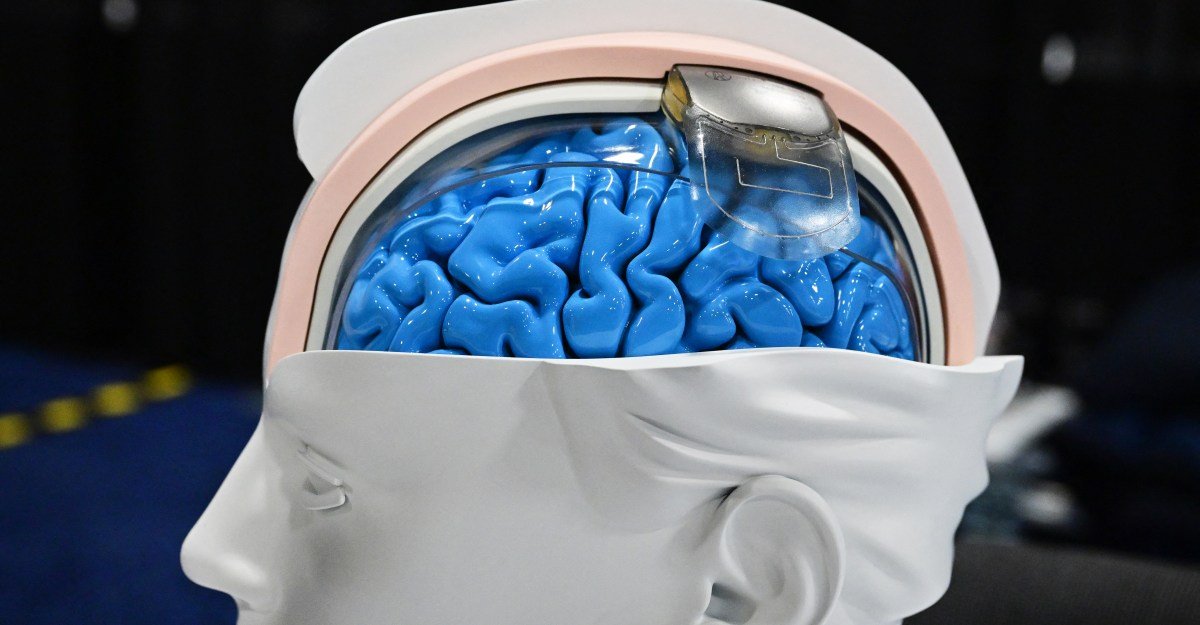
Brain tech revolution: How new neural devices are treating depression and more
0
SHARES
3
VIEWS
Share on FacebookShare on Twitter


When you hear the word “neurotechnology,” you may picture Black Mirror headsets prying open the last private place we have — our own skulls — or the cyber-samurai of William Gibson’s Neuromancer. That dread is natural, but it can blind us to the real potential being realized in neurotech to address the long intractable medical challenges found in our brains. In just the past 18 months, brain tech has cleared three hurdles at once: smarter algorithms, shrunken hardware, and — most important — proof that people can feel the difference in their bodies and their moods.

A pacemaker for the brain

Keith Krehbiel has battled Parkinson’s disease for nearly a quarter-century. By 2020, as Nature recently reported, the tremors were winning — until neurosurgeons slipped Medtronic’s Percept device into his head. Unlike older deep-brain stimulators that carpet-bomb movement control regions in the brain with steady current, the Percept listens first. It hunts the beta-wave “bursts” in the brain that mark a Parkinson’s flare and then fires back millisecond by millisecond, an adaptive approach that mimics the way a cardiac pacemaker paces an arrhythmic heart.

In the ADAPT-PD study, patients like Krehbiel moved more smoothly, took fewer pills, and overwhelmingly preferred the adaptive mode to the regular one. Regulators on both sides of the Atlantic agreed: The system now has US and EU clearance.

Because the electrodes spark only when symptoms do, total energy use is reduced, increasing battery life and delaying the next skull-opening surgery. Better yet, because every Percept shipped since 2020 already has the sensing chip, the adaptive mode can be activated with a simple firmware push, the way you’d update your iPhone.

Scientists applied the same listen-then-zap logic farther down the spinal cord this year. In a Nature Medicine pilot, researchers in Pittsburgh laid two slender electrode strips over the sensory roots of the lumbar spine in three adults with spinal muscular atrophy. Gentle pulses “reawakened” half-dormant motor neurons: Every participant walked farther, tired less, and — astonishingly — one person strode from home to the lab without resting.

Half a world away, surgeons at Nankai University threaded a 50-micron-thick “stent-electrode” through a patient’s jugular vein, fanned it against the motor cortex, and paired it with a sleeve that twitched his arm muscles. No craniotomy, no ICU — just a quick catheter procedure that let a stroke survivor lift objects and move a cursor. High-tech rehab is inching toward outpatient care.

Mental-health care on your couch

The brain isn’t only wires and muscles; mood lives there, too. In March, the Food and Drug Administration tagged a visor-like headset from Pulvinar Neuro as a Breakthrough Device for major-depressive disorder. The unit drips alternating and direct currents while an onboard algorithm reads brain rhythms on the fly, and clinicians can tweak the recipe over the cloud. The technology offers a ray of hope for patients whose depression has resisted conventional treatments like drugs.

Thought cursors and synthetic voices

Cochlear implants for people with hearing loss once sounded like sci-fi; today more than 1 million people hear through them. That proof-of-scale has emboldened a new wave of brain-computer interfaces, including from Elon Musk’s startup Neuralink. The company’s first user, 30-year-old quadriplegic Noland Arbaugh, told Wired last year he now “multitasks constantly” with a thought-controlled cursor, clawing back some of the independence lost to a 2016 spinal-cord injury. Neuralink isn’t as far along as Musk often claims — Arbaugh’s device experienced some problems, with some threads detaching from the brain — but the promise is there.

On the speech front, new systems are decoding neural signals into text on a computer screen, or even synthesized voice. In 2023 researchers from Stanford and the University of California San Francisco installed brain implants in two women who had lost the ability to speak, and managing to hit decoding times of 62 and 78 words per minute, far faster than previous brain tech interfaces. That’s still much slower than the 160 words per minute of natural English speech, but more recent advances are getting closer to that rate.

Guardrails for gray matter

Yes, neurotech has a shadow. Brain signals could reveal a person’s mood, maybe even a voting preference. Europe’s new AI Act now treats “neuro-biometric categorization” — technologies that can classify individuals by biometric information, including brain data — as high-risk, demanding transparency and opt-outs, while the US BRAIN Initiative 2.0 is paying for open-source toolkits so anyone can pop the hood on the algorithms.

And remember the other risk: doing nothing. Refusing a proven therapy because it feels futuristic is a little like turning down antibiotics in 1925 because a drug that came from mold seemed weird.

Twentieth-century medicine tamed the chemistry of the body; 21st-century medicine is learning to tune the electrical symphony inside the skull. When it works, neurotech acts less like a hammer than a tuning fork — nudging each section back on pitch, then stepping aside so the music can play.

Real patients are walking farther, talking faster, and, in some cases, simply feeling like themselves again. The challenge now is to keep our fears proportional to the risks — and our imaginations wide enough to see the gains already in hand.

A version of this story originally appeared in the Good News newsletter. Sign up here!
You’ve read 1 article in the last month

Here at Vox, we’re unwavering in our commitment to covering the issues that matter most to you — threats to democracy, immigration, reproductive rights, the environment, and the rising polarization across this country.

Our mission is to provide clear, accessible journalism that empowers you to stay informed and engaged in shaping our world. By becoming a Vox Member, you directly strengthen our ability to deliver in-depth, independent reporting that drives meaningful change.

We rely on readers like you — join us.

Swati Sharma

Swati Sharma

Vox Editor-in-Chief


Source_link

READ ALSO

Legislators Push to Make Companies Tell Customers When Their Products Will Die

Humans& thinks coordination is the next frontier for AI, and they’re building a model to prove it

Related Posts

Legislators Push to Make Companies Tell Customers When Their Products Will Die
Technology And Software

Legislators Push to Make Companies Tell Customers When Their Products Will Die

January 22, 2026
Humans& thinks coordination is the next frontier for AI, and they’re building a model to prove it
Technology And Software

Humans& thinks coordination is the next frontier for AI, and they’re building a model to prove it

January 22, 2026
8 Best Gig Economy Jobs To Consider For Passive Income
Technology And Software

8 Best Gig Economy Jobs To Consider For Passive Income

January 22, 2026
Why LinkedIn says prompting was a non-starter — and small models was the breakthrough
Technology And Software

Why LinkedIn says prompting was a non-starter — and small models was the breakthrough

January 22, 2026
X is also launching Bluesky-like starter packs
Technology And Software

X is also launching Bluesky-like starter packs

January 22, 2026
What Type of Mattress Is Right for You? (2026)
Technology And Software

What Type of Mattress Is Right for You? (2026)

January 22, 2026
Next Post
How to Find Trending Reels on Instagram (+9 of the Best)

How to Find Trending Reels on Instagram (+9 of the Best)

POPULAR NEWS

Trump ends trade talks with Canada over a digital services tax

Trump ends trade talks with Canada over a digital services tax

June 28, 2025
Communication Effectiveness Skills For Business Leaders

Communication Effectiveness Skills For Business Leaders

June 10, 2025
15 Trending Songs on TikTok in 2025 (+ How to Use Them)

15 Trending Songs on TikTok in 2025 (+ How to Use Them)

June 18, 2025
App Development Cost in Singapore: Pricing Breakdown & Insights

App Development Cost in Singapore: Pricing Breakdown & Insights

June 22, 2025
Google announced the next step in its nuclear energy plans 

Google announced the next step in its nuclear energy plans 

August 20, 2025

EDITOR'S PICK

Fighting for the health of the planet with AI | MIT News

Fighting for the health of the planet with AI | MIT News

October 8, 2025
Intel confirms it will cut a third of its workforce by the end of 2025

Intel confirms it will cut a third of its workforce by the end of 2025

July 24, 2025
Personal Branding for Fitness Trainers That Attracts Clients

Personal Branding for Fitness Trainers That Attracts Clients

November 19, 2025
How enterprises use social listening for lead generation in 2026

How enterprises use social listening for lead generation in 2026

January 4, 2026

About

We bring you the best Premium WordPress Themes that perfect for news, magazine, personal blog, etc. Check our landing page for details.

Follow us

Categories

  • Account Based Marketing
  • Ad Management
  • Al, Analytics and Automation
  • Brand Management
  • Channel Marketing
  • Digital Marketing
  • Direct Marketing
  • Event Management
  • Google Marketing
  • Marketing Attribution and Consulting
  • Marketing Automation
  • Mobile Marketing
  • PR Solutions
  • Social Media Management
  • Technology And Software
  • Uncategorized

Recent Posts

  • Legislators Push to Make Companies Tell Customers When Their Products Will Die
  • Higher-Ed in 2026: AI Targeting for Higher Education from Brand Awareness to Enrollment
  • NRF 2026: 5 Retail Shifts You Can’t Ignore
  • Agentiiv enters strategic technology partnership with the Vector Institute
  • About Us
  • Disclaimer
  • Contact Us
  • Privacy Policy
No Result
View All Result
  • Technology And Software
    • Account Based Marketing
    • Channel Marketing
    • Marketing Automation
      • Al, Analytics and Automation
      • Ad Management
  • Digital Marketing
    • Social Media Management
    • Google Marketing
  • Direct Marketing
    • Brand Management
    • Marketing Attribution and Consulting
  • Mobile Marketing
  • Event Management
  • PR Solutions

Are you sure want to unlock this post?
Unlock left : 0
Are you sure want to cancel subscription?