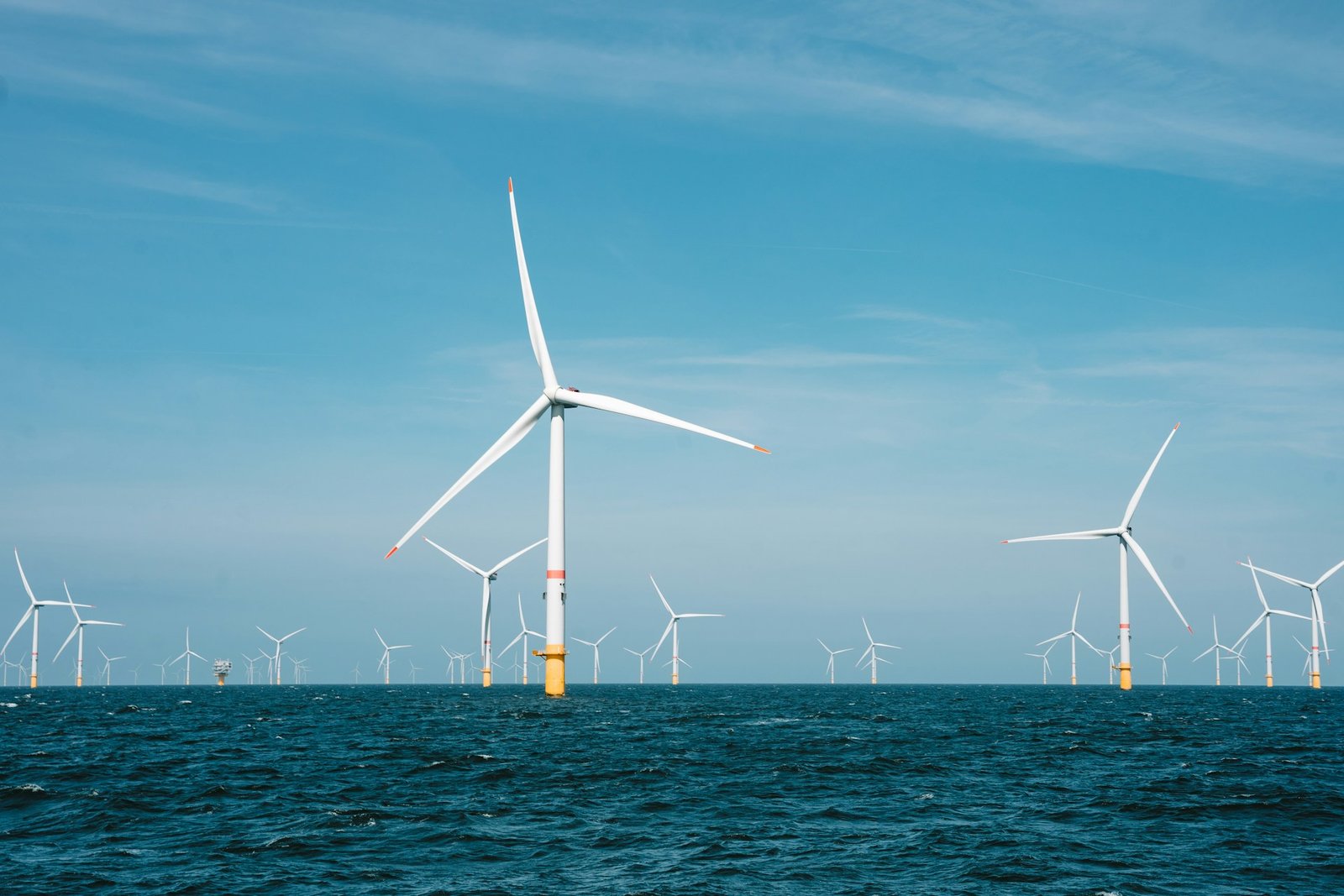
The UK’s largest green energy conference, Energy Security and Green Infrastructure Week, opened with optimism and reserved celebrations from Chris Stark, head of mission control for Clean Power 2030 at DESNZ. He proudly explained both his personal achievement of getting the adjective “stonking” into a government press release and the record-breaking AR7 offshore wind auction results to match.
AR7 was the world’s largest renewables auction, securing 8.4GW of offshore wind, unlocking £22 billion in private investment alone, and providing strike prices of £90/MWh – 40% cheaper than new gas. With ~16GW currently operational, the government believes this result sets us on track to achieve the Clean Power 2030 target of 43-50GW.
However, as Sophie Lethier, interim deputy director of policy at Energy UK, would later note, even this success immediately faced cost scrutiny – online and in the press. And that balance (or tension) between what needs to be done and what that will cost companies and consumers was a theme that ran through each of the three sessions on the day.
Building tomorrow’s grid on today’s bills
Adrian Del Maestro, global head of energy advisory at AECOM, opened the grid networks session with an important reminder: “there’s no transition without transmission”. The challenges for our grid are familiar – connection queues, ageing infrastructure built in the 1950-60s, supply chain constraints, NIMBYism, and data centres. But progress is happening. Roughly £80bn will be spent over the next few years, we have a reformed connection queue, and transmission companies are on unprecedented recruitment drives, for instance.
Dr Jenny Stein, head of net zero at Enterprising Cumbria, offered an important counterpoint. In rural areas facing grid constraints, they’re looking at effectively avoiding grid connections to help with their green transition – using behind-the-meter setups, private wire, or non-pipeline hydrogen and biogas. This approach, she argued, will enable reindustrialisation in places struggling to connect.
To my mind, some of the most interesting insights came from James Veaney, deputy director of electricity sector price reviews at Ofgem. He was focused on the RIIO-ED3 electricity distribution price control framework, which directs distribution grid investment and sets controls on recouping the costs from consumers. The transmission network is system-wide constrained, but distribution has significant headroom and just some local pinch points. This creates a messaging and investment narrative problem. When you’re asking people to pay more on their bills for upgrades that aren’t yet solving an urgent problem, you need better language and ways to articulate the social benefits. As James put it: “Without [that language], we’re going to become more myopic. We should focus on broader benefits beyond the bill to ensure societal buy-in.”
Though distribution isn’t constrained at the moment, a large wave of demand around 2033 is likely – toward the end of the ED3 price control period – when low-carbon tech like heat pumps and EVs will really take off. By then, it will be too late to respond, though. So, there needs to be strategic anticipatory investment now. DNOs and companies investing in new assets need to build bigger now and build it right the first time. In short, Ofgem are open to pre-emptive investment even where there’s no current constraint.
Why our balancing act needs everything – including nuclear and skills passports
During the day’s second session, Barnaby Wharton, head of flexibility and grid at RenewableUK, laid out the full spectrum of what’s needed to keep the lights on in a renewables-dominated system. Batteries are extending to 10-12 hours of duration and are brilliant for intra-day load balancing. But for inter-seasonal storage, we also need things like hydrogen and pumped hydro – which the Long Duration Electricity Storage (LDES) cap and floor scheme could likely provide when new storage projects are approved in Q2 this year.
When it comes to balancing itself, he suggested that NESO should intervene in less of an ad hoc way, and instead set a framework for the whole market, letting it find the best solutions and resolve itself. Skip rates – where NESO selects gas plants over cheaper alternatives like batteries – are a symptom of this sub-optimal approach that ends up costing us all much more.
The politics of energy costs and the politics of energy were challenges that Sophie Lethier was keen to emphasise. The reality check is that we’re in a cost-of-living crisis, with 6 million households currently living in fuel poverty. Her message was clear: “consensus is a key enabler for the transition”. Without it, a green transition is hard to envision.
Sophie also called for more joined-up thinking, particularly around issues like national pricing reform, where three different partners (DESNZ, Ofgem, and NESO) are leading different aspects without necessarily coordinating in the best possible way.
Our nuclear gap was highlighted by Virginia Crosbie, board director at the Nuclear Institute and former MP for Ynys Môn (Anglesey). The UK needs 24GW of nuclear by 2050 according to the Civil Nuclear Roadmap, yet all but one of our plants will soon close – precisely why having nuclear as part of the national industrial strategy is so important.
Closing this gap is an opportunity for investors, but private capital can be a challenge for nuclear. Virginia commented, “Private capital flows when the UK offers predictability, standardisation, and bankable risk allocation.” Fortunately for investors and the prospects of the UK’s nuclear fleet, small modular reactors (SMRs) meet this profile nicely because they’re replicable, lower-cost, and have several bankable routes to market thanks to co-location with data centres, industrial heat users, and hydrogen production.
It was toward the end of the second session that the issue of skills came up again, this time as a universal constraint across the whole of the green transition. To address this, Barnaby called for expanding green skills passports. These passports are currently being trialled in places like Aberdeen, giving oil and gas workers routes into offshore wind. But skills passports should expand to allow people to move between parts of the green economy, switching between solar and wind, or hydrogen and nuclear, for instance. The principle is simple: we need people to flow between technologies as the green transition evolves, not get trapped in silos. This is a big challenge that passporting will address while also giving people lifelong careers.
Green gas giants and the compelling economics of storage
To close the day out, Dr Gareth Mottram, policy lead at the Anaerobic Digestion and Bioresources Association (ADBA), and Brett Ryan, head of policy analysis at Hydrogen UK, made the case for biomethane and hydrogen as central parts of the UK’s transition to a decarbonised economy.
Currently, 130 biogas plants produce about 7TWh of biomethane, which they feed into the gas grid – around one per cent of our total annual gas demand. By the late 2040s this could reach 120TWh. That’s projected to be somewhere between 50-80% of the UK’s total gas demand by that time, making it the future backbone of UK gas.
The storage economics vastly favour molecules over electrons, too. Moving molecules is roughly 1/8 of the cost of moving electrons, while storing biomethane is 1/5,000 of the cost. For dealing with Dunkelflaute, those long periods of low wind and little sun, both hydrogen and biomethane are essential, and could prove to be much more affordable for the UK compared to other technologies. By the 2040s, approximately 50% of biomethane production (~65 TWh) is expected to run gas turbines for electricity system backup, Gareth suggested.
Nevertheless, the planning process is a major hurdle for both sectors. Neither technology has Nationally Significant Infrastructure Projects (NSIP) status, and going through Section 35, i.e. appealing to the Secretary of State, is difficult. Worse, the only vocal party in the planning processes is those against, and they have a disproportionate impact – a few negative voices can do significant damage. Hydrogen faces an especially tough time on this front because there are so few plants currently operating. This means there’s less positive evidence to counteract negative perceptions, unlike biogas, with its hundreds of plants.
What does it all mean?
AR7 was genuinely great news – and with two notable projects, Berwick Bank and Pentland Floating Offshore Wind, close to my home in Edinburgh, I’m keen to see the positive effects of the green transition here in the Lothians in particular.
But what stood out was that delivering clean power by 2030 involves overcoming some significant barriers fast. The technologies are there, and investors are keen. But the skills gap is stark. The next few years require packing in the equivalent of decades of grid work, plus massive offshore wind build-out, plus nuclear, plus green gases and more. Without solving the labour shortage, the hardware won’t get made.
The problem of cost isn’t going anywhere soon, either. It’s a challenge that requires every stakeholder to address it directly, bringing down costs through optimising our energy system and deploying best-fit technologies. It also requires careful and considered messaging, and even a pivot towards narratives that focus on the longer-term social benefit.
That is of course a hard thing to do, but it’s increasingly critical. When even success faces immediate scrutiny and planning objections derail projects because only the against voices speak up, getting your messaging right is essential. If the green transition needs technology and consensus, then how we communicate the change matters too.
Resonates has over 20 years of experience helping green transition companies to create consistent, credible, and compelling messages that appeal to customers and investors. Explore our work or get in touch to find out more.