Many brands claim to personalize their customer experience. But the truth? Most still rely on broad segments and static rules.
The result is generic moments that fail to consider context and intent. AI decisioning takes personalization to the next level, transitioning from segment-based to individual-based engagement. This technology autonomously selects the next-best action, channel, time, and message for each customer in real time.
AI-driven personalization is becoming a core component of customer experience strategies, shifting how brands engage with customers. In this guide, we explain what AI decisioning is, why it’s critical for modern marketing, and how you can implement it at scale.
We also highlight how Insider One uses real-time data and predictive analytics to drive measurable growth and operational efficiency. Expect practical roadmaps, key enablers, and insights to help you build effective, sustainable 1:1 personalization programs.
What is AI decisioning and why does it matter?
AI decisioning refers to the use of artificial intelligence models that autonomously make real-time marketing decisions. These decisions can range from selecting the next-best channel, product, or message to offering personalized content and guidance, all based on behavioral, contextual, and historical data.
Unlike traditional rule-based automation, which relies on predefined, static if/then logic, AI decisioning continuously evolves by learning from new data, adapting to customer interactions, and refining its decision-making process.
Why it matters
1:1 customer personalization

AI decisioning is the cornerstone of true personalization, transforming customer engagement by using first-party data to deliver hyper-relevant, real-time experiences. This level of personalization enhances customer satisfaction and loyalty by ensuring each touchpoint is tailored to the individual’s behavior, preferences, and intent.
As privacy regulations like GDPR and CCPA limit the use of third-party data, leveraging first-party data for AI decision-making becomes even more crucial in delivering meaningful, personalized interactions.
Business impact of AI decisioning
The impact of AI-driven personalization is profound. Businesses that adopt AI decisioning have reported significant improvements in customer engagement and revenue. In fact, AI personalization can increase revenue by up to 15%.
87% of companies using AI decisioning report improved engagement with their customers, illustrating the effectiveness of data-driven, real-time personalization.
Predictive analytics at scale
AI decisioning goes beyond just personalization. By integrating predictive analytics and next-best-action logic, AI can optimize customer engagement across multiple touchpoints.
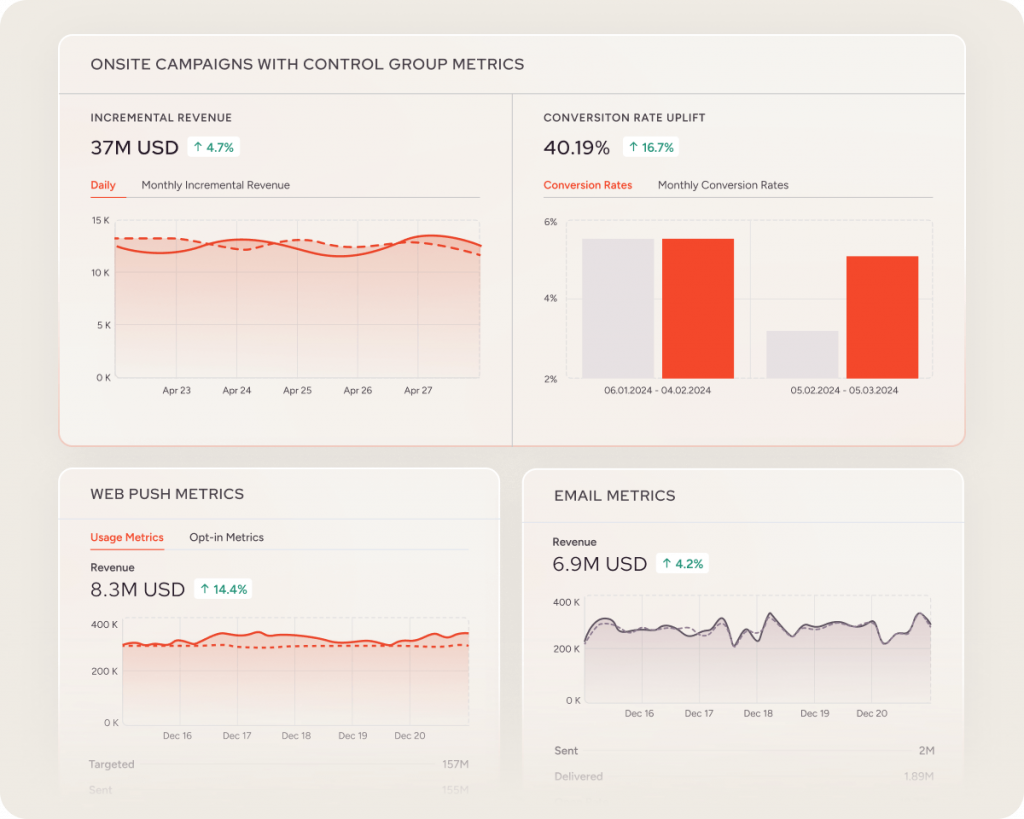
Whether it’s sending the right message at the right time or choosing the most effective channel for communication, AI decisioning ensures brands can scale their personalization efforts efficiently.
This allows businesses to engage customers with timely, contextually relevant interactions that are proven to drive conversions and enhance customer experiences across the entire journey.
How AI Decisioning Compares to Traditional Marketing Automation
| Capability | Traditional Marketing Automation | AI Decisioning for Personalized Marketing |
| Decision Logic | Static rules and segments | Dynamic models learning from real-time signals |
| Speed | Batch, scheduled updates | Instant, event-triggered decisions |
| Adaptivity | Manual updates | Continuous optimization via predictive analytics |
| Scale | Channel-specific | Omnichannel, next-best-action across journeys |
| Personalization Depth | Group-level personalization | Hyper-personalization at the individual level |
| Governance | Manual QA | Policy guardrails + transparent decision logs |
Key enablers of effective AI decisioning
To successfully implement AI decisioning at scale, businesses need to focus on several key enablers that ensure the system functions efficiently and ethically. These enablers set the foundation for AI decisioning to deliver personalized, real-time experiences. Here’s a breakdown of the critical components:
Rich first-party and zero-party data
The foundation of AI decisioning lies in data, specifically, first-party and zero-party data. These data types are critical because they come directly from customer interactions, making them the most reliable and accurate sources for personalized experiences.
Why it matters
With the increasing limitations on third-party cookies and data privacy regulations, relying on first-party data (e.g., website interactions, app usage, purchase history) and zero-party data (e.g., preferences or feedback provided directly by customers) becomes essential. This data helps AI systems make informed, real-time decisions without the reliance on third-party sources.
Practical benefit
Brands that own their data and use it to power AI decisioning can create hyper-personalized experiences without the risk of losing access to external data, ensuring that their personalization efforts remain effective and compliant with privacy regulations.
Unified customer profiles and real-time signals
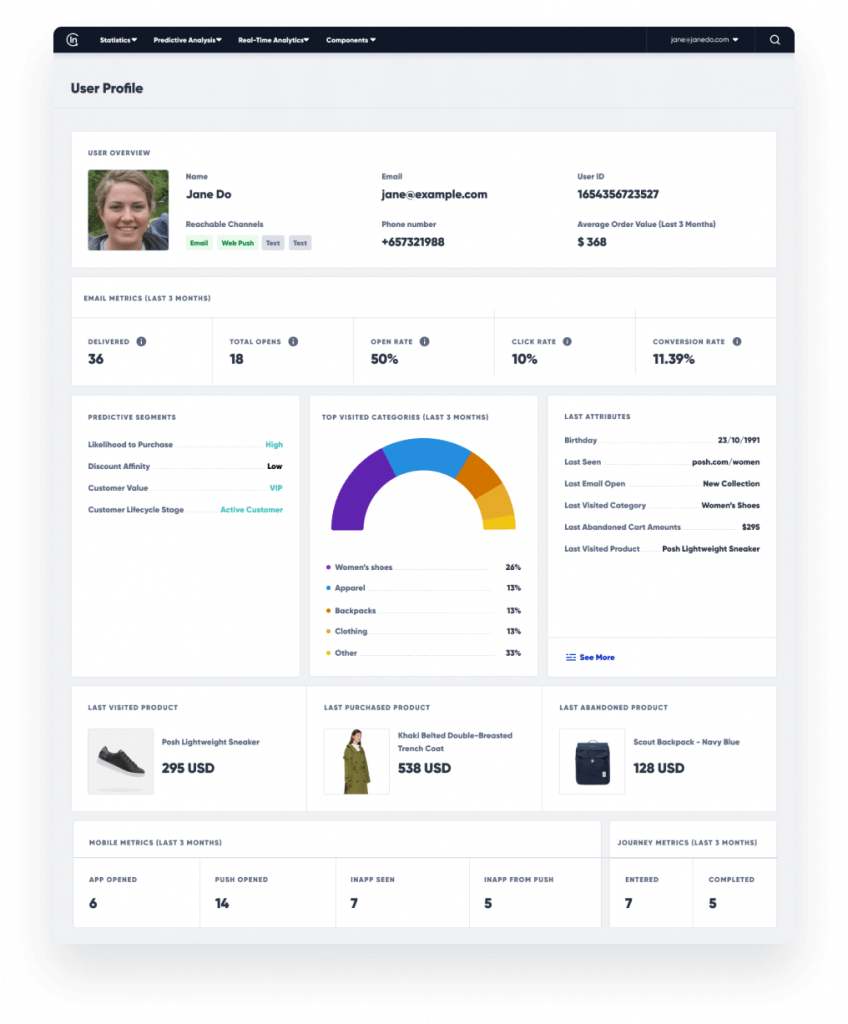
Effective AI decisioning thrives on a unified view of the customer, where data from various sources (e.g., CRM, website interactions, social media) are brought together into a single profile. In addition, real-time behavioral signals (e.g., clicks, browsing activity, recent purchases) are key to delivering timely, relevant recommendations.
Why it matters
Fragmented data leads to missed opportunities. When customer data is siloed or incomplete, AI models can’t make the most informed decisions.
Practical example
When a customer moves from browsing to showing intent by adding items to their cart, real-time data signals can trigger the next best action, whether it’s sending a personalized offer or displaying a discount. With a unified view, the AI knows the best action to take, ensuring a smooth customer journey.
Experimentation and continuous learning
The most effective AI decisioning systems are those that continuously test, learn, and optimize based on new data. Shifting market behaviors and evolving customer preferences demand dynamic adaptation, not static rules. AI systems must be designed to experiment, adapt, and improve over time.
Why it matters
AI decisioning is not a “set it and forget it” tool. To stay relevant, AI needs to experiment with different variables, such as timing, offers, and channels, to find the most effective strategies. Continuous learning ensures that AI decisioning evolves with the market and customer preferences.
Practical benefit
Experimentation through A/B testing and reinforcement learning helps AI refine its decisions and adapt in real time, improving customer engagement and increasing conversions. This process ensures that AI continues to provide value as behaviors and trends change.
Omnichannel orchestration and execution
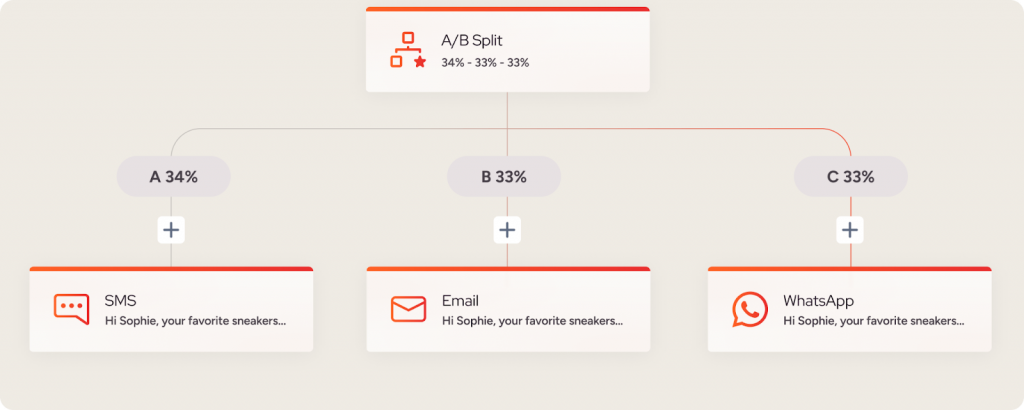
AI decisioning is only valuable if it can be executed across multiple channels at the right time. The decisions AI makes must be actionable, whether through web, email, mobile app, or even voice assistants. Omnichannel orchestration ensures that the right message reaches the customer at the right moment, based on their journey.
Why it matters
Effective AI decision-making involves not just choosing the next best action but also ensuring that the action is executed seamlessly. For example, a customer might respond well to an SMS reminder about a cart abandonment, while another customer prefers an email. The AI must understand the channel preferences and timing to ensure maximum impact.
Practical benefit
Omnichannel orchestration ensures that AI decisioning reaches customers through their preferred touchpoints, creating a seamless experience that drives higher engagement and conversion rates.
Transparency, trust, and ethical AI
Consumers are more aware of how their data is being used, and maintaining their trust is essential for long-term success. Ethical AI practices, transparency in decision-making, and data privacy protections are critical components of building trust in personalized experiences.
Why it matters
With increasing scrutiny on data privacy and AI ethics, brands must ensure that their AI decision-making processes are transparent and trustworthy. This includes clearly communicating how customer data is being used, ensuring fairness, and implementing safeguards to prevent bias in AI models.
Practical benefit
By addressing ethical concerns, businesses can foster stronger relationships with customers, increasing engagement and loyalty. Adopting clear privacy policies, obtaining consent, and being transparent about AI decisions help ensure that consumers feel safe and valued, which ultimately enhances the effectiveness of personalized marketing efforts.
Key considerations before implementing AI decisioning
Adopting AI decision-making requires careful planning and addressing several key challenges:
Data privacy and ethical practices
For AI decisioning to be effective, transparency, consent, and clear opt-out options must be built into the system. Ethical AI practices ensure customers trust how their data is used, which is essential for long-term engagement and compliance with privacy regulations.
Complexity of integration
Successful AI decision-making requires clean, unified data, along with interoperable systems and skilled teams. Underestimating the technical complexity can cause delays and hinder successful implementation. Ensuring that all systems are aligned and capable of supporting AI decision-making is critical for success.
Human oversight and governance
While AI can automate decisions at scale, maintaining human oversight is crucial, particularly for high-stakes interactions. A “human-in-the-loop” approach helps ensure that AI-driven decisions are contextually accurate and aligned with the brand’s quality standards, enhancing trust and maintaining quality control.
By addressing these key considerations, businesses can avoid common pitfalls and fully leverage the power of AI decisioning to drive personalized customer engagement and growth.
Step-by-step roadmap to implement AI decisioning at scale
Implementing AI decisioning at scale requires a structured approach to ensure you achieve measurable results and maintain control over the process. Here’s a step-by-step roadmap for marketers looking to deploy AI decisioning across their organization:
1. Define the business outcome you optimize for
Before diving into AI decisioning, it’s critical to define the specific business outcomes you want to achieve. Whether you’re aiming for repeat purchases, increasing average order value (AOV), or reducing churn, aligning your AI efforts with clear KPIs ensures your decisioning strategies stay focused and measurable.
Tip: Be specific about your goals, and prioritize based on business impact and feasibility.
2. Audit your data maturity & stack readiness
AI decisioning relies on high-quality data. Assess your data maturity by auditing your current stack. Focus on the quality and breadth of your data, including your customer data platform (CDP), event capture systems, and real-time data processing capabilities. Make sure your systems are capable of delivering clean, unified data in real-time.
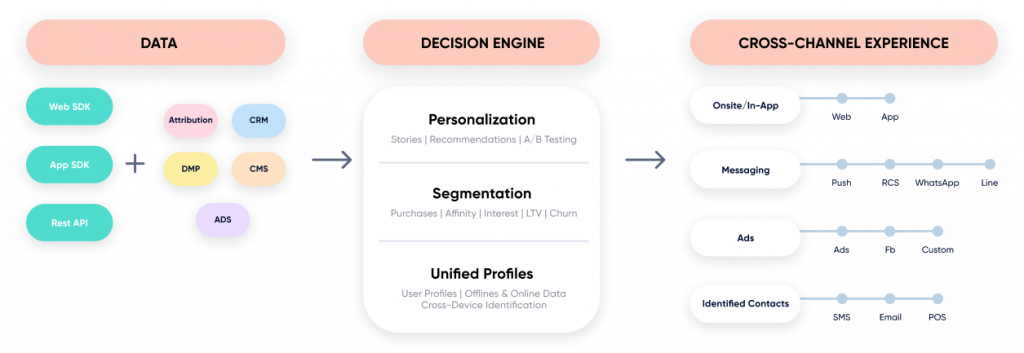
Tip: Ensure your data is complete, clean, and can flow seamlessly across platforms to fuel AI decision-making.
3. Run a pilot with clearly defined guardrails
To minimize risk and optimise results, start with a pilot program. Choose a small cohort of users and focus on a single outcome, such as improving conversion rates or increasing engagement in a specific customer journey. Establish clear guardrails for success, including performance metrics, control groups, and decision logs.
Tip: Use this pilot as a learning phase to fine-tune AI decisioning before full-scale deployment.
4. Expand to full journey orchestration
Once the pilot is successful, scale your efforts across the customer journey. Start with acquisition, then move to engagement and retention. Ensure AI decisioning is applied across all touchpoints, such as web, app, email, SMS, and ads. Integrate next-best-action logic across these channels to create a seamless, personalized experience for every customer.
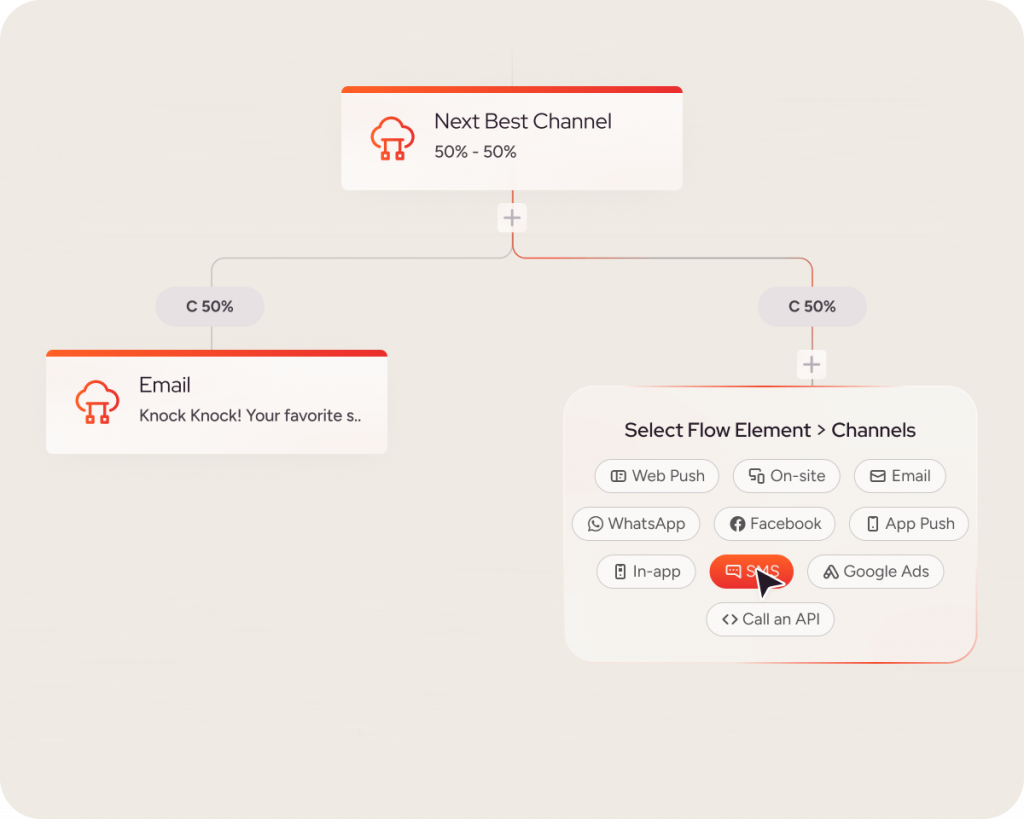
Tip: Aim for omnichannel orchestration to ensure consistency in messaging and experience across the journey.
5. Measure, report, and iterate
Measure the effectiveness of your AI decisioning by tracking both model performance (such as AUC or lift) and business KPIs (e.g., revenue, customer lifetime value). Use this data to refine your AI models, experiment with different approaches, and shift from segments to truly personalized experiences for individual customers.
Tip: Continuously report on both business and technical KPIs to understand the full impact of AI decisioning.
6. Scale ethically and responsibly
As you scale AI decisioning, make sure you maintain ethical standards. Audit your AI decisions to ensure transparency, monitor for bias, and establish clear rules for data usage and decision-making outcomes. Building trust with customers is key to long-term success, so ethical AI practices should be at the forefront of your strategy.
Tip: Implement safeguards to monitor and refine your AI models to ensure fairness and transparency.
What to avoid when implementing AI decisioning
- Ignoring real‑time signals: Real-time decisioning depends on fresh data and immediate context. Failing to capture and act on real-time signals can lead to missed opportunities or irrelevant experiences.
- Assuming AI will fix broken data: AI decisioning won’t fix poor-quality or fragmented data. Prioritize data quality and integration before scaling AI.
- Failing to define success metrics: Without clear success metrics and goals, it’s impossible to measure the effectiveness of your AI decisioning program. Always define success before starting.
By following these steps, businesses can effectively implement AI decisioning at scale, ensuring they achieve significant personalization results while remaining agile and customer-centric.
Deliver true 1:1 personalization at scale with Insider One
To truly harness the power of AI decisioning, businesses need an integrated platform that brings together data, orchestration, and real-time AI-powered personalization. Insider One makes this possible by operationalizing decisioning at scale, allowing brands to create personalized, seamless experiences across multiple touchpoints.
Here’s how Insider One supports the key enablers of effective AI decisioning:
- Unified customer data: Insider One integrates real-time, first-party data to create unified customer profiles, giving brands a complete view of each customer’s behavior, preferences, and intent. This enables better decisioning, driving more accurate and meaningful interactions.
- Omnichannel orchestration: With Insider One, brands can orchestrate AI-driven decisioning across channels, from web and mobile to email and social. AI determines the next best action, whether it’s a personalized message via web chat, SMS, or an in-app push notification, ensuring consistency and relevance at every touchpoint.
- Predictive & generative AI: Insider One uses predictive analytics to model customer behavior and recommend the best action for each individual. Generative AI then fuels hyper-personalized conversations, adapting in real-time to customer interactions for deeper engagement.
- Real-time personalization: With Insider One, you can deliver real-time personalized offers and messages across all channels. The platform’s decisioning engine adapts automatically to changes in customer behavior, helping you scale 1:1 personalization without manual effort.
With Insider One, you can maximize engagement, reduce manual work, and scale personalized, real-time conversations effectively and responsibly.
Take a demo to see how Insider One powers personalized, real-time conversations across channels.
FAQs
AI decisioning refers to the process by which artificial intelligence autonomously makes marketing decisions in real time. This includes selecting the most effective channel, product, message, or action for a customer, all based on behavioral, contextual, and historical data. AI decisioning goes beyond traditional rule-based automation by continually adapting to new data and customer interactions.
While next-best-action is the strategy or framework for determining the best action to take next in a customer’s journey, AI decisioning is the engine that continuously calculates and implements this strategy. AI decisioning utilises real-time data and predictive models to make personalised, dynamic decisions on an individual basis across various touchpoints, whereas next-best-action serves as a broader guiding principle.
Yes. AI decisioning can optimize customer engagement across multiple channels, including web, app, email, SMS, social media, and more. By using a unified view of the customer, AI can select the most appropriate channel and timing for each customer interaction, ensuring consistency and relevance in communication across all touchpoints.
Ethical personalization is ensured by using transparent AI practices, obtaining clear consent from customers, and adhering to data privacy regulations. AI decisioning platforms implement safeguards to prevent bias in models, monitor for fairness, and ensure that personalized experiences are built on responsible data usage, all while maintaining customer trust.
AI decisioning can significantly improve key metrics such as revenue per user, conversion rate, average order value (AOV), customer retention, and customer lifetime value (CLV). It also helps reduce customer acquisition costs (CAC) through better targeting and personalization. By continuously optimizing these metrics, AI decisioning enables brands to provide highly relevant, real-time interactions that drive measurable business outcomes.