Content warning: This article contains graphic descriptions of medical procedures that some readers may find distressing.
When doctors in the emergency room at Brooklyn Methodist asked my wife if I had an advanced directive or do-not-resuscitate order, it was clear my health situation had reached a life-or-death stage.
I was unconscious and shedding blood from my stomach and esophagus at an alarming rate. I was in no position to make decisions for myself.
I’d been admitted to hospital two days earlier, on a Friday evening in mid-April. A normal busy work week covering PR was winding down when, out of nowhere, I started vomiting blood.
My wife Tracey called an Uber to take us to hospital (like a typical guy, I vetoed an ambulance). On arrival, I felt faint and lost consciousness, hitting my head on the sidewalk, my legs splayed out in the road.
A passerby who Tracey swears was Emmy Award-winning Big Little Lies actress Shailene Woodley shouted: “He needs a wheelchair!” She ran and got one and wheeled me into the emergency room, with Tracey alongside. (You can’t make this stuff up.) Thank you, “Shailene.”
I was immediately admitted to intensive care. My hemoglobin and blood pressure were dangerously low. Doctors tried to find the source of bleeding, but there was too much blood.
I was sedated and intubated. An expanding stent was inserted and six clips were clamped to varices in my esophagus. I was given five pressors, drugs used to raise dangerously low blood pressure.
Tracey and I hadn’t specifically discussed an advanced directive. But she knew I’d want the doctors to administer CPR, just not continue resuscitation if, in their professional opinion, my condition became catastrophic.
The doctor offered Tracey a tissue. She signed the form in line with her understanding of my wishes, walked up the corridor and let out a silent scream.
Two of Tracey’s friends dropped everything to be with her immediately. Then my sister arrived from Minnesota. My brother was on his way from England. And Tracey’s parents were flying to NYC from Kentucky.
I started bleeding again and required another operation. At one point, a doctor told my sister he was praying for us. I was given over 20 units of blood in Brooklyn. After about two and a half hours, they got it under control.
My brother and in-laws arrived and, between the support group, someone was at my bedside 24 hours a day.
Eventually, the doctors’ narratives changed from “the next few hours” to “next day,” “when he wakes up,” and, eventually, “next week” and “next month.” I needed significant surgery to survive long term and was transported to Weill Cornell in Manhattan, still sedated with a dozen tubes running into me.
I was in an induced coma for several days. Tracey wasn’t sure I was going to wake up. When my eyes eventually opened she was grateful, but alarmed by the panicked look on my face.
If I hadn’t seen Tracey and the family as I woke up, I’m not sure I’d have made it. Sedation and ICU delirium make the head a very lonely space.
Scientific evidence suggests a person’s life flashes before them during a near-death experience. That happened to me. The visions were vivid and spanned episodes from early childhood through the rest of my life.
Gradually, I stabilized and was extubated, so I could finally speak. I felt more aware of what was going on. There followed a series of MRIs, ultrasounds and X-rays, blood tests and intravenous top-ups of insulin and other fluids. I was fed by nutrients pumped directly into my bloodstream.
Reflecting on what was happening put everything in perspective and clarified my priorities: Health, wife, family, friends. There is no time to waste. Procrastination is not an option. As Jack Nicholson’s character Frank Costello says in The Departed: “We’re all on our way out. Act accordingly.”
Tracey and I celebrated our seventh wedding anniversary in a Weill Cornell hospital room. She joked that I’d chosen an extreme way to scratch the seven-year itch. I was just relieved I hadn’t left her a widow.
The time came for my operation and the finest surgeons in New York City embarked on a complicated 12-hour procedure.
At one point the op was suspended so my blood loss could be stemmed. I received 39 more units. Finally, the lead surgeon called Tracey to tell her I was being “closed up” and she should go home and get some sleep.
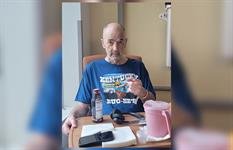
During my recovery, Real Chemistry founder Jim Weiss’ Get Real podcast came to mind. In Weiss’ words, I had been “hit by the bouncing ball.” Having not spent a night in hospital since I was a baby, I experienced a life-threatening illness that spanned eight weeks at Weill Cornell and 20 weeks off work.
Weiss lost his wife Audra to cancer on New Year’s Eve 2024. On Get Real, he interviews high-profile individuals including Bill Nye, Steve Kerr, Patrick Dempsey, Barry Sanders and Misty Copeland about their health journeys and philosophies. “Everyone gets hit by the bouncing ball,” says Weiss. “My hope is that Get Real helps people feel more prepared when that moment comes.”
Someone else who caught my attention during my health hiatus was Andrew Bowins, former corporate reputation lead at blue-chip brands including Mastercard, Samsung Electronics, Dell and KPMG.
Bowins is founder and CEO of RestlessUrban, a platform serving the multitrillion dollar “longevity economy.” Adults older than 50 control 70% of U.S. disposable income (Oxford Economics), yet appear in just 15% of marketing imagery (AARP).
Bowins had his own wake-up call in May 2025, when doctors discovered a 99% heart blockage during a routine check. “It wasn’t just a health scare,” noted Bowins. “It was confirmation. Life is not something to put off. It’s something to live, now.”
My post-op period presented different challenges to intensive care. Lying in a hospital bed causes muscles to melt away. I lost 50lbs — not a weight-loss regime I recommend — and now sport an impressive T-shaped scar.
I had daily interactions with many of the brands PRWeek covers in the health and pharma spaces. The scale and breadth of the healthcare economy is stunning, not least the health insurance part of the equation.
Breakfast at 8 a.m., lunch at noon and dinner at 5:15 p.m. took some getting used to. As did the food. I marveled at the skills of the porters who navigated the labyrinthine hallways of the hospital.
As a patient, you check your ego at the door, ceding control to doctors and nurses. That can be embarrassing, but doesn’t excuse the attitudes I observed from some patients toward staff. They deserve medals for what they endure on a daily basis, as well as for the superb care they offer.
From my bed, I watched the Knicks light up New York with their incredible run to their first NBA championship in 50 years. Then came the celebratory fireworks.
Some wags cheekily suggested I engineered all this so I could watch the soccer World Cup. While being able to watch most of the games was one of the few positive elements of my hiatus, I have to disabuse them of that notion.
As I looked out the hospital window at vessels sailing on the East River, I could see cyclists on Roosevelt Island. It was a full circle moment for me months later, when a friend and I cycled to that exact spot and looked over the river toward the room I spent so much time in. I still have a long way to go to full recovery, but I’m on the right track. And it’s definitely better than the alternative.
From a work point of view, I missed the PRWeek Crisis Comms Conference in Washington, DC, Sports Conference in NYC, the PRWeek Global Awards, the production of our annual Agency Business Report and the Cannes Lions International Festival of Creativity.
The PRWeek editorial, content hub and custom studio teams stepped up to keep the plates spinning, led by Frank Washkuch and Gideon Fidelzeid. Everyone pitched in, from editorial stalwarts Diana, Jess, Julia, Jeremy, Kevin, Lisa, Bill, Sean and David, through our awesome commercial, marketing, audience and events teams.
My boss Louise Boyle and Haymarket’s People Team were incredibly supportive. The positive vibes from within the company and from many of you in the PR industry were tangible — and I thank everyone for that. It truly means a lot.
I’ll finish with the following reflections:
- The surgeons, doctors, nurses and healthcare professionals in U.S. hospitals are elite and we’re lucky to have them. From all walks of life, they deserve much more credit and respect than they get.
- Life is short and it is not a rehearsal. Follow your passions. Take that trip, start that business, learn AI, write that book or go for that new job. Fight procrastination and just do it.
- Don’t skip your regular health tests. I’m especially talking to men here, as we’re all guilty of letting this slip occasionally. It could make the difference between life and death.
- Please give blood. It’s not difficult and it doesn’t take long. Many employers run schemes in the workplace. You could save someone’s life.
- If it feels comfortable, tick that organ donation box on your driver’s license. Again, you could save someone’s life.
I’ve been back at work for a week and I’m brimming with energy and ideas and I’m raring to go. This is not the way I would have chosen it, but a break — even a forced one — allows valuable time to think creatively and long term, away from the hurly-burly of the daily content cycle.
I look forward to reengaging with you all and bringing these ideas to fruition. Thanks again for your support of me and the team, and your continued commitment to PRWeek.