A customer who feels unrecognized rarely complains. They don’t file a support ticket or leave a one-star review. They just quietly stop coming back, and the brand never finds out why. That’s the risk sitting underneath every conversation about customer recognition: the cost of getting recognition wrong is invisible until it shows up as churn. Marketers tend to treat recognition as a nice-to-have, a warm gesture layered on top of the “real” mechanics of a loyalty program. It isn’t. This article opens a six-part series on the different ways loyalty programs connect with customers, starting with the one that has to come first.
If you’d like to get a helping hand in building the concept for your loyalty program, make sure to download our worksheet:
The Six Pillars of Customer Connection
A durable customer relationship isn’t built from a single lever. It splits into six distinct dimensions: three relational and three mechanical. The relational three, recognition, exclusivity, and community, are usually where the brand buyer’s attention lands first, felt as identity and belonging. The mechanical three, personalization, engagement, and utility, are where the operations buyer tends to start, felt as mechanics and value exchange. They’re the same six dimensions either way, just a different door in.
Key takeaways
- Recognition, “you see me.” The customer is known wherever they show up, greeted by name and tier, with status carrying across channels and milestones acknowledged.
- Exclusivity, “you give me first access.” The customer gets access others don’t, through early drops, members-only products, and priority. Community, “you belong with us.” The customer belongs, both with the brand and with other customers, through clubs, events, and shared challenges.
- Personalization, “you know me.” Relevance is built from the customer’s own data, in the form of tailored offers, content, and journeys.
- Engagement, “you make this fun.” Play and interaction build habit, through gamification, streaks, missions, and surprise moments.
- Utility, “you reward me meaningfully.” The customer gets tangible value they actually want, in the form of points worth redeeming, useful perks, and partner offers.
No brand builds all six equally, and that’s by design rather than a gap to close. The point isn’t to check every box. It’s knowing which ones a program is built on deliberately, and which ones are happening by accident.
Recognition, or “You See Me”: The Foundation of Customer Recognition
Recognition means the customer is known wherever they show up. Greeted by name and tier, their status carrying across channels, their milestones and anniversaries acknowledged without having to remind the brand who they are. And here’s the distinction that runs through the rest of this piece: recognition sounds like personalization. It isn’t, and the difference matters more than it looks. For more on how brands build this kind of guest recognition at scale, see our guide to creating an innovative hotel loyalty program.
Recognition in Behavioral Science
The idea that being known is a fundamental need, not a marketing nicety, isn’t new. Philosopher Charles Taylor’s work on the politics of recognition argues that recognition of identity is core to how people understand themselves, not an optional extra layered on top of material needs. The sharper claim, and the one worth leading with, is that non-recognition or misrecognition functions as a form of harm rather than simply a missed opportunity. That reframes the whole conversation: recognition doesn’t just delight customers when it’s present, its absence actively costs a brand something.
Social identity and status research backs this up. Being known confirms status. Being unknown, especially after having previously been known, reads as a demotion rather than a neutral reset. This gap between how marketers and consumers experience being valued is measurable: Antavo’s Global Customer Loyalty Report 2026 found that 82.6% of marketers believe their program makes customers feel valued, compared to just 56.2% of consumers who agree, a gap explored in depth in our Loyalty Perception Gap research, as well as our 2026 report:

Recognition in Customer Retention and Marketing
Company Loyalty vs. Program Loyalty
Non-financial benefits, recognition and preferential treatment among them, build emotional identification with a brand. Financial mechanics alone build attachment to the deal. That distinction matters commercially: program loyalty without company loyalty produces discount-trained customers who churn the moment the deal disappears. Recognition is what prevents a program from collapsing into a pure discount engine, a pillar we explore further in what relationship marketing actually means for modern brands.
Recognition vs. Personalization
Personalization infers what a customer wants from data and acts on the guess. Recognition acknowledges who a customer already is, their tier, status, and history, in ways they already expect and consented to. That’s why recognition mostly sidesteps the “creepy” backlash that dogs personalization: it confirms identity rather than exposing inference. Worth naming the objection early rather than waiting for a reader to raise it: recognition still runs on data. The difference is what’s done with that data, not whether it’s used at all.
The Channel-Failure Pitfall
The most common way a customer recognition program breaks isn’t a missing feature, it’s inconsistency. Recognized in one store and invisible online. Recognized at one location and treated like a stranger at another. This is a pattern hospitality brands run into constantly, where guest recognition tends to work well within a single property but falls apart the moment a customer crosses channels or locations. For the marketer, that reframes the job: a customer recognition program is largely loss prevention, stopping the brand from failing customers it already knows, as much as it is delight generation.
Before investing in new recognition features, audit where your current program already fails silently. A tier member who gets full recognition in-store but has to re-explain their status online isn’t a minor UX gap. It’s the exact failure mode this section describes, and it’s usually cheaper to fix than to build something new on top of it.
Recognition in Loyalty Programs
Recognition gets built mechanically through tier management, including hidden tiers, receipt scanning, digital wallet QR codes at the point of sale, staff-prompted enrollment, and milestone and anniversary workflows. Together, these turn anonymous buyers into identified members, lift second-purchase rates, and create recognition moments customers actually remember.
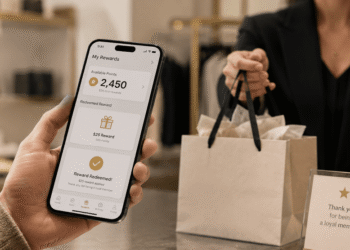
Picture a tier member walking into a store and being recognized instantly through a wallet QR code at checkout, no card, no app search, no explaining who they are.
- Whittard of Chelsea’s loyalty program is a working example of this kind of frictionless identification: its mobile wallet pass lets customers identify themselves with a phone scan rather than relying on staff to manually capture an email address at the till.
- LeMieux’s Insiders program shows the other side of the same coin, using visible tier progression to make status feel earned and recognized as a customer moves through the program, not just assigned and forgotten.
Frequently Asked Questions for Customer Recognition
Do smaller brands need specialized technology to run recognition well?
Not necessarily. Recognition can start with something as simple as consistent tier communication across email and in-store staff training. The technology becomes more important as a brand scales across channels and locations, since that’s where recognition typically breaks down without a system to carry status and history consistently.
How can marketers tell if recognition is actually working?
Watch second-purchase rate and the gap between how marketers and customers each rate the program, since that gap is often where recognition failures hide. A rising second-purchase rate alongside fewer support inquiries about “lost” tier status or missed milestones is a reasonable proxy for recognition doing its job.
Can recognition work without a full loyalty points system in place?
Yes. Recognition is about identity and acknowledgment, not point balances. A brand can build strong recognition through tier status, milestone acknowledgment, and consistent staff-prompted enrollment well before it has a mature points economy running underneath it, an approach covered in our birthday and milestone rewards guide.
Closing Thoughts
Recognition is where a durable customer relationship starts, not because it’s the flashiest pillar, but because it’s the one the other five depend on. A customer who doesn’t feel seen isn’t going to feel exclusive, personalized, or part of a community either. Getting recognition right is largely about consistency across channels rather than adding new features. Next in this series: exclusivity, and what it means to give customers real reasons to feel like they’re getting in first.
Antavo is the AI loyalty and incentives platform that brings together loyalty, promotions, and agentic AI to turn customers into regulars: the customers who come back on their own, buy more often, and bring others with them. For more than a decade, Antavo has powered identity-led loyalty strategies for brands including SKIMS, Paul Smith, KFC, Flying Tiger Copenhagen, and Hyatt’s Inclusive Collection. Marketers build, change, and launch programs and promotions themselves, without waiting on engineering.
If you’re tired of paying to win the same customers twice, book a call with our experts and see how Antavo turns them into regulars.