[ad_1]
When US Foods realized that its 15-year-old Food Fanatics show was starting to get too “vanilla,” the food distributor decided to change its approach. For the 2025 event, it completely reimagined its show floor and invited more than 5,000 food service operators, culinary professionals and industry experts to an experience designed around the customer journey, with celebrity chef demos and tastings sprinkled along the way.
For decades, the prime spots on the trade show floor belonged to the biggest sponsors and longest-tenured exhibitors. Now, organizers are redesigning the layouts around buyer behavior and how attendees naturally research, compare and evaluate solutions, with the goal of facilitating meaningful conversations and, ultimately, faster decisions.
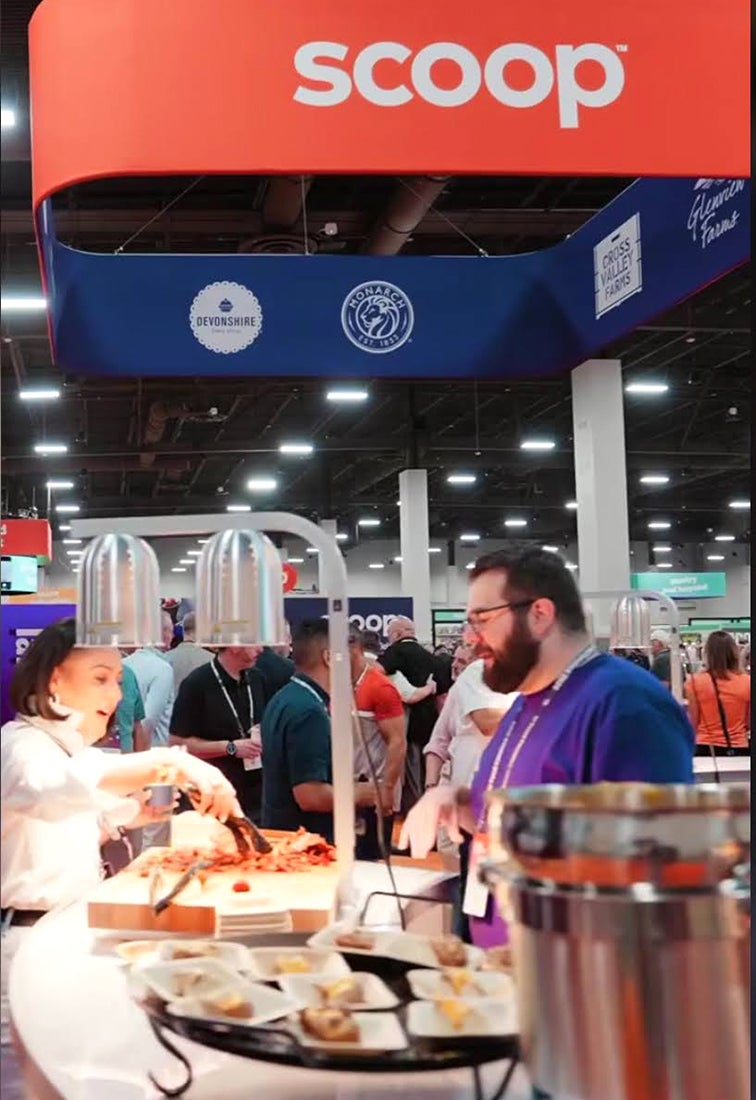
For Food Fanatics 2025, US Foods grouped suppliers the way restaurant operators actually shop: a main proteins area, a seafood market, tools and technology, other specialty areas, and live demos and tastings for additional flavor. (Agency: Agency EA)
“It was about the customer and how they can shop as effectively as possible,” says Diane Hund, svp and cmo at US Foods. “If you’re looking for a POS system, they’re all right there. Looking for a certain protein, they’re all right there.”
Automotive Aftermarket Products Expo (AAPEX) also recently implemented a similar buyer-first approach. As the show grew, organizers realized increasing size was reducing face-to-face time, and exhibitors were considering taking a year off, possibly triggering a cascading effect. The solution became segmenting products and services by common categories and services, which would “allow buyers to spend more time in booths instead of crisscrossing the hall.”
Related:
A Controversial Strategy
Brands that had traditional lucrative placements by the hall entrance had to relinquish them to be positioned next to their competition. It took time, effort and a lot of hand-holding to win the exhibitors’ support.
“It’s tricky,” says Ed Petruczenko, creative director at US Foods. “Toast and Square, for example, are direct competitors. They didn’t want to be next to each other, but we explained the show’s strategy and did what we could to create some separation while still staying true to the concept. Once we explained how customers shop and where we were going, most vendors fell in line. And they should be willing to go head-to-head with a direct competitor. You shouldn’t be nervous about that.”
Building Around Solutions
Buyer-first design doesn’t always mean grouping competitors together. Sometimes it means bringing complementary brands to build a bigger picture.
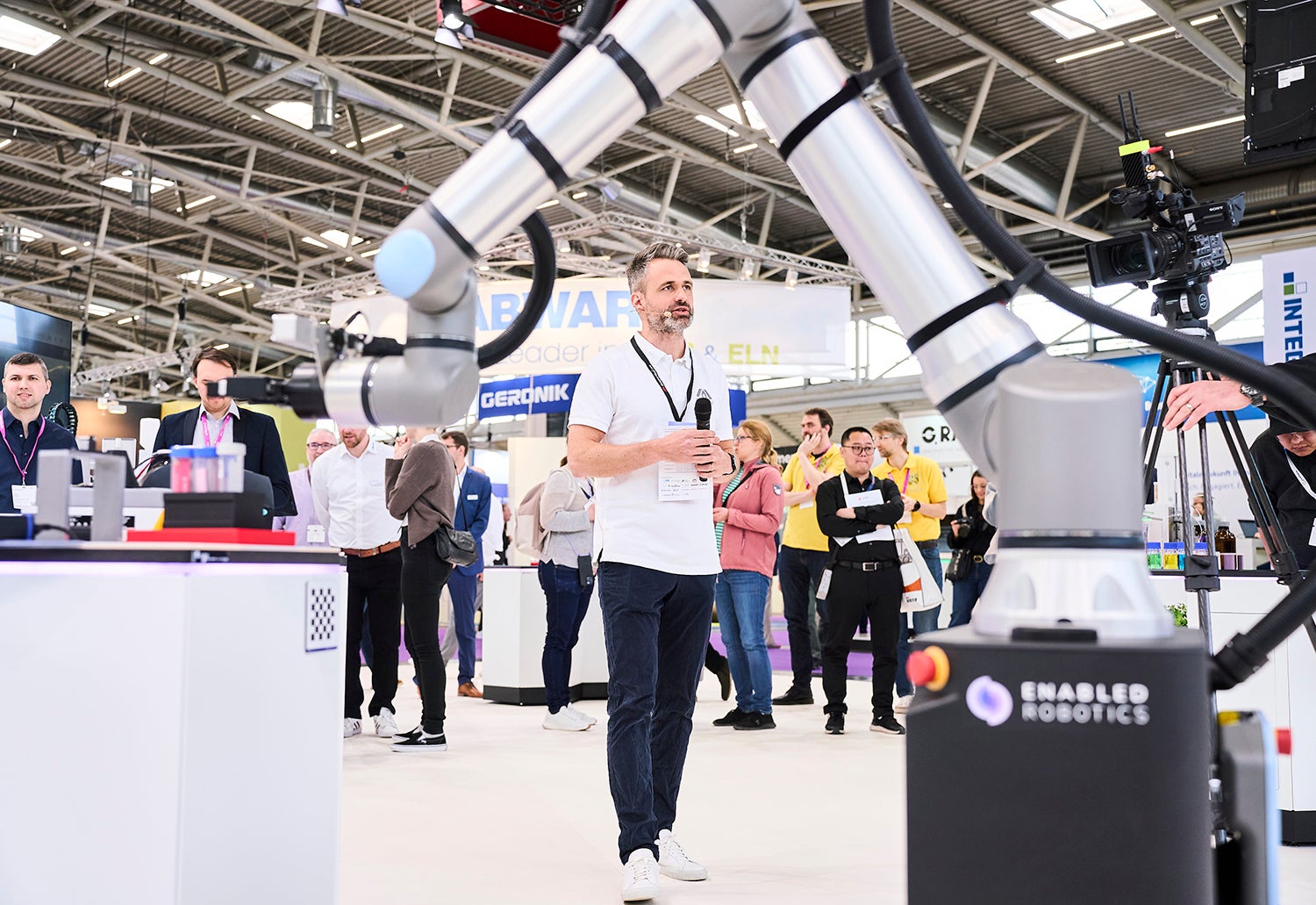
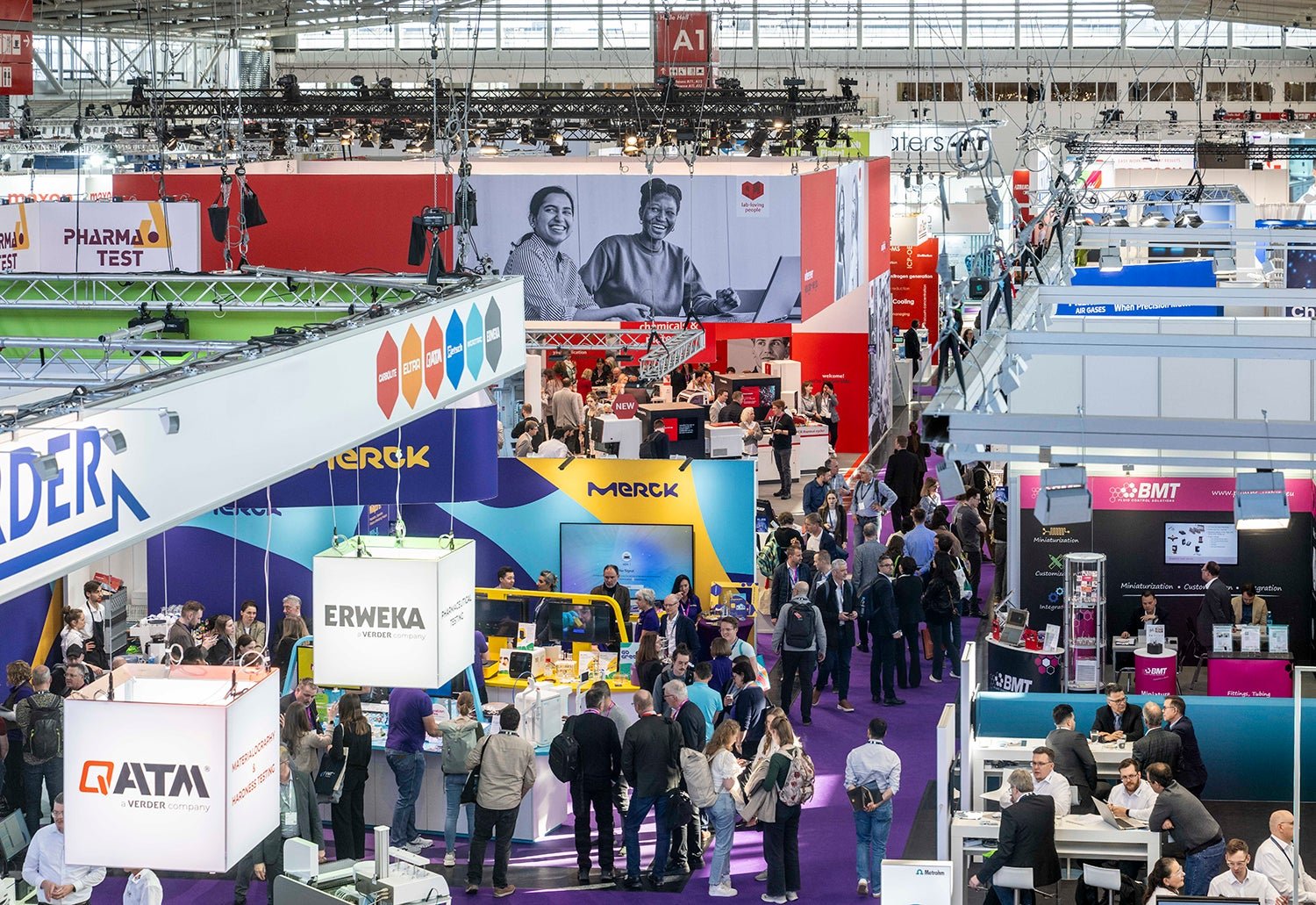
Across the Atlantic, Messe München offers a glimpse into the laboratory of tomorrow with its Digital Transformation Show as part of analytica. The 2026 iteration featured 18 exhibitors—including Liebherr, Metrohm, Mettler Toledo and Sigma—to present how hardware and software from different manufacturers could be integrated to make laboratory processes intuitive and digital.
At INTERFORST, the leading international trade fair for forestry and forest technology, demonstration areas illustrate the entire value chain in action, from highly mechanized timber harvesting to the processing of tree trunks into usable firewood.
“In recent years, this trend has become increasingly visible across trade shows in a wide range of industries,” says Susanne Grödl, exhibition director, analytica shows worldwide. “Rather than presenting independently, exhibitors are joining forces to showcase products, technologies and solutions related to a shared topic within dedicated special exhibition areas.”
Does It Work?
Grödl notes that the Digital Transformation Show has proved to be a true visitor highlight, attracting approximately 2,800 attendees during the event and getting glowing feedback in visitor surveys. Food Fanatics also scored high on customer satisfaction. US Foods’ Hund says, “Our customers told us, ‘You’ve broken the mold. It’s a completely different food show.’”
Photos courtesy of: Messe Munich; US Foods
Have a story idea? Want us to cover your booth? Reach out to EM’s editor-at-large Anna Huddleston.
[ad_2]
Source_link