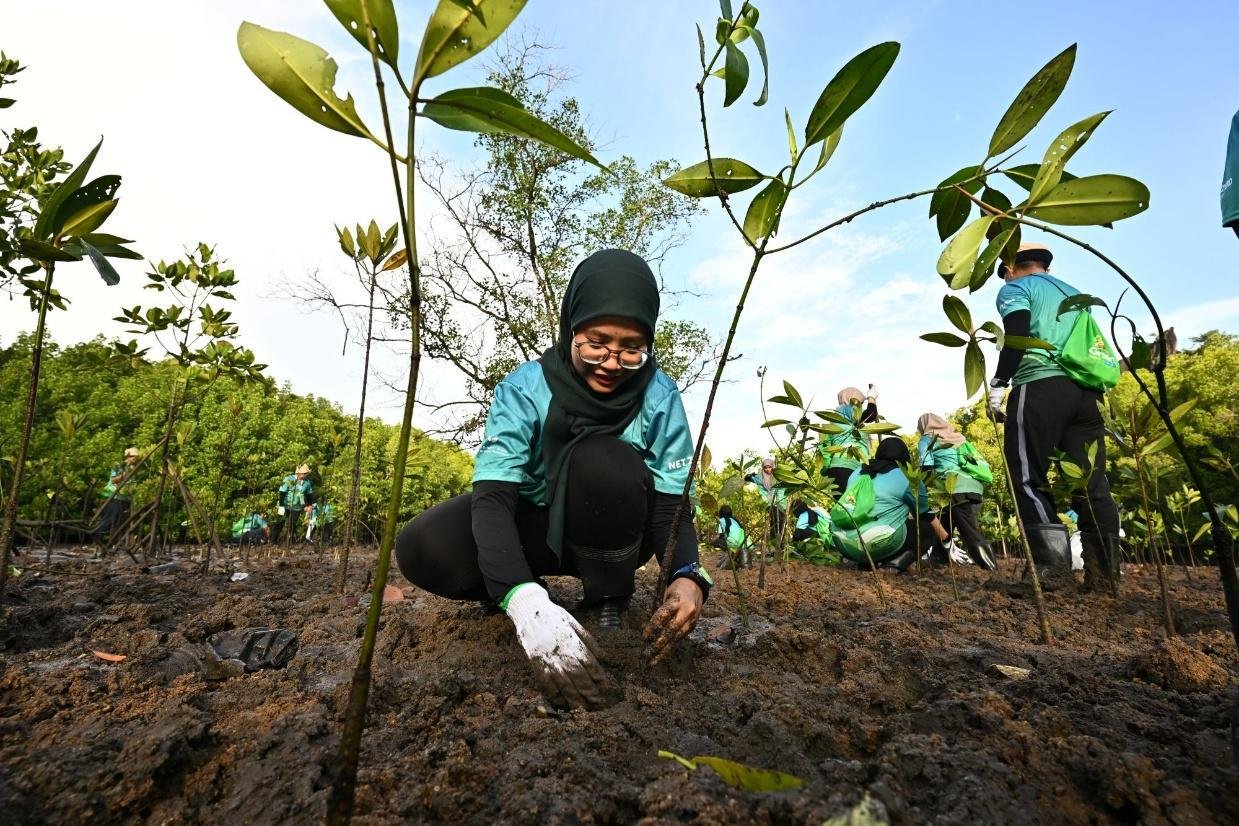
Tenaga Nasional Berhad (TNB) has launched the My Brighter Green Initiative (MBGI) 2026, an environmental conservation programme that will see the planting of 40,000 forest and mangrove saplings across six locations nationwide, supporting biodiversity conservation, enhancing climate resilience, and promoting community well-being.
The launch ceremony for the “My Brighter Green – For Greener Tomorrow TNB 2026” programme, held on 18th June, in Kubang Badak, Langkawi, the northern part of Malaysia. The ceremony was officiated by TNB Chairman Tan Sri Abdul Razak Abdul Majid, together with representatives from the Kedah State Forestry Department, and was attended by approximately 150 participants, comprising TNB employees, local communities, non-governmental organisations (NGOs), educational institutions, and other stakeholders.

Strengthening TNB’s Sustainability Commitment
Abdul Razak said MBGI 2026 reflects TNB’s ongoing commitment to translating its sustainability agenda into meaningful action that delivers tangible benefits to both people and the environment.
“Through MBGI 2026, TNB will plant 40,000 trees at six strategic locations nationwide, which are expected to absorb 67 tonnes of carbon dioxide equivalent (tCO₂e) annually. This is equivalent to approximately 249,100 kilometres travelled by a petrol-powered car, or the annual electricity consumption of nearly 13 households, while also strengthening ecosystem restoration for the long-term benefit of local communities.
“This initiative also supports the nation’s energy transition agenda and the aspiration to achieve net-zero emissions by 2050,” he said.
In addition to Langkawi, MBGI 2026 will be implemented in Tanjung Burung, Perak; Tanjung Tuan, Melaka; Jimah, Negeri Sembilan; Nibong Tebal, Penang; and Universiti Tenaga Nasional (UNITEN), Selangor, involving approximately 1,000 volunteers. Valued at RM800,000, the initiative includes planting, monitoring, and maintenance activities to ensure the effectiveness of coastal ecosystem restoration efforts.
Kubang Badak as the First Project Site
As the first project site for this year’s programme, Kubang Badak will see the planting of 10,000 mangrove saplings through a strategic collaboration between TNB and the Malaysian Nature Society (MNS). Kubang Badak was selected for its significance as a mangrove ecosystem rich in biodiversity and for its role as a natural buffer against coastal erosion and extreme weather events. The species planted at Kubang Badak include Rhizophora apiculata, and Rhizophora mucronata, which play an important role in protecting coastlines from erosion, providing habitats for marine life, and supporting carbon absorption and storage. In addition to tree-planting activities, TNB is implementing various corporate social responsibility (CSR) initiatives that directly benefit the local community.
These include the construction of a water well at Kubang Badak Fishermen’s Jetty, contributions to Masjid Kampung Ewa to support mosque community programmes, the provision of smart learning equipment to Sekolah Kebangsaan Ewa and Sekolah Menengah Kebangsaan Ayer Hangat, as well as the construction of a house under the TNB Baiti Jannati Project for an asnaf family in Kampung Mawat. The total value of these CSR contributions exceeds RM170,000.

Conserving Biodiversity and Building Climate Resilience
According to Abdul Razak, MBGI 2026 continues the legacy of TNB’s greening programmes, which have been implemented since 2007 in collaboration with NGOs, local authorities, and government agencies.
“To ensure long-term impact, MBGI 2026 also includes monitoring and maintenance activities for up to two years after planting, to improve tree survival rates,” he said.
He added that MBGI forms part of TNB’s broader CSR commitment. In the Financial Year 2025, TNB invested more than RM232.3 million in community programmes covering education, sports, community well-being, and environmental initiatives.
Through MBGI 2026, TNB continues to strengthen its role as a utility company that not only powers the nation but also contributes to environmental conservation, community development, and Malaysia’s low-carbon future.