I evaluated 20+ tools to find the 10 best marketing automation software in 2026. These are HubSpot Marketing Hub, ActiveCampaign, Insider One, Braze, Klaviyo, HighLevel, Attentive, Omnisend, Customer.io, and Intuit Mailchimp All-in-One Marketing Platform.
As a marketer, I’ve often found myself buried under manual workflows, sending follow-up emails, segmenting audiences, scheduling social media posts, and trying to personalize content at scale. The process was time-consuming, prone to errors, and, frankly, challenging.That’s when I turned to the best marketing automation software. These tools streamlined workflows and freed me from the constant cycle of repetitive tasks, which helped me to focus on strategy instead. But with so many options available, finding the right one wasn’t easy.
That’s why I focused my evaluation on the best easy-to-use marketing automation software, tools that don’t just automate, but do so intuitively. The marketing automation software market continues to expand rapidly, projected to grow from $8.14 billion in 2026 to $20.12 billion by 2034, at a 12% CAGR, driven by increasing adoption across digital-first businesses.
TL;DR
- Top product picks: Some of the top marketing automation software recommended by G2 users include HubSpot Marketing Hub, ActiveCampaign, Insider One, and Braze. These tools are also among the top-rated marketing automation software for better sales funnels and customer engagement.
- Key features: If you’re looking for the best easy-to-use marketing automation software, these tools stand out for intuitive design, CRM integration, automated workflows, AI personalization, omnichannel reach, and real-time analytics. Wondering which marketing automation service offers the best features? These platforms deliver across the board.
- Common use cases: The best app for automating marketing tasks can help with lead nurturing, abandoned cart emails, campaign scheduling, and audience segmentation. If you’re a founder asking, what’s the best marketing automation software for startups, or a founder of a local brand searching for the best marketing automation software for small businesses, this list is designed to guide you to the right fit. Tools like Intuit Mailchimp also serve as the best software for automating email marketing for lean teams.
Whether you’re just exploring automation for the first time or refining your current setup, this guide will help you choose the right tool to drive better results. Each tool on this list is among the top marketing automation software recommended based on G2 data and peer reviews.
10 best marketing automation software: My picks for 2026
- HubSpot Marketing Hub: Best marketing automation software for SEO and content optimization
Combines marketing automation with built-in SEO tools to help attract and convert leads. (Pricing from $15/month) - ActiveCampaign: Best for advanced email marketing and AI automation
Offers powerful segmentation, email personalization, and predictive automation workflows. (Pricing from $15/month) - Insider One: Best for AI-driven cross-channel customer engagement
Delivers personalized customer experiences across web, email, app, and messaging platforms. (Pricing on request) - Braze: Best for real-time customer messaging across multiple channels
Enables brands to deliver personalized experiences via email, push notifications, and in-app messaging. (Pricing on request) - Klaviyo: Best for e-commerce email and SMS marketing automation
Unifies email, SMS, and automation in a single platform, with deep e-commerce integrations and AI-powered segmentation. (Starts at $20/month for 250-500 active email profiles and 5000 emails/month) - HighLevel: Best all-in-one marketing automation platform for agencies and small businesses
Consolidates CRM, automation, email, and SMS marketing, funnel building, and AI agents into a single platform. (Pricing from $97/month) - Attentive: Best for AI-powered SMS marketing and subscriber growth
Delivers AI-powered SMS and email marketing with intelligent send-time optimization, behavior-based automation flows, and a dedicated white-glove customer success model. (Pricing on request) - Omnisend: Best for e-commerce email and SMS marketing on a budget
Provides AI-powered automation flows, an intuitive drag-and-drop builder, and deep Shopify and WooCommerce integrations to drive sales on autopilot (Pricing from $11.20/month) - Customer.io: Best for behavior-based lifecycle marketing and multi-channel automation
Triggers personalized, behavior-based messaging across email, SMS, push, in-app, and webhooks from a single platform. (Pricing from $100/month for 5k profiles) - Intuit Mailchimp All-in-One Marketing Platform: Best for building personalized, AI-powered campaigns
Uses smart recommendations and automation tools to create targeted, data-driven marketing. (Pricing from $6/month for 0-500 contacts and 6000 mails/month)
*These marketing automation software are top-rated in their category, according to G2’s Summer 2026 Grid Report. I’ve also included their monthly pricing to facilitate easier comparisons for you.
My top 10 best marketing automation software recommendations for 2026
The best marketing automation software is built to help businesses streamline their marketing efforts, boost efficiency, and drive better customer engagement. These leading marketing automation platforms for customer engagement stood out for their ability to deliver timely, personalized experiences across channels. During my evaluation of these tools, I noticed how they simplify campaign management, enhance lead nurturing, and improve overall marketing ROI.
Features such as automated email workflows, real-time customer behavior tracking, and advanced analytics enable businesses to deliver personalized content and respond to customer needs more effectively. I could see how the best marketing automation software empowers teams to create targeted campaigns that drive results while saving time and resources.
How did I find and evaluate the best marketing automation software?
First, I dove into G2 Grid Reports to find out which tools marketers actually trust for automating their campaigns. Then, I took it a step further and tested them myself. I wanted to see how well they handled lead nurturing, whether they truly integrated with CRM systems, and how they empowered teams to create personalized experiences without adding to their workload.
In cases where I couldn’t personally test a tool due to limited access, I reached out to marketing professionals with hands-on experience and cross-referenced their insights with verified G2 reviews. The screenshots in this article come from a mix of my own testing and those shared by the vendor on their G2 page.
To get the full picture, I used AI to analyze thousands of user reviews on G2, extracting the most common praises and concerns. The goal was to find the best marketing automation software that streamlines campaigns without sacrificing personalization.
What I look for in the best marketing automation software
If you’re wondering which marketing automation service offers the best features, here’s what I prioritized while testing and comparing each tool.
- Email marketing and campaign management: Email is a core part of marketing automation, so I look for tools that offer easy email creation with customizable templates and a WYSIWYG editor. A/B testing is essential for optimizing subject lines, content, and CTAs. I also evaluate market segmentation features to target specific customer groups based on behavior, demographics, or purchase history. Dynamic content capabilities are crucial for personalizing emails at scale, ensuring relevance for each recipient. Customer relationship management (CRM) integration is necessary to automate emails based on real-time customer data. Additionally, I test how well the platform tracks email performance, including bounce rates, conversions, and unsubscribe rates, to ensure continuous improvement.
- Lead scoring and nurturing: I want a platform that can score leads based on demographic and behavioral data. I test the accuracy of the scoring model and how easily I can adjust it. The nurturing capabilities must include automated workflows that move leads through the funnel, ensuring each prospect gets the right content at the right time. Integration with the sales team is key, so when a lead is ready for the next step, the transition is smooth. I also check if the platform provides lead activity tracking so I can monitor interactions in real-time and further tailor my outreach efforts.
- Social media management and integration: Social media is crucial, so I look for software that integrates with platforms like Facebook, LinkedIn, Twitter, and Instagram. I need to schedule posts, track engagement, and respond to messages within the platform. I also evaluate whether the tool consolidates social data into one report for tracking engagement, reach, and ROI. Social listening tools are a bonus for monitoring brand sentiment and gathering customer insights to refine our social content. Moreover, I test how well the platform can handle ad campaign management, including budget tracking and performance metrics, to ensure consistency across social media efforts.
- Artificial intelligence capabilities: I look for marketing automation software that uses machine learning and advanced algorithms to enhance marketing decisions. These technologies should improve lead scoring by predicting which leads are most likely to convert based on past interactions and customer profiles. The platform should also offer smart content recommendations to help personalize messaging at scale, as well as sentiment analysis to understand how customers feel about campaigns and content.
- Third-party integrations: CRM software integration is essential, so I test whether the software works with systems like Salesforce or HubSpot. Smooth data flow between systems ensures accurate customer records for personalized marketing. I also check for integrations with third-party tools such as eCommerce platforms, webinar software, and Google Analytics, which help centralize data and reduce manual work. Furthermore, I assess how easy it is to set up and manage these integrations, ensuring minimal friction when syncing data and automating processes.
- Analytics and reporting: I prioritize software with detailed, real-time analytics that allow me to track key metrics such as email open rates, click-through rates, and ROI. Customizable reports are important for analyzing campaign performance, and deep insights into customer behavior help refine future efforts. Predictive analytics is an added benefit for forecasting trends and optimizing campaigns. I also look for the ability to visualize data through graphs and charts, making it easier to present findings to stakeholders and guide decision-making.
- Ease of use and user interface: The platform should be intuitive, with a clean and organized interface that allows both marketers and non-technical users to navigate easily. I look for drag-and-drop functionality for building workflows, emails, and landing pages. Customization options for the interface help tailor it to my team’s needs, making the platform more efficient and less time-consuming to use. Additionally, I evaluate how customizable the dashboard is for team-specific roles and workflows, ensuring it’s set up to prioritize the most important tasks for everyone.
- Scalability and flexibility: As our business grows, I need a tool that can scale with us. The software should handle increasing leads, campaigns, and data without performance issues. It should also support complex workflows, larger audience segmentation, and multiple users across teams. Flexible pricing models ensure that the software can grow with us, avoiding the need for frequent transitions to new platforms. I also check if the platform offers advanced features for large enterprises, such as custom reporting or multi-channel campaign management, ensuring it can meet more sophisticated needs as we expand.
- Automate two or more of the following workflows: email, social media, SMS, and digital ads
- Provide advanced email marketing capabilities, including A/B testing, spam filter testing, scheduling, segmentation, and detailed performance reporting
- Act as a central marketing database for marketing information and interactions
- Allow dynamic segmentation of marketing campaign targets
- Contact targets across multiple channels after specific actions, triggers, or periods of time
- Generate forms and landing pages to collect prospect information
- Provide analytics and reports that track the entire lifecycle of a campaign, including ties to revenue and campaign return-on-investment (ROI)
- Provide personalization features to tailor marketing campaigns based on customer behavior
- Integrate with sales or marketing software such as CRM, CDP, or e-commerce platforms
- Not be categorized in the email marketing software category — products must cater to multiple channels, including email marketing
This data was pulled from G2 in 2026. Some reviews have been edited for clarity.
1. HubSpot Marketing Hub: Best marketing automation software for SEO and content optimization
I have used HubSpot Marketing Hub for over two years now. It is a premium all-in-one marketing solution that makes it incredibly easy for me to manage all of my marketing-related tasks in one place. According to G2 Data, 96% of users rated it 4 or 5 stars, 91% of users believe it is headed in the right direction, and users said they would be likely to recommend HubSpot Marketing Hub at a rate of 89%, which aligns with my experience using the platform over the past two years.
The email campaign editor is by far the most notable feature I use. The drag-and-drop editor simplifies the process of creating visually appealing emails without requiring any advanced design skills or a steep learning curve. Plus, the A/B testing functionality allows me to test different versions of my emails, ensuring I can always optimize campaigns for maximum effectiveness.
I can code a little, but creating websites? Yeah, that’s definitely not in my wheelhouse. So, I’m really impressed with the customizable landing page templates. They make it easy to create high-converting sites with minimal effort. The best part? These pages look amazing and totally do the job, with fantastic customer engagement rates to back it up.
The dashboard is also incredibly easy to understand, especially when I was new to these metrics two years ago. It helped me get up to speed quickly, providing a clear and accessible overview of my campaigns, which made tracking performance more manageable even as a beginner.
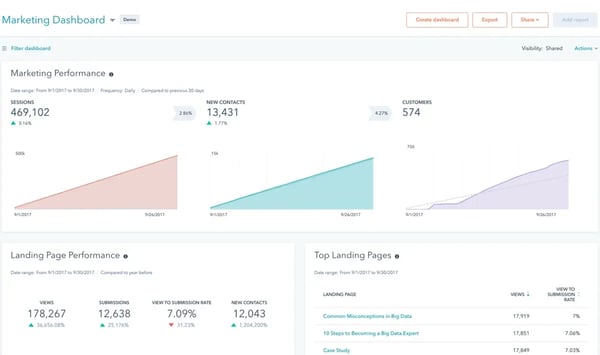
HubSpot Marketing Hub earns consistent praise for its all-in-one functionality and intuitive design. However, G2 reviewers note that pricing can feel high for smaller businesses just starting out, making it best suited for growing teams or enterprises that can fully leverage its automation, CRM, and reporting features.
Overall, HubSpot Marketing Hub stands out for its ease of use, intuitiveness, template library, and marketing dashboard. It is well-suited for content teams looking for a comprehensive marketing automation tool.
What I like about HubSpot Marketing Hub:
- The drag-and-drop email campaign editor is one of the most valuable features. It allows me to create visually appealing emails without any advanced design skills, and the A/B testing functionality ensures that I can continuously optimize campaigns for better performance.
- The dashboard provides a clear and accessible overview of my campaigns, which makes tracking performance more manageable even as a beginner.
What G2 users like about HubSpot Marketing Hub:
“I love the visibility we get from HubSpot in terms of how we’re engaging different segments of our market (customers, churned customers, net new prospects, etc.). The integrations with other tools in our stack are immensely valuable. And the automations/workflows capabilities are super robust and easy to work with.”
– HubSpot Marketing Hub review, Conor B.
What I dislike about HubSpot Marketing Hub:
- HubSpot’s all-in-one setup and ease of use make marketing automation feel seamless, but some G2 reviewers mention that the pricing can be steep for smaller businesses or startups, making it better suited for larger teams.
What G2 users dislike about HubSpot Marketing Hub:
“Nothing much, it is expensive; however, we have seen value in this. There have been some small issues with email sends in the past; however, few and far between. It would also be good to have more control over contact engagement.”
– HubSpot Marketing Hub review, Jo D.
2. ActiveCampaign: Best for advanced email marketing and AI automation
ActiveCampaign is a robust AI-powered email and marketing automation tool that suggests, personalizes, and validates complex marketing campaigns. If you’re weighing what’s the best marketing automation software for startups, ActiveCampaign’s approachable learning curve, strong community, and flexible pricing make it a smart early choice that still scales. In fact, as per G2 Data, this tool is used by 92% small businesses.
From the start, I noticed how intuitive and user-friendly the interface is, which made it easy to navigate the platform and get things done efficiently. ActiveCampaign University was particularly helpful in deepening my understanding of the tool, offering a wealth of information about how to use it. The community forums were excellent resources for troubleshooting issues, providing valuable insights from other users and experts. I also really appreciated the visual automation builder, allowing me to design complex customer journeys with ease using a simple drag-and-drop interface.
One of the standout features for me was the range of tools available for email campaign creation and management. I found advanced options like A/B testing to be incredibly useful for refining my campaigns. The ability to segment email lists and send personalized automation to different groups gave me the flexibility to create more targeted content. According to G2 Data, 90% of users say ActiveCampaign meets their requirements, which reflects how well its features align with real-world marketing needs, especially for growing teams that want both flexibility and power.
Additionally, behavioral tracking provided deep insights into how my contacts interacted with my emails, website, and other touchpoints, enabling me to make data-driven decisions that improved my overall marketing efforts.
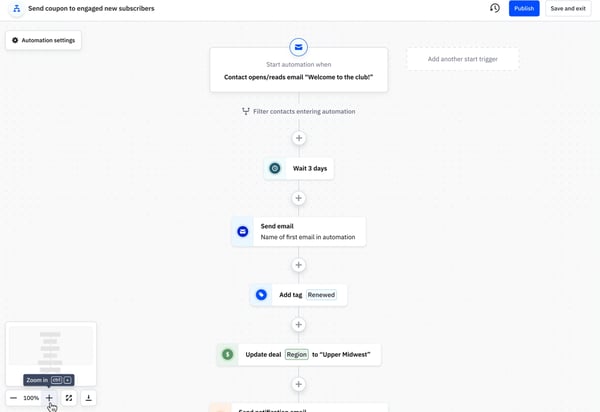
ActiveCampaign’s clean design and automation capabilities make campaign building smooth and efficient. However, G2 reviewers note that the email template library can feel limited over time, particularly for teams running frequent campaigns. For small to mid-sized businesses, though, the available templates cover most use cases effectively and help maintain consistency in design.
Still, the platform remains one of the most user-friendly and effective tools I’ve used for managing marketing campaigns. Its clean interface and strong automation features make it a reliable choice for teams that value both simplicity and performance.
What I like about ActiveCampaign:
- The intuitive, user-friendly interface made it easy for me to navigate and complete tasks efficiently.
- The visual automation builder stood out for its simplicity and flexibility. It allowed me to design complex customer journeys using a drag-and-drop interface, giving me full control over my campaigns without the need for coding.
What G2 users like about ActiveCampaign:
“What I like most is that the UI/UX is very clear and easy to use. It also has one of the best automation systems out there—I use automations a lot, and this is by far the best one I’ve worked with. I also love the CRM management: the way it filters tags and organizes everything about each contact into columns makes it very straightforward and simple to manage.”
– ActiveCampaign review, Tomás Alejandro M.
What I dislike about ActiveCampaign:
- Feedback from G2 also highlights that the email template library can feel limited over time, especially for teams running frequent campaigns. However, it is still sufficient for most SMB use cases, helping maintain a consistent design.
What G2 users dislike about ActiveCampaign:
“The contact limits can feel restrictive unless you upgrade to a more expensive plan. It would be useful to have more flexibility with the number of contacts included. Some features become costly once your list starts to grow. The pricing can rise quite quickly as you add more contacts.”
– ActiveCampaign review, James P.
3. Insider One: Best for AI-driven cross-channel customer engagement
Insider One is an AI-native omnichannel experience and customer engagement platform. As per G2 Data, 99% of users rated it 4 or 5 stars, and 96% of users said they would be likely to recommend Insider One.
One of the most powerful features is Sirius AI™, which offers AI-powered segmentation. It enables me to categorize my audience with advanced algorithms and send personalized messages at the optimal moment. This not only improves the relevance of my campaigns but also drives stronger customer engagement and conversion rates by targeting the right people at the right time.
I noted that its multi-channel marketing strategy empowers users to reach customers on their preferred platforms, whether that’s email, social media, or chat. This flexibility enables engaging users where they’re most active, making communication more relevant and impactful across different touchpoints. According to G2 Data, 95% of users say Insider meets their requirements, which reflects how effectively the platform delivers on its promise of unified, AI-driven engagement.
The smart recommender feature enhances the customer experience by delivering content that aligns with their interests. G2 reviewers mention that this ensures that users aren’t overwhelmed by irrelevant information, keeping the messaging focused and impactful, which ultimately boosts engagement.
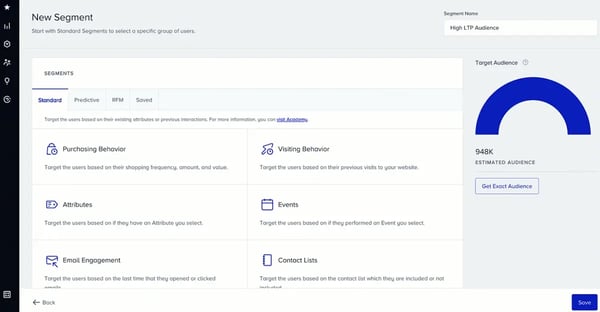
Insider is widely appreciated for its powerful AI-driven personalization and omnichannel capabilities. G2 reviewers note that the platform’s extensive feature set can feel complex at first, especially during initial campaign setup, making it better suited for mid-size and enterprise teams with dedicated marketing operations rather than smaller teams looking for plug-and-play simplicity.
Insider One delivers a comprehensive and highly effective marketing experience. Its ability to unify data, personalize engagement, and automate complex campaigns makes it a valuable platform for businesses looking to elevate customer journeys.
What I like about Insider One:
- Insider’s multi-channel marketing strategy ensures the messages are more relevant and impactful, engaging users across email, social media, and chat.
- AI-powered segmentation is incredibly effective in targeting the right audience with personalized messages.
What G2 users like about Insider One:
“What I like best about Insider is how user-friendly and practical the platform is, while still offering strong capabilities for personalization, segmentation, automation, and omnichannel engagement. It allows teams to build customer journeys and campaigns more efficiently without making the process overly complicated. I also appreciate that Insider continues to evolve according to different industries, verticals, and customer engagement needs. The platform does not feel static; it keeps introducing new features and use cases that help brands stay relevant, improve retention, and deliver better customer experiences.”
– Insider One review, Nahvin C.
What I dislike about Insider One:
- G2 reviewers note that the wide feature set can feel complex at first, especially when building campaigns from scratch. But, they do note that Insider One’s extensive capabilities also make it one of the most versatile marketing automation platforms out there.
What G2 users dislike about Insider One:
“At the start, it took some time to prioritize the right segments and customer journeys, especially while managing multiple use cases across different client needs. That said, once we aligned with the Insider team on a few quick-win use cases, the process became much more structured, and it was easier to scale into more advanced scenarios.”
– Insider One review, Efe G.
4. Braze: Best for real-time customer messaging across multiple channels
With Braze, I could schedule alerts and mobile push notifications days or even weeks in advance. This allowed me to set up consistent communication with my audience without constant manual intervention. According to G2 Data, 93% of users believe Braze is headed in the right direction, which aligns with how innovative and forward-focused the platform feels in day-to-day use.
Braze sits among the leading marketing automation platforms for customer engagement, thanks to BrazeAI™, granular targeting, and a canvas builder that orchestrates multi-channel journeys in real time. BrazeAI™ also helped me tailor experiences, content, recommendations, and more to create unique interactions for every customer, all at scale.
The canvas builder was super intuitive and helped me design multi-channel touchpoints for users at different journey stages. G2 users state that this feature was particularly helpful in building structured, automated workflows that maintained consistency across channels while dynamically adapting to user behavior.
Using Liquid, an open-source template language developed by Shopify and written in Ruby, within Braze helped me pull user profile data into messages and customize it. This feature elevated personalization to a whole new level by dynamically inserting user-specific content into communications.
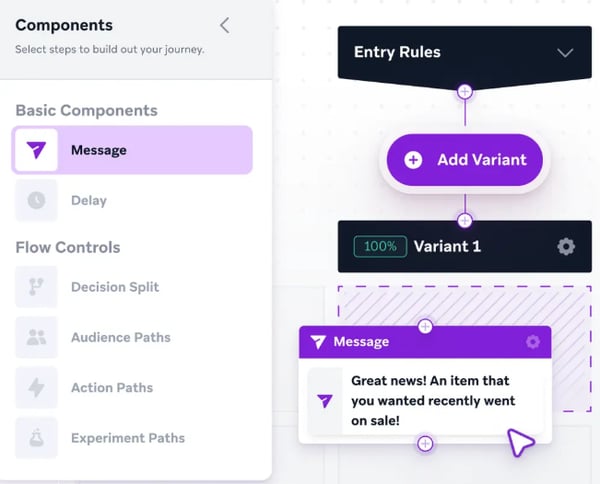
G2 reviewers also note that reporting could be more flexible, particularly when extracting specific data points or running long-term analyses due to historical data caps. For marketers focused on day-to-day performance and engagement optimization, though, Braze still provides the depth and clarity needed to track results effectively.
Overall, Braze stands out for its depth, scalability, and ability to execute complex, personalized campaigns. For marketers looking to craft data-driven customer journeys with precision, it remains one of the most capable platforms.
What I like about Braze:
- With Braze, I can schedule alerts and mobile push notifications well in advance, allowing me to set up consistent communication without manual intervention.
- The canvas builder is incredibly intuitive and helps design multi-channel touchpoints that adapt to users’ behavior.
What G2 users like about Braze:
“I love how Braze ties email, in-app messaging, and push notifications into a single platform, letting me run cross-channel campaigns for our clients efficiently. The intuitive interface makes it very easy to learn and use, and I appreciate the ability to layer different capabilities for building sophisticated, multi-step customer journeys. The customer journey mapping feature is fantastic as it shows me the whole journey clearly with segmentation and filters in one view, which helps me refine targeting and design client campaigns more deliberately.”
– Braze review, Jhoel F.
What I dislike about Braze:
- G2 reviewers highlight that reporting flexibility could be improved, as long-term trend analysis and precise data extraction require extra steps, meaning Braze is ideal for marketers focused on campaign engagement and short- to mid-term insights rather than deep, historical analytics.
What G2 users dislike about Braze:
“Some areas still need improvement. Although there are many things that make it easier, other parts remain very manual and need to be enhanced.”
– Braze review, Maicon V.
5. Klaviyo: Best for e-commerce email and SMS marketing automation
Klaviyo helps build automated customer journeys without writing a single line of code. The drag-and-drop flow builder makes it easy to visualize the entire customer journey. According to G2 Data, 96% of Klaviyo reviewers gave it 4 or 5 stars, and 91% of users are likely to recommend Klaviyo as a marketing automation platform.
From my evaluation of G2 reviews, I noted that Klaviyo works well for B2C and e-commerce brands, with its power rooted in its unified data model. Every customer click, purchase, browse, and form submission is captured into a single profile, which then fuels Klaviyo’s AI to optimize message timing, content, and segmentation. The AI-driven features, including subject line generation, send-time optimization, and predictive analytics like lifetime value (LTV) and next-order date, are frequently praised by G2 reviewers.
The segmentation engine stood out to me as a particular strength. It helps build granular audience segments based on purchase history, browsing behavior, and predictive data without needing a data team. Klaviyo’s pre-built flow templates — for abandoned cart, browse abandonment, win-back, and more — give a strong starting point to customize to match the brand’s messaging and timing.
G2 users mention that for teams already on Shopify, the native integration is particularly seamless. Revenue attribution is automatic, and product blocks can be pulled dynamically into emails without any developer involvement. Klaviyo also combines email and SMS in a single platform, which reviewers consistently praised for keeping campaigns coordinated and reducing the need for separate tools.
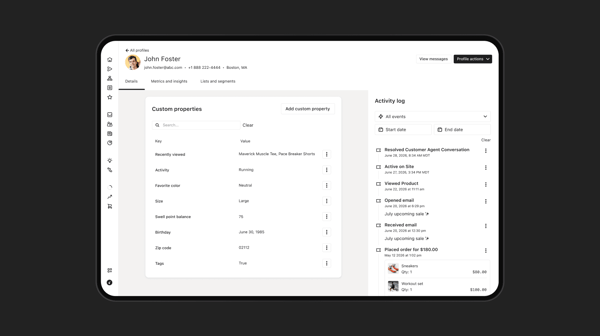
While Klaviyo is strong for email and SMS automation, some G2 reviewers mention that customer support can feel slow or less hands-on when resolving more complex issues. That said, teams with in-house marketing or technical expertise can still get strong value from the platform, especially once workflows, segmentation, and campaign structures are set up.
Overall, Klaviyo excels at turning customer data into personalized, automated revenue. Its AI features, ecommerce integrations, and powerful segmentation make it a standout platform for B2C brands that want to grow without adding headcount.
What I like about Klaviyo:
- The drag-and-drop flow builder makes it easy to set up complex automated journeys.
- Klaviyo’s deep Shopify integration automatically pulls in purchase and browsing data, making segmentation and product-personalized emails effortless.
What G2 users like about Klaviyo:
“What I like most about Klaviyo is how simple it makes email marketing automation. I use it for my projects, and setting up flows like welcome emails or abandoned cart is very easy. The segmentation is powerful and helps target the right audience. I also like the customization options for camagians. The analysis gives clear insights into performance. Overall, it saves time and works reliably once everything is set up.”
– Klaviyo review, Tejas K.
What I dislike about Klaviyo:
- G2 reviewers note that customer support can feel slow or less hands-on for complex issues. It still delivers strong value for teams with in-house expertise, especially once workflows are established.
What G2 users dislike about Klaviyo:
“I find that Klaviyo becomes more expensive the more successful you are. It’s hard for beginners to use, and finding human support agents is tough. There should be more human agents for customer support and resources for beginners to easily understand the complex functionality.”
– Klaviyo review, Craig N.
6. HighLevel: Best all-in-one marketing automation platform for agencies and small businesses
HighLevel is an all-in-one platform that consolidates CRM, email marketing, SMS, funnel builder, appointment scheduling, and automation under a single dashboard. As per G2 Data, 95% of small business teams use the tool. 96% of users rated it 4 or 5 stars, and 94% of users are likely to recommend HighLevel.
Automation is the feature G2 reviewers praise most consistently about HighLevel. They describe a workflow builder that can be triggered by virtually any customer action and that executes sequences across email, SMS, and voice without manual intervention. Once a workflow is built and tested, it runs reliably in the background, essentially acting as a round-the-clock sales and communication team.
I also especially liked the drag-and-drop interface, which allows users to spin up landing pages, opt-in forms, and full sales funnels without developer support, and several G2 users noted they could deliver a complete website setup for a client in a shorter time frame. The builder also connects natively to HighLevel’s CRM and automation engine, meaning that a form submission on a landing page can instantly trigger a nurture sequence, add the contact to a pipeline, and send an automated SMS. That end-to-end flow, from traffic capture to follow-up, is something reviewers repeatedly highlighted as a practical time-saver.
G2 reviewers praise the AI-powered chat widgets for website visitor engagement and AI-assisted content generation for emails and SMS. Several users described deploying AI agents across multiple client sub-accounts. The general sentiment across reviews is that HighLevel’s AI integrations are already useful and improving with each platform update.
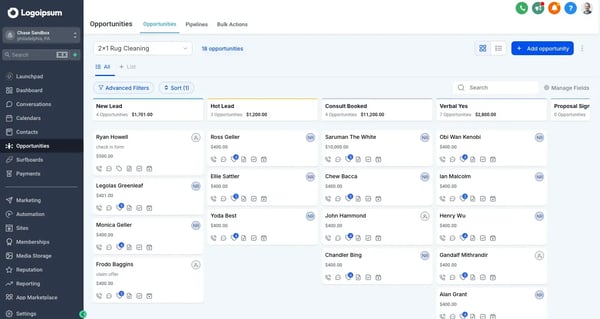
Based on G2 reviews, HighLevel’s interface can feel cluttered and inconsistent across modules, particularly for users navigating between the CRM, workflow builder, and website editor for the first time. That said, this is largely a characteristic of how much the platform does rather than a fundamental usability flaw — reviewers who pushed through the initial friction consistently described the interface as manageable and efficient once they had learned where everything lives.
Overall, HighLevel delivers exceptional value for agencies and small businesses that want to centralize their marketing stack, automate customer communication, and scale without proportionally increasing tool costs.
What I like about HighLevel:
- The drag-and-drop interface allows users to spin up landing pages, opt-in forms, and full sales funnels without developer support,
- The workflow builder can be triggered by virtually any customer action, and that executes sequences across email, SMS, and voice without manual intervention.
What G2 users like about HighLevel:
“What I like most about HighLevel is that it allows centralizing several key functions on a single platform: CRM, automations, funnels, forms, communications, and commercial tracking. For an organization like ours, this helps to organize processes, reduce scattered tools, and have better visibility of the progress of each lead or client. I also greatly value the flexibility to create automated flows and adapt the platform to different businesses or sub-accounts.”
– HighLevel review, Francisco P.
What I dislike about HighLevel:
- G2 reviewers mention that the interface can feel cluttered across modules at first, but the friction mostly reflects HighLevel’s breadth and becomes manageable once users learn the platform.
What G2 users dislike about HighLevel:
“As a new user, I haven’t experienced any significant downsides yet. My first impression is that the platform offers a lot of functionality, which can feel overwhelming initially, but the onboarding support has made the setup process much easier.”
– HighLevel review, Marque C.
Automation handles delivery, but content still drives results. Explore the best AI writing generators to power your campaigns with high-quality copy.
7. Attentive: Best for AI-powered SMS marketing and subscriber growth
Attentive is an AI marketing platform that combines intelligent send-time optimization, automated journeys, and a white-glove customer success model to help businesses drive revenue through direct, personalized mobile messaging. As per G2 Data, 92% of users rated it 4 or 5 stars.
I noted G2 users mention that the journey builder makes it easy to set up abandoned cart flows, browse abandonment sequences, back-in-stock alerts, and post-purchase follow-ups. Campaigns can be scheduled, segmented, and sent in minutes, and G2 reviewers consistently describe the interface as clean and intuitive.
Every account comes with a dedicated customer success manager who proactively reviews performance, flags optimization opportunities, and assists with setup and journey configuration. G2 Reviewers describe this as an extension of their own team, one that follows up consistently, attends quarterly business reviews, and helps brands get more from the platform than they would on their own.
The AI Pro identifies the optimal send time and most purchase-likely audience for each individual subscriber, drawing praise from G2 reviewers. The AI copy suggestions feature generates message variants in the brand’s voice based on past performance. Attentive’s AI layer has moved meaningfully beyond subject-line generation into audience and timing intelligence that affects actual conversion outcomes.
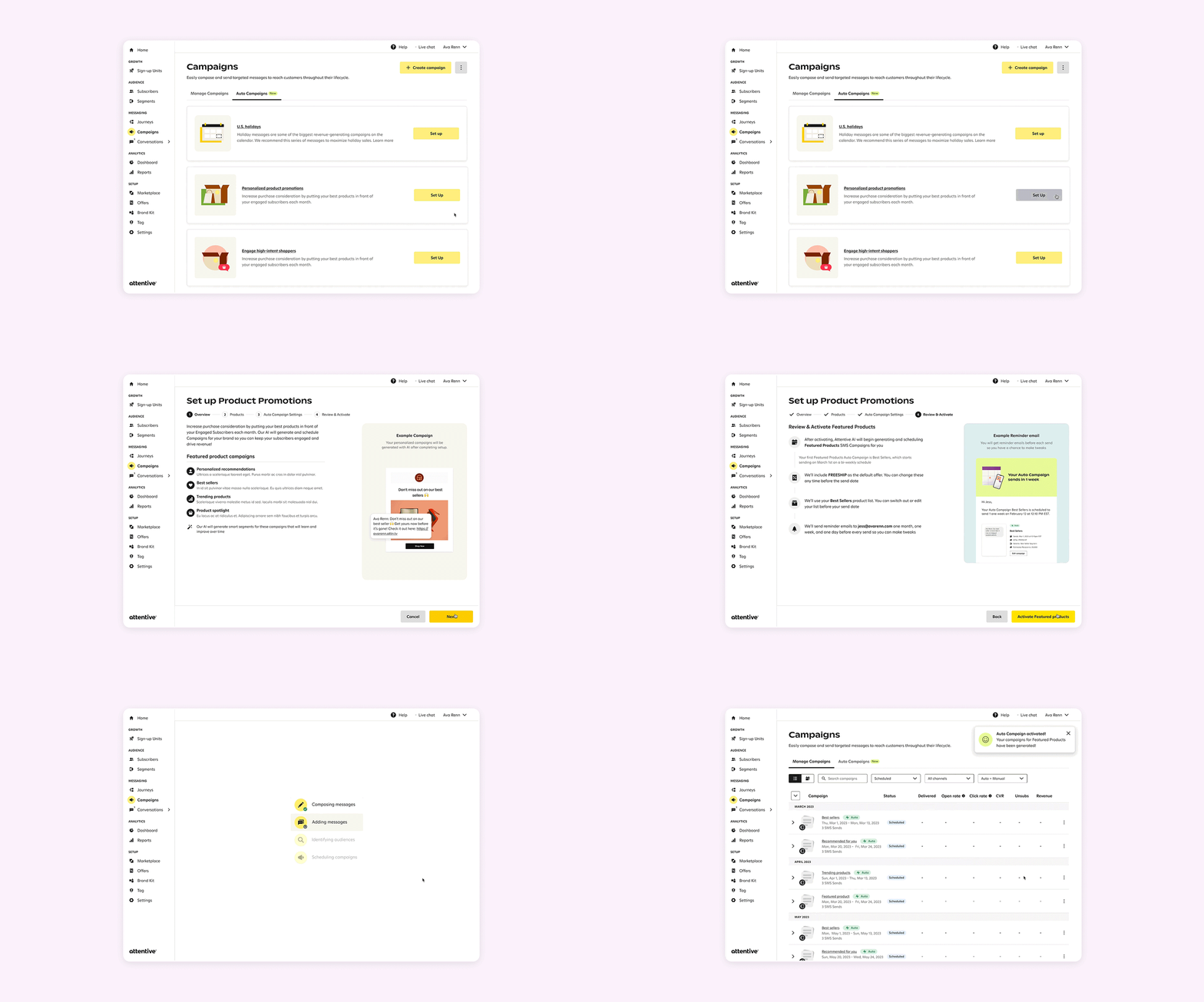
While Attentive offers seamless integrations with major e-commerce tools like Shopify, Klaviyo, and Gorgias, G2 reviewers note that connecting less common platforms may require extra configuration or workarounds. For standard DTC tech stacks, this is rarely a major friction point, and Attentive’s support team is often praised for helping with more technical setup needs.
Overall, Attentive is strongest for direct-to-consumer brands that want to build SMS as a serious revenue channel with enterprise-grade support and continuously improving AI capabilities.
What I like about Attentive:
- Attentive’s AI Pro feature identifies the optimal send time and most likely-to-purchase audience for each campaign automatically.
- The white-glove customer success model means there is always a dedicated strategist reviewing account performance and proactively surfacing improvements.
What G2 users like about Attentive:
“It is user-friendly, easy to navigate, and building new emails off of my templates is helpful, especially when delegating email strategy across different team members. We are a lean team, and having something that is easy to use is helpful! Whenever we have run into an issue, the support team has been really quick and easy to work with. Getting new team members on the platform is seamless. In comparison to other software, we like the pricing of Attentive and the SMS features.”
–Attentive review, CeliaMarie D.
What I dislike about Attentive:
- G2 reviewers mention that Attentive integrates seamlessly with major e-commerce tools, but less common platforms may need extra configuration; standard DTC teams rarely face issues, and support is praised for technical setup help.
What G2 users dislike about Attentive:
“The most frustrating thing is having a character limit to be able to send only 1 SMS, and how many characters emojis and MMS take up. Another thing is that we all of a sudden didn’t have a customer success manager, and no one updated us. I loved our original success manager and would love her back, but was told we don’t meet a monthly threshold to have a manager.”
– Attentive review, Sommer A.
8. Omnisend: Best for e-commerce email and SMS marketing on a budget
Omnisend combines email, SMS, and push notifications in a single platform with deep integrations for Shopify and WooCommerce. As per G2 data, 98% of users rated it 4 or 5 stars, 92% of users said they would be likely to recommend Omnisend.
The AI subject line and preview text generator is a time-saver, and several G2 reviewers noted that AI-powered automation improvements had measurably lifted revenue compared to their previous tools. Across G2 reviews, the AI features are described as genuinely integrated into the workflow rather than a surface-level add-on.
Omnisend’s template library and email builder draw consistent praise in G2 reviews for reducing the time and effort required to produce professional-looking campaigns. Reviewers highlight the breadth of the template library as a meaningful practical advantage for teams who need to move quickly. The drag-and-drop builder is described as accessible to non-designers, enabling brand-consistent emails without technical skills.
Segmentation is another feature that stood out to me from G2 reviews. Users describe being able to create meaningful audience groups, by purchase history, geographic region, engagement level, or product category, quickly and without technical complexity. Segmentation makes the campaigns feel relevant rather than generic.
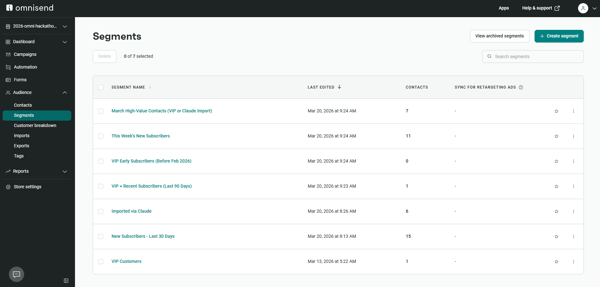
While Omnisend is often praised on G2 for delivering strong value, costs can become less predictable as contact lists grow or advanced features require higher-tier plans or add-ons. For smaller stores and growing e-commerce brands, though, its accessible pricing, built-in tools, and responsive support continue to make it a competitive option compared with platforms like Klaviyo or Mailchimp.
Overall, Omnisend delivers strong value for e-commerce brands that want powerful automation, AI-assisted campaigns, and unified email, SMS, and push notifications, at a price point that makes it genuinely accessible for small and growing businesses.
What I like about Omnisend:
- The automation builder makes it possible to get abandoned cart flows, welcome sequences, and post-purchase emails running within a short time-frame, with no technical knowledge required
- Omnisend’s template library and email builder reduce the time and effort required to produce professional-looking campaigns.
What G2 users like about Omnisend:
“What I like best about Omnisend is the level of control it gives us over customer communications. We switched to Omnisend because we needed more flexibility to create branded email and SMS campaigns, along with automated customer journeys. We now use it to build customized booking confirmation, reminder, and cancellation flows that are tailored to our clients’ needs. The drag-and-drop builder is easy to use, automation setup is straightforward, and having email and SMS managed within one platform has made customer communication much more efficient and consistent.”
– Omnisend review, Harrison T.
What I dislike about Omnisend:
- G2 users mention that Omnisend offers a strong value overall, but costs can grow with larger lists, higher-tier features, or add-ons; still competitive for smaller and growing e-commerce brands versus Klaviyo or Mailchimp.
What G2 users dislike about Omnisend:
“Pricing could be a bit more flexible. It would be great to have more flexibility for businesses that send more during the peak seasons.”
– Omnisend review, Drug W.
Need more targeted, real-time customer experiences? Check out the best personalization software to connect customer data, automate journeys, and tailor every touchpoint.
9. Customer.io: Best for behavior-based lifecycle marketing and multi-channel automation
Customer.io is a customer engagement platform built for product and marketing teams that want to send the right message to the right user at the right moment, triggered by what users actually do, not just who they are. As per G2 data, 95% of users rated it 4 or 5 stars and 92% of users believe it is headed in the right direction.
I noted that unlike tools that prescribe a particular way of working, Customer.io starts with a blank canvas: teams bring their own data model, define their own events and attributes, and build workflows that match their actual product logic rather than bending their product to fit the tool. This makes it particularly valuable for SaaS companies, fintech platforms, and other digital products where customer behavior is complex and cannot be adequately captured by simple purchase-history or tag-based segmentation.
The visual workflow builder is consistently praised in G2 reviews. It gives users the ability to create multi-condition decision trees within a single, readable campaign. Rather than building parallel sequences and managing them separately, complex journeys with dozens of logical branches can live in one workflow that adjusts dynamically based on user behavior, attributes, or event history.
G2 Reviewers describe the unified channel management as meaningfully different from maintaining separate tools for each touchpoint. The same behavioral event can trigger coordinated messages across channels simultaneously, audience segments are shared rather than duplicated across tools, and the customer journey remains consistent regardless of which channel the user encounters first.
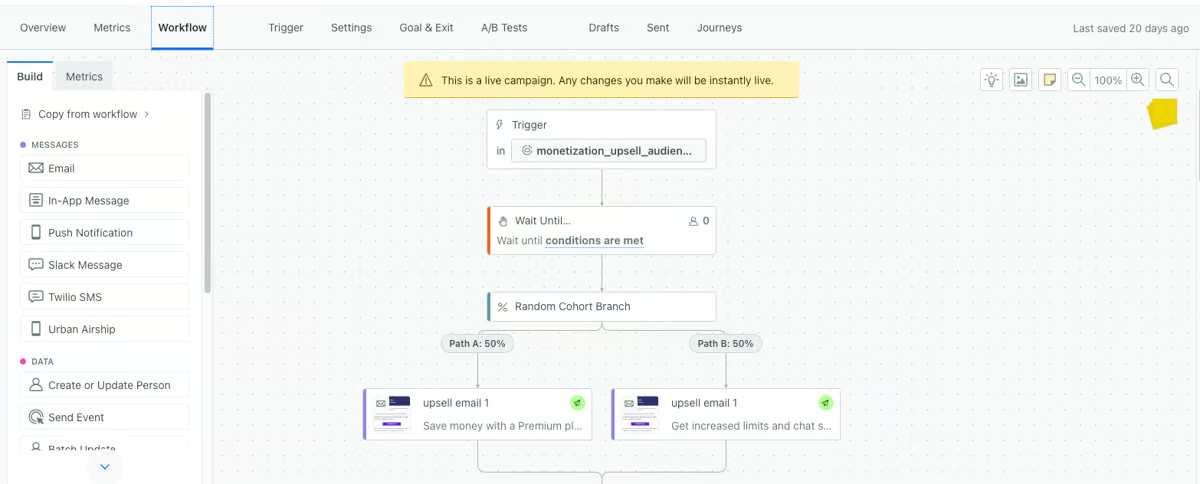
While Customer.io presents essential campaign metrics clearly, G2 reviewers note that deeper reporting needs, such as cross-campaign comparisons, journey-level funnel analytics, and custom dashboards, may require external data tools or engineering support. That said, its strong data exports, integrations with tools like Snowflake and BigQuery, and steady product updates make it a good fit for teams that prefer owning their analytics layer.
Overall, Customer.io is the strongest choice for SaaS, fintech, and digital product teams that want granular control over behavior-based messaging, need deep integration with their data infrastructure, and are building customer journeys that go well beyond what out-of-the-box marketing automation allows.
What I like about Customer.io:
- The visual workflow builder gives users the ability to create multi-condition decision trees within a single, readable campaign.
- Custom attributes and real-time event triggers mean messaging can be personalized at a level that simple merge-tag tools cannot match, making communications feel genuinely contextual rather than templated.
What G2 users like about Customer.io:
“What I love about Customer.io the most is how easy it is to create personalized customer journeys without needing a ton of technical knowledge. The automation builder is easy to use, the segmentation options are powerful and it integrates nicely with other tools. I like being able to send very targeted emails and messages based on actual user behavior, which helps improve engagement and conversion rates. The reporting features are helpful too for understanding how your campaigns are performing and making data driven improvements. All in all, it has a good balance of flexibility and ease of use.”
– Customer.io review, Abhinav J.
What I dislike about Customer.io:
- G2 reviewers mention that the essential metrics are clear, but deeper reporting may need external tools or engineering support; strong exports, Snowflake/BigQuery integrations, and steady updates suit teams owning their analytics layer.
What G2 users dislike about Customer.io:
“One thing I dislike about Customer.io is that the platform can feel a bit overwhelming at first, especially for new users who aren’t familiar with marketing automation tools. Some advanced workflows and integrations also require technical knowledge, which can slow down setup. Additionally, pricing can become expensive as contact lists grow. While the platform is powerful, there’s definitely a learning curve to fully utilize all its features.”
– Customer.io review, Hitesh J.
10. Intuit Mailchimp All-in-One Marketing Platform: Best for building personalized, AI-powered campaigns
Intuit Mailchimp All-in-One Marketing Platform offers an intuitive, all-in-one platform for email marketing, automation, audience management, and analytics. Having tested it, I can confidently say that the tool is incredibly easy to set up. The guided setup process is particularly helpful for beginners like me. It helped me quickly get started without feeling overwhelmed by all the features.
If your main focus is email, Mailchimp may be the best software for automating email marketing, thanks to its intuitive design tools and automation triggers. In fact, according to G2 Data, 89% of users rate Mailchimp highly for ease of use, which mirrors my own experience navigating the platform. The drag-and-drop email editor tool makes designing emails easy and stress-free, even for someone with little design experience. I found that creating visually appealing emails was a breeze, thanks to the editor’s seamless integration of text, images, and links.
One of Mailchimp’s standout features is Intuit Assist. With its AI-powered automation, I could effortlessly connect with customers who abandoned carts and retarget them. The platform even generated fully built emails that I only had to review and publish, saving me time while ensuring highly effective, data-driven campaigns.
Another feature I appreciated during my testing was the integration with social media and e-commerce platforms. By syncing Mailchimp with social media accounts and e-commerce platforms, all marketing efforts can be consolidated in one place. This is a major plus for small teams, as it helps them maintain consistency across various channels while also allowing them to track performance and customer engagement more easily.
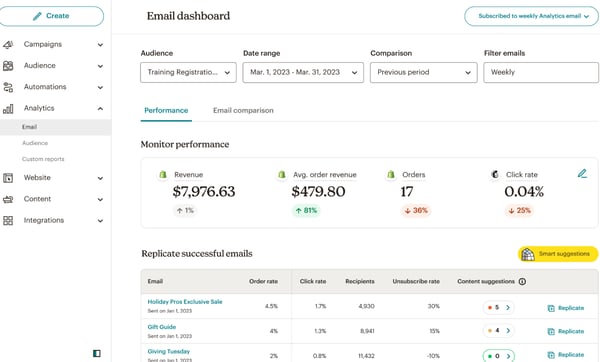
While Intuit Mailchimp offers an intuitive campaign builder and polished templates, G2 reviewers note that customization can feel restrictive for teams with more advanced branding, layout, or workflow requirements. For small and mid-sized businesses, the built-in options are typically more than sufficient, but organizations seeking deeper design flexibility or highly tailored customer journeys may find themselves working within platform constraints.
Mailchimp remains one of the most beginner-friendly and effective email marketing tools out there. It’s reliable, intuitive, and a great starting point for growing businesses that want to build meaningful connections through email.
What I like about Intuit Mailchimp All-in-One Marketing Platform:
- The setup process was incredibly easy, and the guided steps helped me get started without feeling overwhelmed. It was perfect for someone like me who’s new to email marketing, enabling me to dive right in and start using the platform quickly.
- The drag-and-drop email editor was a standout feature for me. It allowed me to create visually appealing emails with ease, even without design experience, and seamlessly integrate text, images, and links to produce professional-looking campaigns without a lot of effort.
What G2 users like about Intuit Mailchimp All-in-One Marketing Platform:
“What I like best about Intuit Mailchimp All-in-One Marketing Platform is how easy it is to create, manage, and track email marketing campaigns from a single platform. The drag-and-drop email builder makes campaign creation simple, even for users without design experience. I also like the audience segmentation and automation features, which help deliver more targeted communication and improve engagement. The reporting dashboard provides useful insights into campaign performance, making it easier to optimize future campaigns.”
– Intuit Mailchimp All-in-One Marketing Platform review, Dharamveer p.
What I dislike about Intuit Mailchimp All-in-One Marketing Platform:
- G2 users mention that Mailchimp’s intuitive builder and polished templates work well for SMBs, but customization can feel restrictive for advanced branding, layouts, or highly tailored journeys.
What G2 users dislike about Intuit Mailchimp All-in-One Marketing Platform:
“It definitely takes work and time to set up a custom template. Yes, you can always choose a pre-made template, but to keep my branding consistent, I created my own, and it was challenging. Luckily, I only had to do it once, and the template was saved, so I can reuse it in my emails.”
– Intuit Mailchimp All-in-One Marketing Platform review, Helder G.
Comparison of the best marketing automation software
If you feel overwhelmed by the wealth of information about the best marketing automation software solutions, this comparison table will help you with the most important aspects:
|
Software |
G2 Rating |
Free trial/plan |
Ideal for |
| HubSpot Marketing Hub | 4.4/5 | 14-day free trial | Businesses that seek an all-in-one inbound marketing platform. |
| ActiveCampaign | 4.4/5 | 14-day free trial | Mid-sized businesses that need a CRM with marketing automation capabilities. |
| Insider One | 4.8/5 | 14-day free trial | Marketers who want to personalize digital experiences across multiple channels. |
| Braze | 4.5/5 | 14-day free trial | Brands that focus on customer engagement across mobile and web apps. |
| Klaviyo | 4.5/5 | Free plan with up to 250 active profiles, 500 email sends/month, 150 mobile message credits/month |
E-commerce brands that need unified email and SMS marketing with deep Shopify integration. |
| HighLevel | 4.6/5 | 14-day free trial | Agencies and small businesses that need an all-in-one CRM, automation, and funnel-building platform. |
| Attentive | 4.5/5 | Demo available | DTC brands that want to build SMS as a primary revenue channel with AI-powered send optimization. |
| Omnisend | 4.6/5 | Free plan with 500 monthly emails, 250 contacts, and 500 Web Push notifications | E-commerce brands that need affordable email, SMS, and push notification marketing in one platform. |
| Customer.io | 4.4/5 | 15-day free trial | Product and SaaS teams that need behavior-based lifecycle messaging with deep data stack integration. |
| Intuit Mailchimp All-in-One Marketing Platform | 4.4/5 | Free plan for under 250 contacts, monthly email send limit of 500 | Businesses that seek strong email marketing and automation tools. |
Marketing automation software: Frequently asked questions (FAQs)
Got more questions? G2 has the answers
1. What are the best marketing automation software platforms for B2B SaaS demand generation?
Customer.io and HubSpot Marketing Hub are the strongest fits. Customer.io supports behavior-based lifecycle messaging for SaaS teams, while HubSpot combines marketing automation, CRM, SEO, and lead nurturing in one platform.
2. Which marketing automation software has the fastest setup time for email nurture campaigns?
Intuit Mailchimp and Omnisend are best for quick setup. Both offer guided setup, templates, and drag-and-drop builders that help teams launch campaigns with minimal technical effort.
3. Which marketing automation software provides accurate lead scoring without AI black boxes?
HubSpot Marketing Hub and ActiveCampaign are good options. They offer clear CRM-linked lead activity tracking, segmentation, and adjustable nurture workflows rather than relying only on opaque AI scoring.
4. What are the top marketing automation software for teams needing native leading CRM platforms integration for your specific needs?
HubSpot Marketing Hub, ActiveCampaign, and HighLevel are the strongest fits. HubSpot has native CRM depth, ActiveCampaign includes CRM management, and HighLevel centralizes CRM, funnels, communications, and automation.
5. What are the marketing automation software that manages complex sales cycles without custom development effectively?
HubSpot Marketing Hub, ActiveCampaign, and Customer.io support multi-step workflows, segmentation, and lifecycle automation without requiring teams to build everything from scratch.
6. Which marketing automation software enables easy sales team feedback on lead quality?
HubSpot Marketing Hub and HighLevel both connect marketing activity with CRM visibility, helping sales teams track lead progress and provide feedback within the same system.
7. What are the most reliable marketing automation software based on reviews from demand gen teams?
HubSpot Marketing Hub, ActiveCampaign, and Customer.io stand out. G2 reviews highlight strong automation, visibility, segmentation, and lifecycle campaign reliability for lead nurture and conversion workflows.
8. Which marketing automation software maintains data sync integrity with leading CRM platforms?
HubSpot Marketing Hub is the safest pick, followed by ActiveCampaign. HubSpot’s native CRM connection reduces sync complexity, while ActiveCampaign is praised for CRM organization and contact management.
9. What are the highest rated marketing automation software for shortening sales cycles across organizations?
Insider One, Omnisend, and Klaviyo have especially high G2 satisfaction signals in the provided content, but for B2B sales-cycle use, HubSpot Marketing Hub and ActiveCampaign are more directly aligned.
10. What are the most trusted marketing automation software by enterprise marketing teams based on user reviews?
HubSpot Marketing Hub, Insider One, and Braze are the strongest enterprise-leaning options. HubSpot suits larger teams needing all-in-one automation, while Insider One and Braze are positioned for scalable omnichannel engagement.
Practically sells itself…
The right tools can make all the difference in marketing. As I’ve learned through trial and error and a lot of coffee, marketing automation software is more than just a convenience.
If you’re wondering what the best marketing automation software for startups is, tools like Mailchimp and HubSpot offer easy onboarding, scalable features, and startup-friendly pricing to help you grow fast.
The 10 tools I’ve tested, evaluated, and reviewed in this article offer a variety of solutions to meet different needs, whether you’re focusing on email marketing, social media management, or overall campaign performance. No matter where you are on your automation journey, these platforms can help you navigate the complexities of modern marketing with ease and precision.
So, whether you’re a seasoned marketer or just starting out, now’s the time to explore these solutions and take your marketing efforts to the next level.
Looking to discover unique marketing strategies? Explore affiliate marketing software today and unlock new opportunities!