
Your buyers are asking ChatGPT for recommendations, and if your brand isn’t in the answer, you’re invisible at the exact moment they’re deciding.
That’s why ChatGPT SEO tools have gone from nice-to-have to essential this year.
But here’s the catch most roundups miss: the majority of these tools only track. They show you where you stand in AI search and stop there. Very few actually help you earn more citations, and only one on this list does the earning for you.
So this guide sorts them out. We’ll cover the best ChatGPT SEO software for tracking your visibility, the ones built around keyword and content work, and the single tool that goes and gets you cited. Whatever your budget or team size, there’s a fit here.
Let’s get into it.

Link building cheat sheet
Gain access to the 3-step strategy we use to earn over 86 high-quality backlinks each month.
Respona
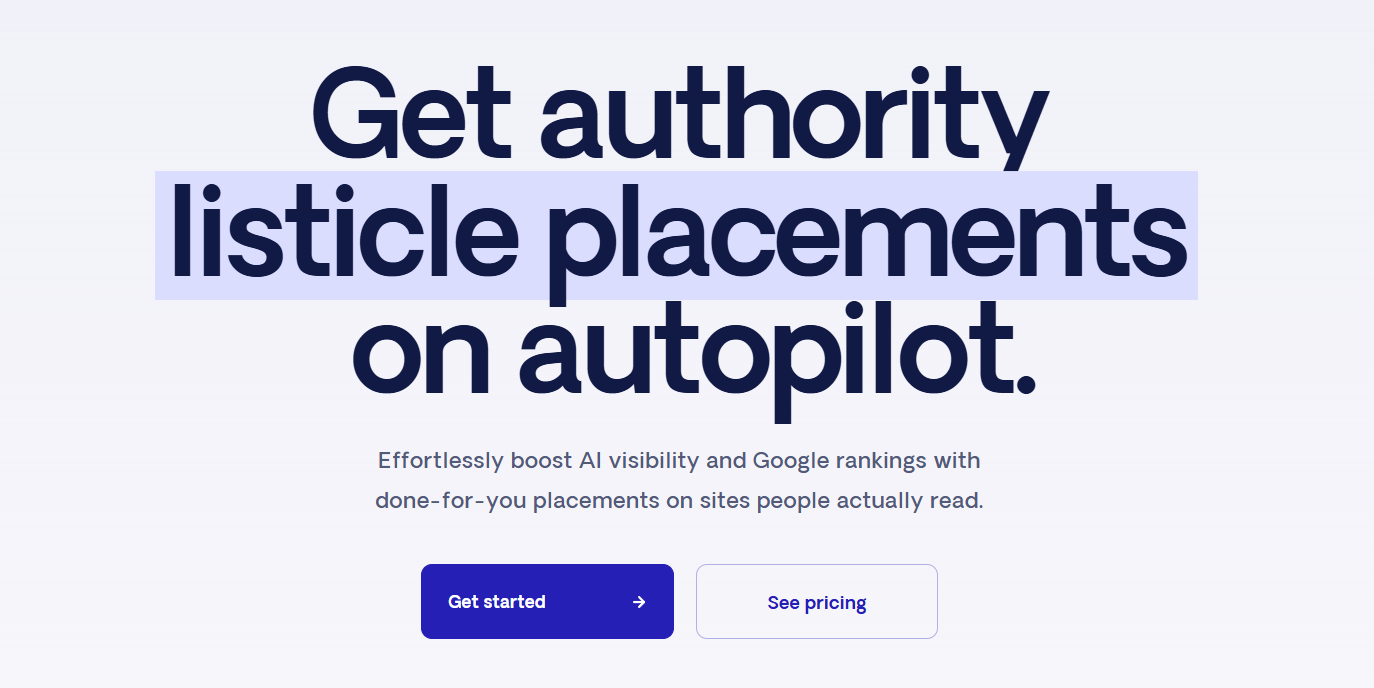
Every other tool on this list tells you where you stand. Respona is the one that improves it, because it’s built around getting you cited, not just tracking whether you are.
It starts as a tool.
You give Respona the ChatGPT prompts you want your brand to get cited for.
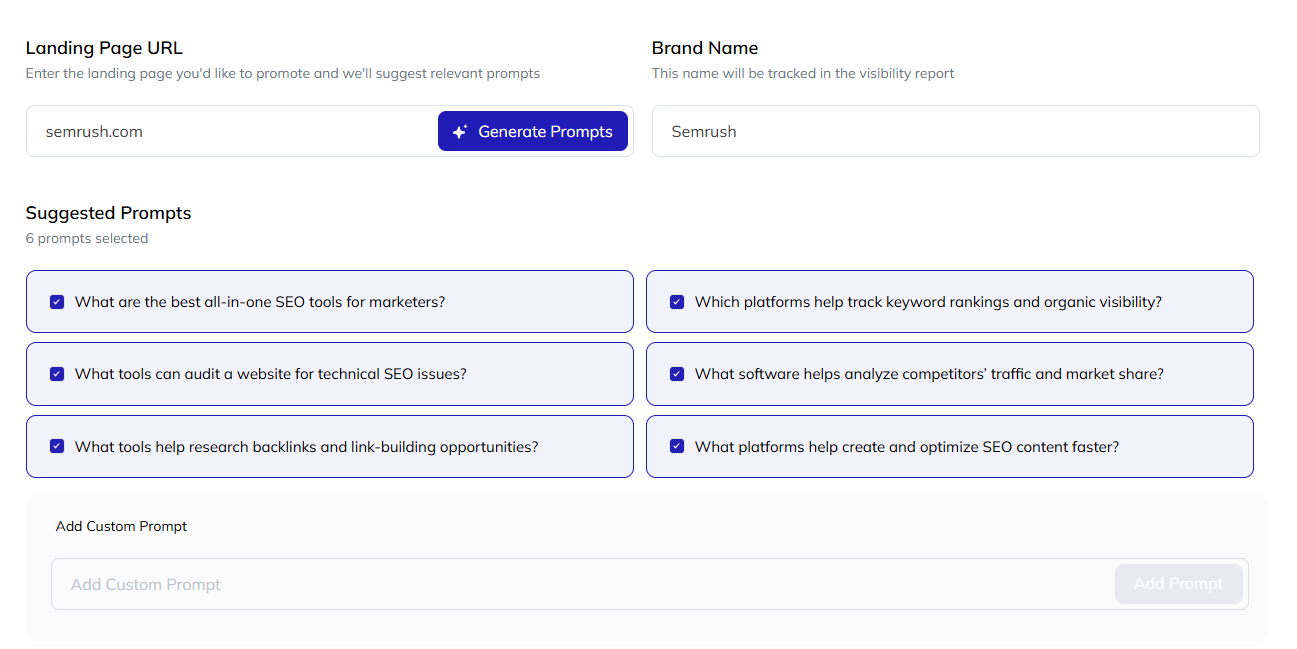
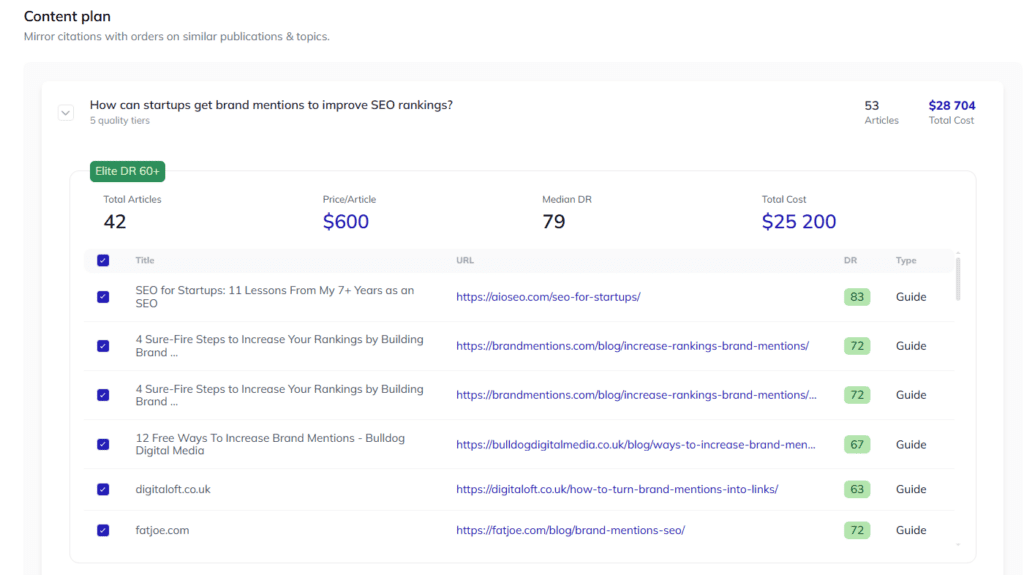
It runs each prompt across the AI engines, checks which articles are cited right now, and builds a link building action plan: the currently cited articles plus similar publications with comparable metrics and keyword profiles.
Instead of a blank Google Sheet, you get a prioritized target list.
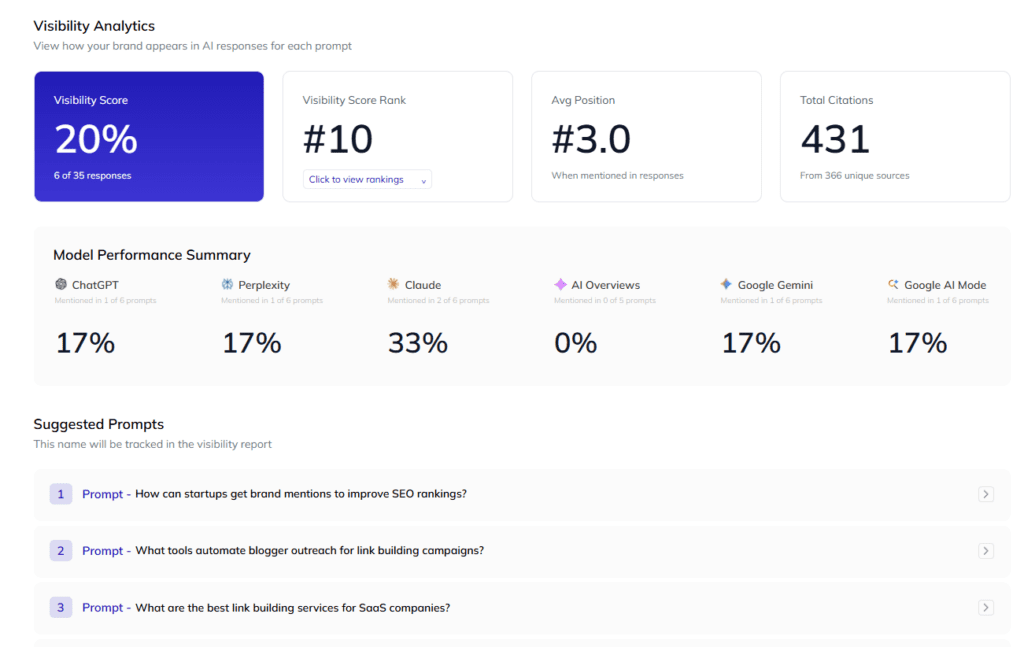
A built-in tracker then handles your ChatGPT tracking across six engines, so you can watch your ChatGPT visibility climb.
Then comes the part no tracker offers: the done-for-you outreach. Respona’s team runs the prospecting, pitching, and placement to earn you a brand mention in each target article, the exact content ChatGPT pulls from.
Every placement is editorial, on a real page with real traffic.
Pricing is pay-per-placement, from $100 per link up to $500, with no retainer, and around 80% of customers are agencies reselling it.
If your goal is more ChatGPT citation coverage rather than another dashboard, this is the tool that gets you there.
Profound
Profound is a monitoring tool built for enterprise teams that want depth.
It tracks your brand across every major AI platform, from ChatGPT to Google AI Overview, so you get a broad view of how you show up in ChatGPT responses and beyond.
Its strength is data breadth and executive-ready reporting: dashboards designed to show leadership exactly where the brand stands across the AI search landscape.
Like most tools in this category, it’s monitoring rather than earning, so you’ll still need a way to act on what it shows you, but for wide-angle tracking at scale, it’s one of the most established options for ChatGPT SEO.
Otterly.AI
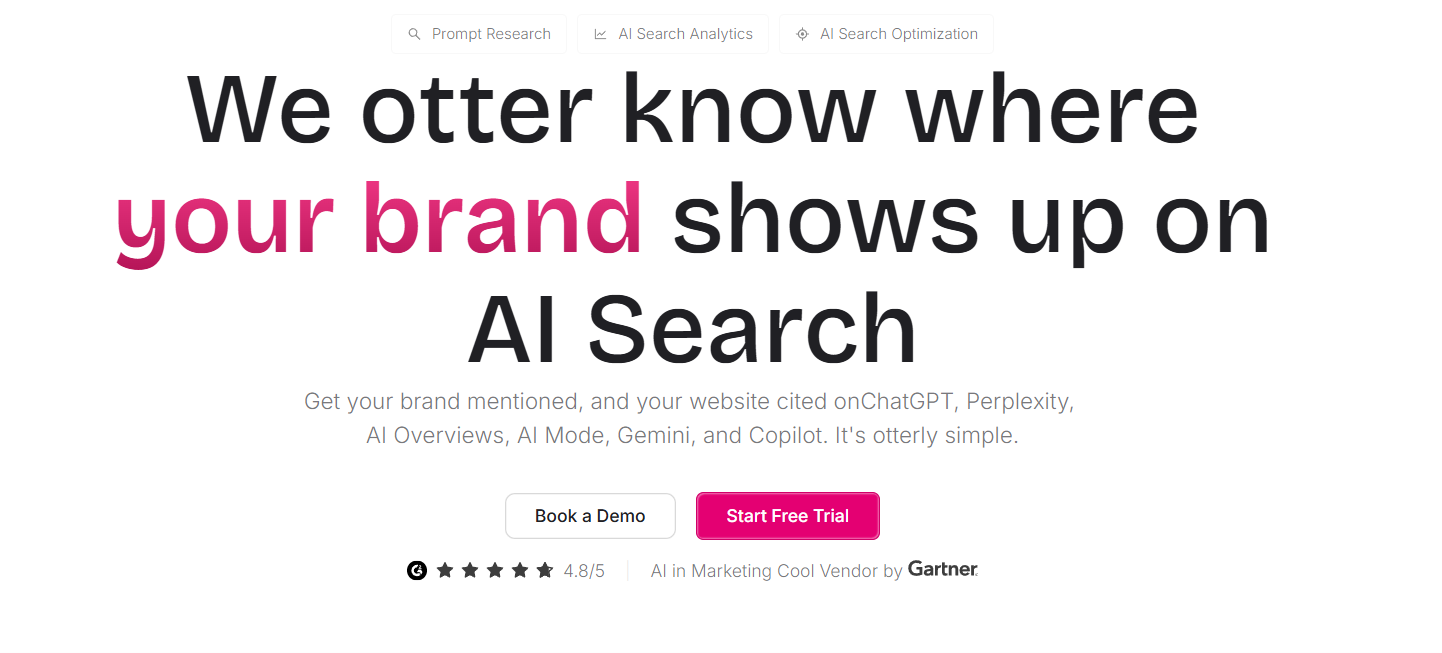
Otterly.AI is an entry-level seo tool for teams that want a clear read on their AI presence without a big commitment. Setup takes minutes, and you get data quickly.
It tracks brand mentions and citations across ChatGPT and other engines, flagging each chatgpt mention so you can see where you appear in ai search results.
It’s monitoring only, with no content or outreach features, but as an affordable first step into AI visibility tracking, it’s hard to beat on speed and price.
Peec AI
Peec AI focuses on measuring citations precisely, capturing how the AI engines actually cite content in their answers rather than approximating it.
For teams that care about accurate data, that precision is the draw.
It monitors your presence across ai search engines and reports what’s being cited with a high degree of fidelity.
Like the other trackers here, this tool highlights the opportunity but leaves the content and outreach to you, so it pairs well with something that can act on the gaps it finds.
Scrunch AI
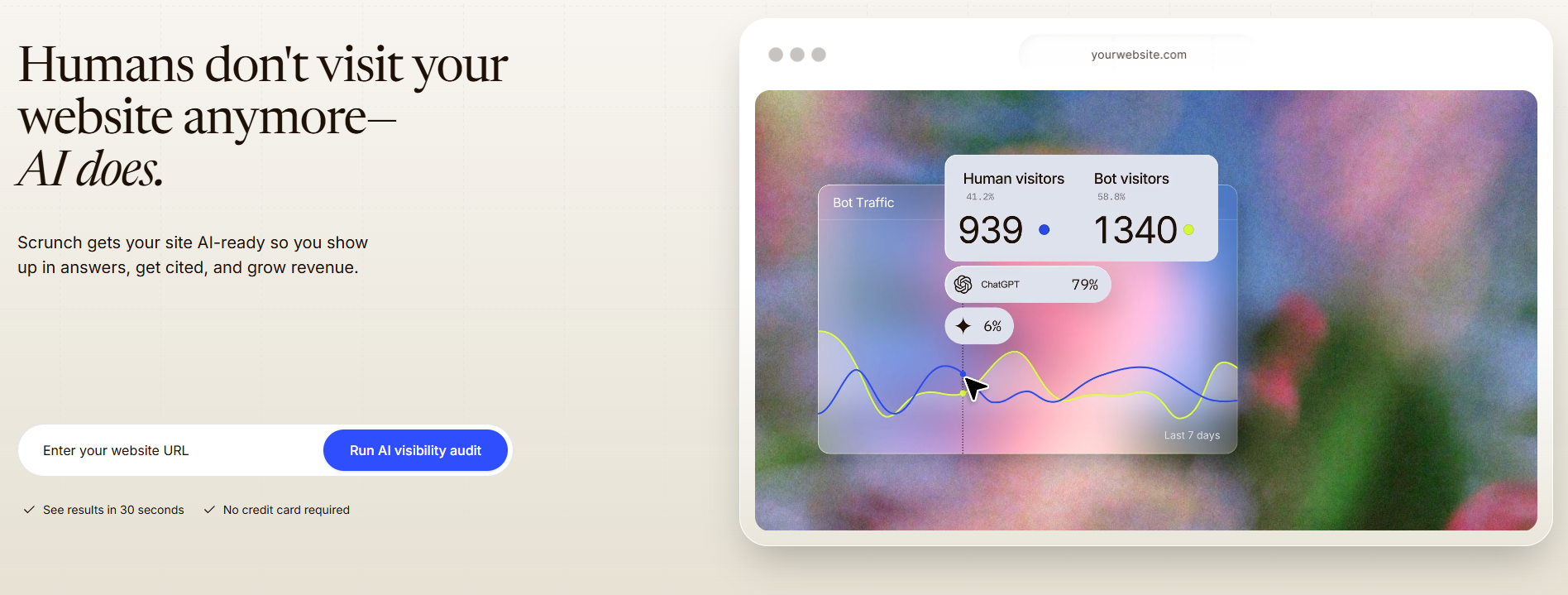
Scrunch AI is a tool built around competitive intelligence in AI search. Its focus is showing how your brand stacks up against competitors in AI answers, which makes it useful for strategy and executive reporting.
It measures how often you appear relative to rivals across key topics, giving marketing teams a clear read on where they’re winning and losing.
As with the rest of this category, it’s a monitoring layer for chatgpt seo rather than an execution one, strongest when you already have a way to close the gaps it highlights.
Ahrefs Brand Radar

Ahrefs Brand Radar brings AI visibility tracking into one of the most established SEO toolsets. If your team already lives in Ahrefs for keyword research and technical seo, this adds AI data without a new login.
It’s built on a large database of real user prompts, so the keyword and visibility data has a solid foundation.
You can see how your brand shows up in AI answers alongside your usual keyword and backlink work, which makes this tool a practical add-on for teams that want AI insight without leaving the suite they trust.
Semrush AI Toolkit
Semrush’s AI Toolkit adds AI answer tracking to a platform many teams already use for keyword research, schema, site audits, and technical seo.
The appeal is not switching tools: you get AI visibility data next to years of traditional seo data.
That combination gives useful context, letting you weigh your AI presence against keyword ideas and competitive data you already track.
As an AI monitoring layer it’s less deep than the purpose-built trackers, but for teams committed to Semrush, keeping everything in one tool is a real advantage.
AthenaHQ
AthenaHQ stands out by combining AI visibility tracking with content optimization agents. Rather than only reporting, this tool also guides improvements to your content so it’s easier for AI engines to interpret and cite.
It tracks your brand across several AI engines and pairs that with guided content and schema work aimed at AI extractability.
That makes it one of the few options here that moves past pure monitoring, though the actual off-site mentions that drive ChatGPT seo still need earning elsewhere.
Surfer SEO
Surfer SEO is a content optimization tool that helps writers structure pages to get picked up by search and AI answers.
It scores your content in real time against what’s already ranking, guiding everything from headings to search intent coverage.
You start with a content brief, write against its live guidance, and tighten your seo content for both readers and machines.
It also covers on-page basics like schema markup and technical seo checks. It won’t track your AI visibility after publishing, but for making individual pages more citable through better content creation, it’s a strong, writer-friendly tool.
Writesonic GEO
Writesonic GEO pairs AI content generation with basic visibility tracking, giving smaller teams a two-in-one option.
You can draft with its AI writer and monitor how that content performs in AI answers from the same tool.
Its content creation features lean on AI generated content optimized for search, with light GEO monitoring layered on top.
The tracking isn’t as deep as the dedicated tools, and you’ll want a human hand on anything the AI drafts, but as an affordable way to produce and watch content for chatgpt seo, it earns its spot.
Link building cheat sheet
Gain access to the 3-step strategy we use to earn over 86 high-quality backlinks each month.
Now Over To You
So there are ten chatgpt seo tools, sorted by the job they actually do. Most of them track your visibility. A few help with keyword and content work. And one goes and earns the citations for you.
That last distinction is the one that matters. A tracker will happily show you, month after month, that you’re not getting cited. But no dashboard changes the outcome on its own. Getting into more AI answers is an off-site job, built on being mentioned in the content ChatGPT reads, and that takes real outreach.
If you’d rather skip the dashboards and just get cited, that’s where we come in.
Place your first order and our team will earn the mentions for you, so you’re the brand ChatGPT recommends.
Frequently Asked Questions (FAQ)
What is the best AI SEO tool for getting cited in ChatGPT?
It depends on the job. If you want tracking, a dedicated monitor like Profound or Otterly.AI is a solid choice. If you want to actually earn citations, the best ai seo tool is one that does outreach, which is why we’d point you to Respona.
There’s no single best chatgpt seo tool for everyone, because tracking and earning are different jobs.
Do I still need traditional SEO tools for ChatGPT?
Yes. ChatGPT leans on content that already ranks, so an seo tool for keyword research and technical seo still matters.
Being findable in Google search and healthy on Google Search Console makes the AI more likely to encounter you. Traditional seo and google seo are the groundwork; AI visibility is what you build on top of it.
Can these tools track my ChatGPT visibility automatically?
Most can. ChatGPT doesn’t offer a native dashboard the way Google Search Console or Bing Webmaster Tools do, so an ai tool that runs chatgpt tracking for you fills that gap.
It watches how often you appear in chatgpt responses across engines, which beats checking chatgpt search by hand or logging results in a Google Sheet.
Is there a ChatGPT plugin that improves my rankings?
Not really. There’s no chatgpt plugin or seo plugin that gets you cited on its own, and no chatgpt prompts you can run to force it.
Ranking in ChatGPT comes from off-site brand mentions and strong content, not a switch you flip. Be wary of any tool promising instant chatgpt citation results from a plugin alone.
How do content tools fit into a ChatGPT SEO strategy?
They handle the on-page half. Content creation, content optimization, and content generation tools help you produce seo content, content briefs, and well-structured pages that AI can parse. Good schema and content optimization make your pages easier to cite.
But a smart seo strategy pairs that on-site content work with off-site mentions, since seo professionals know AI answers lean on third-party sources.
What should marketing teams prioritize first?
Pro tip: start by measuring, then act. Teams should pick one tracker to establish a baseline, whether that’s a standalone monitor or an add-on like the SE Ranking AI suite, then invest in earning mentions.
Handling the SEO tasks around keyword ideas and search engine optimization matters, but the fastest route to more citations is off-site outreach, not another round of tweaks to a single search engine listing.