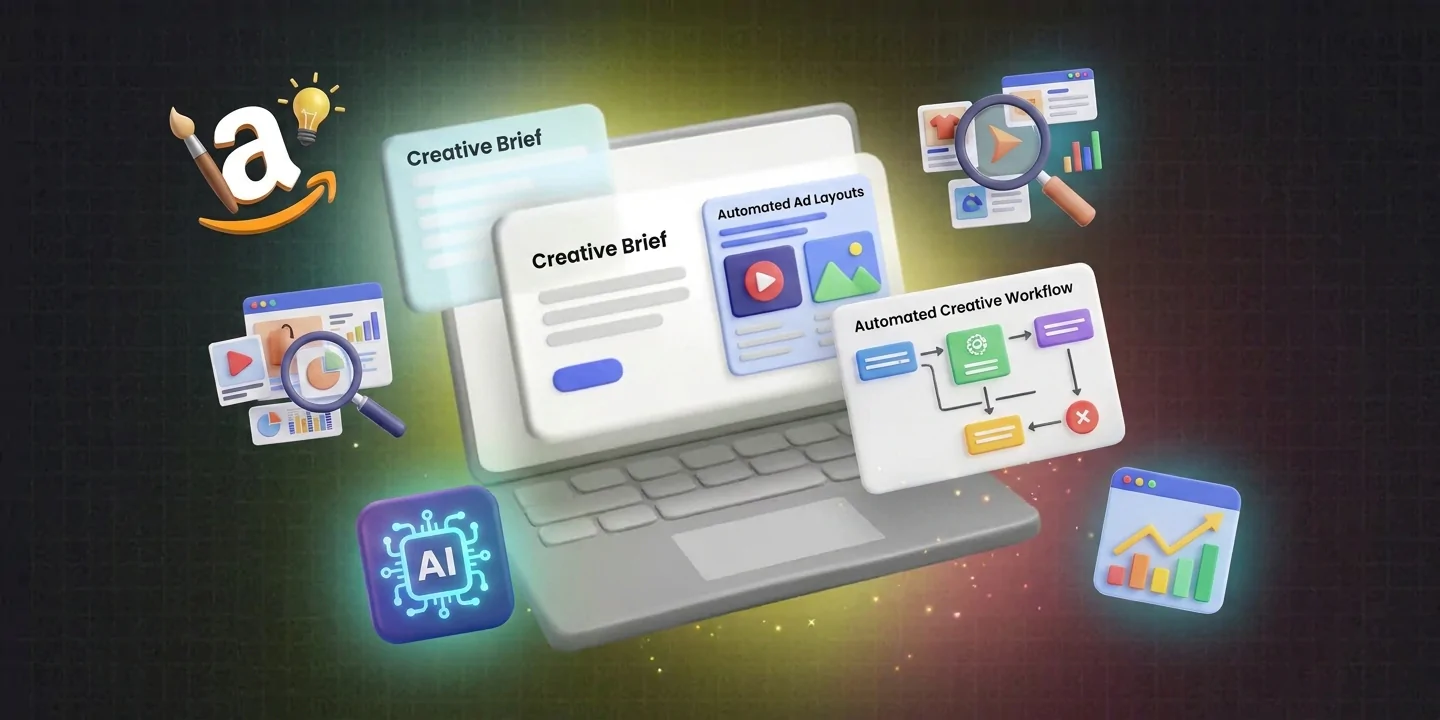
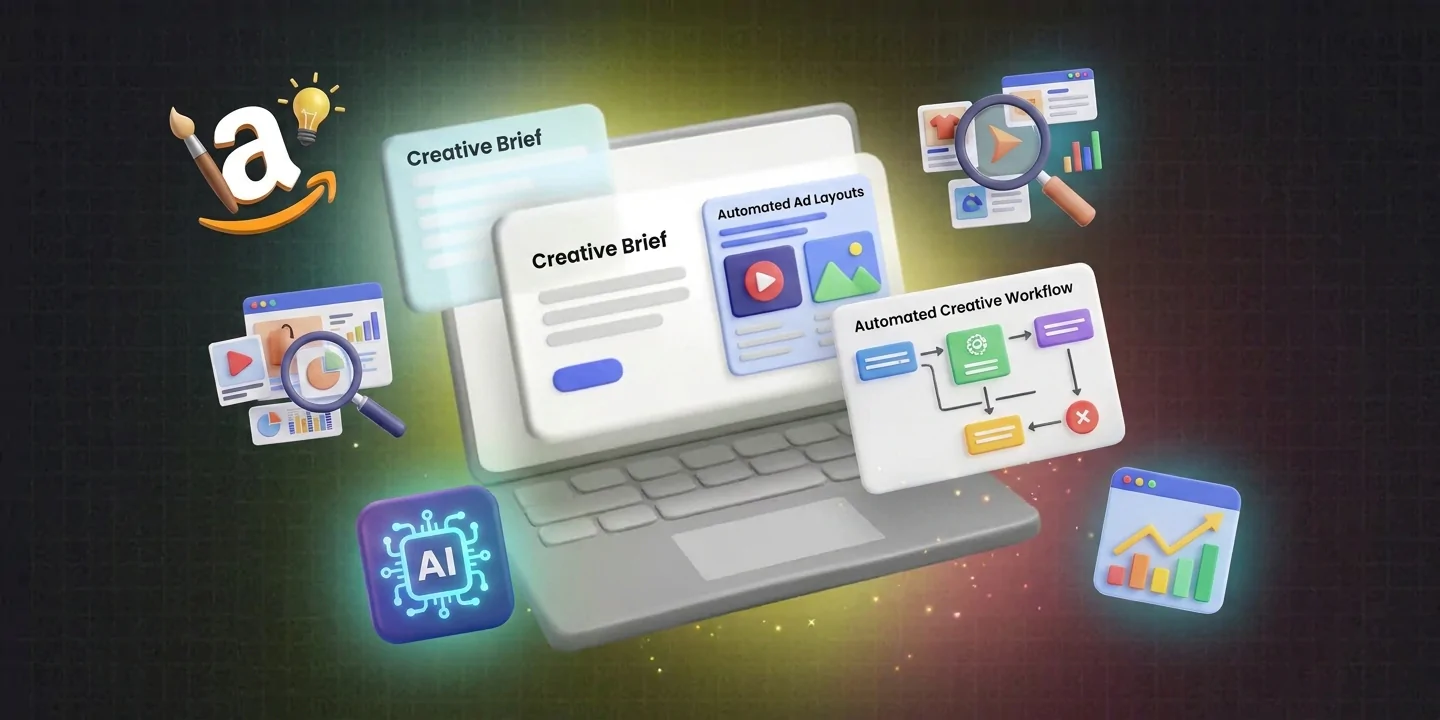
Amazon’s advertising ecosystem just got a serious upgrade. The Amazon Creative Agent for advertisers is an agentic AI tool that researches audiences, brainstorms concepts, and helps launch campaigns across the full funnel, all through a conversational interface. For brands chasing app downloads and e-commerce sales, this compresses creative production from weeks into minutes. But having access to a powerful tool and actually knowing how to squeeze real value out of it are two very different things. Strategy still drives results. The tool just moves faster.
What the Amazon Creative Agent Means for Agentic AI Advertising
Amazon Creative Agent belongs to a new generation of agentic AI tools that go well beyond answering prompts. These systems plan, execute multi-step tasks, and adapt based on outcomes. Instead of manually briefing designers and copywriters, advertisers describe a goal in plain language and the agent handles research, ideation, and asset generation.
That capability matters because Amazon Ads reaches shoppers at the exact moment of purchase intent. According to eMarketer forecasts, retail media is now one of the fastest-growing digital ad channels, and Amazon commands the lion’s share. Layering agentic AI on top of that intent-rich inventory gives advertisers a genuine speed advantage that was simply not available two years ago.
The agent connects to your product catalog, brand assets, and campaign history. It understands context, so recommendations feel tailored rather than pulled from some generic template. If you are already exploring campaign automation across platforms, Amazon’s tool is a strong preview of where the industry is heading: fewer manual steps, faster iteration, and creative that responds to performance data in near real time.
How to Use Amazon’s AI Tool for Audience Research and Insights
Strong campaigns start with research, and this is where the Creative Agent earns its keep. Rather than toggling between separate dashboards and stitching data together manually, you can ask the agent questions in plain language: which audience segments convert best for a specific product, what search terms drive the most traffic, or how seasonality affects demand in your category.
The agent pulls from Amazon’s first-party shopping signals, which rank among the most reliable purchase-intent datasets available anywhere in digital advertising. You can review these capabilities in the official Amazon Ads resources. Use this stage to pressure-test your assumptions before you spend a single dollar on media. In our experience, teams that skip this step end up optimizing creative around the wrong audience entirely.
Practical prompts to try:
- Summarize the top-performing audiences for my product category and explain why they engage.
- Identify gaps where competitors are winning share of voice.
- Suggest three angles that address the objections shoppers raise in reviews.
Pair this research with a broader competitive analysis to see where your positioning is strongest. The goal is to walk into the brainstorming phase with clear direction rather than guesswork, which keeps creative focused on messages that actually move buyers instead of messages that just look nice.
Brainstorming Full-Funnel Creative Concepts With Agentic AI
Once you understand the audience, the agent shifts into ideation. Here is the thing about full-funnel thinking: awareness creative, consideration content, and conversion assets each require genuinely different tones, formats, and calls to action. They are not interchangeable. The Creative Agent can generate variations for every stage from a single brief, which is where the time savings really start to add up.
For top-of-funnel awareness, ask for bold, benefit-led hooks that stop the scroll. For mid-funnel consideration, request comparison-style messaging that answers common shopper questions. For bottom-of-funnel conversion, prompt urgency and specificity around price, shipping speed, or limited availability.
Because the agent generates dozens of options quickly, you can test more creative directions without burning out your team. That volume matters: fresh assets are one of the most effective defenses against ad fatigue, which quietly erodes performance when audiences see the same message too often. For a sharper filter on which ideas are actually worth keeping, our breakdown of what makes ad copy work gives you concrete criteria to score each concept against real conversion drivers.
A useful workflow:
- Generate 10 concepts per funnel stage.
- Shortlist the three that align with your research insights.
- Ask the agent to refine tone, length, and format for each placement.
Launching App Download Campaigns and E-Commerce Sales Funnels
This is where research and ideas finally turn into live campaigns. For e-commerce, the tool assembles Sponsored Products, Sponsored Brands, and display creative that ties directly to your catalog. For app advertisers, it supports awareness and install-focused creative that drives users toward the store listing.
App marketers should remember that acquisition is only half the equation. Even the best creative falls flat if the destination underdelivers, so align your campaigns with strong app marketing fundamentals and a listing optimized to convert clicks into installs. If installs are your primary KPI, the tactics in our guide to increasing app downloads pair naturally with agent-generated creative.
To launch effectively:
- Map each creative variant to a specific funnel stage and objective.
- Set clear KPIs before launch, such as ROAS for sales or cost per install for apps.
- Use the agent to spin up placement-specific versions instead of forcing one asset everywhere.
Cross-platform advertisers should also weigh how Amazon fits alongside other channels. Our overview of digital advertising platforms helps you decide where retail media belongs in your mix, especially when you are balancing app installs against direct product sales at the same time.
Measuring Performance and Optimizing AI-Generated Campaigns
Agentic tools accelerate execution, but human oversight still decides winners. After launch, review performance against the KPIs you set and feed those learnings back into the agent. The system improves as it sees which concepts convert, but you remain accountable for strategy, brand safety, and budget discipline. That accountability does not get outsourced to a model.
Watch for the metrics that matter at each stage. Awareness creative should drive reach and engagement. Consideration assets should lift click-through and add-to-cart rates. Conversion campaigns live and die by ROAS and cost per acquisition. Amazon’s measurement reporting gives you the data to make those calls confidently.
Think of optimization as an ongoing process, not a box you check once after launch. Retail media is competitive, and industry data from Sensor Tower consistently shows that top performers refresh creative and reallocate budget more frequently than average advertisers. What we have seen is that the teams using AI-driven budget allocation effectively are not set-and-forget operators. They are constantly testing, iterating fast, and pruning underperformers before they drag down overall returns.
Practical optimization checklist:
- Kill creative that underperforms after a fair test window.
- Scale winning assets by generating variations of the top concept.
- Rebalance spend toward the funnel stage delivering the best marginal return.
Best Practices for Combining Human Strategy With Agentic Tools
The advertisers who win with agentic AI treat it as a force multiplier, not a replacement for judgment. The agent handles volume and speed. You handle brand voice, positioning, and the strategic calls that data alone cannot make.
Set guardrails before you scale. Define brand tone, non-negotiable claims, and compliance requirements up front so generated assets stay on message. Always review creative for accuracy, especially for regulated categories or anything touching pricing and availability claims. That human layer is exactly what a mobile growth agency brings to automated workflows: strategic direction that keeps the tools pointed at real business outcomes rather than just generating output for its own sake.
Keep learning as the platform evolves, because agentic advertising is moving fast. The LLM-driven shifts we cover in our media buyer’s app growth guide show how recommendation engines increasingly shape which campaigns get discovered. Advertisers who understand both the creative and distribution sides will consistently outperform those who lean on either one alone.
Conclusion
Amazon Creative Agent compresses research, brainstorming, and launch into a single conversational workflow, giving advertisers a real speed advantage across the full funnel. Use it to validate audiences, generate stage-specific creative, and launch faster, then apply human strategy to optimize and protect your brand. Bottom line: let the agent handle volume while you own the decisions that actually drive downloads and sales.
FAQs
What is the Amazon Creative Agent?
It is an agentic AI tool inside Amazon Ads that researches audiences, brainstorms creative concepts, and helps advertisers build and launch campaigns through a conversational interface, reducing manual production time significantly.
Can the Creative Agent help with app download campaigns?
Yes, and it works well for this. It supports awareness and install-focused creative that drives users toward your store listing. Pair it with strong app store optimization and retention tactics to convert those installs into engaged, long-term users rather than one-and-done downloads.
Does agentic AI replace media buyers and creative teams?
No, and in our experience the teams that treat it as a replacement tend to run into trouble quickly. It accelerates execution and expands creative volume, but humans still set strategy, define brand guardrails, review compliance, and make the budget decisions that determine which campaigns actually succeed.
How do I measure success with AI-generated Amazon campaigns?
Set KPIs before launch, such as ROAS for sales or cost per install for apps. Use Amazon’s reporting to track performance by funnel stage, then scale winners and cut underperformers quickly rather than letting weak creative drain budget over time.
How does the Creative Agent fit into a multi-platform strategy?
Treat Amazon as your intent-rich retail media layer alongside search, social, and app channels. Align creative and budget across platforms so each channel plays to its strength within a unified full-funnel plan, rather than running siloed campaigns that cannibalize each other.

Noa Amit
Noa is the UA & PPC Team Leader at Moburst. With a strong foundation in data analysis and a talent for innovative testing methodologies, she excels in managing high-scale campaigns across various digital platforms. Her strategic approach is centered around meticulously crafted media plans and robust marketing strategies, tailored to meet the unique needs of each client and project. Noa’s speciality lies in her ability to interpret market trends and consumer behavior, translating these insights into actionable strategies that significantly enhance campaign performance.