Hi readers! Shayla Love here, science journalist and longtime fan of Your Mileage May Vary. I’m honored to be subbing for Sigal while she’s out on parental leave. I’m diving into your questions as a way to help understand human nature and our choices through multiple lenses: philosophical, psychological, and beyond. Please send in any emotional, body/brain, sociological, perceptual, or other kind of life quandaries you might have.
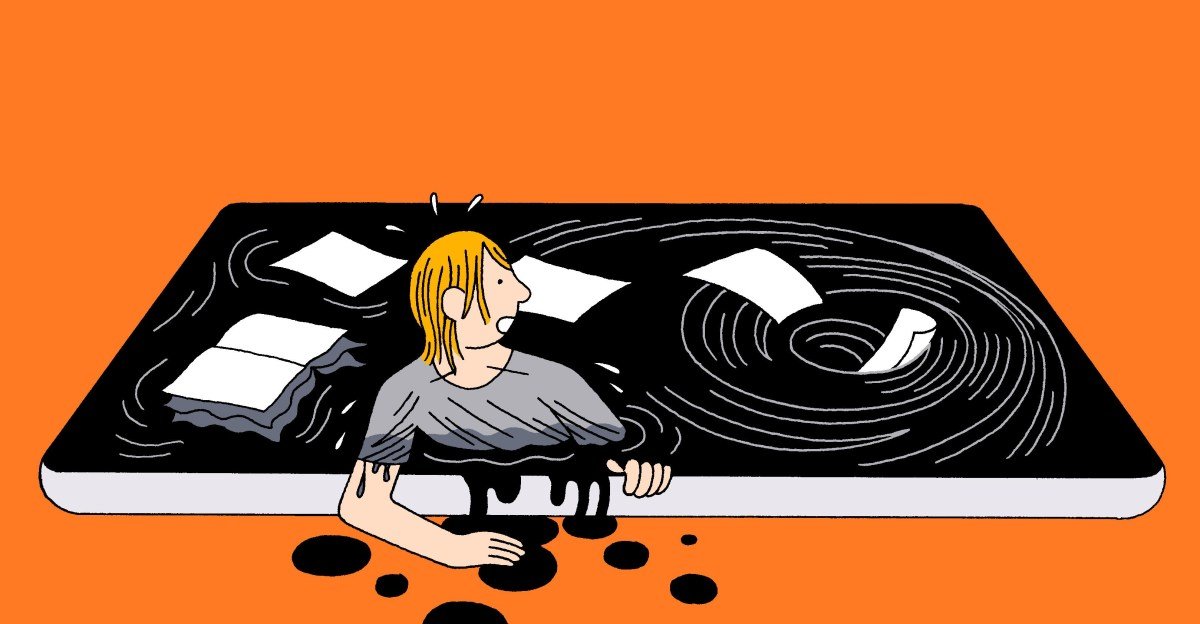
Being online is extremely stressful and unpleasant, and on days I don’t use Twitter, or Bluesky, or any other social media, I typically feel much better mentally — less stressed about the posts I see and less upset about the state of the world.
There’s two problems: The first is that I think it’s pretty irresponsible to put yourself and your emotional comfort above being informed and active in debates about the future. I have a non-insignificant following on both sites, and it would be a bit of a dereliction of duty to give up my influence over my followers for it. The other part is that this non-insignificant online presence has helped me in my non-professional writing career pretty significantly, and I wouldn’t have either source materials or similar opportunities if it wasn’t for my online presence.
So, all in all, there’s pretty strong reasons to not be there. There’s pretty strong reasons to be there. There’s pretty strong personal benefits from leaving and pretty strong personal benefits from staying. Should I stop being online?
Have a question you want answered in the next Your Mileage May Vary column?
Fill out this anonymous form! Newsletter subscribers will get my column before anyone else does and their questions will be prioritized for future editions. Sign up here!
Dear Wishfully-Off-the-Grid,
I feel you. In late June, throughout New York City, I started noticing posters appearing for the “Summer of Ludd” — a series of very offline events organized by a group trying to bring back the philosophy of the Luddites, the 19th-century movement against automated machinery. I attended one of their lectures recently in Manhattan, and I have a hunch that the Luddites could help you with your concerns about becoming detached from the world if you leave social media.
The word “Luddite” has, for the most part, become an insult (even if deployed for self-deprecation), used to describe a person who won’t keep up with the advancements of their time — rejecting innovation in favor of older, slower, and less effective products. There is a hint of this in your question: You’re worried that social media is the more potent way to be informed and to communicate with others. If you leave these platforms, will you lose that ability?
First, the real Luddites were more complex than how we refer to them colloquially. They were English clothmakers who saw how machines owned by wealthy merchants resulted in lower wages and worse working conditions. After trying to organize in support of workers’ rights failed, Luddites broke the looms that were automating their labor. “They would sneak in through the windows or hold up the overseer at gunpoint, and methodically smash just those machines that were de-skilling their work,” wrote journalist Brian Merchant, author of the excellent book Blood in the Machine: The Origins of the Rebellion Against Big Tech.
Luddites weren’t against all technology, Merchant notes, just the tech that took away resources from humans or gave too much power to those at the top. The British government retaliated against the Luddites, and laws were passed that made it punishable by death to break a machine.
The neo-Luddites that I saw and met at The Luddite Conference on Participatory Futures event were bound by a similar distrust and antagonism towards, in this case, big tech. But there was another question they grappled with that was even more closely aligned with your concerns. “This week is just sort of an experiment, right?” said one of the organizers during opening remarks. “Can we get a bunch of people together in a room without using any of these platforms?”
Based on the turnout, the answer was a resounding yes. The large auditorium was standing-room only. It was filled with young people in their 20s in cool outfits who I heard giving each other advice about switching to flip phones.
These neo-Luddites would say to you that learning about the world is an act that is better done offline. In fact, in-person meetings are not only the superior medium through which to express your politics — it is the politics. The act of organizing IRL creates deeper relationships unfettered by algorithms, which build stronger foundations for talking about or acting on any issues that you may care about. This applies to finding sources and opportunities for your writing career, too. The neo-Luddites would challenge you to imagine the rich and exciting people you might meet if you seek out and spend time in what they described as “social infrastructure”: public places where people meet face-to-face — not only for political solidarity, but also for learning, support, play, and rest.
This resonates with me; I only felt connected to my community once I spent a lot less time online and got involved in local organizing a few years ago. As part of my neighborhood’s mutual aid group, I help run our community garden, which teaches people about the area’s environmental history, food justice, and climate change and grows hundreds of pounds of produce for free fridges. I rarely post about this publicly, but I’ve met dozens of neighbors and local politicians and feel much more agentic as a result.
I also should mention the limitations of making a difference through online posting.
Many of us, of course, are trapped in echo chambers in our online communities. Even if you break through, the likelihood of online discourse being the most effective way to share your values is low. I think often about an experiment researchers from Princeton and Stanford did to see if people would change their minds if they saw posts on their Facebook or Instagram that differed from their own perspectives. In the end, they found very little effect on altering people’s opinions or political behaviors.
Not only that, but the more likely, and more disturbing, outcome of a lot of posting is the impact it can have on your own views. In the book The Chaos Machine: The Inside Story of How Social Media Rewired Our Minds and Our World, reporter Max Fisher explains that when you get feedback in the form of likes and replies, it provides powerful positive reinforcement that gives you the signal that your beliefs are good, and you should hold onto them even more tightly. If someone starts contradicting you or pushing back, you’re likely to double down to further emphasize your point. This means that you yourself may end up with even more extreme opinions than you started out with — all without swaying anyone else’s beliefs (potentially even pushing the other person further into more entrenched versions of their views). That doesn’t sound like a very effective technology, does it?
This might seem like I’m telling you to go off social media entirely and join the neo-Luddites. But, actually, I’m not. I do think there are compelling reasons to be on social media platforms, but they are human ones, not political.
Researchers have described our access to the internet and social media as a “mobile connectivity paradox.” Even though we are able to, in unprecedented ways, connect with anyone at any time, it can make us feel isolated. Yet, I haven’t been able to fully give up on the “connection” piece of the paradox; I like seeing pictures of my friend’s baby who lives far away from me! I got a lot out of posting pictures of my wedding party! I’ve tried to (lovingly) cull my followers to only people I really know, but whom I might not get to see as much as I’d like in person. Going on Instagram feels more joyful as a result.
You say that being on social media makes you feel terrible, and you should pay attention to that signal. People respond differently to social media, and it could be a reflection of other aspects of your life. For those who are already feeling vulnerable, lonely, or depressed, spending time on social media tends to make them feel worse.
Where and in what contexts you use social media can also affect how it makes you feel. People feel more lonely when they use social media while in transit, around people they have close relationships with, and when they are in nature. In contrast, when people use social media for shorter periods when they are alone at home or in study locations, it doesn’t have as much of a negative effect. And when people share big life events, like weddings or births, it can even increase their happiness.
Reclaiming social media for quieter and more intimate uses could make you feel lighter. At the same time, perhaps you can redirect some of your activism energy away from the digital sphere and see what happens if you take it offline.
That doesn’t mean, of course, that your IRL life should become unduly heavy either. During the Q&A at the Luddite talk, a person from San Francisco, who was part of a group organizing to get Mark Zuckerberg’s name removed from a local hospital, asked how best to reduce personal social media use. Bill Hartung, a political scientist there, didn’t suggest guilt or recrimination. “I think we just need to make real life more attractive,” he said.
Anyone dabbling in Luddism today is lucky; this is a more enjoyable call to action than meeting up to smash looms in the middle of the night. One of the best ways for you to be invested in the future is to make sure that at least part of yours takes place offline.
Bonus: What I’m reading
- Now that summer is in full swing, I’m re-reading chapters of my copy of How to Be Idle, a book by Tom Hodgkinson, the founder of the similarly themed publication The Idler. Each of the book’s chapters documents an hour of the day and how to be as lazy as possible during that time. Fun to read as inspiration, even when you’re not able to loaf.
- At the Folk Art Museum in midtown, I saw a group exhibition of American self-taught artists as part of the celebration of the country’s semiquincentennial. I was riveted by paintings of pastel, layered, topological landscapes by Joseph E. Yoakum, who was a Chicago-based artist. I recommend this 2021 New York Times profile of him, which explains how his drawings don’t represent real places but figurative terrains from his mind.
- Not something to read, but a fun game called Anthropeum that gives you 10 objects to assess per day. Try to guess where and when they were made and see how you compare to other players. I’ve learned I’m much better at guessing where things are from than their time period!