[ad_1]
When I was managing multiple projects at the same time, I tried different time tracking tools before finding one that actually stuck. The problem was never the software itself; it was that each one looked right on paper and fell apart somewhere between the demo and the third payroll cycle.
That pattern came up repeatedly when I dug into G2 reviews across the category. Teams were struggling not only to find the best time-tracking software but also one their employees would actually use, one that integrated smoothly with their existing project-tracking, payroll, or billing setup, and one that didn’t require constant oversight to keep running.
I’ve done the research so you don’t have to. Using G2 Data, verified reviews, feature and satisfaction ratings, I evaluated more than 20 time tracking tools to identify the five best options: UKG Ready, monday Work Management, ClickUp, Paylocity, and Connecteam.
Whether you’re a freelancer billing clients by the hour, an HR administrator managing payroll data, a project manager tracking profitability across accounts, or a field operations lead overseeing a distributed workforce, you’ll find a solution that fits your workflow in this guide.
7 best time tracking platforms for 2026: My top picks
- UKG Ready: Best for large enterprises managing hourly and salaried workforces
Combines employee time tracking, scheduling, payroll, and HR management in a single platform, helping organizations reduce manual administrative work. (Custom pricing) - monday Work Management: Best for agencies and project-based teams
Tracks time alongside projects, tasks, and resource allocation, giving managers visibility into workloads, project progress, and team capacity. ($9/seat/month) - ClickUp: Best for freelancers and small teams tracking billable hours
Connects time tracking directly to tasks, goals, and project deliverables, making it easier to monitor productivity and project profitability. ($7/user/month) - Paylocity: Best for mid-market HR teams managing complex payroll compliance
Brings together time tracking, attendance, scheduling, and payroll workflows, helping HR teams maintain accurate workforce records. (Custom pricing) - Connecteam: Best for managing deskless and field teams
Enables deskless and field employees to track hours, manage schedules, and stay connected through a mobile-first workforce management platform. ($29/month) - Hubstaff: Best for remote and distributed teams tracking productivity
Tracks employee time alongside activity levels, project budgets, and automated payroll, giving managers visibility into how distributed teams spend their work hours. ($4.99/user/month) - Paycom: Best for large enterprises automating employee-driven payroll and time entry
Centralizes time tracking, scheduling, and payroll in a single database, letting employees verify their own time data before payroll is processed to reduce errors. ($9/seat/month)
These best time tracking software are top-rated in their category, according to the latest G2 Summer 2026 Grid Report. I’ve added their standout features and pricing information for an easy comparison.
7 best time tracking software I recommend in 2026
The biggest pattern I noticed while evaluating time tracking software was that accuracy wasn’t the differentiator. Nearly every platform could track hours, generate reports, and export data. What separated the strongest products was how naturally they fit into the workflows teams already rely on.
More companies are using time-tracking software, especially because remote and hybrid work have become common. As a result, the market is expected to grow to $11.43 billion by 2030. Because of this increase in demand, software vendors are investing more in their products. During my evaluation, I noticed that the best tools did more than just track hours worked. They also helped businesses work more efficiently by identifying spending issues early, automatically syncing with payroll systems, and reducing the manual work required to prepare invoices and billing reports.
On G2, the time tracking software category skews heavily toward smaller organizations, with the majority of reviewers coming from small and mid-market businesses. That distribution shaped how I weighted ease of adoption, integration depth, and value across different team sizes when building this list.
How did I find and evaluate the best time tracking software?
I started with G2’s Summer Grid Report for time tracking software, which ranks products based on verified user reviews and market presence. This helped me identify both established category leaders and emerging solutions that consistently perform well for employee time tracking, payroll management, and project-based work.
Next, I analyzed hundreds of verified G2 reviews to understand how these platforms perform in real-world environments. I focused on the factors buyers care about most, including ease of time entry, payroll and billing integrations, reporting capabilities, project tracking, workforce visibility, and overall usability. I also looked for recurring themes in user feedback to identify where products consistently excelled or fell short.
Because I wasn’t able to test every platform firsthand, I validated my findings using G2 review data, feature satisfaction scores, product documentation, and AI-assisted review analysis. To provide additional context, I also spoke with fellow G2ers who work in operations and project management to better understand implementation experiences and day-to-day platform performance.
All product screenshots featured in this article come from official vendor G2 pages and publicly available materials.
What makes the best time tracking software worth it: My selection criteria
After evaluating recurring themes in G2 reviews and product capabilities, I narrowed my criteria for the best time tracking software to a handful of non-negotiables. Here’s what I looked for based on what real users said matters most in day-to-day operations.
- Ease of time entry: I looked for platforms where logging time required minimal steps for the end user, whether that meant a one-tap mobile clock-in or a timer embedded directly inside a task. Tools that made time entry feel like an afterthought consistently showed up in negative reviews, regardless of how strong their reporting was.
- Payroll and billing integration: Time data is only as useful as what happens to it after it’s captured. I evaluated how each platform connected to payroll processors, invoicing tools, and accounting software, and how much manual reconciliation teams still had to do at the end of a pay period.
- Smart integrations: I’m not looking to clutter my tech stack. I need a tool that integrates smoothly with apps I already rely on, like my project management app, calendar, or even invoicing system. Seamless integration means I spend less time switching between apps and more time getting work done.
- Reporting and workforce visibility: I looked for tools that gave managers actionable insight into project budgets, billable hours, and team productivity without requiring custom report builds for every query. The strongest platforms made it easy to answer the questions that come up every week, not just the ones you plan for.
- Mobile and remote workforce accessibility: For field teams, retail workers, and distributed workforces, mobile isn’t a nice-to-have; it’s the primary interface. I paid close attention to whether mobile apps offered full functionality or were stripped-down companions to a desktop experience.
- Project and task tracking: For project-based teams, time tracking should connect directly to the work being performed. I favored tools that help managers monitor budgets, track billable hours, and understand how time is distributed across projects and clients.
- Ease of setup and adoption: A time tracking tool only works if people actually use it. I looked for platforms that employees could get up and running with quickly, without extensive training or ongoing admin support to keep adoption rates from slipping.
- Scalability across team types: The strongest tools serve multiple types of workforces. I looked for platforms that could handle salaried employees, hourly workers, contractors, and remote teams without requiring separate systems or significant configuration changes.
The list below also contains genuine user reviews from G2’s time-tracking software category page. To be included in this category, a time tracking app must:
- Integrate with existing accounting or third-party payroll software
- Track, report, and calculate time usage
- Analyze work performance and generate reports and invoices
- Export data into an invoicing tool
- Scale according to the size of the company, team, project, or individual freelancers
*This data was pulled from G2 in 2026. Some reviews may have been edited for clarity.
1. UKG Ready: Best for large enterprises managing hourly and salaried workforces
UKG Ready is not a standalone time tracking tool but a workforce management platform that integrates time, scheduling, payroll, and HR into a single system. If your team has been stitching together separate tools for each of those functions, then context matters before diving in.
The feature that surfaced most consistently across the reviews I’ve analyzed was payroll integration — and it’s easy to see why. According to G2 Data, UKG Ready scores 93% for meeting requirements based on more than 2,000+ verified reviews. Users describe a workflow where approved hours flow directly into payroll without manual exports or reconciliation steps, reducing administrative effort and helping payroll teams close out pay periods significantly faster. One reviewer put it plainly: timesheet processing and payroll that used to take a full day now take about an hour.
Employee self-service is another area where UKG Ready earns positive feedback. Reviewers appreciate being able to access pay stubs, review logged hours, update personal information, and manage routine workforce tasks without contacting HR. For HR teams, this reduces the volume of administrative requests and frees up time for higher-value workforce initiatives.
Another feature that stood out was PTO and attendance management. I found several reviewers highlighting how easy it is to track vacation balances, approve requests, monitor attendance patterns, and maintain accurate records from a single system. For managers responsible for workforce planning, having immediate access to this information enables faster scheduling decisions and helps prevent coverage gaps before they become operational issues.
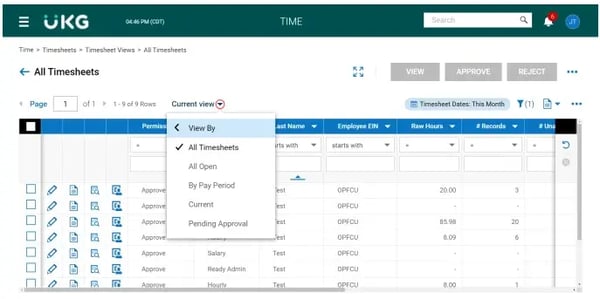
Reporting depth was another area where G2 reviewers were consistently enthusiastic. Users appreciated being able to generate payroll audits, overtime summaries, attendance trend reports, and compliance documentation without needing a separate analytics platform. Several reviewers noted how quickly pre-built reports load, describing the experience as genuinely useful for making staffing and budgeting decisions rather than just an administrative task.
A recurring theme in G2 reviews was the platform’s implementation and support experience. Users often mentioned receiving responsive guidance during setup and onboarding, which helped shorten the learning curve when moving from spreadsheets or legacy systems. UKG Ready’s Satisfaction Score of 99 reinforces the consistently positive feedback I saw around the overall customer experience.
Mobile time tracking is another capability that resonated with users. I saw multiple reviews from healthcare, education, retail, and field service teams describing the mobile app as their primary point of interaction with the platform. Employees can clock in, check accrued hours, review schedules, and manage work-related tasks from anywhere, making time tracking much more practical for deskless workforces.
That said, some G2 reviewers found the navigation less intuitive, likely because of the platform’s broad feature set. Several noted that finding specific features often takes training rather than simple exploration. Once users get past the onboarding curve, though, that depth becomes an advantage, giving teams more flexibility and control instead of adding friction.
A few reviewers note that certain processes feel more fixed than flexible, which can add manual steps for teams with non-standard workflows. For organizations whose time tracking and payroll needs align with standard configurations, the platform’s out-of-the-box setup covers the vast majority of use cases without issue.
Overall, UKG Ready is the strongest fit for mid-market and enterprise businesses that need time tracking, scheduling, and payroll to operate as a single connected system — not three separate tools that share data.
What I like about UKG Ready:
- Approved hours flowing directly into payroll eliminate manual exports and reconciliation steps for HR administrators managing complex pay structures.
- Pre-built reporting depth makes overtime summaries, compliance reviews, and attendance trend analysis fast and accessible without a separate analytics tool.
What G2 users like about UKG Ready:
“I think the most helpful part of UKG Ready is easily managing to clock in and out from my laptop every day. I also think that they make the process of requesting time off pretty smooth and easy with their calendar UI. Though overall, I think their UI is pretty user-friendly and I’ve had no trouble finding any information that I needed from the website.”
– UKG Ready review, Zachary W.
What I dislike about UKG Ready:
- G2 reviewers note that navigating the interface feels unintuitive, perhaps due to the number of features the software offers. However, once the onboarding process is complete, the platform’s depth becomes an advantage rather than a source of friction.
- Some reviewers also mention limited workflow customization for non-standard processes. The tradeoff is greater consistency across payroll, scheduling, and workforce operations, which can make administration easier for organizations that prefer standardized processes.
What G2 users dislike about UKG Ready:
“One challenge with UKG Ready is that its user interface can feel unintuitive at times, making it difficult to navigate and locate specific features quickly. Additionally, some customization options are limited, which can restrict flexibility for organizations with unique needs.”
– UKG Ready review, Frederick T.
If you’re looking to streamline approvals, automate repetitive processes, and improve cross-functional collaboration, explore my guide to the best workflow management software.
2. monday Work Management: Best for agencies and project-based teams
monday Work Management approaches time tracking differently from traditional workforce management platforms. Instead of focusing on payroll and attendance, it connects time tracking directly to projects, tasks, workloads, and team execution. For organizations managing multiple projects simultaneously, that context can be just as valuable as the hours themselves.
The capability that came up most often across the G2 reviews I analyzed was workload visibility. Users describe being able to see every team member’s tasks across all projects in a single, color-coded board view, so they can see at a glance who has capacity, who is overloaded, and where time is actually being spent. According to G2 Data, monday Work Management scores 92% for ease of use, which shows up consistently in how quickly teams gain meaningful visibility without complex configuration.
What also stood out was how naturally the platform handles time tracking for project billing. Reviewers, particularly project managers and agency leads, describe logging billable hours for each task and client from the same interface where work is assigned and tracked. Several users mention that having time and project data in one place makes client invoicing and budget reviews less manual than when tools treat time tracking as a separate module.
Workflow automation also came up frequently as a capability that removed the coordination work that tends to pile up around time tracking. Reviewers describe setting up automations for status updates, deadline reminders, and task reassignments, reducing the manual follow-up that typically falls on project managers when tracking hours across distributed teams. G2 Data shows a 95% likelihood-to-recommend score for monday Work Management, reflecting how consistently this kind of operational value translates into long-term satisfaction.
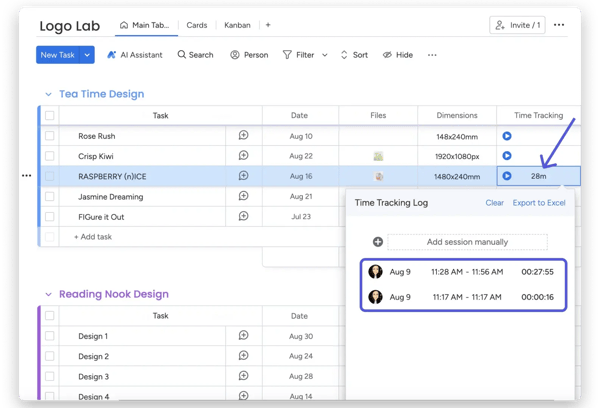
Board customization was another theme I kept seeing in longer-term reviews. Users appreciate the ability to build boards around specific clients, projects, and teams using custom fields, statuses, and workflows. For organizations managing multiple workstreams simultaneously, that flexibility makes it easier to standardize how time is tracked without forcing every team into the same process.
Several reviewers also highlighted the value of integrations with tools like Slack, Outlook, Google Drive, and email. Rather than asking employees to update time in a separate system, monday Work Management fits into the applications teams use every day. For remote and hybrid organizations, this feature reduces the friction that often leads to incomplete or delayed time entries.
Ease of adoption surfaced frequently throughout the reviews. Users often mention that new team members can understand the platform quickly and begin tracking work without extensive training. For managers rolling out time tracking across larger teams, that shorter ramp-up period helps drive adoption more consistently.
That said, some reviewers also noted that costs can increase as organizations expand usage across more users and teams and adopt advanced capabilities. However, many users feel that the platform’s flexibility, automation capabilities, and visibility features justify the investment, as they replace multiple point solutions and reduce operational overhead elsewhere.
A few users also mention that boards with a high volume of tasks or active automations can slow down during peak usage periods. Reviewers note that this tends to surface in larger, more complex workspaces where multiple teams, projects, and automations operate simultaneously. The tradeoff is the visibility and coordination that larger environments make possible.
I recommend monday Work Management for organizations that want to connect time tracking directly to project execution, resource planning, and team coordination. Its combination of workload visibility, workflow automation, and flexible project management makes it particularly valuable for teams managing multiple projects and cross-functional initiatives simultaneously.
What I like about monday Work Management:
- I like that monday Work Management connects time tracking directly to projects, tasks, and workloads instead of treating hours as isolated data points. That context makes it much easier to understand where effort is being spent and how work is progressing.
- Integrations with Slack, Outlook, Google Drive, and email bring time tracking into the tools teams already use daily, reducing the friction that leads to incomplete or delayed time entries.
What G2 users like about monday Work Management:
“The system is extremely comprehensive. What I like most are the reports, because they let me pull detailed information on our company’s financial metrics. I also appreciate how many features it includes while still being very easy to use. It’s great for managing our timesheets, handling project invoicing, creating purchase orders, tracking costs, and more—all in one place.”
– monday Work Management review, Iliass O.
What I dislike about monday Work Management:
- Based on G2 reviews, the platform’s flexibility can create a learning curve because there are many ways to configure boards, automations, and workflows. The benefit is that teams can shape the platform around their own processes, which is one reason monday Work Management works across so many industries and use cases.
- G2 reviewers also mention that costs can increase as organizations expand usage across larger teams and advanced capabilities. The positive side is that many users view the platform as a replacement for multiple project management, reporting, and coordination tools, making the additional investment easier to justify as adoption grows.
What G2 users dislike about monday Work Management:
“I think the main downside is that it can be pretty slow at times, especially when loading boards or switching between tasks. It can interrupt the workflow a bit. Also, some features feel less intuitive than they could be, so it takes extra time to get used to certain processes. While it’s useful for tracking and auditing, the overall user experience could be smoother and more efficient.”
– monday Work Management review, Rodolfo E.
3. ClickUp: Best for freelancers and small teams tracking billable hours
ClickUp is one of those tools that people often discover as a project management platform and then end up using for time tracking as well. What makes it different from many other tools is where the time tracking actually lives — inside tasks, subtasks, and deliverables, rather than in a separate module that teams have to remember to open.
What reviewers on G2 consistently highlight is the native timer embedded directly inside each task. Users can start and stop time against specific work items without leaving the task view, keeping time data tied to the actual work rather than floating in a separate log.
As far as I can tell, users really like how ClickUp handles time tracking for client invoicing at the task level. I came across users describing how they use timesheet exports and task-level time logs to generate accurate client invoices, tracking time down to individual deliverables rather than just project totals. For freelancers and agencies billing by the hour, that granularity makes a real difference.
I saw many users referencing time estimates when discussing project planning. ClickUp allows teams to compare estimated effort against actual hours worked, helping managers understand where projects drift from the plan and where resources may be under- or overallocated. For organizations trying to improve forecasting accuracy, this feature adds useful context beyond basic timesheets.
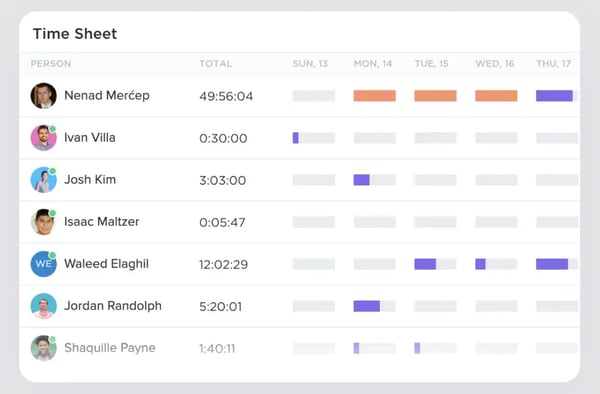
What also stands out is how far ClickUp’s customization extends into the time tracking experience itself. I analyzed reviews mentioning the use of custom fields to tag time entries, integration with Google Calendar for scheduling, and a Chrome extension that lets users start and stop timers directly from Gmail and attach those logs to specific projects. For teams with varied workflows and tools, that level of flexibility means time tracking adapts to how people actually work rather than forcing a new behavior on top of existing ones.
What also stood out was the visibility teams gain from ClickUp’s reporting capabilities. Reviewers describe using dashboards and time reports to understand where hours are being spent, which projects consume the most effort, and how workloads are distributed across teams.
Many users also appreciate the flexibility in how time gets logged. Whether through manual entries, task timers, browser extensions, desktop tracking, or mobile devices, teams can capture hours in ways that fit naturally into their existing workflows. According to G2 Data, ClickUp has a Satisfaction Score of 96%, which aligns with the positive feedback I saw around usability and day-to-day adoption.
Some reviewers also mentioned that pulling highly customized timesheet reports, particularly across archived tasks, specific clients, or custom date ranges, can require additional setup. For teams handling high-volume client billing, that process can be more involved than it is in dedicated time-tracking platforms. The upside is that ClickUp’s flexibility lets most organizations build reporting workflows that meet their specific needs once they’re fully configured.
A few reviewers also mentioned that ClickUp’s desktop version is powerful, but the mobile app doesn’t offer the same depth, especially for logging time, accessing admin views, and navigating between spaces on the go. That said, the core time tracking actions, such as starting and stopping timers and checking task status, remain accessible on mobile, and many reviewers note that ClickUp has been steadily improving the app experience in recent updates.
From everything I’ve read, ClickUp is a strong fit for freelancers, agencies, project managers, and project-driven teams that want time tracking tied directly to the work being delivered. Its combination of task-level tracking, visibility into profitability, forecasting tools, and project context makes it one of the most compelling options for organizations managing client work and complex projects.
What I like about ClickUp:
- The native time tracking feature lives directly within tasks rather than in a separate tool. That connection makes it much easier to understand where time is being spent and keeps tracked hours tied to actual work rather than to isolated timesheets.
- I also appreciate the ability to compare estimated effort against actual time spent. For project managers and agencies, that visibility helps improve forecasting, resource planning, and project profitability over time.
What G2 users like about ClickUp:
“I find ClickUp very user-friendly for project management and time tracking. I like that it keeps me organized and efficiently manages task progress. One of my favorite features is the notification system that alerts me when a deadline is approaching; it really grabs my attention. Setting up templates and copying them for new projects is easy, which helps streamline the workflow.”
– ClickUp review, FADY A.
What I dislike about ClickUp:
- G2 reviewers note that the mobile app experience doesn’t fully match the depth of the desktop version, particularly around time logging, admin views, and workspace navigation. Core time tracking actions remain accessible on the go, and reviewers note that the app has been steadily improving with recent updates.
- Reviewers mention that pulling clean timesheet reports, particularly across archived tasks, by client, or across custom date ranges, requires extra steps or third-party tools. For teams investing time in configuring their reporting workflow, most find a workable setup, though it takes more effort than with dedicated time tracking platforms.
What G2 users dislike about ClickUp:
“Because ClickUp has so many features and customization options, the learning curve can be a bit steep for new users at the beginning. It takes some time to configure everything perfectly, and the mobile app can sometimes feel a bit slower compared to the desktop version when loading heavy tasks.”
– ClickUp review, Hamilton Q.
4. Paylocity: Best for mid-market HR teams managing complex payroll compliance
Paylocity sits in an interesting position. It’s not a standalone time tracking tool, and it’s not a project management platform with time features bolted on. It’s an HRIS that puts time and labor at the center of a much broader HR and payroll workflow. For organizations managing hourly workforces across multiple locations, that connected structure changes the amount of administrative overhead time tracking actually generates.
From what I’ve seen in G2 reviews, one of the most consistently highlighted strengths is Paylocity’s handling of scheduling alongside time tracking. Reviewers describe building and managing shifts without switching between platforms, eliminating the duplication that typically happens when those functions live in separate tools. According to G2 Data, Paylocity scores 90% for meeting requirements across 2,100+ verified reviews, reflecting how reliably the platform holds up for teams managing complex scheduling and pay structures.
A feature I frequently encountered in reviews is kiosk-based time collection. Reviewers describe using tablets as physical clock-in stations on-site, with hours flowing directly into payroll without any manual data entry step. One reviewer specifically notes that the kiosk integration eliminates manual entry of hours, making payroll processing significantly faster for teams with large hourly workforces who don’t interact with a computer during their shifts.
Reporting and workforce analytics are another area where users see value. Reviewers mention using labor reports, attendance summaries, and workforce data to better understand staffing trends and labor costs. According to G2 Data, Paylocity has a likelihood-to-recommend score of 87%, which aligns with the positive feedback I found around workforce visibility and day-to-day administration. For managers responsible for labor planning, those insights make it easier to identify patterns before they become scheduling or budget issues.
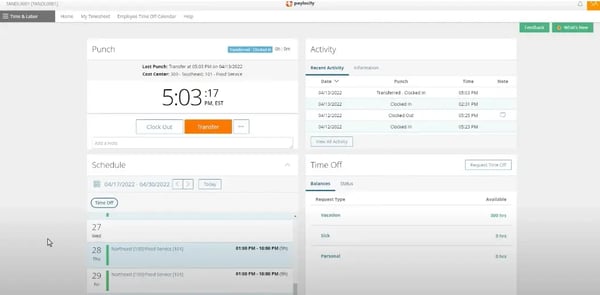
I also noticed reviewers calling out the geolocation tracking built into Paylocity’s time collection tools. Users describe verifying where employees clock in and out from in real time, a capability that several reviewers in field services and healthcare specifically mention as important for attendance accuracy. For organizations managing employees across multiple locations, that visibility helps strengthen accountability without creating additional administrative work.
Pre-processed payroll error checking is another area where Paylocity earns consistent praise. Reviewers describe reports that flag duplicate time entries, missing punches, and pay code discrepancies before payroll is finalized. For payroll administrators, that additional layer of validation helps catch mistakes before they become payroll corrections. G2 Data shows an ease-of-use score of 89%, which holds up well given the breadth of workforce management functionality the platform provides.
The responsiveness of Paylocity’s live support is a recurring theme in the reviews. Several users describe reaching a knowledgeable representative in under 90 seconds for time and payroll issues, with problems resolved during the call rather than queued into a ticket system. For payroll administrators working against hard processing deadlines, that kind of immediate human access makes a practical difference.
That said, custom reporting is an area where reviewers consistently flag room for improvement. Paylocity’s pre-built reports receive strong feedback, but building highly specific reports around labor categories, pay codes, or custom date ranges can require additional effort. Most reviewers note that the standard reporting library covers everyday workforce and payroll reporting needs well, and support is readily available when custom configurations become challenging.
A few reviewers also mention that navigating between payroll, HR, benefits, and workforce management functions can occasionally require more clicks than expected. The tradeoff is access to a broad set of workforce tools within a single platform, reducing the need to manage multiple systems throughout the day.
So, basically, Paylocity is a strong fit for small and mid-sized businesses that want time tracking, scheduling, payroll, and workforce administration operating as one connected workflow. Its combination of payroll validation, workforce visibility, compliance-focused controls, and mobile accessibility makes it particularly valuable for organizations managing growing hourly workforces.
What I like about Paylocity:
- Paylocity combines time tracking, scheduling, payroll, and workforce administration in a single platform, reducing the manual coordination that typically occurs between separate systems.
- Features like kiosk-based time collection, geolocation tracking, and mobile time tracking make it easier for organizations with hourly or distributed workforces to maintain accurate records without adding administrative overhead.
What G2 users like about Paylocity:
“I love Paylocity’s seamless transition from timecard to payroll processing. The ease of processing payroll has significantly lessened my payroll time, bringing it down to one hour for four companies. Its recruitment system is valuable as it posts in numerous forums, creating a wider reach and using job descriptions to attract and qualify candidates effectively. The onboarding is great, letting prospective employees complete 90% of the paperwork before their first day, making the process smooth. I appreciate the system’s intuitiveness, streamlining recruitment and employee recognition of anniversaries and birthdays. Our integration for 401K and paperless time-off requests also works well.”
– Paylocity review, Sue B.
What I dislike about Paylocity:
- G2 reviewers note that building custom time-and-labor reports can require multiple attempts, particularly when pulling specific pay codes, cost centers, or date ranges. Paylocity’s pre-built library covers most everyday reporting needs well, and the support team is responsive when custom configurations run into issues.
- I’ve also seen reviewers mention that navigating between payroll, HR, benefits, and workforce management functions can occasionally require more clicks than they would prefer. The benefit is having those capabilities available within a single platform rather than managing multiple disconnected systems.
What G2 users dislike about Paylocity:
“I have trouble with custom reporting. If I want to figure out something specific, I don’t always know the settings, and the report produces an empty file. I wish it were more intuitive to use. The premade reports are great, but often when I am running a report I build, I need to go back and redo it a few times before anything is produced.”
– Paylocity review, Arturo M.
5. Connecteam: Best for managing deskless and field teams
Connecteam is built for organizations whose employees are in the field, on-site, or moving between locations — and where the biggest time tracking challenge isn’t software complexity; it’s getting a dispersed workforce to log hours accurately and consistently in the first place.
That mobile-first experience is probably the platform’s biggest strength. G2 reviewers praise how easy it is to clock in, review schedules, request time off, and access work information without logging into a desktop portal. According to G2 Data, Connecteam has a Satisfaction Score of 99, which aligns with the positive feedback I found around day-to-day usability.
One thing that stood out to me was the GPS verification tool. Employees can clock in from the field, and location tracking confirms they’re at the job site when their shift begins. Several reviewers in construction, healthcare, and field services describe this as an important safeguard against inaccurate clock-ins and time theft, helping create more accountability without adding administrative work.
The live visibility that comes with Connecteam is something managers in healthcare, civil engineering, and retail mention repeatedly. Seeing exactly who is clocked in, where, and how hours and overtime are tracking across multiple locations from a single dashboard changes the conversation from reactive correction- figuring out what went wrong after payroll- to real-time oversight.
Built-in communication tools are Connecteam’s highest-rated feature on G2, and the reviews make clear why. Chat, announcements, and company updates live alongside time tracking, allowing managers to keep field employees informed without relying on personal messaging apps. For organizations with distributed teams, centralized communication helps reduce information gaps and keeps everyone working from the same source of truth.
Scheduling is another capability reviewers mention frequently. Managers can build shifts, publish schedules, and fill open coverage gaps from the same platform employees use to track time. Several reviewers note that it becomes much easier to coordinate staffing across locations when scheduling and time tracking are integrated into a single workflow.
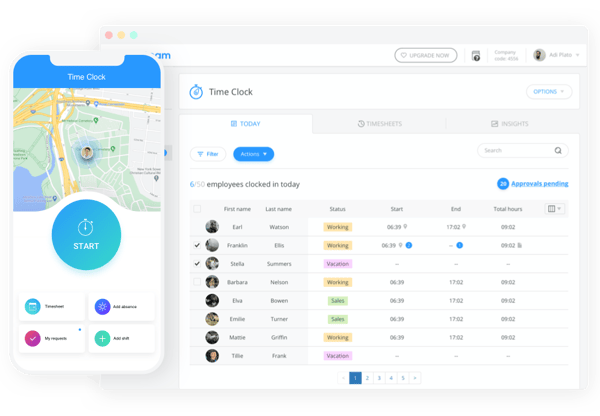
Clocked hours flowing automatically into organized timesheets, with overtime, breaks, and absences calculated against pay rules rather than entered manually, is something reviewers describe as the operational payoff of everything above. One user highlights the ability for employees to request timesheet edits directly through the app, with manager review happening inside the same system. The platform also syncs with payroll providers like ADP, meaning verified hours export without a manual transfer step.
Because Connecteam relies heavily on real-time synchronization, employees in remote areas may occasionally experience delays when updates don’t sync immediately. The tradeoff is the live visibility that many reviewers consider one of the platform’s biggest operational advantages.
Some users have reported that alerts occasionally arrive late or are grouped during busy periods. Even so, reviewers consistently describe communication and workforce coordination as strengths of the platform overall, suggesting that the occasional missed notification is more of an annoyance than a fundamental weakness.
For field service teams, retail operations, construction crews, and any organization managing a workforce that spends its day away from a screen, Connecteam removes the friction that causes time tracking to fail — not by adding features, but by meeting employees exactly where they are.
What I like about Connecteam:
- The mobile-first design puts clock-in, schedule access, task updates, and team communication in one app, replacing the WhatsApp groups, spreadsheets, and paper schedules that most deskless teams still rely on
- Live visibility into who’s clocked in, where they are, and how hours and overtime are tracking across jobs and locations gives managers real-time oversight rather than post-payroll corrections.
What G2 users like about Connecteam:
“I find Connecteam incredibly useful for chatting and updating clients and making quick announcements whenever needed. The software’s mobile-friendly design is amazing for our staff working in the field. The clock-in/clock-out feature, along with GPS tracking, is unique and valuable for ensuring accurate employee attendance and tracking the field team’s specific work locations. The initial setup was quite smooth and simple, which I really appreciated.”
– Connecteam review, Prem L.
What I dislike about Connecteam:
- I came across several reviewers mentioning occasional synchronization delays when employees work in remote areas with weak internet connectivity. The tradeoff is access to real-time workforce visibility and live updates, which many users describe as one of the platform’s most valuable operational advantages.
- Some users also noted that notifications can group during busy periods, making individual updates easier to miss without opening the app directly. It’s fixable during setup, and most reviewers consider Connecteam’s communication tools among its strongest features overall.
What G2 users dislike about Connecteam:
“One limitation I noticed is that some advanced reporting and customization options can feel slightly restrictive for organizations with more complex operational structures. The mobile app experience can also occasionally feel inconsistent compared to the desktop version, especially when handling larger workflows or advanced scheduling adjustments.”
– Connecteam review, Vinay P.
6. Hubstaff: Best for remote and distributed teams tracking productivity
If you’re looking for a no-nonsense time tracker that helps you manage your work hours and team productivity, Hubstaff does many things right.
Hubstaff combines time tracking with workforce visibility to help managers understand how many hours employees work and how those hours are distributed across projects, clients, and daily activities. According to G2 Data, Hubstaff has a Satisfaction Score of 99 based on 1,800+ verified reviews, reflecting how consistently this visibility translates into day-to-day value.
Automated timesheets were another frequently praised capability. Hours logged against tasks and projects automatically populate employee timesheets, reducing the manual effort required to prepare payroll or client invoices. Several reviewers noted that managers can review, approve, and export time records without spending hours reconciling spreadsheets, making the platform especially useful for service-based organizations billing clients by the hour.
One thing that stood out to me was the project budgeting feature. Reviewers describe setting project budgets, hourly limits, and cost thresholds directly within the platform and receiving alerts as teams approach those limits. For project managers overseeing multiple clients or ongoing engagements, this visibility helps identify potential overruns before they affect profitability or client expectations.
Payroll automation surfaced repeatedly throughout the reviews. Users highlighted the ability to connect tracked hours directly to employee pay rates and contractor payments, creating a smoother path from time tracking to compensation. For operations teams managing large groups of contractors or remote workers, this automation reduces administrative overhead while improving payment accuracy.
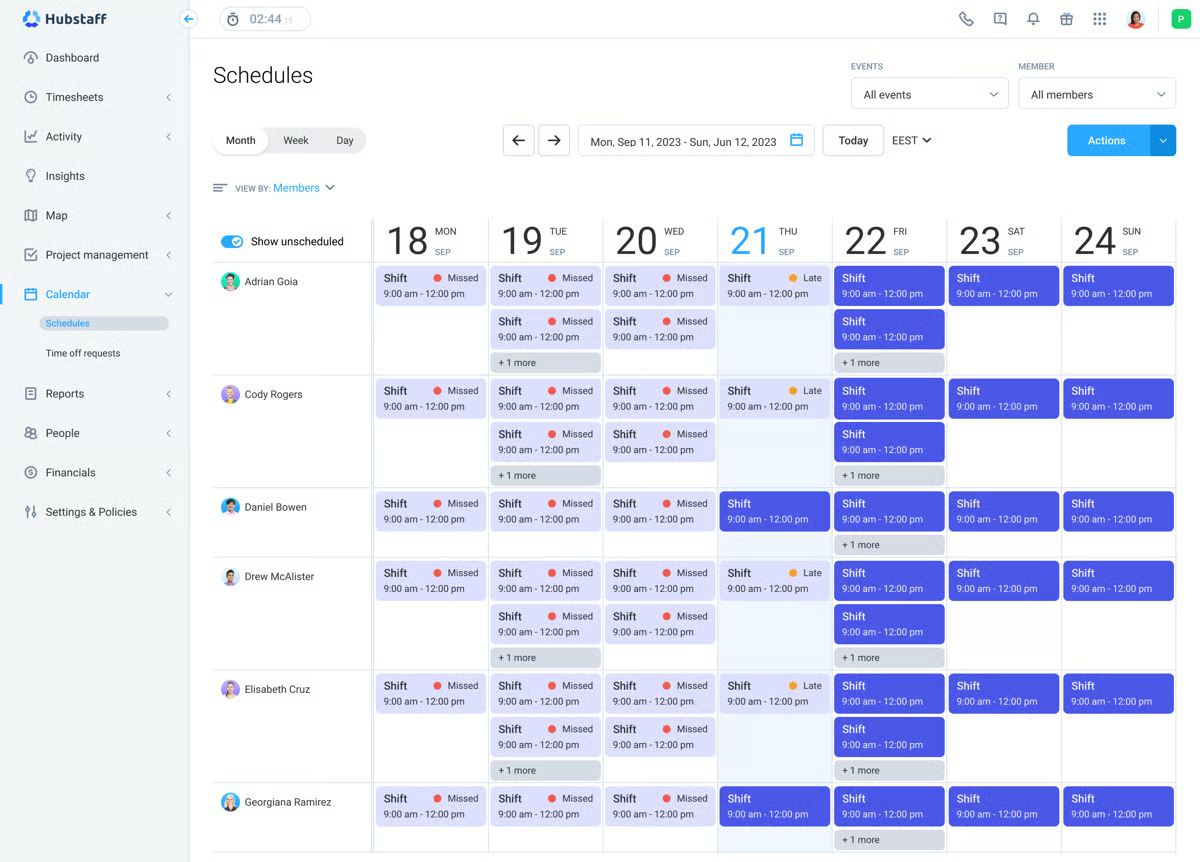
GPS tracking and geofencing add another layer of workforce visibility for organizations with employees working outside traditional office environments. Reviewers in industries such as field services, logistics, construction, and real estate describe using location verification to confirm attendance and automatically capture time at approved job sites. This allows organizations to manage both desk-based and field-based employees from a single platform.
Reporting and workforce analytics also received positive feedback. Users mention using productivity reports, project-level time breakdowns, labor cost analysis, and utilization data to better understand how work is distributed across teams. Rather than simply recording hours worked, Hubstaff helps managers identify workload trends, monitor project performance, and make more informed staffing decisions.
That said, G2 reviewers consistently flag the screenshot and activity monitoring features as feeling intrusive, particularly for employees doing reading-heavy or creative work where keyboard activity doesn’t fully reflect productivity. Hubstaff does give managers control over monitoring settings — screenshots can be blurred, disabled, or randomized — which means teams that configure these settings transparently tend to report fewer adoption issues.
Reviewers also note that idle time detection can be overly sensitive during calls, training sessions, or document review, causing activity scores to understate actual effort. That said, the idle time threshold is adjustable, and several reviewers mention that once teams align on what “active work” looks like for their specific workflows, the data becomes a reliable baseline for productivity conversations rather than a source of friction.
Overall, Hubstaff is a worthy option for remote-first businesses, agencies, and operations teams that need time tracking, productivity visibility, and automated billing to work together in a single platform.
What I like about Hubstaff:
- Hubstaff goes beyond basic time tracking, providing visibility into how work is distributed across projects, clients, and team members.
- The combination of automated timesheets, project budgeting, and payroll workflows reduces the administrative work that typically follows time tracking.
What G2 users like about Hubstaff:
“What I like most about Hubstaff is how easy it makes it to track time and manage productivity across remote teams. Features like automatic time tracking, detailed activity reports, and project-based tracking support transparency without adding extra administrative work. I also find the reporting tools especially helpful for monitoring project progress, balancing workloads, and strengthening team accountability. Overall, Hubstaff offers a straightforward, reliable way to keep projects organized while giving both managers and team members clear visibility into how time is being spent.”
– Hubstaff review, Amro A.
What I dislike about Hubstaff:
- G2 reviewers note that screenshot capture and activity monitoring can feel intrusive, particularly for employees engaged in research, strategy, or creative work, where productivity isn’t always reflected in on-screen activity. However, that same level of visibility is one reason many remote-first organizations choose Hubstaff when accountability and billable-hour verification are priorities.
- Some reviewers mention that activity scores can underrepresent work performed during meetings, training sessions, planning, or document reviews. While this can make productivity metrics feel less precise, many teams still find the reporting valuable when used alongside project outcomes and tracked hours rather than as a standalone performance measure.
What G2 users dislike about Hubstaff:
“Sometimes while switching between different tasks or projects, the timer may need a few extra clicks to start or move correctly, especially between desktop and web tracking. I also feel that some dashboard sections and settings can take time to fully understand at first because there are many options available. Apart from that, the overall experience has been smooth and useful for managing regular work activities.”
– Hubstaff review, Ishan S.
7. Paycom: Best for large enterprises automating employee-driven payroll and time entry
Instead of treating payroll, time tracking, and HR administration as separate workflows, Paycom places employees at the center of the process. Employees can manage time entries, review payroll information, and resolve common issues themselves, reducing the payroll and workforce administration tasks that traditionally fall on HR teams.
Beti, Paycom’s employee-guided payroll feature, came up more consistently across reviews than any other capability. Rather than discovering payroll errors after checks are processed, employees review and verify their pay before payroll closes. Reviewers describe this as an effective shift that helps catch missing punches, overtime discrepancies, and deduction issues earlier in the process. According to G2 Data, Paycom scores 81% for meeting requirements, reflecting its strength as a unified workforce management platform.
The iWant AI feature drew specific attention from reviewers managing multi-module environments. Rather than navigating across sections to pull scheduling data, benefits information, or PTO balances, employees and managers can type or speak a request and retrieve the information directly. For HR teams supporting large workforces, this makes routine answers easier to access without requiring every user to know exactly where each data point lives.
Policy compliance management was another feature that stood out to me for regulated, multi-location workforces. Reviewers cite the ability to create rules that automatically enforce corporate time-and-attendance policies, including overtime thresholds, break requirements, and scheduling restrictions. For enterprises operating across multiple states or managing union and non-union workforces simultaneously, this helps maintain consistent policy enforcement across locations without relying on manual oversight.
Scheduling is tightly connected to Paycom’s time-tracking workflow. Managers can build shift schedules, manage availability, approve time-off requests, and compare scheduled hours against actual hours worked from a single interface. Reviewers note that having schedule and time data together makes it easier for operations teams to handle coverage gaps, overtime, and last-minute changes. G2 Data shows Paycom has a likelihood-to-recommend score of 93%, which aligns with the operational value reviewers describe across time, scheduling, and payroll workflows.
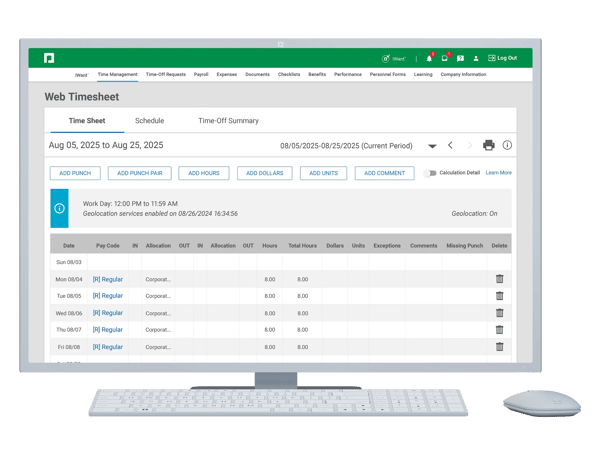
I really liked the automated reminders feature that came up in reviews. The platform sends automatic alerts to employees who haven’t completed timesheets or have outstanding punch actions, reducing the manual follow-up that typically falls on managers and payroll administrators at the end of each pay period. For large workforces where chasing down incomplete timecards is a recurring bottleneck, this built-in prompting keeps time data accurate without adding to the administrative workload.
Project- and task-level time tracking adds another layer of granularity for teams that need more than just attendance data. Paycom allows employees to log hours for specific tasks and activities, with billable time rate management that lets administrators set different rates by user, role, or project assignment.
That said, custom reporting is one area where G2 reviewers flag room for improvement. Building reports that span multiple modules may require additional configuration steps that feel less intuitive than the rest of the platform. Yet, Paycom’s pre-built report library covers most standard workforce reporting needs well, and reviewers note that the dedicated support team is responsive when custom configurations become challenging.
A few reviewers also mention occasional geofencing inconsistencies that require manual punch adjustments when employees clock in from approved locations. While these situations can create additional administrative work, location-verified time tracking still provides stronger attendance controls than traditional self-reported time-entry methods.
In a nutshell, Paycom is a good fit for mid-market and enterprise organizations that want time tracking, scheduling, and payroll to operate as a single automated system — with employees doing more of the verification work that HR teams typically handle. Its single-database architecture and employee self-service model make it valuable for organizations where payroll accuracy and administrative efficiency are both strategic priorities.
What I like about Paycom:
- Beti’s ability to shift payroll verification to employees before payroll is processed. Catching missing punches, overtime discrepancies, and deduction issues earlier helps reduce the costly correction cycles that often follow payroll runs.
- Paycom’s policy compliance management capabilities is also praised. For organizations operating across multiple locations or managing complex labor requirements, automatically enforcing overtime thresholds, break policies, and scheduling rules helps reduce compliance risk without requiring constant administrative oversight.
What G2 users like about Paycom:
“Paycom is a comprehensive solution with the ability to help employees and supervisors. The new AI widget has also made it easier to find support and understand the information you are looking at. Accessibility across multiple devices helps to make Paycom easy to access and use as both an employee and supervisor.”
– Paycom review, Jeremy H.
What I dislike about Paycom:
- G2 reviewers note that building highly customized reports across payroll, labor, and workforce data can require additional configuration and feel less intuitive than other areas of the platform. The tradeoff is access to detailed workforce analytics that larger organizations can use to gain visibility across multiple operational functions.
- Some reviewers report occasional geofencing inaccuracies in which the mobile app fails to recognize an approved clock-in location, requiring a manual punch correction. While these situations can create additional administrative steps, location-verified time collection still provides stronger attendance controls than traditional self-reported time-entry methods.
What G2 users dislike about Paycom:
“I wish for several site improvements, like an easier position management tool. Right now, it’s very hard to explain to others in my department how it works and it just seems clunky. I wish there was an easy way to vacate a seat or remove someone from the org chart. A better way to provide site feedback or suggestions would be helpful too.”
– Paycom review, Bethany S.
Comparison of the best time tracking software for 2026
| Software | G2 Rating | Free plan and trial | Starting price of paid plans |
| UKG Ready | 4.4/5 | No free plan or trial available | Custom pricing |
| monday Work Management | 4.7/5 | Yes; free plan and a 14-day free trial available | $9 per seat, per month |
| ClickUp | 4.6/5 | Yes; free plan and free trial available | $7 per user, per month |
| Paylocity | 4.4/5 | No free plan or trial available | Custom pricing |
| Connecteam | 4.6/5 | Yes; free plan and a 14-day free trial available | $29 per month |
| Hubstaff | 4.4/5 | No free plan; 14-day free trial available | $4.99 per user, per month |
| Paycom | 4.5/5 | No free plan or free trial available | Custom pricing |
Note: G2 ratings are based on user reviews and are subject to change.
Frequently asked questions about time tracking software
Have more questions? Find more answers below.
Q. What is the most trusted time tracking software among project managers based on user reviews?
monday Work Management and ClickUp are strong choices for project managers. monday Work Management is best for workload visibility and resource planning, while ClickUp is better for task-level time tracking, estimates, and project forecasting.
Q. What is the highest rated time tracking for improving project profitability and visibility?
ClickUp and monday Work Management are best for project profitability. ClickUp helps teams compare estimated vs. actual hours, while monday Work Management gives managers visibility into workloads, budgets, and resource allocation.
Q. Which time tracking platforms do employees consistently use without manager follow-up?
Connecteam, ClickUp, and Paycom support consistent time entry. Connecteam works well for mobile and field teams, ClickUp embeds time tracking into tasks, and Paycom uses reminders to help employees complete timesheets before payroll deadlines.
Q. Which is the most reliable time tracking software based on reviews from professional services teams?
ClickUp and monday Work Management are reliable options for professional services teams. Both connect time tracking to client projects, billable work, and reporting, helping teams manage utilization, budgets, and profitability.
Q. Which time tracking software reduces data entry friction while maintaining accuracy specifically?
UKG Ready and Connecteam are strong options. UKG Ready connects approved hours directly to payroll workflows, while Connecteam simplifies time capture with mobile clock-ins, GPS verification, and automated timesheets.
Q. Which time tracking platforms do project managers rely on for accurate billable hour capture across client work?
ClickUp is one of the best choices for billable-hour tracking because time is logged directly within tasks and deliverables. monday Work Management is also useful for agencies that need billable-hour visibility alongside project and workload management.
Q. Which time tracking systems integrate with project management without disrupting team workflows?
monday Work Management and ClickUp integrate time tracking directly into project workflows. Teams can log time inside tasks, boards, and projects instead of switching to a separate time-tracking system.
Q. What are the top time tracking solutions for improving project profitability through visibility?
monday Work Management and ClickUp are good options. monday Work Management helps managers track workloads and budgets, while ClickUp shows estimated vs. actual time to identify scope creep and improve forecasting.
Q. What are the best time tracking platforms that teams complete without constant administrator reminders?
Connecteam performs particularly well for distributed and deskless teams because employees can clock in and out on a mobile device with no additional steps. ClickUp also supports strong adoption by embedding time tracking directly into day-to-day work, reducing the likelihood that employees forget to log hours.
Q. What is the best time tracking software for professional services capturing billable hours?
ClickUp is best for professional services teams focused on billable hours. Its task-level time logs, timesheet exports, and reporting help teams accurately capture client work. monday Work Management is better when firms also need resource planning.
Q. What is the best real-time time tracking app?
Connecteam is best for real-time workforce visibility. Managers can see who is clocked in, where employees are, and how hours are tracking across locations. monday Work Management is better for real-time project and workload visibility.
Q. What is the best free time tracking software for businesses?
If you’re looking for a free option, ClickUp is the best choice. Multiple G2 reviewers mention starting with ClickUp’s free plan before expanding usage across larger teams, making it a practical option for startups, freelancers, and businesses evaluating time-tracking software without an upfront investment.
Q. What is the best-rated time tracking solution for startups?
ClickUp and monday Work Management are good choices for startups. ClickUp works well for task-level time tracking, while monday Work Management gives growing teams better visibility into workloads and capacity.
Q. What is the best time tracking software for small businesses?
Paylocity and Connecteam are worthy small-business options. Paylocity is best for teams that need time tracking connected to payroll and HR, while Connecteam works well for deskless and field employees.
Q. Which app is best for employee time tracking?
Connecteam is particularly suitable for field teams and deskless workers because of its mobile-first design and GPS-based verification, while UKG Ready excels for organizations that need employee hours to be connected directly to payroll, scheduling, and workforce management processes.
Q. What is the best time tracking tool for freelancers?
ClickUp is the most practical option for freelancers. Its native task timer, timesheet exports, and free plan make it practical for tracking billable hours, organizing client work, and preparing invoices.
Q. What is the top-rated time tracking service for enterprises?
UKG Ready is a good enterprise-focused option. It combines time tracking, scheduling, payroll, reporting, and HR workflows, making it well-suited for organizations managing large and complex workforces.
Q. What is the most reliable time tracking app for productivity?
ClickUp is best for task-level productivity tracking, while monday Work Management is better for team workload visibility. Hubstaff is useful for organizations that need activity insights and automated timesheets.
Q. What software do companies use for time tracking?
Companies use different tools based on their workforce. UKG Ready and Paylocity are common for payroll-connected time tracking, monday Work Management and ClickUp for project teams, and Connecteam for deskless or field employees.
Clock’s ticking, choose wisely.
After working through hundreds of G2 reviews across the time tracking category, one thing stood out: the tools that earn the highest satisfaction scores aren’t necessarily the ones packed with the most features. They’re the ones who create the least distance between an employee and an accurate time entry. That gap, between what a tool can do and what people will actually do with it, is where most time-tracking implementations quietly fall apart.
Here’s something worth sitting with: the organizations that struggle most with time tracking rarely have a software problem. They have an adoption problem. The right platform doesn’t just track hours; it disappears into the workflow so completely that logging time stops feeling like an extra task and starts to feel like a natural byproduct of the work already being done.
If there’s one thing I’d leave you with, it’s this: don’t evaluate time tracking software by its feature list. Evaluate it by how much friction it removes for the person who uses it every day. That’s where the real value shows up, not in the dashboard, but in the data that actually makes it there.
Ready to explore more? Take a look at our report on top-rated time and attendance software for enterprise to see how businesses handle the full employee lifecycle.
[ad_2]
Source_link