[ad_1]
Key takeaways:
- Herfy-like app development costs SAR 150,000 to SAR 1,500,000 ($40,000 to $400,000).
- Costs rise with rider tracking, POS sync, kitchen displays, loyalty, and branch controls.
- Saudi apps need Arabic UX, Mada, STC Pay, VAT, and ZATCA-ready invoice flows.
- Peak loads during Ramadan, Eid, and weekends need strong backend and load testing.
- A phased MVP, cross-platform build, and existing POS APIs can reduce development costs.
The cost to develop an app like Herfy in Saudi Arabia ranges from SAR 150,000 to SAR 1,500,000 ($40,000 to $400,000) in 2026. A basic food ordering app covers menu, cart, checkout, payments, pickup, delivery status, and admin access. A full QSR platform costs more when it includes rider tracking, kitchen displays, POS sync, loyalty, branch-level menus, Arabic-English UX, local payments, VAT, and ZATCA-ready invoices.
The final cost depends on app scope, number of branches, backend depth, payment setup, delivery logic, and Saudi-specific requirements. And in a market growing at a 15.18% CAGR, the cost becomes more competitive and unpredictable.
Therefore, to save you, this blog breaks down the complete Herfy-like app development cost, including features, timeline, tech stack, hidden costs, and ways to optimize the budget.
Unlock an exact budget for your requirements
Share your goals with our team, and we will help you plan a scope-creep-proof budget.
Cost to Develop an App Like Herfy
The cost to build a Herfy-like app in Saudi Arabia ranges from SAR 150,000 to SAR 1,500,000 ($40,000 to $400,000). A small burger brand in Riyadh may only need ordering, payments, pickup, and basic delivery. A larger QSR chain needs more control over branches, kitchens, riders, stock, offers, and customer data.
| App Scope | Cost in SAR | Cost in USD | What It Covers |
|---|---|---|---|
| Basic ordering app | SAR 150,000 to SAR 300,000 | $40,000 to $80,000 | Menu, cart, login, pickup, payment, order status, and simple admin access. |
| Standard restaurant app | SAR 300,000 to SAR 750,000 | $80,000 to $200,000 | Customer app, rider app, live tracking, loyalty points, offers, Mada, STC Pay, and Apple Pay. |
| Multi-branch QSR app | SAR 750,000 to SAR 1,125,000 | $200,000 to $300,000 | Branch menus, POS links, kitchen screens, stock updates, delivery zones, and sales reports. |
| Enterprise food ordering platform | SAR 1,125,000 to SAR 1,500,000 | $300,000 to $400,000 | CRM, live inventory, VAT setup, ZATCA-ready invoices, campaign tools, reports, and stronger backend control. |
Most Saudi restaurants start with a lean app first. Ordering, payment, delivery status, offers, and admin control are enough for the first launch. The price rises with Arabic-English screens, right-to-left design, POS sync, kitchen display links, rider routing, branch-wise menus, and Ramadan or Eid offer tools.
Choosing the right restaurant app development company can also affect the final budget. A team with Saudi QSR experience will plan for Arabic UX, local payments, branch rules, and invoice flow early, reducing costly fixes later.
Also Read: How to build an online food delivery app like Talabat?
Breaking Down the Cost Based on Flows
A Herfy-style app is not priced solely by screens. The main spend goes into order routing, branch logic, kitchen flow, rider movement, payments, tax records, and real-time sync across systems.
To simplify, the cost depends on how deeply the app connects to the restaurant ordering ecosystem. A basic setup may only link the menu, cart, payments, and admin panel. A larger QSR platform connects mobile ordering, delivery, loyalty, kitchen operations, rider dispatch, POS, inventory, branch rules, and customer data in one system.
Cost Breakdown Based on Customer Experience
This covers the part customers use daily, from menu browsing to checkout and order tracking.
| Cost Area | Cost in SAR | Cost in USD | What Goes Into It |
|---|---|---|---|
| App design and user flow | SAR 15,000 to SAR 56,250 | $4,000 to $15,000 | Arabic-English screens, right-to-left layout, menu flow, cart, checkout, and order status |
| Ordering module | SAR 30,000 to SAR 112,500 | $8,000 to $30,000 | Meal add-ons, combos, saved addresses, pickup, delivery, repeat orders, and coupon use |
| Loyalty and offers | SAR 18,750 to SAR 75,000 | $5,000 to $20,000 | Points, cashback, Ramadan boxes, Eid bundles, family meals, and app-only deals |
Cost Breakdown Based on Branch and Kitchen Operations
This covers the tools used by branch managers, kitchen staff, and head office teams.
| Cost Area | Cost in SAR | Cost in USD | What Goes Into It |
|---|---|---|---|
| Admin panel | SAR 37,500 to SAR 150,000 | $10,000 to $40,000 | Order view, branch settings, staff roles, menu edits, offer setup, and daily reports |
| Kitchen display flow | SAR 26,250 to SAR 112,500 | $7,000 to $30,000 | Kitchen tickets, prep status, ready-for-pickup alerts, delay flags, and handover updates |
| Branch rules engine | SAR 30,000 to SAR 131,250 | $8,000 to $35,000 | City-wise menus, branch timings, delivery radius, stock rules, and local pricing |
Cost Breakdown Based on Delivery and Rider Flow
This covers dispatch, rider tracking, and customer delivery status updates.
| Cost Area | Cost in SAR | Cost in USD | What Goes Into It |
|---|---|---|---|
| Rider app | SAR 30,000 to SAR 131,250 | $8,000 to $35,000 | Rider login, assigned orders, pickup status, delivery status, route view, and earnings |
| Dispatch logic | SAR 30,000 to SAR 150,000 | $8,000 to $40,000 | Rider assignment, distance checks, branch load, order priority, and delivery zones |
| Live tracking | SAR 22,500 to SAR 93,750 | $6,000 to $25,000 | GPS updates, ETA, OTP delivery, customer alerts, and map support for malls, towers, and compounds |
Cost Breakdown Based on Backend and Integrations
This is where most technical work sits. It keeps the app, branch, kitchen, rider, and payment systems connected.
| Cost Area | Cost in SAR | Cost in USD | What Goes Into It |
|---|---|---|---|
| Backend and API layer | SAR 56,250 to SAR 337,500 | $15,000 to $90,000 | User data, order data, branch logic, notifications, server setup, and API connections |
| POS and inventory sync | SAR 37,500 to SAR 225,000 | $10,000 to $60,000 | POS links, stock updates, item availability, order records, and branch inventory |
| Payment setup | SAR 22,500 to SAR 131,250 | $6,000 to $35,000 | Mada, STC Pay, Apple Pay, cards, refunds, failed payments, VAT, and payment logs |
| Saudi invoice flow | SAR 18,750 to SAR 93,750 | $5,000 to $25,000 | VAT logic, receipt data, ZATCA-ready invoice format, and customer billing records |
Cost Breakdown Based on Testing and Launch
This checks the app before real users place orders during peak hours.
| Cost Area | Cost in SAR | Cost in USD | What Goes Into It |
|---|---|---|---|
| QA testing | SAR 26,250 to SAR 105,000 | $7,000 to $28,000 | Order tests, payment tests, Arabic layout checks, rider flow, and bug fixes |
| Load testing | SAR 15,000 to SAR 67,500 | $4,000 to $18,000 | Iftar rush, weekend orders, Eid traffic, checkout load, and branch order spikes |
| Launch support | SAR 11,250 to SAR 45,000 | $3,000 to $12,000 | App Store release, Play Store release, release checks, monitoring, and first-week fixes |
For Saudi QSR brands, the higher spend usually sits in backend logic, POS sync, local payments, ZATCA-ready records, branch rules, and rider dispatch. These parts decide how well the app works during Ramadan evenings, weekend dinner hours, and large campaign days.
Look Under the Hood of a Winning Agency
Discover our full range of services and see the battle-tested strategies that keep our clients coming back.
Key Factors That Affect the Cost to Develop an App Like Herfy
The factors affecting the cost of developing an app like Herfy mostly come from backend depth, branch control, payment setup, and Saudi market needs.
- App Modules and User Roles: A simple app needs a customer app and an admin panel. A Herfy-like build needs a customer, rider, kitchen, branch manager, and super admin modules. Each role adds screens, permissions, alerts, and data rules.
- Arabic-English Experience: Arabic support is not just translation. The app needs right-to-left layouts, Arabic menu names, local address fields, bilingual receipts, and Arabic push alerts. These details add design, frontend, and QA time.
- Branch-Level Menu Control: Saudi QSR chains often run different menus across Riyadh, Jeddah, Dammam, Makkah, and Medina. The backend must handle branch timings, local prices, delivery zones, stock status, and sold-out items.
- POS and Kitchen System Links: POS sync raises cost. The app must pass orders, payments, refunds, stock updates, and item notes without duplicate records. Kitchen display links add prep status, delay flags, and handover updates.
- Local Payments and Invoice Flow: Mada, STC Pay, Apple Pay, cards, refunds, VAT records, and ZATCA-ready invoices need careful backend work. Payment webhooks must update order status correctly, mainly during peak traffic.
- Rider Dispatch and Live Tracking: Delivery logic adds cost when the system checks rider distance, branch load, order age, and delivery radius. This matters during iftar rush, weekend dinners, and large offer campaigns.
- Loyalty and Campaign Rules: Points, cashback, coupons, referrals, Ramadan boxes, Eid bundles, and National Day offers need a rule engine. Costs rise when offers change by branch, date, city, or customer segment.
- Cloud, Security, and Reports: The cost to develop an app like Herfy grows with load testing, caching, backups, API monitoring, role-based access, encrypted data, audit logs, and detailed reports for sales, refunds, orders, and rider delays.
- High Concurrency and Peak Load Planning: Saudi food ordering demand can rise fast during Ramadan, Eid, weekends, and major campaigns. The app needs autoscaling, cached menus, order queues, payment retries, and load testing. These choices add cost, but they protect revenue during peak hours.
- Microservices and Failure Isolation: An enterprise QSR app needs separate services for orders, payments, loyalty, inventory, kitchen flow, dispatch, and alerts. This keeps the platform stable. For example, if loyalty fails, customers should still place orders.
- Ghost Kitchen and Multi-Brand Fulfillment: Restaurant groups often run multiple brands from shared kitchens. The backend should support virtual menus, shared inventory, brand-wise pricing, and kitchen-level routing. Planning this early helps avoid costly rework later.
- Phase 2 ZATCA Readiness: ZATCA-ready invoices need VAT data, QR details, secure storage, refund records, and finance exports. Phase 2 readiness adds backend work, but it helps reduce compliance risk.
Development Timeline for an App Like Herfy
A Herfy-like app can take 12 to 32 weeks to build. The timeline depends on modules, branch logic, payment setup, POS links, Arabic-English screens, and testing for Saudi peak hours.
| Phase | Timeline | What Gets Done |
|---|---|---|
| Planning and scope | 1 to 2 weeks | Team maps order flow, user roles, branch rules, delivery zones, and launch features. |
| UI and UX design | 2 to 4 weeks | Customer app, rider app, kitchen screen, and admin panel designs are created in Arabic and English. |
| Customer app build | 4 to 8 weeks | Menu, cart, login, offers, checkout, saved addresses, order status, and live tracking are built. |
| Admin and branch panel | 4 to 7 weeks | Teams add menu control, branch timings, city-wise prices, staff roles, offers, and reports. |
| Kitchen and rider modules | 3 to 6 weeks | Kitchen tickets, prep status, rider tasks, GPS tracking, OTP delivery, and handover updates are added. |
| Backend and integrations | 5 to 10 weeks | APIs, order routing, payment webhooks, POS sync, stock checks, and ZATCA-ready invoice flow are built. |
| Testing and launch | 2 to 4 weeks | QA checks payments, Arabic layouts, refunds, rider flow, and load during Ramadan, Eid, and weekend rush. |
For Herfy app clone development, the bulk of the work lies in backend logic, POS sync, local payments, and branch-level controls. A basic launch can take 12 to 16 weeks. A multi-branch Saudi QSR platform may need 24 to 32 weeks.
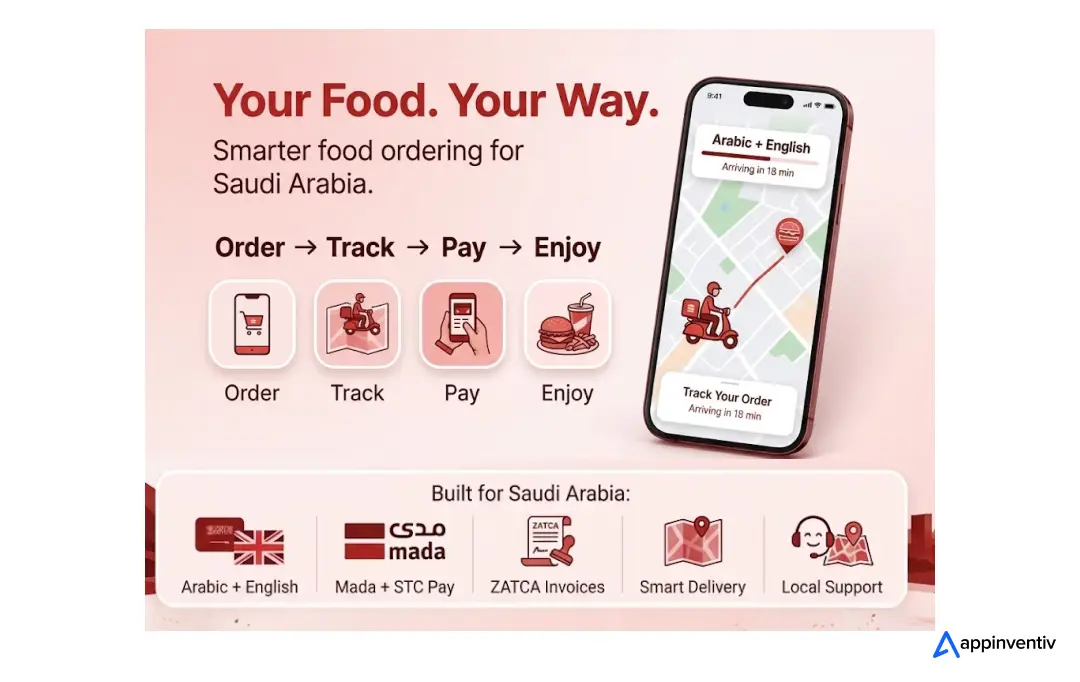
Must-Have Features of a Herfy-Like App
The features of an app like Herfy should match how Saudi QSR chains take, prepare, and deliver food across busy cities. The app must handle Arabic users, local payments, branch stock, kitchen load, rider movement, and campaign peaks without breaking the order flow.
Beyond order placement, the app also needs strong customer engagement features. Loyalty points, app-only offers, push notifications, repeat-order options, saved favorites, support access, and campaign-based rewards help Saudi QSR brands bring customers back without depending only on food aggregators.
1. OTP Login With Saudi Mobile Support
Customers should sign in with a Saudi mobile number and OTP. The app should support country code +966, saved profiles, past orders, saved cards, favorite meals, and multiple addresses.
Address fields must work for villas, apartments, offices, malls, towers, and compounds. This matters in Riyadh, Jeddah, Dammam, Makkah, and Medina, where delivery instructions often need landmarks or gate details.
2. Arabic-First Menu With Branch-Level Stock
The menu should support Arabic and English names, right-to-left layout, item photos, calories, add-ons, sauces, drinks, and family meals. Each item should be connected to the branch stock.
If spicy chicken is sold out at one Riyadh branch, the app should hide it only for that branch. Other outlets should keep selling it. This needs catalog logic, SKU mapping, and real-time stock checks.
3. Pickup and Delivery Logic
The app should not blindly accept every order. It should check branch timing, delivery radius, kitchen load, rider availability, customer location, and item stock before checkout.
For pickup orders, customers need the branch location, prep time, and ready status. For delivery orders, the system should assign the best branch based on distance, stock, and order queue.
4. Local Payment Flow
A Saudi QSR app needs Mada, STC Pay, Apple Pay, card payments, refunds, failed-payment retries, VAT records, and digital receipts.
The backend should capture payment status through webhooks. It should not create duplicate orders after a failed or delayed payment. This one detail can save a lot of support tickets during rush hours.
5. Kitchen Display System
The kitchen screen should show order items, add-ons, removed ingredients, prep notes, and priority. Staff should mark the order as accepted, preparing, ready, delayed, or handed to the rider.
This keeps the customer app, rider app, and admin panel up to date without phone calls between the counter and the kitchen.
6. Rider App and Dispatch Control
The rider app should show order details, pickup branch, route, OTP handover, and delivery status. Dispatch teams should track rider workload, delays, and active orders from one dashboard.
During peak hours, the system must assign orders based on distance, branch load, delivery radius, and rider availability. It should also support landmarks, gate numbers, floor details, and compound notes for smoother Saudi deliveries.
7. Admin Panel for Multi-Branch Control
The admin panel should let teams manage branch menus, prices, timings, offers, riders, refunds, staff roles, and daily reports.
A branch in Makkah may need different delivery rules than one in Riyadh. A Jeddah outlet may run a local offer that does not apply in Dammam. The panel should support these city-wise rules.
8. Loyalty and Campaign Engine
The app should support points, cashback, referrals, birthday rewards, repeat-order offers, and app-only deals.
Saudi QSR brands can use the same engine for Ramadan boxes, Eid bundles, family meals, lunch offers, and Saudi National Day campaigns. The system should allow date-based offers, branch-wise offers, and minimum order rules.
9. Order Alerts and Support
Customers should receive useful alerts or push notifications for payment success, order acceptance, food readiness, rider assignment, and delivery completion. Messages should work in Arabic and English.
Support teams should see order history, payment status, rider details, refund status, and branch notes in one place. This helps them solve missing items, late orders, or failed payment cases faster.
10. Reports That Help Daily Decisions
The dashboard should show top-selling meals, slow branches, late orders, failed payments, coupon use, repeat customers, and refund reasons.
For brands planning to develop an app like Herfy, these reports matter after launch. They show which branches need more riders, which meals sell during Ramadan, and which offers bring customers back.
Saudi Arabia-Specific Requirements for a Herfy-Like App
A Saudi food ordering app has to feel local from day one. Brands that plan to develop an app like Herfy need to account for language, payments, tax records, delivery habits, and peak-hour traffic before the build starts.
- Arabic-first app flow: Arabic should not feel like a late translation. The app needs Arabic and English screens, right-to-left layouts, Arabic menu names, bilingual receipts, and clear push alerts.
- Local payment setup: Checkout should support Mada, STC Pay, Apple Pay, cards, refunds, and retries for failed payments. The backend must process payment callbacks quickly, update order status, and prevent duplicate orders.
- VAT and ZATCA invoice flow: Each order needs clean tax data, receipt records, refund notes, and invoice storage. This should sit inside the database logic, not as a small add-on after launch.
- Customer data control: The app stores names, phone numbers, delivery addresses, order history, and loyalty data. Teams need consent logs, role-based access, encrypted records, and audit trails.
- Saudi address handling: Riders need more than a map pin. The app should capture villas, apartments, malls, towers, offices, compounds, gates, floors, and landmarks across Riyadh, Jeddah, Dammam, Makkah, and Medina.
- Peak-hour stability: Ramadan iftar, Eid orders, weekend dinners, and National Day deals can bring sudden traffic. The app needs cached menus, order queues, stock checks, payment retry logic, and load testing.
These local details can raise the cost to develop an app like Herfy, but they save the brand from bigger problems later. A Saudi QSR app has to handle real branch pressure, not just look good in a demo.
Why Custom Food Delivery App Development Works Better Than SaaS for Saudi QSR Brands
White-label SaaS works for small restaurants that need a quick ordering setup. However, Saudi QSR chains need more control over branches, payments, POS, Arabic UX, loyalty, invoices, and delivery operations.
A custom Herfy-like app gives the brand full control over customer data, workflows, integrations, and future scaling.
| Factor | SaaS Platform | Custom Herfy-Like App |
|---|---|---|
| Arabic UX | Basic translation | RTL-first Arabic experience |
| POS Sync | Limited connectors | Deep POS, kitchen, and inventory links |
| Branch Control | Basic menu settings | City-wise menus, stock, pricing, and delivery zones |
| Payments | Limited options | Mada, STC Pay, Apple Pay, refunds, and VAT logs |
| ZATCA | May need workarounds | Invoice logic is built into the backend |
| Scaling | Shared limits | Built for peak loads and multi-branch growth |
| Data Ownership | Limited access | Full control over customer and order data |
For CIOs and CFOs, this choice is about control, not just launch speed. SaaS may cost less at first, but it can limit growth as the brand expands across Saudi cities.
Recommended Tech Stack for Developing an App Like Herfy
The technology stack for building a food delivery app should fit the daily restaurant work in Saudi Arabia. Orders must reach the right branch. Riders need clear routes. Finance teams need correct payment, VAT, and invoice records.
| Tech Area | Suggested Stack | Practical Use |
|---|---|---|
| Frontend Technologies | Flutter, React Native, Swift, Kotlin | Customer and rider apps with Arabic-English screens, right-to-left layout, quick checkout, and live order status. |
| Backend Technologies | Node.js, NestJS, Java Spring Boot, FastAPI | Branch selection, order routing, coupon rules, refunds, kitchen status, and staff roles. |
| Database Systems | PostgreSQL, MongoDB, Redis | Orders, users, menus, stock, loyalty points, and cached menu data for rush hours. |
| Real-Time and Location Services | WebSockets, Firebase, Google Maps, Mapbox | Rider location, ETA, route changes, OTP delivery, and live order alerts. |
| Cloud and DevOps Infrastructure | AWS, Azure, Docker, Kubernetes | Hosting, backups, app releases, logs, rollbacks, and traffic spikes during iftar or Eid. |
| AI and Machine Learning Integration | Python, TensorFlow, SageMaker | Demand forecast, meal suggestions, late-order alerts, and branch stock planning. |
| Payment Gateway Integration | HyperPay, PayTabs, Moyasar, Checkout.com | Mada, STC Pay, Apple Pay, cards, refunds, VAT records, and payment callbacks. |
| API and Third-Party Services | REST, GraphQL, POS APIs, WhatsApp API, Twilio | POS sync, OTP login, CRM links, WhatsApp alerts, support tools, and branch data. |
| Security and Authentication | OTP, JWT, OAuth 2.0, RBAC, SSL | Safe login, staff access limits, admin control, address data, and payment record protection. |
| Analytics and Monitoring Tools | GA4, Firebase, Mixpanel, Sentry, Grafana | Failed payments, app crashes, late orders, top meals, coupon use, and branch issues. |
For a Saudi QSR brand, the stack should solve ground-level problems first. It needs to handle Arabic users, Mada payments, branch-wise menus, rider movement, VAT records, and ZATCA-ready invoice data from the start.
Hidden Costs of Building an App Like Herfy
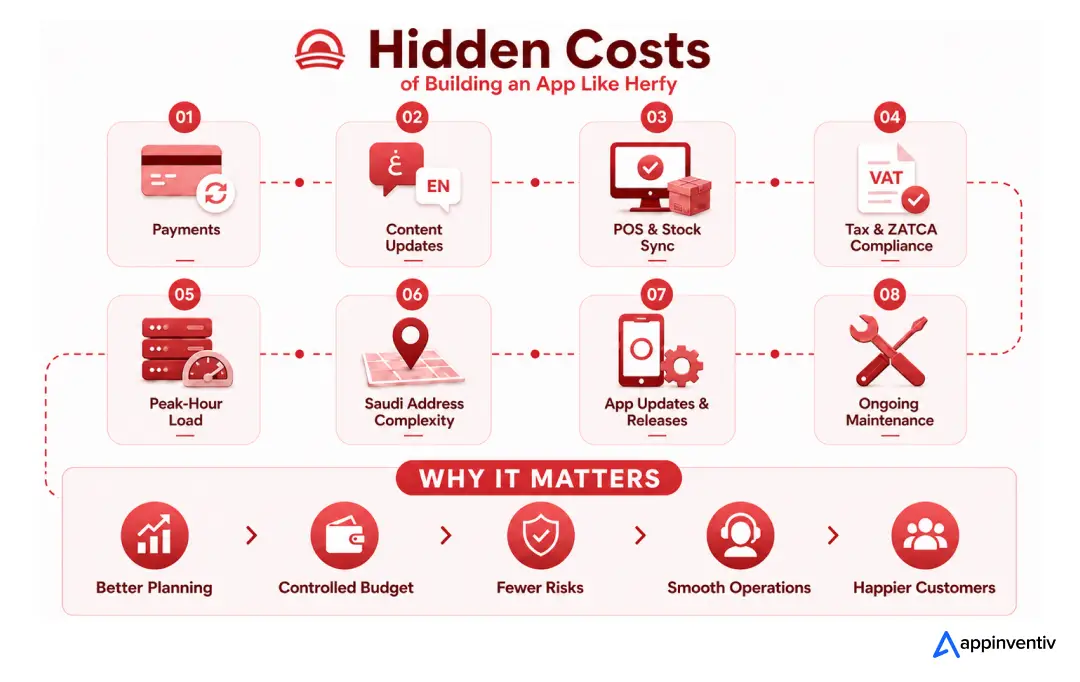
Hidden costs usually appear after the first build. They come from payments, branch changes, tax records, content updates, and real Saudi delivery pressure.
- Payment retries and refunds: Mada, STC Pay, Apple Pay, and card payments require callback handling, refund logs, failed-payment checks, and duplicate-order protection.
- Arabic and English content upkeep: Menus, add-ons, offers, receipts, push alerts, and help messages need regular Arabic-English updates. A small copy error can hurt checkout trust.
- POS and stock sync gaps: The app, POS, and kitchen screen must stay in sync. If one branch runs out of a meal, the app should stop showing it for that branch only.
- VAT and ZATCA records: Each order needs correct VAT data, invoice records, refund notes, QR details, and finance exports. This work continues after launch.
- Peak-hour server load: Ramadan iftar, Eid orders, weekend dinners, and National Day offers can spike traffic fast. Cached menus, order queues, and load testing add cost.
- Saudi address fixes: Riders often need gate numbers, tower names, floor details, mall pickup points, compound notes, and nearby landmarks. GPS alone is not enough.
- Release and update work: iOS and Android updates need testing, store review, crash fixes, rollback plans, and version control.
- Monthly maintenance: New branches, menu changes, payment bugs, security patches, offer updates, and rider issues need ongoing work after launch.
How is Vision 2030 influencing AI adoption in food delivery and restaurant apps?

Vision 2030 is pushing Saudi restaurants toward faster, smarter, and more customer-focused digital systems. For food delivery and QSR brands, this means apps are no longer limited to menu browsing and checkout. They now need AI-backed features that improve ordering, delivery, loyalty, branch planning, and customer engagement.
Here’s how Vision 2030 is shaping AI adoption in restaurant apps:
- Smarter demand forecasting: AI can help restaurants predict order spikes during Ramadan, Eid, weekends, lunch hours, and large campaigns.
- Personalized meal recommendations: Apps can suggest meals, combos, add-ons, and repeat orders based on customer behavior and past purchases.
- AI-led loyalty campaigns: Restaurants can use AI to segment customers and send more relevant offers, cashback, app-only deals, and seasonal rewards.
- Delivery delay prediction: AI can track order volume, rider availability, branch load, and traffic patterns to flag possible delays early.
- Branch-level stock planning: AI can help teams understand which meals sell more by city, branch, time, or season, reducing stockouts and waste.
- Automated customer support: AI chatbots can answer common questions around order status, refunds, menu items, delivery issues, and offers in Arabic and English.
These AI features can increase the cost to develop an app like Herfy, but they also make the platform more scalable and competitive. For Saudi QSR brands, Vision 2030-aligned app development is about building a smarter ordering ecosystem that improves customer experience, delivery performance, loyalty, and branch operations together.
Explore how Appinventiv is accelerating Vision 2030
Strategies to Optimize the Cost to Build An App Like Herfy
A Saudi QSR brand can control the budget by building the app in phases. The first version should handle real orders well, then deeper tools can come later.
- Start with core ordering first: Build menu, cart, checkout, pickup, delivery status, admin panel, and local payments first. AI offers, advanced loyalty, and deep reports can wait.
- Use one cross-platform app: Flutter or React Native can cut frontend work for iOS and Android. Native builds make sense only when the app needs heavy device-level features.
- Connect with existing POS APIs: Replacing the entire POS system increases costs. A cleaner path is to sync orders, payments, stock, and refunds through APIs.
- Keep branch rules simple at launch: Start with basic city-wise menus, timings, and delivery zones. Add deeper branch pricing, stock alerts, and rider rules after order volume grows.
- Use ready payment gateways: HyperPay, PayTabs, Moyasar, or Checkout.com can support Mada, STC Pay, Apple Pay, and cards. Custom payment work should stay limited.
- Plan Arabic UX early: Arabic-English screens cost more when teams fix them late. Right-to-left layout, Arabic menu names, and bilingual receipts should be included in the design stage.
- Launch in one city first: A Riyadh-only or Jeddah-only launch helps test payments, riders, kitchen flow, and customer response before adding more branches.
- Use cloud wisely: Start with a managed cloud setup, caching, backups, and basic monitoring. Move to heavier scaling only after peak traffic proves the need.
These are practical strategies to optimize the cost to build an app like Herfy without cutting the parts that matter. The goal is simple: launch a stable app first, then add advanced features with real order data.
Key Challenges of Building an App Like Herfy and Their Solutions
Most challenges in a Herfy-like build sit in the backend and surface during peak hours. The table below pairs each one with a practical fix.
| Challenge | Solution |
|---|---|
| Arabic-first design treated as late translation, breaking checkout and invoice screens | Build right-to-left layouts, Arabic menu names, and bilingual receipts in the design stage |
| Failed or duplicate payments during the iftar and weekend rush | Use ready gateways like HyperPay, PayTabs, or Moyasar with webhook-based status updates and duplicate-order protection |
| Branch-wise menus and stock differ across Riyadh, Jeddah, Dammam, Makkah, and Medina | Apply SKU mapping and real-time stock checks so sold-out items hide for that branch only |
| POS and kitchen screens falling out of sync on orders, refunds, and stock | Connect through POS APIs to keep records aligned without duplicate entries |
| Rider dispatch and Saudi addresses needing more than a GPS pin | Assign by distance, branch load, and order age, and capture gate, tower, floor, and compound details |
| VAT and ZATCA-ready invoices added as an afterthought | Build VAT logic, QR data, refund records, and secure invoice storage into the backend from day one |
| Traffic spikes during Ramadan, Eid, weekends, and National Day campaigns | Add autoscaling, cached menus, order queues, payment retries, and load testing before launch |
| Real delivery edge cases like sold-out items, late riders, and refund requests | Handle each gracefully so the order flow never breaks for the customer |
Planning for these early is the main way to avoid costly rework and protect revenue during the busiest hours.
Cut Waste Before Development Starts
Plan the right MVP, reduce rework, and launch a Herfy-like app with the features your customers need first.
How Appinventiv Can Help You Build an App Like Herfy
Appinventiv helps QSR and restaurant brands build food-ordering platforms that meet Saudi Arabia’s real market needs. As a prominent mobile app development company in Saudi Arabia, we can help you plan the customer app, the rider app, the kitchen flow, the admin panel, branch controls, payment setup, and post-launch support.
Our team brings strong delivery and operations experience to food app builds. We have deployed 250+ logistics platforms, achieved 95% customer satisfaction in logistics apps, and supported logistics tech across 20+ countries. This experience matters for brands that need rider tracking, automated dispatch, branch visibility, local payments, VAT records, and ZATCA-ready invoice flow. See the results:
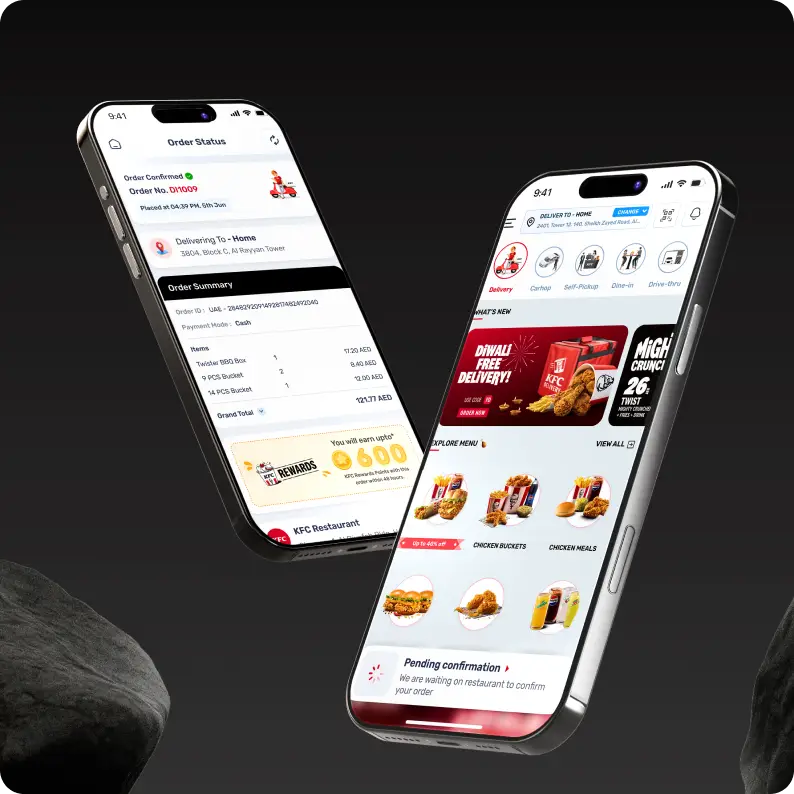
Americana Last Mile Platform

Challenge:
The Americana Restaurants Platform faced delays, manual dispatch, and poor visibility across 2,100+ outlets in 12 countries.

Appinventiv’s Role:
A centralized last-mile delivery system with automated dispatch, real-time tracking, and geofencing control.

Impact:
- 42% to 82% auto order assignment
- 20% to 80% geofencing accuracy
- 60M+ orders handled with zero downtime
YK Almoayyed Retail & Distribution Platform
Challenge:
Needed a unified system to manage retail operations, distribution, and inventory.
Appinventiv Role:
Developed a centralized platform for real-time operational visibility and control.
Impact:
- Faster and more efficient operations
- Improved inventory accuracy
- Quicker decisions through live data access
For brands exploring how to build a Herfy-like app, we bring proven case study experience from large-scale delivery and retail platforms. These systems handled branch complexity, real-time tracking, inventory visibility, and high order volumes at scale.
Launch a food ordering platform built for Arabic users, local payments, branch operations, rider tracking, and long-term growth. Let’s connect!
FAQs
Q. How long does it take to develop an app like Herfy?
A. A basic setup takes 12 to 16 weeks, covering essentials like menus, cart checkout, and simple admin tools. A robust Saudi QSR platform requires 24 to 32 weeks. You need that extra time to build dedicated rider apps, integrate POS systems, ensure ZATCA invoice compliance, and load-test the infrastructure to survive massive Ramadan or Eid traffic spikes.
Q. How does technology impact food delivery app development cost?
A. Your tech stack is the biggest budget variable. Basic tech handles simple menus and checkouts. Premium tech costs more because it runs real-time tracking, smart dispatch, and automatic cloud scaling. Investing in live inventory sync, AI offers, and deep backend analytics keeps the platform from crashing during heavy dinner rushes.
Q. What is the maintenance cost of a food delivery app?
A. Maintenance costs around 15% to 25% of the original development cost per year. This covers bug fixes, server bills, payment updates, app store releases, security patches, and small feature changes.
For a Saudi restaurant app, maintenance also includes menu updates, new-branch setup, offer changes, Arabic content fixes, VAT changes, invoice updates, and payment-gateway checks.
Q. How does Saudi Arabia’s compliance affect restaurant app development cost?
A. Saudi compliance adds work around VAT, ZATCA-ready invoices, data privacy, role access, payment logs, audit trails, and secure storage. These are not small add-ons at the end of the project.
Compliance raises the cost to develop an app like Herfy, but it protects the brand after launch. Clean records help finance teams, branch teams, support teams, and customers trust the app.
Q. How do apps like Herfy make money?
A. They earn through direct food orders, delivery fees, premium combos, app-only meals, loyalty-led repeat orders, and seasonal campaigns.
For Saudi QSR brands, direct ordering is valuable. Ramadan boxes, Eid bundles, family meals, lunch deals, and National Day offers can bring repeat orders without paying aggregator commissions on every sale.
Q. How can restaurants reduce the cost of building a Herfy-like app?
A. The best Strategies to optimize the Cost to Build An App Like Herfy start with a phased launch. Build ordering, payments, delivery status, admin control, and basic offers first.
Costs stay lower when teams use Flutter or React Native, ready payment gateways, existing POS APIs, and one-city testing. A Riyadh-first launch can reveal payment, rider, and kitchen issues before a wider Saudi rollout.
Q. What is the cost of Arabic-English support?
A. The cost of adding multi-language support, Arabic and English, in an app like Herfy changes with screen count, menu size, push alerts, receipts, help content, and right-to-left design work.
Arabic should be introduced into the design stage early. Late fixes create layout breaks in checkout, menu cards, offer banners, invoices, and order tracking screens.
Q. Is Herfy app clone development enough for Saudi restaurants?
A. An app like Herfy can give a starting structure, but a direct copy will not fit every restaurant brand. Each chain has its own branch rules, menu logic, offers, delivery zones, and customer habits.
A Saudi QSR app should align with the brand’s actual operations. It needs a custom payment flow, kitchen process, loyalty rules, delivery routing, and customer data setup.
Q. How to create a platform like Herfy?
A. The process to create a platform like Herfy starts with a clear product scope. The team should map customer flow, branch rules, kitchen process, rider movement, payments, loyalty, and reports before development starts.
A strong build grows in phases. Start with ordering, payment, admin, and delivery tracking. Then add POS sync, AI offers, live stock, campaign tools, and deeper analytics after real order data comes in.
[ad_2]
Source_link