What is artificial intelligence?
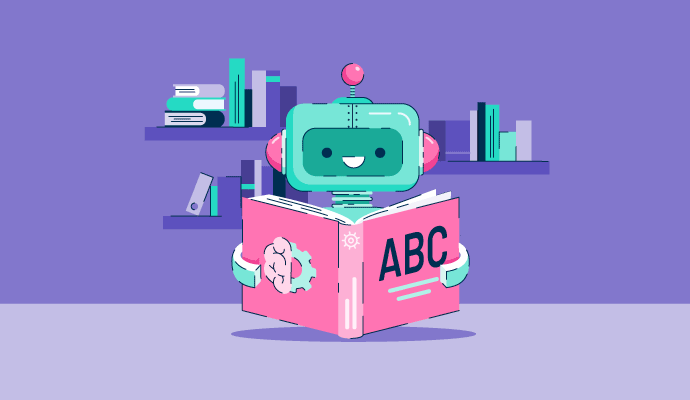
Artificial intelligence is software that performs tasks normally requiring human intelligence, such as understanding language, recognizing images, making predictions, and generating content.
Most modern AI relies on machine learning, in which systems improve by processing data rather than following hand-coded rules.
Full G2 explainer → | AI terminology A-Z →
A brief history of AI
2024-2026 · AI at operating scale
Over 75% of organizations use AI. Agentic AI moves from pilot to production.
2022-2023 · Generative AI goes mainstream
ChatGPT launches and reaches 100M users in 2 months, the fastest consumer tech adoption ever (2022). GPT-4, Claude, Bard, and Gemini follow (2023).
1993-2020 · Agents and deep learning
Deep Blue beats the chess world champion (1997). Apple launches Siri (2011). Google’s neural network learns to recognize cats from unlabeled images (2012). AlphaGo defeats Go’s world champion (2016). GPT-3 enters testing (2020).
1957-1987 · Maturation and boom
McCarthy creates LISP (1958). The first industrial robot debuts at GM (1961). ELIZA, the first chatbot, launches (1966). Expert systems hit commercial markets (1980); Japan invests $850M in AI (1981).
1950-1956 · Birth of AI
Alan Turing publishes “Computing Machinery and Intelligence” (1950), proposing the Imitation Game. John McCarthy coins “artificial intelligence” at the Dartmouth workshop (1956).
What are the different types of artificial intelligence?
By capability, it includes Narrow AI, AGI, and Superintelligence. Narrow AI is the only form that exists today, while AGI and Superintelligence remain theoretical. By function, AI includes Generative AI for content creation, Agentic AI for autonomous task execution, Predictive AI for forecasting outcomes, and reasoning models for solving complex problems step by step.
By capability
Narrow AI (weak AI)
Narrow AI powers everything from spam filters to ChatGPT and Claude. “Narrow” refers to the scope of capability, not sophistication; even advanced LLMs operate within defined domains rather than possessing general reasoning.
Artificial general intelligence (AGI)
A system that could switch contexts and reason across any domain a human can. Researchers disagree on both definition and timeline, with serious predictions ranging from a few years away to never.
Artificial superintelligence (ASI)
A system that exceeds human cognitive ability across every field, including science, creativity, and social intelligence. Most often discussed in AI safety and alignment contexts. No scientific consensus on whether it is achievable.
By function
Generative AI
Trained on vast datasets to produce new outputs across text, images, code, audio, and video. Power tools like GPT, Claude, and Midjourney.
Agentic AI
It goes beyond generating responses by taking actions such as querying databases via tool calls and API integrations.
Predictive AI
Built on statistical models and machine learning, Predictive AI identifies patterns in historical data to forecast outcomes.
Reasoning models
A newer class of AI that reasons step by step before responding, designed for complex coding, math, and analysis tasks.
What are the applications of artificial intelligence?
Artificial intelligence is used across marketing, customer support, sales, engineering, and HR to automate tasks and improve efficiency. Common AI applications include content creation, chatbots, meeting transcription, sales prospecting, code generation, recruiting, and AI agent development.
Ratings shown are G2 reviewers’ average likelihood to recommend on a 0–10 scale.
Marketing
7 categories · 14K reviews
G2’s largest AI vertical by review volume. AI Content Creation Platforms top the vertical at 9.53/10, ahead of AI Presentation Tools at 9.47/10 and AI Avatar Generators at 9.43/10. AI Writing Assistants lead by volume with 7K reviews; AI Content Creation Platforms also grew +110% YoY.
9.53/10
Average likelihood to recommend for AI Content Creation Platforms, the highest-rated marketing AI category
G2 AI Review Data
What are the best AI tools and software?
The best AI tools and software depend on the task, but G2 users most commonly adopt AI writing assistants, AI chatbots, AI meeting assistants, AI sales assistants, AI video generators, AI coding tools, AI recruiting software, and AI agent builders to automate repetitive work, improve productivity, and scale business operations.
How do you evaluate AI software?
Evaluating AI software comes down to five criteria: output quality, integration, time to ROI, data privacy, and vendor transparency. Patterns across 48K+ verified AI software reviews on G2 between May 2025 and April 2026 show output quality and integration friction as the most-cited dissatisfaction drivers, while vendor transparency consistently separates the highest-rated tools from the rest.
How likely G2 reviewers are to recommend their AI software (0–10):
78.8%
Would recommend their AI tool to a peer
Rated 9 or 10 out of 10
3.0%
Would actively warn a peer off it
Rated 6 or below
9.21/10
Average likelihood to recommend
Across 45,250 unique reviewers
G2 research and reports on AI
G2 publishes data-driven reports on AI adoption, buyer behavior, and market trends, backed by G2’s proprietary review and survey data.
G2 flagship reports
Annual flagship
G2 State of Software: AI growth and buyer sentiment
Primary source for AI software category growth and buyer adoption trends.
2026 industry outlook
G2’s Enterprise AI Agents Report: 2026 outlook
Vendor survey on the maturity, autonomy, and outcomes of AI agents.
Annual survey
Buyer Behavior Report 2025: AI always included
1.1K+ B2B decision-makers; two-thirds factor AI into purchase decisions.
Reach 2025 keynote
AI mega trends: Transforming the future of go-to-market
How AI is reshaping go-to-market across sales and marketing.
G2 research by function
AI decision intelligence in marketing: G2’s 2026 industry report Read →
The state of AI sales intelligence in prospecting: G2’s 2026 report Read →
AI in data integration: G2’s 2026 vendor insights Read →
G2 leadership on AI
Perspectives from G2’s leadership team, grounded in platform data and first-party research.
Software brand visibility in the AI search era · Godard Abel, CEO Read →
G2 and Profound partnership for AEO and AI search · Godard Abel, CEO Read →
How AI agents are delivering real business impact · Tim Sanders, CIO Read →
G2’s product innovations for the AI answer economy · Alexis Zheng, CPTO Read →
Conversational reviews for an AI-first era · Alex David, GM, AI Solutions Read →
AI statistics
Figures from The Answer Economy: How AI Search Is Rewiring B2B Software Buying, G2’s April 2026 research report, based on a survey of 1,000+ B2B software buyers and decision-makers across North America, EMEA, and APAC.
AI glossary
Short definitions of the terms you will encounter most often when evaluating AI software.
FAQs about artificial intelligence
Find answers to some commonly asked questions about AI.
Modern AI learns patterns from data instead of following hard-coded rules. A model is trained on a large dataset, then applied to new inputs once deployed. The capabilities most people use today (chatbots, code generators, voice assistants, image tools) are built on deep learning, which uses layered neural networks to capture patterns at scale.
Business AI adoption clusters around five functions: content generation (writing, design, video), conversational interfaces (chatbots, helpdesks), workflow automation, data analysis, and software development assistance. Adoption is highest in roles with repetitive text-and-communication work, and growing fastest in operations, engineering, and HR.
Buyers research and shortlist software through AI chatbots before visiting a vendor’s website. By the time a buyer reaches a sales conversation, the vendor has often been evaluated and either included or excluded by an AI model summarizing third-party sources. The shift is from search engine optimization to answer engine optimization (AEO): structuring content so AI models can find, cite, and recommend it accurately. G2’s Answer Economy Report covers this in detail.
The main pattern is a gap between vendor promise and operational reality. Buyers often expect AI to work autonomously out of the box, then learn that consistent results require careful prompting, integration work, and human review. Reviews tend to favor vendors who position AI as a way to accelerate human work with structured oversight, rather than as a hands-off replacement. How well expectations match reality at purchase time often predicts long-term satisfaction.
Growth on G2 shows up in two dimensions: review volume and buyer traffic. By year-over-year review growth, the leaders are Conversational AI Survey Platforms (+1,126%), Answer Engine Optimization (+907%), Agentic AI (+382%), AI Voice Assistants (+150%), and AI Writing Assistants (+59%). By buyer traffic growth, AEO (+496%), Customer Service Automation (+450%), and AI SDRs (+85%) lead. Machine Learning still draws heavy buyer traffic despite slower review growth, suggesting buyers evaluate ML platforms more than they review them.
Two patterns separate the strongest AI rollouts from weaker ones. AI-native products consistently outscore legacy tools that have AI features added on; reviewers describe the latter as stitched together and slow to adapt. Products that fit cleanly into existing workflows show faster time-to-value than ones requiring teams to change how they work. The strongest predictor of ROI is a narrow, well-defined use case, not breadth of features.
The clearest way to see the difference is a workflow example. Ask a generative AI to write a follow-up email and it produces the email. Give an agentic AI the goal “follow up with this lead” and it pulls the prospect record, drafts the email, schedules the follow-up, updates the CRM, and logs the outcome, none of which required step-by-step prompting. The shift is from producing content on demand to executing multi-step work toward a goal.
Four concerns dominate enterprise discussions: bias (particularly in hiring, lending, and healthcare AI), data handling (whose data is used for training, where it is stored, who can access it), explainability (whether decisions can be audited), and accountability (who is responsible when AI produces incorrect outputs). Regulation is catching up; the EU AI Act and emerging US state laws are codifying these into purchase-time requirements. For software buyers, due-diligence on training data, model behavior, and incident response is increasingly standard practice.
About this data. The figures cited on this page come from G2’s proprietary data. Review-based statistics are drawn from 48K+ verified AI software reviews submitted to G2 between May 1, 2025 and April 30, 2026, spanning 85 AI software categories and 2K+ distinct products. Each review is independently approved before publication.
Survey-based statistics come from G2’s published research, including The Answer Economy: How AI Search Is Rewiring B2B Software Buying, the Enterprise AI Agents Report, and the 2025 Buyer Behavior Report.
Aggregations, year-over-year growth rates, category breakdowns, and rating distributions were calculated using G2’s Snowflake data warehouse with AI-assisted analysis via Anthropic’s Claude.