[ad_1]
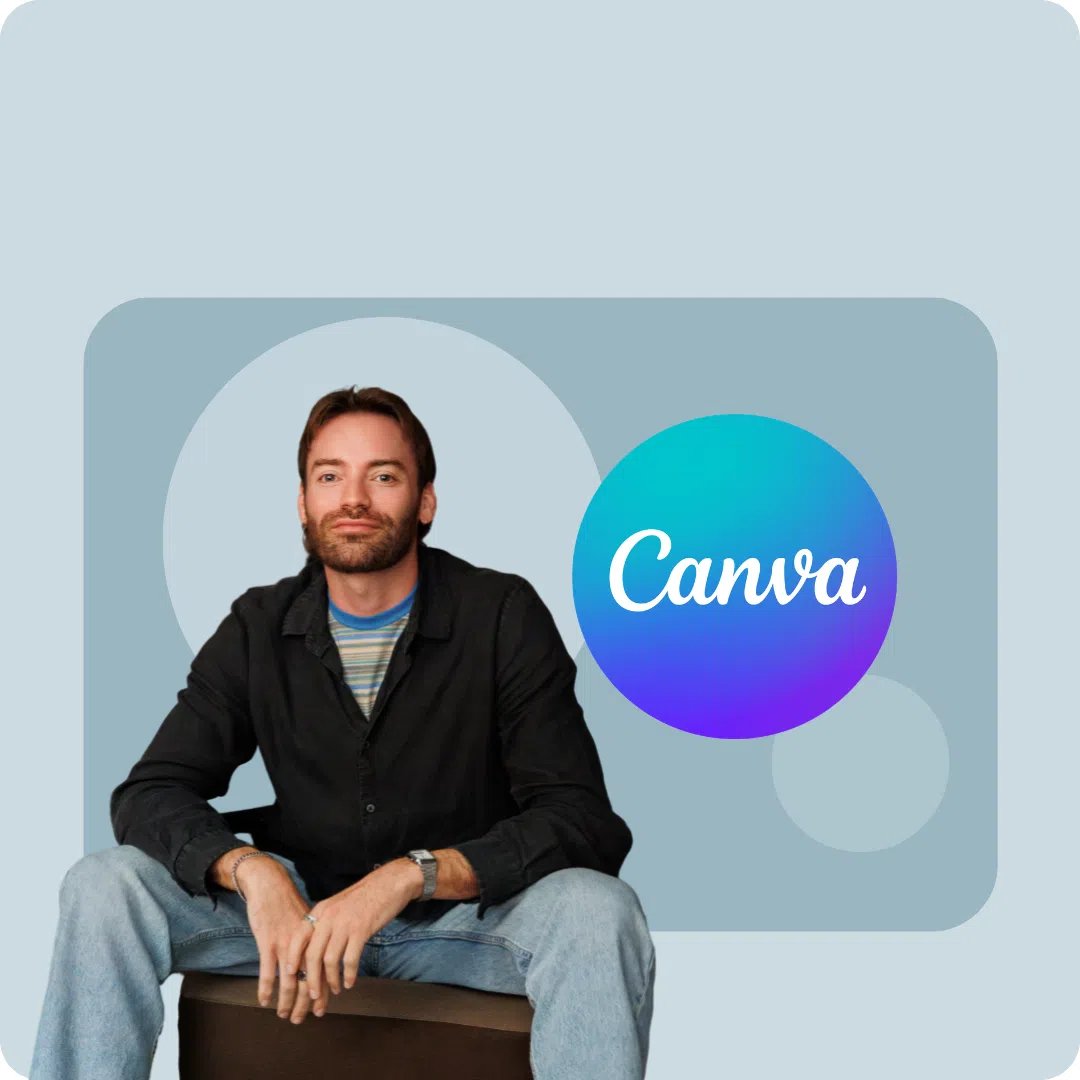
Editor’s note: We sat down with Lachlan Stewart, Social Lead at Canva, to learn how the company uses social media to drive conversation and fuel business growth. This Q&A is part of an exciting new series on our blog, so stay tuned for more thought leadership from top marketing leaders. 👀
Canva has over 265 million users across 190 countries. By every metric, it’s a massive global brand.
But talk to Lachlan Stewart, Social Lead at Canva, about their social strategy, and the word that keeps coming up is “local.”
“If you look at Canva in different countries, you’ll see real people and real stories from those markets,” he says. “When it comes to our marketing strategy, it’s really about being truly local.”
And that’s where it gets fun. Because when your social team is that plugged into local culture, the campaign ideas start finding you.
Like when Canva partnered with UK reality star Gemma Collins (one of the most recognizable voices in the country), added her voice to the product, and named her its new UK Creative Director.
“Our sweet spot is when we’re driving cultural conversation,” says Lachlan. Then, they let social do what social does best: amplify it.
In this Q&A, Stewart explains how Canva turns local culture into campaign fuel, why they’d rather start a trend than jump on one, and why they prefer to give social a seat at the strategy table.
Key takeaways
- Think local. Canva’s social media strategy focuses on showing up authentically in every market, with real people and real stories.
- Start conversations, don’t always chase them. Canva’s most successful social media campaigns come from tapping into insights already simmering in specific markets.
- Give social a seat at the table. When social teams are involved early, they can shape campaign goals and drive content creation from the start.
- Experiment, experiment, experiment. Being the first to try something new is how you create highly shareable, engaging content. It also pleases the algorithm, which builds brand awareness.
- Match your metrics to different content types. Don’t measure every social media post the same way. Think over the objective of the creative before deciding how to track performance.
- Social is the ultimate testing ground for large campaigns. Use your social media channels to test ideas with your existing audience. It’s one of the easiest ways to optimize (or fuel) your social media marketing campaigns.
When you look at Canva’s marketing strategy overall, what role does social media play?
I have quite a unique experience to answer this because I’ve worked in both our global marketing teams and our international marketing team.
Over the last couple of years, as Canva continues to grow, our focus has been on expanding into local markets. When it comes to our marketing strategy, it’s really about being truly local, and by that we mean showing up as a brand that resonates culturally and with a local flair.
What’s cool about social is that we’re essentially the face of the brand for all of these local markets. If you look at Canva in different countries, you’ll see real people and real stories from those markets.
And because of the success of that strategy, we’ve now started to apply that same mentality to our global channel as well, even though it has a global audience.

If you had to explain Canva’s philosophy around social media in simple terms, what would it be?
It’s an area that’s always evolving as we scale, but, more and more, entertainment is something we want our philosophy to center around. That’s not to say every single piece of content needs to be slapstick hilarious, but we still want to apply entertainment principles to our social content.
So if we’re posting a tutorial — which can typically be a little more dry and educational — how can we work the caption in a fun, cheeky way that feels like Canva? Or, what design element can we add to a tutorial to make it feel more social-first, and gets people to share it?

Source: Canva
What types of ideas or creative concepts tend to translate well on social media for Canva?
Our sweet spot is when we’re driving cultural conversation, as opposed to jumping into an existing one. Across the board, it’s about us tapping into a clear insight and leveraging social to explode it, instead of “here’s what’s trending, let’s jump into it.”
A good example is in our Brazil marketing. The MasterChef judge in Brazil is French, and while he speaks Portuguese, people still need subtitles to understand him. So we collaborated with him on our auto captions feature and played into that.
The joke already existed in Brazilian culture, but it wasn’t necessarily a social media moment. We made it one with this campaign.

We did something similar in the UK. We partnered with Gemma Collins, who is an iconic UK personality and a bit of a meme. As part of a campaign, we embedded her voice into our product using the change voice functionality.
The idea was basically, “What if we take the most iconic voice in the country and put it in our actual product to show off a feature?” And it exploded the conversation around her and our partnership.
From your perspective, why do some marketing moments take off on social while others don’t?
The consistent thread seems to be trying something that doesn’t exist already.
A big reason the Gemma Collins campaign was so successful was that we gave her a LinkedIn profile and pretended she actually worked at Canva. I think it was the first time someone used LinkedIn in that way, and it really got people talking. We’ve already started to see other brands jump on this trend of turning their ambassadors into employees.
When we’re the first to do something, that’s when we know we’re hitting the spot on social. And you can apply that to something not as big, like being the first to react to something.

When Canva is planning a large marketing push, how early does social come into the conversation?
It changes from market to market. From a global point of view, we’re trying for it to be as early as possible. More often than not, social is at the forefront of the conversation, which is definitely my preference.
I come from a creative agency background where it took a lot of convincing to be included early in those creative, strategic conversations. But at Canva, we have a really collaborative structure that empowers the entire social team to put forward suggestions from the very beginning of a campaign.
How does Canva use social media to build momentum around campaigns?
We do a really good job with teasers, as an example. Going back to the Gemma Collins campaign, we set up her LinkedIn account before the campaign went live. We published teaser content to her profile, which got people talking before we even announced her role at Canva. Those pre-campaign moments are something we’re hitting our stride with, and we’re seeing a lot of success with it on social.
On the flip side, it’s really important to have a suite of assets in your back pocket to roll out on social after launch. If you launch this amazing campaign and then stop talking about it, it’s a missed opportunity.
Being a visual company, we’re also producing really strong creative, and it would be a waste if we weren’t leveraging the visuals, the messaging, or the fun elements of the campaign, and bringing them to life in more innovative ways on social.

Source: Canva
What teams at Canva work together to bring a social media campaign to life?
We have in-house teams across all different specialties and modalities. It’s often creative plus social, plus a campaign manager, plus a producer, plus our comms team, plus leadership. Everyone is involved and has a role to play.
Leveraging social from both a strategic and a creative point of view has been really important to having those viral or conversation-starting moments.
What advice would you give an enterprise team trying to run more integrated marketing efforts?
When it comes to enterprise or B2B, the UK campaign we just launched on LinkedIn proves that you can do things that are experimental and innovative. We’re seeing a lot of success on social media platforms like LinkedIn, and I think that integration between social and the rest of marketing feels more important than ever for us.
When you look at social performance, what signals matter most beyond likes and comments?
We obviously report on holistic numbers to track how we’re doing in general. But I also believe you should look at what you’re posting to decide how to measure it.
For example, if you’re posting a two-minute video that’s funny or entertaining, you want to measure whether someone’s watching it until the end, not just whether they liked it. You also want to see if they’re sharing it. So view-through rate plus shares would be a good way to measure a post that’s going for that entertainment angle. Whereas a tutorial, you might want to see if people are actually saving it because they want to go back and refer to it later.
For me, it’s really about surfacing the objective of the creative before evaluating it against typical metrics.
How do you see the role of social media evolving in marketing campaigns?
It feels like social is playing a bigger role than ever. When it comes to big campaigns, I think it’s going to be more about testing. We can test ideas before we go live, and we can do that really easily with our existing audience. Using social to experiment and fuel campaign creative is something that’s going to happen more and more.
What advice would you give marketing leaders who want their campaigns and content to have more impact?
Don’t be afraid of trying things that are a bit different, or not yet tried and tested. At Canva, we have a little flexibility because we have a big audience, but there’s also risk in that. So it’s about taking those risks and trying new things, because if you continue to just create content that your audience is comfortable with, you’re not going to make an impact beyond them. And that growth is when you start seeing results.
Manage your social media presence with Hootsuite. Schedule your social media content, engage your target audience, find relevant hashtags, track KPIs, benchmark your campaign performance, and more — all from one dashboard. Try it free today.
[ad_2]
Source_link