[ad_1]
Not sure where to start with social media marketing? This guide walks you through everything from choosing platforms to building a strategy that sticks.
Marketers, social media is where your audience already hangs out — and it’s one of the best ways to connect with over 5 billion of them in a real, meaningful way.
And it’s not just about staying in touch. Social platforms have become powerful discovery engines. A growing number of people actively use TikTok, Instagram, YouTube, Facebook, and others to research products, read reviews, and decide what to buy next. In fact, 63% of Gen Z and 49% of millennials say social media ads or recommendations influence their purchasing decisions.
In other words: your audience isn’t just scrolling. They’re searching, evaluating, and acting, so it’s well worth your business’s time to meet these potential customers on their social channels of choice.
In this guide, we’ll walk you through some of the most popular social networks for marketing (including what we’ve learned from analyzing millions of posts through Buffer), plus how to build a social media marketing strategy that actually works for you. You’ll also find some resources that take a deep dive into particular areas of this increasingly important marketing arena.
Key takeaways
- Definition: Social media marketing involves connecting with audiences to build brands, drive traffic, and increase sales through content, engagement, and ads.
- Strategic approach: Success requires a cyclical 7-step strategy: setting SMART goals, defining the audience, establishing content pillars, choosing platforms, calendaring, analyzing, and evaluating.
- Platform selection: Focus on the platforms where your target audience is most active, rather than spreading resources too thin across all networks.
- Engagement is critical: Modern SMM has evolved from simple broadcasting to meaningful two-way engagement and social listening.
Social media marketing (SMM) is the use of social media platforms to connect with your audience to build your brand, increase sales, drive website traffic, and more. This involves publishing high-quality content on your social media profiles, listening to and engaging your followers, analyzing your results, and running social media advertisements.
You’ve got plenty of platforms to choose from, and just as many tools to help you manage it all without losing your mind. We’ll unpack all of these things in this guide.
Back in the early days, brands treated social media like digital billboards — just another place to shout their message and hope people clicked through to buy something.
But social media has become increasingly crowded, and users have become more selective and savvy. Today, simply showing up is no longer enough. To stand out, you need to create stuff people actually care about. And, more importantly, talk with them, not at them.
The good news is that as platforms have evolved, so have the tools and tactics that make social media marketing easier and more rewarding, too.
Along with posting, social media management also involves:
- Social listening and engagement: Monitoring social media conversations and responding to relevant mentions.
- Analytics and reporting: Analyzing reach, engagement, sales, and more on social media with an analytics tool.
- Paid social: Reaching a specific audience at scale with highly targeted social media ads.
Together, these pieces make up what we think of as modern social media management. Bonus: they’re all things Buffer can help you with.
There are so many platforms out there. We’ve rounded up over 20 in our guide to the top social media sites — but don’t let that overwhelm you.
One of the most important things to know about social media marketing is that you don’t need to be everywhere. In fact, we’d recommend picking just a few platforms to focus on (we’ll get into how to choose in a bit).
When you’re deciding which platforms to use, the biggest question to ask yourself is: where does my audience actually spend their time? Here’s a high-level explainer, plus a breakdown of the demographics of the most popular social media marketing platforms to guide you:
- Monthly active users: 3.07 billion
- Breakdown by gender: 43% women, 57% men
- Dominant age group: 25–34 years
- 79% of organizations use it for social media marketing
Facebook is still the biggest social network out there, with over 3 billion people logging in at least once a month. For perspective: That’s more than a third of the world’s population.
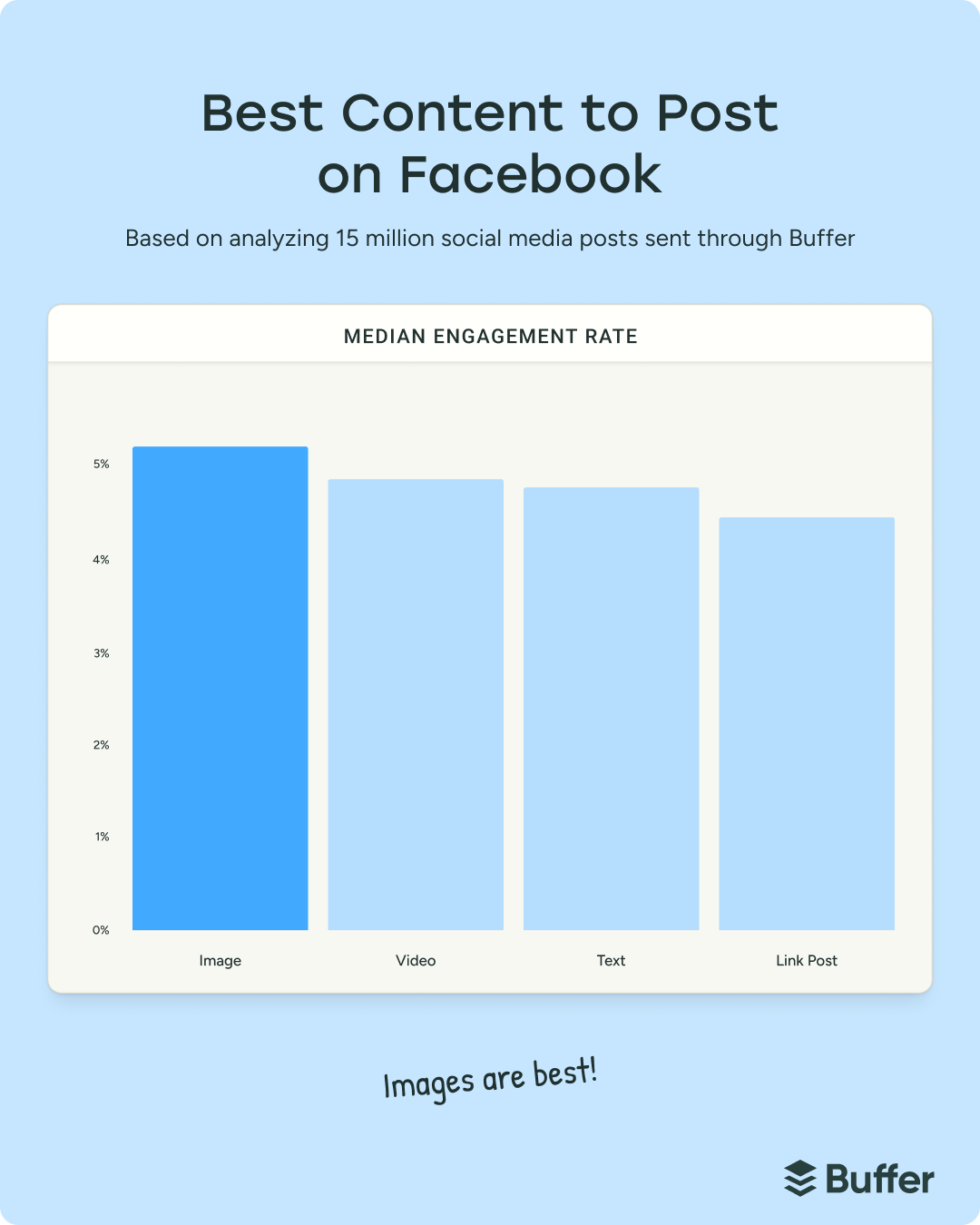
You can post pretty much any content format on Facebook, including links, text, images, and videos. We analyzed over 15 million posts and found that images get the most engagement on the platform (but only just!). You’ll see from the graph, however, that images, videos, and text posts are all clustered within one percentage point of each other.
Our data also shows that the best time to post on Facebook is generally early to mid-morning on weekdays.
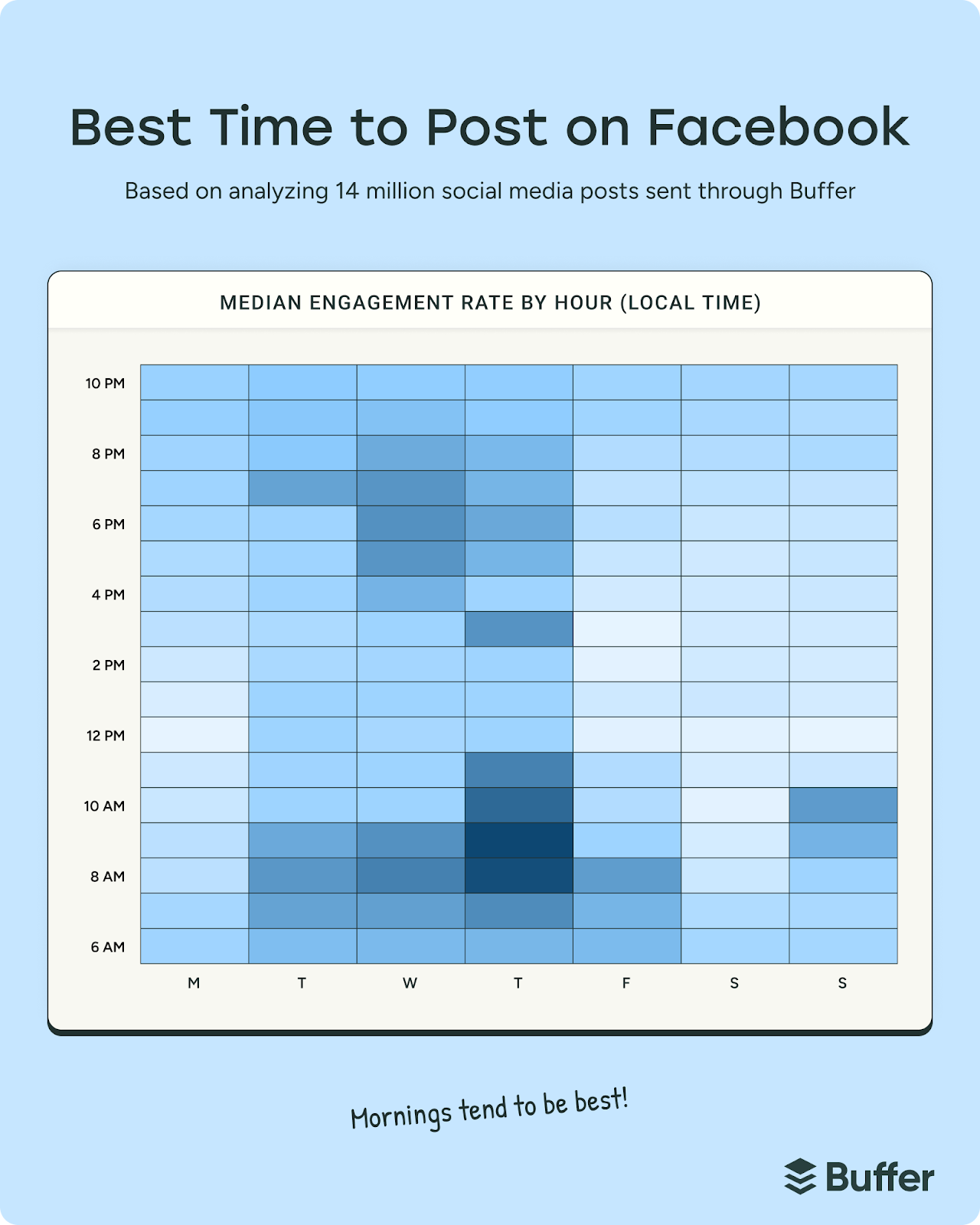
Wednesday and Thursday are the best days of the week to share content on the social media platform.
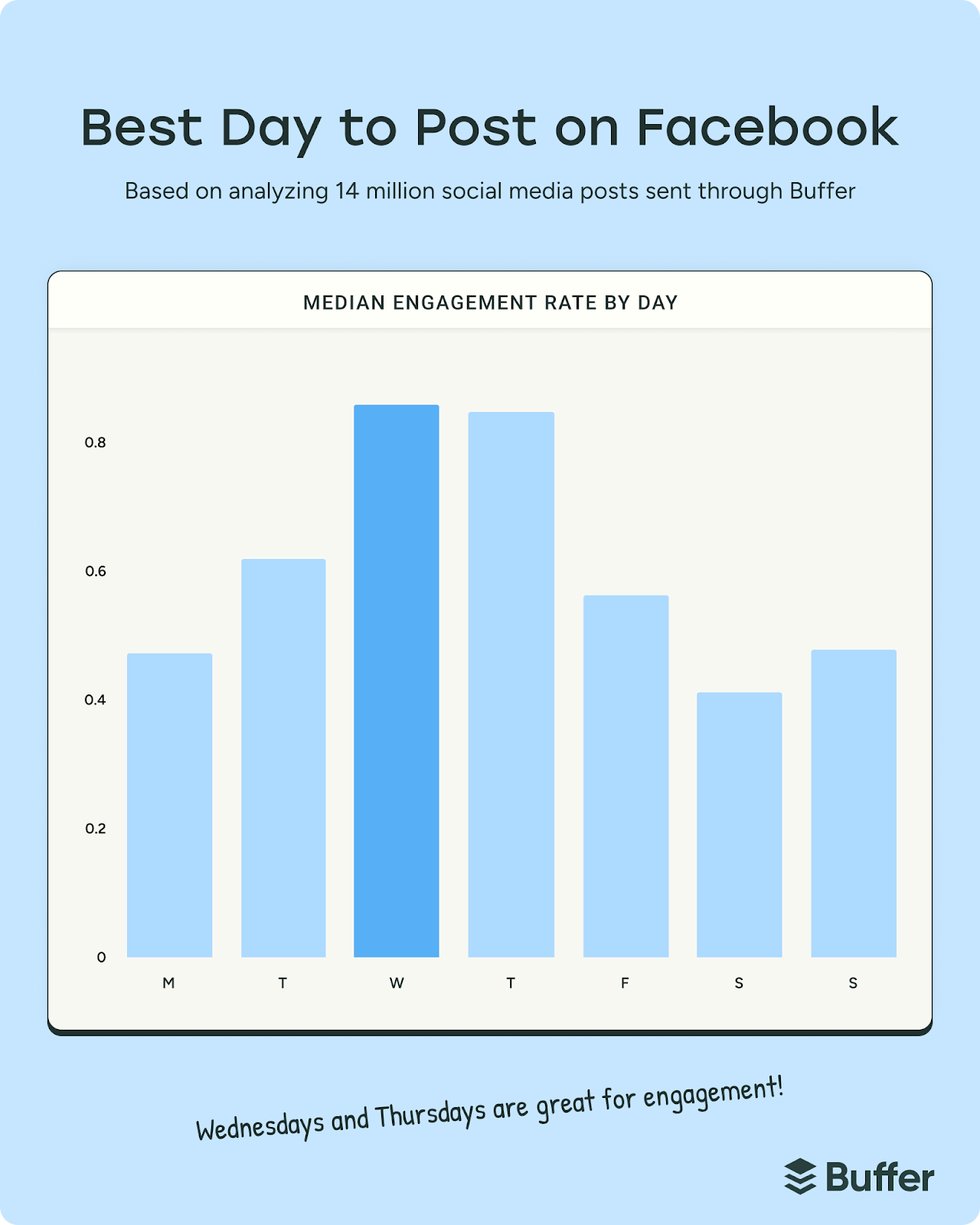
Facebook (owned by Meta) also has some really useful tools built in, like Meta’s Business Suite and Facebook Ads Manager, which can help you schedule posts and run ads.
🔍 Deep dive: Understanding the Facebook Algorithm
⏫ Level up: How to Get More Followers on Facebook
- Monthly active users: 3 billion
- Breakdown by gender: 47% women, 53% men
- Dominant age group: 18–34 years
- 86% of organizations use it for social media marketing
Instagram is all about visuals. You can share photos, carousels (multi-photo posts), stories, reels, and live videos.
Our latest research revealed that carousels are the best content to post on the platform for engagement.
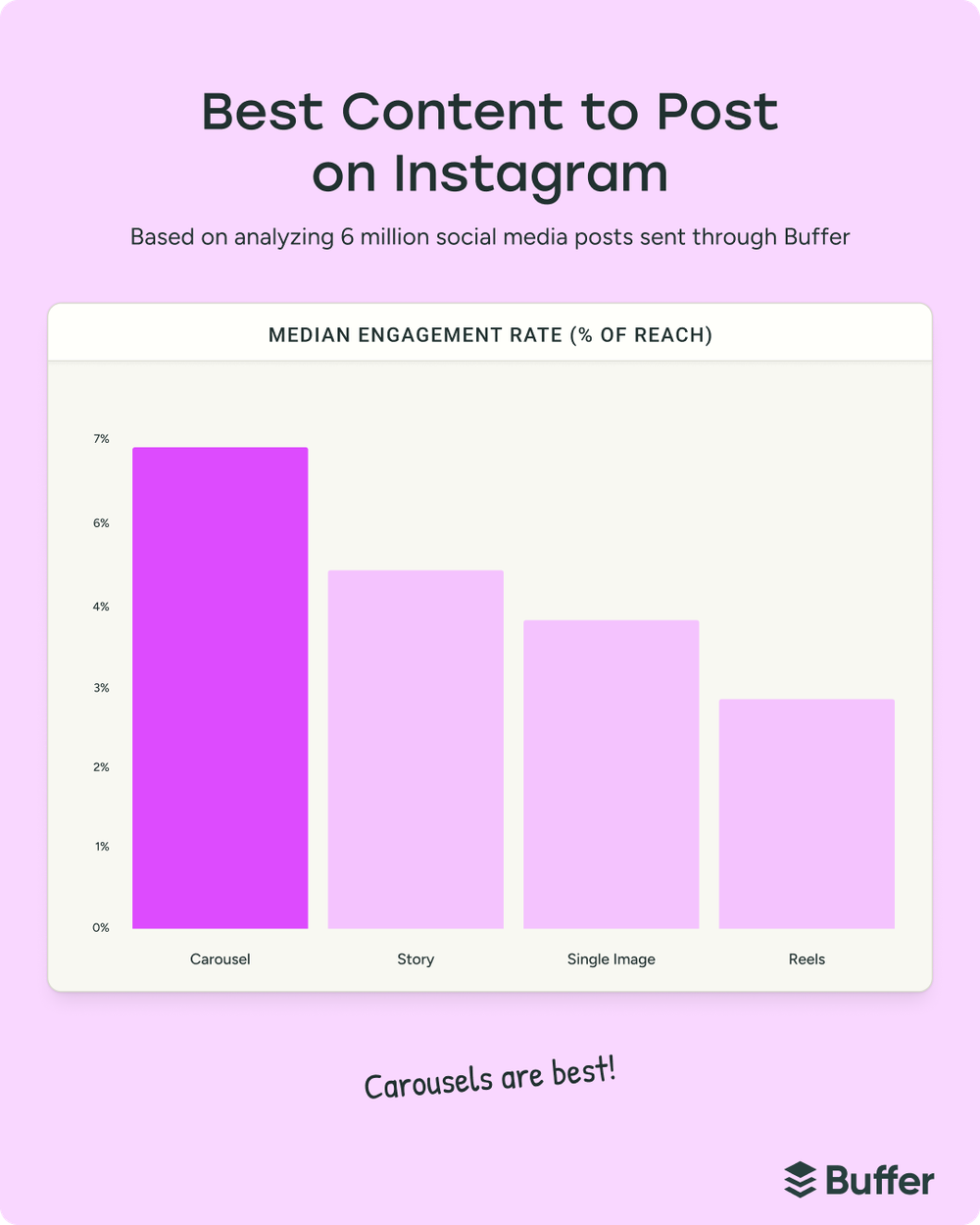
You may be surprised: surely reels reign supreme? Interestingly, the data above measured engagement, not reach. Essentially, reels and carousels serve different goals on Instagram:
- Reels are great for reach and discoverability thanks to distribution on the explore page and reels tab
- Carousels tend to drive deeper engagement by keeping people interacting with your content longer
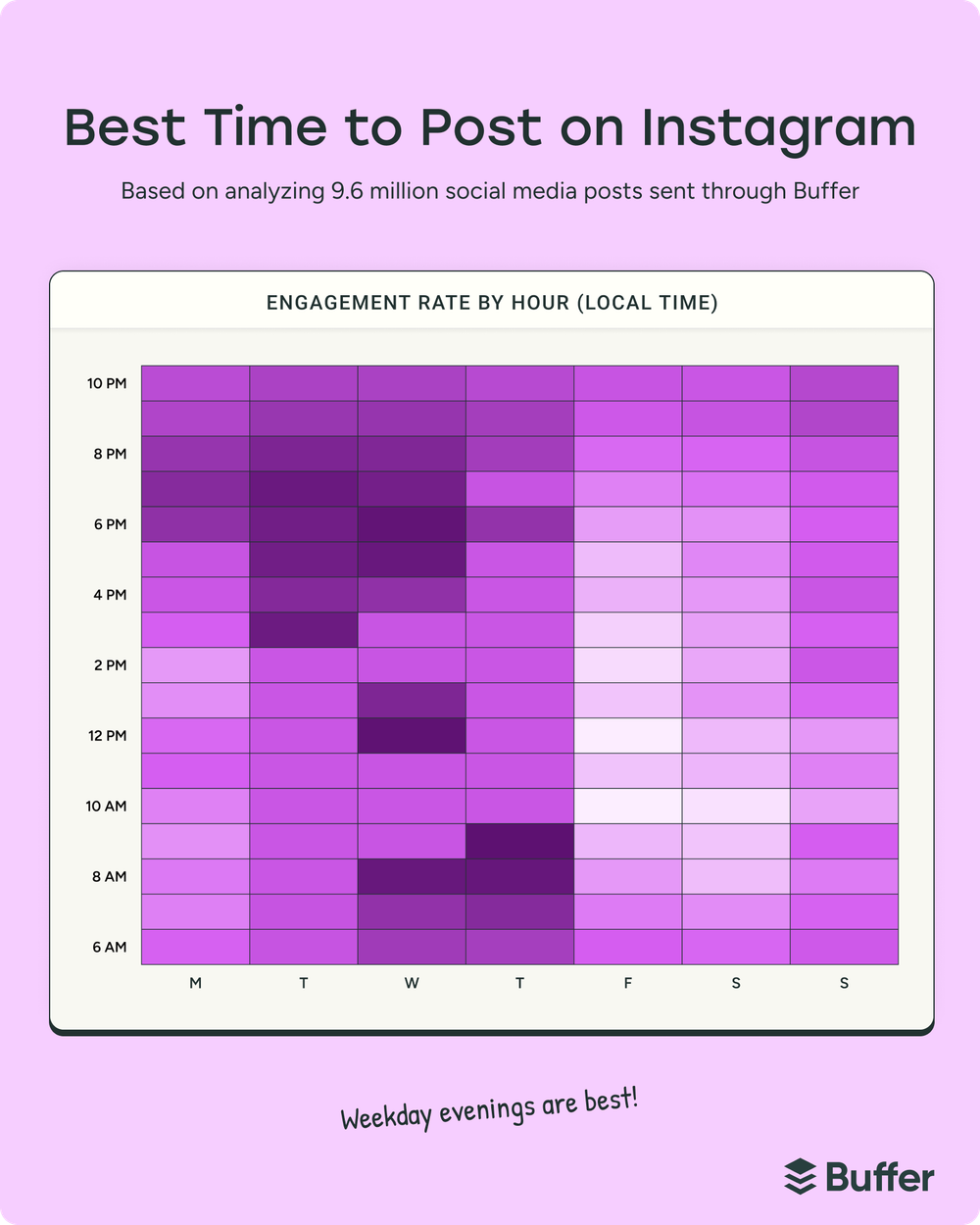
We also uncovered that the best time to post on Instagram for engagement is weekday evenings between 6 p.m.–11 p.m.
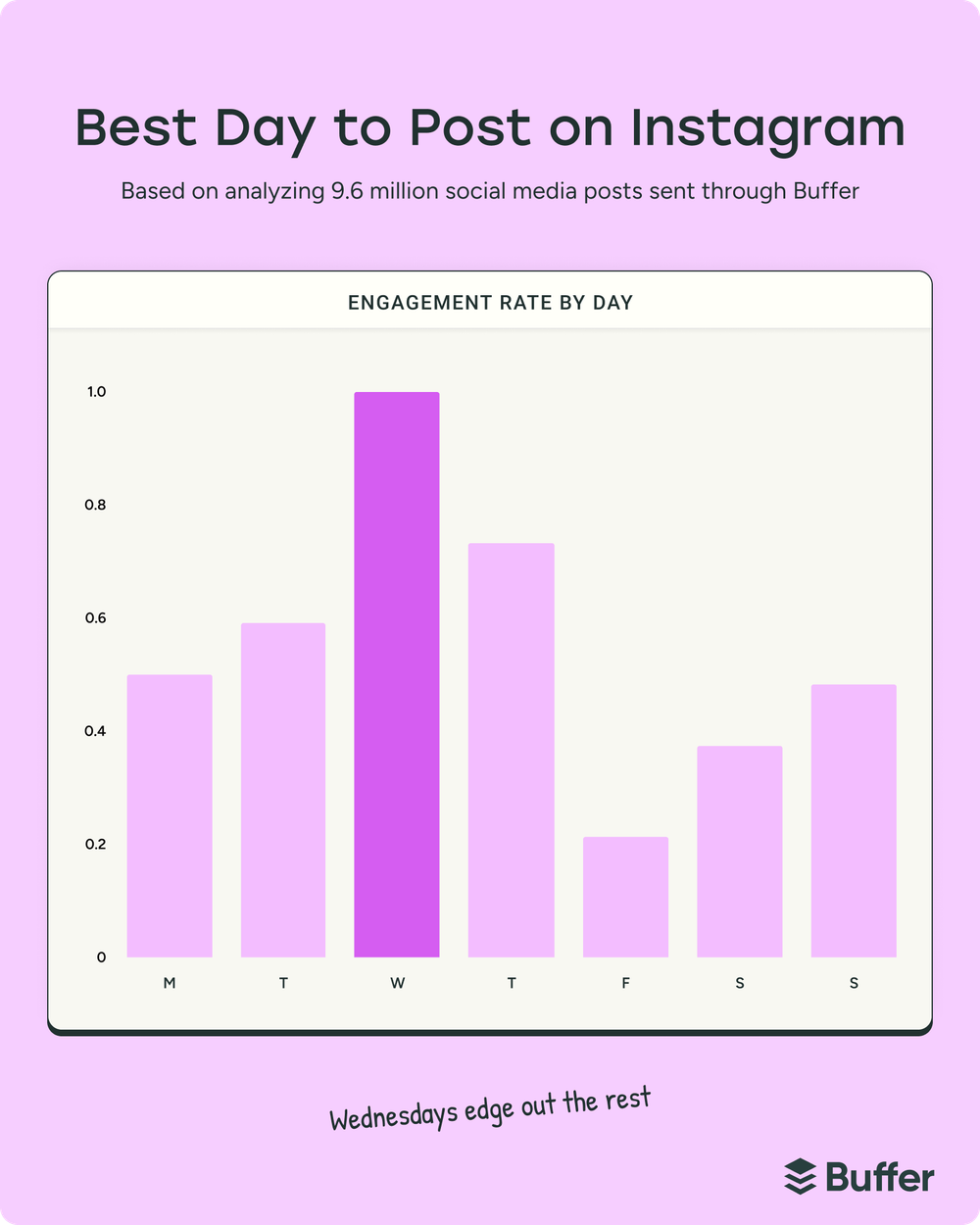
Midweek posts on Instagram see solid engagement, with Wednesdays topping the stats.
Also owned by Meta, Instagram plays well with Facebook for crossposting content and ads. You’ll also be able to access Meta’s Business Suite and Ads Manager with your Instagram account.
🔍 Deep dive: How the Instagram Algorithm Works
⏫ Level up: How to Get More Followers on Instagram
YouTube
- Monthly active users: 2.6 billion
- Breakdown by gender: 46% women, 54% men
- Dominant age group: 25–34 years
- 58% of organizations use it for social media marketing
YouTube was the OG video platform, and it’s still going strong. For years, YouTube was all about landscape videos, but they’ve since jumped on the short-form video trend and introduced portrait short-form videos up to 60 seconds, called YouTube Shorts.
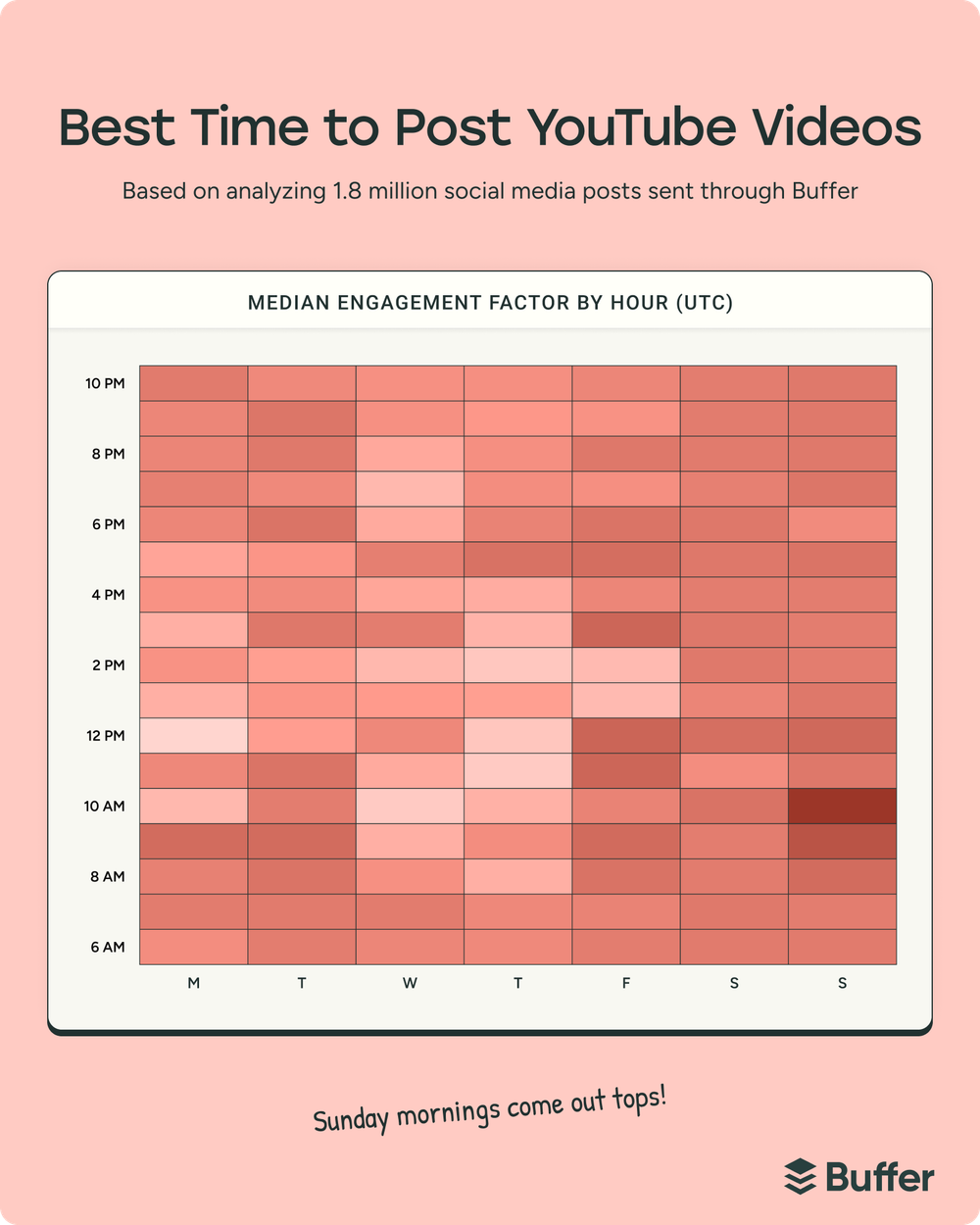
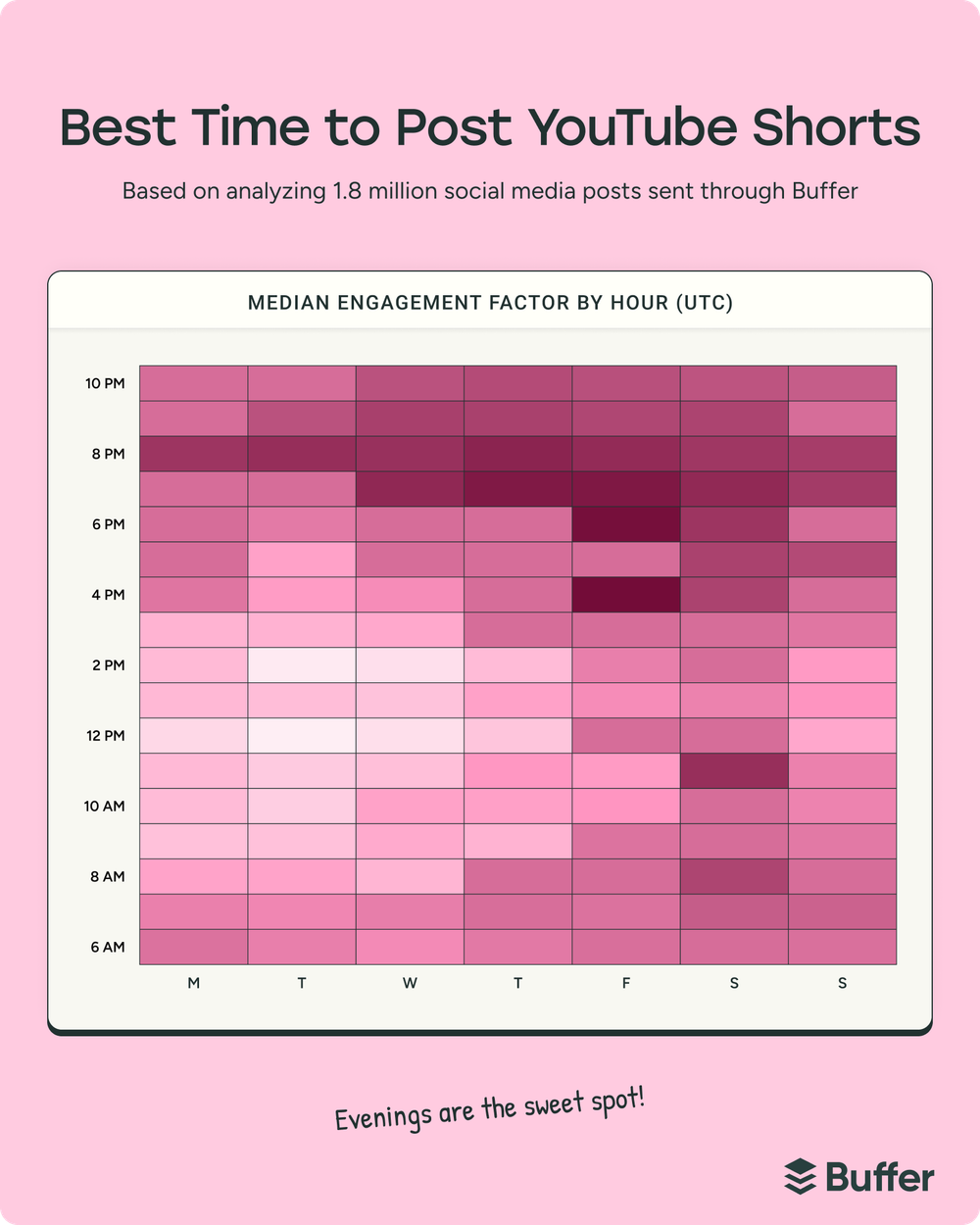
It makes sense to differentiate between long-form videos and YouTube Shorts when we look at the best time to post on YouTube, since each type performs a different function and attracts different audiences at different times.
As you can see from the heatmaps below, the best time to post long-form videos is Sunday at 10 a.m. (by a long shot); whereas the best time to post YouTube Shorts is Friday afternoon and evening.
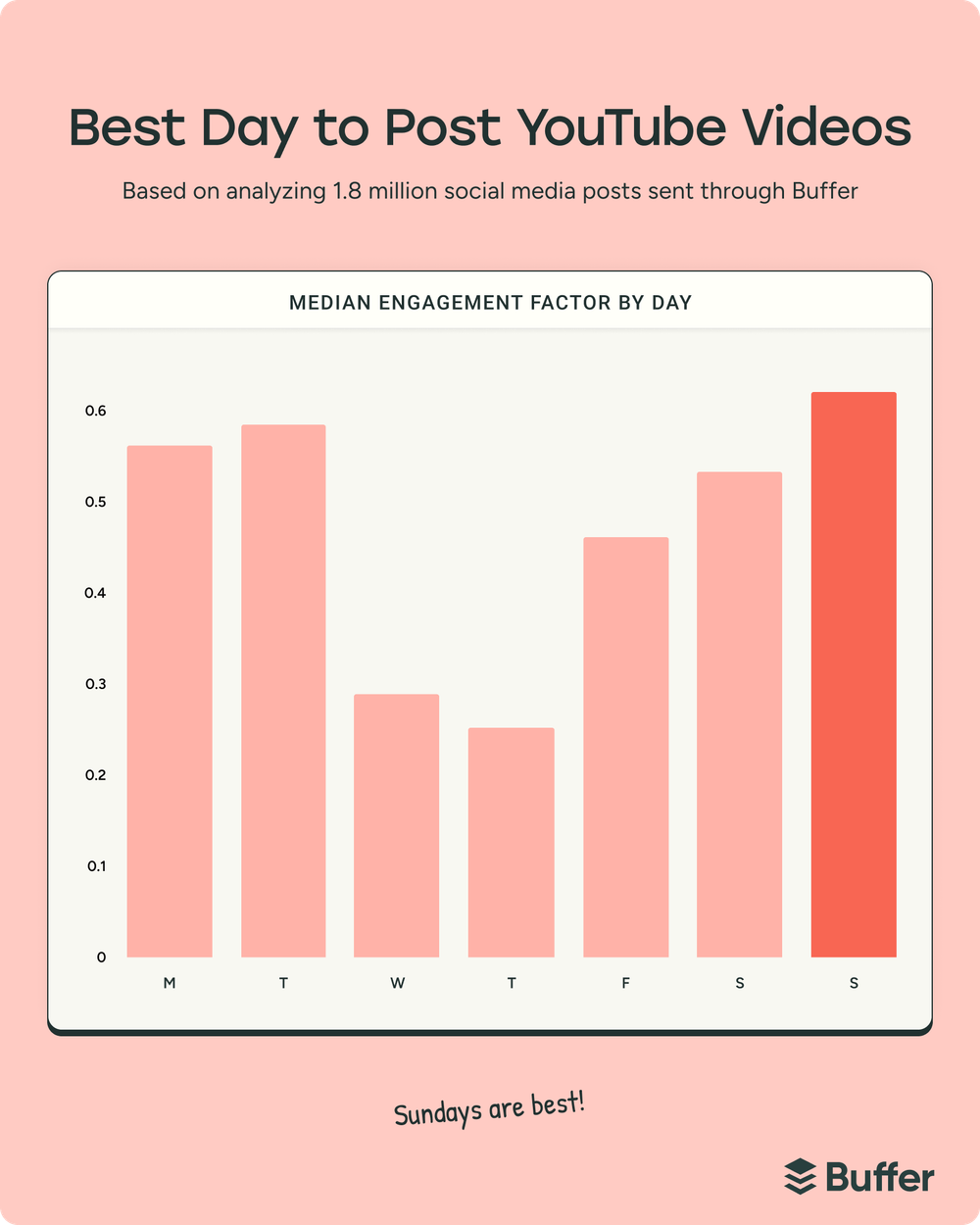
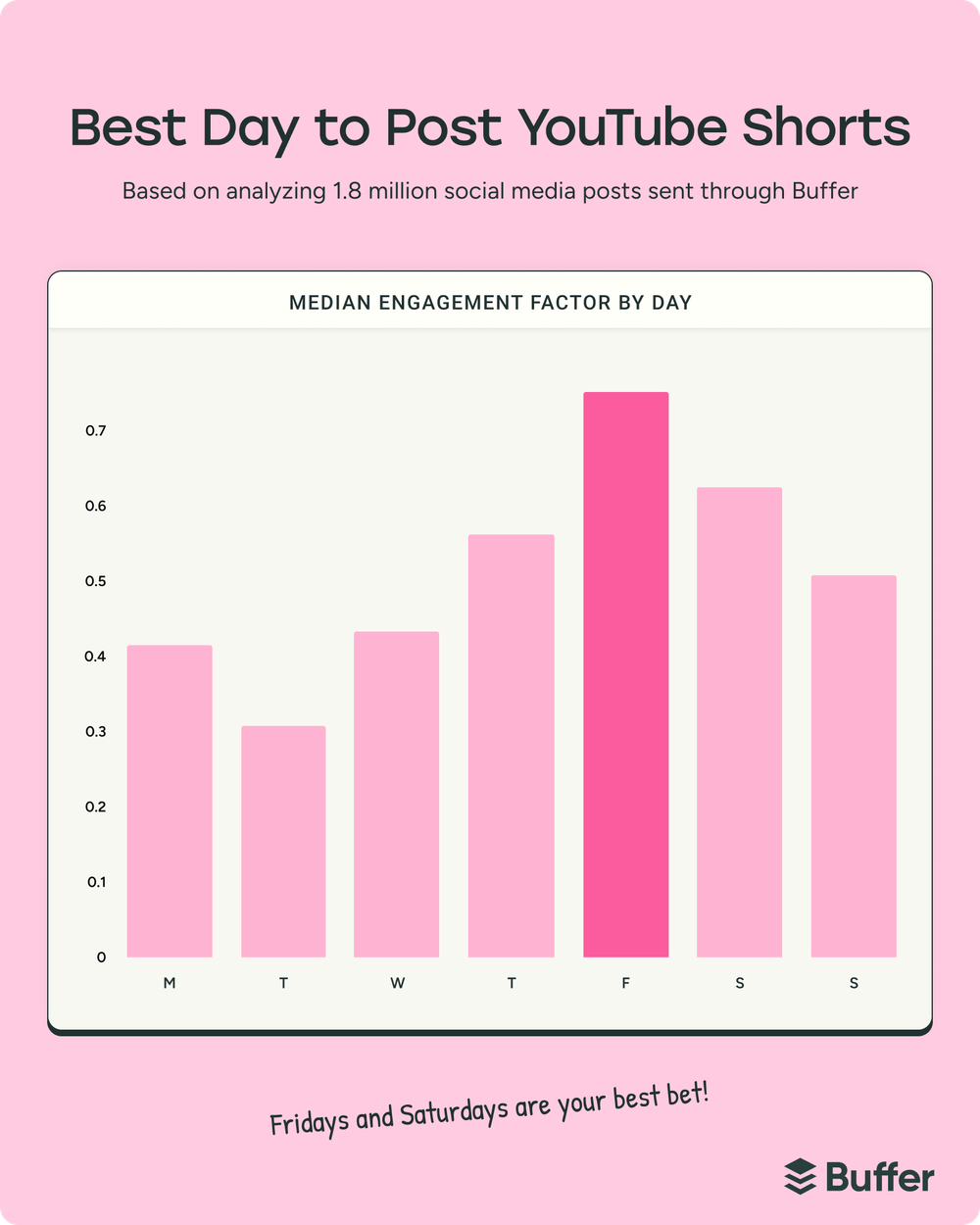
When it comes to the best days of the week to post on YouTube, the same pattern applies: Sundays for long-form videos; Fridays for YouTube Shorts.
YouTube also offers shopping tools like YouTube Shopping (only for certain users) plus YouTube Ads, allowing you to advertise before and during other YouTube videos.
🔍 Deep dive: Understanding the YouTube Algorithm
⏫ Level up: How to Get More Subscribers on YouTube
TikTok
- Monthly active users: 1.9 billion
- Breakdown by gender: 44% women, 56% men
- Dominant age group: 18–24 years
- 43% of organizations use it for social media marketing
On TikTok, you can create videos anywhere from 15 seconds to 60 minutes long, and there are tons of filters, AI effects, sounds, and music to play with. It makes creating content fun and accessible, even if you don’t have mad editing skills. The social media platform also introduced stories and carousel-style photo posts.
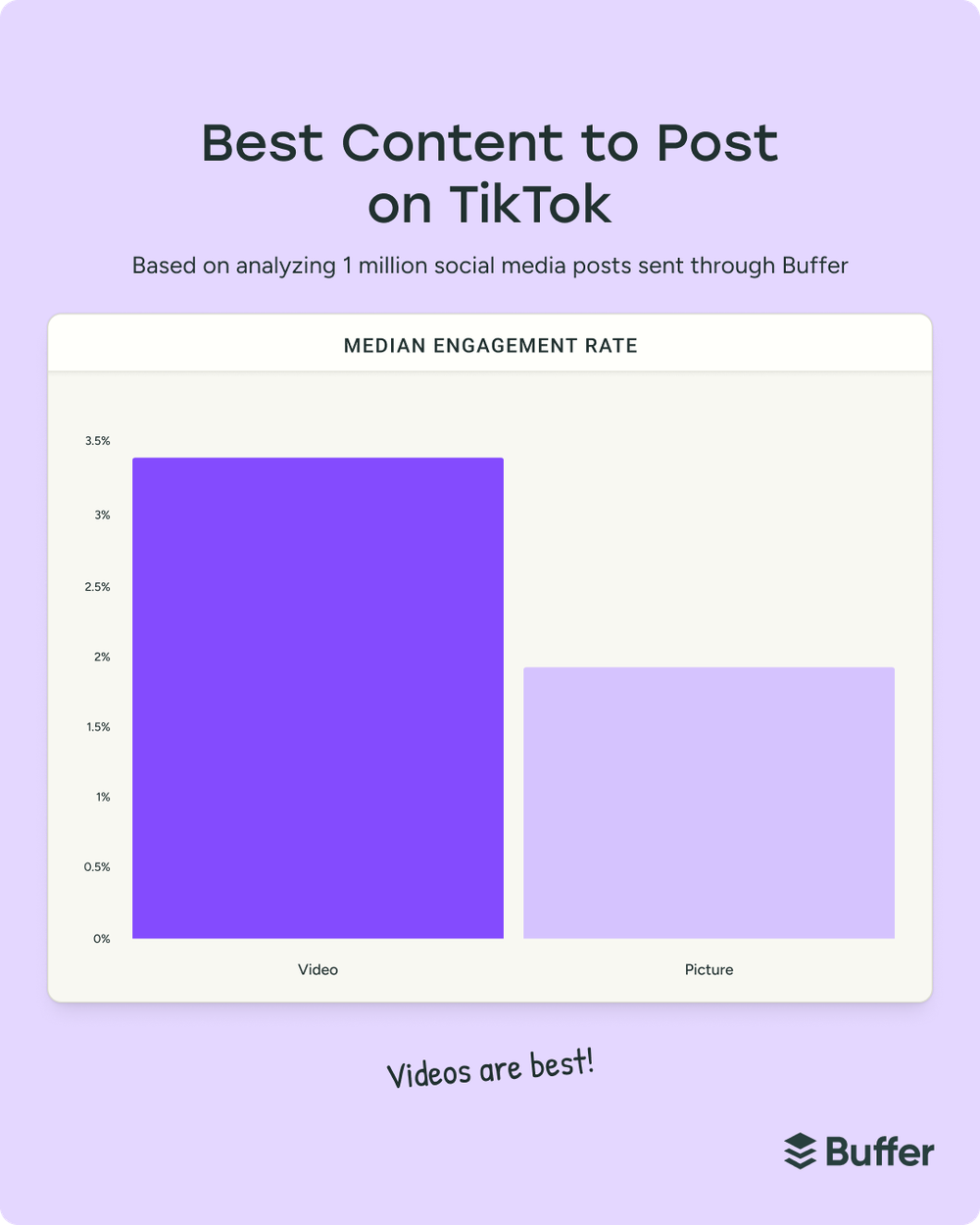
But there are no surprises when it comes to the best content format to post on TikTok: on a video-first platform, video still performs best.
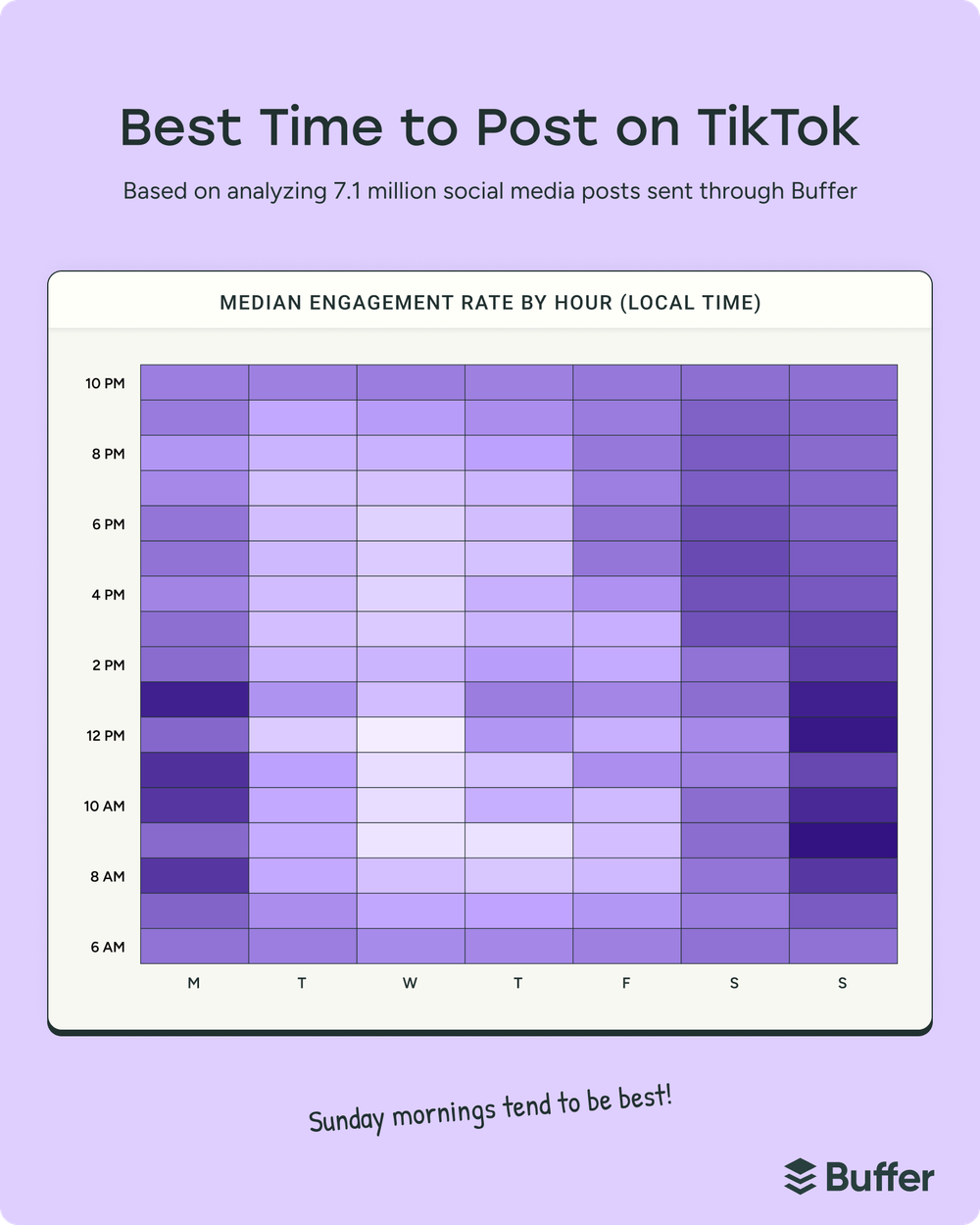
Buffer data revealed that the best time to post on TikTok is Sunday at 9 a.m., followed by Monday at 1 p.m., and Sunday at 1 p.m. Generally speaking, views tend to pick up in the evening hours, which makes sense considering the entertainment value of most TikTok content.
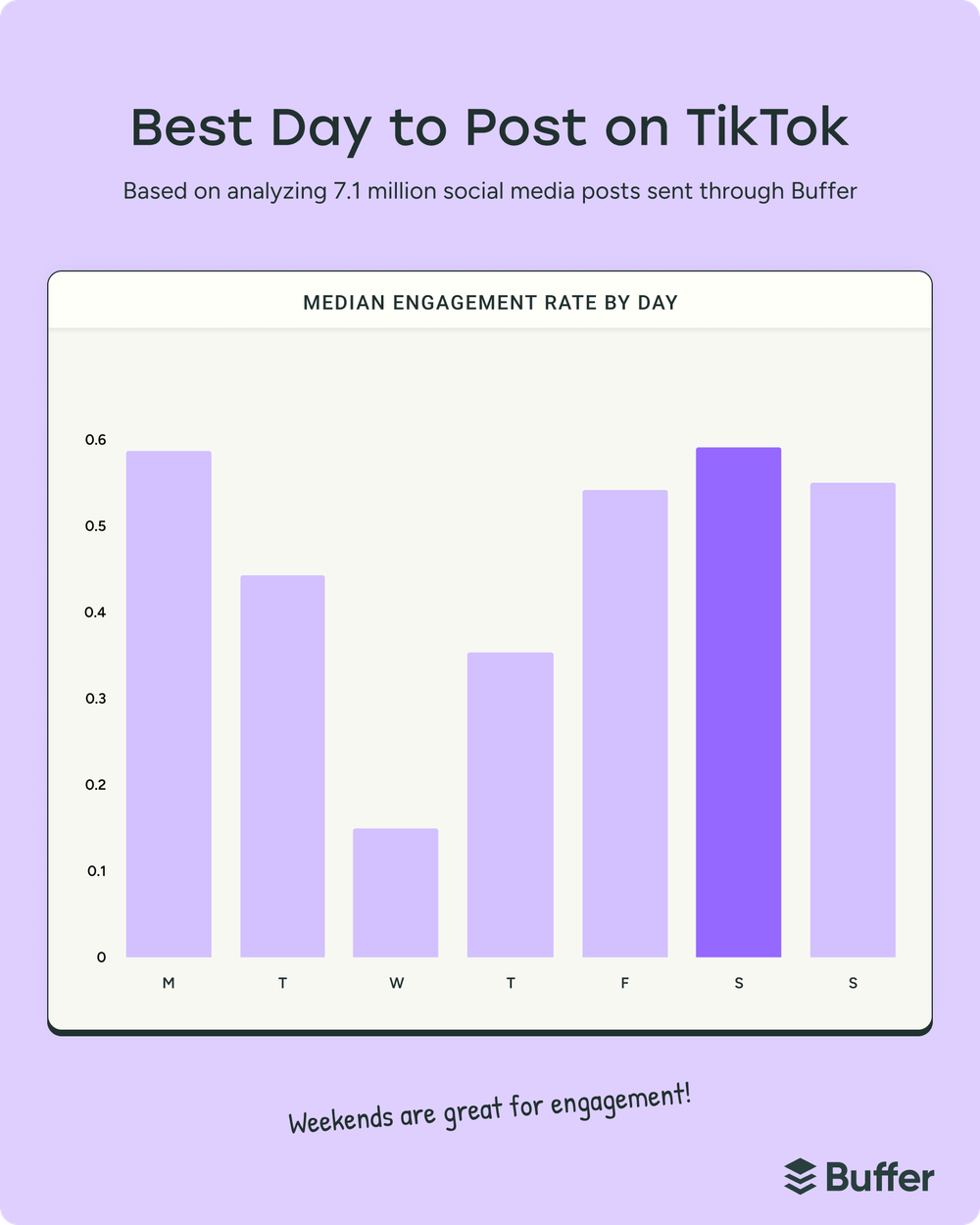
Unlike many other social platforms, which tend to see more engagement during the week, the best day of the week to post on TikTok is Saturday. Monday comes in second place, followed closely by Sunday.
TikTok offers a powerful ads platform with formats like in-feed ads, Topview, and Spark ads, helping you reach new audiences and boost high-performing content directly within the app.
🔍 Deep dive: Understanding the TikTok Algorithm
⏫ Level up: How to Get More Followers on TikTok
- Monthly active users: 578 million
- Breakdown by gender: 70% women, 23% men
- Dominant age group: 18–34 years
- 10% of organizations use it for social media marketing
Pinterest is a bit of a hidden gem. It’s part social platform, part visual search engine, and it’s where people go to discover ideas, plan projects, and find brands they love. Think of it as a digital pinboard: users save images and videos (called pins) to curated boards, whether they’re dreaming up a new recipe, redesigning a space, or researching products.
With nearly 600 million users (and over a third actively looking for brands), Pinterest offers a powerful, often overlooked way to get your content discovered and send traffic your way.
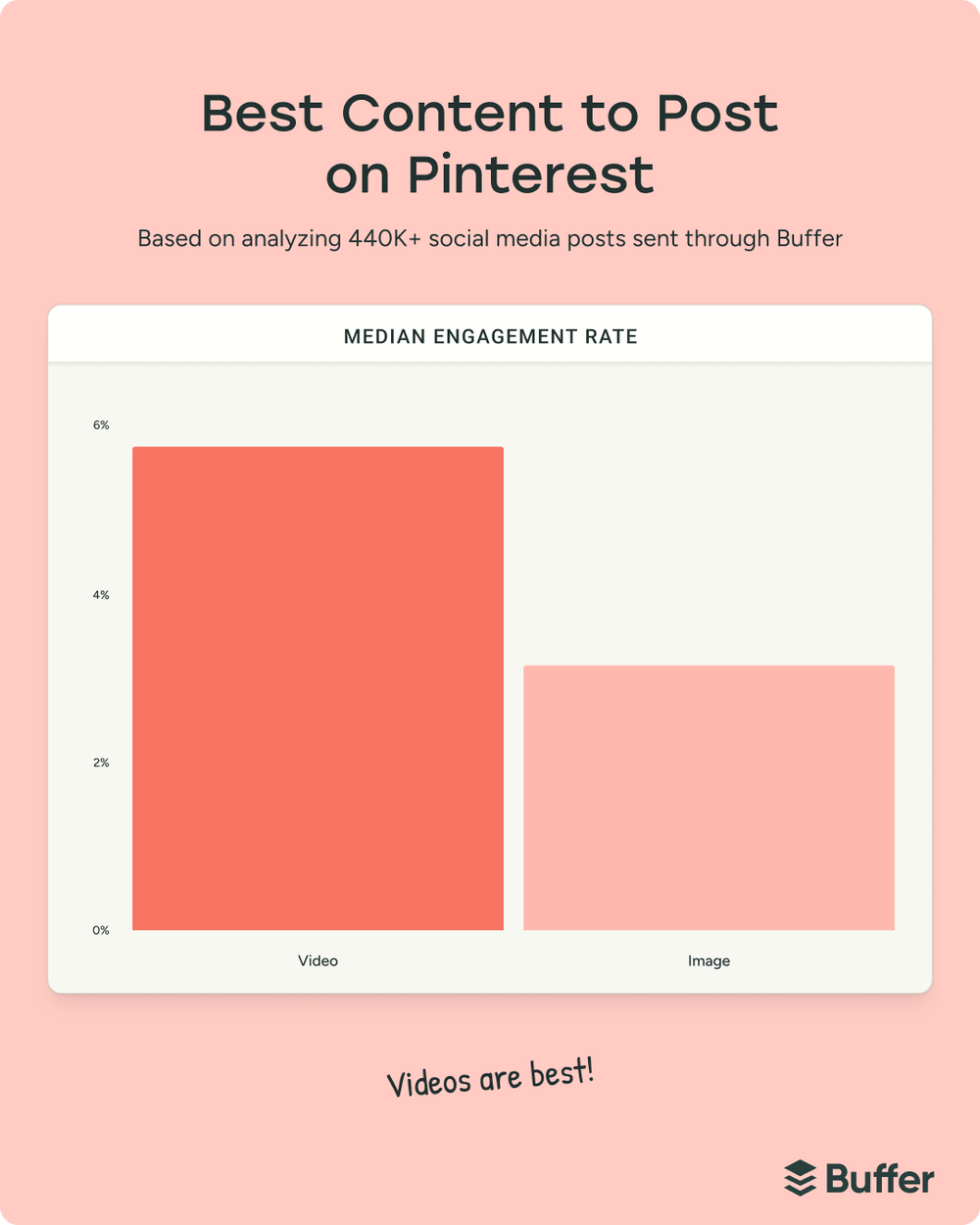
Interestingly, our data found that video posts on Pinterest get 83% higher engagement than images. So if you’re using Pinterest primarily as a visual catalog, it might be worth testing a few video pins and seeing how they perform with your audience.
Pinterest also has built-in advertising tools, including promoted pins and shopping ads, making it easy to get your content discovered by users actively searching for ideas and products.
🔍 Deep dive: Pinterest Marketing Strategy
⏫ Level up: How to Get More Followers on Pinterest
X (formerly Twitter)
- Monthly active users: 557 million
- Breakdown by gender: 36% women, 54% men
- Dominant age group: 18–34 years
- 38% of organizations use it for social media marketing
X (formerly Twitter) has been around since the early days of social media. It was actually the very first platform Buffer supported! That said, the platform has been through a lot of changes lately.
But don’t count it out just yet. Sure, there are some interesting X (Twitter) alternatives popping up (like Bluesky, Mastodon, and Threads) but none of them have surpassed X’s monthly user count yet.
After acquiring the platform in 2022, Elon Musk set out to transform it into a broader “everything app,” expanding far beyond its original focus on short posts and conversations. Since then, we’ve seen a wave of updates, including new account types, longer-form posts, improved video features, and early steps toward digital payments and e-commerce.
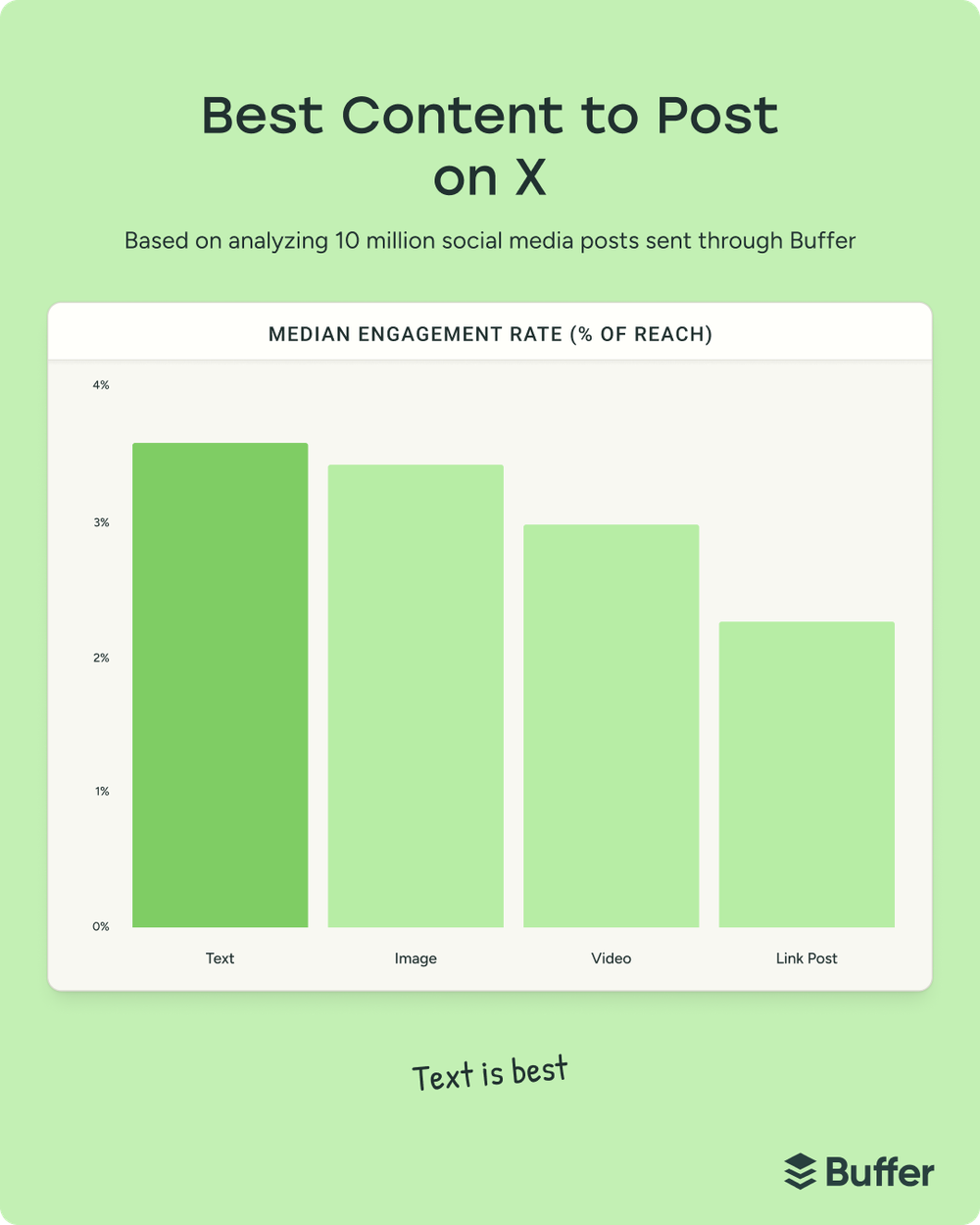
Like Facebook, X supports links, images, text, and video posts, but according to our analysis of over 10 million posts sent through Buffer, text is the most engaging content format on X.
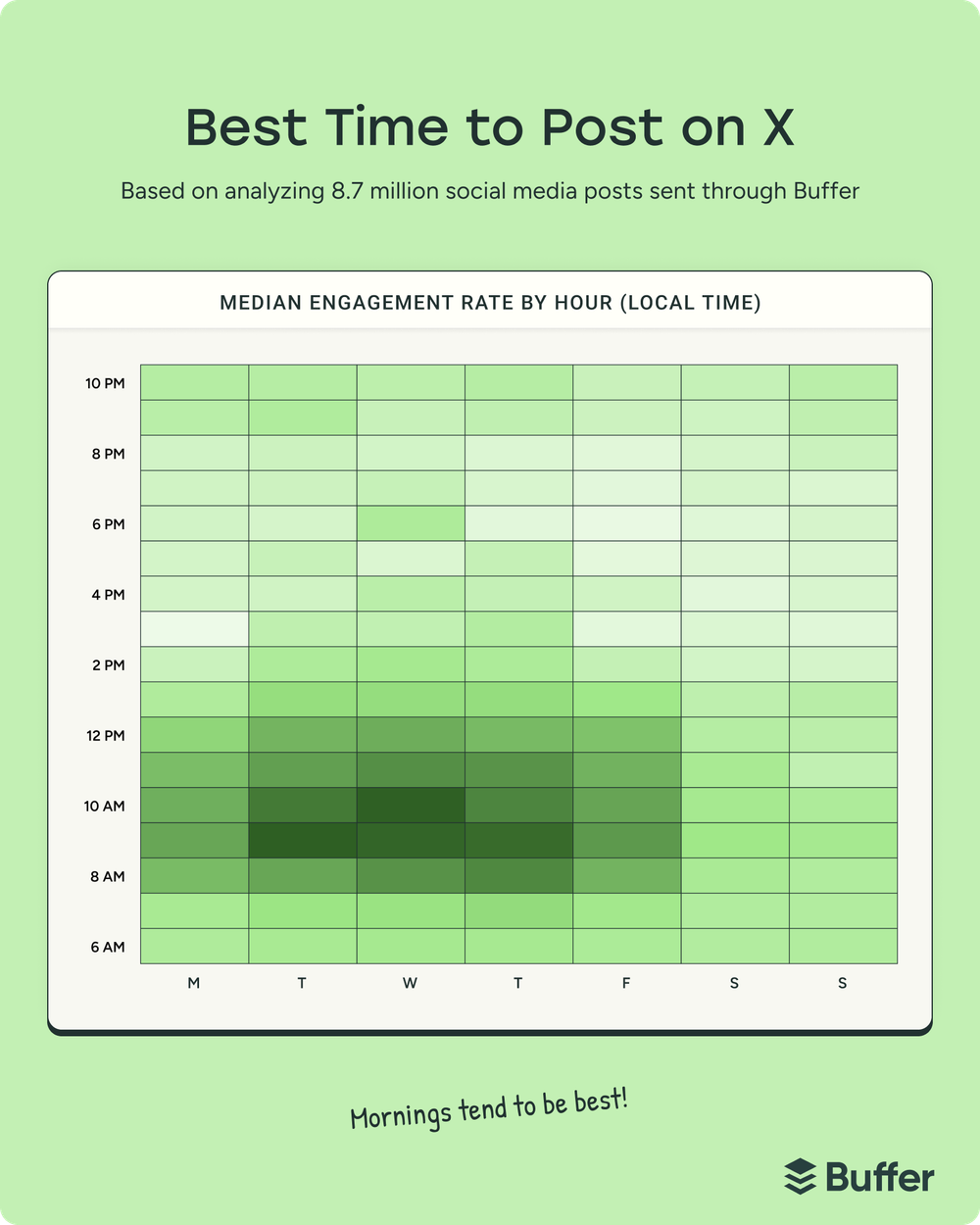
The best time to post on X (Twitter) is 9 a.m. on Tuesday. In general, posting on weekdays from 8 a.m. to about 12 p.m. gives your content the best shot at higher engagement stats.
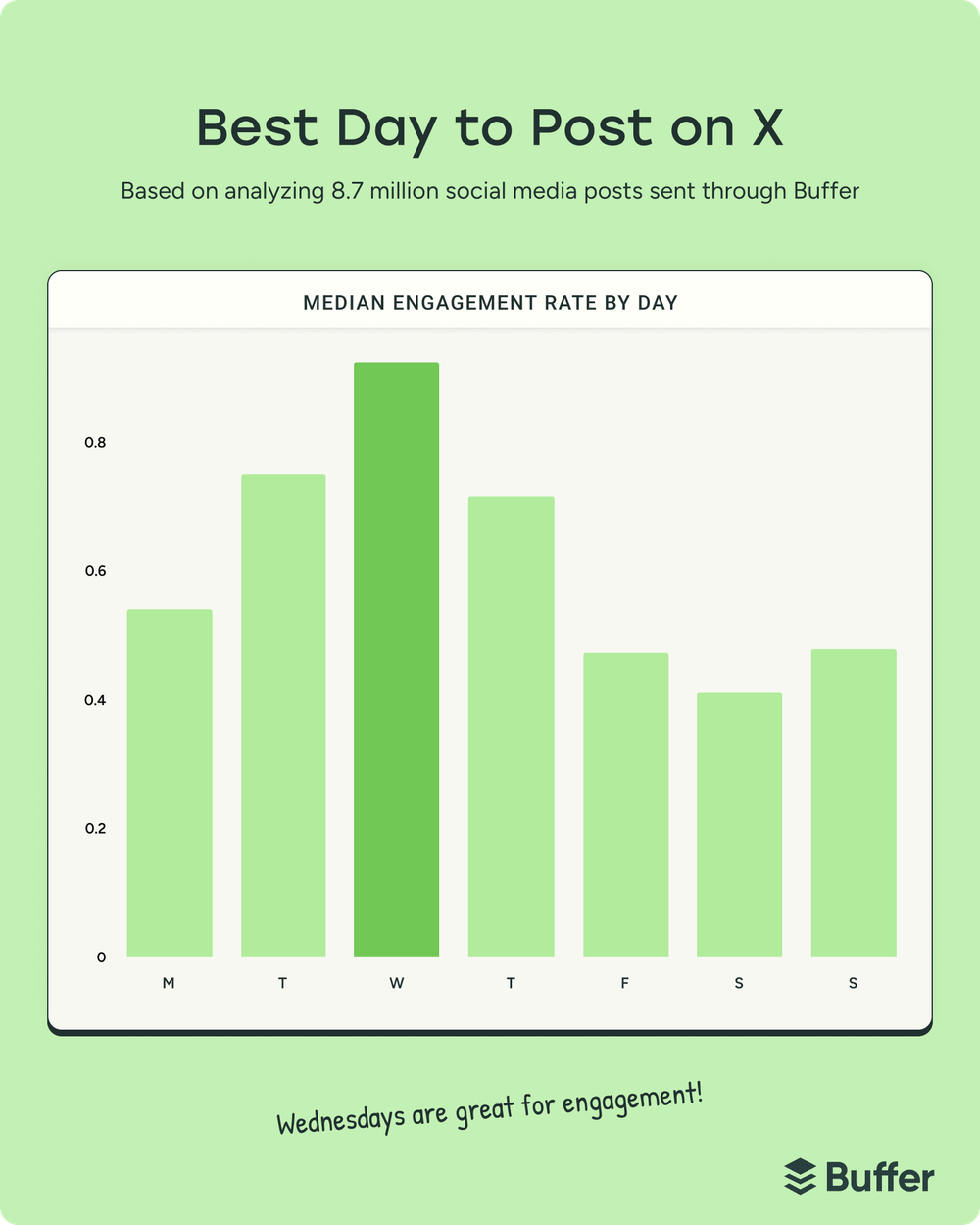
The best day of the week to post on X is Wednesday, followed by its fellow midweek buddies, Tuesday and Thursday.
X offers a range of advertising options through X Ads, including promoted posts, accounts, and trends, helping you boost visibility and reach targeted audiences in real time conversations.
🔍 Deep dive: Understanding the X (Twitter) Algorithm
⏫ Level up: How to Get More Followers on X (Twitter)
- Monthly active users: 350 – 450 million (estimated)
- Breakdown by gender: 43% women, 57% men
- Dominant age group: 25–34 years
- 75% of organizations use it for social media marketing
LinkedIn has evolved from a resume-sharing platform to one of the best networks for thought leadership content and building a personal brand. From a business social media perspective, your employees’ personal brands can be a powerful digital marketing tool. More so, in most cases, than sharing from a company page.
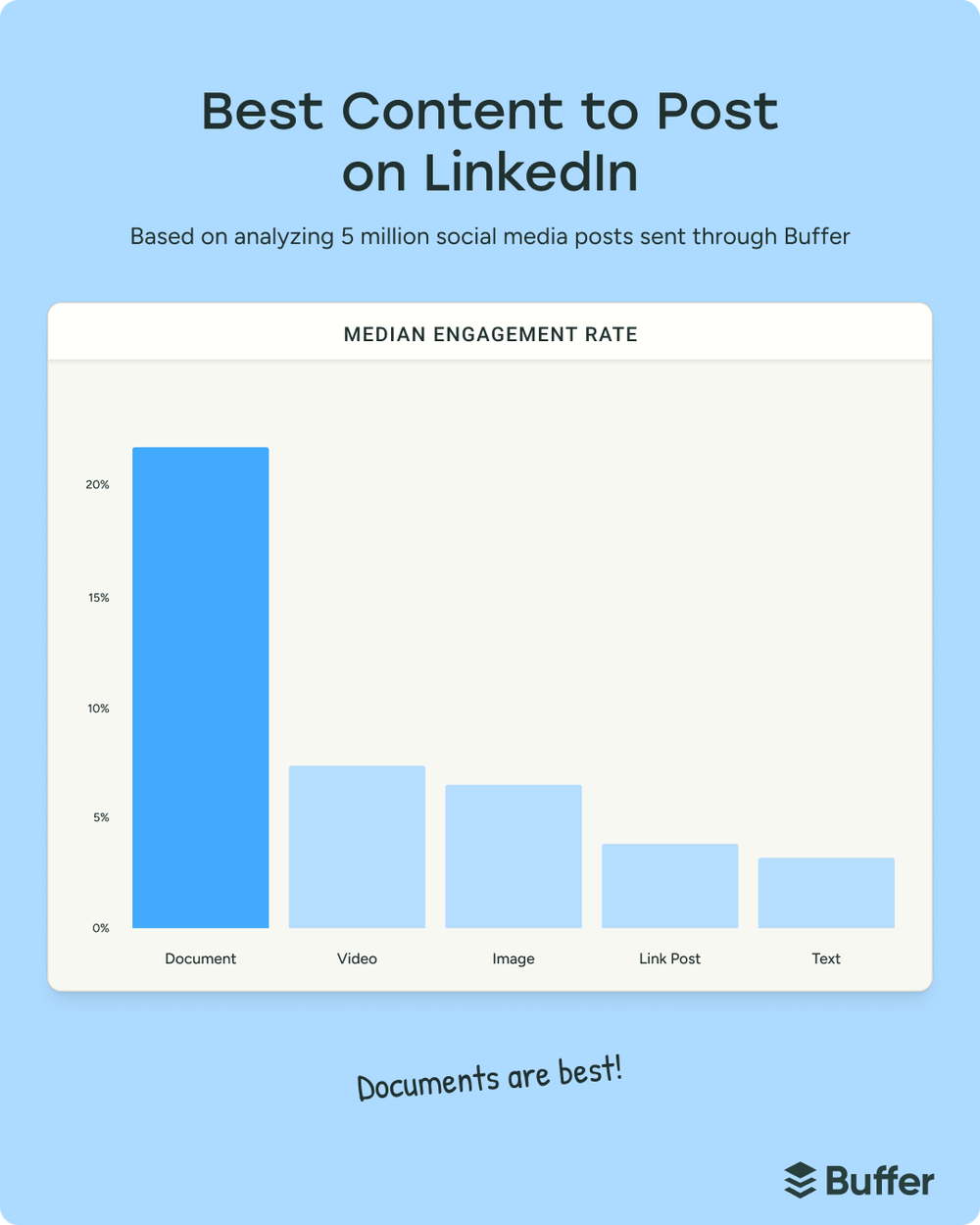
Although the platform also allows for text, video, image, and link posts, LinkedIn carousels (documents) take the top spot by far in terms of engagement.
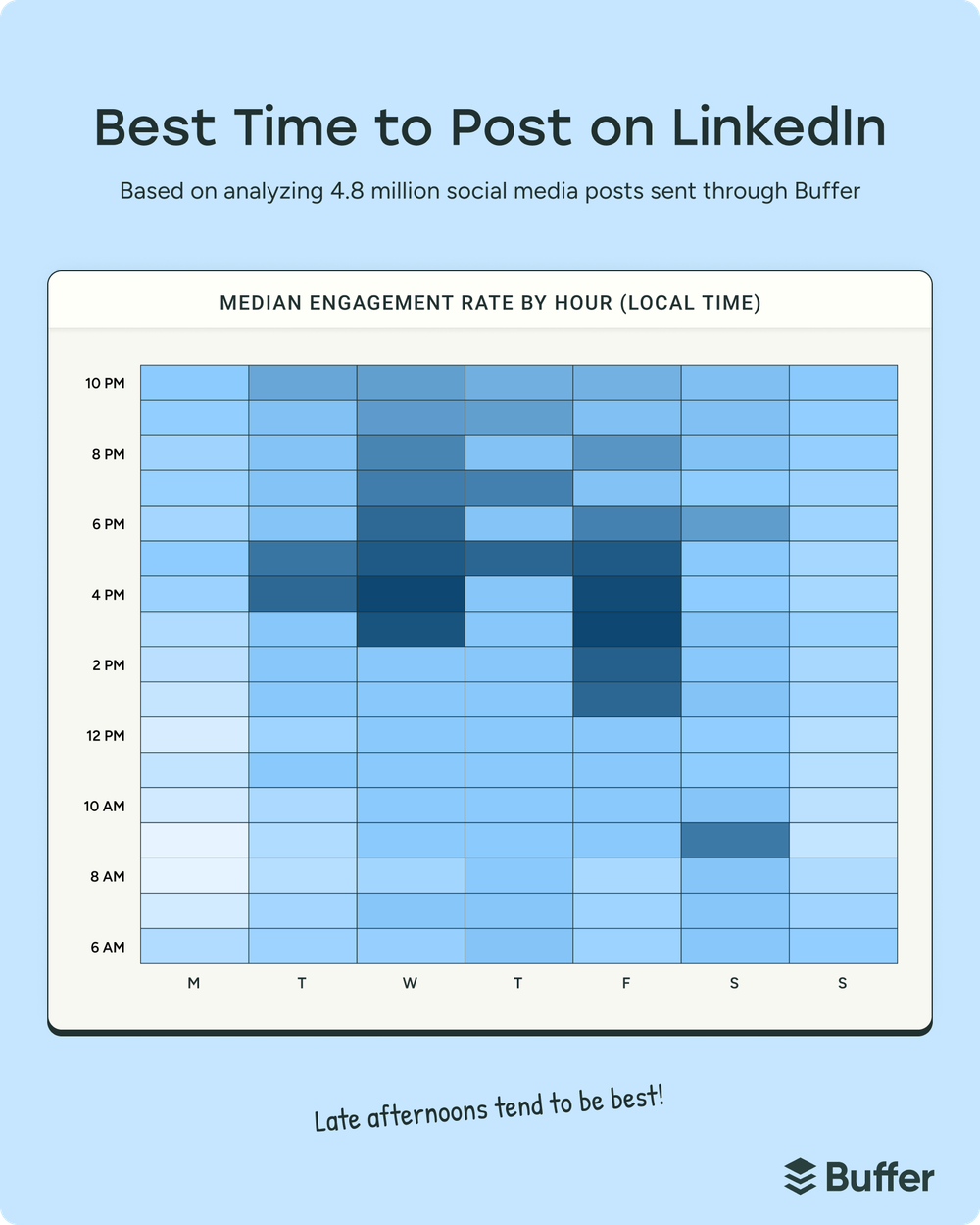
We also uncovered that late afternoon and evening hours (3 p.m.–8 p.m.) now drive the highest engagement on LinkedIn. As you can see on the heatmap below, the best times to post on LinkedIn are Wednesday at 4 p.m., Friday at 3 p.m., and Friday at 4 p.m.
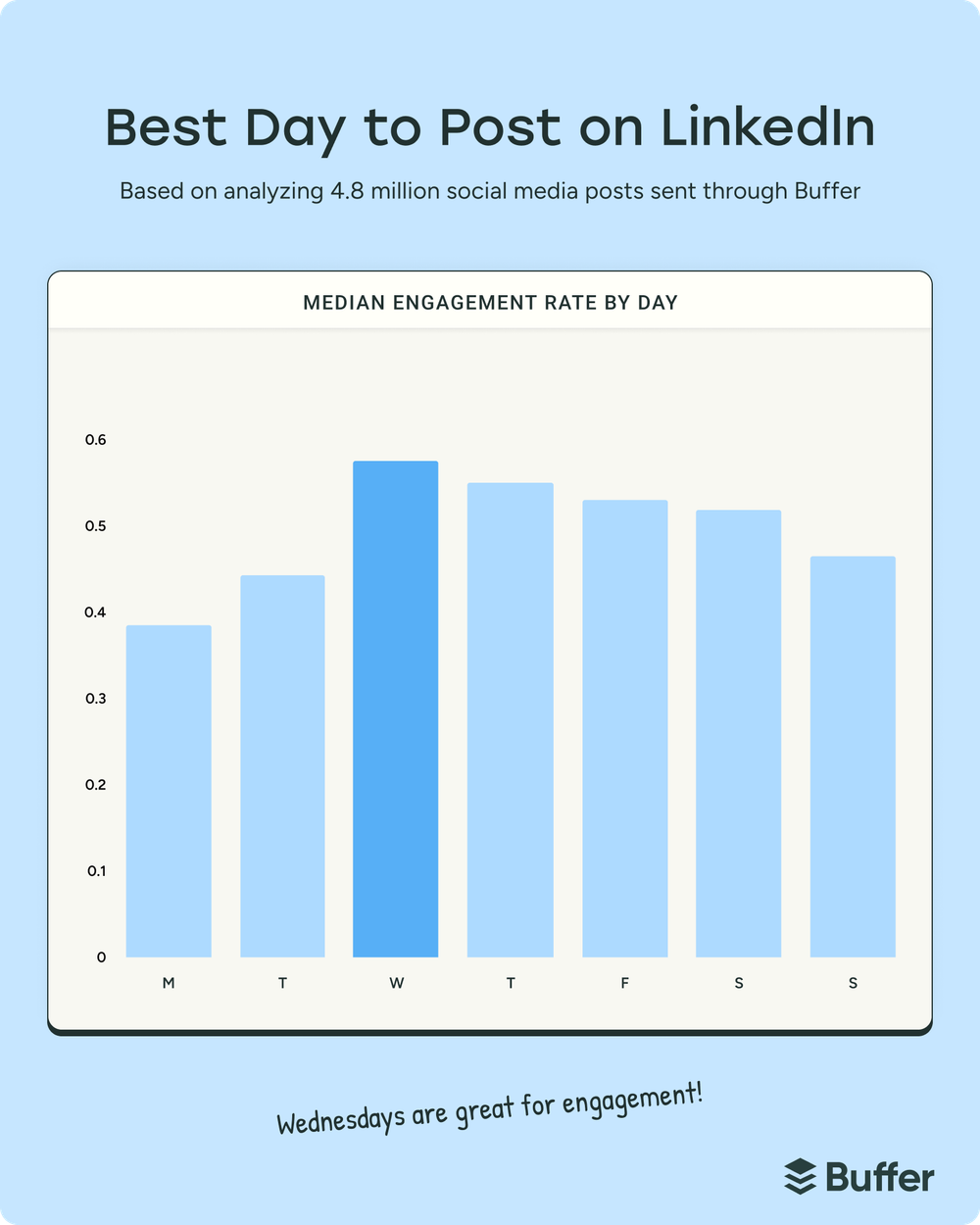
The best day of the week to post on LinkedIn is Wednesday. We found that posts shared on Wednesday tended to get the most engagement, closely followed by Thursday, then Friday.
LinkedIn’s ads platform uses formats like sponsored content, message ads, and lead gen forms to help you target professionals and expand your reach.
💡 Pro tip: Because personal profiles are where it’s at on LinkedIn, we introduced LinkedIn profile analytics to help you see what’s working and refine your strategy over time.
🔍 Deep dive: Understanding the LinkedIn Algorithm
⏫ Level up: How to Get More Followers on LinkedIn
Threads
- Monthly active users: 400 million
- Breakdown by gender: 42% women, 58% men
- Dominant age group: 25–34 years
- 11% of organizations use it for social media marketing
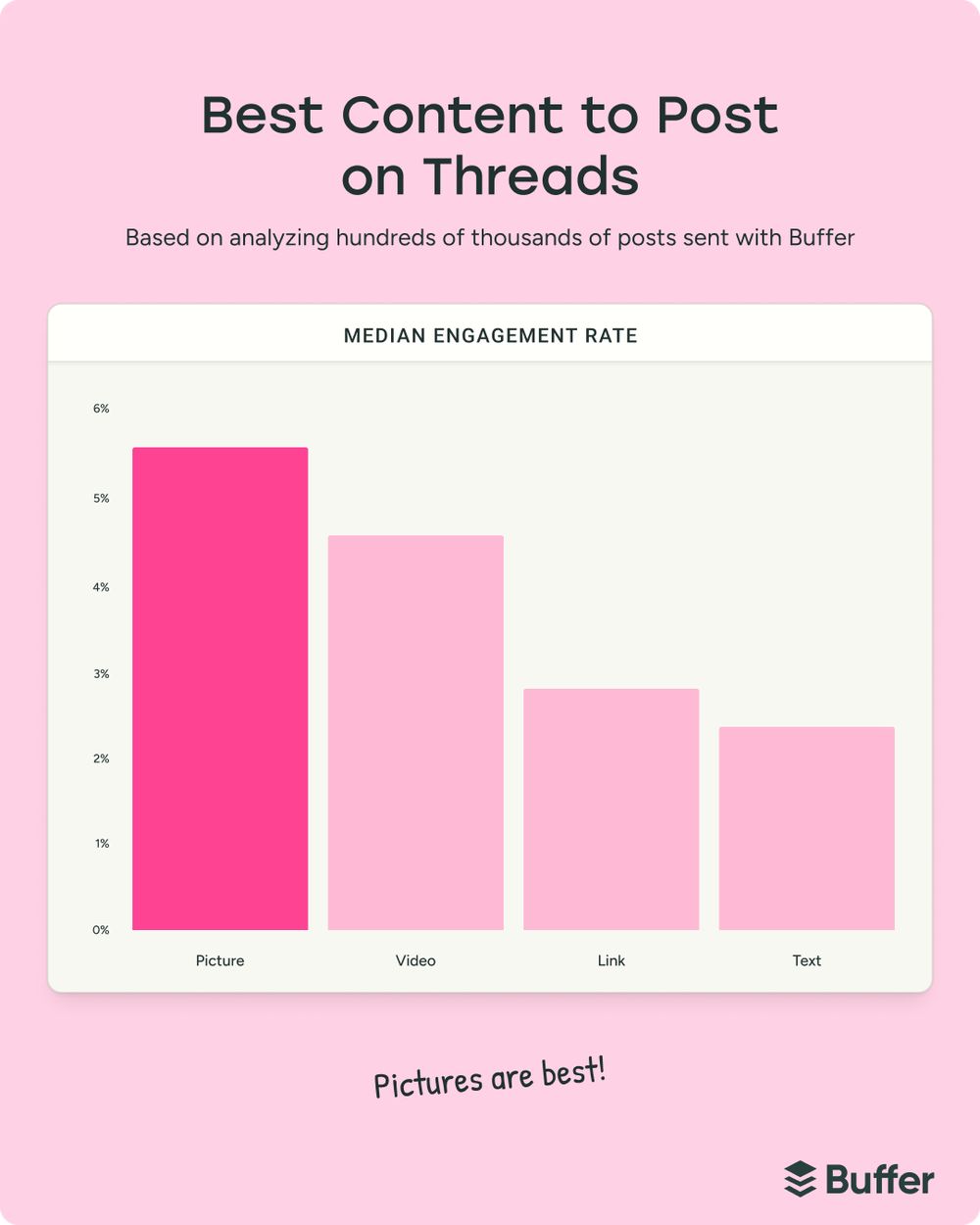
Threads may be positioned as a conversation-first, text-forward platform, but posts with visuals currently see higher median engagement. That said, format isn’t everything. There’s plenty of overlap, and a strong text post can still outperform an average video or image.
As Threads continues to evolve and refine its algorithm, these trends may shift, but for now, a simple, effective approach is to mix in visuals alongside your text to give your posts an extra boost.
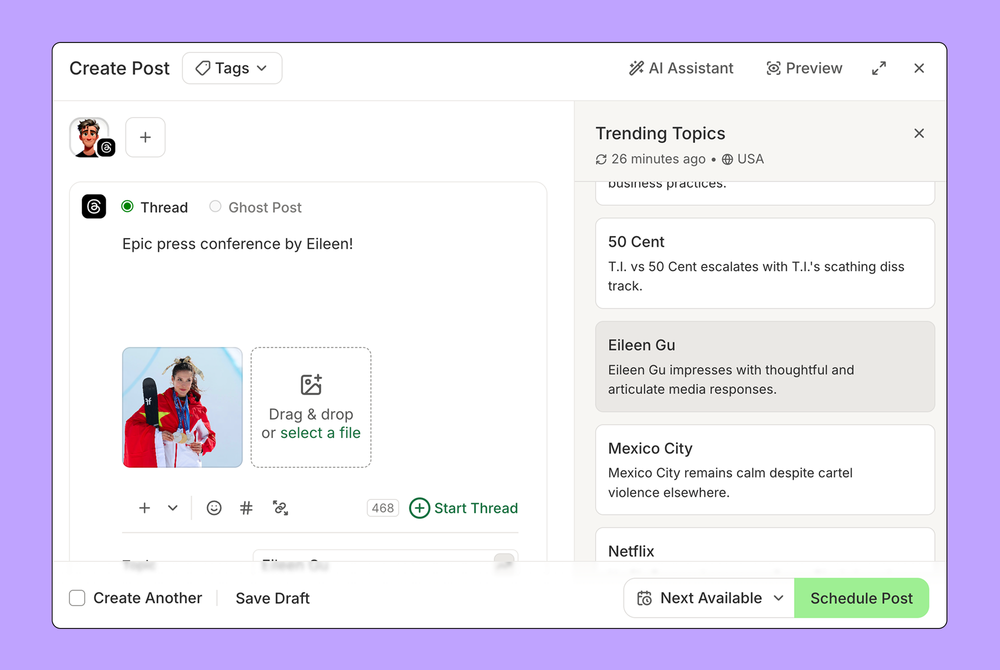
No matter the format, one of the most effective ways to engage on Threads is to add your insight to trending topics (before they run away from you). Using Buffer’s Trending Topics feature, you can see what’s taking off right now, browse actual posts from the conversation, and jump in with your take, all without leaving the Buffer app.
So, when is it best to post? Our research revealed that the best time to post on Threads is 9 a.m. on Thursday. Other high-performing slots were 12 p.m. on Wednesday and 9 a.m. on Wednesday. Generally speaking, midweek mornings and early afternoons are your best bet for maximum engagement.
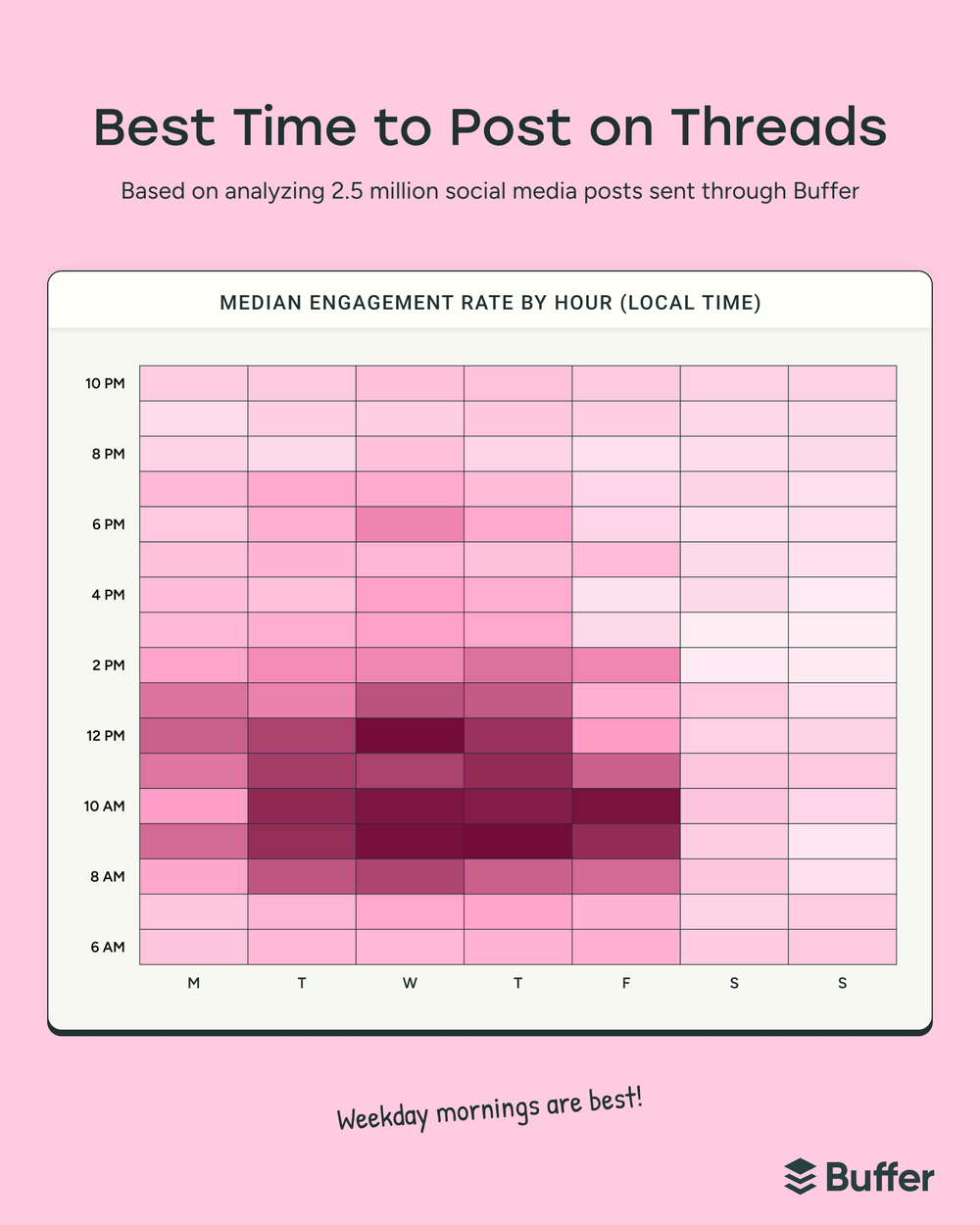
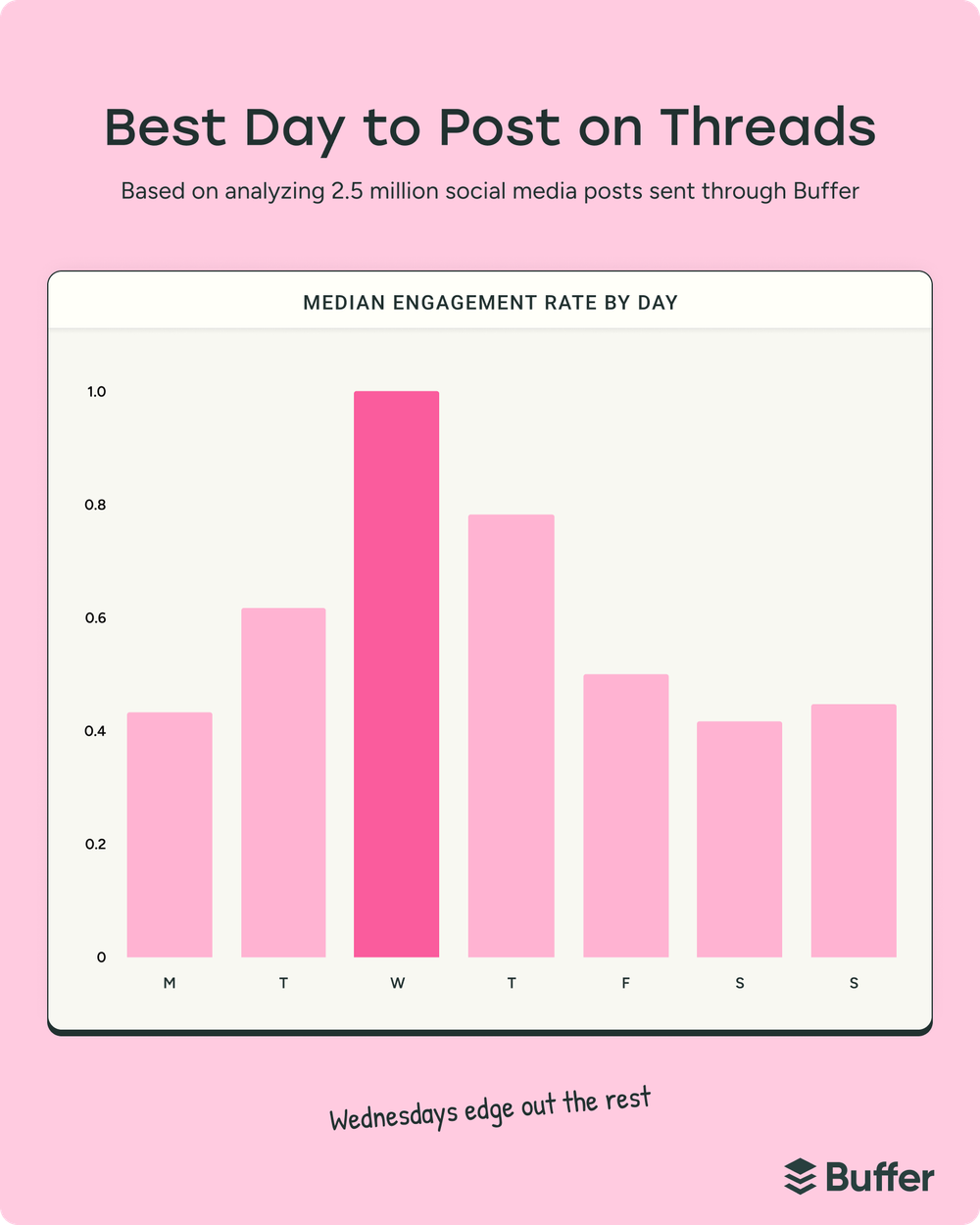
Midweek is where it’s at for the best median engagement, so it’s little surprise that Wednesday seems to be the best day of the week to post, followed by Thursday, then Tuesday.
💡 Pro tip: Good timing won’t save mediocre content. Remember that Threads rewards specificity and niche interests, so don’t be afraid to geek out on your favorite topics.
As of January 2026, Meta has officially completed the global rollout of Threads as an advertising placement through Meta’s Ads Manager.
🔍 Deep dive: Understanding the Threads Algorithm
⏫ Level up: How to Get More Followers on Threads
Bluesky and Mastodon
Bluesky and Mastodon are two fairly new decentralized social media platforms. Bluesky has 5.2 million monthly users, while Mastodon has 1 million. Being decentralized means that they aren’t owned or controlled by a single company, but instead are made up of smaller, community-led networks.
That structure shapes how people show up: these spaces are far more community-first, with a strong emphasis on authentic conversations and people over polished brand content. So before you post, it’s worth asking whether your audience is actually there. If they are, focus on engaging, not just broadcasting.
Instead of engagement rate, Bluesky uses total interactions (likes + comments + reposts), so it’s not one-to-one with the other platforms in this section. Nevertheless, our data found that video content earns the most interactions per post on Bluesky.
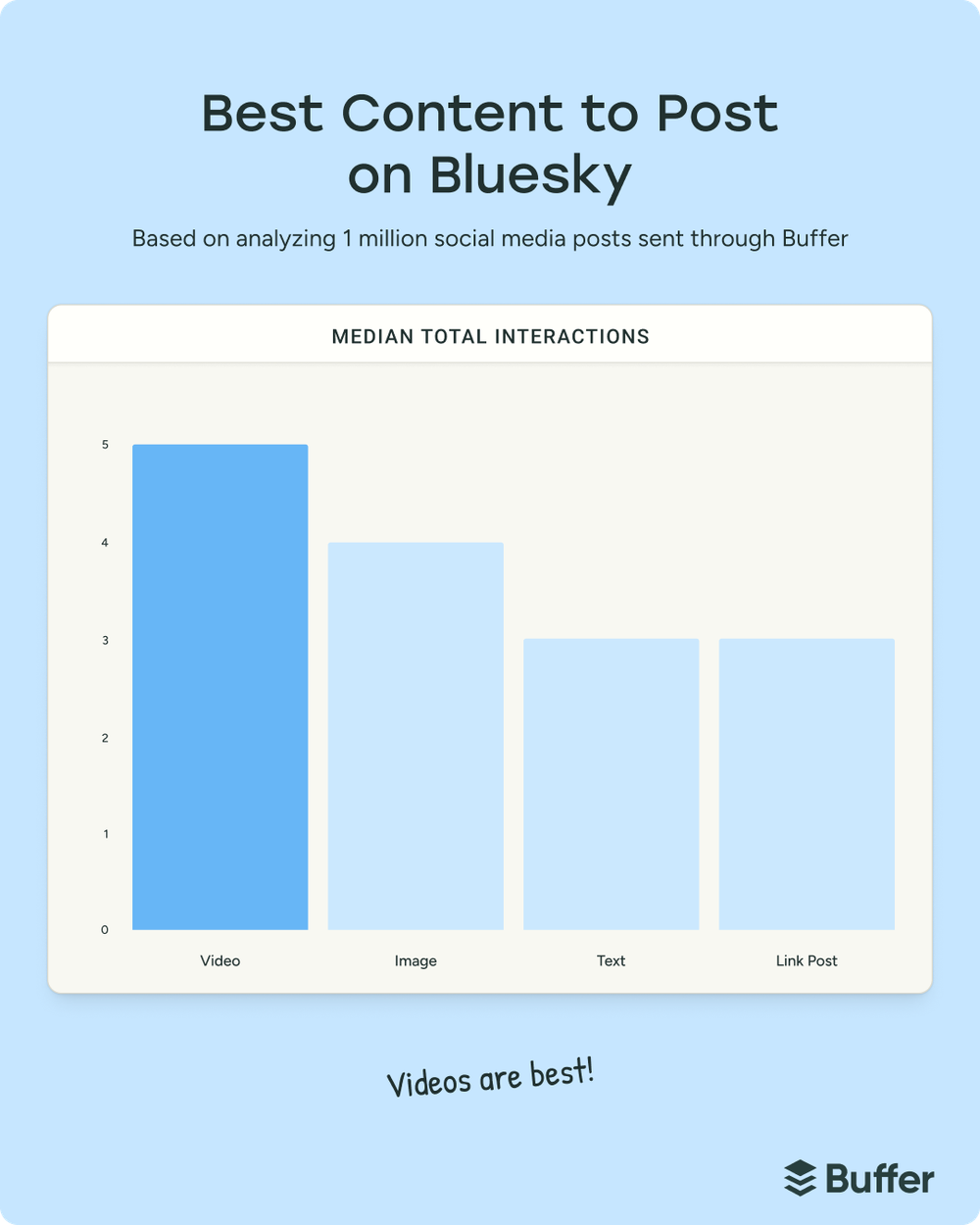
Like Bluesky, Mastodon uses total interactions (shares + favorites + comments) instead of engagement rate. It came up as the most stable platform in our dataset: Images and videos both earned a median of three interactions per post, and links and text both averaged out at two interactions.
Keep an eye on these two platforms; it’s going to be interesting to see how decentralized social media networks evolve.
🔍 Deep dive: Understanding Decentralized Social Media
⏫ Level up: How to Schedule, Crosspost, and More on Bluesky
Now that you understand more about the most popular social media marketing platforms, let’s explore the key to social media marketing success: a social media strategy.
Good social media marketing starts with a strategy. Before you start creating content, take a step back and look at the big picture. Before you even start thinking about content creation, it’s wise to take a step back and look at the big picture to devise your social media marketing plan. Remember: random acts of content lead to random results.
Here’s a step-by-step guide to creating your social media strategy:
- Set your social media marketing goals
- Define your target audience
- Choose your content pillars
- Choose your platforms
- Create your content calendar
- Analyze your content performance
- Evaluate your content strategy
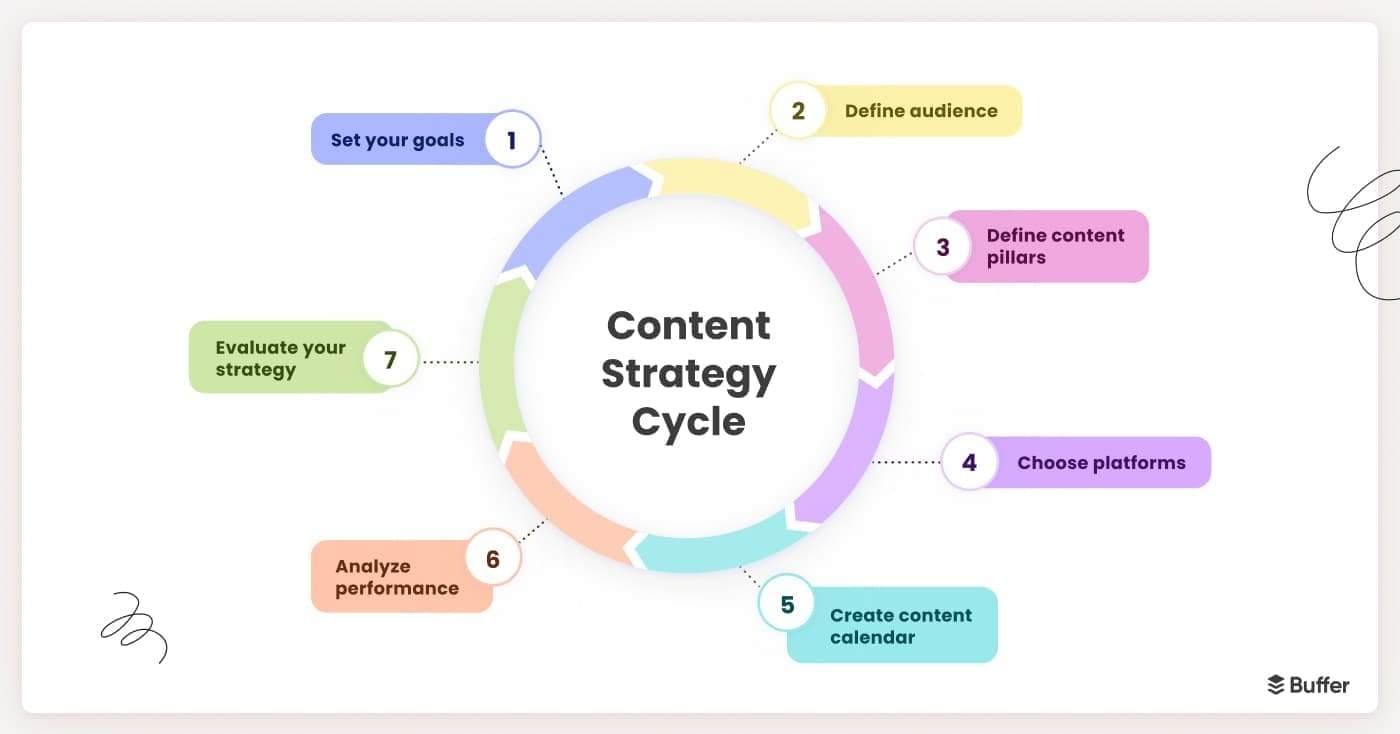
Your social media marketing strategy is not a one-and-done process: it’s a plan that should be regularly tweaked and iterated upon. So, instead of thinking of the above steps as a to-do list to move through, visualize them as a cycle, like the flywheel below.
You should be regularly tweaking and building on your strategy to hit your goals.
1. Set clear social media marketing goals
Start with your business goals. Then ask yourself: ‘How will growing an engaged social media following help me (or my team) reach these goals?’
This is especially important if you need to convince leadership that social media is worth the investment. They’ll want to see real results. The more you can show that social media is working, the easier it’ll be to get the resources you need to grow.
Build a solid foundation for your social media strategy by making these goals SMART:
- Specific
- Measurable
- Achievable
- Relevant
- Timebound
| SMART Goal Element | Ask Yourself | Examples + Guidance |
|---|---|---|
| Specific | What are we trying to achieve on social media? |
|
| Measurable | How will we measure success? What metrics will we use? |
|
| Attainable | Are our goals realistic and achievable? | Growing a new YouTube channel to 5,000 subscribers within a month might not be realistic if you’re new to video. |
| Relevant | Are our goals aligned with broader business objectives? | Try using the prompt: “so that we can [insert business goal here].” |
| Time-bound | What is the deadline for achieving the goal? | Give yourself a reasonable timeframe. Many companies work in quarterly (three-month) periods. |
2. Define your target audience
Before you dive headfirst into creating content, you need to know who you’re actually talking to. Once you know who your audience is, you’ll have a much better idea of where to find them and how to talk to them.
Answering these questions will help you get a clear picture of your target audience:
- Who are they? (e.g., job title, age, gender, salary, location, etc.)
- What are they interested in that you can provide? (e.g., entertainment, educational content, case studies, information on new products, etc.)
- What goals and challenges do they have? (Ideally, this will be one your content or company can help them achieve or solve.)
- Where do they usually spend their time online? (e.g., TikTok, Instagram, etc., or niche platforms)
- When do they look for the type of content you can provide? (e.g., weekends, during their daily commute, etc.)
- Why do they consume the content? (e.g., to get better at their job, become healthy, stay up to date with something, etc.)
- How do they consume the content? (e.g., reading social media, watching videos, etc.)
3. Choose your content pillars and formats
What kind of content will your audience actually care about? Could short-form video content be the best format for capturing their attention? Could partnering with an influencer take your brand awareness to the next level?
Your marketing personas will come in handy here. It’s also worth checking out what similar businesses are doing on social media. A competitive analysis can help you learn a lot from what’s working (and what’s not) for them. What are your competitors doing that works? Have they made mistakes you can learn from?
Your content pillars and formats aren’t set in stone. You can (and should) adjust them based on what’s actually working. Here’s a comprehensive guide to creating content pillars for social media (with a handy template).
4. Choose your platforms
So, which platforms should you focus on? With so many options out there, it’s easy to feel overwhelmed. Here are some things to consider when making this choice:
Focus your efforts instead of spreading yourself thin
When you’re just starting out, it’s better to focus on a few platforms where your audience actually hangs out, rather than trying to be everywhere at once.
Brands focusing on just one or two platforms tend to get more engagement per post than those spreading themselves across three or more.
Understand your target audience
Even basic demographic info about your audience (like age, location, and interests) can help you figure out where to focus. Check out the stats for each platform above for some guidance.
For example, if you’re trying to reach teenagers, LinkedIn isn’t where you want to spend your time. The same goes for TikTok and Snapchat if you’re trying to reach retirees. They’re probably not hanging out there.
Use built-in shopping tools
Many social networking sites, like Facebook, Instagram, and TikTok, have robust e-commerce tools that may increase sales if that is your social media goal.
It makes sense to reduce friction when it comes to sales by letting your customers shop right on their favorite platforms. If it works for your particular business, the availability of these tools is also an essential factor in your choice.
Explore newer or niche platforms
If you’re serving a particularly niche market segment, it’s worth exploring the alternative platforms gaining traction. Don’t write Mastodon or Bluesky off simply because their active monthly users don’t number in the billions (yet).
Less popular (but still powerful) social media marketing platforms like Pinterest may also prove valuable, especially for categories where visual discovery drives purchases, such as home decor, fashion, food, and DIY.
5. Create your content calendar
You’ve outlined the big picture; it’s time to get into the details — and implementation. Social media marketing usually starts with having a consistent social media presence, i.e., regularly sharing content on your chosen platforms.
It’s best to plan your content calendar ahead of time instead of creating and publishing content spontaneously. Luckily, you’ve already done so much of the hard work required. Armed with your content pillars and formats and the platforms you’ve decided on, you can begin to map out the content itself on your social media content calendar.
We have a comprehensive guide to creating your social media calendar (and template) that will walk you through it step-by-step, but here’s a high-level overview:
Step 1. Choose your social media content calendar tool
This could be as simple as a spreadsheet, but social media scheduling tools like Buffer will help you plan, schedule, and analyze your content in a single platform.
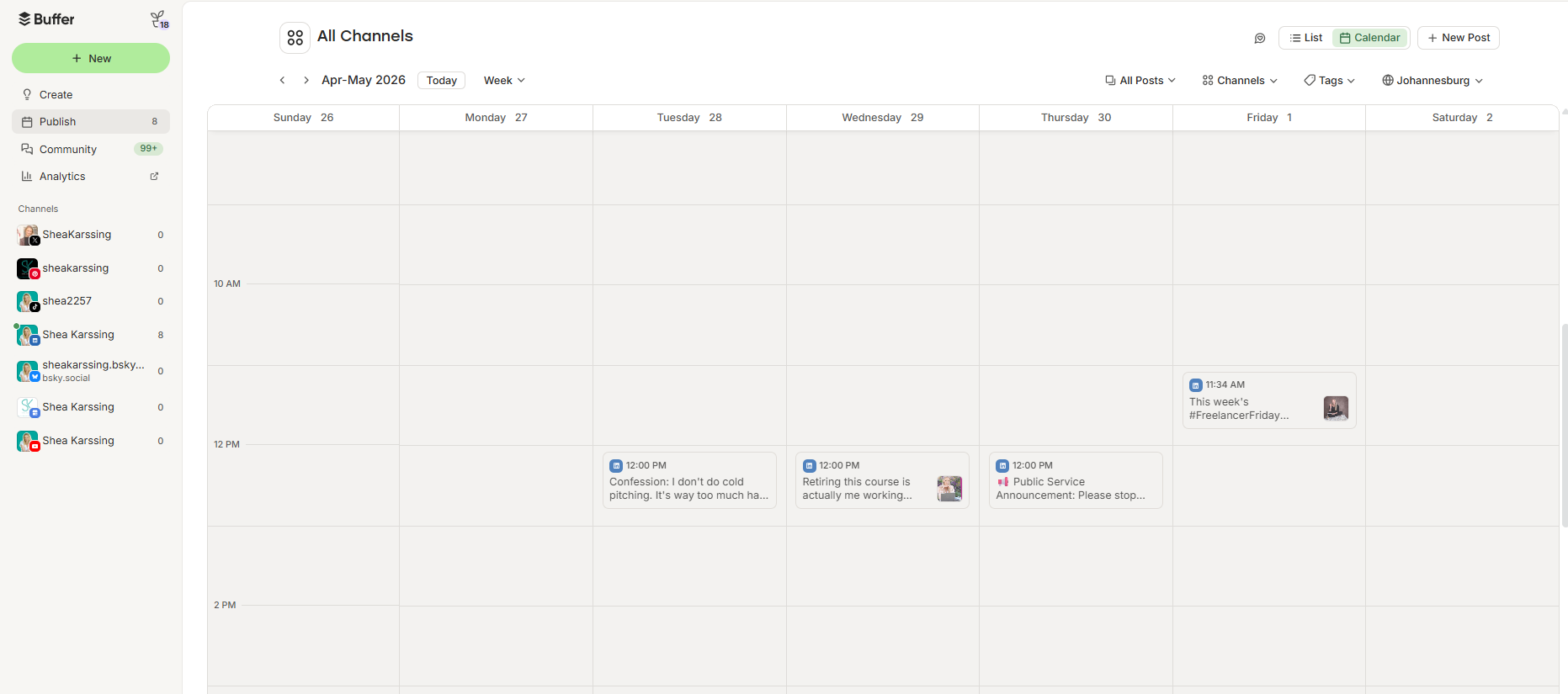
Prefer to start your social posts on a good ol’ spreadsheet? No problem. Buffer’s Bulk Upload allows you to convert a spreadsheet into up to 100 scheduled posts, all ready to go.
Step 2. Gather your content ideas
Defining your content pillars likely sparked plenty of exciting content ideas. Get them down before you lose them.
A tool like Buffer’s Create Space can be super helpful here. It’s a versatile system that will allow you to save text, images, and videos for your social media posts (and organize them with color-coded tags) to keep track of all your lightbulb moments.
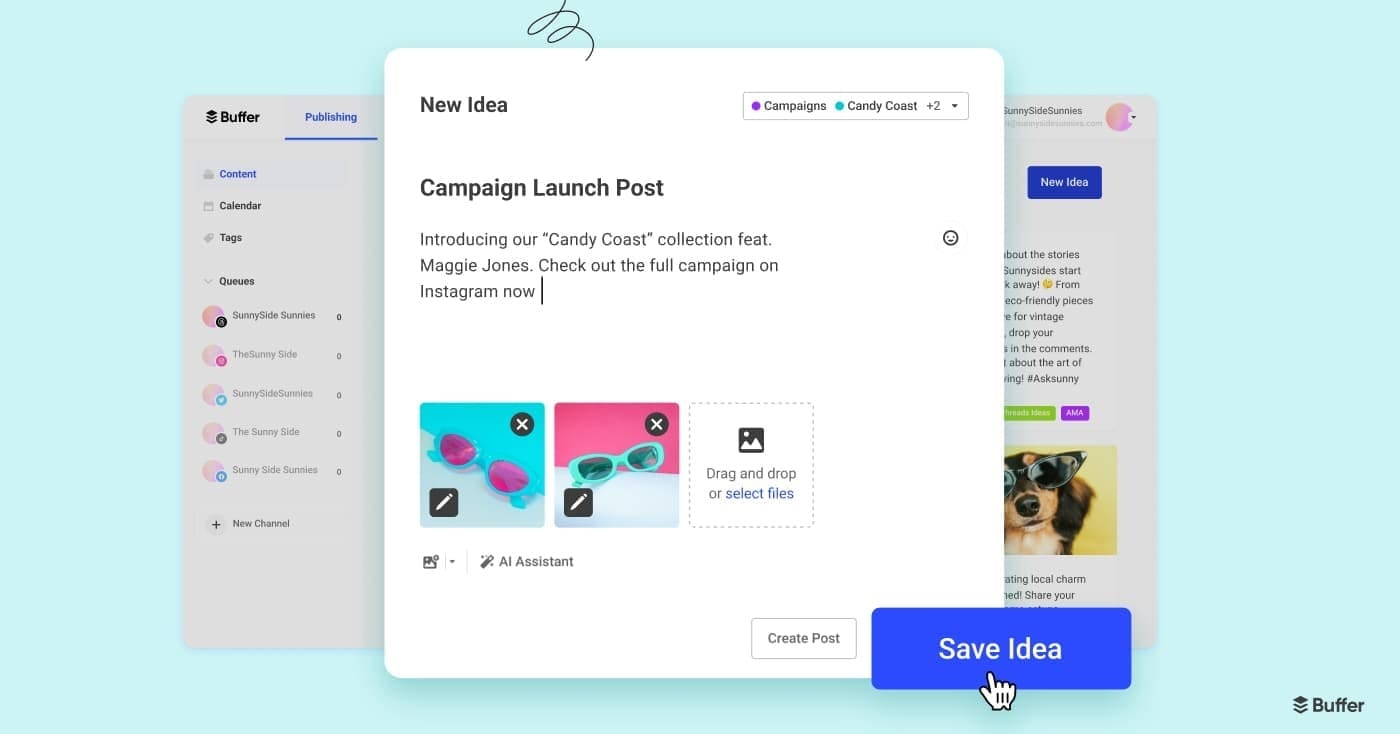
Even if all you have is a link to another social post that has inspired you, a half-baked idea, or a reminder about an important product launch, save it. You can refine it later before you schedule it.
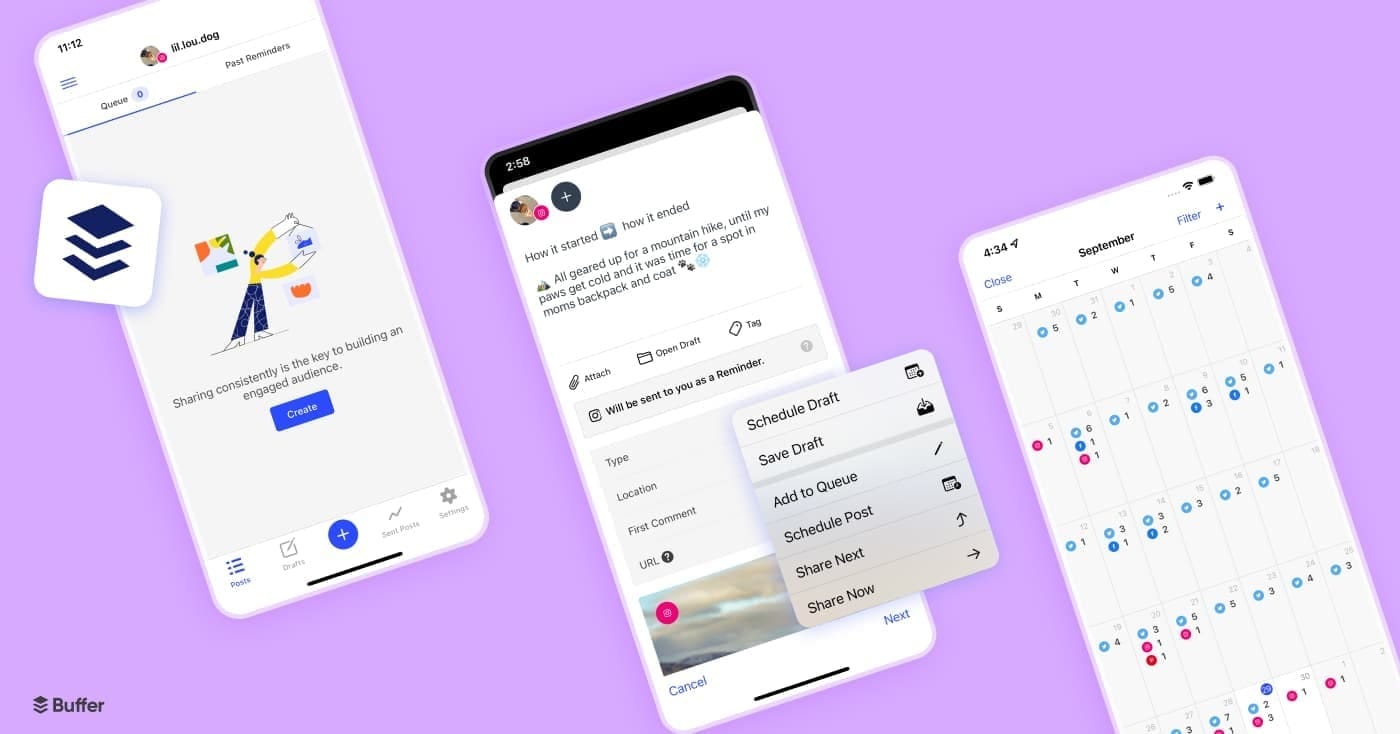
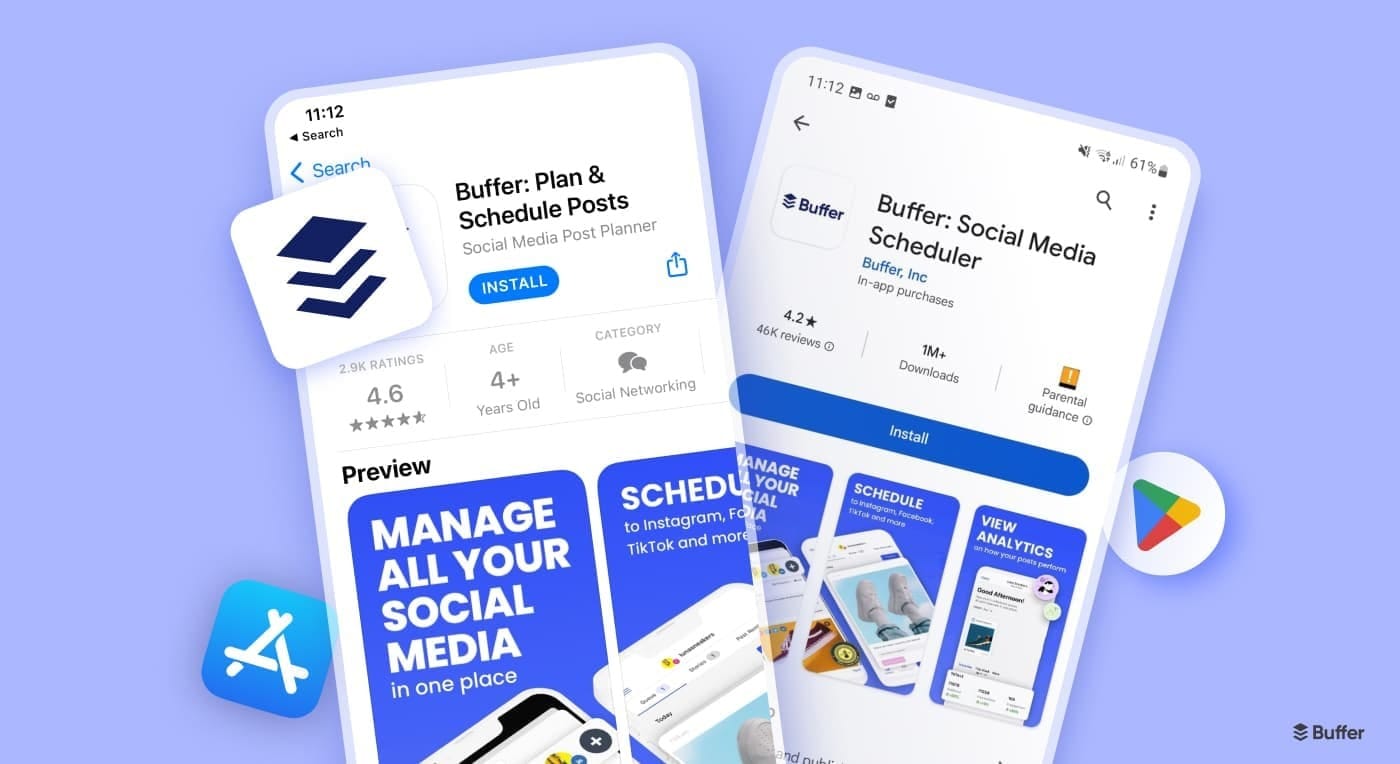
With the Buffer app (available on both iOS and Android), you can save those ideas while you’re on the go, too.
💡Pro tip: If you’re stuck for ideas and staring at a blank composer with nothing to say, check out our Template Library of writing prompts. Take that, writer’s block.
Step 3. Decide on a content cadence for each platform
When it comes to building an engaged social media audience on any platform, consistency is key. It makes sense. The platforms want you to use their sites and apps, so they reward that behavior.
Every platform is different when it comes to the best days and times to post on social media for optimal engagement. While you’re revving up your social media content engine, it can be helpful to know the best times to post on each network to maximize your chances of likes, comments, shares, and views.
Here’s a recap of the best time slots for each platform:
| Platform | Best time to post |
|---|---|
| 8 a.m. – 12 p.m. (weekdays) | |
| 9 a.m. and 6 p.m. (weekdays) | |
| 3 p.m. – 6 p.m. (Wed–Sun) | |
| TikTok | 6 p.m. – 11 p.m. (daily) plus weekend mornings |
| YouTube Shorts | 4 p.m. – 7 p.m. (Fri–Sat) |
| YouTube (long-form) | 6 p.m. – 10 p.m. (Sun–Tue) |
| X (Twitter) | 8 a.m. – 11 a.m. (weekdays) |
| Threads | 7 a.m. – 12 p.m. (weekdays) |
While these best-time-to-post guides can be helpful, they’re no substitute for knowing your best time to post. Every audience is different, and yours may be more likely to engage with your content at different times.
After some time posting to your chosen platforms with Buffer, Buffer’s analytics will recommend your unique best time to post for each platform to maximize your chances of high reach and engagement.
Step 4. Map key launches and dates
Plan out posts for all your product launches, company news, and events. You can use placeholders if you don’t have all the details or social media marketing assets you need just yet.
Why map them out first? Those posts should be your priority on those days, and you may want to hold off on sharing other content that detracts from these on key dates. It will also help you gather all the copy, images, and other assets with enough time to plan and schedule these posts.
Step 5. Batch your content
Consistently creating content for multiple channels is no cakewalk. But content batching (sitting down to create content in bulk, enough to last several days, weeks, or even months) can help you be more efficient.
Here are some examples of social media manager content batching:
Step 6. Schedule your content
With all that content batched and ready to go, it’s time to start scheduling. Scheduling your social media marketing posts in advance is essential. There are so many benefits to scheduling your content in advance, especially for the social media managers themselves.
Having your posts scheduled in a social media management tool like Buffer means:
- You don’t have to be online at all hours to post.
- You can take time off and rest, knowing that your audience is still engaged and growing
- You can post your content at the best time to post on each platform.
- You can free up time for last-minute changes.
6. Analyze your content performance
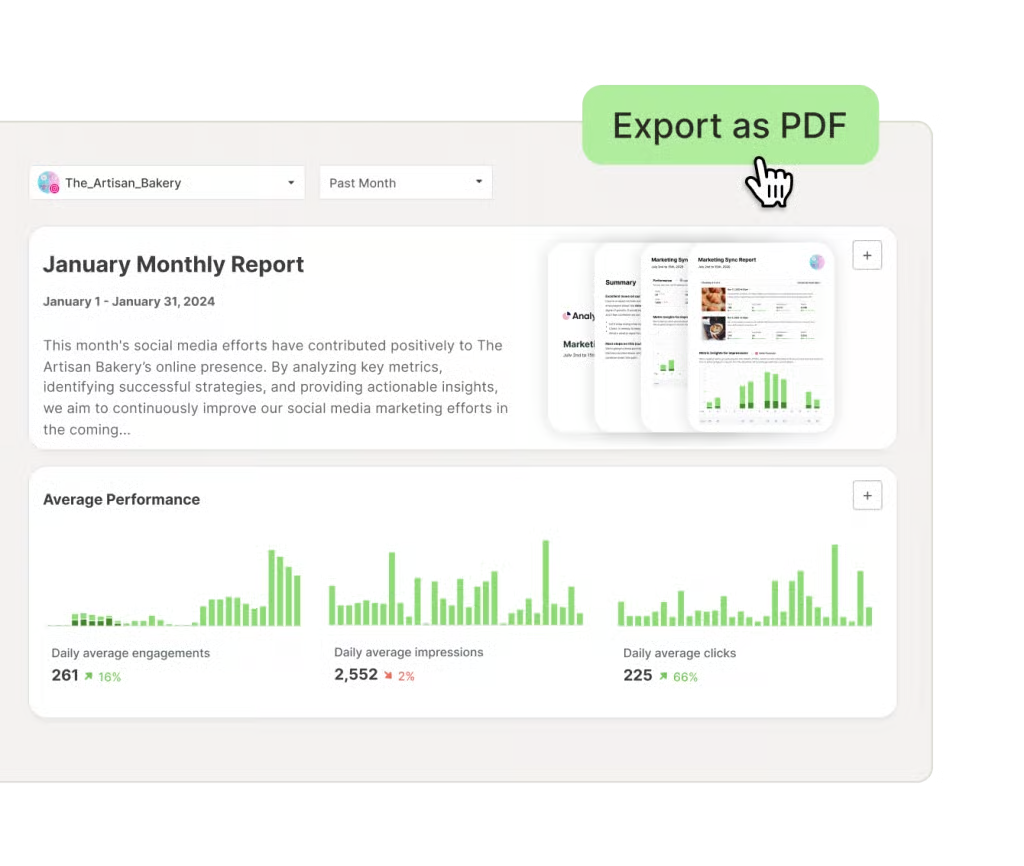
Understanding how your content is performing using social media analytics is a hugely important step in your social media marketing plan. Are you reaching more people than last month? How many positive mentions? How many used your brand’s hashtag? Are you driving traffic to key pages?
Metrics to look at include:
- Reach and impressions
- Engagement rate
- Click-throughs
- Conversions
The social networks provide basic metrics, but for more in-depth analysis or cross-platform comparison, use a social media analytics tool. We’re biased, of course, but Buffer’s analytics are tough to beat.
Rather than just numbers, Buffer uses your reach and engagement data to recommend the best time to post, frequency, and content format to grow your channel.
7. Evaluate your content strategy
It’s time to step back and ask: “Is our social media marketing strategy working?”
Use your analytics reports to see if your efforts are helping you reach your business goals. You might be gaining followers and engagement, but not increasing sign-ups or sales. If so, revisit earlier steps and adjust your strategy. Platforms evolve, and so should your approach. Adaptation is part of the process.
As your business and following grow, conversations about your brand will increase. People comment, tag, or message you directly. And how you respond to these is important.
As you’ll see in our 2026 State of Social Media Engagement Report, the biggest driver of post performance isn’t when or how you post. It’s whether you show up and talk back to your audience.
Here’s a quick recap:
- Replying to comments is one of the strongest patterns we found: Accounts that do this consistently see higher engagement across every platform (up to +42% on Threads and +30% on LinkedIn).
- Content format performance isn’t universal: What works on one platform won’t necessarily work on another (and sometimes not even for different goals on the same platform).
- Consistency still matters: Accounts that stop posting see a clear drop in performance, while posting regularly increases your chances of being seen.
- Timing and frequency help, but only as a boost: The real lever is creating content people want to engage with and responding when they do.
If there’s one takeaway: don’t just publish: participate.
An easier way to engage
As you can see, responding to these interactions is a mega win for your engagement, but it’s easy to miss a notification, especially when you’re managing multiple social media accounts. If you’re like most people, you’ll post something, close the app, and forget to check back.
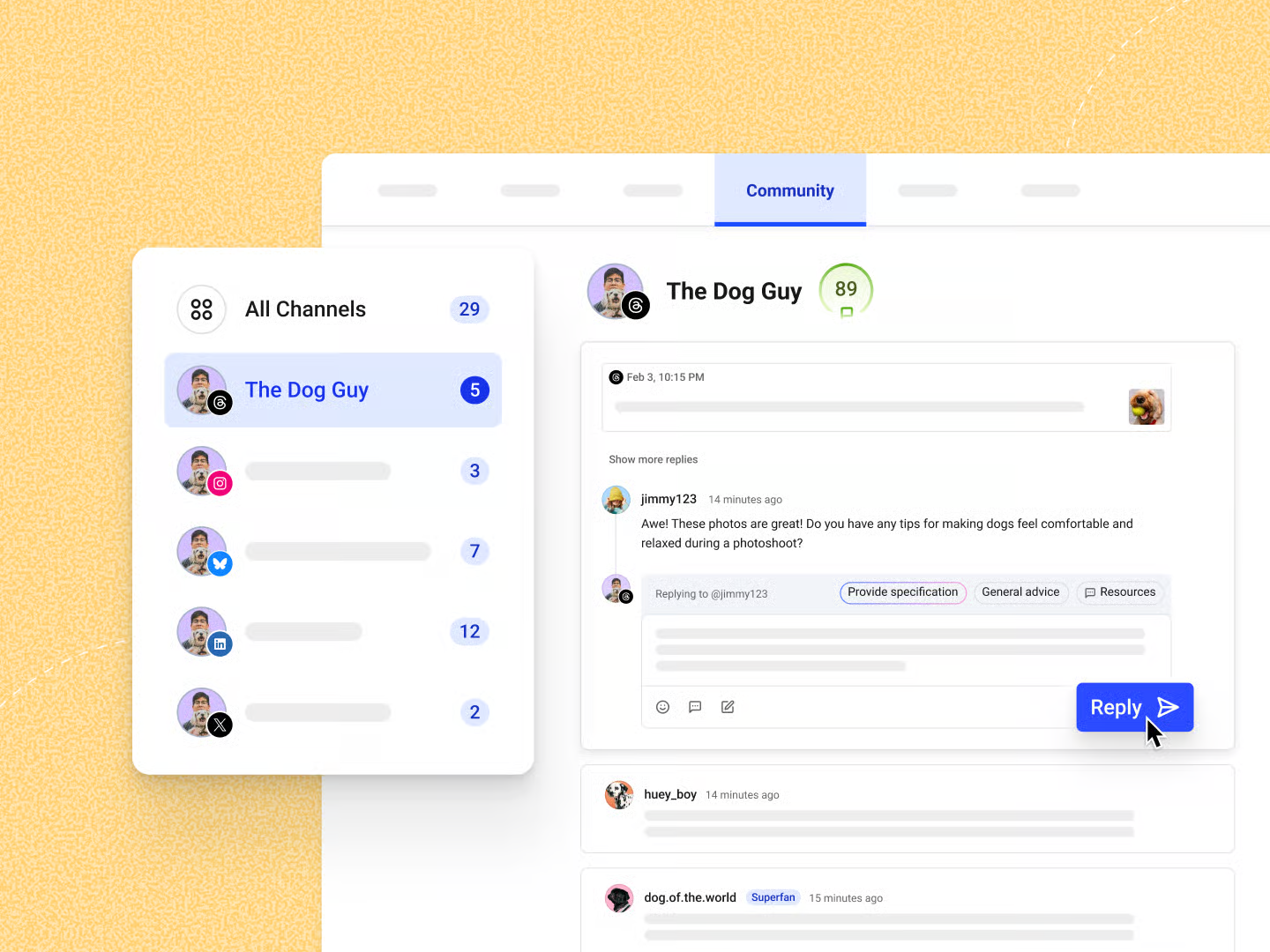
Buffer’s Community makes it easier by bringing all your conversations into one calm, organized space, where you can filter unanswered comments, get real-time notifications, and reply across platforms without jumping between apps. The Community motto: “Don’t post and ghost.”
You can respond faster with saved replies or AI-assisted suggestions (that still sound like you), track how consistently you’re engaging, and even turn great replies into new content — so no comment gets missed, and every interaction becomes an opportunity to connect and build your community. Because social media is meant to be social, right?
People might talk about your brand without tagging you. These conversations are valuable — positive comments can be opportunities to surprise and delight, while negative ones allow you to offer support and resolve issues early.
Manually searching for mentions can be tedious. Use a social media listening tool to find relevant conversations and participate effectively.
📚 Recommended reading: Social Media Engagement Guide
If resources allow, social media ads can significantly expand your reach and grow your following. Well-executed campaigns target specific audiences based on demographics, interests, and behaviors. Meta’s Ads Manager allows crossposting across platforms, even without profiles.
The average Cost Per Click (CPC) on social media is generally lower than Google Ads. For example, Instagram’s average CPC is $0.00–$0.25 (Pinterest is even lower at $0.00–$0.10), compared to Google’s $2.69. The amount will vary depending on your campaign objective, industry, and competition in your niche, so your numbers may look different.
💡Pro tip: Ads work best when they’re layered onto a consistent, organic social media presence.
📚 Recommended reading: Social Media Advertising Guide
We asked social media marketers worldwide for their top tips for beginners. Common themes include authentic connection, platform selection, and partnering with creators.
1. Know your audience
“Ignore fads and trends and vanity metrics. Create a solid strategy that talks to your audience. Think about their pain points, emotional triggers, and how you want to be perceived in their eyes.”
– Sarah Man, Social Media and Marketing Consultant, Mantar Marketing
“There’s already so much being shared by your target audience across various platforms. Work smarter, not harder! Your audience/customers will always express their pain points or challenges. If you can address those pain points or challenges head-on with your content, your messaging/products/services are guaranteed to reach those people.”
– Emma Rafanello, Social Media Account Supervisor, Bospar
2. Stick to the platforms that make sense
“You don’t have to be everything, everywhere, all the time! It’s better to start small and focus on one platform, at a lower posting frequency, than it is to spread yourself too thin. The best way to see if social is working for your business, no matter what your goals are, is to really focus on one channel and grow from there. If your attention is divided between 10 other platforms, it’s hard to notice those small yet promising upward trends that are whispering, ‘This could work!’ to you.”
– Emily Brungard, Senior Social Media Manager, Rossman Media
3. Optimize your profiles
“Optimize and fill out every aspect of all your social media profiles to create the best first impression for your audience. The better the first impression, the higher the perceived value. This will really help generate leads, too.”
– Piyush Malpure, Founder and Marketing Strategist, Leads Infinity
4. Engage with your communities
“Posting often will only show off part of your brand, but you’ll come across as more genuine and authentic if you take the time to comment on relevant posts and discussions.”
– Naba Ahmed, Marketing Manager, Prezi
5. Be authentic and relatable
“Don’t be afraid to test out-of-the-box ideas and be yourself. Understand that ‘being good’ on social means nothing if you aren’t meeting your objectives and reaching your business goals.”
– Sarah Man, Social Media and Marketing Consultant, Mantar Marketing
6. Create value for your audience
“Create content in which you give more to people than what you ask of them, and find peers to partner with and amplify your message.”
– Meryoli Arias, Head of Marketing, The Community Marketing Company
7. Get your team involved
“Your brand should be an extension of real people’s voices. For someone just building out their strategy, the best place to start is with your internal team. Interview them, use their thoughts and ideas to ideate topics, and feature them often. Give them prompts and enablement material to share those thoughts themselves. Involving the team humanizes the brand and creates real connection with your audience.”
– Sam Hembree, Co-founder, Beam Content
8. Be strategic with links
“This one is an easy one: stop posting links in Instagram captions and stop putting multiple links in social posts! They’re not accessible and honestly seem spammy. If you’re posting in multiple languages, just separate the posts.”
– Jessica Perreault, Director of Communications, Labour Market Information Council (LMIC)
As you’ll have picked up from this article, social media marketing is a deep, nuanced subject, and there’s often plenty to consider before a business kicks off any kind of social media marketing campaign.
In a field constantly in flux, social media pros know staying on top of trends, platforms, tools, and features is key.
To help you get going (or level up), here are some high-level resources to bookmark and add to your social media marketing toolkit (along with the deep dives and zoom-outs we’ve linked above):
✍️ Social Media Marketing Blog
Latest news, success stories, platform guides, and more.
Weekly updates on new features and tips.
Clarify industry jargon as you build your strategy.
Connect, share, and learn with other social media managers, small business owners, and creators.
Got questions? We’d love to help. Find us on Facebook, Instagram, LinkedIn, X, YouTube, TikTok, Threads, and Bluesky.
How do I do social media marketing?
At its core, social media marketing is about showing up where your audience already spends time and building real connections. Start by choosing one or two platforms your audience uses most, create content that helps, entertains, or informs them, and stay consistent. Just as importantly, don’t post and ghost. Respond to comments, join conversations, and learn from what’s working so you can keep improving over time.
How much does social media marketing cost?
It can cost as little or as much as you want. If you’re just getting started, your main investment is time: creating content, engaging with your audience, and learning what works. As you grow, you might invest in tools, ads, or extra support. The good news is you don’t need a big budget to see results, especially if you focus on consistency and genuine connection.
What are the benefits of social media marketing?
Social media marketing helps you get your brand in front of the right people, build trust over time, and stay top of mind. It can drive traffic to your website, generate leads, support sales, and even act as a customer service channel. But one of the biggest benefits is the direct connection. You’re not just broadcasting, you’re building relationships.
Why is social media marketing important?
Because that’s where people are. Your audience is already using social media to discover brands, research products, and make decisions. If you’re not showing up there, you’re likely missing out on opportunities to connect, learn from your audience, and grow your business in a way that feels natural and accessible.
How do I start marketing on social media?
Start simple. Pick a platform, set a clear goal, and begin sharing content that’s useful or interesting to your audience. You don’t need a perfect strategy from day one. You’ll learn as you go. Pay attention to what people respond to, keep experimenting, and build from there. Progress matters more than perfection.
Which is the best platform for social media marketing?
There isn’t a single “best” platform. It depends on your audience and your goals. The best platform is the one your audience actually uses and engages with. Instead of trying to be everywhere, focus on one or two platforms where you can show up consistently and do it well.
[ad_2]
Source_link