
[ad_1]
People talk about AI and SEO like we’re dealing with a completely different internet now.
Suddenly ChatGPT came out, Google AI Overviews started showing up everywhere, every SEO tool added some kind of AI mode, and now there’s this huge misconception that traditional SEO is dead.
Honestly, I don’t think that’s true at all.
The actual Google algorithm has not changed nearly as much as people think. What changed is mostly how information gets presented.
Search engines still rely heavily on links, authority, relevance, and content quality. The foundation is still basically the same. AI just changed how users interact with search results and how information gets brought up.
And if anything, AI SEO has made some older SEO practices even more important now, especially things like link building, structured content, and topical authority.
In this article, I’ll break down what actually changed with AI search, how Google AI Overviews and answer engines work, and why AI optimization is really more of an evolution of SEO than a replacement for it.
Key Takeaways:
- AI SEO did not replace traditional SEO. Search engines still rely heavily on links, authority, relevance, and optimization to rank content.
- Google AI Overview results are usually pulled from pages already ranking well in search engine results, which means visibility still starts with strong SEO.
- AI search engines like ChatGPT and Gemini largely rely on the same sources and signals already trusted by Google AI systems.
- The biggest shift is not the algorithm itself. It is how artificial intelligence presents and summarizes information through AI generated answers.
- Because anyone can now use AI to produce content quickly, the real advantage comes from editing well, building authority, and promoting SEO content properly.
- In the AI era, only about 20% of the work should go into creating content. The other 80% should go into promotion, optimization, and building visibility through links.

Link building cheat sheet
Gain access to the 3-step strategy we use to earn over 86 high-quality backlinks each month.
First Things First, How Does the Algorithm Work?
Before getting into AI SEO, it’s important to understand that the foundation of Google’s algorithm really has not changed that much.
A huge part of it is still based on PageRank.
PageRank is basically a numeric value assigned to a website based on the links pointing to it from other websites. The more trustworthy sites linking to you, the more authority your domain builds in the eyes of the search engine.
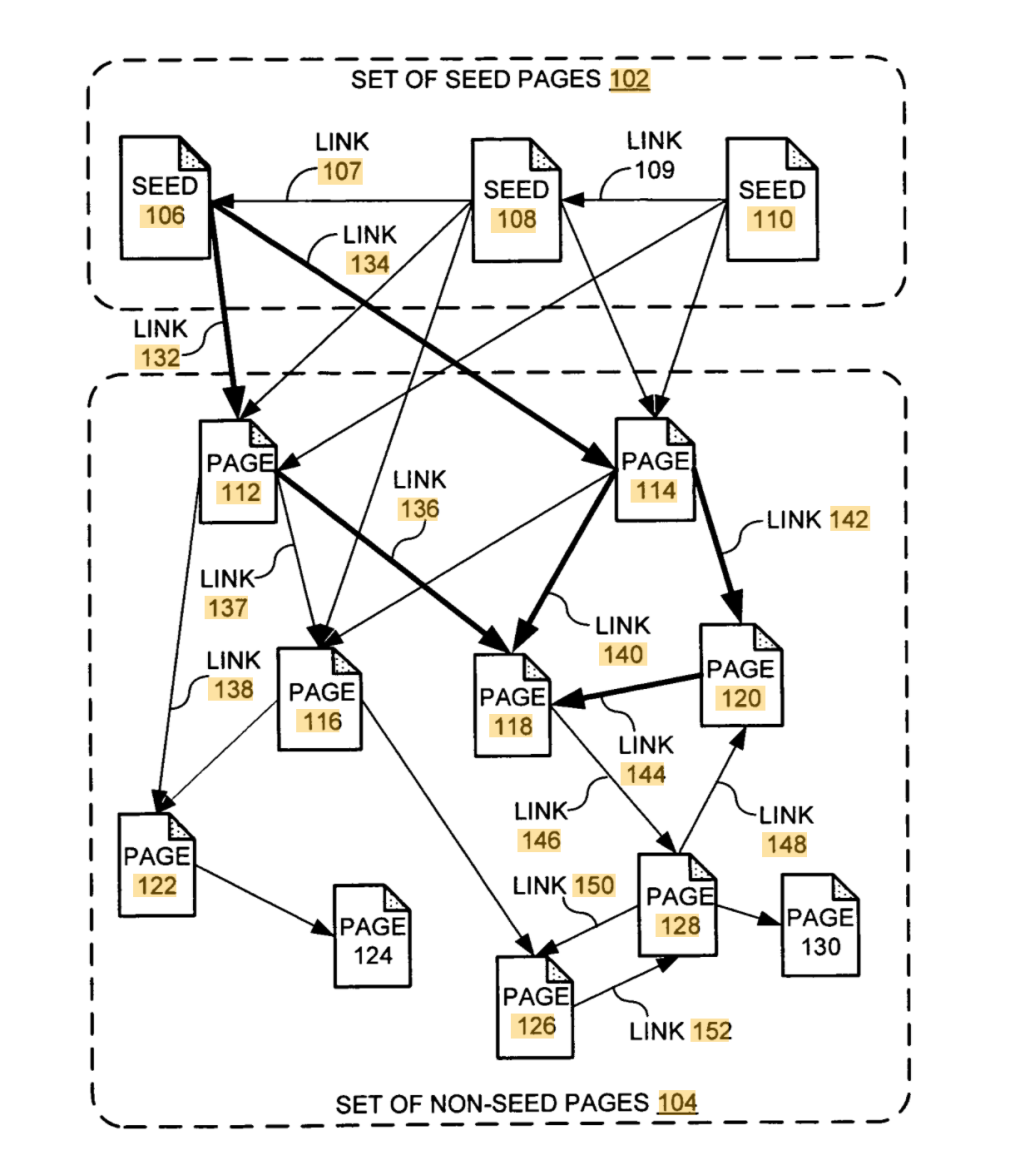
Obviously, there are way more moving parts now. Modern search engines look at hundreds of signals, not just links.
But links are still one of the foundations.
And honestly, that much has not changed.
If your website gets strong backlinks from real websites, you are usually going to rank better than someone getting links from spammy pages or link farms.
That’s why traditional SEO still matters so much in AI search too.
People talk about artificial intelligence like it completely replaced SEO, but AI systems still rely heavily on the same signals Google always cared about:
- Authority
- Relevance
- Trust
- Content quality
- Links
The difference now is mostly how the information gets displayed.
How Do Google AI Overviews Work?
Google AI Overviews are honestly not as mysterious as people make them sound.
What Google AI basically does is “read” the top-ranking results for a query and pull easily parsable sections that directly answer what the user is asking.
So if someone searches something informational, Google AI Overview scans the pages already ranking well in the search engine results and generates an AI summary based on that information.
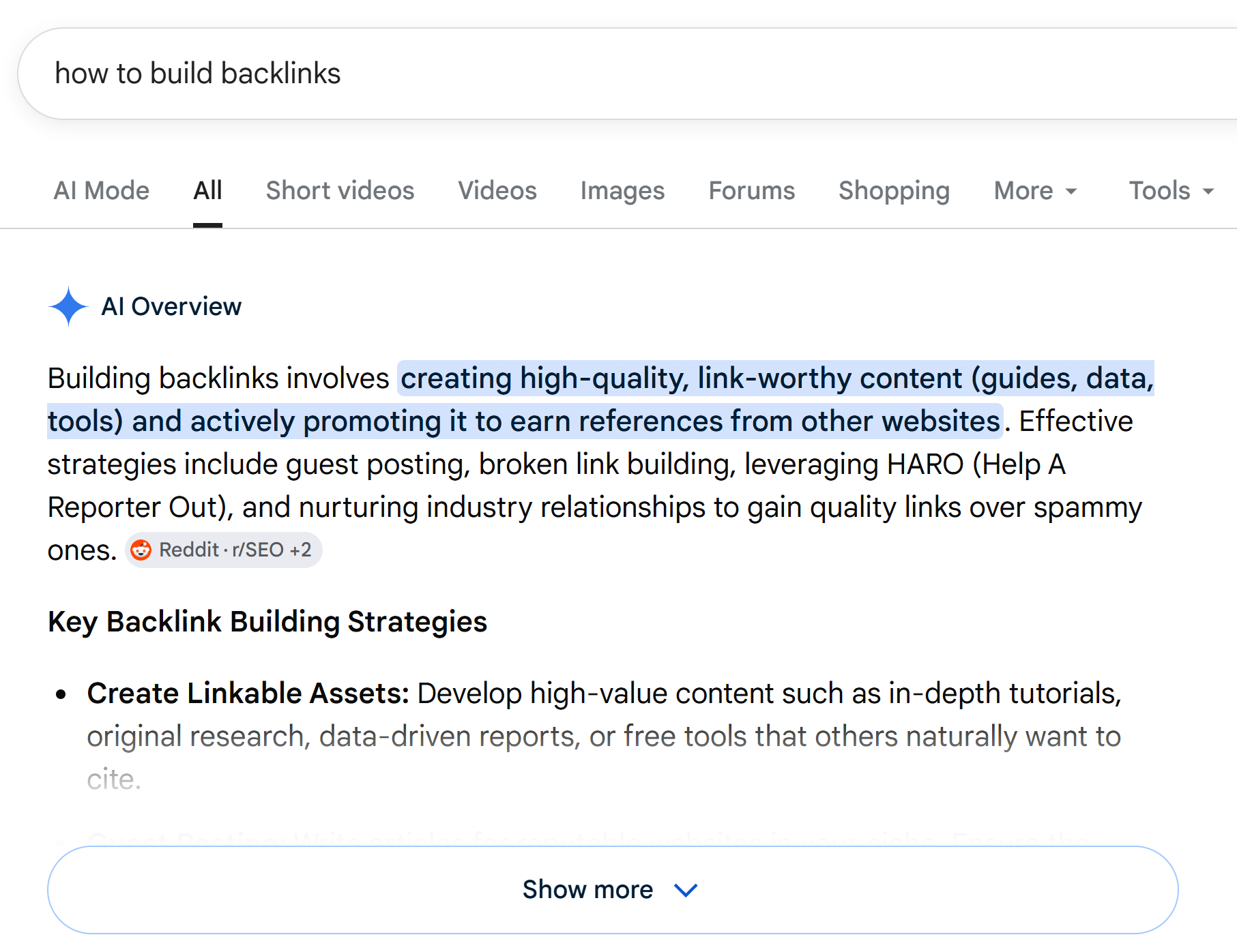
Which means one thing still matters a lot:
You still need to rank.
That part of AI SEO has not really changed at all.
The difference now is that you do not always get the click because the answer is sitting right there in the SERP. But you still get the visibility, which is incredibly important, especially for commercial and high-intent searches.
For example, if someone searches something like:
Google AI will usually pull recommendations from listicles, comparison pages, and roundup articles already ranking highly.
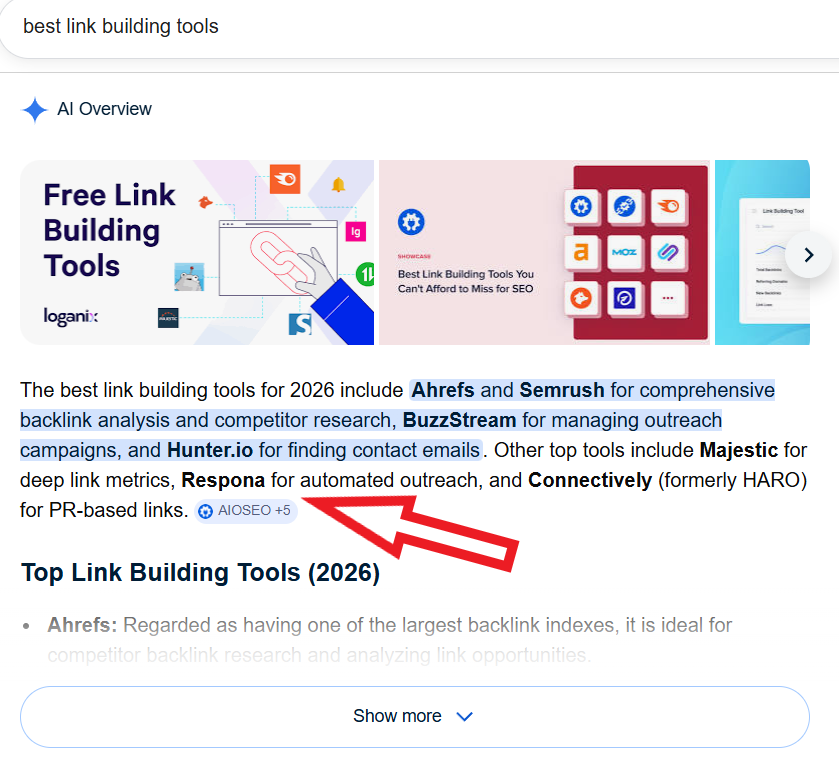
And here’s the interesting part.
You do not necessarily need your own page ranking in position zero anymore.
As long as pages being pulled into the Google AI Overview mention your brand, tool, or website, you can still appear in those AI generated answers.
So in a weird way, AI SEO actually made link building more important, not less.
Especially placements on pages that already rank and already have visibility in Google AI.
How Do Answer Engines Work?
Honestly, answer engines work very similarly to Google AI Overviews.
Whether it’s ChatGPT, Gemini, Claude, Perplexity, or another AI platform, they all still rely heavily on information that already exists online and already performs well in search engines.
Each AI model has its own way of finding and processing information, but the core idea is basically the same:
- Scan the web
- Find trustworthy sources
- Pull relevant information
- Generate an answer
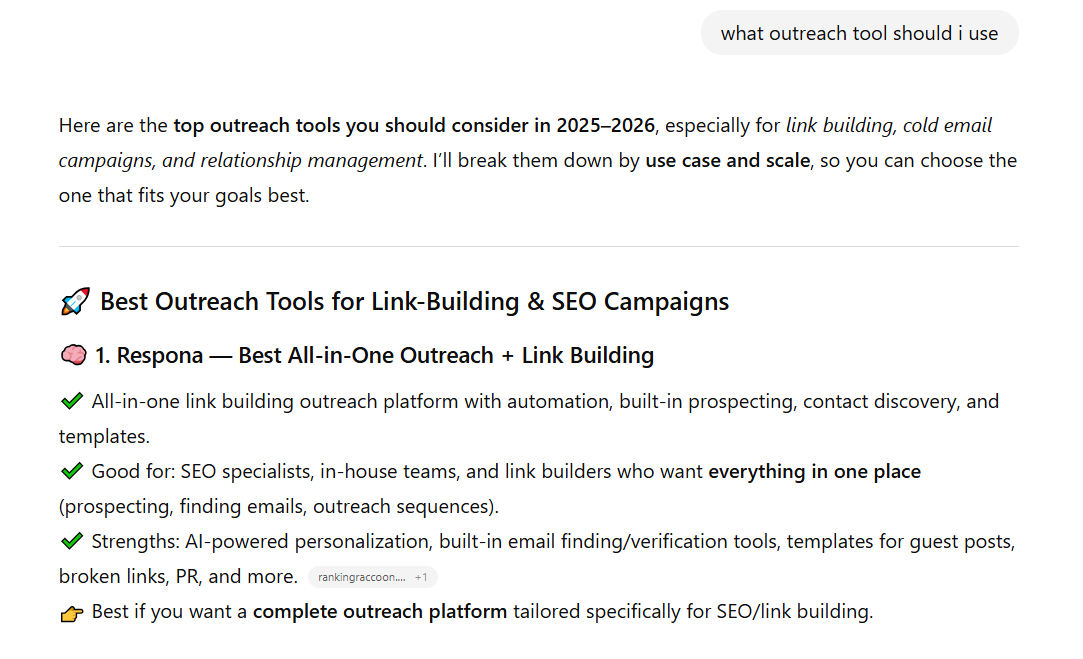
So if your content and brand already show up consistently in Google AI Overview results, there’s a very good chance you’ll start showing up across other AI search engines too.
That’s why a lot of AI search optimization is honestly just doing more of the same things that already worked in traditional SEO.
For informational queries, the goal is to publish content that’s easy for AI systems to parse and summarize. Clean formatting, direct answers, strong structure, and clear optimization all help.
Google AI, AI crawlers, and other AI engines love content that’s easy to extract information from.
Same goes for the aforementioned listicles. The more of them you’re on, the more AI citations you’ll get.
The Bar To Making Good Content Is The Lowest It’s Ever Been
With AI, basically anyone can make content now.
That part is true.
You can use AI tools to generate outlines, do keyword research, rewrite sections, summarize information, and speed up a lot of the boring parts of content creation. AI powered tools are genuinely useful for productivity.
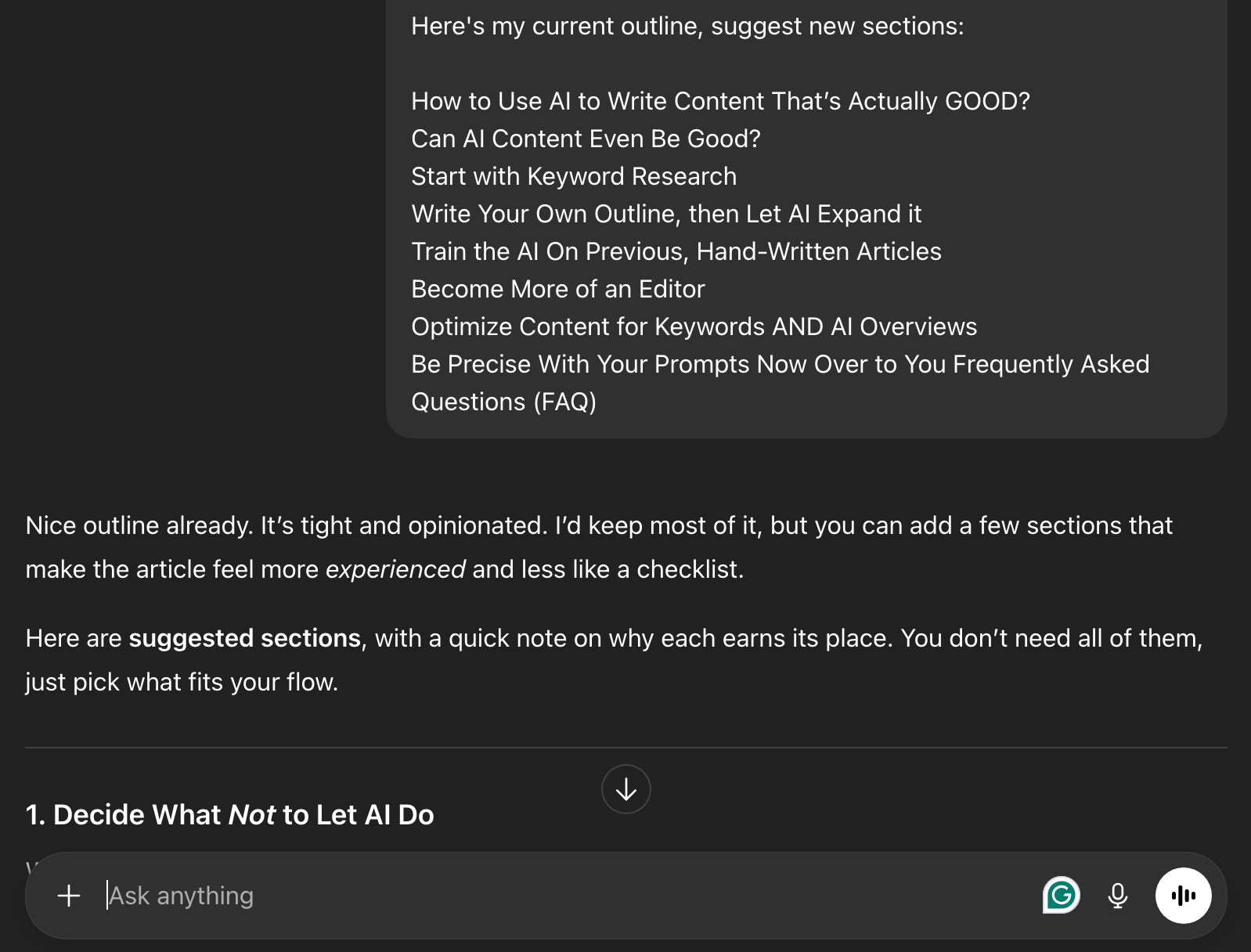
The problem is that now everybody can do it.
So, pumping out AI generated content alone is not really an advantage anymore. If anything, it just raised the amount of mediocre SEO content flooding the internet.
The trick now is making content sound human.
And honestly, this is where a lot of people misunderstand AI SEO. They think artificial intelligence replaced writers completely, when in reality, it mostly changed the role.
You are not really just a writer anymore. You are more of an editor.
You use AI to speed things up, structure ideas, and cover topics faster, but then you still need actual judgment, experience, and context to turn that into something people would genuinely want to read.
That’s still what separates good content from generic AI slop.
The other thing that did not really change is EEAT.
Google AI and other AI systems still want trustworthy, well-structured content from credible sources. They even stated themselves that ai content is fine as long as it follows EEAT.
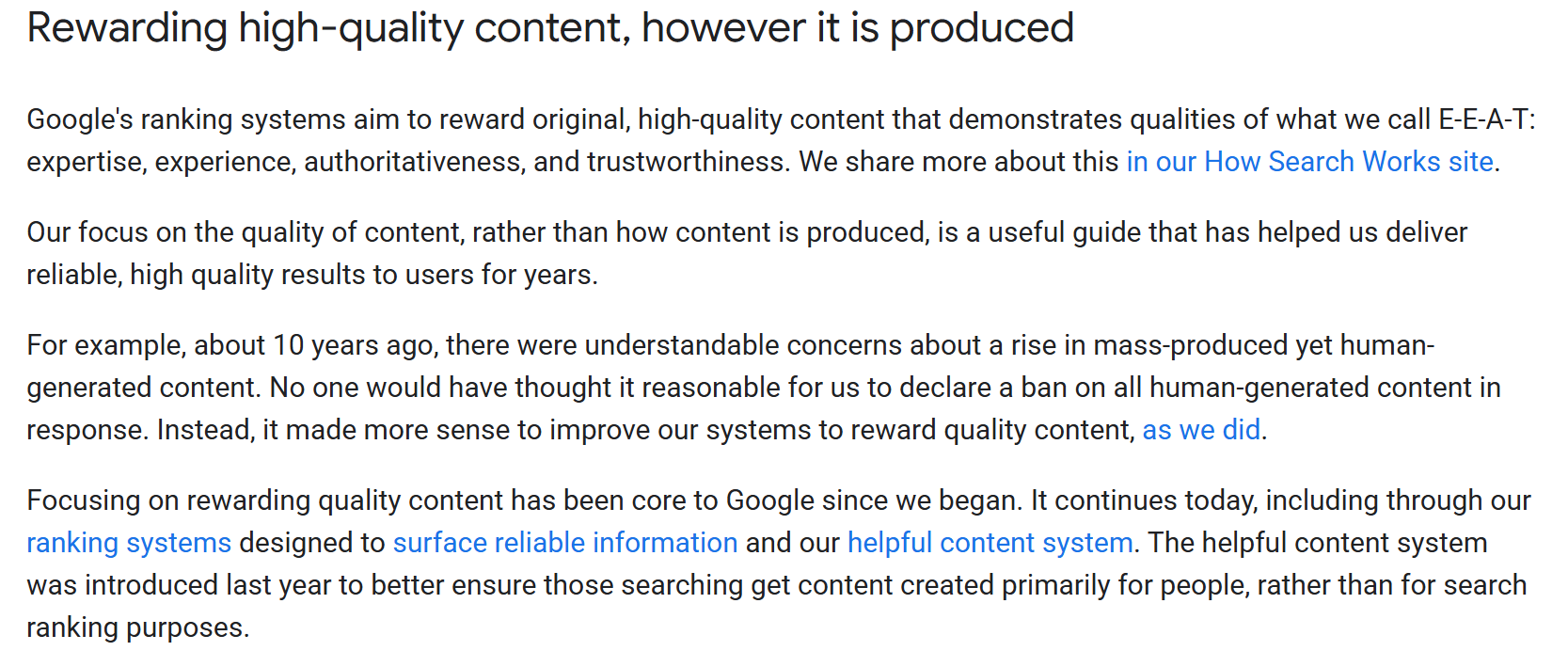
The only difference now is that formatting and optimization matter even more because AI crawlers need to parse the information cleanly.
Which, honestly, was already true before.
Featured snippets rewarded structured content years ago. AI generated answers just pushed that trend even further.
So things like:
- Clear headings
- Direct answers
- Structured sections
- Tables and lists
- Strong internal organization
matter way more now in AI driven SEO.
Honestly, creating the content is probably only 20% of the work now. The other 80% is promotion, distribution, and link building.
Because even the best AI SEO strategy still depends on authority.
If nobody links to your content, references your brand, or mentions you on trusted pages, you get little to no visibility in both traditional search engine results and AI search.
That’s why link building matters even more now than before.
At Respona, the whole process is built around helping with exactly that side of AI optimization.
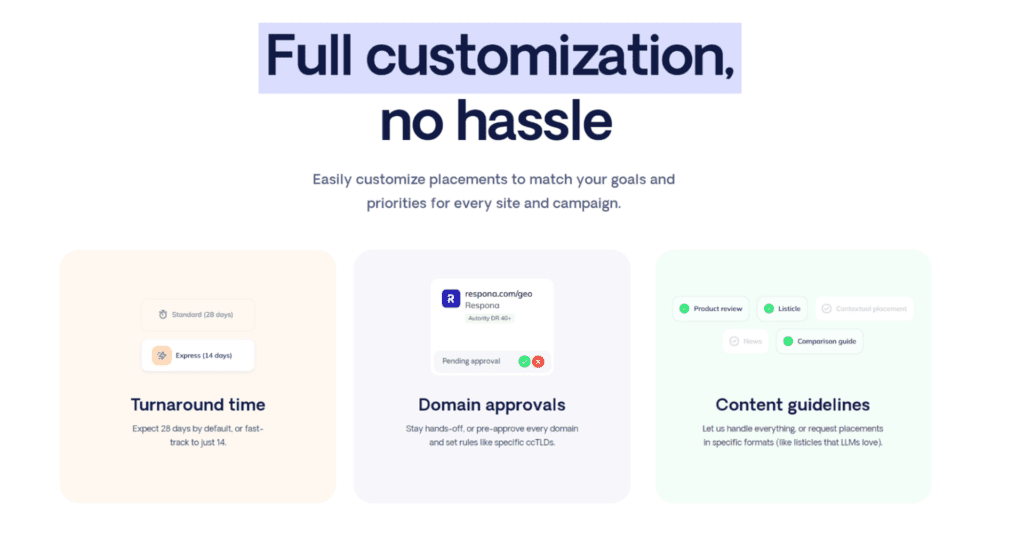
Instead of spending months handling outreach yourself, you can place an order with custom guidelines and let the team handle the prospecting, outreach, follow-ups, relationship building, and placements for you.
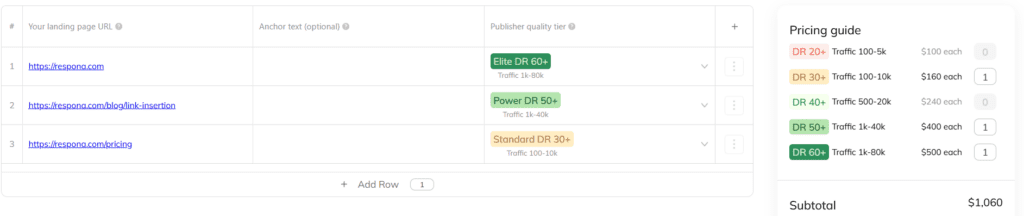
And because it’s pay-per-result, it works whether you need a handful of placements for one page or a much larger AI SEO campaign across multiple topics.
The campaigns feature also makes things much more targeted.
You can enter the queries you care about, and the tool identifies listicles and articles already performing well in search engines and already being used in AI generated answers.
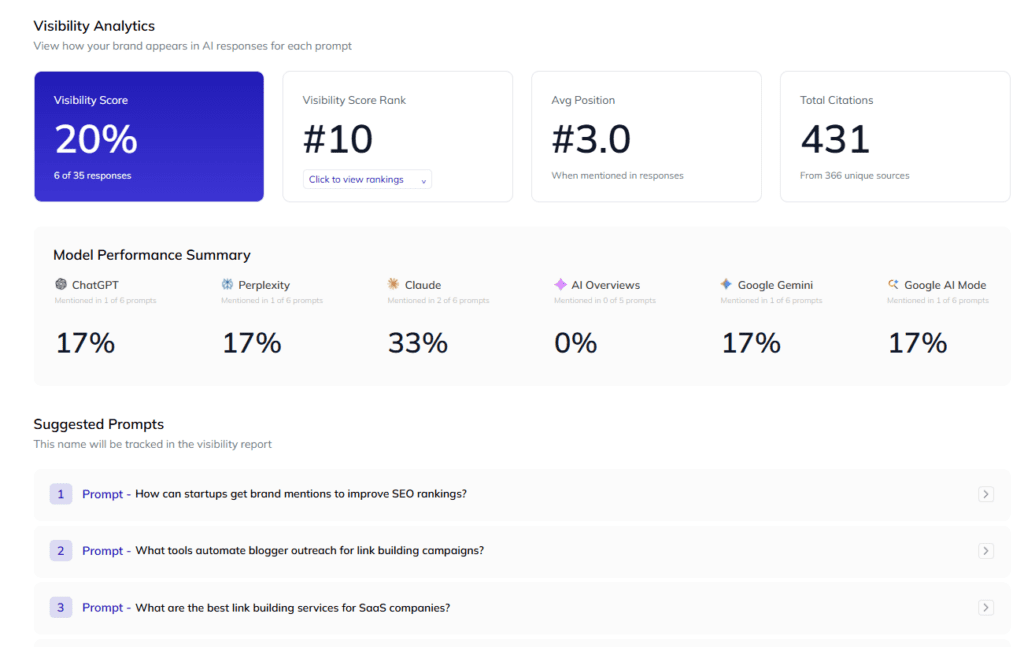
So instead of building random links, you focus specifically on placements that already have visibility in both organic search and AI search engines.
Link building cheat sheet
Gain access to the 3-step strategy we use to earn over 86 high-quality backlinks each month.
Now Over To You
At the end of the day, AI and SEO are not fighting each other.
Most of the fundamentals still work the same way they always did. Search engines still care about authority, relevance, trust, and good optimization. AI just changed how the information gets presented and consumed.
If anything, AI SEO made some older SEO practices even more important now, especially structured content, topical authority, and link building.
So instead of treating AI like the death of SEO, it makes a lot more sense to treat it like the next version of it.
And if you need help building the authority and visibility side of AI SEO, you can simply place an order and let Respona handle the outreach, placements, and AI visibility work for you.
Frequently Asked Questions (FAQ)
Is AI replacing traditional SEO?
Not really. Traditional SEO still matters because AI search engines and AI generated answers still rely heavily on pages already ranking well in search engine results.
What is AI SEO?
AI SEO is basically the process of optimizing content and visibility for both traditional search engines and AI powered search experiences like ChatGPT, Gemini, and Google AI Overviews.
How do AI search engines find information?
Most AI search engines rely on existing web content, trusted websites, and search engine rankings to generate answers. They use AI systems and AI crawlers to process and summarize information from across the web.
Do AI generated answers reduce clicks?
Yes, sometimes. A Google AI Overview or AI summary can answer a query directly inside the search results. But even without the click, showing up there still gives you visibility and brand exposure.
Can you use AI to create SEO content?
Absolutely. A lot of SEO professionals already use AI powered tools and generative AI to speed up research, outlining, optimization, and content production. The important part is editing the content properly so it still sounds human.
What is AI search optimization?
AI search optimization is the process of improving your visibility inside AI generated answers, AI chatbots, and AI powered search platforms by building authority, publishing structured content, and earning mentions on trusted pages.
What role do links play in AI SEO?
Links still matter a lot. AI systems and search engines both rely heavily on authority signals, which means backlinks, mentions, and contextual placements still play a major role in rankings and AI visibility.
Do AI SEO tools replace SEO strategy?
No. AI SEO tools can speed up workflows and automate parts of optimization, but they do not replace actual judgment, positioning, or a solid SEO strategy.
What is the difference between AI driven SEO and normal SEO?
Honestly, there is a lot of overlap. AI driven SEO just puts more focus on structured content, AI visibility, and optimization for AI generated answers alongside traditional rankings.
Will AI powered SEO continue changing search?
Definitely. The AI era is still evolving quickly, and AI algorithms will keep changing how people interact with search engines. But the core ideas behind good optimization are probably not going anywhere anytime soon.
[ad_2]
Source_link