I’ve been doing this for a very long time. In August, this website will be 15 years old. I’ve been talking about and writing about and practicing Facebook-then-Meta advertising longer than almost any walking human.
But that also gives me lots of chances to be wrong. And I’ve been wrong a lot.
In some cases, I was right about something for a time. But as things changed, I clung too tightly to that old perspective. Correction was more difficult in some situations than others.
It’s why I’d argue that it’s easier to be a new advertiser than an experienced one. If you’re new, you don’t walk in with expectations about how things should work. But the experienced advertiser has years of “proof” that you should do things one way, and that other way is wrong.
Meta advertising is constantly changing. The pages of this website are proof of that. Hundreds and hundreds of pages of new features and best practices that may conflict with those discussed a few weeks, months, or years earlier.
Below are examples of when I was the most wrong about Meta advertising. This, of course, is not an exhaustive list.
1. Remarketing
The thing about remarketing is that I was absolutely right about it for a while. I was obsessed with it, and for good reason. Targeting was possibly the most important factor for getting results.
I was all over every type of remarketing. The minute we could create website custom audiences, it became almost all I did. I’d segment and micro-target and do some of the craziest stuff.
And it worked. Part of the reason it worked so well was that I was lucky enough to have large and engaged audiences to target. Facebook was still surfacing my content organically, leading to lots of social traffic to my website. Google loved me, resulting in plenty of referral traffic. And my email list was large and active, leading to a big chunk of email-driven traffic.
It’s not that I don’t still benefit from these things, but I took for granted how easy it all was back then. And, combined with the low costs, it made remarketing all the more effective.
My sweet spot was from 2015 to 2018. A large percentage of my strategic-focused content was about remarketing. When I spoke at a conference, I’d talk about remarketing. It became what I’d be known for.
Remarketing strategies became part of my identity. And that, my friend, is dangerous. Because if remarketing were to become less relevant, that would mean I was less relevant.
And I became less relevant.
It probably started with iOS 14 changes and the drop in reliability and completeness of remarketing audiences. But costs also increased while my audiences began to shrink. And Meta, faced with challenges related to privacy and charges of discrimination in targeting, focused on improving algorithmic targeting.
And this is when I started to be wrong. I would not allow myself to believe that Meta could reach the people I wanted to reach without me explicitly targeting them.
It wasn’t until Meta introduced Advantage+ Audience that it began to click. Even if you didn’t provide audience suggestions, Meta would prioritize people based on pixel activity, conversion data, and prior engagement with ads. You know… REMARKETING.

But I clung to my old strategies until Meta made audience segments available for manual sales campaigns. It wasn’t until then that I could actually prove that Meta was doing the things that were claimed.
And once I could prove it, I first had to admit to myself that I was wrong. And it was time to change course.
2. Targeting Control
Of course, I wasn’t just wrong about remarketing. I was wrong about all targeting control.
If I wasn’t remarketing, I was using interests and behaviors to reach a new audience. And if I wasn’t using interests and behaviors, I was using lookalike audiences. To make things really fun, I’d layer them together.
And I’d restrict by age, usually focusing on people aged 25 to 54. It didn’t matter what I optimized for.
This was the accepted way to reach a new, but relevant, audience. It wasn’t wrong years ago. But then Meta started making changes.
The first big moment was the introduction of audience expansion. It started as a checkbox to allow Meta to reach people beyond your chosen interests and behaviors if it would improve performance.
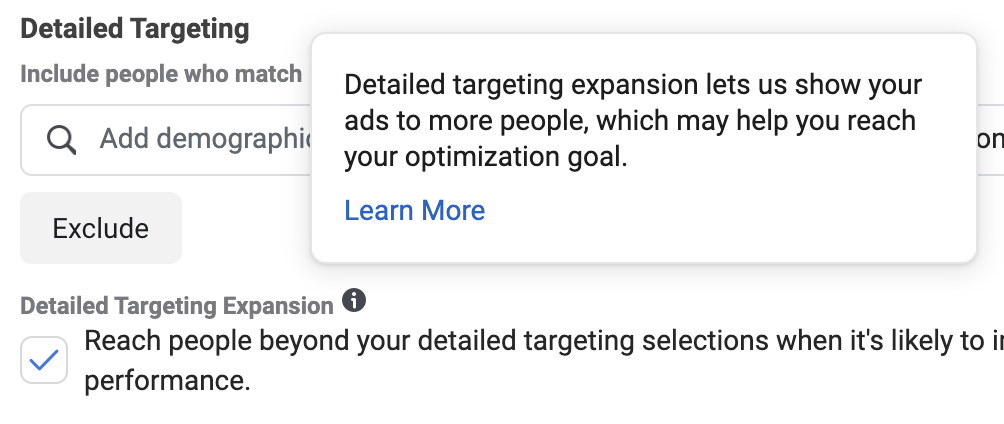
Then it was offered for lookalike audiences. And eventually, under the labels of Advantage+ Detailed Targeting and Advantage+ Lookalikes, these were forced for many of the most common performance goals.

I wanted to restrict my audience. But Meta wouldn’t let me. I initially revolted against the idea that my chosen audience could be expanded, and I’d have no way to prevent it.
Eventually, I gave up the fight. If I can’t restrict by these audiences, why should I obsess over which ones I reach? And if algorithmic targeting is already proven to reach my remarketing audience automatically, what does that say about the necessity of detailed targeting and lookalikes?
These audience inputs ceased being part of my focus when creating ad sets. I was wrong to fight it for as long as I did.
And while restricting by age made sense in certain circumstances, it took me far too long to realize that context matters. The only reason to restrict by age would be if Meta could find cheap, low-quality optimized actions from a certain age group.
Eventually, even this scenario wouldn’t require a restriction. Value rules became the solution.
3. Ads Focus
When my priority was targeting, I spent very little time worrying about the ads. I was convinced that great targeting provided the benefit of making even below-average ads effective.
And this was a nice perk for someone who didn’t love the ads side of advertising. I know that sounds ridiculous, but I’m an accidental marketer. I enjoy the stats and strategy and mechanics of advertising, but I’ve always hated the selling part.
Because I wasn’t trained in sales, I wasn’t particularly concerned about the psychology of sales copy. I convinced myself that my soft sales approach with low-quality creative that I whipped up in two minutes was good enough.
They weren’t. I was wrong. And it wasn’t until the craze over Andromeda that I started to figure it out.
I can actually thank my initial overreaction to Andromeda in the first half of 2025. To test what Andromeda meant to performance, I’d create 10, 20, and even 50 ads in an ad set. It forced me to dive deep into the copy and creative — things that never made me all that comfortable.
In the meantime, I started thinking about customer personas, pain points, solutions, and sales psychology — all things I had mostly avoided until that point.
While I can also say I was initially wrong about needing so many ads, that experience helped me get more comfortable with the importance of ads. I started to understand that not every potential customer was the same or would respond to the same text or creative.
These realizations coincided with embracing a hands-off approach to targeting. So once targeting took a back seat, my focus shifted to the ads themselves. If I wasn’t getting the results I wanted, I knew where to look.
In the past, I may have focused on the targeting. But now, I understand: Improved performance can be found with better ads.
4. Complexity
This truly happened as a result of abandoning my long-held beliefs about targeting.
If remarketing happens algorithmically, why do I need to create a separate remarketing ad set? And it went so much deeper than this since I’d create “Evergreen Campaigns” that included separate ad sets and ads for separate stages of the funnel based on when someone engaged with me.
If detailed targeting and lookalike audiences are automatically expanded, why do I need separate ad sets for different groups of detailed targeting and lookalikes when they could all, technically, reach the same people?
I was wrong. And because I was wrong, I could approach campaign complexity differently.
I cut out these extra ad sets, which eliminated much of the complexity that became a common trait of my advertising in the early days.
5. Control
Years ago, it made sense. Control targeting. Control placements. Control the message.
Ultimately, we were trying to guarantee that a specific ad looked a specific way for a specific group of people. And we’d “optimize” performance by further controlling these things.
I turned off placements that metrics suggested were less effective. I obsessed over winning copy and creative combinations. These are the types of actions taken when you assume your target audience is static.
I was wrong. And it’s a lesson I’ve come to embrace as control has steadily disappeared.
I know now that, because the algorithm is literal, Meta is trying to get results that reflect my performance goal. That’s a balancing act of costs, impressions, and performance by placement. As long as a placement isn’t known for generating low-quality optimized results, there’s no reason to control it.
The entire concept of five primary text and five headlines conflicted with my original approach years ago. It didn’t make sense. I wanted this specific message to be shown to that group of people. Why would I let Meta choose from other options?
And what do you mean I should provide up to 10 images and videos for a single ad? And I can’t see which one performs best? That’s nonsense.
I now understand that different people respond to different creative and messaging. Meta has more data than I do and can adjust dynamically to show the right versions to the right people. And ultimately, micro-results by primary text or headline or even creative aren’t all that important. We should be viewing results in aggregate to determine success.
6. Automation
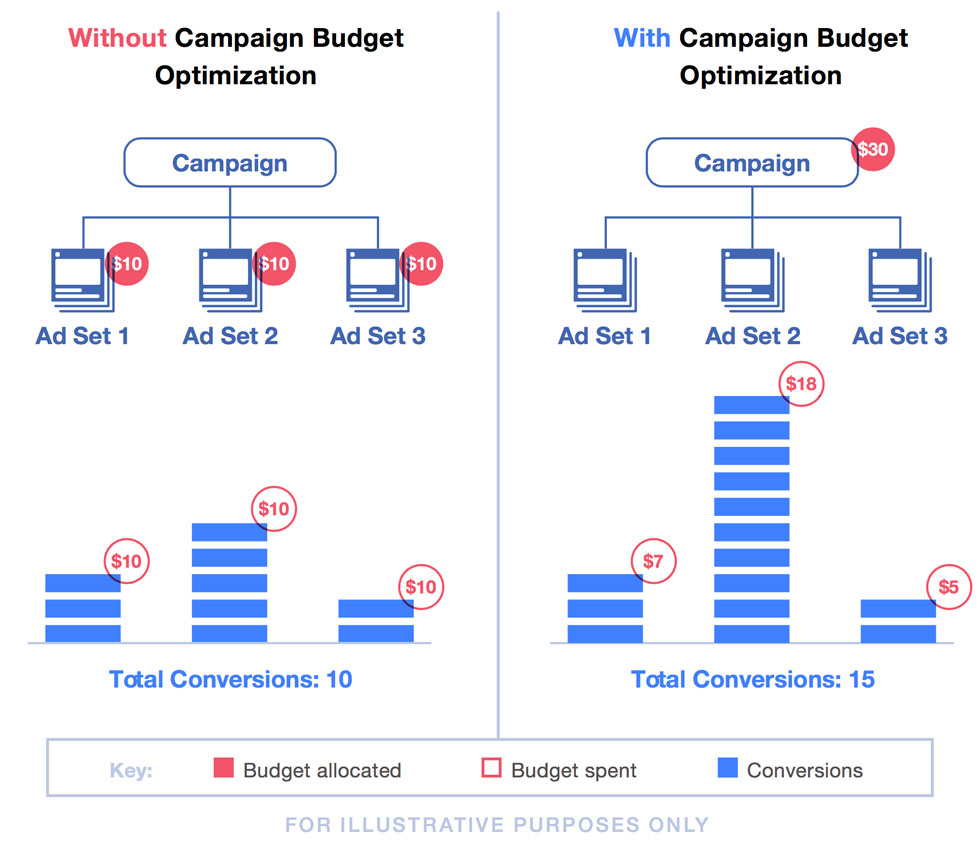
If you’ve been doing this long enough, you may remember when Campaign Budget Optimization was introduced in 2018. Then, in early 2019, it was reported that it would eventually become a fixed default that couldn’t be turned off (this would never happen).
I nearly rioted. If I set a $100 daily budget for one ad set and a $50 ad set for another, that’s what I want to spend. That’s why I set those budgets in the first place!
I spent some time understanding how CBO worked. I tested it. And I realized that my budget would be spent optimally to help get the most results. It took the thinking out of setting my budgets.
I was wrong.
And you can certainly connect so many other automations to my former need to control things. Allowing budget to be spent on all placements. Allowing Meta to find my audience algorithmically. These were all things that would have originally seemed like nonsense.
Because I knew better, dammit. But I was wrong.
7. Creative Enhancements
I was like most advertisers when Advantage+ Creative enhancements first became a thing. I despised them. And many advertisers still do.
But it wasn’t until all of that time spent trying to better understand Andromeda and creative diversification that everything clicked. These enhancements help me create more variations of my ad to give Meta a larger pool of options.
I was wrong. Or maybe I was wrong about most of the enhancements. Some of them are still trash. But I’ll leave most of these enhancements on now.
The main thing I’ve come to understand is that creative enhancements are there to help me. They won’t change my images and videos universally. Instead, they give Meta the option to enhance a version that will become one of many versions that could be shown.
8. The Learning Phase
Don’t touch a campaign that’s working!
My voice was one of many shouting this, and it was related to the learning phase. Avoid any change that will restart the learning phase because that will mean that performance is likely to go into the toilet.
And maybe there was some validity to that claim for a while. But even when it became less true, I clung to it for too long.
I was wrong. I was wrong that the learning phase was something to be feared. And I was wrong that exiting the learning phase is a necessary priority.
The truth is you may never exit the learning phase when selling an expensive product. That doesn’t mean that you can’t get good results. The concept of 50 optimized actions in a week is a rule of thumb. More is better, but it’s not required.
And delivery isn’t as sensitive as it once was. You’re getting good results now, not because of some magical combination of settings and luck that can be disrupted with a change. You’re getting results because you have good ads.
I’m no longer fixated on ways to avoid restarting the learning phase. I’m not going to tell you to only raise budget by 20 percent or avoid creating new ads when you’re getting decent results. If you’re getting good results now, you can get good results again.
It’s not magic or luck, and that’s the main thing that’s helped me understand that I was wrong.
We Will Be Wrong
If you’re ever going to have success with Meta advertising — or anything, really — you need to understand that you will be wrong. If you are unable to embrace this possibility, you’re likely to create a fantasy land where everyone else is to blame but you.
It’s the algorithm. Meta’s automations. Server outages. Creative enhancements. Attribution. Targeting. Magical campaign structure.
I was wrong. The fact that I’m still here today, writing on this website, is because I was willing to accept that fact. And truly, there was once a danger that I wouldn’t be able to do that.
If you’re truly committed to getting the best results possible, you’ll also be committed to fully understanding how things work. That involves researching Meta’s documentation and running tests that aim to disprove your beliefs, not confirm them.
Once you’re open to being wrong, you’re much more likely to survive what is an absolutely wild ride of constant changes to features and functionality. And that ride isn’t ending anytime soon.
Buckle up.
Your Turn
What have you been wrong about related to Meta advertising?
Let me know in the comments below!