
[ad_1]
If you’ve published more than a handful of articles, chances are your internal linking is a mess.
Some pages get tons of links, others get none, and a few important pages are probably buried so deep that neither users nor any search engine can easily find them.
That is exactly why an internal link audit matters.
A proper internal linking audit helps you understand how link equity flows across your site, which pages are being supported, and where you’re leaving ranking opportunities on the table. It is one of the simplest ways to improve SEO performance without creating new content or building new backlinks.
In this guide, we’ll walk through a simple 7-step process to audit your internal links, fix common issues, and build a stronger internal linking strategy that actually supports your most important pages.
Key Takeaways:
- Internal links still pass value across your site, so linking from high-performing content can help newer pages rank faster.
- Pages should not be more than three clicks deep, otherwise they become harder to crawl and less likely to rank in Google search.
- Every indexable page should have multiple internal links pointing to it to avoid orphaned pages.
- Broken links and redirect issues waste link equity and should be fixed during every audit.
- Anchor text should be varied and descriptive to help pages rank for more than just a single keyword.

Link building cheat sheet
Gain access to the 3-step strategy we use to earn over 86 high-quality backlinks each month.
What is an Internal Link Audit & Why Should You Care?
An internal link audit is the process of reviewing how your internal links are structured, where they point, and how link equity flows across your site.
In simple terms, you’re checking whether your internal linking actually helps your content rank or if it’s holding it back.
Even though internal links don’t carry the same weight as external links, they still pass link equity across your pages. If you have a few high-performing articles, you can use them to support newer or lower-ranking content just by linking to it strategically.
That alone can make a noticeable difference in how your pages perform in search engine results.
Internal linking also plays a huge role in how a search engine discovers and crawls your content.
If a page is buried too deep, or only linked once from some random article, there’s a good chance Google won’t prioritize it.
As a general rule, anything beyond three clicks from your homepage becomes much harder to find and index.
That’s where a proper internal linking audit comes in. It helps you find those pages and fix your internal linking structure so everything is easier to access.
There’s also the technical side of things.
If you change URLs, delete pages, or restructure your content, your internal links need to reflect that. Otherwise, you end up with broken links, unnecessary redirects, and wasted link equity across your site.
And finally, there’s user experience.
Good internal linking makes your site easier to navigate, keeps users engaged, and helps them find relevant content faster. Bad internal linking does the opposite.
So while internal links might not get as much attention as backlinks, they are one of the most controllable parts of your SEO strategy. A solid internal link audit helps you clean up your structure, support your most important pages, and get more out of the content you already have.
Make Sure ALL Pages Have At Least 5 Internal links
As a general rule, every indexable page on your site should have multiple internal links pointing to it.
A good baseline is at least 5 internal links per page.
This isn’t a strict rule, but it’s a solid benchmark to make sure your content is actually connected within your internal linking structure.
When a page has zero internal links pointing to it, it becomes what’s known as an orphan page.
That means no other page on your site links to it, so the only way a search engine can find it is through your sitemap or manual submission. In practice, that page is very unlikely to perform well in Google search.
Even if it does get indexed, it won’t receive any link equity from the rest of your site, which limits its ability to rank.
This is why internal link audits should always start with identifying orphaned pages and weakly linked content.
You don’t need to overcomplicate this.
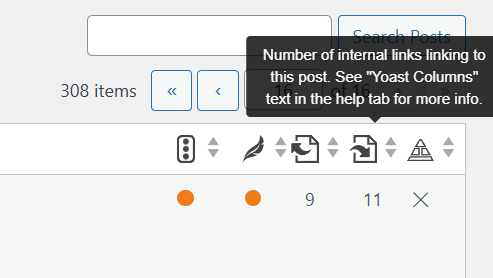
If your site runs on WP and has Yoast SEO installed, it shows you the number of inbound internal links right there in the post list view:
Optimize Click Depth
Click depth refers to how many clicks it takes to reach a page from your homepage.
The deeper a page is, the harder it is for both users and search engines to find it.
As a rule of thumb, every important page on your site should be accessible within three clicks or less.
Once you go beyond that, crawl depth becomes an issue. Pages buried too deep in your internal linking structure are less likely to be crawled frequently, which can slow down indexing and hurt your visibility in Google search.
This is one of the most common issues brought up during an internal linking audit.
You might have great content, but if it’s only accessible through a long chain of internal links, it’s not going to perform as well as it could.
The fix is usually structural.
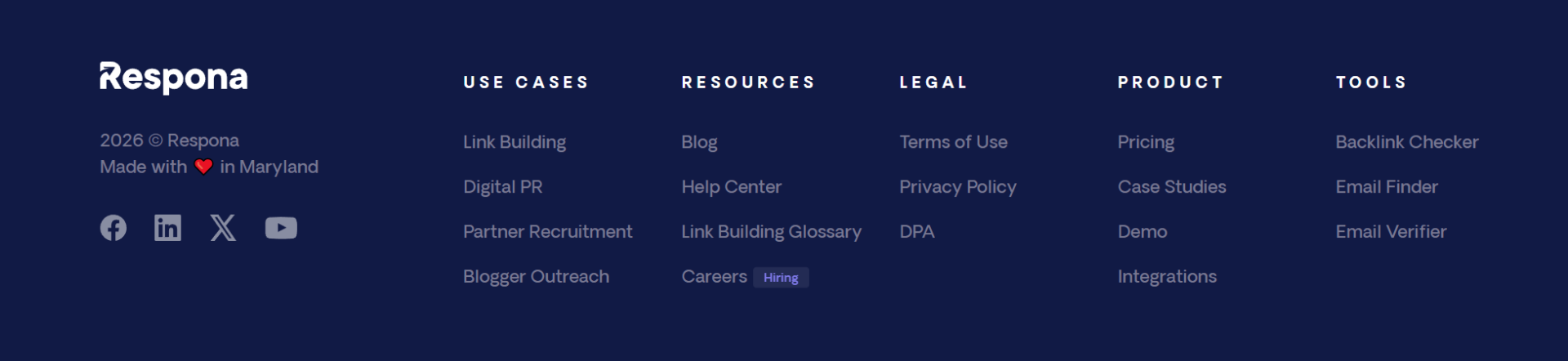
Start by reviewing your navigation. Your header and footer should surface your most important pages and categories so they’re easy to access from anywhere on the site.
Then look at your content.
If a page is only linked once from a random blog post, that’s a problem. Add more internal links from relevant articles and make sure those links are easy to find within the content.
You can also use tools like Google Search Console or Screaming Frog to identify pages with high click depth and low internal link counts.
Redirect PageRank to Newer Content
If you have older pages that already perform well, you can use them to boost newer content through internal linking.
These pages have accumulated link equity over time, so adding internal links from them helps pass that value to newer or underperforming pages.
This is one of the simplest ways to give fresh content a ranking push without building new backlinks.
Look for pages that already get traffic or have strong rankings, then add contextual links to relevant newer content where it makes sense.
Done right, this helps distribute link equity across your site and ensures your important pages are actually being supported by your internal linking strategy.
Fix Broken Links
Broken links are one of the most common issues you’ll find during an internal link audit.
A broken internal link points to a page that no longer exists, usually returning a 404 error. When that happens, any link equity flowing through that link is lost, and both users and search engines hit a dead end.
Neither is good.
From an SEO perspective, broken links waste link equity and make it harder for a search engine to properly crawl your site. From a user experience standpoint, they’re just frustrating.
The easiest way to find them is by running a crawl with Screaming Frog SEO Spider, Ahrefs, or checking the Pages report in Google Search Console.
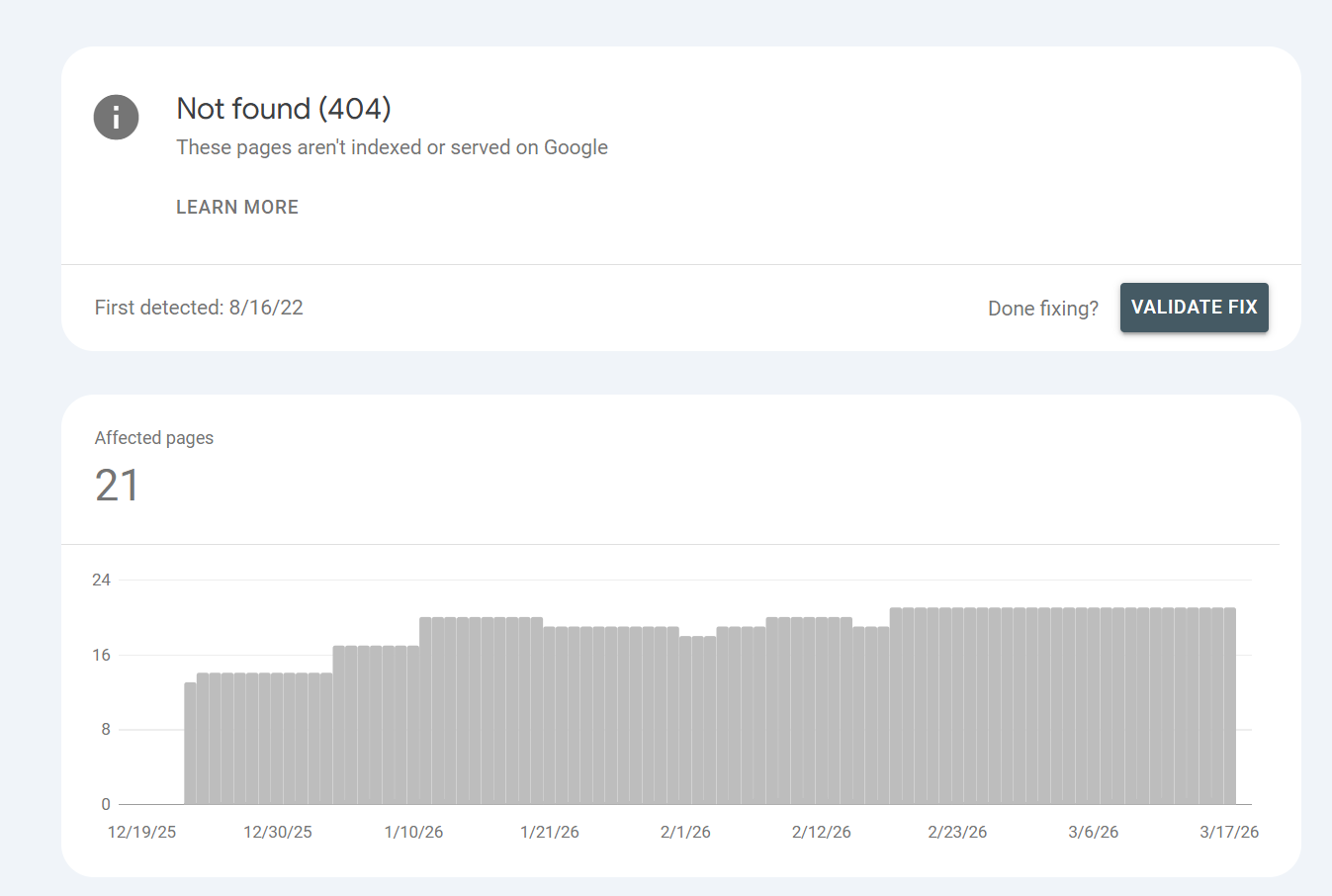
Each will quickly find any broken links across your site.
Once you’ve identified them, you have two options:
- Update the link to point to the correct, working page
- Remove the link entirely if there’s no relevant replacement
If the original page still exists under a new URL, always update the internal link instead of relying on a redirect.
Set up Redirects and Double-Check Redirect Loops
Whenever you move, delete, or change a URL, you need to handle it properly with redirects.
Otherwise, your internal links will keep pointing to pages that no longer exist, which leads to broken links and wasted link equity.
The standard approach is simple. If a page has been permanently moved, set up a 301 redirect to the new URL. If the page is gone entirely, redirect it to the most relevant alternative or remove the internal links pointing to it.
But setting up redirects is only half the job.
You also need to check for redirect loops and chains.
A redirect loop happens when a URL points back to itself through a series of redirects, while a redirect chain is when one URL redirects to another, which then redirects again. Both slow down crawling and dilute link equity.
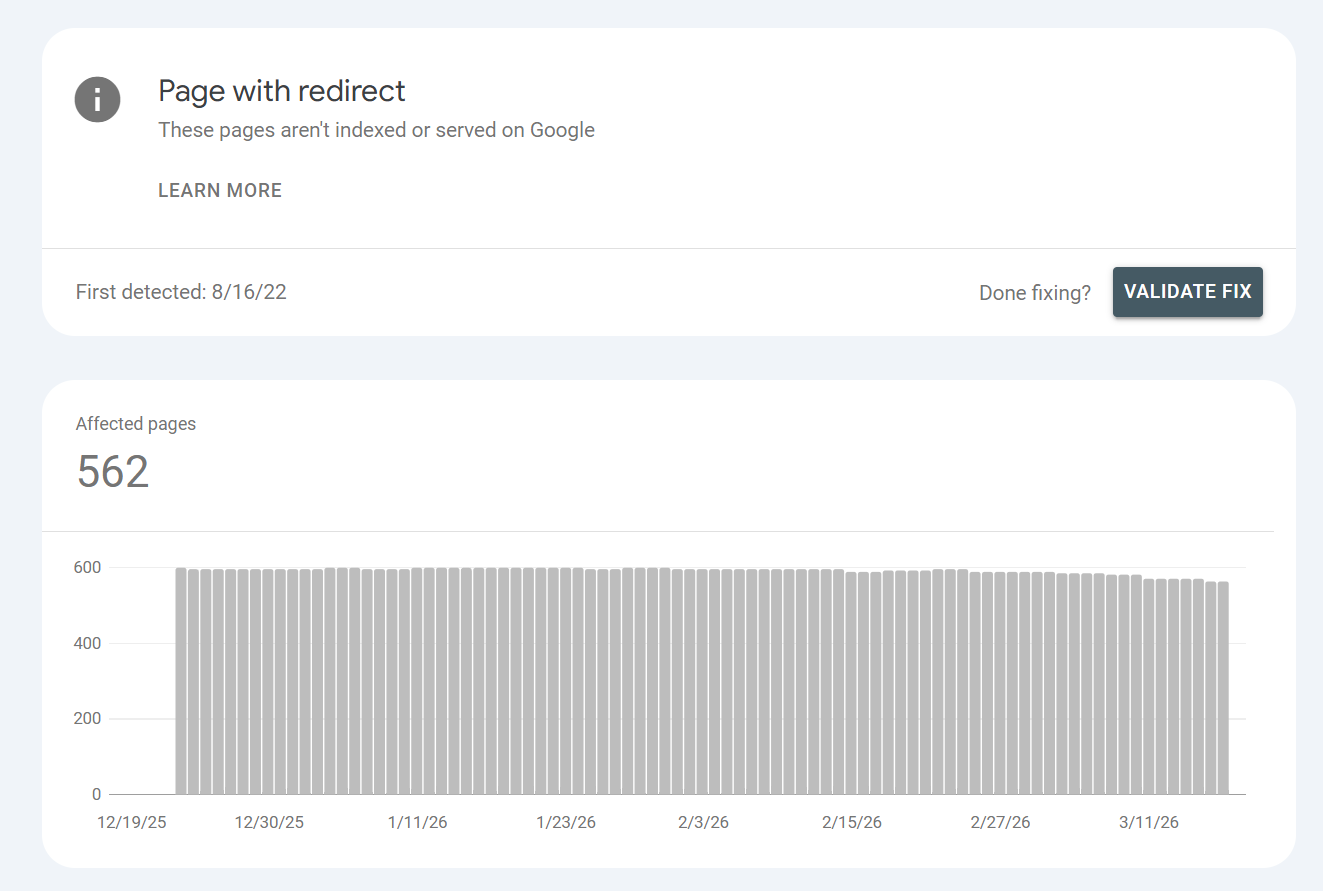
During a site audit, you can use tools like Screaming Frog or Google Search Console to identify these issues quickly.
Once you find them, update your internal links to point directly to the final destination URL instead of relying on redirects.
Find and Fix Orphan Pages
Orphan pages are pages that have no internal links pointing to them.
That means they’re effectively invisible within your internal linking structure.
Even if they exist on your site and are included in your sitemap, a search engine has a much harder time discovering and prioritizing them. As a result, orphaned pages rarely perform in Google search.
The easiest way to identify them is by combining data from a crawl (like Screaming Frog) with data from Google Search Console or Google Analytics. This helps you spot pages that exist but aren’t connected through internal links.
If you’re using WordPress with Yoast SEO, this process is even simpler.
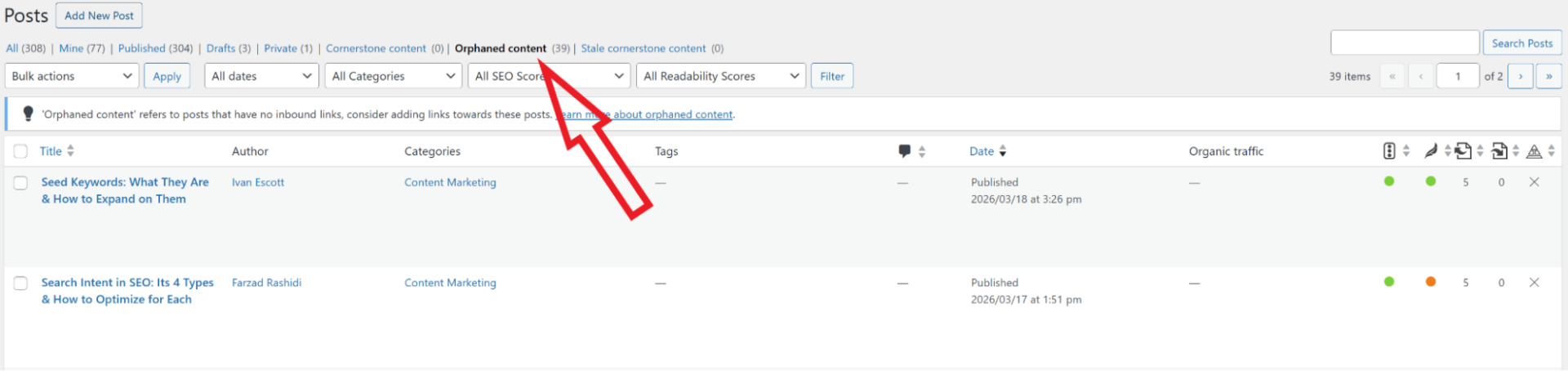
Yoast actually flags orphaned pages directly in your dashboard, so you can quickly see which pages don’t have enough internal links pointing to them without running a full crawl.
Once you’ve identified orphan pages, the fix is straightforward.
Go to relevant pieces of content and add internal links pointing to them. Ideally, these should be contextual links placed naturally within the content, not just thrown into a footer or sidebar.
Diversify Anchor Text
Anchor text is the clickable text used in a link, and it plays a bigger role in SEO than most people realize.
When you use internal links, your anchor text helps search engines understand what the linked page is about. This means your internal linking can directly influence how your pages rank for specific keywords.
But there’s a catch.
If you overuse exact match anchor text (i.e. always linking with the same keyword), it can look unnatural and limit your ability to rank for related terms.
That’s why a diversified anchor text strategy is important.
Instead of using the same keyword every time, mix in:
- Exact match anchors (your main keyword)
- Partial match anchors (variations of your keyword)
- Related terms and synonyms
- Natural phrases that fit the context
For example, instead of always linking with “internal link audit,” you might also use variations like “internal linking audit,” “audit your internal links,” or “internal linking structure.”
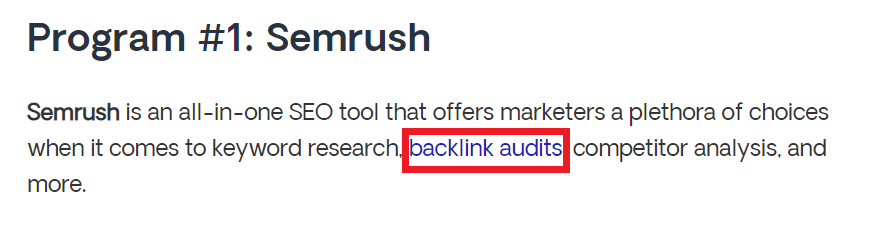
This helps your pages rank for a broader set of search queries, not just one exact keyword.
Also, prioritize contextual links.
Anchor text within the body of your content tends to carry more relevance than links in navigation menus or footers, because it provides clearer context to both users and search engines.
Link building cheat sheet
Gain access to the 3-step strategy we use to earn over 86 high-quality backlinks each month.
Now Over To You
An internal link audit is one of the easiest ways to improve your SEO without creating new content or building new backlinks.
By fixing broken links, reducing click depth, supporting important pages, and cleaning up your internal linking structure, you make it easier for both users and search engines to navigate your site.
Over time, that translates into better rankings, stronger visibility, and more consistent organic traffic.
But just like link building, internal linking only works if you do it consistently.
If you’re already investing in content but not seeing the results you expect, chances are your internal linking strategy is holding you back.
And while internal links help distribute link equity within your site, you still need external authority to grow.
That’s where we come in.
Our done-for-you link building helps you earn high-quality backlinks from relevant websites, so your content doesn’t just rely on internal links to rank.
We focus on placements that actually drive SEO performance and long-term growth.
Frequently Asked Questions (FAQ)
What is an internal link audit?
An internal link audit is the process of analyzing how internal links are structured across your site. It helps identify issues like orphan pages, broken links, poor anchor text usage, and weak internal linking that can impact SEO performance.
How often should you run an internal linking audit?
It depends on how often you publish content, but running a site audit every few months is a good baseline. If you publish frequently, you may want to review your internal links more often.
What tools can you use for an internal link audit?
Tools like Screaming Frog SEO Spider, Google Search Console, and Google Analytics are commonly used for internal link analysis. Some plugins like Yoast or Link Whisper can also help identify internal linking opportunities.
What are orphan pages?
Orphan pages are pages that have no internal links pointing to them. Because they are not connected to your internal linking structure, search engines may have difficulty discovering and ranking them.
Do internal links help SEO?
Yes. Internal links help distribute link equity, improve crawlability, and give search engines context about your content. A strong internal linking strategy can improve rankings without needing additional backlinks.
What is the difference between an internal link audit and a backlink audit?
An internal link audit focuses on links within your own website, while a backlink audit analyzes external links pointing to your site. Both are important, but they serve different purposes in SEO.
How many internal links should a page have?
There is no exact number, but a good rule of thumb is at least a few internal links per page. Important pages will naturally have more, while no page should have zero internal links.
Can internal linking improve user experience?
Yes. Good internal linking makes it easier for users to navigate your site, find relevant content, and stay engaged longer, which can also positively impact SEO.
[ad_2]
Source_link