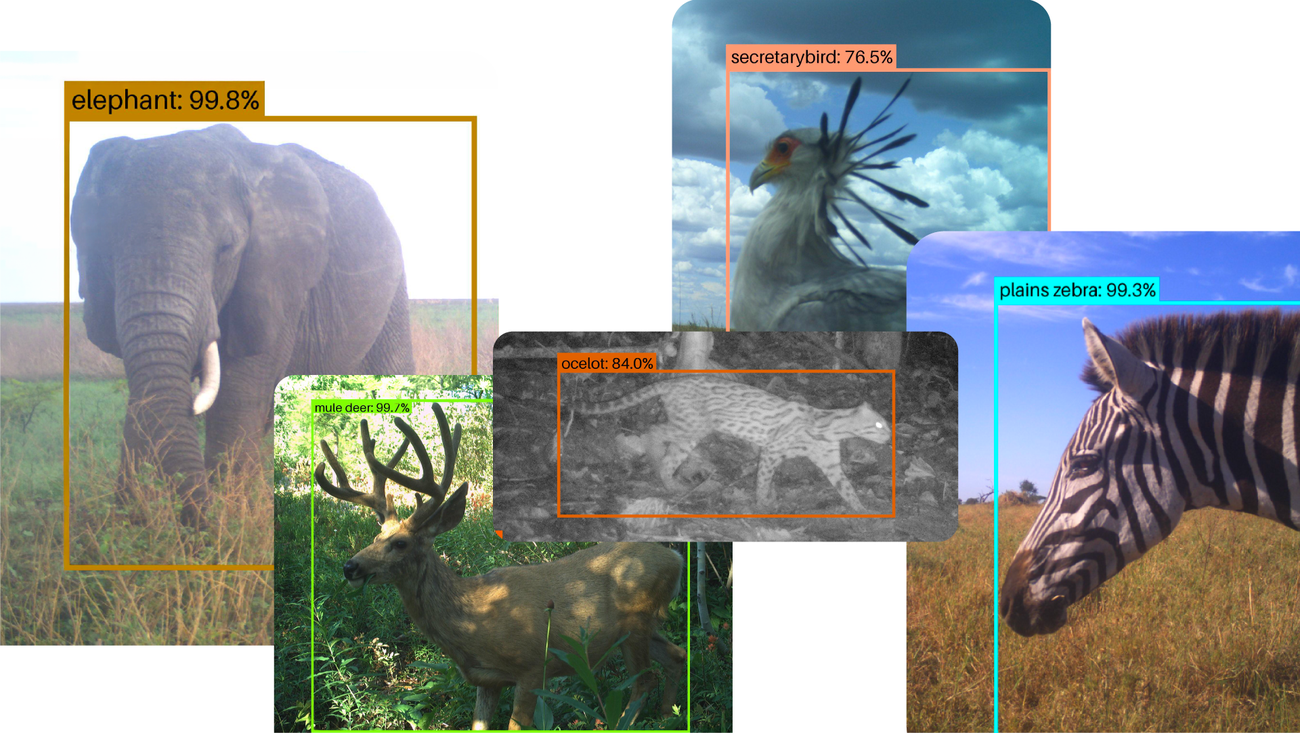
In Australia, our collaborators at the Wildlife Observatory of Australia (WildObs) took the open-source SpeciesNet model and trained it to identify species that weren’t part of the initial model, but that are important locally. Australia is home to many species not found anywhere else in the world, and those species are a priority for monitoring and conservation. A version of SpeciesNet trained on local wildlife lets groups keep an eye on iconic, threatened or endangered species specific to their region in order to sustain wild populations.
SpeciesNet can identify species from multiple angles, in different types of light, and when only a portion of the animal is visible. But sometimes animals get curious and look straight at the camera, producing a true portrait.
The projects above represent just a sample of the groups we’ve worked with to help run SpeciesNet to interpret camera trap photos. We’re grateful to all of our partners who are applying this tool on the ground to better understand and protect the wildlife that also call our planet home. To learn more about the history of SpeciesNet, its model training and performance, read our post on the Google Research Blog.