
More buyers are starting their research inside ChatGPT.
Instead of opening a search engine and clicking through multiple pages, they type a ChatGPT prompt like:
- “Best tools for cold email outreach”
- “Top B2B lead generation platforms”
- “What software should I use for sales outreach?”
ChatGPT generates a response and recommends a handful of companies.
Those companies get the visibility. Those companies generate leads.
If your brand appears in that ChatGPT response, you instantly reach a potential customer who is actively researching a solution. That moment is extremely valuable for lead generation because the user already has a clear pain point and is looking for tools that solve it.
That is why ChatGPT is quickly becoming part of the modern lead generation funnel.
The key is understanding how AI systems generate recommendations and how to position your brand so it appears in the content that influences those answers.
Below are the strategies that help companies generate leads from ChatGPT by increasing the chances of being cited in commercial AI responses.
Key Takeaways:
- ChatGPT is becoming a discovery channel where prompts replace traditional search queries.
- When ChatGPT recommends a product inside a response, it can send highly qualified leads directly to your business.
- The brands that generate leads from ChatGPT usually appear across listicles, comparison pages, and authoritative content.
- Strategic outreach and placements on pages that AI systems cite can significantly improve lead generation.
- Monitoring your AI visibility regularly helps identify which prompts drive discovery and where your brand still needs exposure.

Link building cheat sheet
Gain access to the 3-step strategy we use to earn over 86 high-quality backlinks each month.
ChatGPT is Essentially Google 2.0
For many people, ChatGPT has replaced the first step of Google search.
Instead of opening a search engine and browsing through multiple search results, users type an AI prompt directly into ChatGPT and ask for recommendations.
Common prompts include:
- “Best tools for cold email outreach”
- “Top platforms for B2B lead generation”
- “How should a sales team handle LinkedIn outreach?”
- “What tools help with B2B sales prospecting?”
ChatGPT then generates a response that summarizes the topic and recommends several tools, platforms, or strategies.
That response becomes a shortcut in the buyer journey.
If your company appears in the ChatGPT response, you are suddenly in front of a potential lead who is actively researching a solution. For many businesses, this creates a new form of inbound lead generation where AI answers introduce companies directly to buyers.
This is why visibility inside these prompts can influence B2B sales decisions and drive qualified leads.
In many ways this works similarly to traditional search.
When someone searched Google for “best cold email tools,” they would click through listicles, comparison pages, and product reviews. Now many users simply use ChatGPT to generate that answer instantly.
The difference is that the AI tool selects which companies to mention.
ChatGPT does not choose recommendations randomly. Its responses are influenced by patterns across the web.
The brands that appear repeatedly across authoritative content, listicles, comparison pages, and digital marketing articles are far more likely to show up in a ChatGPT response.
Why Commercial Citations Drive Leads
The biggest difference between AI discovery and traditional search is how recommendations are delivered.
In Google search, users typically visit multiple pages before choosing a product. They read articles, compare tools, and evaluate different sales solutions before deciding which company to explore further.
ChatGPT compresses that entire research process into one response.
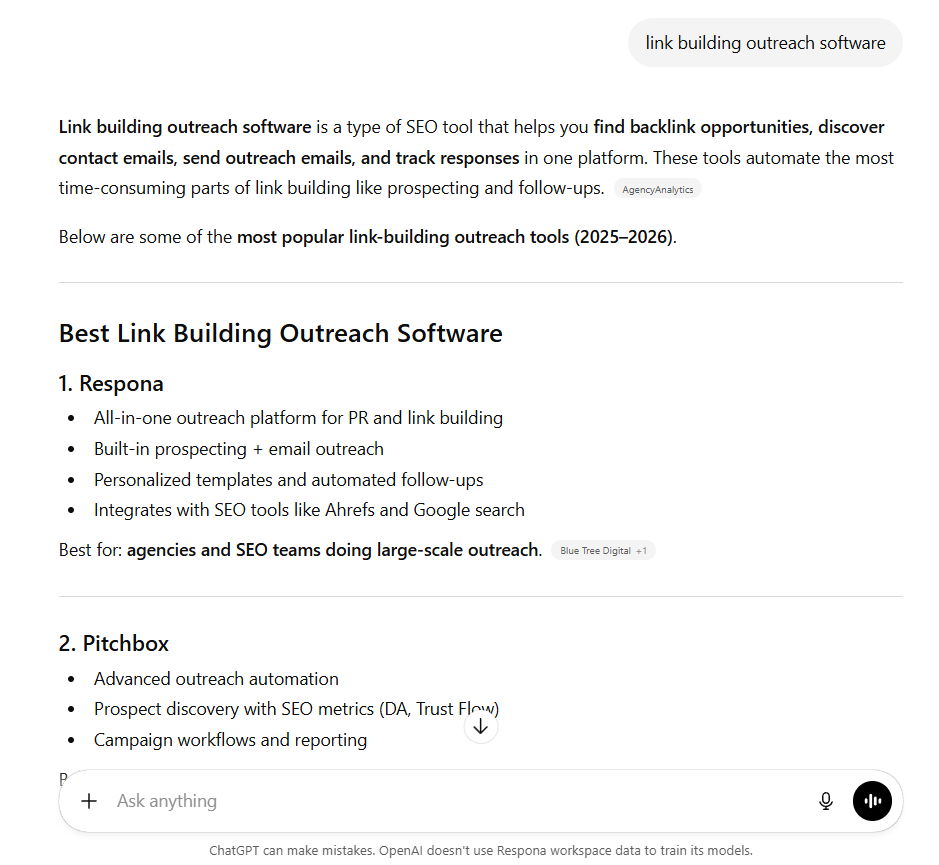
Instead of visiting five articles, the user immediately sees a short list of recommended tools or companies. These recommendations act as commercial citations inside the answer.
That dramatically changes how lead generation happens.
If your brand appears in the list, you are introduced to the user at the exact moment they are evaluating solutions.
That moment can produce highly qualified leads because the potential customer already understands the problem they want to solve.
From there the user often takes the next step in the sales process. They might search your brand on Google, visit your landing page, review your content, or share the tool internally with their sales team.
Sometimes the lead becomes part of a longer B2B sales cycle where multiple stakeholders evaluate the product before moving forward.
In other words, the citation becomes the entry point into your sales pipeline.
For many companies this visibility supports several lead generation efforts at once, including sales prospecting, email marketing campaigns, social media discovery, and digital marketing initiatives.
Get Placements on Listicles that Get Cited
Another important strategy for generating leads from ChatGPT is appearing in listicles and roundup articles that AI systems frequently reference.
When someone enters a ChatGPT prompt like “best link building tools” or “top outreach software for SEO,” AI models look for patterns across the web.
One of the most common sources they learn from is list-style content that summarizes a category.
Articles like “Best Cold Email Tools,” “Top Outreach Platforms,” or “Best B2B Lead Generation Software” clearly define a market and highlight the main tools in it.
Because these articles organize information so clearly, AI systems often rely on them when generating answers.
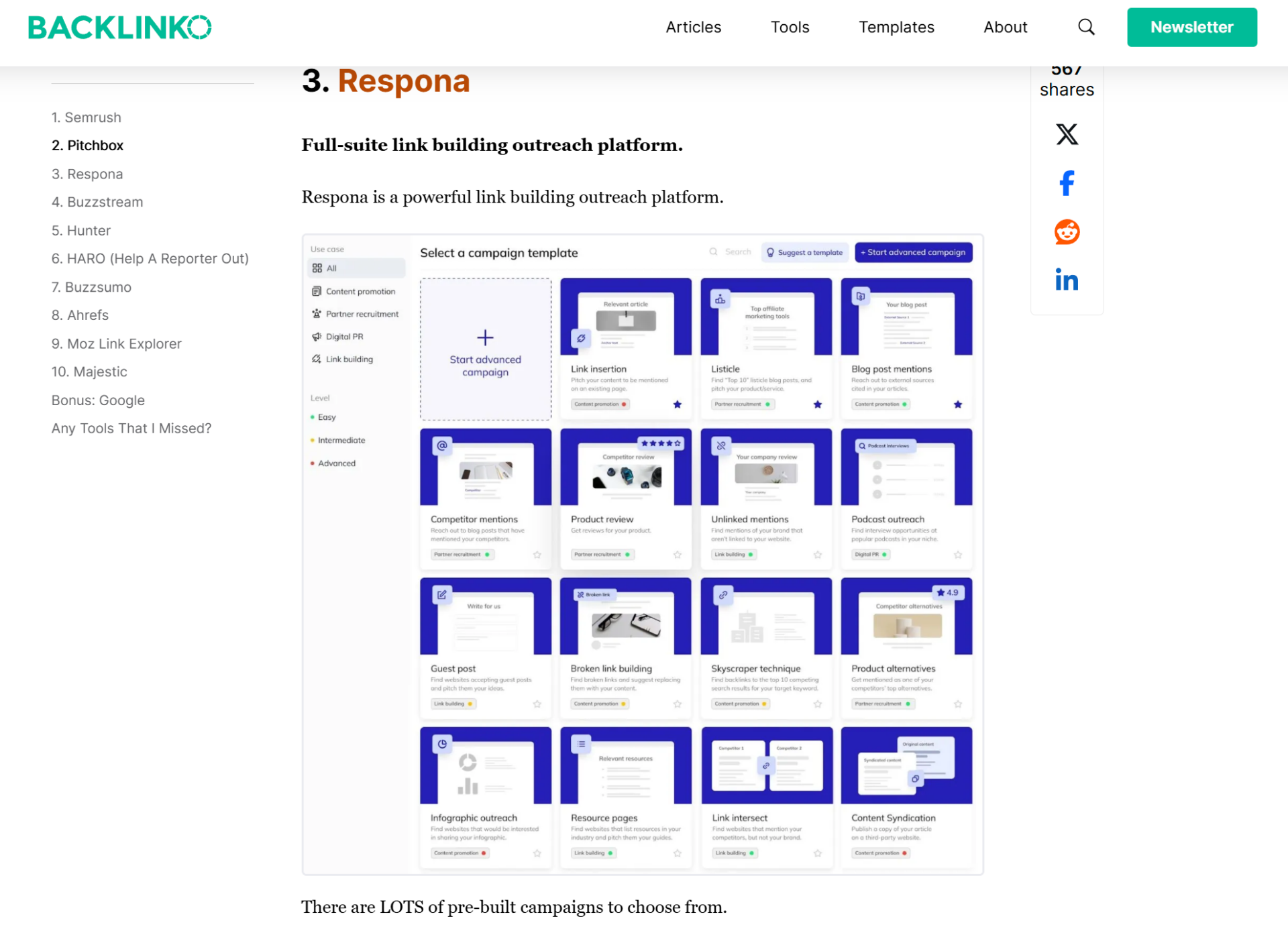
If your brand appears consistently across these listicles, AI models begin associating your company with that category.
Over time this increases the likelihood that your product appears when someone asks ChatGPT for recommendations.
For example, if a user asks an AI prompt like “What tools help with sales prospecting or LinkedIn outreach?” the system will often recommend tools it has seen mentioned repeatedly across trusted content.
The challenge is that earning these placements requires outreach.
You need to find relevant listicles, identify the authors behind them, and convince them to include your tool.
Doing this manually across hundreds of sites can quickly overwhelm most sales or marketing teams.
That is where our done-for-you link building service helps.
Monitor AI Visibility Monthly
AI visibility should be monitored regularly.
Just like Google rankings, your presence in AI-generated answers changes as new content is published and competitors gain mentions across the web.
If another tool begins appearing across more listicles, comparison pages, or industry publications, AI systems may start recommending them instead of you.
Likewise, as you earn more placements and backlinks through outreach, your brand can begin appearing more frequently in AI answers.
This is why it is important to monitor your AI visibility monthly.
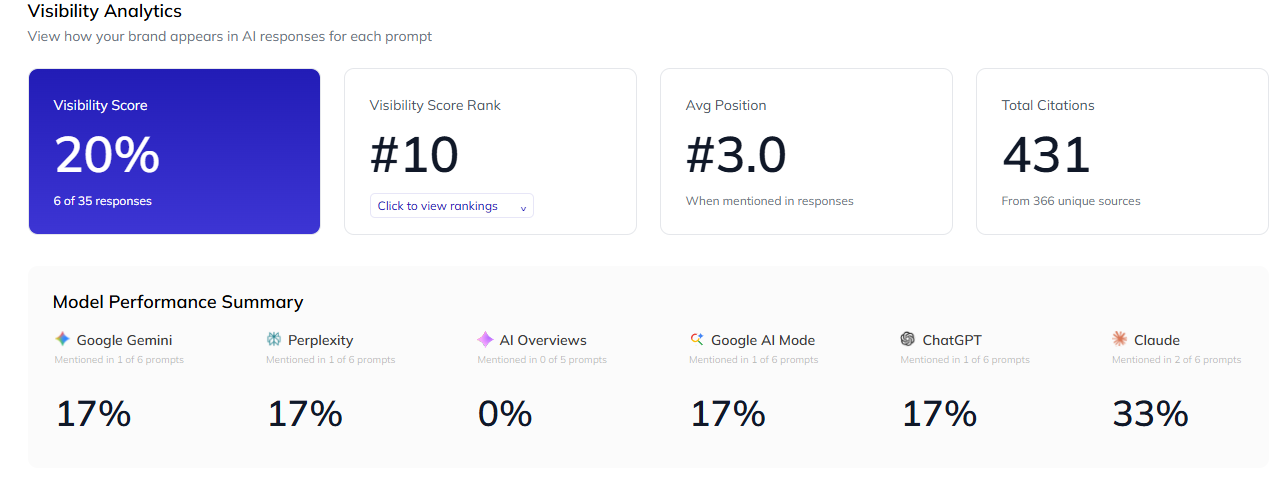
A simple approach is to track the prompts your target audience might use when researching solutions.
Examples include:
- “best link building tools”
- “top outreach software”
- “digital PR platforms”
- “best cold email tools”
By checking these prompts across platforms like ChatGPT, Perplexity, and Gemini, you can see:
- whether your brand appears in the response
- which competitors are recommended
- how your visibility changes as your content and outreach campaigns grow
Tracking this manually can become messy, especially if your lead generation efforts involve multiple outreach campaigns and placements.
That is why we built Campaigns in Respona.
Each campaign groups together the outreach efforts tied to a specific lead generation goal.
For example, a campaign might focus on securing placements in listicles about cold email tools, B2B outreach platforms, or sales prospecting software.
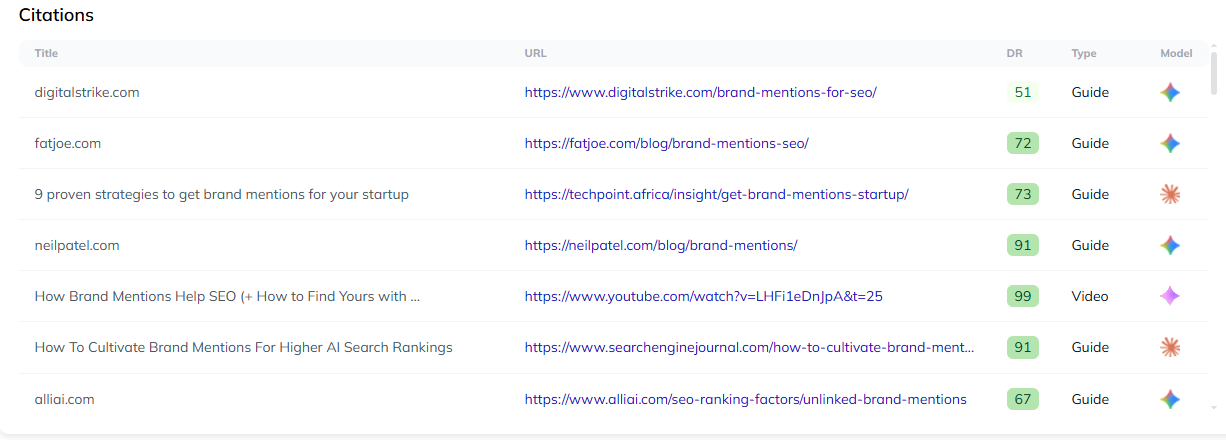
As those campaigns run, you can monitor how the new placements influence your overall visibility.
Instead of guessing which outreach activities produce results, campaigns help you connect your link building work with real lead generation outcomes.
Link building cheat sheet
Gain access to the 3-step strategy we use to earn over 86 high-quality backlinks each month.
Now Over to You
As AI search continues to grow, visibility is no longer just about ranking on Google.
It is increasingly about appearing in the content that AI systems analyze when generating answers.
Large language models learn from patterns across the web, and the brands that appear most often in listicles, comparison pages, and trusted industry publications are the ones most likely to show up in AI-generated recommendations.
Those recommendations can introduce your company to a potential lead at the exact moment they are researching solutions.
This means traditional SEO activities like earning backlinks and building authoritative content now play a major role in AI lead generation.
However, consistently earning these placements takes time.
You need to identify relevant publications, reach the right authors, and scale outreach across dozens or even hundreds of websites.
That is exactly what our done-for-you link building service is designed to handle.
Our team manages the entire outreach process from prospecting high-authority sites to securing placements that strengthen your SEO and increase the likelihood that AI assistants recommend your brand.
Frequently Asked Questions (FAQ)
What is AI visibility?
AI visibility refers to how often your brand appears in answers generated by AI systems like ChatGPT, Perplexity, Gemini, or Claude. Instead of only ranking in search results, companies are now focusing on appearing in the sources these AI systems use to generate recommendations.
How do AI tools decide which brands to mention?
AI models analyze patterns across large amounts of web content. Brands that frequently appear in trusted articles, industry roundups, comparison pages, and resource lists are more likely to be associated with their category and recommended in AI-generated responses.
Do backlinks help with AI visibility?
Yes. Backlinks help your content and brand appear on authoritative sites, which increases the likelihood that AI systems encounter and learn about your company when analyzing the web. In many cases, the same links that improve SEO also strengthen AI visibility.
Why are listicles important for AI search?
Listicles like “Best SEO Tools” or “Top Outreach Platforms” clearly define a category and its main players. Because of this structured format, they are frequently used by journalists, bloggers, and AI systems as reference points when summarizing an industry.
How can I track my brand’s AI visibility?
You can monitor AI visibility by regularly checking prompts your audience might use in tools like ChatGPT or Perplexity and seeing whether your brand appears in the responses. Tracking this monthly helps you understand how new backlinks and mentions influence AI recommendations.
How does Respona help improve AI visibility?
Respona helps teams earn placements on authoritative websites through scalable outreach campaigns. By securing mentions in listicles, resource pages, and industry publications, you increase the chances that your brand appears in the content AI systems use to generate answers.