• About Us
  • Disclaimer
  • Contact Us
  • Privacy Policy
Thursday, July 23, 2026
mGrowTech
No Result
View All Result
  • Technology And Software
    • Account Based Marketing
    • Channel Marketing
    • Marketing Automation
      • Al, Analytics and Automation
      • Ad Management
  • Digital Marketing
    • Social Media Management
    • Google Marketing
  • Direct Marketing
    • Brand Management
    • Marketing Attribution and Consulting
  • Mobile Marketing
  • Event Management
  • PR Solutions
  • Technology And Software
    • Account Based Marketing
    • Channel Marketing
    • Marketing Automation
      • Al, Analytics and Automation
      • Ad Management
  • Digital Marketing
    • Social Media Management
    • Google Marketing
  • Direct Marketing
    • Brand Management
    • Marketing Attribution and Consulting
  • Mobile Marketing
  • Event Management
  • PR Solutions
No Result
View All Result
mGrowTech
No Result
View All Result
Home Al, Analytics and Automation

OpenAI Releases Symphony: An Open Source Agentic Framework for Orchestrating Autonomous AI Agents through Structured, Scalable Implementation Runs

Josh by Josh
March 5, 2026
in Al, Analytics and Automation
0
OpenAI Releases Symphony: An Open Source Agentic Framework for Orchestrating Autonomous AI Agents through Structured, Scalable Implementation Runs


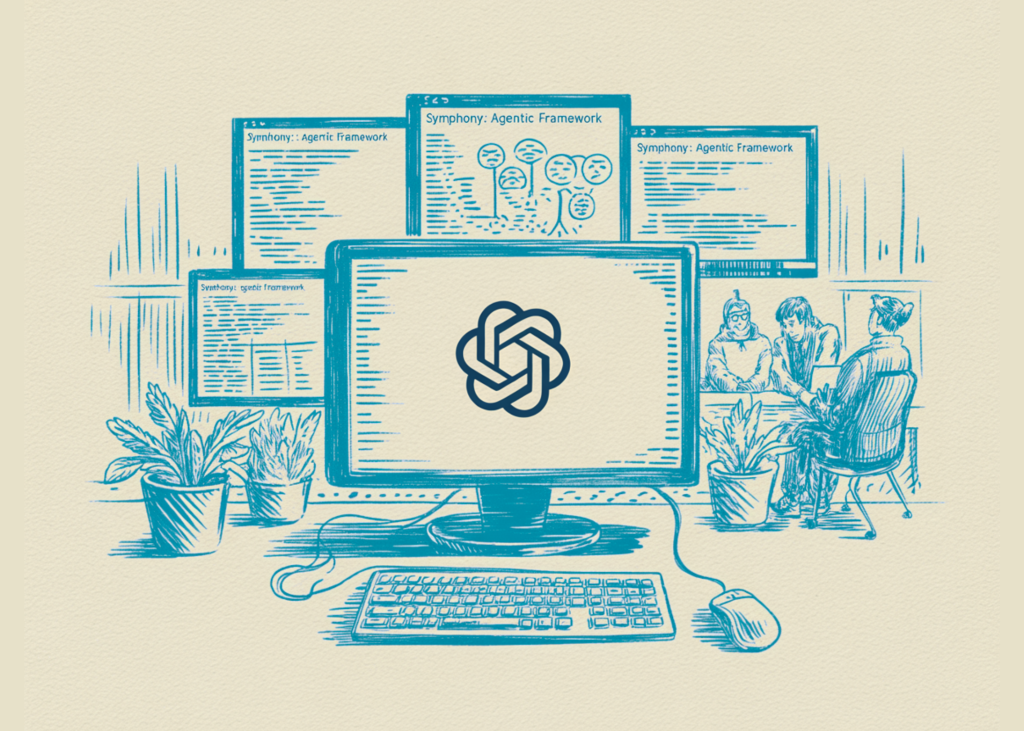
OpenAI has released Symphony, an open-source framework designed to manage autonomous AI coding agents through structured ‘implementation runs.’ The project provides a system for automating software development tasks by connecting issue trackers to LLM-based agents.

System Architecture: Elixir and the BEAM

Symphony is built using Elixir and the Erlang/BEAM runtime. The choice of stack focuses on fault tolerance and concurrency. Since autonomous agents often perform long-running tasks that may fail or require retries, the BEAM’s supervision trees allow Symphony to manage hundreds of isolated implementation runs simultaneously.

READ ALSO

Professor Emeritus Dimitri Bertsekas, influential computer scientist and prolific author, dies at 83 | MIT News

Unsloth vs Axolotl vs TRL vs LLaMA-Factory: A Fine-Tuning Framework Comparison on Speed, VRAM, and Multi-GPU

The system uses PostgreSQL (via Ecto) for state persistence and is designed to run as a persistent daemon. It operates by polling an issue tracker—currently defaulting to Linear—to identify tasks that are ready for an agent to address.

The Implementation Run Lifecycle

The core unit of work in Symphony is the implementation run. The lifecycle of a run follows a specific sequence:

  1. Polling and Triggering: Symphony monitors a specific state in the issue tracker (e.g., ‘Ready for Agent’).
  2. Sandbox Isolation: For each issue, the framework creates a deterministic, per-issue workspace. This ensures the agent’s actions are confined to a specific directory and do not interfere with other concurrent runs.
  3. Agent Execution: An agent (typically using OpenAI’s models) is initialized to perform the task described in the issue.
  4. Proof of Work: Before a task is considered complete, the agent must provide ‘proof of work.’ This includes generating CI status reports, passing unit tests, providing PR review feedback, and creating a walkthrough of the changes.
  5. Landing: If the proof of work is verified, the agent ‘lands’ the code by submitting or merging a Pull Request (PR) into the repository.

Configuration via WORKFLOW.md

Symphony utilizes an in-repo configuration file named WORKFLOW.md. This file serves as the technical contract between the developer team and the agent. It contains:

  • The agent’s primary system instructions and prompts.
  • Runtime settings for the implementation environment.
  • Specific rules for how the agent should interact with the codebase.

By keeping these instructions in the repository, teams can version-control their agent policies alongside their source code, ensuring that the agent’s behavior remains consistent with the specific version of the codebase it is modifying.

Harness Engineering Requirements

The documentation specifies that Symphony is most effective in environments that practice harness engineering. This refers to a repository structure that is optimized for machine interaction. Key requirements include:

  • Hermetic Testing: Tests that can run locally and reliably without external dependencies.
  • Machine-Readable Docs: Documentation and scripts that allow an agent to discover how to build, test, and deploy the project autonomously.
  • Modular Architecture: Codebases where side effects are minimized, allowing agents to make changes with high confidence.

Key Takeaways

  • Fault-Tolerant Orchestration via Elixir: Symphony utilizes Elixir and the Erlang/BEAM runtime to manage agent lifecycles. This architectural choice provides the high concurrency and fault tolerance necessary for supervising long-running, independent ‘implementation runs’ without system-wide failures.
  • State-Managed Implementation Runs: The framework transitions AI coding from manual prompting to an automated loop: it polls issue trackers (like Linear), creates isolated sandboxed workspaces, executes the agent, and requires ‘Proof of Work’ (CI passes and walkthroughs) before code is merged.
  • Version-Controlled Agent Contracts: Through the WORKFLOW.md specification, agent prompts and runtime configurations are stored directly in the repository. This treats the AI’s operating instructions as code, ensuring that agent behavior is versioned and synchronized with the specific branch it is modifying.
  • Dependency on Harness Engineering: For the system to be effective, repositories must adopt harness engineering. This involves structuring codebases for machine legibility, including hermetic (self-contained) test suites and modular architectures that allow agents to verify their own work autonomously.
  • Focused Scheduler Scope: Symphony is defined strictly as a scheduler, runner, and tracker reader. It is designed specifically to bridge the gap between project management tools and code execution, rather than serving as a general-purpose multi-tenant platform or a broad workflow engine.

Check out the Repo here. Also, feel free to follow us on Twitter and don’t forget to join our 120k+ ML SubReddit and Subscribe to our Newsletter. Wait! are you on telegram? now you can join us on telegram as well.



Previous articleHow to Design an Advanced Tree-of-Thoughts Multi-Branch Reasoning Agent with Beam Search, Heuristic Scoring, and Depth-Limited Pruning


Source_link

Related Posts

Professor Emeritus Dimitri Bertsekas, influential computer scientist and prolific author, dies at 83 | MIT News
Al, Analytics and Automation

Professor Emeritus Dimitri Bertsekas, influential computer scientist and prolific author, dies at 83 | MIT News

July 22, 2026
Unsloth vs Axolotl vs TRL vs LLaMA-Factory: A Fine-Tuning Framework Comparison on Speed, VRAM, and Multi-GPU
Al, Analytics and Automation

Unsloth vs Axolotl vs TRL vs LLaMA-Factory: A Fine-Tuning Framework Comparison on Speed, VRAM, and Multi-GPU

July 22, 2026
FDA-Ready Medical Image Annotation Guide for Healthcare AI
Al, Analytics and Automation

FDA-Ready Medical Image Annotation Guide for Healthcare AI

July 22, 2026
Poolside Releases Laguna S 2.1, an Open-Weight Agentic Coding Model Punching Above Its Weight Class on SWE-Bench Multilingual
Al, Analytics and Automation

Poolside Releases Laguna S 2.1, an Open-Weight Agentic Coding Model Punching Above Its Weight Class on SWE-Bench Multilingual

July 22, 2026
Meta Open-Sources Astryx: An Agent-Ready React Design System With 150+ Accessible Components, Seven Themes, and a CLI
Al, Analytics and Automation

Meta Open-Sources Astryx: An Agent-Ready React Design System With 150+ Accessible Components, Seven Themes, and a CLI

July 21, 2026
Alibaba’s Tongyi Lab Releases Qwen-Audio-3.0-TTS, a Hosted Text-to-Speech Model in Flash and Plus Tiers Across 16 Languages
Al, Analytics and Automation

Alibaba’s Tongyi Lab Releases Qwen-Audio-3.0-TTS, a Hosted Text-to-Speech Model in Flash and Plus Tiers Across 16 Languages

July 21, 2026
Next Post
How to watch Frost Fatales 2026, kicking off on March 8

How to watch Frost Fatales 2026, kicking off on March 8

POPULAR NEWS

Trump ends trade talks with Canada over a digital services tax

Trump ends trade talks with Canada over a digital services tax

June 28, 2025
15 Trending Songs on TikTok in 2025 (+ How to Use Them)

15 Trending Songs on TikTok in 2025 (+ How to Use Them)

June 18, 2025
Communication Effectiveness Skills For Business Leaders

Communication Effectiveness Skills For Business Leaders

June 10, 2025
App Development Cost in Singapore: Pricing Breakdown & Insights

App Development Cost in Singapore: Pricing Breakdown & Insights

June 22, 2025
Comparing the Top 7 Large Language Models LLMs/Systems for Coding in 2025

Comparing the Top 7 Large Language Models LLMs/Systems for Coding in 2025

November 4, 2025

EDITOR'S PICK

Mark Zuckerberg wants Meta to launch its own prediction market

Mark Zuckerberg wants Meta to launch its own prediction market

June 23, 2026
B2B Advertising and Testing –

B2B Advertising and Testing –

June 4, 2025
20+ Text Message Errors to Be Aware Of

20+ Text Message Errors to Be Aware Of

June 6, 2025
Does AI content rank well in search? [Survey + Data study]

Does AI content rank well in search? [Survey + Data study]

April 1, 2026

About

We bring you the best Premium WordPress Themes that perfect for news, magazine, personal blog, etc. Check our landing page for details.

Follow us

Categories

  • Account Based Marketing
  • Ad Management
  • Al, Analytics and Automation
  • Brand Management
  • Channel Marketing
  • Digital Marketing
  • Direct Marketing
  • Event Management
  • Google Marketing
  • Marketing Attribution and Consulting
  • Marketing Automation
  • Mobile Marketing
  • PR Solutions
  • Social Media Management
  • Technology And Software
  • Uncategorized

Recent Posts

  • The credential that let OpenAI's agents into Hugging Face exists in most enterprises right now
  • How Brands Can Escape AI-Driven Sameness
  • How to use your Gemini Live camera for real-time help
  • MoEngage adquire Aampe para construir a CEP Agêntica, alimentada por Tomada de Decisões Agênticas 1:1
  • About Us
  • Disclaimer
  • Contact Us
  • Privacy Policy
No Result
View All Result
  • Technology And Software
    • Account Based Marketing
    • Channel Marketing
    • Marketing Automation
      • Al, Analytics and Automation
      • Ad Management
  • Digital Marketing
    • Social Media Management
    • Google Marketing
  • Direct Marketing
    • Brand Management
    • Marketing Attribution and Consulting
  • Mobile Marketing
  • Event Management
  • PR Solutions