[ad_1]
Addressing the challenges of decarbonising the hard-to-abate maritime industry
The maritime shipping industry is the backbone of the global economy. Whether bulk or container carriers, oil and chemical tankers, from the Amazon package you overnighted to the petrol in your car, a vast majority of international trade is enabled through maritime means. 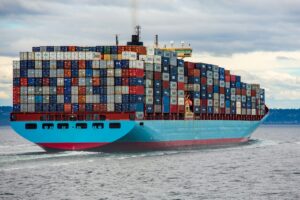
The immense amount of work, money and transportation involved is matched by an immense amount of carbon emissions. It’s such that, if the sector was a country, it would come close to Germany as a carbon emitter, at around the 6th or 7th largest in the world. Accounting for around 3% of annual global greenhouse gas emissions, this has been recognised as a significant issue for the industry – and the planet.
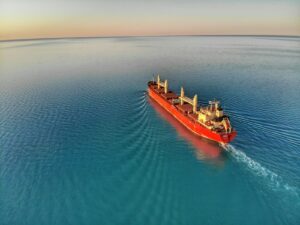 The International Maritime Organisation (IMO) has set ambitious decarbonisation targets to protect and secure the future of the industry. The organisation is striving to achieve net zero emissions by the industry at or around 2050, with gradual checkpoints at each decade in the lead up. Important to note in this decarbonisation goal and strategy is the emphasis on innovative emission technologies, fuels and energy sources. Because ultimately the maritime industry is going to be one of the hardest sectors to decarbonise, and these goals will not be achieved without ingenuity, creativity and innovation.
There is a wide range of potential solutions, each with pros and cons, that offer promising ways to reduce the environmental impact and global strain of the industry. They include making cultural changes onboard ships, introducing new and low-carbon fuels, on-board carbon capture, electrification, digitalisation and efficiency logistics, optimisation tools and innovative technologies. The list goes on. Clearly, there are many solutions available to fleets, ships, tankers and organisations in this industry.
Overall, full decarbonisation will require a combination of a large-scale shift to carbon-neutral fuels, construction of new vessels with electrification, combination engines and retrofitting of older ships to operate on green fuels. But these transitions all incur extra costs that prove unappealing to owners and operators and impart financial strain on those in the industry.
A report by the Faraday Institution (FI) suggests that in 2050 ammonia will be the predominant fuel for UK marine applications, taking 35 per cent of the market. Green ammonia is forecast to be 15 times cheaper than liquid hydrogen. However, FI does not expect ammonia-powered ships to be in use until 2035 due to the need to develop new technology. 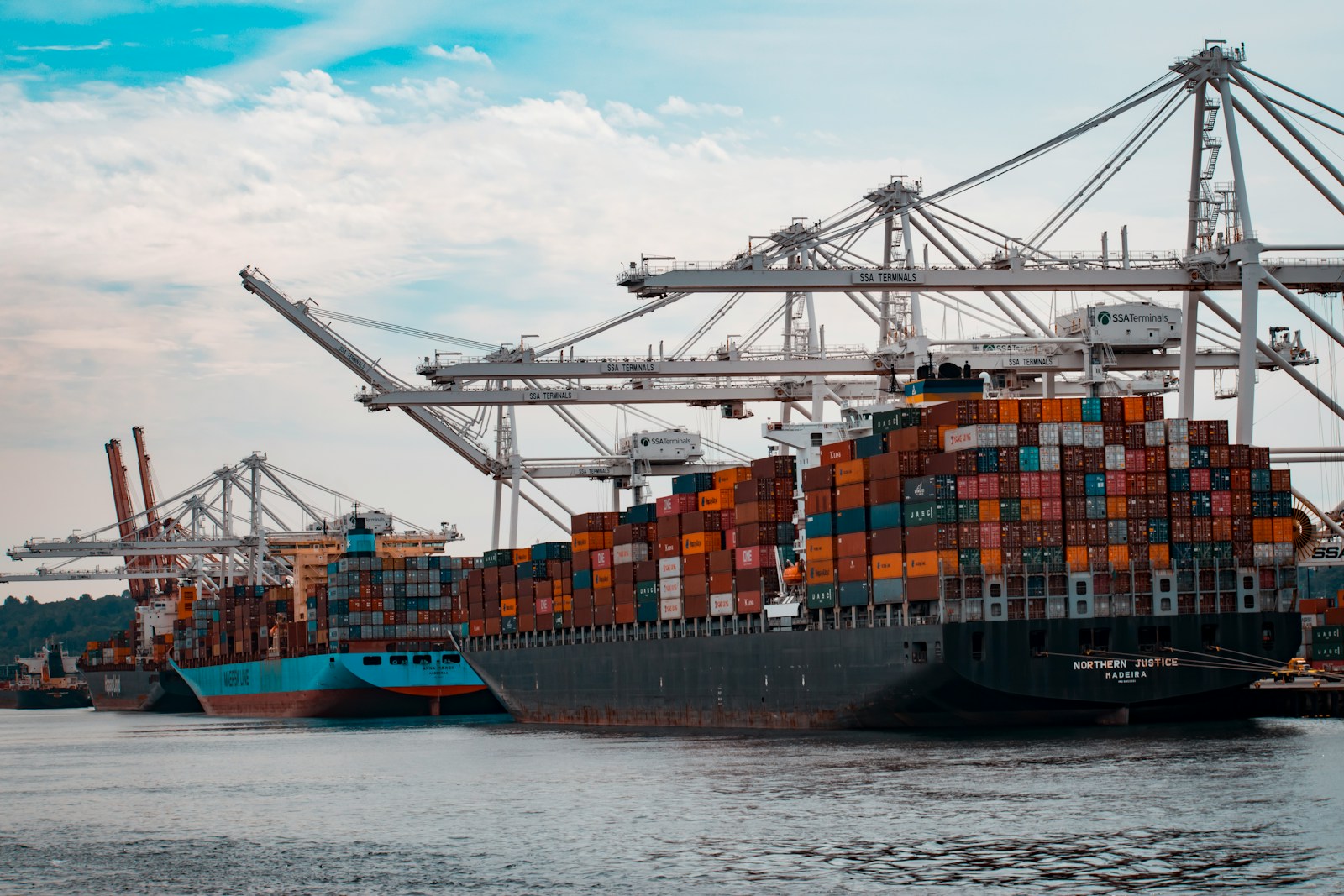
At this point, 93% of the global fleet still runs on traditional fuels. Even if the entire fleet was to transition to run on low-carbon fuels, shipping still needs to compete with other industries for the limited supply of green fuels.
A shift to carbon-neutral fuels cannot be the sole tactic used on the pathway to decarbonisation. But what else do we have to look to? Cultural changes in crew activities and small efficiencies to prioritise in day-to-day operations is one. This small but effective solution is not sufficiently impactful to lead to full decarbonisation. Onboard carbon capture is another, but keeps the door open for conventional fuels, and the negative impacts they carry with them. These potential solutions can be combined to make an effective strategy, but they still leave space for other innovative tactics to employ.
Among these are new technologies for ships, particularly that of vessel propulsion. The Global Maritime forum found that as of the beginning of 2023, there were over 200 projects focussed on zero-emission technologies. More than fifty of each centred-on ammonia propulsion, battery propulsion and hydrogen fuel cell technologies. Around 30 use methanol technologies and 15 hydrogen combustion.
Making the way in which ships travel more efficient, whether using carbon-neutral fuels or not, contributes to the overall net carbon usage and adds up on long voyages that fulfil global demand for shipping.
Another solution is the AirWing by GT Wings. This exciting innovation is cleverly designed to maximise thrust and save on fuel expended for ships, both new-built and retrofit. It produces 10 times the thrust of a traditional sail, and cuts fuel consumption by 30%. Such technologies are another tactic that can be used to achieve decarbonisation goals.
While there is no one size-fits-all solution for shipping operators, taking into consideration the costs, pressures, demand and time to deliver the transition, there are many methods, techniques and technologies available to combine into a complete strategy.

Resonates is proud to support decarbonisation in the shipping industry. Hard-to-abate industries like maritime shipping and transport deserv
e time, attention, creativity and ingenuity to make the world safer and the future of the global maritime sector more secure.
As a team backed by a commitment to sustainability and supporting the green transition, we are working to back GT Wings’ push to bring the AirWing to market, and lead the way to a more environmentally conscious maritime industry. Join us at GT Wings’ launch event in London on May 1st, and learn more here.
The post Charting a carbon-free course appeared first on Resonates.
[ad_2]
Source_link