[ad_1]
This is the first in a series of content I’ll be publishing during the month of August to celebrate 15 years of Jon Loomer Digital.
August 29th will mark the 15-year anniversary of this website. I purchased the jonloomer.com domain nine days prior, after being notified of my second layoff in two and a half years.
I didn’t launch it with the plan to make it a resource on Facebook-then-Meta advertising. That happened slowly, and mostly by accident.
In the 15 years since, I’ve published more than 1,400 blog posts totaling around 1.5 million words, recorded over 1,000 videos and nearly 750 podcast episodes, and hosted 632 consecutive weekly webinars. Almost all of it was created to keep advertisers updated on the latest feature updates, changes, and best practices.
That puts me in a unique position. I may be better positioned to document the evolution of Meta advertising than anyone outside of Meta itself.
And that’s kinda cool.
So this is an advertiser’s perspective on how Meta advertising has evolved over the past 15 years, assembled from content I published while it was happening. Where the posts are still live, I’ve linked to them so you can see what I was saying at the time rather than what I’d say about it now.
This is the first of several. I’ll continue the trip through time during the month of August. I hope you enjoy the ride.
2011: People, Businesses, and Ads
Since my website launched on August 29, 2011, without a clear focus yet, I have a very partial recounting of what happened in 2011. But much of my initial content spanned Facebook for personal and business use, before an eventual mention of ads.
Timeline, Redesigned News Feed, and Ticker
If you were a Facebook user like I was in 2011, you may remember the days of constant news feed redesigns. Facebook was always experimenting with a new look or algorithm. And users, as a result, were always complaining about the latest redesign, begging to get “the old Facebook” back.
In September, Mark Zuckerberg announced that Timeline would replace user profiles. Facebook pitched Timeline as “the story of your life.” Dramatic, yes. Timeline was headlined by a cover photo and consisted of your stories, apps, and ways to express “who you are.”
The Ticker was a distracting hub of activity that lived on the right side of your desktop news feed. It dynamically popped in all of the latest updates and notifications related to your friends and pages you followed. And people hated it.
Updates for Businesses
I didn’t start my Facebook business page until November 6th because, well, I hadn’t considered myself a business at that point. The only reason I created a business page was that it felt like there needed to be some differentiation between the stuff I shared with friends and the stuff I shared with others.
I mostly followed the leads of both Mari Smith and Amy Porterfield and created a page. But while they named their business page the same as their personal profile, I felt like that was confusing. And that’s why my page, and ultimately my business, would be called Jon Loomer Digital.
One change Facebook made was adding a “Subscribe” button that could be embedded on creator websites. I believe this was before either “follows” or “likes,” where you could subscribe to posts from people.
One relic of the past was welcome pages for businesses. We’d build experiences on Facebook pages that could require people to become a fan before seeing more. I cited that Page tabs moved from FBML to iFrames. I remember frantically trying to understand how to create them.
I also wrote about Facebook Places and check-in deals, which allowed local businesses to incentivize customers to “check in” when visiting their business.
Sponsored Stories!
My first documented mention of Facebook ads was in November, when I wrote about the Differences Between Sponsored Stories and Page Post Ads.
Page Post Ads allowed you to choose any page post you’ve created and make it into an ad. Here’s an example of a Page Post Ad…
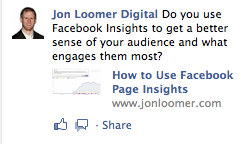
Sponsored Stories allowed you to choose whether to promote Page Likes or Page Post Likes. Amazingly, you could only reach friends of fans.

And yeah, these images were SMALL. I guess things were primitive back then.
2012: The Year it All Happens
This is the year that Facebook as a business tool exploded, coinciding nicely with it becoming my core focus. While I didn’t focus entirely on Facebook ads at this point, I quickly realized that there was a whole lot to cover about it from a business standpoint.
Facebook Timeline for Pages
If I were to pinpoint a single moment that determined my next 15 years, this would be it. In late February, Facebook announced Timeline for Pages.
There was nothing particularly special about it, as much as Facebook tried to hype it. This was simply applying the redesign that had already happened for profiles in 2011 and applying it to pages. But it gave me more than a dozen content opportunities, and I’d write about it for days.
This is when I started to realize that my focus could be on business use of Facebook.
Five Levels of Page Admin Roles
Facebook announced five roles that you could assign to help manage a business page:
- Insights Analyst: View Insights
- Advertiser: View Insights and create ads
- Moderator: All of the above, plus send messages as the Page and respond to and delete comments
- Content Creator: All of the above, plus create posts as the Page, edit the Page and add apps
- Manager: All of the Above, plus Manage Admin Roles
Page Offers Roll Out to Pages
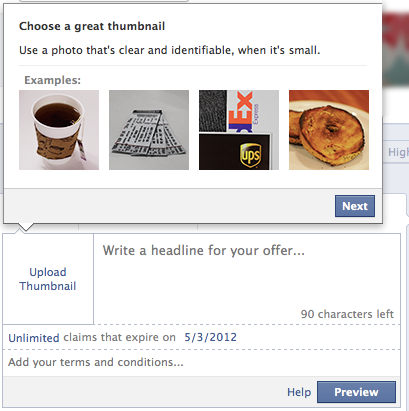
In May, Facebook rolled out Offers to all businesses, following an initial test. Offers were page posts that allowed businesses to feature deals that could be redeemed by their fans.
A New Ad Create Flow
Before there was Ads Manager, there was Power Editor. Before there was Power Editor, there was a generically-named “Ad Create Flow.”
With the changes documented in June of 2012, Facebook redesigned how ads were created. They started with an objective.

But I don’t think I fully grasped at the time what the most important part was: Show your ads to “people who are most likely to” perform an action you want.
Our system will optimize your ad or sponsored story’s delivery by showing it to the people who are most likely to take the action you select as your objective.
This remains central to the way Meta’s ad delivery algorithm works today. I did not realize at the time both the good and bad that could come from that.
Promoted Posts
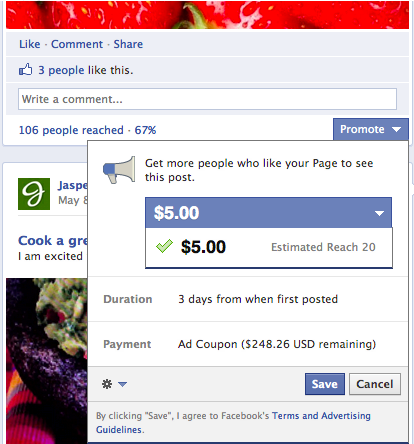
If your page had at least 400 fans, you could create Promoted Posts. These odd ad units were created from your page. Before the Boost button existed, you could pay to push posts out to more people.
Custom Audiences Arrive
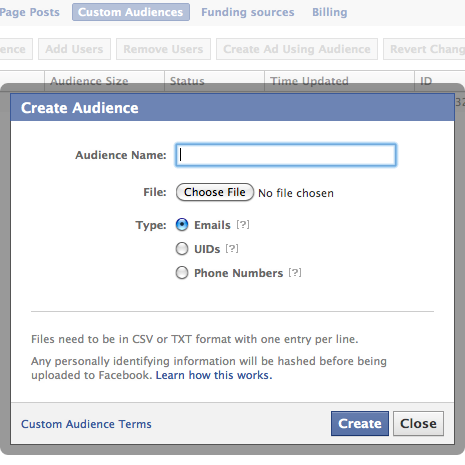
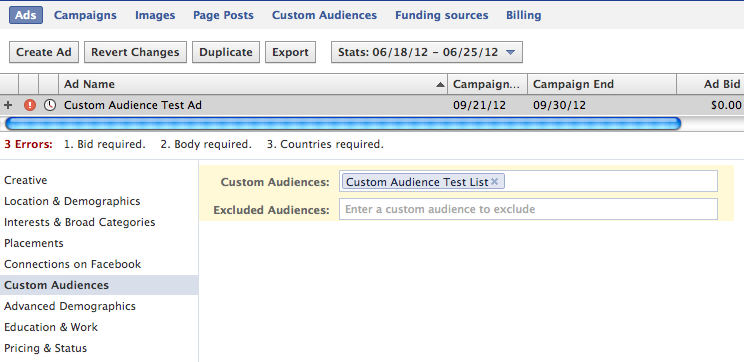
And here we go! This was a big deal. In September of 2012, Facebook launched custom audiences so that you could target or exclude your customers by email address, phone number, or UID.
Curious how much things have changed since 2012? Check out this view…
2013: The Year of Power Editor, Conversion Tracking, and Targeting
While I still covered non-ads changes related to things like another news feed redesign, story bumping (??!!), a controversial drop in reach, Facebook hashtags, and Graph Search, ads-related topics took center stage in 2013.
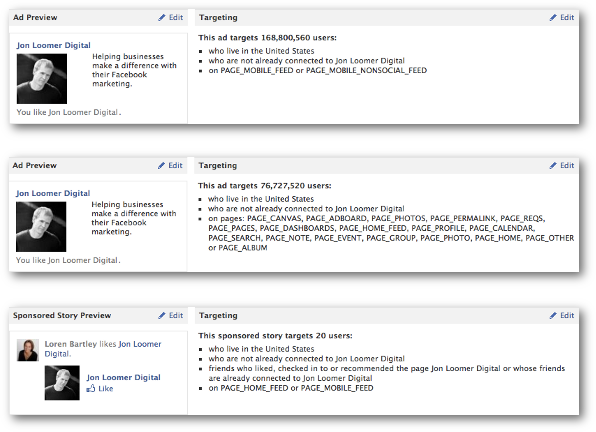
Promoted Page
Similar to a Promoted Post, but Promoted Page allowed admins to easily create an ad campaign to promote their page with a single click from the Timeline.
These were essentially “Page Like Ads.”
Facebook Exchange (FBX)
FBX was the beginning of website remarketing. Using a third-party tool, brands could place a pixel (I called it a “cookie” then) on their website so that when that user visited Facebook, they could be served a relevant ad.
I used tools like AdRoll and Perfect Audience. Remember them?
Lookalike Audiences
2013 was an exciting time! This was when we were first given the ability to create lookalike audiences to reach people who were similar to those who were connected to us.
Here is the earliest image I have of creating a lookalike audience…
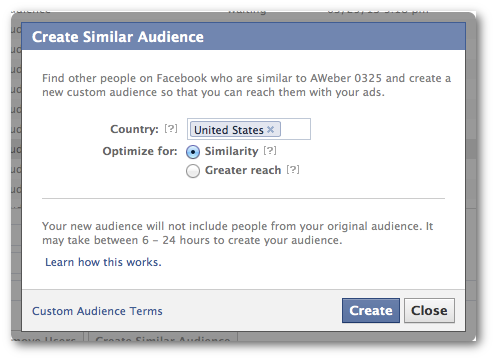
It was before we could use 1-10% similarity. We had options to optimize for similarity or greater reach.
Partner Categories
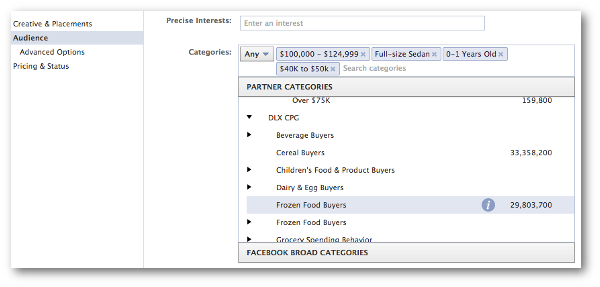
Partner Categories were the earliest expansion of interest targeting. Instead of only relying on information Facebook had about people from the platform itself, data was collected from third-party partners Acxiom, Datalogix, and Epsilon.
There were more than 500 partner categories at the time. The Acxiom categories focused on demographic info (home owner, renter and annual income) while Datalogix allowed you to target users based on their purchase history (type, model and price of car; date of purchase; purchase history of products that include beverages, cereals, children’s foods and a whole lot more).
Here is my earliest image of Partner Categories in Power Editor.
Offsite Conversion Pixels
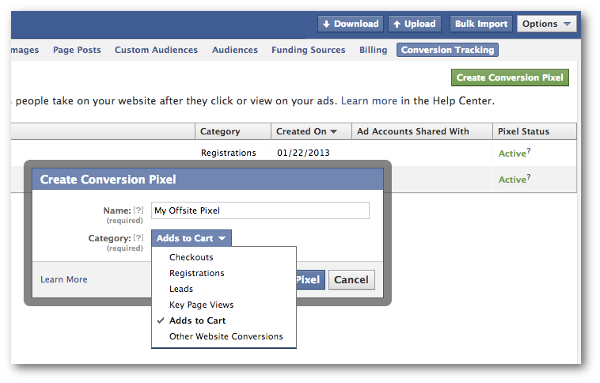
Even if you were an advertiser back in 2013, you may forget that there used to be two separate pixels: One for conversion tracking and one for targeting.
At this point in 2013, the custom audience pixel didn’t exist yet (it was only available via FBX). The offsite conversion pixel finally allowed advertisers to see how many conversions resulted from someone clicking on their ad.
And, you guessed it, you had to create the conversion pixel in Power Editor.
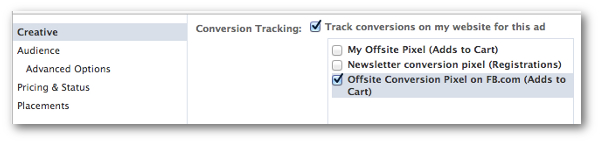
You would need to select the relevant pixel when creating your ad.
Power Editor
By this point, most advertisers were using what was called the Self-Serve Ad Tool to create their ads. This would eventually evolve to become Ads Manager.
But the most advanced advertisers didn’t use that tool. We used Power Editor instead. Power Editor was a Chrome plugin that housed the most advanced features. But it was also incredibly clunky, buggy, and confusing.
And this gave me amazing opportunities for content.
You didn’t have access to any of these features without Power Editor:
- Custom Audiences
- Lookalike Audiences
- Saved Audiences
- Partner Categories
- Conversion Tracking
- Conversion Specs
- Domain Sponsored Stories
- Sponsored Search Results
The Self-Serve Ad Tool also gave you no control over where your ads appeared. Power Editor provided placement options.
You also had access to manual bidding, targeting, and bulk ad creation options only if you used Power Editor. Not surprisingly, my first training course would be on how to use it — and it would ultimately be what launched my business.
2014: Website Custom Audiences Arrive
There were so many foundational changes in 2013 that set the stage for what happened in 2014 and beyond. It was a great era for targeting.
Six Big Changes
I wrote one blog post that outlined six pretty big changes in early January 2014.
1. Sponsored Stories were sunset.
2. Crop images for different aspect ratios by placement.
3. Targeting redefined to fit into four categories: Locations, Demographics, Interests, and Behaviors.
4. Broad Category and Precise Interests combined into a single unified Interests category.
5. Advanced demographic and behavioral targeting.
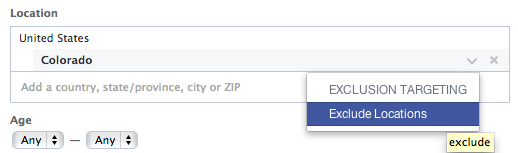
6. Targeting and exclusion logic added for geographic targeting by country, region, city, or zip code.
Here’s what location targeting looked like…
Website Custom Audiences!!
I was probably more excited about this update than any other that happened over 15 years. And I used website custom audiences into the ground for the better part of a decade.
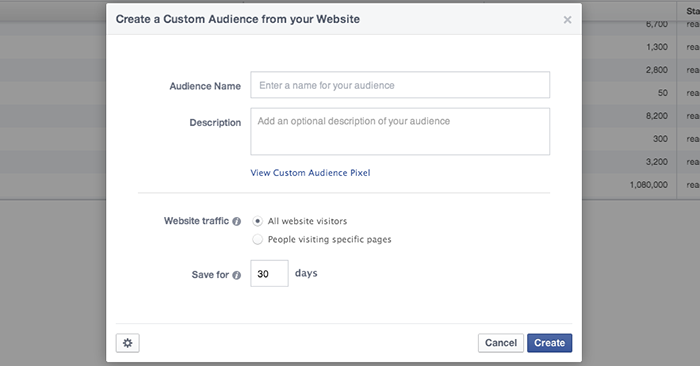
When launched, website custom audiences meant you no longer needed to use a third-party tool to retarget website visitors via Facebook Exchange (FBX). Instead, you’d create a unique remarketing pixel that was explicitly used for custom audience targeting.
Here’s what the old website custom audiences looked like…
New Campaign Structure (TWICE)
You probably don’t remember this, but the original Facebook ads campaign only included a campaign and an ad. Ad sets didn’t come about until March of 2014.
At the time, it worked like this:
- Campaign: Objective
- Ad Set: Schedule and Budget
- Ad: Creative, Placement, Targeting and Bidding
The structure was adjusted again in August, when placement, targeting, and bidding were moved to the ad set.
Lookalike Audiences Expanded
A year after their initial launch, Facebook enhanced lookalike audiences to include sources for your mobile app, website visitors, and Facebook fans. They previously only included your customer list custom audiences.
Bigger Right Hand Column Ads
Up until this point, right hand column ads were small and easily ignored. This also meant that they were cheap, there were more of them, and they had their own rules. In June, Facebook announced bigger right hand column ads, which also meant different rules.
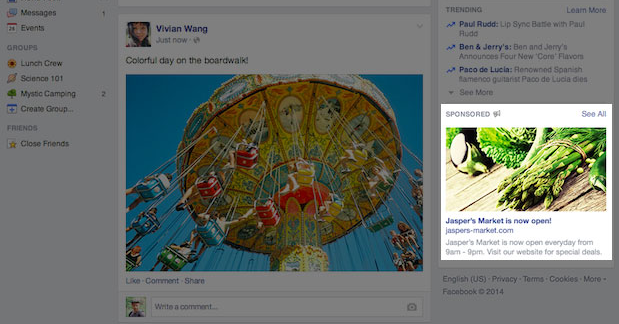
These were twice as big as they were previously and would use a consistent 1.91:1 aspect ratio going forward. While the old sidebar ads didn’t need to follow Facebook’s dreaded 20% text on image rule, the new ads would no longer be an exception.
2015: “The Good Ol’ Days”
Just looking through these updates, 2015 was the sweet spot when (then) Facebook was constantly rolling out features and improvements that were huge enhancements on the prior product. Here’s a sampling of what happened that year…
Dynamic Product Ads
Ads that dynamically promote products from your catalog launched 10 years ago. Can you believe that?
Still a dominant ad format.
Relevance Score and Feedback
Facebook announced the Relevance Score for ads, including positive and negative feedback. Facebook meant well, but these signals may not have been as useful as more meaningful metrics.
A New Ads Manager
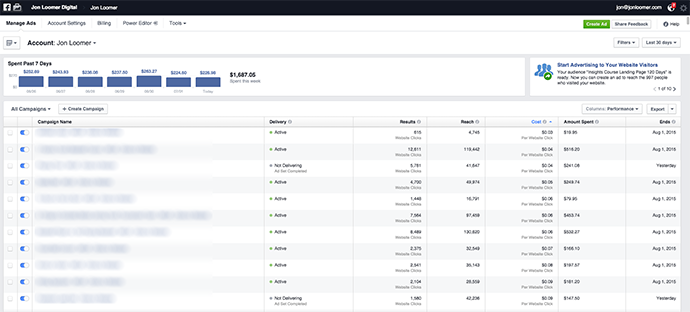
Up until this point, Ads Manager (or the Self-Serve Ad Tool) left a lot to be desired. But with this update, it started catching up with Power Editor — and looking more like it, too.
A New Power Editor
And just after the Ads Manager update, Power Editor got a new look.
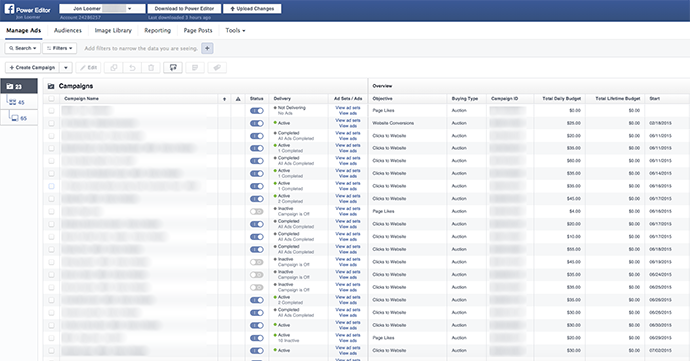
While Power Editor still gave advertisers access to a few extra features, the gap between it and Ads Manager was closing — and the entire look and feel was merging.
Facebook Lead Ads
When Lead Ads were first tested in 2015, they were only available for mobile devices. Later that year, they became available for desktop devices and with videos and carousels.
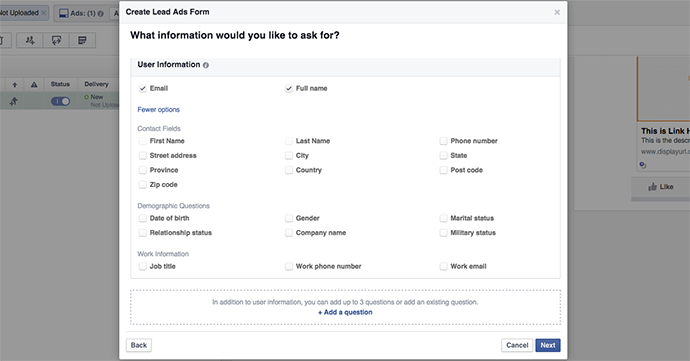
At the time, Lead Ads were only available in Power Editor.
Changes to Bidding and Optimization
There were three major changes revealed in a November announcement:
- What you chose to optimize for was no longer tied to what you got charged for.
- The way clicks were measured changed for some objectives.
- Optimized cost per-impression (oCPM) was removed as an optimization option.
New Facebook Pixel: Audiences, Events, and Custom Conversions
HUGE announcement in December. You may recall there were originally two pixels: One for targeting and one for conversion tracking. The new Facebook Pixel unified these things.
The new pixel would be the foundation of website custom audiences, standard (and eventually custom) events, and custom conversions.
I remember being confused about these changes at the time, but they would establish a strong foundation that is still mostly used today.
2016: Remarketing Magic
The biggest updates from 2016 were related to Lead ads and new ways to reach remarketing audiences.
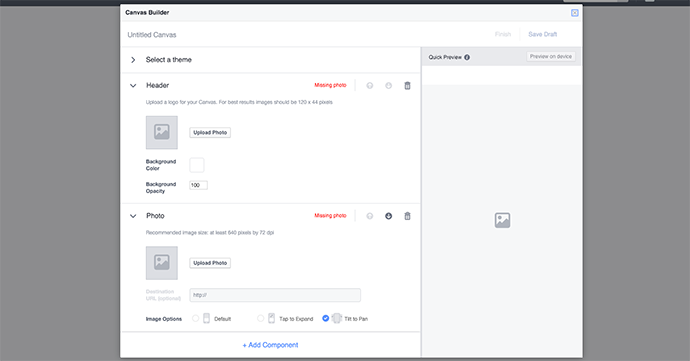
Facebook Canvas
Remember Canvas? It’s the original name for Instant Experience ads.
This is a product that barely evolved over the years, and is now deprioritized so much that it’s almost impossible to find in the options.
Engagement Custom Audiences
This was a big one! Engagement Custom Audiences became available in March, and video views were the first set of data made available. You could target people based on how much of a video they watched.
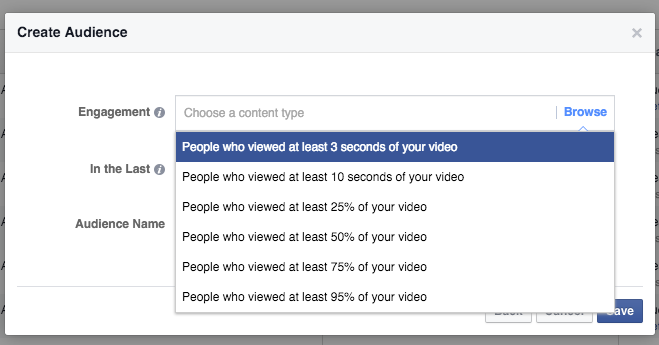
I correctly predicted that this would lead to targeting people based on other types of engagement.
6 Lead Ads Updates
Facebook Lead Ads were a major focus in 2016, with the following updates happening all at once:
- Zapier integration
- Duplicate forms
- Use videos or slide shows
- Context cards
- Edit field IDs
- FINALLY made available in the Ad Create Tool
This is around the time when Power Editor started losing its exclusive access to features.
Change to 20% Rule
Everyone hated the 20% text-in-image rule. Essentially, your ads could get rejected if more than 20% of your ad image included text. Measuring that 20%, of course, involved a very inexact method using a grid tool.
Around this time, Facebook started testing removing that restriction — or at least loosening it. Your ad wouldn’t get rejected for having too much text, but it may get less distribution.
Enhanced Website Custom Audiences
I was a power user of remarketing using website custom audiences, and these updates made me even more obsessed.
Originally, you could only target your website visitors generally. But with the latest update, you could create rules to segment visitors by page visited and event. For example, you could target people by purchase value, lead magnet subscribed to, frequency of visits, and more. It depended partially on the parameters you sent with the pixel events.
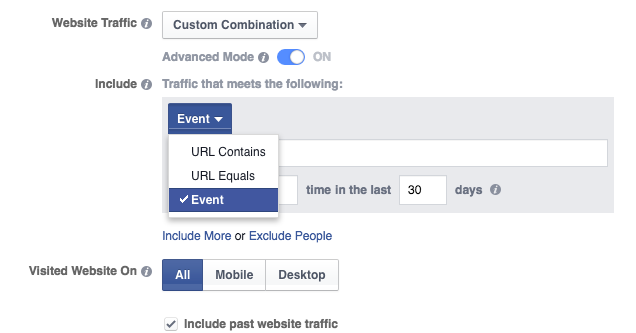
Additionally, advertisers using third-party tools could create audiences based on time spent, dynamic date, and aggregate values. These are options that would eventually come to the main interface.
Messenger Destination Ads
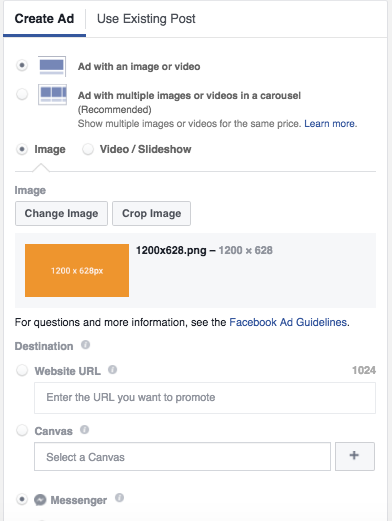
Beginning in September, advertisers could send people into a Messenger conversation from their ad.
Split Testing
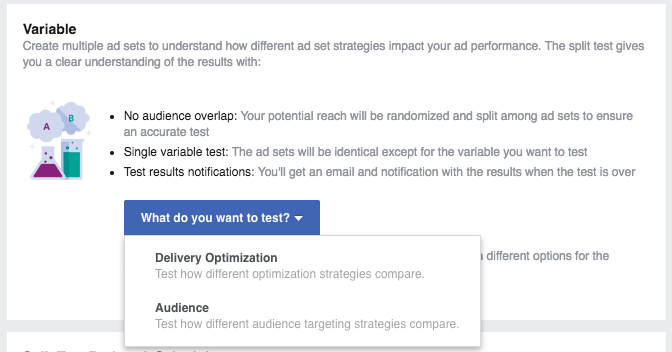
Facebook launched a built-in split-testing tool to A/B test audiences and optimization options.
2017: Updates to Creative
While the prior few years may have been dominated by targeting updates, the biggest changes in 2017 focused on the creative side.
Dynamic Ads for Broad Audiences
Dynamic Product Ads were originally released as a remarketing tool. They dynamically showed ads to people who have interacted with products from your catalog.
In January, Dynamic Ads were updated to allow for broad targeting to people who haven’t been exposed to your products, but may be interested.
Create Ads for Instagram Stories
You’d probably be shocked by how few placements were available in 2017. But a new one was added when advertisers were able to create ads for Instagram Stories.
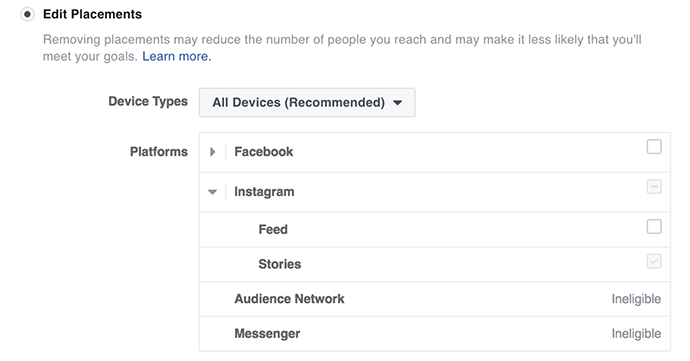
At the time, you had to use the Reach campaign objective.
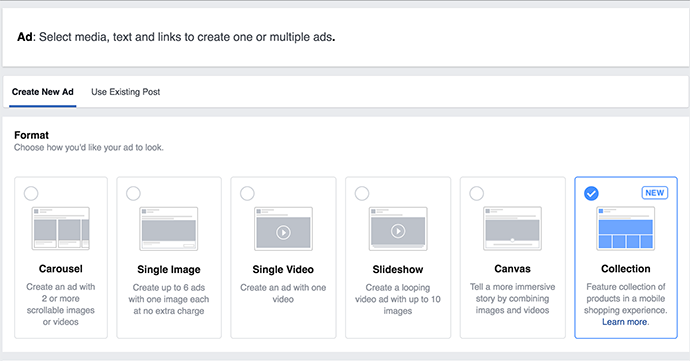
Create a Collection
Facebook was leaning into keeping users on Facebook during this time using Lead Ads, Canvas, and now Collections. The one difference is that Collections made use of the product feed.
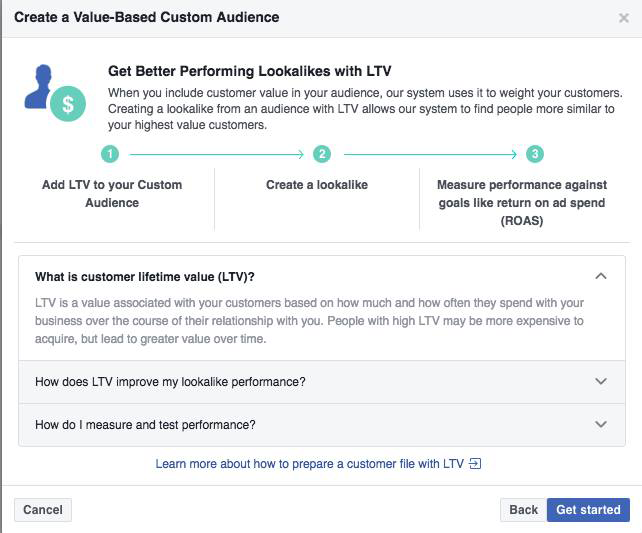
Value-Based Lookalike Audiences
You could already create lookalike audiences based on your current customers. But what if Meta could learn from the wide range of customer lifetime values to help assemble lookalike audiences that closely align with those who are most valuable?
That was the thought process behind value-based lookalike audiences, which I discussed in June.
Ads Manager and Power Editor Merge
The inevitable finally happened in September. After years of Power Editor and Ads Manager living as separate tools, they were combined into a new Ads Manager product.
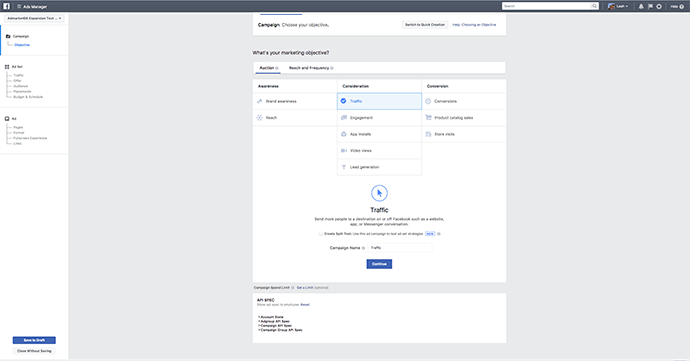
For those of us who loved (or had a love/hate relationship with) Power Editor, it was the end of an era.
Dynamic Creative
It’s really quite amazing that Dynamic Creative was launched nearly a decade ago. Create a single ad that utilizes up to 30 assets from headlines (5), images or videos (10), primary text (5), descriptions (5), and CTA buttons (5).
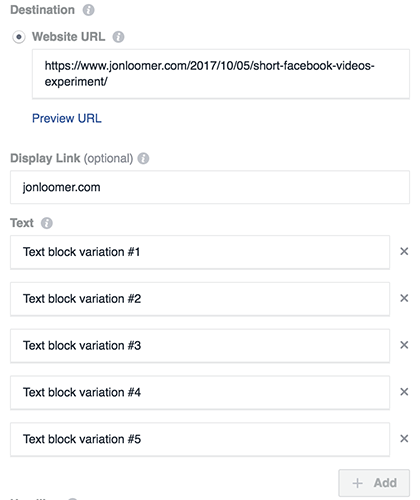
Meta finally appears to be phasing out Dynamic Creative now, in favor of the new creative workflow.
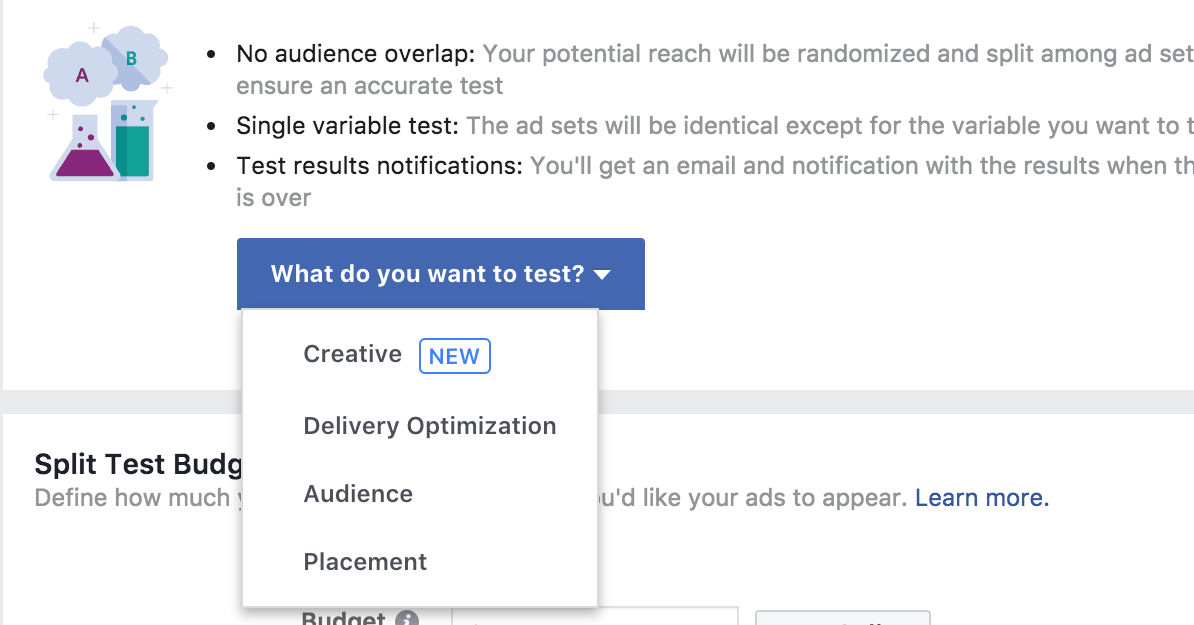
Creative Split Testing
Facebook launched the split-testing tool in late 2016. Nearly a year later, advertisers could also test creative and placements.
Customize Creative by Placement
As Facebook kept adding placements with different aspect ratios while recommending “automatic placements,” a need arose to be able to customize creative by placements.
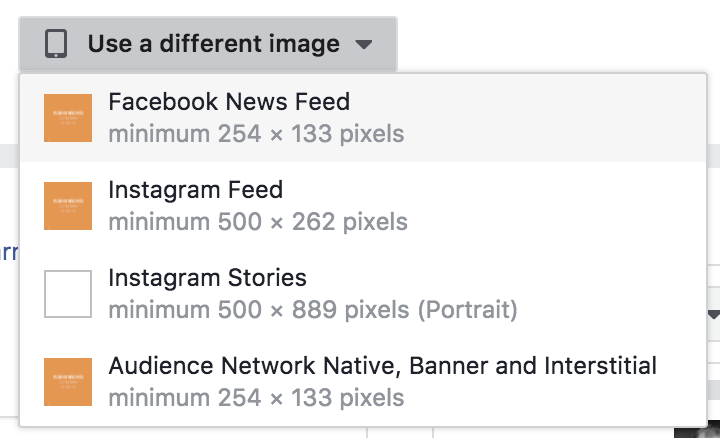
Before this feature, advertisers would often create separate ad sets for different placement groups.
2018: Cambridge Analytica and the End of the Wild West
Things were getting pretty crazy before 2018. Advertisers were using targeting and exclusion options to reach very specific groups in ways that were getting worldwide attention. And when Cambridge Analytica exposed the use of Facebook ads for influencing elections, the pressure was on. Changes would be made.
This is when the dominoes started to fall regarding advertiser control.
No More Partner Categories
In response to pressure following Cambridge Analytica, Facebook shut down Partner Categories. This was surely the result of the creepiness and perceived privacy concerns related to targeting based on information gathered by data mining companies.
Put a pin in this change. It would be only the beginning. So much more would happen during the next several years, and this was the pivotal moment.
New and Reinstated Professional Targeting Options
Strangely enough, Facebook also announced a slew of new and reinstated (removed because of a “bug,” apparently) professional targeting options.
- Page Admins: Behaviors targeting > Digital activities > Facebook page admins
- Employer Targeting: Demographics > Work > Employers
- Job Title Targeting: Demographics > Work > Job Titles
- School Targeting: Demographics > Education > Schools
- Field of Study Targeting: Demographics > Education > Field of Study
This would all be self-reported information from user profiles.
Ad Metric Updates
Several updates to ad metrics were announced in February.
First, labels were added to individual metrics to clarify if they were Estimated or In Development.
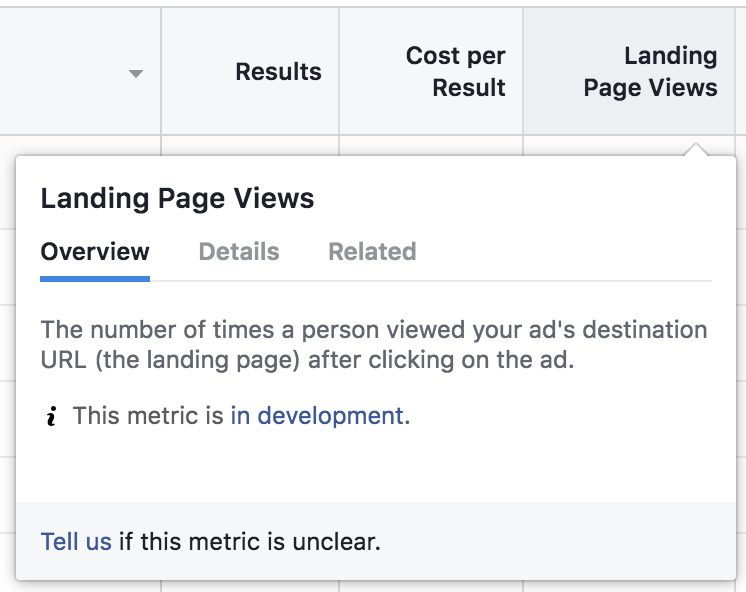
Second, a long list of metrics were removed, including Actions, Button Clicks, Page Mentions, Page Tab Views, Positive Feedback, Negative Feedback, and Social Reach. Positive and Negative Feedback were introduced in 2015.
Marketplace Placement
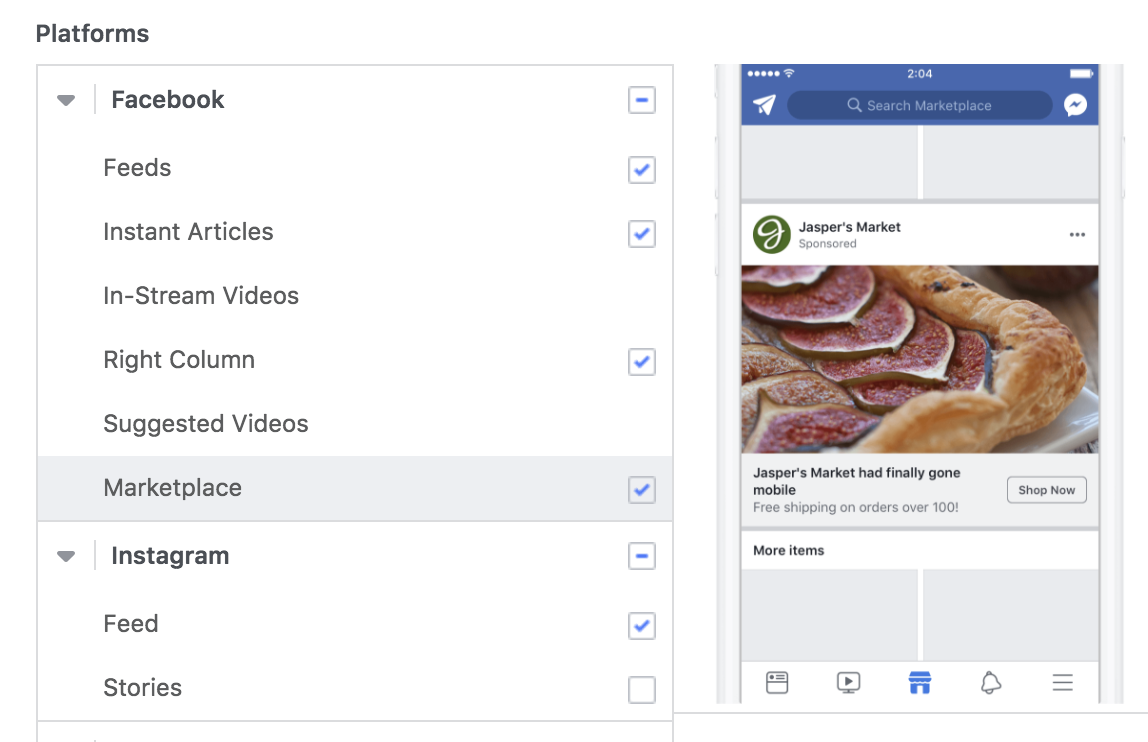
Another new placement! Show ads that appear in Facebook Marketplace.
Facebook Attribution Tool
In October, Facebook launched the Attribution Tool “to give marketers a more holistic view of the customer journey, both on and off Facebook.”
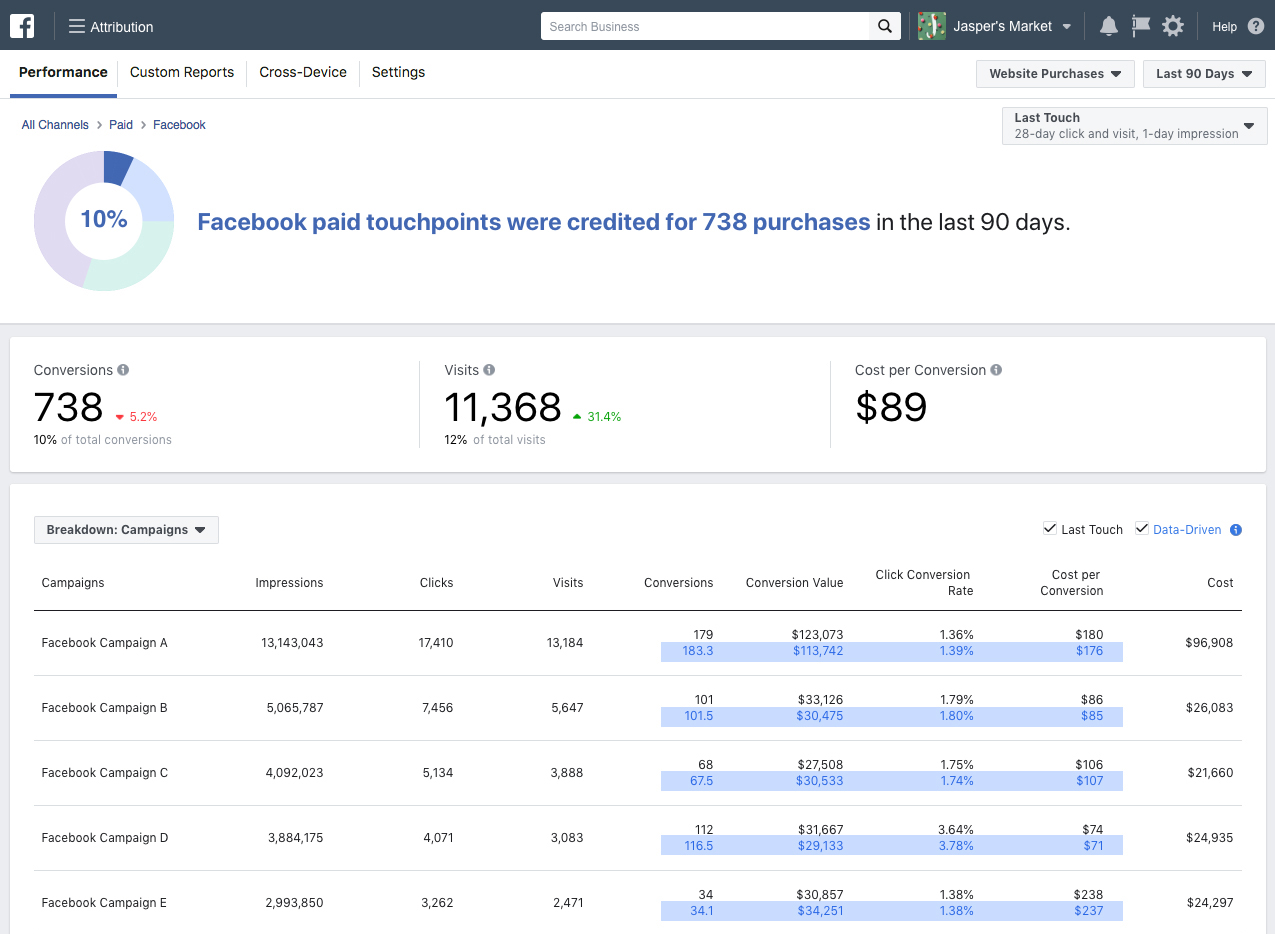
I never understood why this tool was eventually eliminated.
2019: Special Ad Categories From a Thin Year
2019 was a thin year for me, regarding public-facing content. Throughout the 15 years of this website, I normally publish at least one blog post per week — and sometimes up to five or six, depending on the year. But I only published 33 in 2019. While I did supplement that with 13 podcast episodes (and they weren’t related at all to Facebook ads), I didn’t record a single video.
I was busy coaching baseball that year, if I had to guess what was taking up my time. But I never stopped hosting a weekly webinar for my private community, which is where I documented all of the biggest changes.
Here are the biggest updates that came out in 2019:
- Campaign Budget Optimization becomes the default, then the mandatory switch is delayed
- Ads Manager redesign (again)
- Special Ad Categories introduced to prevent discrimination in housing, employment, and credit
- Off-Facebook Activity rolls out
- Pixel Event Setup Tool launches
- Inspect tool arrives in Ads Manager
- Expanded ad transparency
- Automatic ad translation
- Multiple text options and dynamic creative expansion
- Significant edits confirmed to reset the learning phase
- Lead forms removed from Instant Experience
- Audience Network refunds after measurement problems
- Commerce Manager launches
- Political ads updates
- Custom metrics in ads reporting
- Messenger ad design and options updated
- Ad rejections for abbreviating “Facebook” and “Instagram”
Probably the biggest update was the introduction of Special Ad Categories, which was a continuation of the impact of Cambridge Analytica. It reflected increased scrutiny of the ways advertisers abused ad targeting, particularly for discriminatory reasons
2020: The COVID Year
Everyone handled 2020 differently. The world stopped in March, and I mostly stopped with it.
I couldn’t bring myself to sell or care about Facebook ads during these days. I know others benefited from the move to online, but I instead found myself in an emotional rut.
When stuff was hitting the fan in March, I wrote about the dilemma of what to do in difficult times. I scrapped all of my plans for training courses, and started focusing instead on teaching people how to host live webinars.
I’d eventually pick back up fiercely in September, in an attempt to make up for lost time. But it was weird, man. It was a weird, weird year.
Beyond the obvious, here’s a collection of some of the highlights from that year…
The Inspect Tool
The tool launched in late 2019, and I wrote a guide in early 2020. This was a great tool that helped you gain deeper insights into things like auction competition, audience saturation, and auction overlap.
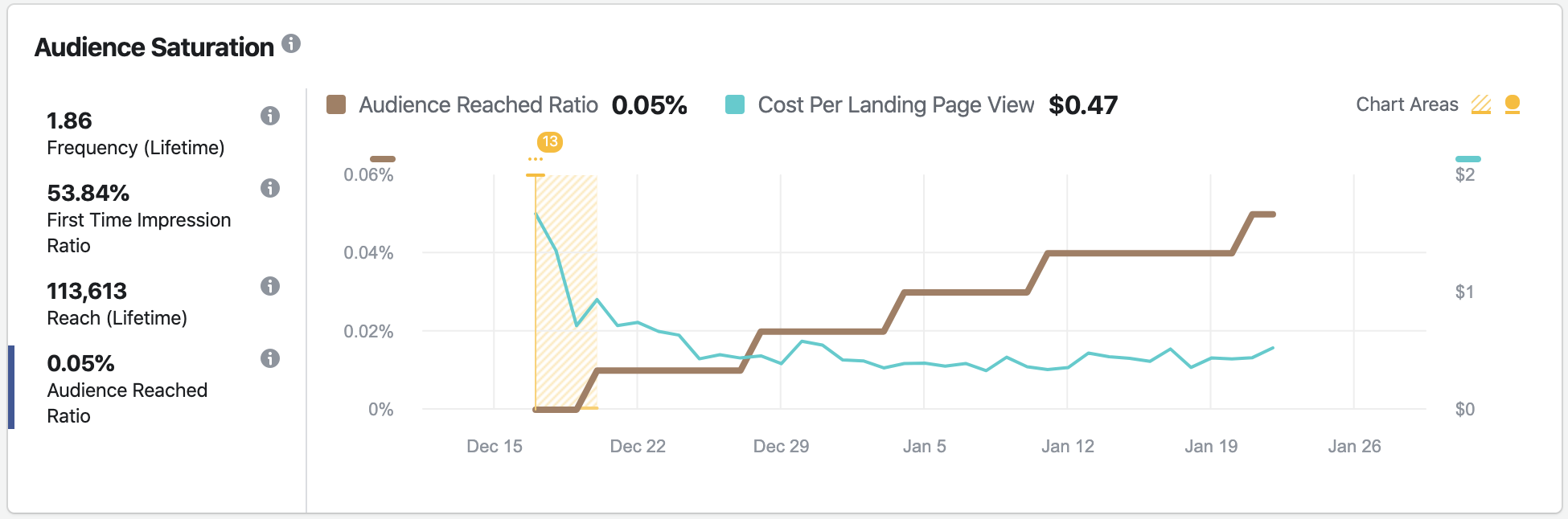
CBO Mandate Shut Down
CBO was introduced to skeptical advertisers in 2019 with the plan to make it mandatory. Eventually, it became an editable default.
I’d eventually write more about how CBO works in October.
Significant Reduction in Demand
I wasn’t the only one who pulled back on everything during the initial months, beginning in March. During a May 6 webinar, I discussed how Facebook reported a significant reduction in ad demand as a result of the pandemic.
I Got Big Into Custom Events
I couldn’t even tell you when custom events became a thing, but I do know that I became obsessed with them in 2020. Because quality website traffic was so important to me, I’d create custom events for things like time spent, scroll depth, watching embedded YouTube videos, and more.
I used those events for targeting, optimization, and reporting. I don’t mess with custom events nearly as much these days, beyond for an added reporting layer. But these were some interesting times.
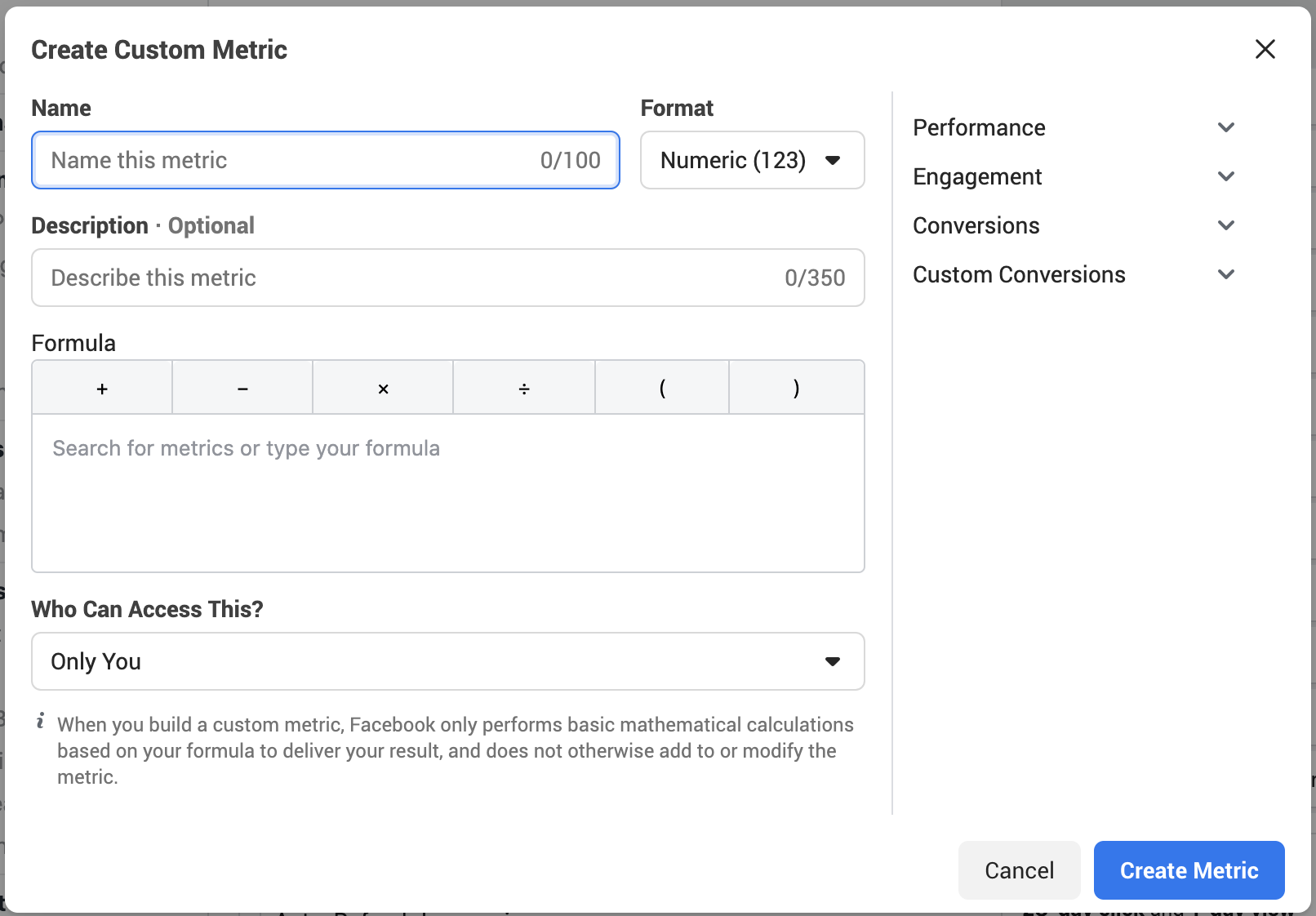
Custom Metrics
Sometimes, the exact metric that you need to display in Ads Manager doesn’t exist, but the building blocks do. Beginning in 2020, you could create custom metrics using formulas.
The 20% Text Rule is Dead
Finally, the 20% text rule is no more. Originally, ads could get rejected for having too much text. Then, that restriction was loosened, but with warnings that your delivery could be throttled. But finally, in September, all of those warnings disappeared.
28-Day Attribution Window Eliminated
It’s interesting because I wrongly remembered this happening as a result of iOS 14 changes. While it’s certainly possible it was in anticipation of those changes, Facebook eliminated the 28-day attribution window in September for “privacy reasons.”
The way this was worded may be more confusing to me now than it was then. But Facebook claimed the change would have no impact on delivery or performance.
iOS 14 Changes Are Coming
The changes hadn’t happened yet, but the panic had already started. We were told all about the impending iOS 14 changes related to privacy opt-outs that were coming, and we were trying to figure out how they’d impact our advertising results.
We assumed the worst.
2021: iOS 14 Changes Hit
According to a review of my content, 52% of everything I published in 2021 mentioned iOS 14. That’s how worried and obsessed we were.
iOS 14 Changes Go Live in May
The anticipation for these changes was crazy. Looking back, it’s hard to believe that we waited six months for these changes to go into effect.
The initial impact was huge. Do you remember?
We could optimize for only eight configured events, a system known as Aggregated Event Measurement. If the event wasn’t configured, we couldn’t optimize for it.
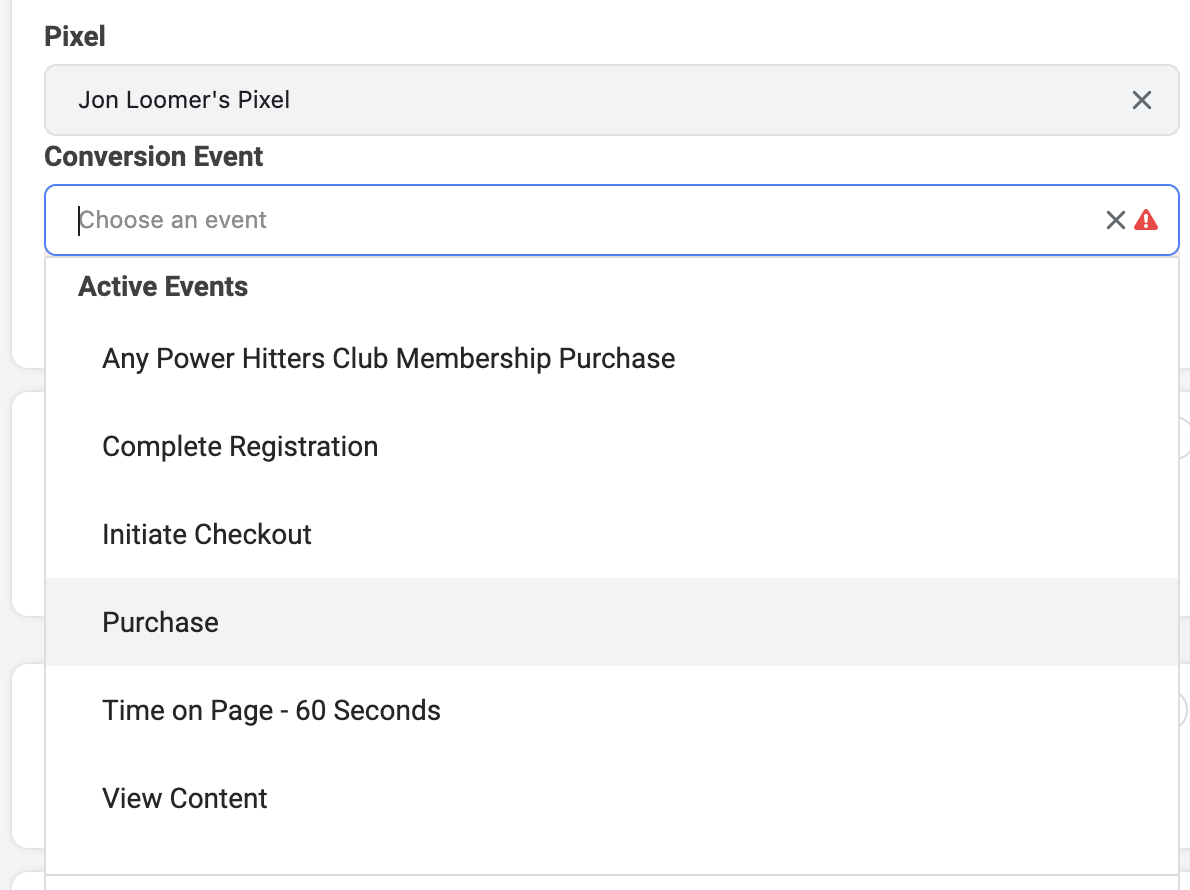
Ad sets that started prior to enforcement that were optimized for events that weren’t configured were paused. If you changed the events you configured, access would be paused for up to 72 hours.
We were warned that audiences would shrink due to iOS opt-outs. Reporting would be delayed. Attribution would drop due to a degradation of tracking (by September it would be reported that results were down 15% due to iOS 14).
We were freaked.
Conversions API Becomes Essential
While we were given mixed signals about whether the Conversions API would get around iOS 14 opt-outs (it wouldn’t), that didn’t make it any less important. If your reporting was already down, you wanted to improve tracking in any way you could.
I set up Conversions API using the API Gateway as a result, and wrote about it.
Facebook Analytics Shut Down in March
Surely related to the trend line related to privacy and tracking, helpful tools like Facebook Analytics were going away.
Default Attribution Setting Changes Again and Again and Again
Conversions were originally reported by default when they happened within 28 days of clicking or 1 day of viewing an ad. Beginning January 19, default attribution was changed to 7-day click and 1-day view. Once the iOS 14 changes went live and were reflected in Ads Manager, default attribution was updated to 7-day click only.
And then, as of September 23, 2021, the default attribution setting changed back to 7-day click and 1-day view.
Facebook/Meta was reacting in real-time, and many of their changes were likely overreactions. This was a good example of that.
Facebook Changes to Meta in October
Maybe it was the Metaverse. Or maybe it was a company running from bad PR ever since Cambridge Analytica. Whatever the reason, Facebook changed to Meta in October.
I mostly ignored this change in protest for at least a couple of years. I built a business on “Facebook ads,” so I refused to call it Meta for some time.
Targeting and Lookalike Expansion
This was another logical reaction to privacy concerns and misuse of targeting.
Facebook targeting expansion was first an option before eventually being a fixed default (depending on the performance goal). When on, your audience would expand beyond your detailed targeting inputs if it would improve performance.
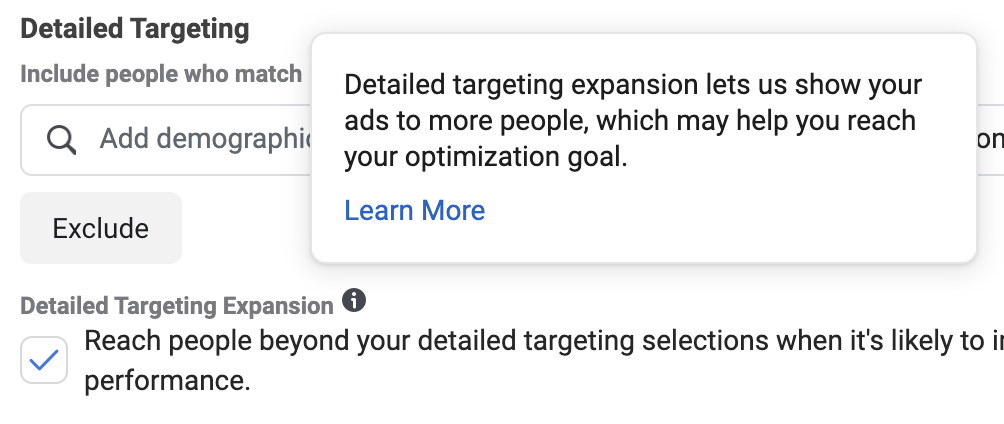
The same option would soon come to lookalike audiences. We were further losing control over targeting.
2022: Everything is Advantage or Advantage+
This is when Meta’s branding started getting unnecessarily confusing. Some features were labeled “Advantage” while others were “Advantage+” and no one was ever quite sure why it mattered.
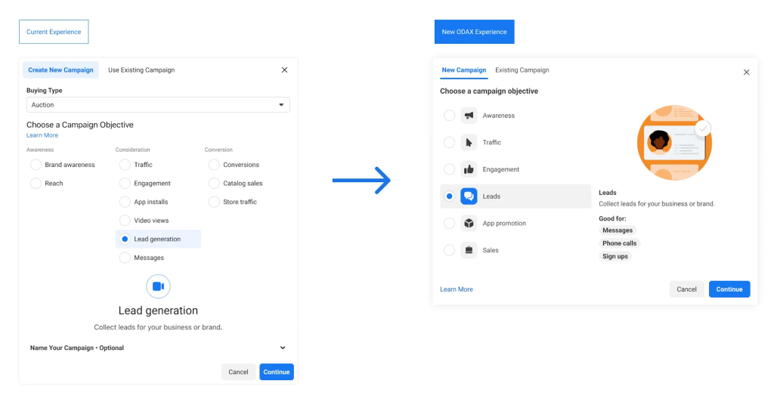
ODAX
In January, Meta announced Outcome-Driven Ad Experiences, or ODAX. It was essentially a simplification of campaign objectives from 11 options to 6.
Advantage+ Campaign Creation
The early signs of campaign automation were spotted in March. Advantage+ Campaign creation allowed you to create campaigns using a more streamlined method that locked in defaults.
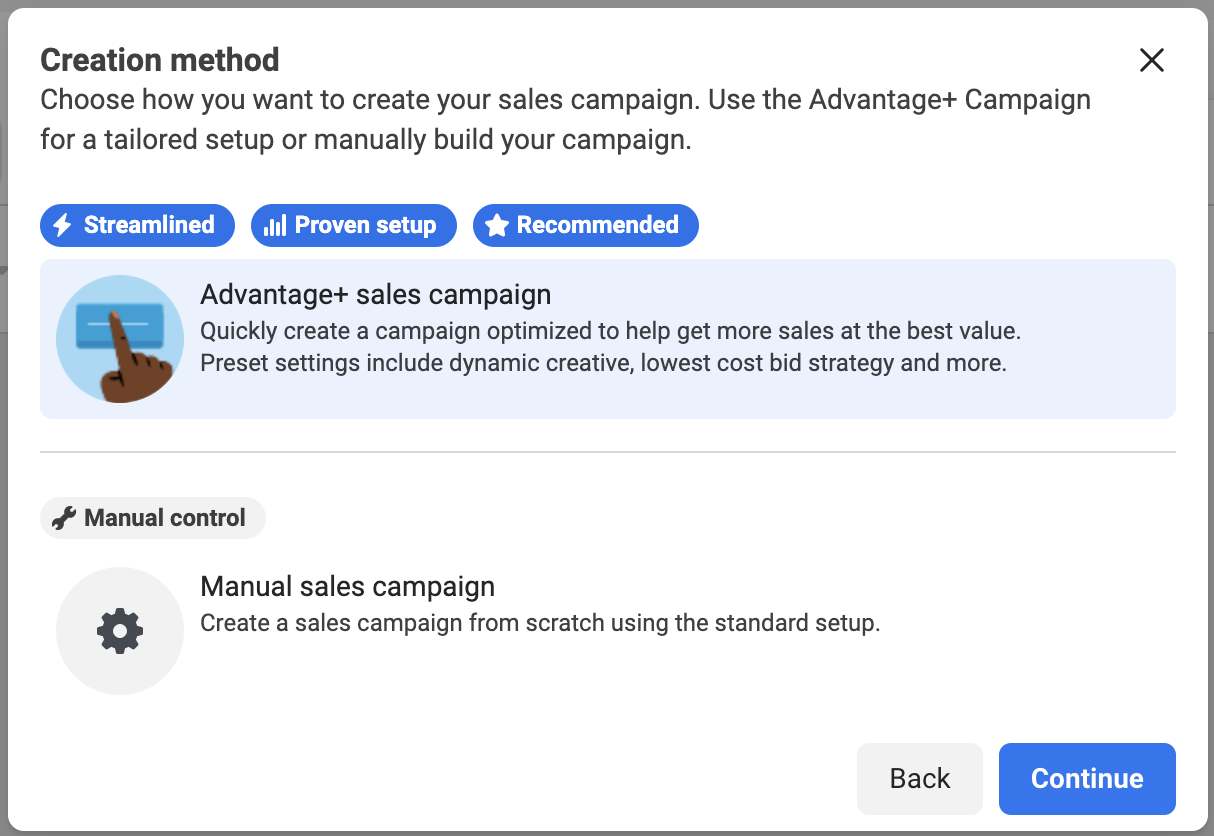
Would results improve? No one was quite sure.
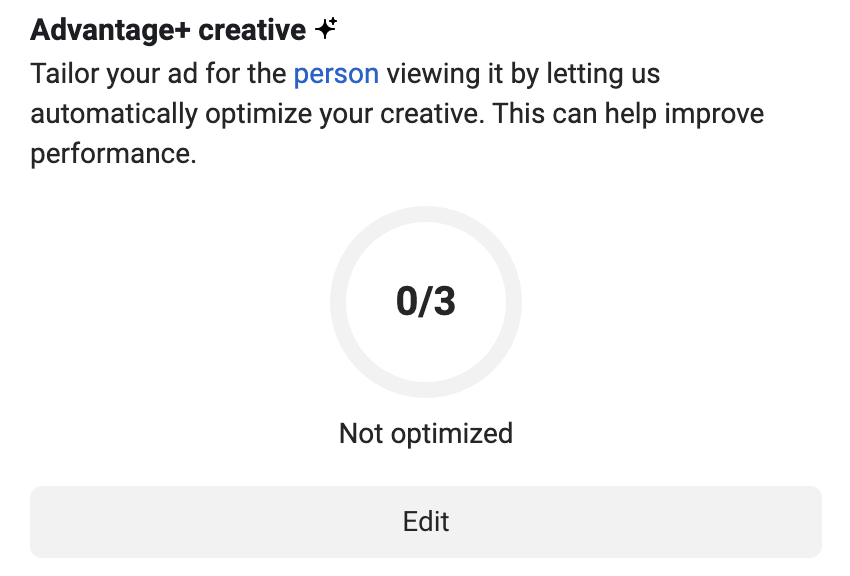
Advantage+ Creative Enhancements
It started with a feature that Meta called Dynamic Experiences. When turned on, certain enhancements could be applied to your ad creative, including:
- Adjusting the image brightness or contrast
- Applying artistic filters
- Varying aspect ratio
- Adding templates to a feed image
These enhancements would eventually be rebranded as Advantage+ Creative. And we would be prompted and reminded repeatedly to make sure they were allowed.
The Meta Advantage Suite
And this is the year when everything starts getting branded “Advantage” or “Advantage+.” The Meta Advantage Suite was split into two product lines.
These were the Advantage features:
- Advantage Detailed Targeting
- Advantage Lookalike
- Advantage Custom Audience
- Advantage Campaign Budget
That’s right, Targeting Expansion and Lookalike Expansion were rebranded to Advantage Detailed Targeting and Advantage Lookalike. Years later, a + would be added to each of these.
And these were the Advantage+ products:
- Advantage+ Shopping Campaign
- Advantage+ App Campaign
- Advantage+ Placements
- Advantage+ Creative
- Advantage+ Creative for Catalog
- Advantage+ Catalog Ads
- Advantage+ International Catalog Ads
ChatGPT Arrives
It was the end of 2022, so you may not remember it as the year of ChatGPT. But this was when it was first made available. And we were freaking shook.
It was still early. While it absolutely blew our minds, it was also not nearly as good then as it is now. But even then, we could start to see the potential — both good and scary.
2023: AI is Here
2023 was the year of early experimentation with ChatGPT. I wasn’t doing anything all that advanced with it yet, but we were starting to see some pretty crazy applications — and a whole lot of people trying to take advantage of the moment.
But there was still plenty of Meta ads-related activity, as well.
No More Inspect Tool
This was a huge disappointment. One of my favorite tools was gone. The Inspect Tool provided access to information like Auction Competition, Audience Saturation, and Auction Overlap. Maybe it was gone due to iOS 14 changes?
No one knows because Meta never explained it.
Threads Arrives
It wasn’t an ads-related update yet, but I fully understood the potential of a Meta-backed Twitter competitor. Threads was live, and it would certainly only be a matter of time before it would be monetized.
Engaged-View Attribution
The default attribution setting was previously 7-day click and 1-day view. With this change, Meta added 1-day engaged-view attribution. Here’s how it was initially defined:
When someone plays 10 seconds of a skippable video ad, or watches at least 97% of the video ad, if the video ad is shorter than 10 seconds, this will count toward engaged-view attribution. The person watching the video also needs to convert on your advertising objective within 24 hours.
Advantage+ Audience
In its continued effort to automate targeting and limit manual audience restrictions, Meta rolled out Advantage+ Audience in 2023. When on, Meta would use automation to find your audience for you. You could provide suggestions by age, gender, custom audience, detailed targeting, and lookalike audience, but those suggestions were only optional. Meta would prioritize them before searching more widely.
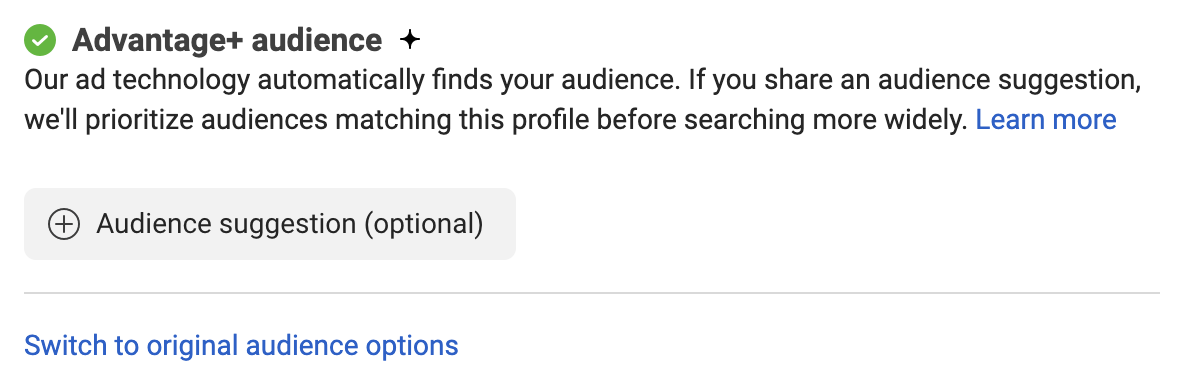
Something that immediately got my attention about Advantage+ Audience was that if you didn’t provide suggestions, Meta would automatically prioritize pixel activity, conversion history, and prior engagement with your ads.
I was beginning to question my prior attachment to targeting control.
Flexible Format
I spotted Flexible Format for the first time, which at least seemed to be replacing Dynamic Creative. Instead, it would replace it for certain campaign objectives.
Like Dynamic Creative, Flexible Format allows you to create a single ad that leverages up to 10 images and videos with 5 primary text and 5 headline options. But these changes were made at the ad level, rather than at the ad set (where Dynamic Creative was turned on).
2024: I Question Everything I Thought I Knew About Targeting
This truly was the year I had an awakening. For the better part of a decade, I was obsessed with targeting. I resisted features that would expand my audience, typically in favor of remarketing. But everything started to change for me in 2024.
Chrome’s Elimination of 3rd Party Cookies??
Remember this one? We were pretty freaked out about it. This would end up being a nothing burger.
Opportunity Score
I started seeing Opportunity Score in Ads Manager in April.

It’s Meta’s way of gamifying best practices and recommendations. Do you implement enhancements and proper campaign structure? You’ll get a high score. Otherwise, you’ll see “opportunities” to raise your score by implementing changes.
Audience Segments for Manual Sales Campaigns
Audience Segments were originally a feature for Advantage+ Shopping Campaigns. In June, Meta introduced them for manual Sales campaigns.
When you define your audience segments in Advertising Settings, you can get additional insight into how your ads are delivered. When using the breakdown by audience segments, you can see how delivery and performance are distributed by Engaged Audience, Existing Customers, and New Audience.
This feature alone changed so much about what I thought I knew about broad targeting. It helped me understand that remarketing happens naturally.
First Conversion Reporting
In July, Meta introduced First Conversion reporting. It helped shed light on what was surely a common misunderstanding of conversion reporting.
By default, Meta reports all conversions that are attributed to your ads. But that could include a single person who performs multiple, separate conversions. When using First Conversion reporting, you can isolate the first conversions that happen.

Tests That Transformed My Understanding of Targeting
As I said, this was a big year for me. Thanks largely to features like Advantage+ Audience and audience segments, I started to realize that much of what I assumed simply wasn’t true. In this post, I highlighted five tests that disproved my assumptions.
2025: The Year of Andromeda
People are still talking about Andromeda, and 2025 is the year it all started. I’m actually kind of sick of hearing about it, mainly because I’m confident most people completely misunderstand what it actually does.
Value Rules
Meta started rolling out value rules in May. I’ve got to admit that it caught me by surprise. While the trend is less and less control, value rules give some of that control back.
But I eventually started to understand why they made sense, and I use them often now. With value rules, you can bid more or less on specific groups of people by age, gender, location, placement, audience, and more. One of the primary reasons to use value rules is to avoid restrictions.
Flexible Format for Creative Diversification
I started using Flexible Format a lot in 2025.

The initial reason was that it helped me simplify what may otherwise be multiple ads into one. Eventually, I realized that it was also a good way to diversify creative, which would be the new buzz phrase around Andromeda. But most importantly, I simply found I was getting good results with it.
Opportunity Score and Campaign Score Officially Roll Out
A year after I initially had access to Opportunity Score, Meta officially rolled it out with Campaign Score. Opportunity Score was ultimately about applying recommendations for your account while Campaign Score applied to the specific campaign you were looking at.
Everyone is Talking About Andromeda
I put off writing about Andromeda for as long as I could in 2025, but I finally got around to it in August. Yes, it was powerful new software and hardware. Yes, it meant that Meta wants us to diversify our creative. But I firmly believe most advertisers made way too much of it beyond those two things.
Creative Testing Tool
While creative testing was first made available in 2016, Meta created a new creative testing option in 2025 that was integrated into the ad creation process.

When it first came out, I’d often use this tool to test new ads when they were originally published. I’d eventually abandon that approach for the next feature on this list.
Push Delivery to This Ad
One challenge advertisers face is what to do when one ad gets all the budget. While you could do nothing, Meta started testing a feature in 2025 that provided an alternative. You could choose to push delivery to an ad for a designated number of days.

2026: A Partial Year
We’re only into August, so I won’t give a full rundown here. But we’ve certainly seen a little bit of everything related to attribution, AI, and targeting.
Attribution Breakdowns
The breakdown by attribution is one of my favorite new features. It allows you to break down your conversion results by attribution setting or conversion count.
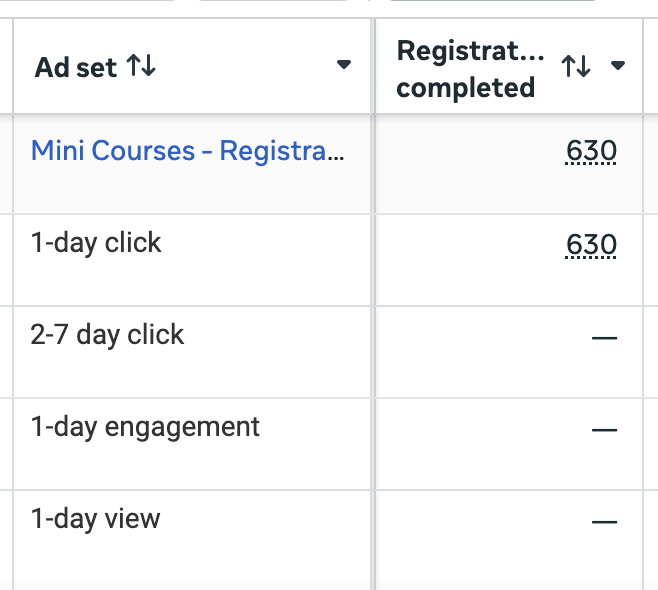
It provides such helpful information that I wish more advertisers used.
Advantage+ Creative Video Generation
Okay, it’s not amazing yet, but Meta’s Advantage+ Creative Video Generation is getting a whole lot better. Use AI to turn scenes based on static images into actual videos.
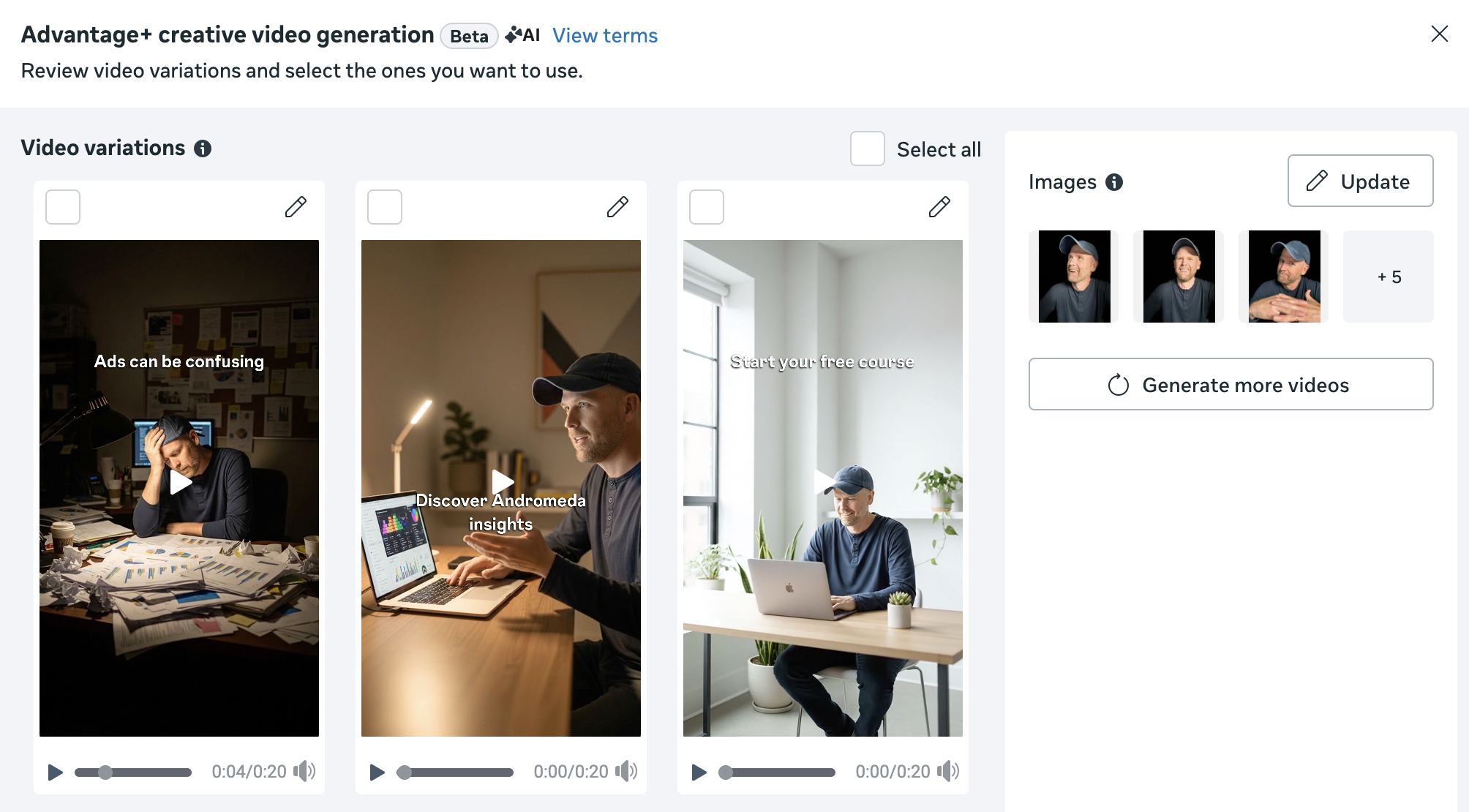
This stuff is going to keep getting better.
Targeting Inputs and Suggestions
Detailed targeting and lookalike audiences are almost always suggestions now. Our control over targeting is very slowly slipping away.
Click-Through Attribution Now Requires a Link Click
It wasn’t until 2025 that I realized that click-through attribution didn’t actually require a click on a link to count a conversion. Well, Meta changed that in 2026. In addition to redefining click-through attribution, engaged-view was changed to engage-through, consisting of both the prior engaged-view conversions and the conversions that resulted from clicks that weren’t on links.
More to Come
I hope you enjoyed this deep reflective post on the changes we’ve seen during the past 15 years. I’m sure I’ve missed a few, but hopefully it’s been a fun trip down memory lane.
I’ll be sharing more about my journey throughout this month. Stay tuned!
[ad_2]
Source_link