
Backlinks have been at the core of SEO for decades.
And despite everything changing with AI, generative search, and evolving search engines, one thing hasn’t: backlinks still play a massive role in how content ranks.
What has changed is what counts as powerful backlinks.
Today, it’s not just about getting as many links as possible. It’s about earning backlinks that build real authority, drive organic traffic, and increase your chances of being cited in AI-generated answers.
In this guide, we’ll break down what makes backlinks powerful in 2026, how link building has evolved, and which strategies actually move the needle today.
Key Takeaways:
- Backlinks are still a core ranking factor for search engines and remain essential for building authority
- Powerful backlinks today come from relevant, high-authority content that aligns with user intent
- Listicle placements and brand mentions are among the most valuable backlinks for both SEO and AI visibility
- High quality backlinks from trusted sites improve your backlink profile, domain authority, and organic traffic
- Traditional strategies like guest posting and broken link building still work, but are no longer the most effective
- The best link building strategies focus on earning backlinks from pages that already rank and get cited by search engines and AI systems
- Strong anchor text, placement, and context determine whether a backlink becomes a powerful backlink

Link building cheat sheet
Gain access to the 3-step strategy we use to earn over 86 high-quality backlinks each month.
Does AI Replace Backlinks?
Short answer: no.
Backlinks are still one of the strongest signals used by search engine algorithms to evaluate authority.
Google’s algorithm is still heavily based on PageRank, which relies on links to measure authority and trust. Without backlinks, it’s extremely difficult to break into the top results—no matter how good your content is.
And that’s the key point.
AI hasn’t replaced backlinks. It has made them more important.
Most AI systems, including Google’s AI Overviews, pull information from pages that already rank well in search engines. And what helps those pages rank in the first place? Backlinks.
So if your content doesn’t have strong backlinks, it’s unlikely to:
- rank in traditional search results
- generate organic traffic
- or get picked up and cited by AI
That’s why link building is still essential.
Without strong backlinks, even well-optimized content and keyword research won’t be enough to compete in search engine results.
However, the type of backlinks that matter has evolved.
Instead of just focusing on volume, search engines now prioritize:
- relevance
- authority
- and how naturally your backlinks fit within the content
For example, a single mention on a high-authority page that already ranks can be more valuable than dozens of low-quality links.
This is also where brand mentions and listicle placements come into play.
If your brand appears in a “top tools” or “best X” article, that placement not only drives referral traffic, but also increases your chances of being cited by AI systems across different platforms.
So while AI is changing how content is discovered, it’s still built on top of the same foundation.
What Makes a Link Powerful?
Not all backlinks are created equal. Some do almost nothing, while others can move your rankings in a meaningful way.
A powerful backlink is usually a high quality backlink placed within relevant content on a page with strong domain authority.
It also mostly comes down to context and authority.
First is relevance.
If your link sits inside content that’s closely related to what you do, it’s going to carry more weight. Search engines look at the surrounding content to understand why that link exists.
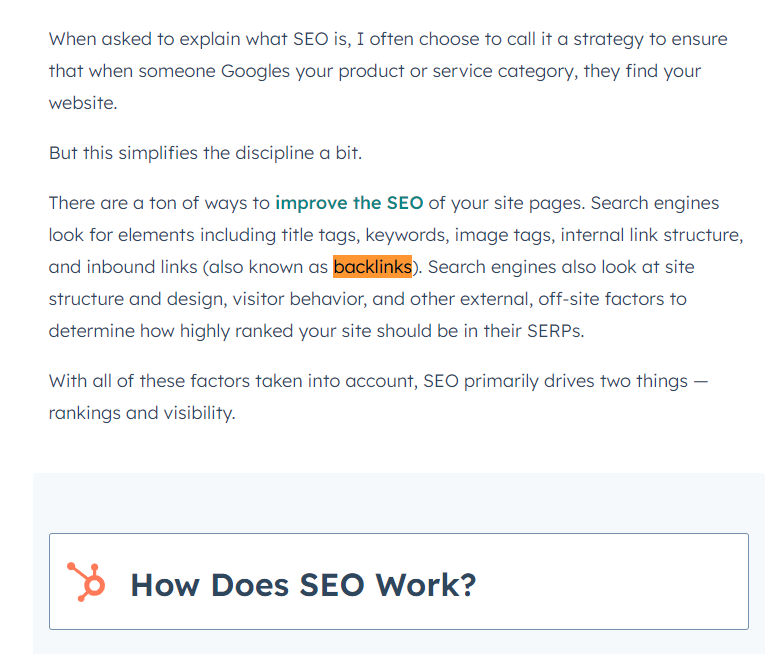
When it fits naturally, it sends a much stronger signal.
Then there’s authority.
A link from a page that already ranks, gets traffic, and has strong domain authority is always going to outperform links from weak or inactive sites.
You’re essentially borrowing trust from that page. That’s why high authority backlinks from pages with strong domain rating tend to outperform weaker links.
Anchor text still matters too, but only when it feels natural. If it looks forced or overly optimized, it can actually hurt more than help.
Anchor text should align with your target keyword while still sounding natural.
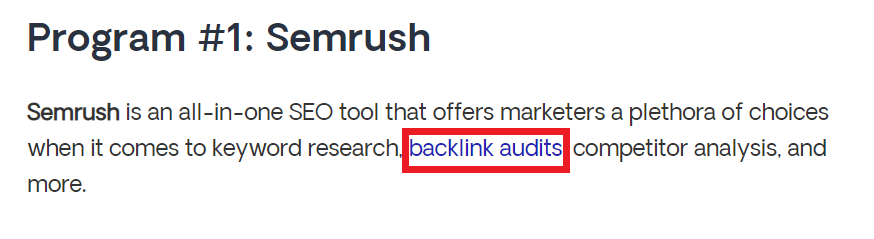
Placement is another big factor. Links that live inside the main body of the content tend to perform better than ones in sidebars, footers, or author bios.
If the link is part of the actual discussion, it’s more likely to be trusted and clicked.
And then there’s search intent. A link from a page that already ranks for commercial intent queries, like “best tools” or “top services,” is incredibly valuable.
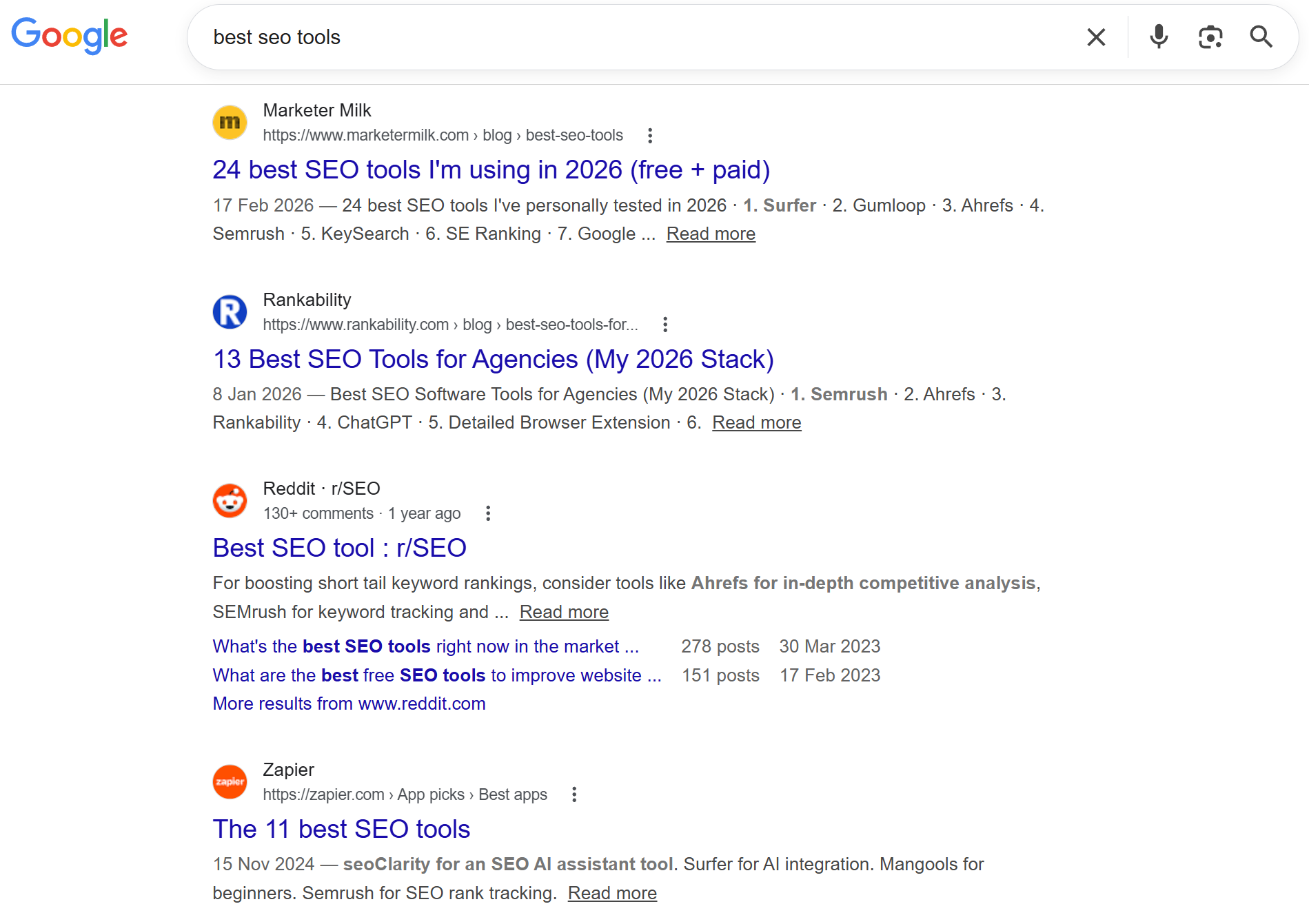
Those pages attract traffic, match what users are looking for, and often get referenced by other sites and even AI systems. That’s why those placements tend to punch above their weight.
None of this is new, but it’s become more obvious. Search engines have gotten better at filtering out noise, so only the links that actually make sense in context and come from strong pages really count.
This balance is key to building a quality backlink instead of a spammy one.
These types of placements are often considered editorial backlinks, which are among the most valuable backlinks you can get.
What is the Most Powerful Backlink Strategy?
Traditional strategies like guest posting, guest blogging, and broken link building still play a role in backlink building.
And to be clear, those still work.
Guest posting can get you solid backlinks, and link insertions can land you placements on relevant pages. If done right, both can help grow your backlink profile and improve rankings.
Broken link building is still useful for finding quick backlink opportunities, but it rarely produces high authority backlinks at scale.
But they’re not the most powerful option anymore.
The issue is that most of these links live on pages that don’t get much traffic, don’t rank for anything meaningful, and don’t get referenced elsewhere. So while you’re technically building backlinks, the actual impact is limited.
What’s working best right now is getting placed on pages that already have authority, traffic, and visibility.
Specifically, listicle-style pages like:
- “best X tools”
- “top Y companies”
- “alternatives to Z”
These pages rank well in search engines, attract consistent organic traffic, and are often used as sources not just by users, but by AI systems too.
Listicle placements combine elements of digital PR, content marketing, and high-quality link placement.
That’s what makes them so powerful.
A placement on one of these pages does a few things at once. It gives you a high quality backlink from a page that already has authority, it drives referral traffic, and it increases your chances of being mentioned or cited elsewhere.
That’s very different from a typical guest post sitting on a low-traffic blog.
A good example of this is getting featured in something like Backlinko’s “link building tools” article. That kind of placement is incredibly strong because the page itself ranks, gets links, and keeps getting referenced over time.
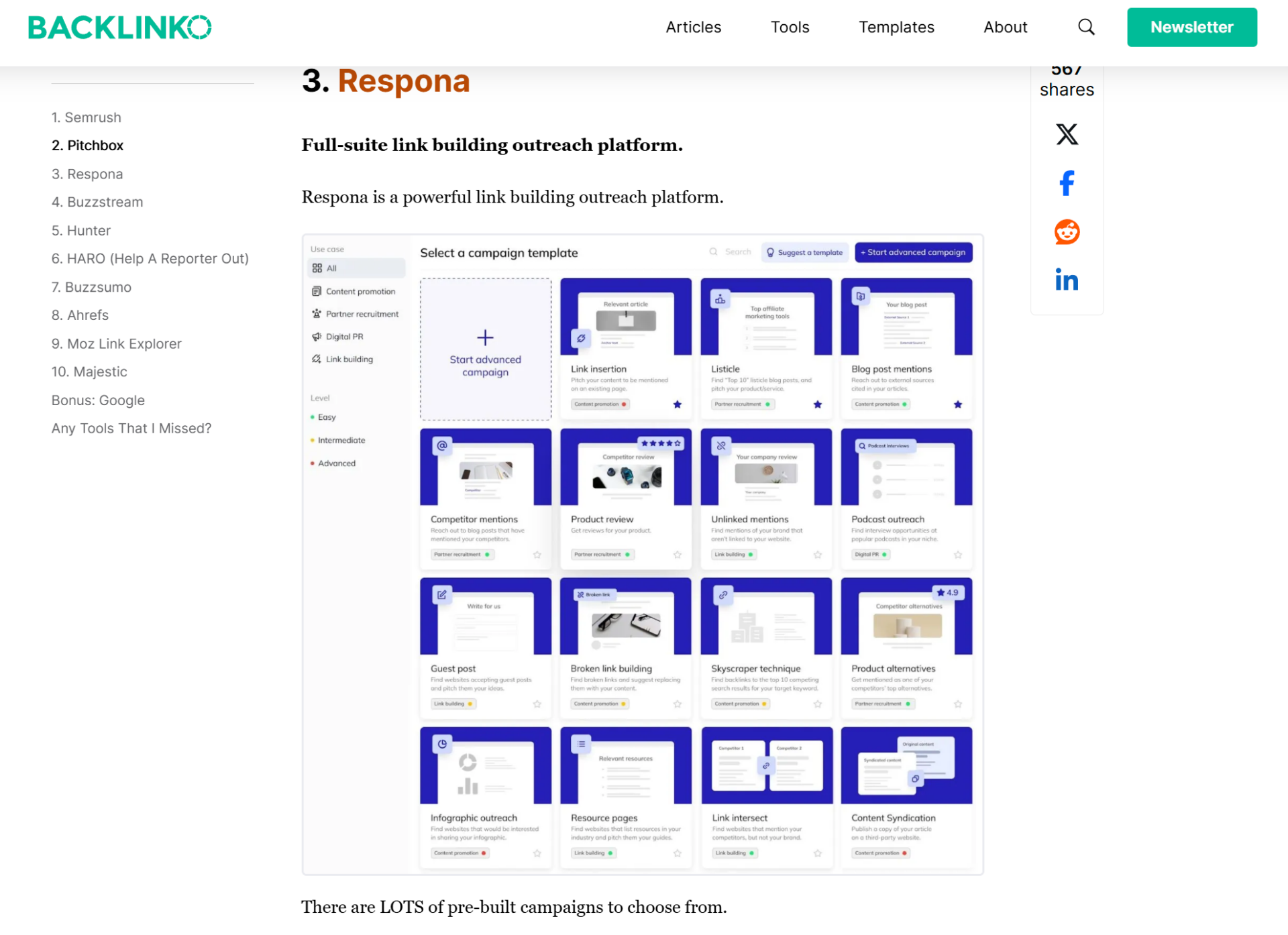
Compared to that, most traditional backlink strategies just don’t have the same upside.
This doesn’t mean you should ignore guest posting or broken link building entirely. They still help build a natural backlink profile and support long-term growth.
But if you’re asking what the most powerful backlink strategy is right now, it’s this:
Get your brand placed on pages that already rank, already get traffic, and already have authority.
How to Get Powerful Backlinks?
Getting powerful backlinks isn’t complicated in theory. It’s just hard to execute consistently.
That’s where most teams get stuck.
In practice, the process looks like this. First, you identify backlink opportunities.
These are usually listicles, comparisons, or high-performing articles ranking in search engines for your target keywords.
Then you qualify them based on organic traffic, domain authority, and how well the content aligns with your offering.
After that comes outreach. You pitch your inclusion, follow up, negotiate placements, and repeat this process continuously to build momentum in your backlink profile.
Doing this at scale is where it breaks.
That’s why a done-for-you approach makes a lot more sense if you want consistent results.
With Respona, instead of handling everything manually, you simply place an order. You submit your target URL, your target keywords, and any specific requirements like anchor text, positioning, or the type of pages you want to be featured on.
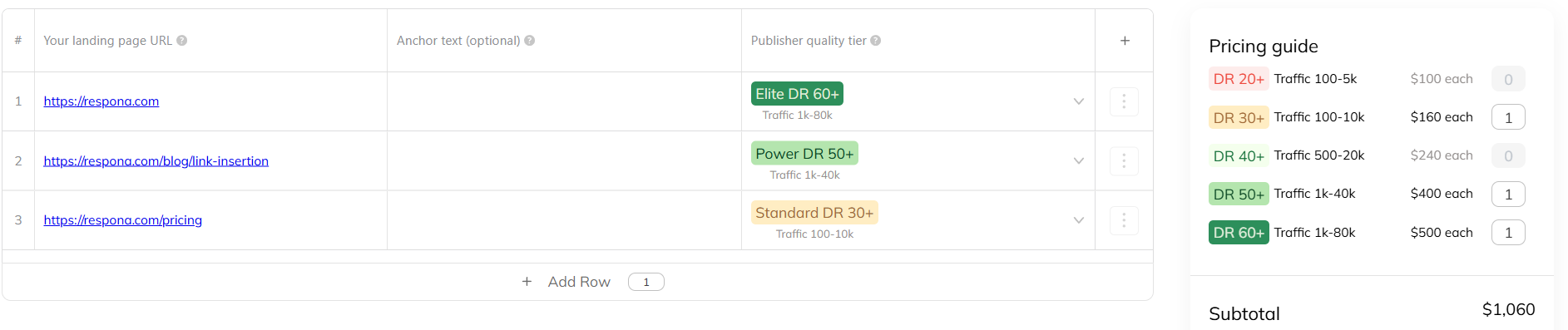
From there, everything else is handled for you. That includes prospecting relevant pages, evaluating opportunities, reaching out to website owners, and securing placements on pages that already have authority and traffic.
The goal is not just to build backlinks, but to place your brand in content that actually ranks and gets referenced.
And that’s where the Campaigns feature comes in.
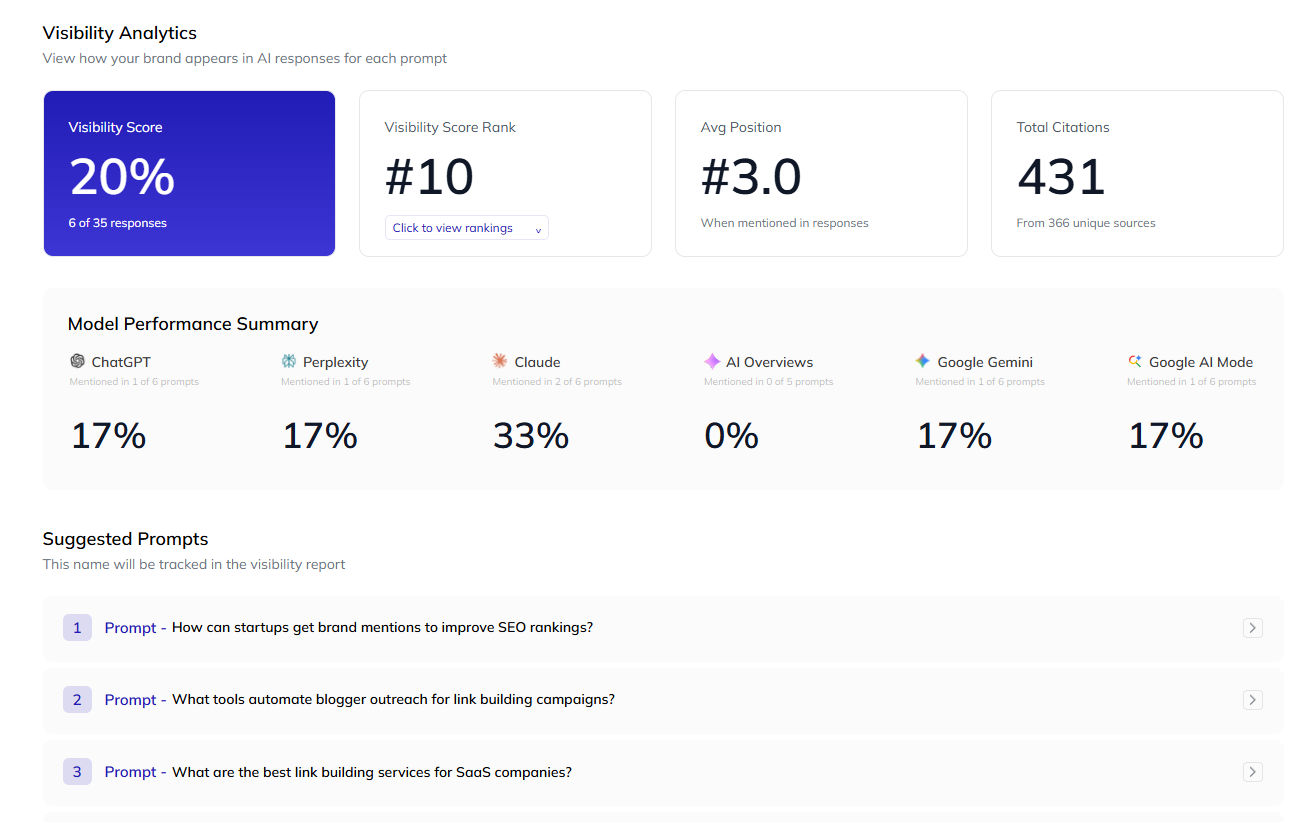
Once your placements start going live, Campaigns helps you track how those links translate into visibility beyond traditional search.
You can see where your brand is being mentioned, which pages are being cited in AI-generated answers, and where competitors are showing up instead of you.
This gives you a much clearer picture of how your link building efforts impact both search engines and AI systems.
Instead of guessing whether your backlinks are working, you can see exactly which placements are driving authority, organic traffic, and AI visibility.
Link building cheat sheet
Gain access to the 3-step strategy we use to earn over 86 high-quality backlinks each month.
Now Over to You
Backlinks haven’t gone anywhere. Strong backlinks remain the foundation of SEO, helping search engines evaluate authority, relevance, and trust.
The difference is that search engines have gotten better at filtering out noise. It’s no longer about how many backlinks you have, but where they come from and how much authority they actually carry.
The right mix of high quality backlinks, strong anchor text, and relevant content is what drives long-term growth.
If you want to compete in today’s search landscape, you need to focus on getting placed on pages that already rank, already get traffic, and actually influence both search results and AI-generated answers.
That’s exactly what our done-for-you link building is built for.
Instead of spending time prospecting, outreaching, and following up, you can focus on growth while we secure placements on relevant, high-authority pages that strengthen your backlink profile, improve your rankings, and increase your visibility in AI search.
Frequently Asked Questions (FAQ)
Are backlinks still important in the age of AI?
Yes. Backlinks are still one of the core ranking factors used by search engines. They remain essential for search engines to determine authority and ranking. AI systems also tend to pull from pages that already rank, which makes backlinks even more important.
What are the most powerful backlinks today?
The most powerful backlinks come from pages that already rank, get consistent traffic, and have strong authority. Listicle placements, editorial mentions, and high-quality content-driven links tend to have the biggest impact.
Is guest posting still worth it?
Guest posting still works and can help build a natural backlink profile. However, it is not as impactful as getting placed on high-traffic, high-authority pages that already rank in search engines.
Do nofollow links have any value?
Yes. While a nofollow link does not pass link equity, it can still drive referral traffic, increase visibility, and contribute to a natural backlink profile.
How many backlinks do I need to rank?
There is no fixed number. It depends on your niche and competition. In most cases, a few high-quality backlinks from authoritative pages can outperform a large number of low-quality links.
How do I find good backlink opportunities?
Look for pages that already rank for your target keywords, get organic traffic, and are relevant to your content. These are usually listicles, comparison pages, or well-performing articles.
What’s the fastest way to build powerful backlinks?
The fastest way is to focus on placements on existing high-authority pages instead of building links from scratch. Done-for-you link building can help you secure these placements without handling outreach yourself.